THE LOVE BOOKS OF OVID
BEING THE AMORES, ARS AMATORIA, REMEDIA AMORIS AND MEDICAMINA FACIEI FEMINEAE
OF PUBLIUS OVIDIUS NASO
TRANSLATED OUT OF THE LATIN BY J. LEWIS MAY
ILLUSTRATED BY JEAN DE BOSSCHERE
PRIVATELY PRINTED FOR RARITY PRESS, NEW YORK, 1930 (NO COPYRIGHT).


Title Page

Cover
INTRODUCTION
I
PUBLIUS OVIDIUS NASO was born at Sulmo--the modern Sulmona--on March the 20th, 43 B.C. He was fortunate in his birthplace, and it may not perhaps be over fanciful to ascribe the airy charm, the delicate grace, which his Muse so plentifully displays, at least as much to his early environment as to heredity. Sulmo, indeed, lies amid a region of great natural beauty. Its pastures, as Ovid himself tells us, were cool and rich, it produced abundant crops of corn, and yet so light and fine was the soil that the vine and the olive flourished there in profusion. It was a land of streams, of streams that hurried down from the mountains so clear and cold that the place is called by the poets "gelidus Sulmo." Even in the hottest of Italian summers, when the canicular is at its height, its meadows are fresh and green and its atmosphere sparkling and salubrious.
Ovid's family was of hereditary equestrian rank and possessed a sufficiency if not an abundance of wealth. The poet was proud of his ancestry and his family traditions, and he is careful to impress upon us that he is no upstart, no parvenu, emphatically not one of the postwar rich, as we are wont to say nowadays. At an early age he and his only brother--his elder by exactly a year--brought up in their father's house with the care and attention that would naturally be bestowed on the sons of well-to-do and aristocratic parents, were sent to
continue their education in Rome. It was their father's intention that they should both follow the profession of advocate, and with this purpose in view they were sent to study rhetoric under two of the most celebrated professors of that art--Porcius Latro and Arellius Fuscus. For in the Rome of Ovid's time, though the days of the great political orators were gone for ever, oratory, the lucrative and harmless oratory of the schools or the bar, was a highly popular pursuit. The elder brother, Lucius, appears to have devoted himself to his studies with a will. Ovid's tastes, however, lay in a very different direction. He tried hard to follow the parental injunctions and to make himself an effective advocate, but he achieved only indifferent success. The elder Seneca tells us that he once heard Ovid delivering a speech before his master Fuscus, and he gives us to understand that the effort was more remarkable for the beauty of its phrasing than for its argumentative power. Indeed he describes the speech as nothing more or less than poetry without metre. Ovid himself confesses that, try as he would to declaim in prose, he constantly found himself gliding into poetry. He "lisped in numbers, for the numbers came." His heart was with the Muses. He wanted to be, not a barrister, but a poet. One can imagine the paternal chagrin when the boy made known his ambitions. A country gentleman with family traditions, and not too much money to throw away, could hardly be expected to look with favour on poetry. As a pastime, well enough perhaps, but rather effeminate. As a profession, mere starvation. Naso père seems to have entertained the typical country squire's contempt for "those writing fellows" and to have given expression to it in no ambiguous terms. So for a time, at least, our poet had to stick to his declamatory exercises and turn his back on the Muses. It is clear that had his father remained obdurate, Ovid might well have achieved no more than mediocrity as a professional barrister, have filled
with tolerable credit a few minor offices of State and, in course of time, have gone back to Sulmo to wear out the evening of his days in such innocent pursuits as usually fall to the lot of retired Civil servants with landed interests and a private income. The prudent and level-headed father would have had his way; the world would have lost one of its most delightful poets, and the literatures of Italy, France and England would have been immeasurably the poorer. But when Ovid had attained the age of nineteen or thereabouts, an event occurred which averted the threatened triumph of parental common-sense. That event was the death of Ovid's elder brother Lucius. His removal from the scene, though we have no reason to doubt that Ovid sincerely regretted it, went a long way to disarm the parental opposition, which had always been based on practical grounds of finance, for obviously what would have provided a bare sufficiency for two would furnish an easy if not abundant competence for one. Ovid doubtless returned to the charge and pressed his suit with the persuasive eloquence which his genius and his training would have placed at his command. His father, realising, like the good sensible man he was, that it is useless trying to drive a nail where it won't go, and wisely concluding that a willing poet is better than a reluctant advocate, "sealed his hard consent." Whether Ovid would have gone to Athens had he followed the forensic career designed for him by his father is perhaps doubtful, but, for the man of letters, and above all for the poet, such a crown to his education was in the highest degree desirable; so to Athens he went, much in the same way that a public school boy of to-day goes up to Oxford or Cambridge. What he did there we do not know. He himself, usually so communicative about his own affairs, contents himself with informing us that he went there for purposes of study. He would, at all events, have learned to read Homer, Euripides and
Sophocles. A knowledge of Greek was in those days a mark of a superior education, and Greek he certainly acquired; but whatever he learned or did not learn--and we can scarcely picture this child of the Muses as a fort-en-thème, a determined reading man--we may be quite sure that he was not insensible to the beauty of the incomparable city to which his good fortune had sent him, or to the charm of the region in which it was set, and Attica, with its delicate and brilliant atmosphere, with its soil so favourable to the vine and olive, may well have reminded him of his native Sulmo.
His sojourn in Athens was followed by a tour which he made in company with Pompeius Macer, another youthful aspirant to poetic fame. In the course of these leisurely wanderings the two young men visited Sicily and the famous Greek cities of Western Asia Minor, bathing their spirits in the perennial springs from which Anacreon and Theocritus derived their inspiration. Altogether Ovid was away from Rome about three years. When he returned he sought, probably at his father's instigation, and obtained, certain public appointments, which, though not in themselves of great importance, were stepping-stones to the quæstor-ship, an office which, under the Empire, was shorn of much of its ancient importance, notably the care of the treasury, but which nevertheless carried with it the right to a seat in the Senate. He successively discharged the duties of Triumvir Capitalis, whose functions largely corresponded with those of a modern police magistrate, and Decemvir Stlitibus Judicandis, a member of a tribunal for the trial of private causes, representing the prætor. If, however, the father had entertained the hope that the fulfilment of these offices would divert his son from his poetic ambitions, that hope was doomed to disappointment, for, though Ovid appears to have filled these preliminary positions with credit, he made what his father at least must have considered il gran rifiuto.
He declined the quæstorship, and exchanged the broad purple band which he had worn as a future member of the Senate for the narrower stripe to which he was entitled as a member of the equestrian order. In other words, he decided to retire into private life, preferring, it would seem, to indulge his dilettantism and to enjoy the distractions of society, as the fancy took him, rather than to incur the diminution of his freedom which the adoption of a public career would have necessarily involved.
When he was very young, scarcely more than a boy, Ovid was married, to a wife who was probably chosen for him by his parents. All we know about this union is that it was speedily dissolved. Another wife was promptly discovered, the bride on this occasion being a native of Falisci in Etruria and a woman of some social standing. Ovid's attitude towards her appears to have been dictated by respect rather than affection--he confesses that her conduct gave him nothing to complain of, yet the second marriage lasted but little, if any, longer than the first. All his devotion, in those early days, seems to have been reserved for the mistress whom he celebrates in his earliest poem, "The Loves," under the name of Corinna. Who Corinna was we do not know. That she was not Julia, as Sidonius Apollinaris would have us believe, is as certain as that she was a real and not an imaginary personage. How long Corinna continued to reign supreme in Ovid's heart is a matter of conjecture. Her dominion had probably come to an end some considerable time before his marriage with his third wife, to whom he appears to have been sincerely attached. Since his daughter, Perilla, the fruit of this third union, had attained the age of twenty and was herself married when Ovid was banished., A.D. 8, the marriage could scarcely have taken place later than 12 B.C. Until his fiftieth year Ovid lived at Rome in a house near the Capitol, whence, from time to time, he would
go to seek refreshment and repose on his country estate at Sulmo. It seemed as though everything had combined to make Ovid's lot a happy one. Endowed with talents that shone with special lustre even among the brilliant society of the day, blest with sufficient but not burdensome wealth, popular with the men, idolized by the women, smiled on by Augustus himself, Ovid seemed to be indeed a favourite of the gods. But suddenly, when the barometer of his fortune was at its height, this brilliant and fascinating child of the age, this refined and delicate voluptuary, was commanded by an Imperial edict to quit Rome and to take himself to Tomi, a town on the Euxine, by the mouths of the Danube and on the very confines of the Empire. Though the sentence which thus fell upon him was harsh enough, it was not as terrible as it might have been. It was not an exsilium, but a relegatio. He did not lose his citizenship, he was permitted to enjoy the income of his property, to correspond with his friends and to indulge in the hope (alas, illusory!) of ultimate pardon. Still, even with all these mitigating circumstances, such a fate would have been hard enough on any man. On a man of Ovid's habits and disposition it was peculiarly so. The place of his banishment was surrounded and continually threatened by hostile and barbarous tribes. The cold was so intense that the snow would sometimes remain unmelted from one winter to another. The wine turned to ice in the jar; the broad waters of the Danube were often frozen completely over, and afforded but too easy a viaduct to the men and horses of the barbarian foe, when they came to murder, outrage and destroy.
Probably Ovid exaggerated the horrors of his situation in the hopes of moving the Emperor's pity. Those hopes, to which he clung with despairing tenacity, were destined never to be fulfilled, and he died in exile, A.D. 18, in the sixtieth year of his age.
What was the real cause of his banishment is, and will probably always remain, a mystery, for the publication of the Ars Amatoria was obviously but a mere pretext and could have deceived nobody. It certainly did not deceive Ovid, for whenever he mentions the ostensible cause of his misfortune,, he darkly alludes to another which he never discloses. He is continually harping on a "Carmen" and an "Error." The "Carmen" was the Ars Amatoria; what the "Error" was he never reveals. It is commonly supposed that, in some way or another, he had given serious offence to Livia and that the poet's banishment was due to the machinations of that redoubtable woman.
It may have been so, or it may merely have been that Augustus, with the shadows of oncoming age descending upon him, viewed with misgiving the increasing licentiousness of the times, the growing corruption, which had not spared even the members of his own household, and which the sternest legislation seemed unable to repress, and that he therefore determined to make an example of those who were most conspicuously identified with the dissolute society he thought it his duty to castigate, foremost amongst whom was the unhappy Ovid. If, as is not improbable, Ovid was privy to the adulterous intercourse of the younger Julia with Silanus, he, as well as the erring lovers, would, by the lex de adulteriis, have been liable to the capital sentence, so that in suffering a mere relegatio, the milder form of exile, he may be considered to have got off lightly.
INTRODUCTION
II
The society into which Ovid was received after his refusal of the quæstorship, and in which he gained that intimate knowledge of women which make his love poems such masterpieces of feminine psychology, was one of the most brilliant that the world has ever known.
Out of the welter of conflicting forces and rival ambitions which had so long distracted the Roman State, the crafty and patient Augustus had emerged triumphant. The era of bloodshed, of political strife and social insecurity was over. The shadow of civil conflict which had so long oppressed men's minds had at length departed, and, even if the last vestiges of political freedom had vanished with it, the loss was forgotten, at least temporarily, in the joyfulness with which the dawning of what promised, and indeed proved, to be a long era of peace and settled government was universally acclaimed.
The age in which Ovid flourished was singularly favourable to the cultivation of the arts. It was a luxurious, pleasure-loving age if you will, but at the same time it was an age of extraordinary elegance and refinement, and Ovid was one of the choicest and most typical of its products. He flung himself with zest into this brilliant and witty society, a society which he was destined to immortalize in his verse, and its members, recognizing in him a rare and congenial spirit, welcomed him with open arms. He was, in fact, an immediate and an immense success. Being a man of breeding and education, as well as the possessor of brilliant natural gifts, no door, however exclusive, was closed against him. He was a delightful companion, a brilliant talker, a tremendous favourite with the women, as well as a most observant and penetrating student of their psychology. "The Loves," the first of the three poems included in this volume, was also the first work published by Ovid. Originally, as the poet himself tells us, it consisted of five books, subsequently compressed into three, and the "elegies" of which it is made up are for the most part written to or concerned with his mistress. Who the Corinna was whom he celebrates in his "Loves" is, as we have stated, unknown. She was clearly a woman of some social standing. In an early elegy he commends himself to her favour by the merits of his poetry
the purity of his morals, and by the vow he makes to her of his unchangeable fidelity. "I am none of these," he avers, "who love a hundred women at a time; I am no fickle philanderer. Whatsoever the tale of years the fates may spin for me, I will pass them at thy side, and dying be lamented by thee." At length, after a long siege, she surrenders, and Ovid is in the seventh heaven. Alas for the frailty of lovers' vows! We turn but a page or two, and we find him cursing himself for laying violent hands upon her in a fit of rage. But amantium iræ! It's soon made up; they are fast friends again, and in a poem of singular beauty he upbraids the Dawn for hastening her coming, and so tearing him from her side.
Women in Ovid's time were no less slaves to fashion than they are in ours. In these days of bobbing and shingling and permanent waving and henna dyeing, what a note of actuality rings in the reproaches he addresses to Corinna for dyeing and crimping her hair till she has nearly lost it all, and is compelled to conceal her baldness with a toupet made from the tresses of a German slave-girl! How many a lover in these days has had to deplore that his Corinna, or his Neobule, or his Cynara has wilfully deprived herself of the aureole with which the gods had endowed her.
A little while ago he was vowing eternal fidelity to Corinna, yet a few pages further on, incorrigible rogue, he is confessing that every type of beauty sets his heart on fire. Here is a girl who is shy and demure. That's enough, the flame's alight. Here's one that's out for prey. Good! She's bound to be an adept at the art of love. Here's one that's learned. He loves her because she's clever. And this one's quite unlearned. Her naïveté enthrals him. This girl tells him he's a better poet than Callimachus. How nice of her! This one says he's no poet at all. Yet he longs to have her in his arms. And so, dark or fair, short or tall, slim or
plump, the girlish novice, the woman of experience he adores them all. "In a word, of all the beauties they rave about in Rome, there's none whose lover I am not fain to be."
But if men were deceivers ever, it is no less certain that
"Souvent femme varie,
Bien fol qui s'y fie,"
for in the very next elegy we find him upbraiding his mistress, whom he has detected acting falsely towards him. "I saw you making eyes at him. I saw what you wrote in wine on the table. I saw you kiss him, when you thought I was asleep. And what a kiss it was! Not the sort of kiss a girl gives her brother, but such as a loving mistress might bestow upon her eager lover." And then they make it up and she kisses him; kisses him so voluptuously that all his old suspicions are aroused again, for he wonders where she learnt the art to such perfection. "Was it that fellow who taught her?--And in bed too, perhaps!"
And now Corinna accuses him of carrying on an intrigue with her maid Cypassis. He is very indignant and swears by all that's holy that he's innocent of the charge. How could she imagine he would do such a thing, with a mere servant-girl too! And then, no sooner is he alone with Cypassis than he asks her in tones of amazement: "How ever did she find out? Who, or what, could have given us away? Anyhow, I satisfied her and she thinks it's all right. I got you out of a nice scrape, and now in payment for that good deed, my dusky Cypassis, grant me your favours to-day. What, you refuse? Nay then, in that case I shall turn King's evidence and tell your mistress all that we have done, when and where and how." We may be sure that Cypassis did not persist in her refusal.
And so it goes on to the end of the chapter. Ovid
"could resist everything except temptation," and temptations were so plentiful in Rome. He loved Corinna--in his fashion. But there were many interludes--on his part and on hers. She came to consoling herself, and that liberally. He knew, poor fellow; and yet he could not give her up. "I have had a lot to put up with," he exclaims one day, "and I've put up with it a great deal too long! I am completely out of patience with you. I've done with you. No, no more kisses; it's no good talking like that any more; your words don't move me now. I'm not the madman I used to be." Brave words these. But no sooner are they out of his mouth than something catches at his heart. And forthwith he begins to chant his palinode. "Oh, this wavering heart of mine!" he cries. "How it is wrenched this way and that, torn simultaneously by love and hate. And love, I think, is winning. . . . I can live neither with you nor without you. Helpless, indeed, am I!" And then he surrenders completely. "Forgive me," he implores her, "by all the gods who lend themselves so often to thy false oaths; by that face that seems to me a thing divine, and by thine eyes which have made captives of mine."
A striking contrast this with the sane, smiling, softly ironic philosophy of Horace. "Boy, fetch the unguents and the garlands and the wine and then go round to Neaera's; tell her I want her and bid her make haste. But if the janitor's surly and you have any fuss, give it up and come away. Passion grows cool when the hair turns grey. I shouldn't have stood such a thing, though, in my young days, when Plancus was Consul." Heart-whole Horace had managed to remain, even when jilted by Pyrrha, who, reclining on her couch of roses, shines down the ages with the clear-cut perfection of the cameo. "Who's the happy youth now, Pyrrha? For whom are you braiding your fair tresses, you model of simple grace? Poor fellow, he little knows what's in
store for him who thinks you will always be sparkling and lovely as the sunlit sea. He'll find out to his cost how suddenly the squalls come on. I was nearly done for once, but thank heaven I escaped." For Horace women were an interlude, a pastime. If he felt inclined for Lydia, or Glycera, or Neobule, and she was free to come, so much the better. If not, he just shrugged his shoulders and thought of other things.
But Ovid, despite his own peccadilloes, and her passades, could not live without his Corinna. He had not yet acquired the wisdom which came with later years and which he set forth in such masterly fashion in his Remedia Amoris. Home is not home without her. "Behold me," he writes to her from the land of his birth, "behold me at Sulmo, in the land of the Peligni. It is a little spot, but bright and clear with its streams of sparkling water. Though the scorching sun may crack the earth, though the dog-star shines its fiercest, limpid streamlets wind their way across the fields of the Peligni, and there the grass is always green. The land with corn is rich and with the vine is richer still. The olive, too, flourishes in profusion on the light, loose soil. The rivulets, meandering among, the meadows, clothe the moist earth with shadowy verdure.
"But here my love is not. Or stay--my love is here, but not the object of my love. I would not live in heaven itself without you." He seems, he tells her, to be dwelling not in the fair land of the Peligni, not in the familiar home of his ancestors, but in the heart of Scythia, or among the grim Cilicians, or the Britons who smear themselves with green stain--and all because she is not there beside him. The conclusion is charming: "If thou hast any pity for me in my lonely state, begin to make thy words bear fruit in deeds." She had promised never to quit his side:--"Quick, up with you into your little chaise, and with your own hands shake the reins about your horses' flying manes. And you, ye
swelling hills, abase yourselves before her as she comes; ye paths in the winding vales, be smooth beneath her feet."
INTRODUCTION
III
The Art of Love, in which he sets forth the rules of amatory intrigue, is divided into three parts. Of these, the first deals with choosing the woman to whom you intend to lay siege. "First catch your hare." The hunter knows where to spread his nets to enmesh the stag; the fowler where to smear his bird-lime; the fisherman what waters most abound in fish. As for the lover, he has no need to journey far. Here in Rome, beneath his very eyes, he'll find every type of beauty; ’tis a very embarras de richesses. Let him take a stroll through the porticoes of Pompey or of Livia, he'll discover plenty of pretty women to choose from. And the theatre! There they abound as thick as the bees that hover among the flowers and the thyme. The Circus, too, is another place most favourable to love, for there you have to sit close, you cannot help it, and it's so easy to begin a conversation. Then, you arrange a cushion for her and find a place for her to rest her feet; a speck of dust lights on her bosom: you flick it off. And if it isn't there, you flick it off just the same. Boldness is the essence of success. It's no use waiting for the woman to make the first advance. Enter the fray with a stout heart. Not one woman in a thousand will offer any serious resistance. She may put up a fight, but she'll be sorry if she wins, however pleased. She may try to look. Pay plenty of compliments, unlimited compliments, but don't start giving costly presents. That's an error, and you'll find there'll be no end to it. She'll have a birthday every time she wants you to buy her something. Study the fine arts. Adorn your mind so that you may interest her with your conversation. In whatever you say or write to her, avoid
the highbrow style. Don't talk to her like a professor, or as if you were addressing a meeting. That's fatal. Keep on the best of terms with her husband. If, when the dice are thrown, chance crowns you monarch of the feast, take off your wreath and place it on his brow. Drink moderately, never overdo it. Simulate drunkenness, if you like, because that will afford you an excuse for saying things you would not dare to say when sober.
If she treats you with hauteur, cool off a little. Don't let her think you too importunate. Above all suit the treatment to the case. Different women require different methods.
The first part of the Art of Love, then, instructs the lover how to win his mistress. In the second part, the poet sets out to teach his pupil what is certainly no less important, and that is, how to retain her. Good looks are something, but charm of manner is a great deal more. Pleasant words--like music--are the food of love. Never squabble. Quarrels are the dowry which married folk bring one another. A mistress should only hear agreeable things. This, and all his counsels, are intended for lovers of small or moderate incomes. If a man has got money, there's no need for him to learn the Art of Love. Money is the sure passport to a woman's favours. If you are not endowed with wealth, you must make up for it in other ways. Pander to her when she's well; pet her and coddle her when she's sick. Don't make her take nasty medicine, or put her on a lowering diet. Leave that sort of thing to your rival. And don't try to rush things. Gradually make yourself indispensable to her; and when you are sure that she will long for you, leave her alone for a bit, so that your absence may give her some anxiety. But don't stay away too long. Out of sight may eventually be out of mind. If you've had a little dalliance elsewhere (and no man can be expected to stick wholly to one woman), don't, when you come back to your mistress, be sheepish
or gushing. To be either is a sure sign of a guilty conscience and is bound to give you away. Satisfy her, if she isn't pleased with you, in the only way a woman can be satisfied. Never spy on a woman. Even if they tell you your mistress is out, when you know very well she's in don't make a fuss. Make believe she is out and that your eyes have deceived you.
In these clays when women of forty, like the little girl in Punch, have often still got "a past before them," it will gladden many hearts to hear that Ovid considered a woman only really interesting when she had passed the age of thirty-five. "No new wine for me!" he cries. "Let me have a rich and mellow vintage."
The third part of his treatise he reserves for advice to women. "Never fear," he says to those who would have it he was arming the enemy, "women are not as black as they're painted. We must not condemn the whole sex for the crimes of a few. Helen, Clytemnestra, Eriphyle--these were certainly not shining examples; but look at Penelope, look at Laodamia, look at Alcestis. No; Virtue is a woman both in vesture and in name."
Let them make haste, and not be niggard of their favours while they are yet young. Old age and wrinkles and white hair will come all too soon. Such is the burden of his counsel. Good looks are a fine thing, but they're rare. But a careful toilet will make a woman attractive, and without it the loveliest faces lose their charm.
"Let who will praise the ancient days when Tatius was king and all the women housewives. I am a child of the age. I find it better suited to my tastes not because we've got a lot of gold and wear expensive clothes, but because we know how to enjoy the amenities of life and have discarded the boorish ways of our forefathers. Dress well, but do not over-dress; smell sweet; attend to your teeth; see that your legs are not hairy; learn the art of cosmetics, but don't powder and paint before your lover--these are some of his excellent injunctions.
Learn how to walk, how to laugh, and even how to weep, for there's a right and a wrong way of doing everything. Above all, if you want to keep your good looks, keep your temper. A woman is never so ugly as when she's in a rage. If your lover's getting lukewarm, let him scent a rival. Don't let him think he's the only pebble on the beach. Don't gourmandize, and don't drink to excess. There is no sight so beastly as a drunken woman." Then, with some further advice, some intimate instructions, which formed the pretext for his exile, he concludes.
As one turns these pages, one cannot but reflect how little, in essentials, the world of society, the beau monde has changed since Ovid's day. Take away the accidental circumstances, change the mise-en-scène from Augustan Rome to Paris or London, and the poem might have been written yesterday. No; woman has not changed, nor man, nor the way of a man with a woman, or of a woman with a man. It is true that the loves Ovid sings have little in common with the grande passion. The love that ends in ruin, despair and death is not for him. Such passions are enemies to wit and gaiety, and would be terribly out of place in this careless, frivolous, pleasure-loving, elegant and highly sophisticated society, a society in which the revelation of any depth of feeling would have been considered somewhat ridiculous and condemned as "bad form," even as it would be in our own. No vows of eternal fidelity for Ovid! He knew well enough that à la fin on se lasse de tout. "If Tereus had had recourse to my remedies, if I had been there to prescribe for him, he would never have gone off his head about Philomel and never have been changed into a bird for his sins." Pasiphaë would have given up her bull, Phædra would have seen the error of her ways; Paris would have pulled up in time, and there would have been no Trojan wars; Dido would never have slain herself for Æneas. Those myrtle groves, whereof Virgil
sings, and within whose shade wander the ghosts of those whom hopeless love consumes, would, if Ovid could have had his way, have been eternally untenanted.
This Art of Love is indeed a miracle of a poem. There had been nothing like it in the Roman world before. Gallantry was a new cult to the Romans and Ovid was its high priest. The Comedy of Love! Here we have all the charming and familiar ingredients--the promenades, the whispered confidences, the secret assignations, the fops and the dandies, the billets-doux, the presents, the dainty dresses, the lover's pleadings, the mistress's disdain, the kissings and the quarrellings, the cuckold husband and the obliging--the very obliging--maid, the perfume, the powder, the courtliness, the wit, the raillery, the naughtiness, the rippling laughter--all the familiar stock-in-trade of the perennial comedy whose setting is now Rome, now Paris, now Versailles, or Bath or Vauxhall or the Mall. Here, in this Art of Love, we assist, as it were, at the birth of the World of Gallantry. Here is the world in which later on the de Grammonts, the de Lauzuns, the Rochesters, the Buckinghams, Beau Nash and Beau Brummell et hoc genus omne, were to find themselves so thoroughly at home.
And what a man of taste he is, this Ovid; with the true exquisite's abhorrence of vulgar display. Elegance is his watchword, but it is elegance based on the most scrupulous cleanliness. It's no good wearing fine clothes if your nails are in mourning; and--this he is never weary of reiterating--it is not only the body but the mind we must adorn. Music, poetry, dancing, there's none so fair--whether man or woman--who can afford to disdain these accomplishments. And these charming, but not very difficult, ladies, how beautiful they were, and what a wealth of care and artifice and what a troop of artists it needed to dress them, to do their hair, to emphasise their beauty or repair the ravages of time!
There was the slave who removed grey and superfluous hair, a slave to comb and brush my lady's unbraided tresses; a slave for her pomades, another for her perfumes. It was the duty of one to apply the rouge and of another to paint her eyebrows and eyelashes and to shade her eyelids; another had to see to her hands, another to polish and adorn her feet. There were the wardrobe-maids and the tire-women, the ornatrices, who put on her necklaces and saw to her jewellery. One slave was skilled at holding the mirror, another at holding the torch-and when at length my lady is sufficiently bedecked, adorned, tricked out, bathed and aired, powdered and scented; when, in a word, she looks as if she has just stepped out of a bandbox, the door is flung open to admit the women-critics, the experts, who give just one last look to see that everything is just perfection.
It has been said that with the mere names of the things that composed Corinna's trousseau Ovid could have made a poem. First came the little flimsy garment woven of silk or linen, and artfully embroidered. Then the castula, which reached up to the throat, and the indusiata, which went on over it. There were the brassières to hold in a too voluminous bosom; the scarf which fell about her white shoulders from her lofty head dress; veils of every hue. As to the different dresses that a Lesbia, a Corinna or a Neaera might wear, one would have a train like the dress worn to-day by a great lady at Court. There was a wonderful diaphanous thing called the "laconic." There was the crocula, a short saffron-coloured dress; there was the impluvia, a dress worn on days of mourning, or when it was raining. As for tunics and cloaks, they were as divers as the dresses. There was the long tunic with a fringe, the short one just reaching to the knee and flounced with fur; the calthula, a sort of yellow mantilla; tunics closely woven, tunics loosely woven. There was a
marvellous thing called the man-killer, because it was caught up high at the bottom and liberally displayed the wearer's person.
There was a bewildering assortment of implements and instruments in Corinna's dressing-room and on Corinna's dressing-table: scissors, razors, files, various brushes for the teeth, the nails, the hair, combs of every shape, a preparation of burnt cork for darkening the eyelashes; soaps, pastes, cosmetics, phials of scent; "strigils," that is, little ivory currycombs for rubbing and cleansing the skin after the bath; hair-nets, wigs, false teeth; oiled pumice-stone for giving a polish to the arms, neck and shoulders; paint red and white; pomades both emollient and astringent; necklaces and earrings; hair-pins in infinite variety, gold chains, brooches, bracelets, rings, cameos, artificial flowers, chaplets enriched with pearls and precious stones, butterflies, grasshoppers, flies made out of gems, cloaks embroidered and fringed, scarves inwrought with silver and gold, girdles sparkling with precious stones, frontlets, ribands, veils, shoes and so on ad infinitum.
The Remedia Amoris contains a variety of precepts too sound to admit of any other conclusion than that the physician had himself suffered from the disease in its most acute form. "If you can take it in time," he says, "before it has got a hold on you, cut it out. If you can't, wait a little until the attack has spent its force. Then drink deep of the cup of love. Drink to satiety. Drink till you're sick. And find work to occupy your mind: love thrives on idleness. Take up farming, gardening, shooting, fishing. Above all, go away. There's nothing like a long journey and change of scene to remove 'this something-settled matter in the heart.' If you've got to stay on in town willy-nilly, don't go near the places where you used to meet her; cut her friends, burn her letters, destroy her portrait and--get another mistress. And remember, if you can go on long enough
pretending you're cured, you'll be cured indeed." Thus spoke Ovid in the first century, and thus speaks Dr. Coué in the twentieth. Verily, there's nothing new under the sun.
The Art of Beauty is a fragment of one hundred lines. He begins by telling his fair pupils what he had already impressed upon them in the Art of Love, namely, the importance of cultivating charm of manner. Beauty fades, but charm endures. Then he gives them a recipe or two for their complexions. What these are we leave the reader to discover.
INTRODUCTION
IV
It will readily be seen that in these poems there is no hint of the lacrimæ rerum, the sense of tears in mortal things. All is bright, sunny, sensuous and superficial, incomparably elegant, irresistibly charming, and completely insincere. If the note of sadness steals in once or twice to mingle with the laughter and the lutes, it is but to warn some pretty woman who is niggard of her favours, to make the most of her time while she is still young; ere yet the vandal years have filched the roses from her cheeks and sprent her hair with grey. It is a poetry of the senses, not of the heart, a poetry that is whole worlds away from the grave and melancholy cadences that fell from the lips of Ovid's great compatriot Virgil, that anima naturaliter Christiana. But, like the hymn to Adonis of which Matthew Arnold speaks in his essay on Pagan and Mediæval Religious Sentiment, Ovid's poetry "adapts itself exactly to the tone and temper of a gay and pleasure-loving multitude of light-hearted people who seem never made to be serious, never made to be sick or sorry." Whether or not the world to which Ovid addressed himself was "made to be sick or sorry," it is certain that it did not want to be. It wanted to be amused, and to forget.
And so "all unmindful of his doom" Ovid went on gaily singing his careless lays and taking life very easily. He suffered the consequences born of too great a sense of security. Even if he, the amorous butineur of days now past, had more or less settled down to a life of conjugal fidelity--the temptation to err having forsaken him--he probably viewed with sympathy and, when he could, abetted, the moral delinquencies of others. Perhaps he failed to observe the clouds ominously gathering about the Imperial brow, or, if he observed them, cheated himself with the fond belief that their thunders would never discharge themselves upon him or upon his friends. He had ample leisure at Tomi to meditate on the foolishness of putting one's trust in princes.
It is a remarkable thing that, so far as we are aware, no complete translation of the Ars Amatoria, which Macaulay held to be Ovid's finest poem, has hitherto appeared in English. The poem, as Sir Edmund Gosse recently took occasion to remark in discussing the reason of Ovid's exile, contains "nothing so very terrible," and, as he justly proceeds to observe, "Catullus before him and Martial after him were far more indecent, to our modern ears at least, than Ovid, and nobody ever dreamed of banishing or even blaming them." The explanation of this unjust treatment of so delightful a poem is probably to be found in the fact that it was made the pretext for Ovid's banishment. It affords yet another example of the truth contained in the old adage about giving a dog a bad name. The result has been that Ovid, in so far as his Love Poems are concerned, has suffered a second exile that has endured down to the present day. It is no doubt true that the subject matter with which it deals affords inappropriate pabulum for the minds of schoolboys and schoolgirls, but that is a circumstance which, particularly in these days of free discussion, when matters of sex are the favourite theme of our novelists and playwrights, seems to offer no
sufficient reason why men and women should be debarred from reading in its entirety a work which is justly regarded as being one of the finest poetical achievements of the Augustan Age.
As for the plates and decorations which enrich this volume, M. Jean de Bosschère is too well known to need any introduction here. When I saw his illustrations to the Golden Asse of Apuleius, with their wonderful power of suggestion, they seemed to me to exhibit a degree of excellence which I thought could not be surpassed. And yet here in his interpretations, for such his drawings are, of these poems of Ovid, he seems to have achieved the impossible, and to have excelled himself. M. de Bosschère possesses in a marked degree the faculty of uniting in a single picture the spirit of the past and the spirit of the present, and that is a faculty particularly valuable in an illustrator of this most modern of the ancients. Where all are excellent it would be difficult to decide to which of these pictures one would award the palm. For my own part I think I should assign the pre-eminence to the picture portraying the "really inexperienced girl," and that not only on account of the beauty of the central figure, but equally, and perhaps chiefly, by reason of the delicate and subtly significant decorative work by which it is embellished.
To attempt to translate Ovid is, of course, to attempt the impossible. The best one can hope for, in such an undertaking, is to fail with honour. It will be apparent to my readers that I have not aimed at strict uniformity of style. I have indeed allowed myself considerable latitude in this respect. The greater part of the Art of Love, for example, seems to go naturally into modern English, and I have not hesitated to employ the most up-to-date language I could think of; but, when the narration of some myth or legend introduced by the poet as an illustration of his precepts seemed to demand a more formal rendering, a more traditional vocabulary, I have adopted a less familiar tone. Nor have I made any great attempt at verbal fidelity; nevertheless, I hope I shall nowhere be found seriously to have betrayed the spirit of the original and that I may even be credited with having preserved, here and there, some faint suggestion of its elegance and charm.
J. LEWIS MAY
|
BOOK I--THE LOVES | |
|
ELEGY I: THE POET EXPLAINS HOW IT IS HE COMES TO SING OF LOVE INSTEAD OF BATTLES |
3 |
|
ELEGY II: THE TRIUMPH OF LOVE |
4 |
|
ELEGY III: HE COMMENDS HIMSELF TO HIS MISTRESS BY THE MERITS OF HIS POETRY, THE PURITY OF HIS MORALS, AND BY THE VOW OF HIS UNCHANGEABLE FIDELITY |
6 |
|
ELEGY IV: OVID, HIS MISTRESS AND HER HUSBAND ARE ALL BIDDEN TO THE SAME SUPPER. HE GIVES HIS MISTRESS A CODE BY WHICH THEY CAN TESTIFY THEIR LOVE FOR EACH OTHER, BENEATH HER HUSBAND'S VERY EYES |
7 |
|
ELEGY V: HIS DELIGHT AT HAVING OBTAINED CORINNA'S FAVOURS |
9 |
|
ELEGY VI: HE CONJURES THE PORTER TO OPEN THE DOOR OF HIS MISTRESS'S HOUSE |
10 |
|
ELEGY VII: HE CURSES HIMSELF FOR HAVING MALTREATED HIS MISTRESS |
13 |
|
ELEGY VIII: HE CURSES A CERTAIN OLD WOMAN OF THE TOWN WHOM HE OVERHEARS INSTRUCTING HIS MISTRESS IN THE ARTS OF A COURTESAN |
15 |
|
ELEGY IX: HE COMPARETH LOVE WITH WAR |
19 |
|
ELEGY X: HE ENDEAVOURS TO DISSUADE HIS MISTRESS FROM BECOMING A COURTESAN |
20 |
|
ELEGY XI: HE ASKS NAPE TO DELIVER A LOVE-LETTER TO HER MISTRESS |
22 |
|
ELEGY XII: HE CALLS DOWN CURSES ON THE TABLETS WHICH BRING HIM WORD OF HIS MISTRESS'S REFUSAL |
23 |
|
ELEGY XIII: HE ENTREATS THE DAWN TO HASTEN NOT HER COMING |
24 |
|
ELEGY XIV: TO HIS MISTRESS, WHO, CONTRARY TO HIS COUNSEL, DYED HER HAIR WITH NOXIOUS COMPOSITIONS, AND HAS NEARLY BECOME BALD |
26 |
|
ELEGY XV: THE POETS ALONE ARE IMMORTAL |
28 |
|
BOOK II | |
|
ELEGY I. HE TELLS WHEREFORE, INSTEAD OF THE WARS OF THE GIANTS, WHICH HE HAD COMMENCED, HE IS CONSTRAINED TO SING OF LOVE |
33 |
|
ELEGY II. TO THE EUNUCH BAGOAS, BEGGING HIM TO GIVE HIM ACCESS TO THE FAIR ONE COMMITTED TO HIS CHARGE |
34 |
|
ELEGY III: HE APPEALS ONCE MORE TO BAGOAS, WHO HAD PROVED INFLEXIBLE |
37 |
|
ELEGY IV: HE CONFESSES HIS INCLINATION FOR LOVE AND HIS ADMIRATION FOR ALL MANNER OF WOMEN |
37 |
|
ELEGY V: HE UPBRAIDS HIS MISTRESS WHOM HE HAS DETECTED ACTING FALSELY TOWARDS HIM |
39 |
|
ELEGY VI: HE LAMENTS THE DEATH OF THE PARROT HE HAD GIVEN TO HIS MISTRESS |
41 |
|
ELEGY VII. HE ASSURES CORINNA THAT HE HAS NEVER HAD ANY GUILTY COMMERCE WITH CYPASSIS, HER MAID |
43 |
|
ELEGY VIII: HE ASKS CYPASSIS HOW IN THE WORLD CORINNA COULD HAVE FOUND THEM OUT |
45 |
|
ELEGY IX. HE BESEECHES CUPID NOT TO DISCHARGE ALL HIS ARROWS AT HIM ALONE |
46 |
|
ELEGY X: HE TELLS GRÆCINUS HOW, DESPITE WHAT HE SAYS TO THE CONTRARY, IT IS POSSIBLE TO BE IN LOVE WITH TWO WOMEN AT THE SAME TIME |
48 |
|
ELEGY XI: HE SEEKS TO DISSUADE, CORINNA FROM GOING TO BALÆ |
49 |
|
ELEGY XII: HE REJOICES AT HAVING AT LAST WON THE FAVOURS OF CORINNA |
51 |
|
ELEGY XIII: HE BESEECHES ISIS TO COME TO THE AID OF CORINNA IN HER CONFINEMENT |
52 |
|
ELEGY XIV: ON CORINNA'S RECOVERY HE WRITES TO HER AGAIN CONCERNING HER ATTEMPT AT ABORTION, AND TELLS HER HOW NAUGHTY SHE HAS BEEN |
53 |
|
ELEGY XV: TO THE RING WHICH HE IS SENDING TO HIS MISTRESS |
55 |
|
ELEGY XVI: TO CORINNA, BESEECHING HER TO VISIT HIM IN HIS COUNTRY HOME AT SULMO |
56 |
|
ELEGY XVII: HE COMPLAINS TO CORINNA THAT SHE IS TOO CONCEITED ABOUT HER GOOD LOOKS |
57 |
|
ELEGY XVIII: TO MACER: TO WHOM HE EXCUSES HIMSELF FOR GIVING HIMSELF UP WHOLLY TO EROTIC VERSE |
58 |
|
ELEGY XIX: TO A MAN WITH WHOSE WIFE HE WAS IN LOVE |
60 |
|
BOOK III | |
|
ELEGY I: THE TRAGIC AND THE ELEGIAC MUSE STRIVE FOR THE POSSESSION OF OVID |
65 |
|
ELEGY II: THE CIRCUS |
67 |
|
ELEGY III: TO HIS MISTRESS, WHOM HE HAS FOUND TO BE FORSWORN |
70 |
|
ELEGY IV: HE URGES A HUSBAND NOT TO KEEP SO STRICT A WATCH ON HIS WIFE |
71 |
|
ELEGY V: A DREAM |
73 |
|
ELEGY VI: TO A RIVER WHICH HAS OVERFLOWED ITS BANKS AND HINDERED THE PORT, WHO WAS HASTENING TO HIS MISTRESS |
75 |
|
ELEGY VII: THE POET REPROACHES HIMSELF FOR HAVING FAILED IN HIS DUTY TOWARDS HIS MISTRESS |
78 |
|
ELEGY VIII: TO HIS MISTRESS, COMPLAINING THAT SHE HAS GIVEN PREFERENCE TO A WEALTHIER RIVAL |
81 |
|
ELEGY IX: ON THE DEATH OF TIBULLUS |
83 |
|
ELEGY X: HE COMPLAINS TO CERES THAT, DURING HER FESTIVAL, HE IS NOT SUFFERED TO SHARE HIS MISTRESS' COUCH |
85 |
|
ELEGY XI: WEARY AT LENGTH OF HIS MISTRESS' INFIDELITIES, HE SWEARS THAT HE WILL LOVE HER NO LONGER |
87 |
|
ELEGY XII: HE LAMENTS THAT HIS POEMS HAVE MADE HIS MISTRESS TOO WELL KNOWN |
89 |
|
ELEGY XIII: THE FESTIVAL OF JUNO AT FALISCI |
90 |
|
ELEGY XIV: TO HIS MISTRESS |
92 |
|
ELEGY XV: HE BIDS FAREWELL TO HIS WANTON MUSE, TO COURT ONE MORE AUSTERE |
93 |
|
THE ART OF LOVE | |
|
BOOK I |
95 |
|
BOOK II |
123 |
|
BOOK III |
151 |
|
LOVE'S CURE |
181 |
|
THE ART OF BEAUTY |
211 |
LIST OF ILLUSTRATIONS
|
FACING PAGE | |
|
LOVE, WITH FLUSHED CHEEKS, HOLDS IN HER FRAIL ARMS THE AMPHORA OF BACCHUS |
Frontispiece |
|
SHE DELIGHTETH TO PROFANE THE CHASTITY OF THE MARRIAGE BED |
16 |
|
TO PRESS HER SOFTLY TO MY SIDE |
24 |
|
A BACK COVERED WITH WEALS |
44 |
|
HE WILL TELL THEE HOW MANY THROATS HE HAS CUT |
82 |
|
A REALLY INEXPERIENCED GIRL WILL OFFER HERSELF TO THY GAZE |
100 |
|
DECEIVED BY THE IMAGE OF A COW |
108 |
|
WHEN THOU SAILEST THE OPEN SEA |
134 |
|
VENUS HERSELF NEVER PUTTETH OFF HER VEIL, BUT, WITH MODEST HAND, SHE COVERETH HER CHARMS |
144 |
|
LET HER BODY BECOME A LIVING LETTER |
174 |
|
THE UNFORESEEN ENCOUNTER OF SOME PASSIONATE LOVERS |
202 |
|
COME, LEARN FROM ME HOW TO IMPART A DAZZLING WHITENESS TO YOUR SKIN |
214 |
THE LOVES
| P. OVIDI NASONIS LIBER PRIMVS AMORESEpigramma Ipsius Qui modo Nasonis fueramus quinque libelli, |
ELEGY I:
THE POET EXPLAINS HOW IT IS HE COMES TO SING OF LOVE INSTEAD OF BATTLES.
|
WAS about to sing, in heroic strain, of arms and fierce combats. ’Twas a subject suited to my verse, whose lines were all of equal measure. But Cupid, so ’tis said, began to laugh, and stole away one foot. Who was it, cruel boy, gave thee this right to meddle with poetry? We poets belong to the train of the Muses and follow not in thine. What would be said if Venus were to seize upon the arms of golden-haired Minerva, and if golden-haired Minerva were to wave thy lighted torches in the wind? Who would deem it well that Ceres should queen it o’er the wood-crowned heights, and that the tilling of the fields should be the quivered Virgin's care? Shall Apollo, with his glorious tresses, go armed with the spear, what time Mars wakes into song the strings of the Aonian lyre? Too great already are thine empire and thy power; wherefore then, boy, wouldst thou make wider yet the frontiers of thy realm? Is all the world thine? Shall Helicon and the Vale of Tempe call thee master, too? Shall Apollo himself cease to be lord of his own lyre? Brave was the line that sounded the opening of my new poem, but lo! Love comes and stays my soaring flight. No boy have I, nor long-haired girl, to inspire me in these lighter strains. Such was the burden of my plaint when, on a sudden, Cupid lowered his quiver and drew forth therefrom arrows to pierce my heart. Then, bending his curving bow with a will upon his knee, he said, "Poet, here is matter for thy song." Ah, hapless me, Love's arrow did but all too surely find its mark. On fire am I, and Love, and none but Love now rules my heart that ne'er was slave till now. Now let six feet my book begin, and let it end in five. Farewell fierce War, farewell thy measure too. Only with the myrtle of the salt sea's marge shalt thou bind thy fair head, my Muse, who needs must tune thy numbers to eleven feet. |
Arma gravi numero violentaque bella parabam |
ELEGY II:
THE TRIUMPH OF LOVE.
|
WHO is it that can tell me why my bed seems so is hard and why the bedclothes will not stay upon it? Wherefore has this night--and oh, how long it was!--dragged on, bringing no sleep to my eyes? Why are my weary limbs visited with restlessness and pain? If it were Love that had come to make me suffer, surely I should know it. Or stay, what if he slips in like a thief, what if he comes, without a word of warning, to wound me with his cruel arts? Yes, ’tis he! His slender arrows have pierced my heart, and fell Love holds it like a conquered land. Shall I yield me to him? Or shall I strive against him, and so add fuel to this sudden flame? Well, I will yield; burdens willingly borne do lighter weigh. I know that the flames will leap from the shaken torch and die away in the one you leave alone. The young oxen which rebel against the yoke are more often beaten than those which willingly submit. And if a horse be fiery, harsh is the bit that tames him. When he takes to -the fray with a will, he feels the curb less galling. And so it is with Love; for hearts that struggle and rebel against him, he is more implacable and stern than for such as willingly confess his sway. Ah well, be it so, Cupid; thy prey am I. I am a poor captive kneeling with suppliant hands before my conqueror. What is the use of fighting? Pardon and peace is what I ask. And little, I trow, would it redound to your glory, armed as you are, to strike down a defenceless man. Crown thy brows with myrtle and thy mother's doves yoke to thy car. Thy step-father will give thee the chariot that befits thee, and upon that chariot, amid the acclamations of the throng, thou shalt stand a conqueror, guiding with skill thy harnessed birds. Captives in thy train, youths and maidens shall follow, and splendid shall be thy triumph. And I, thy latest victim, shall be there with my fresh wound, and with submissive mien I will bear my new-wrought fetters. Prudence shall be led captive with hands bound behind her back, and Modesty, and whatsoever else is an obstacle to Love. All things shall be in awe of thee, and stretching forth their arms towards thee the throng with mighty voice shall thunder "Io Triumphe!" Caresses shall be thy escort, and Illusion and Madness, a troop that ever follows in thy train. With these fighting on thy side, nor men nor gods shall stand against thee; but if their aid be lacking, naked shalt thou be. Proud to behold thy triumph, thy mother will applaud thee from High Olympus and scatter roses on thy upturned face. Thy wings and thy locks shall be adorned with precious stones, and all with gold resplendent shalt thou drive thy golden car. Then too, if I know thee well, thou wilt set countless other hearts on fire, and many a wound shalt deal as thou passest on thy way. Repose, even when thou art fain to rest, cometh not to thine arrows. Thy ardent flame turns water itself to vapour. Such was Bacchus when he triumphed over the land of the Ganges. Thou art drawn along by doves; his car was drawn by tigers. Since, then, I am to have a part in thy godlike triumph, lose not the rights which thy victory gives thee over me. Bethink thee of the victories of thy kinsman Cæsar; he shields the conquered with the very hand that conquers them. |
Esse quid hoc dicam, quod tam mihi dura videntur |
ELEGY III:
HE COMMENDS HIMSELF TO HIS MISTRESS BY THE MERITS OF HIS POETRY, THE PURITY OF HIS MORALS, AND BY THE VOW OF HIS UNCHANGEABLE FIDELITY.
|
My prayer is just: let the fair one who has so lately captivated my heart love me ever, or so act that I shall love her ever. Nay, but ’tis too much I ask! Only let her suffer herself to be loved. May Cytherea incline her ear to all my prayers. Vouchsafe thy favours to a lover who swears that he will serve thee through the years, who knows how to love with pure and lasting fidelity. If I have no long line of famous ancestors to recommend me, if the founder of our family is but a simple Knight; if innumerable ploughs be not required to till my fields; if my father and mother are constrained to husband our resources, at least let Apollo and his choir the Nine, and the discoverer of the vine, plead with thee in my behalf and Love who gives me unto thee, and faith that shall fail not, irreproachable morals, guileless sincerity and modesty that knows how to blush. I am none of those who love a hundred women at a time; I am no fickle philanderer. Thou and only thou, believe me, wilt ever be beloved by me. Whatsoever the tale of years the fates may spin for me, I will pass them at thy side, and, dying, be lamented by thee. Vouchsafe to be the joyful subject of my song, and my songs shall be worthy their theme. ’Twas poesy that gave renown to the nymph Io, affrighted at her horns, and to the fair Leda whom the divine adulterer seduced by taking on the semblance of a swan, and to Europa who, carried off by a fictitious bull, traversed the sea, grasping in her virgin hands the wide horns of her captor. We too shall be sung throughout the world, and ever my name shall be united with thine own. |
Iusta precor: quae me nuper praedata puella est, |
ELEGY IV:
OVID, HIS MISTRESS AND HER HUSBAND ARE ALL BIDDEN TO THE SAME SUPPER. HE GIVES HIS MISTRESS, A CODE BY WHICH THEY CAN TESTIFY THEIR LOVE FOR EACH OTHER, BENEATH HER HUSBAND'S VERY EYES.
|
YOUR husband will be at our supper. May that supper be his last. So I shall only be looking on my beloved as any other of the guests might look on her. The right to caress her belongs to another. Voluptuously lying at another's feet, his is the bosom thou wilt warm. And when he will, he may pat and stroke thy neck. Marvel no more that, her bridal banquet over, the fair Hippodamia excites the monstrous race of the Centaurs to the combat. I dwell not, as do they, in the forests, nor, as they, am I half-man, half-horse; yet it would, I trow, be full hard for me to restrain my ardour and my jealousy. Now learn what it will behove thee to do and suffer not the winds, neither Eurus nor the warm-breathing Notus, to whirl away my words. See to it that thou comest before thy husband. I do not surely foresee what, if thou dost so, may befall; yet be there before him. When he shall have lain him down beside the table, go thou, with mien demure, and lay thee at his side, but forget not, as thou passest, to rub my foot, but, secretly, so that he shall not see. Never take thine eyes off me; take heed of all my movements and note the discourse of my eyes. Secretly receive, and secretly send forth, these signals of our love. Though they utter no word, my eyebrows shall speak to thee; my fingers, aye, and the very wine itself shall have their language. When thou bethinkest thee of the delights we taste together, thou and I, pass thy dainty hand o’er the roses of thy cheeks, If there is aught wherewith thou wouldst secretly reproach me, softly, with thy fingers, touch the tip of thine ear. When the signs I make, or the words I speak, delight thee, then be sure, my starry one, to twist thy ring about thy finger. Touch the table as the priest toucheth the altar, when thou wouldst call down well-merited evils on thy husband. When he shall pour out wine for thee, bid him quaff it himself; then whisper softly to the slave and bid him bring thee the wine thou dost prefer. The cup which thou givest him back, I will drink therefrom, and the place thy lips have touched, there shall my lips touch also. If, peradventure, he offer thee a dish whereof he hath already tasted, put it from, thee. Suffer him not to shower upon thee his unworthy caresses. Lean not thy dainity head upon his uncouth breast; let not his roving fingers touch thy lovely breast; and above all, see that there be no kissing. If thou but give him a single one, I will proclaim myself thy lover; I will say, "These kisses are mine," and I'll clap a heavy hand upon him. These caresses at least I shall behold with mine eyes, but the fondlings that the table-cover shall conceal from my sight, they are the hidden things that will put my soul to the rack. Put not thy thighs nor thy legs nigh to thy husband, nor touch with thy dainty toes his hard and clumsy foot. Ah, hapless me; countless are the things of this kind that I dread, for countless are the times I have myself indulged in them. All that I myself have experienced with thee, comes back to-day to torture me. Often times my mistress and I, feeling with our hands beneath our sheltering raiment, have forestalled the sweet moment of delight. Thus thou shalt not do, but so thou mayest free me from the merest shadow of misgiving, lay bare thy shoulders from the mantle that enshrouds them. Cease not to bid thy husband drink; but add no kisses to thy prayers; and so long as he shall be able to swallow, stint not secretly to fill his cup with strong wine. When he is overcome by sleep and liquor, we ourselves will do what the place and the circumstances permit. When thou risest up to return home, all the company will rise with thee; remember then to place thyself in the midst of the throng. There shalt thou find me, or I thee, and then whatsoever part of me thou canst touch, lay thy hand upon it. Ay me! These my behests can serve but for an hour or two. The imperious night is at hand that severs me from my mistress. Her husband will have her in keep and hold till the day cometh, and I, weeping sad tears, can but follow her to that cruel door. He will taste her lips, and anon far more than her lips. What thou grantest me in secret, he will demand as his right. But this, at least, give him with reluctance, thus much thou canst do, and as one yielding to superior force. Silent be thy caresses and let Venus be niggard with him. If thou fulfillest my behests, he will taste no delight, and thou at least will feel none in his arms. Howbeit, whatsoever may betide to-night, assure me on the morrow that he hath had no joy of thee. |
Vir tuus est epulas nobis aditurus easdem-- |
ELEGY V:
HIS DELIGHT AT HAVING OBTAINED CORINNA'S FAVOURS
|
'TWAS summer, and already past the hour of noon. I flung myself on my couch to rest my limbs. My windows were but half open. The light of my chamber was like the light of the woods, or like the glow which follows after sunset; or father, like the twilight that comes between departing night and dawning day. Such is the light that is befitting for young women of reserve; in its mystery their timid modesty may find concealment. Behold Corinna cometh, her shift ungirdled, her tresses hanging loose on either side her snowy neck. In such guise did the fair Semiramis offer herself to the caresses of her spouse, and thus did Lais give welcome to her many lovers. I raised her shift, which withal was of so fine a texture that it was but a flimsy obstacle. Howbeit Corinna was not willing to be deprived of her raiment. She strove, but not as one whose will it is to conquer. Soon she gave up the struggle and consented to be conquered. When, her apparel laid aside, she stood naked before mine eyes, not a blemish was to be seen on her whole body. What shoulders, what arms it was my privilege to behold and to touch. What bliss to press a bosom shaped so perfectly for such caresses. How soft and smooth her skin beneath her lovely breasts, how divine her figure, how firm and plump her thighs. But wherefore should I here tell o’er the number of her charms? Nought did I see that was not perfect, nor was there aught, how thin soe'er, between her lovely body and my own. Need I tell the rest? Wearied, we rested from our toil. May many an afternoon be thus sped by. |
Aestus erat, mediamque dies exegerat horam; |
ELEGY VI.
HE CONJURES THE PORTER TO OPEN THE DOOR OF HIS MISTRESS'S HOUSE.
|
HAPLESS porter, laden with unmerited fetters, push me back this cruel door upon its hinges. ’Tis little enough I ask of thee. No, do but open it a little, just enough for me to pass in sideways. I have long been a lover and it has so reduced my body and my limbs that such a thing were easy. ’Tis Love that tells me how to creep in softly in the midst of the guards. ’Tis he that guides me and safeguards my steps. Time was when I dreaded the night and its empty shadows. I marvelled how anyone could fare forth in the darkness. But Cupid laughed in my face with his gentle mother, and whispered in my ear, "Thou too shalt grow a mettlesome fellow." Love's hour has come; I fear not the mazy shadows of the night, nor weapons uplifted against me. I only fear the slowness of thy movements; thee alone do I cajole; in thy hands thou hold'st the weapon that can undo me. See--and that thou may be the more surely convinced, take down awhile these cruel bars--see how this door is moistened with my tears. This is I, thou knowest it well enough, who seeing that thwackings were about to rain down on thy naked shoulders, interceded for thee with thy mistress. How now! Shall my supplications, which erstwhile proved so powerful in thy behalf, to-day--oh shame!--prove powerless in my own? Come, pay back what thou owest; now mayest thou show thy gratitude to the top of thy bent. The night is passing--slide back the bolts. Open the door, and so may thou be freed for ever from thy long chain and from thy water-drinking serfdom. Vain are my prayers, O man implacable; harder than iron is thy heart. Thou hearest me and yet thy door of oak is barred against me. That a beleaguered town should need unyielding gates, ’tis well; but in the heyday of peace, what fear hast thou of arms? How wouldst thou treat a foe, if thou repel a lover thus? The night speeds on; slide back the bolts. I come not as a warrior attended by henchmen. I should be alone, were not cruel Love beside me. Him, even if I desired it, I could not send away. 'Twere easier to sunder my soul from my body. Love, a little a wine in my head, a chaplet slipping from my perfumed hair, these are the things I bring. Who could be scared at them? Who would be daunted by such foes? The night speeds on; slide back the bolts. Is it thy slowness, is it sleep that is no friend to Love, that makes thee heedless of my prayers and flings them to the winds? Yet, if my memory deceive me not, when, once on a time, I sought to evade thee, I found thee astir in the middle of the night. Peradventure at this moment thine own belovèd is reposing at thy side. If this be so, how preferable is thy lot to mine. If it be so, pass on to me, ye cruel chains! The night speeds on; slide back the bolts. Do I dream? Did not the door swing upon its hinges? Did it not grunt its signal for me to enter? Alas, I was deceived! ’Twas but an unruly gust of wind that made it creak. Ah, hapless me! How far away that gust doth bear my hopes. If, O Boreas, thou dost bethink thee of the ravished Orithya, come swiftly hither and, with thy blast, beat down this heedless door. All is quiet in the city. Moist with diamond dew, the night speeds on; slide back the bolts. Open, I say, open, or I, better prepared than thou, with my sword and with the fire I bear within my torch, will break into this disdainful house. Night, Love and Wine counsel no half-hearted measures. Night knoweth not shame. Love and Wine know not fear. Everything, prayers, threats have I essayed, but all in vain, nought could avail to move thee, O man more deaf than the door thou guardest! Thou wast not made to guard a lovely woman's door. Thy office should be to keep the key of a loathsome dungeon. But see, the morning star is risen, and the cock's shrill trumpet calls the labourer to his task. And, flowery wreath, which from my brows sadly I disengage, lie there upon this heartless threshold through the night. When on the morrow my mistress shall descry thee trailing there, tell her the hours that, sick at heart, I wasted at her door. Farewell, porter; in spite of all, I say to thee, farewell. Mayest thou thyself suffer the agony of unrequited love. Muddy-mettled villain, who wouldst not give admittance to a lover, fare thee well. And ye too, ye cruel doors with your pitiless hinges, and threshold more slavish than the churl that guards thee, to all I say farewell. |
Ianitor--indignum!--dura religate catena, |
ELEGY VII:
HE CURSES HIMSELF FOR HAVING MALTREATED HIS MISTRESS.
|
LOAD my guilty hands with fetters, if thou be my friend, now that my anger has departed. Rage it was, look you, that made me raise my hand against my mistress. O madman that I was I To think it was my hand that made her weep! At that moment I would have struck my father and mother; nay, I would have rained blows upon the gods themselves. But say. Did not Ajax, armed with his sevenfold shield, slaughter the flocks that he seized in the broad meads? And the ill-fated Orestes who, in his mother, wrought vengeance on his father, did he not take arms against the Dark Sisters? And could I, I of all men, dishevel her rangéd tresses? And did this mar my mistress's beauty? Not so, she only looked the lovelier. In such guise they say the daughter of Schœneus, armed with her bow, pursued the beasts on Mænalus. In such a plight did Ariadne mourn, when she beheld the swift south winds bearing away both the sails and the promises of her perjured Theseus. Thus too, O chaste Minerva, but for the sacred fillets that bound her head, Cassandra had lain upon thy temple's floor. Who would not have called me a madman? Who would not have called me a barbarian? But never a word said she. Her tongue was paralysed with fear. Howbeit I read the mute reproach upon her face, and, though she spake not, her tears were my accusers. Oh, why did not my arms fall from my shoulders? It had been better had I lost a limb. ’Tis against myself that my violence hath turned, and my vigour hath been the instrument of my own torture. Wherefore do I need you more, ye ministers of crime and slaughter? Avaunt, ye sacrilegious hands, and with the fetters ye deserve, be laden. Why, had I struck the humblest Roman, I should have had to answer for it. Have I then more right to strike my mistress? The son of Tydeus left a hideous memorial of his wickedness. He was the first to raise his hand against a goddess. I am the second. And withal, his sin was not so black as mine. I struck the woman whom I said I loved; he did but wreak his fury on a foe. Now, mighty conqueror, go and prepare thy triumph. Set the victor's laurel crown about thy brows and on thy knees give thanks to Jove, and let the vast throng that grace thy chariot shout aloud, "Io triumphe!" And let thy poor victim fare sadly before thee, her hair unbraided, pale from head to foot but for the bruises on her cheeks. Better it had been to have left upon her lips the imprint of my own, better that her neck should bear the traces of my loving teeth. Then, even though I was as violent as a mountain torrent, even if I was beneath the sway of blind rage, was it not enough to shout at the poor girl, without roaring out a torrent of horrible threats and tearing her dress from neck to girdle? ’Twas there my violence stopped? Nay, so hardened was my heart, that I dragged her along by the hair and in my barbarous rage I left the mark of my nails upon her dainty cheek. There she stood distraught, her face as white as Parian marble. I beheld her deathlike look, and her limbs trembling like the poplar leaf stirred by the sighing wind, like the slender reed which bends beneath the zephyr's breath, like the wave whose surface is ruffled by the warm south wind. Her tears, long restrained, coursed down her face as the water floweth from the melting snows. ’Twas then I 'gan to feel the blackness of my guilt. Those tears of hers, what were they but my blood? Thrice I essayed to fling myself, a suppliant, at her knees. Thrice she thrust away my dreaded hands. "Lay on," I cried, "and spare not. Vengeance win alleviate thy pain. Tear my face with thy nails, spare not mine eyes, no, nor my hair. Let rage lend strength to thy hands, weak though they be; or at least, to obliterate the sad traces of my crime, braid once more the tresses that my hand so cruelly dishevelled." |
Adde manus in vincla meas--meruere catenas-- |
ELEGY VIII:
HE CURSES A CERTAIN OLD WOMAN OF THE TOWN WHOM HE OVERHEARS INSTRUCTING HIS MISTRESS IN THE ARTS OF A COURTESAN.
|
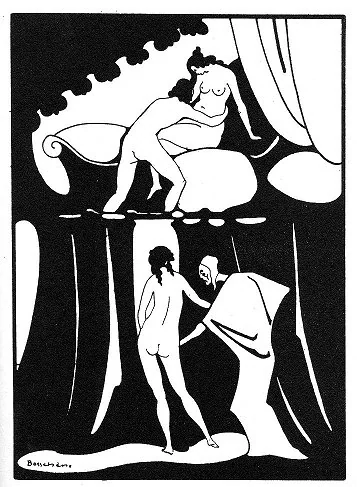
THERE exists (give ear, all ye who are fain to know a prostitute), there exists a certain old hag named Dipsas. Her name she deriveth from her calling. Never, in a sober state, does she behold dark Memnon's daughter with her steeds of roseate hue. Learned in magic and in the Ææan arts, she hath power to turn the swiftest rivers and make them flow backwards towards their sources. Skilled is she in the virtues of herbs, of linseed twisted on the cabalistic wheel, and of hippomanes. She needeth but to wish, and lo, the heavens grow dark with heavy clouds; to wish again, and lo, the heavens shine in purest splendour. I have seen, Wouldst thou believe it, blood drip from the stars. I have seen red blood overspread the face of the moon. I suspect that she, living though she be, flies through the shadows of the night, and that her hag's body is covered with feathers. That is what I suspect, and such is the report. In her eyes shines a double pupil whence rays of fiery light dart forth. She calleth forth the dead from the graves, our grandsires and great-grandsires. At the sound of her incantations, the solid earth doth open. She delighteth to profane the chastity of the marriage bed, and her poisoned tongue is not lacking in eloquence. Chance, on a day, made me a witness of her lessons. I was able, thanks to our double doors, to hear unseen. Thus, then, she spake: "Dost know, my fair one, that yesterday thou didst please the eye of one of our young favourites of fortune? He spied thee and his eyes never wandered from thy face. And whom, indeed, wouldst thou fail to attract? Thou yieldest in loveliness to none. But, alas, thy raiment is not worthy of thy beauty. Would thou wert rich as thou art fair. Win thou riches, and I shall no more be poor. The star of Mars in opposition hath been unkindly to thee; but Mars hath departed; and now Venus, the protectress of thy sex, hath taken his place. See how favourable to thee his advent is. A wealthy lover desireth thee and is fain to know what thou dost lack. His face and figure as thine own are fair, and if he fain would buy thy charms, so shouldst thou purchase his." The girl blushed as she heard this. "Modesty," the crone went on," becometh a fair cheek, but ’tis useless, save when feigned. Real modesty is nearly always harmful. When, with downcast eyes, thou gazest modestly on thy bosom, look at none save in proportion to the price he offereth. Maybe, when Tatius was king, the heavy Sabine dames refused to give themselves to more men than one. Nowadays Mars employs our gallants in foreign wars; but Venus reigns in the City of her beloved Æneas. Enjoy yourselves, my pretty ones. She is chaste whom none hath courted. Or, if coyness doth not hold her back, she herself maketh the first advances. Come now, efface these frowns that delve their lines upon thy brow; with those wrinkles many a failing will be removed. ’Twas with a bow that Penelope tested the strength of her young lovers; and that bow, the index of their prowess, was of horn. Time hurries on, by us unheeded. It fleets away even as a river whose waters ever flow. Bronze is made bright by rubbing; what availeth fair apparel, if it be not worn. The palace that is tenantless decays beneath the moss that moulders it. So beauty, if there be none to enjoy, waxeth swiftly old. Nor do one or two lovers suffice. The more there be, the greater is the pay, and the more readily obtained.
Rich is the booty that falls to the hoary wolves who seek their prey from a whole flock. Now tell me, what dost thou get from this poet of thine save his latest verses? A few thousand verses, such is the coin in which thy lover payeth. The god of poesy himself, robed in a mantle gold inwrought, touches the chords of a golden lyre. Let him who hath gold to give thee be greater in thy sight than great Homer himself. Mark my words, it does a man good to give. Scorn not the slave who has bought his freedom. ’Tis no crime to have thy foot marked with chalk, nor shouldst thou suffer thyself to be dazzled with the lordly display of a long line of ancestors. Begone and take thy forefathers with thee, thou needy lover. And how now? Here is another who would fain lie a night with thee, because he is comely. Ah, no indeed! Let him go and beg some money for thee from his own admirer. "Be not over-exacting whilst thou art spreading thy nets, for fear lest the prey should escape thee; but once he is in thy power, fleece him as thou wilt. Simulated love is often no bad thing. Let him think thou lovest. But see thou love not for nothing. Sometimes withhold thy favours. As for a pretext, why, maybe thy head doth ache, or else the festival of Isis compels thee to abstain; but hold not thyself too long aloof, lest he grow used to the lack of thee, or lest love, by dint of being rebuffed, at length grow cold. Let thy door, closed to the needy, be open to the rich. Let the laments of the rejected reach the ears of the favoured lover. If thou woundest thy lover, be wroth with him as if he had hurt thee first. Forestall his upbraidings with thine own; but indulge not over-long thine anger. Anger too far prolonged hath oft engendered hate. Let thine eyes learn the secret of shedding tears at will and moistening thy cheek. If thou wouldst deceive, fear not to forswear thyself. Venus makes the gods deaf to the plaints of the deceived lover. Take into thy service a clever man and maid who may indicate what presents you would welcome. Let them also beg a few things for themselves. If they ask a little of many, each separate ear of corn will soon make up a rick. Let thy sister and thy mother and thy nurse lay thy lover under contribution. There will soon be a goodly heap of booty, when several hands labour at the task. Thou lackest a pretext for soliciting a present? Show him a cake and say it is thy birthday. "Above all, never let thy lover think that he hath no rival; love, without rivalry, endureth not. Let him see upon thy bed the traces of another possessor of thy charms, and on thy neck the marks of his lascivious embraces; and above all, let him behold the gifts his rival hath bestowed on thee. If he brings nought with him, tell him of the novelties they are showing in the Via Sacra. When thou hast dragged from him a goodly tale of presents, bid him not despoil himself entirely, but ask him for a loan--that thou wilt ne'er repay. Let thy tongue beguile him, to conceal thy scheming; caress him, the more surely to lure him to his doom. Sweet honey hides the subtlest poison. If thou followest my lesson, which long experience has taught me, if thou tossest not my words to the winds, how oft, when I am dead, wilt thou pray the gods to let the earth lie lightly upon me." Thus she was speaking, when my shadow betrayed me. ’Twas with difficulty I kept myself from tearing her last grey hairs, her eyes that were shedding drunken tears, and her cheeks furrowed all over with wrinkles. "May the gods," I said, "reject thee, and send thee a miserable old age, endless winters and an everlasting thirst." |
Est quaedam--quicumque volet cognoscere lenam, |
ELEGY IX:
HE COMPARETH LOVE WITH WAR.
|
THY lover is a soldier, and Cupid hath his camp. Aye, believe me, Atticus, every lover is a soldier. The age which suiteth war is also favourable to Venus. A fig for an elderly soldier! A fig for an elderly lover! The age which generals demand in a brave soldier is the age which a fair young woman demands in the possessor of her charms. Soldier and lover have, each, their vigil to keep; both couch upon the hard ground; both have their watch to keep, the one at the door of his mistress, the other at the door of his general. What a weary way the soldier hath to march! And the lover, when his mistress is exiled, will follow her, with a stout heart, to the uttermost limits of the world. He will fare over the loftiest mountains and over rivers swollen with rains; he will cleave his way through the snowdrifts. Is he compelled to cross the seas? He will not plead that the tempests are let loose; nor will he wait till the weather be propitious for setting sail. Who but a soldier or a lover will brave the chill nights and the torrents of mingled snow and rain? The one is sent forward as a scout towards the enemy; the other keepeth watch upon his rival as upon a foe. The one lays siege to warlike cities, the other to the dwelling of his inexorable mistress. One beats down gates, the other doors. Oftentimes it hath brought victory to catch the foe asleep, and to slaughter, sword in hand, an unarmed host. Thus did the fierce battalions of Thracian Rhesus fall and you, ye captured steeds, forsook your lord. So, too, a lover oft is able to profit by the husband's slumbers and to turn his arms against the sleeping foe. To elude the vigilance of watchmen and sentinels is ever the perilous task alike of the soldier and the lover. Mars is uncertain and in Venus there is nothing sure. The conquered rise up again, and those you would deem could never be o’erthrown, fall in their turn. No longer then let love be held a little thing. Love demandeth a resourceful mind. Achilles burns for Briseis torn from his embraces. Trojans, while his grief allows, smite ye the Grecian host. Fresh from Andromache's embraces, Hector went forth to battle. ’Twas his spouse who placed his helmet on his head. When he beheld the daughter of Priam, her tresses floating in the wind, the son of Atreus, the first of all the Grecian chiefs, stood, they say, lost in admiration. Mars himself was caught in the chains which Vulcan had forged. No tale made a greater stir in heaven than this. I myself was slothful and not born for work. My bed and sleep had softened my spirit. But love for a comely young woman set a term to my indolence. She enjoined me to make my first campaign in her service. Since then, thou seest. me ever active and always busy with some nocturnal adventure. Thou wouldst not be a sluggard? Well then, love a woman. |
Militat omnis amans, et habet sua castra Cupido; |
ELEGY X.
HE ENDEAVOURS TO DISSUADE HIS MISTRESS FROM BECOMING A COURTESAN.
|
SUCH as she who, snatched away from the banks of the Eurotas in the Phrygian ships, was for her two husbands the cause of so long a war; such as was Leda when cunning Jupiter, hidden beneath the deceptive disguise of a white-plumed swan, seduced her and made her his paramour; such as Amymone wandering in the parched fields of Argos, her urn upon her head; such wast thou in my eyes. I feared for thee the divers wiles that Love suggested to almighty Jove, I feared for thee the metamorphosis of the Eagle and the Bull. But now I fear no more. I am cured of my malady, no more mine eyes are blinded by thy loveliness. How came this change, thou askest? Why, ’tis that thou settest a price upon thy favours. This is the reason why thou pleasest me no more. So long as thou wast art less and free from guile I loved thee body and soul; but now this blemish on thy soul hath robbed thy body of its charms. Love is a child and Love is naked. The years have not corrupted him and he wears no clothes, that he may be without guile, Wherefore dost thou ask the child of Venus to sell his favours at a price? He wears no robe wherein to put the coin. The hard calling of a soldier suits neither Venus nor her son; how befits it, then, that divinities so unused to war should serve for pay? "A courtesan selleth herself for a given price to the first customer; by yielding her body she gaineth her miserable pay. Yet withal she curseth the tyranny of the greedy whoremaster, and what thou doest for thy pleasure, she doth because she must. Take, for an example, the beasts devoid of reason. Thou wilt blush to find the brutes possessed of finer feelings than thyself. The mare asks no gift of the stallion, nor the heifer of the bull; the ram payeth not the ewe on whom he wreaks his passion. Woman alone loves to flaunt the spoils she wrests from man. She alone setteth a price upon her favours; she alone offereth herself for hire. She selleth a pleasure that bringeth delight to both, a pleasure which both have longed for, and she maketh him pay for the bliss he giveth her. When love hath equal charms for both, wherefore should one sell it and the other buy? Wherefore should I lose, and thou win at a game wherein we both minister to our mutual bliss? A witness may not sell his testimony for money; nor must a judge take bribes. It is a disgrace for an advocate to sell his services to a pauper or for a tribunal to grow fat on the proceeds of justice. So, too, it is shameful for a woman to augment her patrimony by bartering her charms and by selling her body to the highest bidder. Gratitude we owe for a favour freely given, but none for the sordid hiring of a woman and a bed. Once thou hast received thy pay, thy, hire--love and gratitude are at an end. Ah, dear women, never set a price on the favours ye bestow. Ill-gotten gains will never prosper. Of what value were the bracelets of the Sabines to the young vestal who was crushed beneath the weight of their armour? A son plunged his sword into the loins that bore him; a necklace lured him to his crime. Not that thou shouldst refrain from asking presents of a rich man. He hath the wherewithal to satisfy thy demands. Pluck the grapes that hang from the loaded vines; gather thy apples in the fruitful orchards of Alcinoüs. And for the poor man, bethink thee of the good he doeth thee, of his zeal and his fidelity. Let every man give what he hath unto his mistress. My wealth consists in celebrating in my verse the women who render themselves worthy of that honour. She who maketh me desire, her my art exalteth. Precious gifts and costly raiment will perish; gems set in gold will one day shattered be, but my verses shall endure for ever. What disgusts and enrages me is not giving, but seeing thee ask for pay. What I refuse thee when thou askest, I will freely give thee when thou askest not. |
Qualis ab Eurota Phrygiis avecta carinis |
ELEGY XI:
HE ASKS NAPE TO DELIVER A LOVE-LETTER TO HER MISTRESS.
|
O THOU who with such happy art dost bind and range thy mistress's hair, thou whom 'twere unjust to place in the ranks of ordinary servants, Nape, as skilful in contriving nocturnal assignations as in conveying missives to my beloved, thou hast often persuaded the hesitating Corinna to come to my arms; thou whose loyalty hath ofttimes saved me in a crisis, take these tablets and deliver them this very morning to my mistress. May thine ingenuity prove triumphant over eve obstacle. Thy breast is not made of adamant or steel; nor dost thou carry simplicity to excess. Thou too, methinks hath felt boy Cupid's darts. Fight then and defend the flag 'neath which we both do march. If she ask thee how I fare, tell her the hopes of spending a night with her keep me alive. For the rest, my passionate hand hath writ it on this waxen tablet. Even as I speak, time fleeteth way. Go and choose a moment when she's free and give her these; but see to it that she read them straightway. Note her eves, her brow while she doth read. Her mute expression will inform thee of my fate As soon as she hath read my words, ask her to indite a long reply. I hate to see blank spaces on the wax. Let her lines be close together, let her writing fill up the margins, so I may feast my eyes upon her letters. Yet wherefore should she weary herself with writing? Let me read but a single word, Come, and swiftly I will deck my tablets with the laurels of victory, hang them as a votive offering in Venus' temple, and inscribe them thus: Unto Venus doth Ovid consecrate you, faithful ministers of his love which, but a while ago, were but a fragment of worthless maple." |
Colligere incertos et in ordine ponere crines |
ELEGY XII:
HE CALLS DOWN CURSES ON THE TABLETS WHICH BRING HIM WORD OF HIS MISTRESS'S REFUSAL.
|
MOURN and lament with me! My tablets have come back, with this one sad word upon them scored: Impossible! I have some belief in omens. Just now, as she went out, Nape struck her foot against the threshold. Henceforth, when thou art sent anywhere, remember to walk more warily and pick up thy feet. Away with you, ye ill-omened tablets, away, thou sullen wood, and as for thee, thou wax that bringest her refusal, thou wast sucked from the flower of the towering hemlock; surely thou art the dregs of the vile honey of some Corsican bee. Thou seemest to have been stained with vermilion, and truly thou art of bloody hue. Go and kiss the ground, ye useless things; may the heavy wheel of the first cart that passes crush you into atoms. No, the fellow that hacked you from the tree to shape and fashion had filthy hands. That same tree must have served as a gibbet for some unlucky wretch, and furnished the crosses of death to the executioner; beneath its mournful shade the howlet shrieked., and amid its branches the vulture and the, screech-owl laid their eggs. To such wood as this was I mad enough to confide the secrets of my heart. Such was the wood I bade carry to my mistress the tenderest words of love. This wax would more appropriately have served for some crusty lawyer's writ, or for the diary wherein a miser might record the payments that wrung his heart. O lying tablets, little wonder that men call ye double; faith, ’twas a number of evil augury. What is the worst fate my wrath can wish you? May time devour you and rot you, and may the wax which covers you grow damp and foul with mildew! |
Flete meos casus--tristes rediere tabellae |
ELEGY XIII:
HE ENTREATS THE DAWN TO HASTEN NOT HER COMING.
|
O, over the Ocean doth she come, from the arms of her aged husband. Over the waves she cometh, the bright goddess whose car brings back the day. O beautiful Aurora, whither dost thou hasten? Stay, O stay thy flight. So, yearly, may the birds make solemn offering to the shades of Memnon. This is the time when I love to lie in my sweet one's sheltering arms;
this, if ever, is the moment when ’tis sweet to press her softly to my side. Now, too, sleep is pleasant and the air cool, and the birds discourse sweet music from their tender throats. Whither fleetest thou, with a speed to men and to their mistresses unwelcome? Draw in with thy shining hand the dewy reins of thy swift coursers. Ere thou risest, the mariner can clearly see the stars, and wandereth not at random over the wide seas. When thou dost appear, the traveller, for all his weariness, must quit his couch, and the soldier seize his fighting gear. Thou art the first to behold the husbandman shouldering his mattock; the first to call the lagging oxen to the yoke. 'Thou robbest children of their sleep and handest them over to the master for their tender fingers to suffer the blows of his cruel ferule. Thou bringest the surety to the court, where a single word may make or mar him. To advocate and to judge thou art alike unfriendly, for each is forced to rise to take up a case. ’Tis thou who, when a woman would fain taste the sweets of repose, callest her to spin the wool with unwearying hands. All this I could endure; but who would bear that young women should rise thus early in the morning, save the man that hath no mistress of his own? How often have I longed that night would not make way for thee, that the stricken stars would not flee before thee! How often have I longed for the winds to shatter thy car, or for one of thy steeds to founder in the hollow of a cloud! Ah, cruel one, whither dost thou hasten? Since thou had'st a son whose skin was black, such was the colour of his mother's heart. Would that Tithonus were free to speak his mind about thee, the heavens I trow would ne'er have known a more lascivious woman. Thou fleest from thine aged spouse, because old age hath chilled him, and leavest the old man betimes to mount thy hateful car. But if in thine arms thou heldst thy favourite, Cephalus, thou wouldst cry, "Go slow, go slow, ye coursers of the Night!" And though thy spouse be wasted with old age, wherefore should my love pay the penalty? Was it I that led thee to mate an old man? See how many hours of sleep the Moon gave to the youth she loved; and her beauty is no whit inferior to thine. The father of the gods himself, that he might not behold thy face so often, joined two nights in one, so as to let his passions have full play. Thus did I upbraid her; be sure she heard me, for she blushed. Howbeit the day appeared no later than his wont. |
Iam super oceanum venit a seniore marito |

ELEGY XIV:
TO HIS MISTRESS, WHO, CONTRARY TO HIS COUNSEL, DYED HER HAIR WITH NOXIOUS COMPOSITIONS, AND HAS NEARLY BECOME BALD.
|
DID I not say to thee, "Cease to dye thy hair?" And now thou hast no longer any hair to dye. Nevertheless, hadst thou not been stubborn, where was there anything more beautiful than thy hair? It came down to thy knees, so fine thou wast afraid to comb it. No finer is the tissue with which the dark-skinned Seres clothe themselves; no finer is the thread which, with her dainty legs, the spider, swaying from her lonely beam, draws out to weave her airy web. Howbeit its colour was not black as ebony, nor was it golden. ’Twas a mixture of the two. Such is the colour of the tall cedar in the cool valleys of Mount Ida, when its bark is stripped away. So soft, so tractable it was that thou couldst bind it in countless different ways, without the smallest trouble. Never did the comb's tooth tear thy tresses; thy tire-woman was never fearful of a slapping. Many a time have I been present at my mistress's toilet and never did she seize the bodkin to prick her woman's arms. Sometimes of a morning, her hair still in disorder, she would lie, half turned over, on the purple bed. And even then, in her careless abandon, she was lovely, lovely with the loveliness of an o’er-wearied Bacchanal who has cast herself, heedless of her posture, on the green grass. Then her tresses were soft as down. How often, alas, have I seen them put to the torture, compelled patiently to endure both iron and fire, to make them stay in little rounded curls. "’Tis a crime," I cried, "a crime to scorch that hair of thine; it falls beautifully of its own accord. Cruel one, have mercy on thine own head. Away with such violent treatment. This is not the sort of hair to scorch. Thy hair itself instructs the bodkin where to go." Gone are those lovely tresses which Apollo, which Bacchus, might have envied; such tresses as Dione, coming naked from the foam, upheld with her dripping hands. Why, since they pleased thee not, dost thou lament the ruin of thy tresses? Wherefore, stupid one, dost thou thrust aside so mournfully thy mirror? No longer doth it please thee, remembering what thou wast, to gaze therein. Howbeit ’tis not to magic herbs culled by a jealous rival, nor to water drawn by some treacherous witch from Hæmonian springs, that their fall is due. ’Tis not the effect of some dire malady (the gods keep thee from that), no, nor a rival's jealous tongue, envious of their beauty. No, thine is the crime, and thine own the hand that wrought the loss thou mournest; thine own the hand that poured the poison on thy head. Now Germany will send you some slave-girl's hair; a vanquished nation shall furnish thy adornments. Alas, how oft, when thou shalt hear men praise the beauty of thy hair, wilt thou tell thyself with a blush, "’Tis purchased merchandise that makes me comely in their sight to-day; of some unknown Sygambrian girl my friends the praises sing. Yet I remember the day when that glory was my own." Heavens, what have I said? See, she can scarce restrain her tears. She buries her face in her hands, and look how she is blushing. She steals a glance at one of her fallen tresses lying in her lap, a treasure, alas I not fitted for that place. Nay, come then, soothe thy heart and clear thy brow. The loss is not irreparable. Ere long with thine own hair, thou wilt be beauteous as of yore. |
Dicebam 'medicare tuos desiste capillos!' |
ELEGY XV:
THE POETS ALONE ARE IMMORTAL.
|
WHEREFORE dost thou blame me, gnawing Envy, for consuming my days in slothfulness; wherefore callest thou my verses the employment of an idle mind? Why dost thou reproach me for not following in the footsteps of my forefathers, for not seeking, while vigorous youth permits, to crown my brows with the dusty laurels of war, for not studying the jargon of the law, or for not prostituting my words in a dingy court of justice? Mortal are the works whereof thou pratest; my aim is glory that shall not perish, so that in every time and in every place I may be celebrated throughout the world. Mæonides shall live so long as Tenedos and Ida shall endure, so long as Simois shall roll his hurrying waters to the sea. The Ascræan bard, too, shall live while the grape ripens on the vine, while the corn shall fall beneath the sickle's curving blade. The song of Battus shall be sung throughout the world, albeit his art, rather than his genius, is his title deed to fame. The tragic buskin of Sophocles shall never grow old. So long as the sun and the moon shall shine, Aratus will live on. So long as slaves are rogues, as fathers storm, as pimps deceive and strumpets wheedle, Menander will not die. Ennius, for all his artlessness, and Accius, with his lusty speech, possess a name that Time shall not lay low. When shall there dawn an age that shall know not Varro, or the first ship to sail the seas, or the Golden Fleece brought home by Æson's son? When the world perisheth, then, and not till then, shall the works of the high-souled Lucretius perish too. Tityrus and the garnered crops, Æneas and his doughty deeds, will be read so long as Rome shall wield her sceptre o’er the conquered world. So long as Cupid wields his fires and bends his bow, thy numbers, skilled Tibullus, will remembered be. In the West and in the East the name of Gallus shall be known to fame, and because of Gallus, the name of Lycoris shall live on. What though devouring time wear down the flint, and blunt the share of the enduring plough, yet poetry shall never die. Let kings, then, and all their train of conquests, yield to poetry, to poetry let the happy shores of the golden Tagus give place. Let the vulgar herd set their hearts on dross if they will. For myself, let Apollo bestow on me cups overflowing with the waters of Castaly; let the myrtle that dreads the cold adorn my brow and let my verses ever be scanned by the eager lover. While we live we serve as food for Envy; when we are dead we rest within the aureole of the glory we have earned. So, when the funeral fires have consumed me, I shall live on, and the better part of me will have triumphed over death. |
Quid mihi Livor edax, ignavos obicis annos, |
THE LOVES, | P. OVIDI NASONIS LIBER SECVNDVS AMORES |
ELEGY I:
HE TELLS WHEREFORE, INSTEAD OF THE WARS OF THE GIANTS, WHICH HE HAD COMMENCED, HE IS CONSTRAINED TO SING OF LOVE.
|
BEHOLD here another work of Ovid, who was born in the moist land of the Peligni, of Ovid who singeth to the world of his own follies. This time, again, ’twas Love that willed it. Hence! Avaunt! ye prim and prudish ones. No fitting audience, ye, to strains that sing of tender love. I would be read of none save the maiden that grows warm when she beholds her lover, and of the boy till now unvisited by Love. I pray, too, that some young man, wounded by an arrow sped from the same bow that hath stricken me, may recognise in my verse the image of the flames whereby he is consumed. Long may he marvel, and then at last exclaim, "How comes it that this poet singeth the very story of my love? Who is it hath informed him?" I was, I remember, making bold to sing of the Wars of Heaven and Gyges of the hundred hands, and verily I was well equipped for that great argument. I was about to sin the fell revenge of Tellus and the fall of Pelion with Ossa crashing down from high Olympus whereon they were empiled. In my hands I held the clouds, Jove and his thunderbolts, wherewith he would not have failed to defend his heavenly realms. And then my mistress slammed her door against me. Forthwith I dropped Jupiter and his lightnings; aye, Jupiter himself clean vanished from my mind. Forgive me, Jupiter thy weapons were of no avail to me. That close-shut door moved me more than all thy thunderbolts. Back to my love songs and my gentle elegies went I; those are the arms for me, and ere long my gentle plaint moved to compassion the unfeeling doors. Poetry hath power to bring the blood-red moon to earth; poetry stayeth in mid-career the snow-white coursers of the sun. Poetry robbeth the serpent of his poisoned fang, and maketh the rivers to flow backward to their sources. Poetry hath battered down doors, it hath forced back locks, how tight soever they were welded to the massy oak. What had it booted me to sing Achilles fleet of foot; what would the sons of Atreus have done for me, or he who waged fierce war for ten long years and then wandered ten more upon his homeward way; or hapless Hector, dragged by the Hæmonian steeds across the dusty plain? But as soon as ever I pipe the praises of a sweet young girl, she cometh in person to pay the singer for his song. And that, methinks, is no small recompense. So farewell, ye heroes with illustrious names; not yours to bestow, the favours that I crave. But as for you, my charmers, look sweetly on the songs which rosy Cupid singeth in mine ear. |
Hoc quoque conposui Paelignis natus aquosis, |
ELEGY II:
TO THE EUNUCH BAGOAS, BEGGING HIM TO GIVE HIM ACCESS TO THE FAIR ONE COMMITTED TO HIS CHARGE.
|
THOU, Bagoas, who art entrusted with the task of guarding thy mistress, lend me thine ear. I have but a couple of words to say to you, but they are weighty ones. Yesterday I saw a lady walking in the portico beneath the temple of Apollo. At once I fell in love with her and importuned her in writing. In answer, with a trembling hand, she wrote: "Impossible." And why is it impossible? I asked. And she replied that you keep too strict a watch on her. Now listen to me, my over-watchful friend; if you are wise you will give up getting yourself hated. If people fear you, they will long for you to die. Her husband, too, is a fool, for why be at such pains to guard a thing whereof, even if you watch it not, no part is lost? Still, if he is madman enough, let him indulge his passion to the full, and believe her chaste who gives her charms to all. But for thee, vouchsafe her, in secret, a modicum of freedom. What you give her in that direction she will repay. Just let her take you into her confidence a little, and the mistress will do what the slave shall bid. Afraid of conniving a little? Why, you've only got to shut your eyes. Is she reading a letter in secret? Well, take it that it's from her mother. A stranger comes to call? Take him for some old acquaintance. She goes to see a sick friend who isn't sick at all? Why, pretend she is sick. Is she a long time coming? Let your head droop on your breast, and snore away to your heart's content. Don't go worrying your head about what they're doing in the temple of Isis, or what's going on in the theatres. A discreet accomplice wins a deal of glory, and after all, what is simpler than to hold your tongue? Such a man is liked, he rules the household and never gets a beating. He is a man of power; the others, scurvy fellows, merely slaves. In order to keep the husband sweet, he stuffs him with fairy tales and, masters both, they both approve of what delights the woman. A husband may frown and furrow his brow with wrinkles, a wheedling woman always gets her way. Still, every now and then she must seem to have a grudge against you, pretend to cry and say you are a brute. Your cue is then to accuse her of some fault that she can readily disprove. In taxing her with what is false, you blind her husband to the real truth. This if you do, honours and money will be showered upon you. Act as I bid you, and you'll soon be a slave no more. You see informers laden with heavy chains, you see false-hearted knaves shut up in gloomy dungeons. Tantalus is thirsty, with water all about him; surrounded by fruit, of fruit he cannot taste. That's all because he was a blabber. Because he gave too strict effect to Juno's bidding, Io's guard died ere his prime, and Io is a goddess. I have seen a fellow loaded with chains that were making his legs black and blue, because he had insisted on telling a husband of his wife's amours. He merited a weightier doom; his prating tongue had killed the happiness of two. He filled the husband's heart with grief and slew his wife's good rime. Mark what I say; there never was a husband yet that liked such charges brought against his spouse. Hear them he may, but he'll never hear them with pleasure. If he be indifferent, all your precious tale is wasted; if he love her, then ’tis you who kill his peace of mind. Nay, howsoever clear a woman's fault may be, it takes a deal of proving. The judge's sympathies are all for her. Even if he had seen the whole thing with his own eyes, he would still believe her, if she denied it. He would say his eyes deceived him; that he himself had been at fault. Let her but fall a-weeping, he'll mingle his tears with hers and say, "This babbling ass shall get it hot for this." You see, the odds are nearly all against you, and if you lose, you get a thrashing, while she's being dandled on the judge's knee. It is no crime we meditate. It is not to mix a poisoned draught that we desire to meet. No naked dagger flashes in our hand. All we ask is that, by your good offices, we may love in safety; and what request could be more innocent than that? |
Quem penes est dominam servandi cura, Bagoa, |
ELEGY III:
HE APPEALS ONCE MORE TO BAGOAS, WHO HAD PROVED INFLEXIBLE.
|
AH me, that my mistress should be entrusted to thy care, thou who art nor man nor woman, thou who can'st never know the mutual joy that lovers give--and take. He who was the first to rob little boys of that which makes a man, deserved, himself, to suffer a like fate. Thou wouldst be less unbending, thou wouldst incline more willingly thine ear to my request, if ever thou hadst loved a woman. Thou art not made to mount the fiery steed, to handle heavy arms, or, in thy right hand, wield the warlike spear. It needs a man for that; and to do aught manly thou must never hope. Follow no standard but the standard of thy mistress. ’Tis she that thou must wait on hand and foot; make the most of her favours. If thou lose her, what purpose wilt thou serve? Her face, her youth invite to dalliance. 'Twere ill her loveliness should fade and perish in base neglect. She may have hoodwinked thee, however troublesome thou may'st appear. What lovers want, they'll find the means to get; but since, perhaps, 'twere best to see what prayers will do, we do entreat you now, while yet there's time, to give our prayers effect. |
Ei mihi, quod dominam nec vir nec femina servas |
ELEGY IV:
HE CONFESSES HIS INCLINATION FOR LOVE AND HIS ADMIRATION FOR ALL MANNER OF WOMEN.
|
I MAKE no pretence of justifying the laxity of my morals; I never resort to untruthful pretexts to excuse my wanderings from the path of virtue. I freely confess my faults, if such avowals can serve any useful purpose. Now I have acknowledged my guilt in general terms, I mean to make a clean breast of all my follies. I curse my failings, yet I cannot help finding pleasure in the very faults that I deplore. How burdensome is the yoke that one would fain cast off. I have not the strength nor the will-power to govern my passions; they bear me along with them, even as the swift tide hurries away the slender bark. It is not any particular type of beauty that sets my heart on fire. A hundred motives compel me to be always in love. Here is a girl that drops her gaze demurely. That is enough, my heart catches fire and her modesty is the lure that ensnares me. And here is one that is out for booty. To her I fall a willing victim because she is no novice and because she bids fair to be keen and enterprising on a downy couch. And then, if I see one with an expression that recalls to me the Sabine dames, I forthwith tell myself that she has longings but knows how to conceal them. Are you a learned lady? I fall in love with your rare accomplishments. Unlearned? Your naïveté enthralls me. This one finds Callimachus a sorry poet compared with me. I please her, and lo, straightway she pleases me. This one finds fault with my verses and tells me I am no poet. Despite her strictures I fain would have her in my arms. This one walks languorously. Her gait enchants me. This one is prim. Peradventure, if she had a lover 'twould soften her. This one sings delightfully, and breathes from her soft throat the most melodious strains. I long to steal a kiss from her parted lips. Another lightly fingers the trembling chords of her lyre; where is he who could help adoring such skilful fingers? Here is one that wins me with her dancing. I feast my eyes on her seductive poses, on the rhythmic movements of her arms, on the swaying of her whole body as she moves in time to the music. But never mind me, whom anyone can set on fire. Let Hippolytus see her; even he would become a Priapus. You, my tall beauty, recall the heroines of olden days and the bed is not a whit too long for you. And you, my dainty little treasure; I love you, too, just as much. Both are enchanting. Tall and short, I love them both. Here is one that wears no finery; I muse how jewels would enhance her beauty. Here is one tricked out with gems; how dazzling are her charms. Of fair and dark I am alike the slave; white-skinned or sunburnt, I adore them all. Black tresses flutter on a snowy neck? Leda's loveliness lay in her raven hair. Is she fair, the girl I see yonder? Why, ’twas to her golden hair Aurora owed her beauty. Everywhere history helps me to justify my love. A young woman delights me, an older one enthralls me. The one has the beauty of her body, the other experience and richness of mind, to recommend her. In a word, of all the beauties they rave about in Rome, there's none whose lover I am not fain to be. |
Non ego mendosos ausim defendere mores |
ELEGY V:
HE UPBRAIDS HIS MISTRESS WHOM HE HIS DETECTED ACTING FALSELY TOWARDS HIM.
|
AWAY with thee, Cupid and thy quiver! Love's not such a priceless thing that I should so often and so desperately long for death. Aye, for death I long, when I bethink me of thy perfidy, thou thankless girl, born to be a lasting grief to me. ’Tis not thy tablets carelessly effaced that reveal thy conduct to me; ’tis not the presents secretly received that tell me thy misdeeds. Would to heaven I could fail to prove the accusation that I bring against thee. Ah, hapless me, why is my cause so good! Happy the lover who can boldly defend the woman he adores; happy he to whom his mistress may say, "Free of all guilt am I!" Hard of heart is he, and too indulgent of his grief, who would seek to win a sanguinary triumph by bringing home a crime to the woman that he loves. Alas, I saw it all when you thought I was asleep. Aye, with these eyes did I behold your treason, for the wine beside me had not dulled my vision. I saw you making eyes at him, I saw your nods of the head, and read it all as plainly as if it had been written down in words. Your eyes were not silent; I saw letters writ in wine upon the table, even thy fingers had their tale to tell. Try as yon would to hide it, I read the meaning of your discourse, and guessed the cipher of your secret code. And now the throne of guests had left the table and only two remained, both young, both drunk with wine. And then I saw you both exchange most wanton kisses, kisses in which, as I too plainly saw, your tongues were intermingled. Not such kisses as a sister gives her sober-minded brother, but such as a loving mistress might bestow upon her eager lover; not such kisses as Phœbus to Diana gives, but such, we may believe, as Venus often lavished on her darling Mars. "How now!" cried I. "On whom dost thou bestow the favours that are mine? Nay, these things are mine by right. My right I'll hold, my right I will defend. Thy kisses are for me and mine for thee, alone. What does this interloper, then, coming between us twain?" In such-like words did I outpour my grief. The blush of shame o’erspread her guilty cheeks. So flushes the eastern sky when Tithonus' spouse arises from his bed, and so doth blush the maiden when her betrothed resteth his gaze upon her. So roses shine when lilies round them blow; so turns the pale moon red when by some magic spell her course in heaven is stayed; so gleams Assyrian ivory that a Mæonian dame has dyed with crimson so that it may not yellow grow with years. Such then, or as near as may be, was the colour of the wench's cheeks, and never had I seen her look more lovely. She looked on the ground; the look became her. Sad was her countenance; the sadness suited her. Her hair, and deftly was it braided, I nearly tore out by the roots. Her dainty cheeks, I all but laid rude hands upon. But when I saw her face, my arms fell strengthless at my side; by weapons of her own was my mistress defended. I who a moment since she had seen so fierce and menacing, now cast myself at her feet and begged her to give me kisses no less tender. She smiled, and then, with all her heart and soul, gave me a kiss, and never was kiss more sweet. ’Twas such a kiss as would have filched the thunderbolt from the hand of angry Jove. Yet how my breast is tortured now, lest another may have tasted kisses just as sweet; I hope that those were not of this celestial quality. These last kisses that she gave me were better far than those which I had taught her; she hath, methinks, acquired some novel art. It bodes no good, this too, too luscious sweetness; it bodes no good that all your tongue within my mouth was thrust, all mine within your own. And ’tis not this alone that grieves me; not only of these voluptuous kisses that I complain, albeit complain I do, but what rankles most is the thought that lessons such as those could have been given nowhere but in bed, and I know not who is the instructor that has received such rich remuneration. |
Nullus amor tanti est--abeas, pharetrate Cupido!-- |
ELEGY VI:
HE LAMENTS THE DEATH OF THE PARROT HE HAD GIVEN TO HIS MISTRESS.
|
OUR parrot, winged mimic of the human voice, sent from farthest Ind, is dead. Come ye in flocks, ye birds, unto his obsequies. Come, ye pious denizens of the air; beat your bosoms with your wings and with your rigid claws, score furrows on your dainty heads. Even as mourners rend their hair, rend ye your ruffled plumes. Since the far-sounding clarion is silent, sing ye a doleful song. Wherefore, O Philomel, mourn ye the dark deed of the Ismarian tyrant? Time should have ended that lament. Keep it to mourn for the passing of the rarest of thy kind. The fate of Itys was once a mighty theme of sorrow; but all that was long ago. All ye who float with outspread wings in the liquid air, and thou before all others, loving turtle, breathe forth your mournful plaint. He was, all his life long, a faithful friend to thee and never did he waver in his loyalty. What young Pylades the Phocian was to Argive Orestes, such, my parrot, was the turtle-dove to thee, so long as thou didst live. But how did this fidelity bestead thee, and what availed the brilliant colours of thy plumage rare? or that voice so skilled in mimicking the tones of human speech? What did it boot thee to win the affection of my mistress from the very moment thou wast given her? O hapless one, thou wast the glory of birds, and now thou art no more! With thy wondrous plumage, thou couldst outshine the green fire of the emerald, and the hue of thy beak was of the richest red. No bird on earth could speak so well as thou, so great thy skill in imitating, with thy nasal tones, the sounds that thou hadst heard. Now envious death hath stricken thee; never wast thou at war with any bird. Thou wast garrulous and didst love the piping times of peace. See, the quails are for ever at war; that, perchance, is why they live so long. Thou didst ask for very little; and sith you loved so much to gossip, your beak had very little time for food. A nut was all thy dinner, a poppy-seed or two would bring thee sleep, and with a sip of water thou wouldst quench thy thirst. The hungry vulture lives, and the kite that weaves his circles in the air, and the rain-foretelling daw. The raven, whom the panoplied Minerva hates, lives on--nine generations will hardly see it die. But he is dead, this bird, this babbling echo of the human voice, this gift so rare brought from the utmost limits of the world. ’Tis nearly always so; the greedy hands of death strike first at what is best upon the earth, and things of little worth accomplish to the full their destined tale of years. Thersites beheld the melancholy obsequies of Protesilaus. Hector came to dust and ashes while yet his brothers lived. What boots it to recall how, with fear at her breast, my mistress prayed for thee--prayers caught up by the swift wingèd South and carried o’er the seas? The seventh day had come, the seventh, and thy last. Fate had unwound thy thread of days. Howbeit even then thou spakest, crying, with thy dying breath, "Corinna, fare thee well!" There, in Elysium, on a hill-side's gentle slope there stands a forest of broad, shady oaks, and over the moist soil the rich grass spreads its coverlet of green. Here, if the fabled tale we may believe, abide all innocent birds, and here no fowl of evil omen ever comes. Here range the harmless swans, and here the one undying Phœnix dwells. Here doth the peacock proudly show his gorgeous plumage and the crooning dove showers kisses on her eager mate. Here in their midst, here in these pleasant woody places, our parrot speaks and calls around him all birds of gentle soul. His bones a mound doth cover, a little mound as doth befit his size, and on it is a little stone that bears this little legend: From this memorial, you may see |
Psittacus, Eois imitatrix ales ab Indis, |
ELEGY VII:
HE ASSURES CORINNA THAT HE HAS NEVER HAD ANY GUILTY COMMERCE WITH CYPASSIS, HER MAID.
|
Oh, are you always going to be bringing some charge against me? No sooner have I succeeded in rebutting one than you trump up another. I'm sick of this perpetual bickering. If I happen to run my eye along the topmost tier of the theatre, you'll be sure to pick one woman out of the crowd there and make her a pretext for some more nagging. If a woman merely glances in my direction, and I don't look back at her, my indifference, you'll say, is all put on; there's something between us right enough. If I say anything nice about a woman, you immediately start tearing your hair; if I say anything nasty, well, you say it's just a blind. If I'm looking well, it's because I leave you alone; and if I'm not, I'm dying of love for someone else. I shouldn't so much mind if I had really done something. It's easier to put up with troubles you've brought on yourself; but you upbraid me without rhyme or reason, and your fatal proclivity for believing the worst about everybody, weakens whatever effect your fulminations might otherwise have had. Look at that poor old long-eared donkey there; he doesn't mend his pace, for all their whackings. And now you've got another grievance. It's your smart little maid, Cypassis, with whom I am supposed to have misconducted myself this time, is it? And in your bed, too. Now if ever I feel inclined to go astray, the gods forbid that I should do so with a servant-girl. What man would ever willingly have relations with a slave or want to fondle a back all covered with weals? And, mark you, this particular slave is the one that gives the finishing touches to your hair, whose clever fingers make you look so irresistible; and I am supposed to go philandering with someone who thinks there's not a woman like you in the world? Is it likely? I should only get snubbed for my pains, and she'd tell you all about it. No, I swear by Venus and by the bow of her wingèd boy, I'm innocent of the charge you bring against me. |
Ergo sufficiam reus in nova crimina semper? |
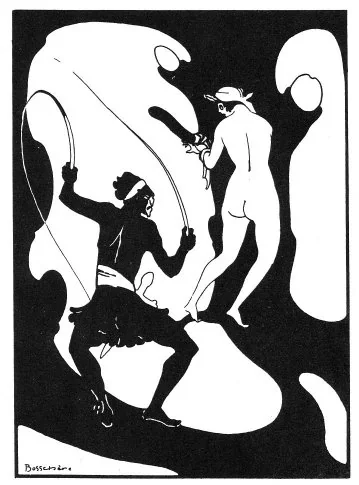
A BACK COVERED WITH WEALS
ELEGY VIII
HE ASKS CYPASSIS HOW IN THE WORLD CORINNA COULD HAVE FOUND THEM OUT.
|
YOU wonderful little hair-dresser, who only ought to have goddesses' hair to tend, Cypassis, whom in a stolen moment of delight I found by no means unexpert, you who suit your mistress so well, and me better still, tell me who has given our secret away? How did Corinna get wind of our clandestine delights? Did I turn red? Did I let fall a single word that could have betrayed our hidden pleasures a' Nay, didn't I swear that for a man to hanker after a servant-girl he couldn't have all his wits about him. And yet the Thessalian hero burned with desire for the lovely Briseis, and she was but a slave. No more than a slave was she, the priestess that cast her lures about the King of Mycenæ. Am I then greater than Achilles, greater than the son of Tantalus? Shall I blush at what was deemed a fitting portion for a king? Nevertheless, when she turned that angry look upon you, I saw you blush red all over. I was not anything like so flustered. I, if you remember, swore by great Venus herself that I was innocent. But you, my goddess, ordain that this beneficent lie may be swept by the warm South over the Carpathian deep. In payment for these my services, my dusky Cypassis, grant me the sweet pleasure of lying with you to-day. Why do you say no? Why, ungrateful girl, why pretend you are afraid? It will be enough to have deserved well of one of your masters. If you are silly enough to refuse, I shall confess all we have done, I shall become my own accuser, and I shall tell your mistress-yes, I shall, Cypassis--where and how often we have met, what we did, in how many ways, And what they were. |
Ponendis in mille modos perfecta capillis, |
ELEGY IX
HE BESEECHES CUPID NOT TO DISCHARGE ALL HIS ARROWS AT HIM ALONE.
|
O THOU who dost never weary of tormenting me, who never givest me any peace of mind, why, Cupid, dost thou treat me thus, who never ceased to march beneath thy banner? Why dost thou wound me thus? Why scorchest thou thine own friends with that torch of thine; why doth thy bow transfix them with its shafts? 'Twere better thou should'st prove thy might on one who resisteth thee. Did not the hero of Hæmonia, after piercing Telephus with his spear, heal with that same spear the wound that he had made? The huntsman chaseth the quarry that flees before him, yet once he hath seized it, he setteth it at liberty, and hasteneth after a fresh prey. ’Tis for us, thy loyal followers, that thou dost keep thy weapons, albeit thy sluggish arm smiteth not the foe that resisteth. Wherefore spend thine arrows on these fleshless bones? For in truth Love hath left me nought but skin and bones. Loveless live so many maidens, so many youths know nought of love. Over these, then, should be thy victory. Rome, had she not extended her might throughout the world, would be to-day nought but a huddled group of straw-thatched huts. The war-worn veteran lays down his arms and tills his allotted fields. The courser, freed from his stall, leapeth in the meadow; vast docks shelter the vessel that hath returned to port, and the gladiator yieldeth up his weapons for the wand that quits him of his toils. And I who have fought so many campaigns in Love's service, is it not time that I should live in peace? Yet if some god should come to me and say, "Henceforth thou shalt live a loveless life," I should demur to his decree, so sweet a plague is woman. When I have had my fill of love, when I feel its fires no more, I am driven I know not whither by an indescribable tumult of the mind. just as the horseman, tugging vainly at the foam-flecked bridle, sees himself hurried to the abyss's edge; just as the pinnace, nearing the shore and about to bound into port, is suddenly carried out to sea again by a gust of wind; so am I blown hither and thither by Cupid's changeful breath, and Love of the rosy cheeks makes me once more the target for his arrows. Shoot on, my little one! I have laid down my arms; naked I stand, shoot on! Here show off thy strength; here display thy skill. Here in this spot, without awaiting thy command, thy arrows come and bury themselves; the quiver is scarcely more familiar to them than is my heart. Foul fall the man who can slumber the whole night through and thinks so much of sleep. Fool! What is sleep but the image of cold Death. Thou shalt sleep long enough one of these days. As for me, I would that my mistress should sometimes cheat me with lying promises. The anticipation of bliss I hold to be a boon in itself; I would have her sometimes caress, sometimes upbraid me. I like her to surrender often, and often to resist. If Mars is inconstant, Cupid, ’tis thanks to thee. Yea, ’tis after thy example that thy mother's lover bears his arms now here, now there. Thou art fickle, far lighter than thy wings, and as the fancy takes thee, thou givest and withholdest the delights of love. Howbeit if thou and thy gracious mother will but hearken to my prayers, thou wilt come and reign in my heart and never quit it more. May all the too inconstant host of fair ones rally to my banner. Thus of both sexes at once shalt thou adorèd be. | IXaO numquam pro re satis indignande Cupido, IXb'Vive' deus 'posito' siquis mihi dicat 'amore!' |
ELEGY X
HE TELLS GRÆCINUS HOW, DESPITE WHAT HE SAYS TO THE CONTRARY, IT IS POSSIBLE TO BE IN LOVE WITH TWO WOMEN AT THE SAME TIME.
|
TWAS thou, oh, yes, I mind me well, ’twas thou, Græcinus, who wast wont to say a man could never love two women at a time. ’Tis, then, through thee that I have been deceivèd, through thee that, all defenceless and unarmed, I've fallen into the snare, for here in me--oh, scoundrel that I am--thou dost behold a man in love with two fair charmers at a time. Lovely are both and both in love with dress. In artifice I scarcely know which one the other doth surpass. Now doth the first the second one outshine, and now the second doth eclipse the first; yes, sometimes one, and then, anon, the other, taketh my fancy most. My heart, like to a barque tossed by opposing winds, veers sometimes hither, sometimes thither, between these rival loves. Oh, wherefore, Erycina, wherefore dost thou everlastingly increase my torments. Did not one mistress suffice to keep me busy? Wherefore to the trees add leaves, stars to the starry sky, or water to the boundless deep? Howbeit 'twere better so, than live a loveless life. The life that scorns delights and lives laborious days I'll leave my enemies. Let them sleep soundly in their lonely beds, lie in the middle and stretch themselves to their heart's content. As for myself, I'd liefer cruel love should break my downy slumbers; I would not be my bed's sole burden, no, not I. Let my mistress, without let or hindrance, ease me of love's pangs if she alone be equal to the task. If she be not, then I'll have two of them. My body's thin, but strong; it lacks not strength, but flesh. Besides, Love's joys my prowess will sustain. Never a woman have I disappointed yet, and often after battling all the night, the morn hath found me ready to renew the fray. Happy he who dies in the lists of Love. I pray the gods that such may be my end. The soldier, if he will, may oppose his breast to the foemen's spears, and buy undying glory with his blood. The miser may roam the world in search of wealth, and when he's shipwrecked, let his lying mouth choke with the seas his vessel's keel hath ploughed. Be it my lot softly to fade away doing Love's service, to die in the very crisis of the fray. And may some gentle soul, shedding a tear upon my grave, exclaim "in sooth thy death did well become thy life." |
Tu mihi, tu certe, memini, Graecine, negabas |
ELEGY XI
HE SEEKS TO DISSUADE CORINNA FROM GOING TO BAIÆ.
|
YES, it was the ship of pine hewn on Mount Pelion, that first opened a path over the wonder-stricken billows--a path beset with perils and bestrewn with reefs--the ship of pine which, amid the clashing rocks, bore away the ram famed for its golden fleece. Would to heaven that the Argo had been swallowed up in the depths of the sea so that never mortal man should vex the wide ocean with his oars. For see now, here is Corinna leaving her own dear bed and all her household gods, and making ready to trust herself to the deceiving deep. Wherefore dost thou make thy hapless lover tremble for thy sake at every wind that blows, the West wind and the East, the icy North and the warm South? Thou’lt find no cities on thy way, no woods to enchant thy gaze, only and always the blue-grey waters of the treacherous main. Not on the open sea wilt thou discover dainty shells and pebbles many-hued; they are the pastime of the sandy shore; leave on the sands, my sweet ones, the imprint of your lovely feet; there doth safety lie; beyond, who knows what perils lurk? Let others tell thee of the warring winds, what seas by Scylla and Charybdis are infested, and on what rocks enthroned the grim Ceraunian peaks tower o’er the main, and where the Syrtes hidden lie, where Malea lurks. These things let others tell. Whate'er they say, give credence to their tales; for tempests the believer never harm. When once the cable's loosed and the carven ship sweeps out on to the wide, salt sea, ’tis long ere one beholds the land again. Then doth the anxious sailor dread the wrath of the winds and sees the face of death in every wave. What will become of you if Triton stirs his waves to fury. You'll look a pretty pallid object then. Then you'll cry for succour to the sons of fruitful Leda and exclaim, "Happy the woman that's safe on her native shore." It's a far safer thing to snuggle down in bed, to read diverting tales, or wake the music of the Thracian lyre. But if my words be vain and wind-dispersed, may Galatea look with favour on thy ship. If so precious and so fair a freight were lost, heavy on you, daughters divine of Nereus, heavy on thee, old Nereus thyself, would lie the blame. Go then, and take me with thee in thy thoughts; go thou, and soon return with prospering gales, and stronger be the winds that on thy homeward way shall swell thy sails. Let mighty Nereus roll the billows toward these shores, let all the winds breathe hither, and hither let the moon the waters draw. Pray thou thyself the Zephyrs to breathe full upon thy sails, and with thine own hand shake the canvas out. I, gazing seawards from the shore, shall be the first to see thy vessel dear, and I shall cry, "That barque brings home my heaven." I'll fold thee in my arms, and with a riot of wild kisses smother thee; the victim, consecrate to thy return, shall slaughtered be; the sands of the shore I'll fashion like a couch, and any mound will serve us for a table. There, with the wine beside us, thou shalt all thy tale narrate; thou shalt tell me how thy vessel almost foundered mid the waves; thou shalt tell how, in hastening home to me, thou didst not fear the cold, dark nights, no, nor the stormy southern gales. They may be travellers' tales, yet I'll believe them, every one. Wherefore should I not smile on what I long for most? Oh, may the Morning Star, that has no rival in the fields of night, spur on his steed and bring with speed that happy day. |
Prima malas docuit mirantibus aequoris undis |
ELEGY XII
HE REJOICES AT HAVING AT LAST WON THE FAVOURS OF CORINNA.
|
COME, bind ye my brows, ye laurels of victory, for I have conquered; lo, in my arms I hold her, this wonderful Corinna, whom husband, watchman, oaken door and all such enemies to love, were guarding from the invader. This is a victory specially deserving of triumphal honours, since the prize, without bloodshed, has been gained. No lowly ramparts, nor towns with narrow moats begirt, but a woman it is that my generalship has won. When, after twice five years of war, Troy fell, what, among so many claimants for reward, was the prize that fell to Atreus' son? But now, the glory of the day is mine and mine alone; no other can demand his share of the spoils. I was the leader, I the host, that took the citadel by storm. Cavalry, infantry and standard-bearer I. By no mischance did Fortune mar my feats. A Triumph then for me, the guerdon of my efforts! The cause of my campaign is no new thing. Had not the daughter of Tyndarus been carried off, the peace of Europe and of Asia had not been disturbed. ’Twas a woman who, when the wine was going the rounds, stirred up to mutual strife the fierce Lapithæ and the monstrous race of the Centaurs. ’Twas a woman who, in thy kingdom, good Latinus, forced the Trojans to begin fresh wars; ’twas woman who, when the City was but newly founded, did cause the bloody conflict when the Romans had to battle with the fathers of their wives. Bulls I have seen fighting for a snow-white heifer, which, looking on at the fray, stirred them to fresh exploits. Me too, as others oft before me, hath Cupid bidden march to battle under his banners, but mine was a bloodless victory. |
Ite triumphales circum mea tempora laurus! |
ELEGY XIII
HE BESEECHES ISIS TO COME TO THE AID OF CORINNA IN HER CONFINEMENT.
|
MY rash Corinna, seeking to rid herself of the burden she bears in her womb, hath risked the loss of her own life. For having thus, unknown to me, courted so great a danger, she merits all my wrath; but wrath gives way to fear. Howbeit it was by me that she conceived, or such, at least, is my belief; for oftentimes my facts are only peradventures. Isis, thou who in Parætonium dost dwell, and in Canopus' kindly meads and Memphis and palm-bearing Pharos and those plains where the Nile, quitting its mighty bed, flows and bears through seven channels its hurrying waters to the sea. By thy timbrels I entreat thee, and by the head of dread Anubis--so may the pious Osiris ever accept thy offerings, so may the drowsy serpent glide round about thine altars, and the hornèd Apis march in the procession; look mercifully on Corinna, and spare two lives in one, for thou to my mistress wilt give life; she will give life to me. Full often, on days appointed for thy worship, hath she sat within thy temple at the hour when thy priests enwreathe their brows with laurel. And thou who takest pity on women who are suffering the pangs of childbirth when they seek to be delivered of the burden that stirs within them, come, propitious Ilithyia, and hearken to my prayers. She merits that thou shouldst count her among thy favoured ones; and I, apparelled all in white, will offer incense at thine altars. I at thy feet will lay my votive gifts, and this inscription will I add: "Ovid for Corinna's safety makes this offering." And all I pray thee is to justify these same offerings and inscription. And as for thee, Corinna, if, in my panic, I may give thee such advice, I'll say to thee, once safely out of the wood this time, take heed thou enter not again therein. |
Dum labefactat onus gravidi temeraria ventris, |
ELEGY XIV
ON CORINNA'S RECOVERY HE WRITES TO HER AGAIN CONCERNING HER ATTEMPT AT ABORTION AND TELLS HER HOW NAUGHTY SHE HAS BEEN.
|
WHAT avails it that our women should be free from the perils of the field, that they should not be called upon, buckler in hand, to march with our doughty troops if, though far from the dangers of war, they wound themselves with their own shafts and with rash hands seek to compass their own destruction? She who first essayed to expel from her womb the tender fruit she bore therein, deserved to perish in the struggle she had invited. What, to avoid a few wrinkles on thy stomach, must the sand be strewed for a veritable scene of carnage? If in the childhood of the world mothers had followed this wicked custom, the human race would have vanished from the face of the earth, and to re-people the world by sowing those stones whence our ancestors were born, a second Deucalion had been required. Who would have overthrown the kingdom of Priam if Thetis, goddess of the seas, had not been willing to bear her fruit until the term allotted by nature? If Ilia had smothered the twins she bore within her, the founder of the ruling city of the world would never have been born. If Venus had slain Æneas in the womb, the earth would have been bereft of the Cæsars. And thou, who wast born so fair, wouldst have perished had thy mother done that act thou hast just essayed. And I, who am more fitted to die of love, would never have existed. Wherefore despoil the fruitful vine of the swelling grape? Wherefore, with cruel hand, tear away the fruit ere it be ripe? When ripe it will drop of its own accord, and once ’tis borne, let it increase at will; to bring new life into the world is meet reward for a few months of patience. O women, why will ye desecrate your entrails with the instruments of death? Why offer dread poisons to infants yet unborn? We curse the Colchian damsel spattered with the blood of her own children; we bewail the fate of Itys, slain by her own mother. Ay, these were fell and cruel women; but their cruelty had its motive. Each took vengeance on her husband by shedding his children's blood. Tell me, then, what Tereus, what Jason prompts you to rend your body with such desperate hand? The Armenian tigresses behave not thus, nor dares the lioness destroy an offspring of her own. Such acts by dainty women are performed, yet not always with impunity. Many a time she slays herself who slays her offspring in the womb. She dies herself and with dishevelled hair is borne away upon her bed of anguish, and all who see her cry, "Well was her doom deserved." But let my empty words be borne away on the wind; let my forebodings all be vain. Ye gods, be kind to her and punish not Corinna for her first misdeed. ’Tis all I ask; let your chastisement be reserved for her second lapse. |
Quid iuvat inmunes belli cessare puellas, |
ELEGY XV
TO THE RING WHICH HE IS SENDING TO HIS MISTRESS.
|
O LITTLE ring that art going to encircle my fair mistress's finger, thou that no value hast save the giver's love that goes with thee, be charming in her sight. May she with delight receive thee and straightway slip thee on her finger. May thou fit her, as well as she fits me; and may thy circle, nor over-tight nor yet too loose, softly gird her finger. Happy ring, thou wilt be touched by her I love. Ah me, already I begin to envy my own gift's happy lot. Would that the enchantress of the Ææan Isle or the Old Man of Carpathos would change me to a ring. Then, lady, I should wish that you should touch thy breasts and slip thy left hand underneath thy tunic. Off from your finger I should glide, however tight and clinging. As by some wizard's art, would I grow loose and slip into your bosom. Aye, and when she would seal her secret missives, so that the wax should not cling to the dry stone, I first should touch my fair mistress's moist lips, so only that I might never seal a word that would to myself bring grief. If she were fain to lay me in the casket, I'd refuse to leave her finger. I'd small and smaller grow so as to clip her the more closely. Never, my love, my life, may I give thee cause to blush for me, or grow too heavy for thy dainty finger. Wear me e'en when you take your bath, nor fear the water will unloose the gem. And yet, methinks, if naked I beheld thee, I should be consumed with desire, and that ring would like a man acquit itself. Ah me! Why do I long for things that cannot be? Go forth, little gift, upon thy way, and may my mistress see in thee the symbol of my changeless love. |
Anule, formosae digitum vincture puellae, |
ELEGY XVI
TO CORINNA, BESEECHING HER TO VISIT HIM IN HIS COUNTRY HOME AT SULMO.
|
BEHOLD me at Sulmo, in the land of the Peligni. It is a little spot, but bright and clean with its streams of sparkling water. Though the scorching sun may crack the earth, though the Dog Star shine his fiercest, limpid streamlets wind their way across the fields of the Peligni and there the grass is always green. The land with corn is rich, and with the vine is richer still. The olive, too, flourishes in profusion on this light, loose soil. The rivulets meandering among the meadows clothe the moist earth with shadowy verdure. But there my love is not. Or stay--my love is there, but not the object of my love. Nay, if betwixt Castor and Pollux you should set me, I would not dwell in heaven itself without you. Let death be bitter and let the earth lie heavy upon them, who first drave their roads into the far-off regions of the earth. At least they should have bidden their mistresses go with them, if indeed they were compelled to furrow the world with their interminable tracks. So, even if I, benumbed with cold, had had to cross the windswept Alps, that journey, painful though it be, would have been sweet to me, if only my love had borne me company. With my mistress at my side, the Libyan quicksands I would boldly cross, and spread my canvas to the treacherous southern gales; with her beside me, I'd not fear the monsters that yelp at Scylla's side, nor yet thy narrow straits, O tortuous Malea, no, nor the waters which the unwearying Charybdis, sated with sunken wrecks, spews forth and swallows up again. But if the might of the winds prevail, if the billows bear away the gods who would fain come to our assistance, fling thou thy snowy arms about my neck and freely the sweet burden will I sustain. Many a time and oft, to behold his Hero, Leander swam the straits; nor would he have perished, had not the darkness blotted out the distance from his sight. Here, of my darling one bereft, though I gaze upon rich vineyards, on fields watered with limpid streams, though I behold the river, at the husbandman's behest, unravelling itself in many channels, and see the leaves of the trees lightly stirred by cooling breezes, I seem not to be dwelling in the fair land of the Pelignians; nor in the familiar home of my ancestors, the place which saw my birth. Nay, I seem to be in the heart of Scythia, or among the grim Cilicians, or the Britons who paint themselves with green, or the rocks red with the blood of Prometheus. The elm loves the vine, the vine clings to the elm; why, then, am I so often sundered from my mistress? And yet thou shouldst never leave me, for thou wast wont to swear, both by myself and by your eyes, my stars, that thou wouldst never quit my side. Lighter than autumn leaves, the empty promises of woman are whirled away and scattered on the bosom of the winds and the waters. Howbeit, if thou hast any pity for me in my lonely state, begin to make thy words bear fruit in deeds. Quick, up with you into your little chaise, and with your own hands shake the reins about your horses' flying manes. And you, ye swelling hills, abase yourselves before her as she comes; ye paths in the winding vales, be smooth beneath her feet. |
Pars me Sulmo tenet Paeligni tertia ruris-- |
ELEGY XVII
HE COMPLAINS TO CORINNA THAT SHE IS TOO CONCEITED ABOUT HER GOOD LOOKS.
|
IF anyone deems it a disgrace to be the slave of a beautiful woman, well then, I will plead guilty to the charge. Let him declare me an infamous fellow if he will, only let the goddess who rules over Paphos and wave-girt Cythera treat me a little more gently. Ali, would that I had fallen captive to a sweet and gentle woman, since I was fated to fall to a lovely one. Beauty engenders pride. Corinna is so fair, there's no managing her. Poor devil that I am, would she did not know how lovely she is! It is her mirror that makes her so conceited, and she never looks in it until her toilet is complete. Even if your charms do make you proud and promise conquests, charms that were born to captivate my eyes, that is no reason why you should treat me with disdain. High and low may mate together. They tell that the nymph Calypso, fired with love for a mortal, made him tarry with her against his will. ’Tis well known, too, that a daughter of Nereus did not disdain to lie with the King of Phthia, Egeria with Numa the just, and Venus with Vulcan, limping withal and dirty as he came straight from his forge. These lines are not of equal length, yet the heroic metre matches well its shorter fellow. Dear heart, take me on whatsoever terms thou wilt. Throned high upon thy bed, be pleased to let me know thy laws. I'll never raise an accusing finger at you; you'll never have to disavow our love. Let my verses be to you instead of riches. More than one woman owes her fame to me. I know of one who everywhere gives out that she's Corinna. What would she not give to be Corinna in very sooth? But even as we see not the cool Eurotas and the poplar-fringed Po gliding along between the self-same banks, so none but thou shalt be the subject of my song, and thou alone shalt be my inspiration. |
Siquis erit, qui turpe putet servire puellae, |
ELEGY XVIII
TO MACER: TO WHOM HE EXCUSES HIMSELF FOR GIVING HIMSELF UP WHOLLY TO EROTIC VERSE.
|
WHILST in your verse you are depicting the wrath of Achilles, and are investing with their first arms the heroes who are bound by their oaths, I, Macer, am tasting the sweets of repose in the shade of Venus, and tender love restrains the daring flight of my genius. More than once I have said to my mistress, "Enough of this, now go thy ways." And forthwith she would seat herself on my knees. Often I have said to her, "Verily, I grow ashamed," and she, scarce able to restrain her tears, would cry, "Oh, hapless me! Art thou ashamed of me already?" Then, flinging her arms about me, she would shower kisses upon me, kisses that are my undoing. Then it is all over with me. My mind is occupied with anything but fighting. The things I sing are deeds performed within four walls, my private wars. Howbeit I have handled the sceptre; high tragic themes my pen has dared essay, nor did my powers prove too weak for that emprise. But Love did laugh to see my splendid cloak, my painted buskin and my sceptre wielded with such address by hands ne'er made to grasp it. Again did my mistress' needs drag me from these labours, and the buskined poet by Cupid was undone. Since, then, it is my lot, the art of love I'll sing and try no other themes. Behold I am urged on amain by the force of my own precepts. Either I tell what Penelope wrote to Ulysses or paint thy tears, Phyllis, when thou knewest thyself abandoned. I write to Paris and to Macareus, to the churlish Jason, to the father of Hippolytus, to Hippolytus himself. I sing the lamentations of the hapless Dido, armed with her threatening sword; I sing the sighs of the Lesbian heroine that loved the Aonian lyre. With what speed has my friend Sabinus hastened o’er the world and brought from countless divers places the answer to these letters! The chaste Penelope recognised Ulysses' seal, and the step-mother of Hippolytus hath scanned the reproaches which he addresses to her. Jason's sad adieux have reached Hypsipyle, and Sapho, lover of Apollo, has but to lay at the feet of the lyre which she consecrated to him. But you, too, Macer, who, sing of battles and the deeds of Mars, you, too, have told, so far as thy task allowed, of love and its treasures. Paris in thy poem hath a place, and the fair adulteress whose crime made such a bruit in the world, and Laodamia, who quitted not her slaughtered lord. If I know thee well, thou treatest of these subjects as freely as thou singest of battles, and from thine own camp often strayest into mine. |
Carmen ad iratum dum tu perducis Achillen |
ELEGY XIX
TO A MAN WITH WHOSE WIFE HE WAS IN LOVE.
|
FOOL, if you don't want to keep an eye on your wife for your own sake, at least do so for mine, that it may whet my desire for her. What we can have for the asking we never want; to forbid a thing adds ardour to our longing. He must have a heart like iron, who loves a woman he is free to love. As for us, who are versed in the art, we must have our hopes and fears, and we must have a few rebuffs to give zest to our appetite. I don't want to hear about the happiness that never deceives. None of your steady-going, placid loves for me. My mistress must have something of the devil in her. That's a weakness of mine, and that, Corinna, cunning little minx, knew perfectly well. She knew only too thoroughly how to take me in her snare. How often, alas, have I known her, the lying jade, to say she had a dreadful headache, so as to keep me at arm's length, and how many times have I, despite the pangs it cost me, ruefully taken my departure. How many a time has she upbraided me, playing the injured innocent, when all the time it was she herself that was at fault. And when she had sufficiently tormented me, when she had revived the dying embers of my passion, she would relent and pander to my longings. How she would twine her arms about me, what loving words she'd lavish on me. How she would smother me with kisses, and, oh, ye gods, what luscious ones they were! And thou, who just now charmed my vision, do thou too be cunning; turn often. a deaf ear to my entreaties; suffer me) lying at thy door, to endure the biting cold of a long winter's night. ’Tis the only way to make my love endure. ’Tis that that's needed, ’tis that that adds fuel to my passion. I For me a plain straightforward love-affair's devoid of savour. ’Tis like a dish with two much sugar in it. My gorge doth rise at it. If Danaë within a brazen tower had never been immured, Jupiter would ne'er have made her great with child. Juno, by setting strict watch on Io with her horned brow, made her, in Jupiter's regard, more precious than before. He who desires the safe and easy way, let him go pluck the leaves of the trees and drink of the open river. Ah, my dears, if you would keep your hold upon your lovers, learn to misuse them oft. Alas! And must I give you lessons to my own undoing. It matters not. Let him who will, love the pattern woman who will always do as she's told; I can't abide her. I flee who chases me, and chase who flees me. Now, you, good sir, who think your wife so very safe; from this day forth bolt up your door at night-fall; ask who it is that comes so often and taps so cautiously; what makes your dogs bark at the dead of night; what notes are those with which that servant girl so slyly comes and goes; ask why your fair one wants so often to have her bed to herself. Let these gnawing fears at length invade the marrow of your bones, and thus compel me to use some stratagem. He's only fit to pilfer the sand of the lonely shore who can love the wife of a complacent fool. I give you solemn warning, if you don't keep watch upon your wife, she soon will cease to be my mistress. I have been a long-suffering individual. I hoped the day would come when your jealous watch would put me on my mettle. But you don't bestir yourself at all. You bear what never husband in the world should bear. Well, ’tis I myself will put an end to this too facile love. Oh, luckless that I am! Will you never shut your door against me? Shall I never have, o' nights, to risk your vengeance? Shall I never have anything to fear from you? Will never the gasping intake of the breath disturb my sleep? You'll ne'er do aught would make me wish you dead. Do I, of all men, want an easy-going husband, a husband who would prostitute his wife? You poison my pleasure by your feeble acquiescence. Why don't you look for someone to whom such meekness would be welcome? If you wish that I should be your rival, then swear your rival I shall never be. |
Si tibi non opus est servata, stulte, puella, |
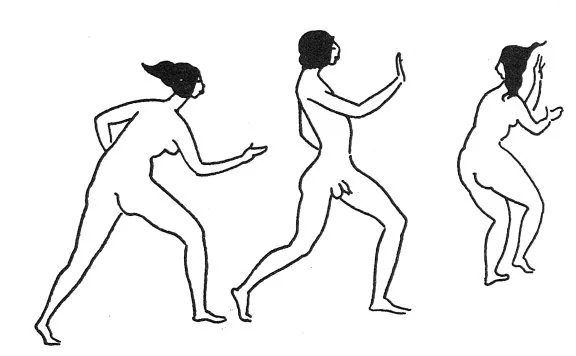
THE LOVES | P. OVIDI NASONIS LIBER TERTIVS AMORES |
ELEGY I
THE TRAGIC AND THE ELEGIAC MUSE STRIVE FOR THE POSSESSION OF OVID.
|
THERE is an age-old forest which for many a year the axe has never touched. They say that it is sacred to a god. In its midst is a sacred well sheltered by a grotto, hewn out of the rock; and all around, birds sing their sweet complaint. One day, as I was sauntering in its shady groves, I fell to wondering what task should occupy my Muse. And making her way towards me I beheld Elegy. All perfumed was her hair and right cunningly braided, and, if I saw aright, one of her feet was longer than the other. Her mien was staid, her form was comely; her dress of thinnest gauze, and, in her eyes, the light of love, and even her maimèd foot lent her an added charm. And Tragedy also I beheld, advancing wit h measured strides and vehement gesture, her hair dishevelled, her mantle sweeping the ground. In her left hand she proudly bore the royal sceptre, and on her feet she wore the Lydian buskin. First of the twain she spake to me and said, "When wilt thou have finished with thy loves, O poet, heedless of thy great calling? At drunken revels they talk of thy wild doings, and at the crossways, too, thou art a byword. Often, as you pass by, men point you out and say, 'There goes the man whom cruel Love consumes.' Knowest thou not thou art the talk of the whole town, thou who with shameless tongue vauntest thy exploits in the lists of love? High time it is to essay a higher theme. Long enough hast thou been idle; take up a loftier argument. The subject-matter of thy songs hampers thy genius; sing the noble deeds of war. 'This,' wilt thou say, 'is the field that befits my genius.' The songs the fair may sing, thy Muse has gaily told, and to such wanton trifles thy early youth didst thou devote. But now to me thy genius consecrate, so unto thee my name of Roman Tragedy I may owe. Thy genius is equal to this lofty task." She spake, and leaning proudly on her broidered buskins, thrice, nay four times, she shook her head, shadowed with cloudy hair. Elegy, if my memory serves me, gave me a sidelong glance and smiled. She had--or do I dream?--a branch of myrtle in her hand. "Why, haughty Queen," she said, "dost thou rebuke me with such weighty words? Canst thou never lay aside thine austere air? For the nonce, at least, thou hast deigned to combat me in verses of unequal length, and with the measure that belongs to me. Not that I dare compare thy stately verse with mine; thy lofty palace quite o’erwhelms my lowly dwelling. Light as the air am I, and just as light is Cupid with whom I love to sport. I'm just as airy as the subject-matter of my song. Were it not for me, even Cupid's mother would lack something of her charm. I am the helpmeet and confederate of that goddess. The door that would never open for thy buskin, swings wide at the gentle accents of my voice; still, if in this respect my power is mightier than thine, I owe it to the patience with which I suffer many things which thou wouldst be too haughty to endure. It was from me that Corinna learned to hoodwink her guard, to force the lock of a well-fastened door, to steal quietly from her bed clad in a short chemise and to find her way noiselessly in the darkness of night. "How often have I beheld myself hung on an unfriendly door, caring not a whit whether I was read by the passersby. Nay more; I remember that Corinna's maid received me and kept me hidden in her bosom till her mistress's grim guardian had turned his back on us. Shall I remind thee how, to celebrate thy fair one's birthday, thou didst send me to her as a present, and how she tore me into fragments and cast me pitilessly into the water? ’Twas I who first made stir within thee the fertile seeds of poetry; to me thou owest the happy talent which my rival would claim for herself." At length the Muses both were silent, and in these words I addressed them: "By your own selves," I said, "I conjure you. With friendly ears, I pray, list to my faltering words. Thou offerest me, thou, the sceptre and the stately buskin, and even now from contact with thy lips, accents sublime have issued from my mouth; whilst thou, even thou, upon my loves bestowest immortality. Hear then my prayers and suffer me to wed the greater with the lesser verse; grant me, proud Tragedy, a little respite. Thy service needeth years, thy rival's, merely hours. She was not deaf to my regrets; now may the tender loves make haste to profit by the time thus granted me; for, in my rear, a far more weighty task is pressing on." |
Stat vetus et multos incaedua silva per annos; |
ELEGY II
THE CIRCUS.
|
THOUGH I am sitting here, it's not in the least because I am interested in the racing; all the same! I want your favourite to win. What I've come here for is to talk to you, to sit near you and to tell you how tremendously I love you. So you are looking at the races, I am looking at you. Let us both enjoy the sight that pleases, both drink our fill of delight. He's a lucky fellow, the man you back; he has the good fortune to enlist your interest. I wish I had his chance; like a flash I should be at the starting-post, and let my horses run clean away with me. Here, I'd shake the reins about their necks, here, I'd let them feel the whip, then round I'd go within a hair's breadth of the turning-post. But if, in my headlong career, I chanced to catch sight of you, I should pull up and the reins would drop from my hands. Ah, how narrowly Pelops escaped falling by a spear at Pisa, through gazing on thy face, Hippodamia! Nevertheless, he won because his mistress favoured him. May all lovers thus triumph when their ladies want them to. Why do you keep trying to edge away from me? You can't do it; we've got to sit close because of the seats. That's an advantage I owe to the Circus arrangements. But you, there, who are sitting on the other side of this lady, mind what you're about; don't lean on her like that. And you behind there; don't thrust out your legs like that; don't let your hard knee dig into her back. Mind, darling, you're letting your dress drag on the ground. Pull it up a little, or I shall have to do it for you. Ah, jealous dress, how you liked to cover her beautiful legs. Aye, and the longer you looked--oh, you jealous dress, you! Atalanta's legs must have looked like yours, when she was running--no wonder Milanion wanted to catch hold of them--and Diana's too, when, with uplifted dress, she pursueth the wild beasts in the forests, beasts less fearless than herself. Though I never saw them, those legs set me on fire. What would happen if I saw yours? You will be adding fuel to fire, water to the ocean. I can just imagine, from what I've seen, what those other charms are like that you conceal so well under your dainty dress. Would you like to have a little cool air in your face? If I wave this tablet a little it will refresh you, unless it's the warmth of my passion rather than the warmth of the air that is heating you, and lighting up such a charming flame in your heart. While I've been speaking, a horrid black smut has come and settled on your white dress. Begone, base smudge, from those snowy shoulders. But here they come; keep still and drink it all in. Now's the time to clap; the procession is coming in all its splendour. First of all comes Victory, with wings outspread. Be kind to me, O goddess, and help my love to win. Three cheers for Neptune, you rash people that put your trust in the sea. As for me, I don't like it. I prefer my own bit of land. You, my soldier friend, shout loud for Mars, he is your god. I loathe fighting. I love peace and love that thrives with peace. Let Phœbus be propitious to the augurs, and Phoebe to the huntsmen, and you, Minerva, receive the salutations of the craftsmen. And you, ye tillers of the soil, give hail to Ceres and to kindly Bacchus. May Pollux hearken to the gladiators' prayers and Castor to the horseman's. For us, ’tis thee, sweet Venus, thee and the Loves, thy bowmen, that we greet with cheers. Oh, help me, tender goddess; change thou my fair one's heart, that she may let herself be loved. See, Venus nods, and seems to tell me I shall win. What she foretells, tell me yourself, I pray. Hear thou my prayer and--Venus forgive me--you will be greater than that goddess herself. I swear it, and all the gods that shine in that procession I call to witness, you shall ever be my darling mistress. But you've nowhere to rest your legs. Put your toes, if you like, on these bars. They've cleared the course now, and the big races are going to begin. The prætor's just given the signal. The four-horsed chariots are off. I see your favourite. Whoever you favour is bound to win. The very horses seem to guess your wishes. Ye gods, how wide he takes them round the turning-post. Wretched creature, what are you about? Now you've let your rival get ahead of you. He went round ever so much more closely. What are you up to, foolish one? What's the use of a woman's backing you. For heaven's sake pull your left rein hard. Oh, he's an idiot, our man. Come on, Romans, have him back, wave your togas there. See they're calling him back. But mind they don't ruffle your hair, waving their togas about like that; come and hide your head in the folds of mine. Look, now they're starting again, the bars are down. Here they come, with their different colours, driving like mad. Beat them this time, anyhow; you've got a clear field in front of you. See that my mistress has her way, and see that I have mine. Well, she's got hers; but I must wait. He's won. Now I must see what I can do. She smiled, the darling, and there was a promise in her look. That's enough for here. Elsewhere you'll let me have the rest. |
'Non ego nobilium sedeo studiosus equorum; |
ELEGY IIITO HIS MISTRESS, WHOM HE HAS FOUND TO BE FORSWORN.SHALL I believe any longer that the gods exist? She has broken her sworn oath, and her loveliness is unimpaired. Long was her hair before she took the gods to witness. Now that she has deceived them, it is just as long. The whiteness of her skin was suffused with the hue of the rose, and the rose still blooms on her snowy check. She had a little foot; her foot is still the daintiest thing on earth. Tall was she, and graceful. Tall and graceful is she still. Her eyes shone like stars; many a time with them has she deceived me. And so the gods themselves allow beautiful women to break their vow, and Beauty herself is a goddess. It was, I remember, only the other day that she swore by her own eyes and by mine; it was mine that felt the smart. Ye gods, if the deceitful little thing has hoodwinked you, how is it you have punished me for her crime? It is true you did not hesitate to decree death to the daughter of Cepheus, in punishment for her mother's pride. If I have found you vain and ineffectual witnesses, if she plumes herself on having fooled us both, have I got to suffer for her perjury, have I to be at once her scapegoat and her dupe? Either the gods exist in name alone, a mere chimæra invented to terrify the silly credulous rabble, or, if exist they do, they display gross favouritism towards women, and let them do what they like. It is only against us men that Mars is armed with his death-dealing sword; only against us that Pallas turns her fatal spear. At us Apollo aims his arrows. At us, and us alone, the thunderbolt is sped from sovran Jove's right hand. The gods have not the courage to punish the misdeeds of women, and not being able to terrify them, are themselves in terror of them. And are, we going on burning incense on their altars? No, men ought to have more spirit. Jupiter demolishes sacred woods and citadels, but he withholds his wrath from perjured women. Out of the whole host of lying jades, only Semele perished by the flames. And that was because she was so willing. If she had evaded the attentions of her lover, the father of Bacchus would never have had to do a mother's duties. And why do I thus fall out with all the company of heaven? The gods have eyes, as we have, they have hearts like ours. If I were a god myself, I should never quarrel with a woman because she took my name in vain. I should swear that the jade swore truly, and I'd never be known for a crusty god. But you, my dear, use the gods a little more sparingly; or at all events have a thought for your lover's eyes. | IIIEsse deos, i, crede--fidem iurata fefellit, |
ELEGY IV
HE URGES A HUSBAND NOT TO KEEP SO STRICT A WATCH ON HIS WIFE.
|
IMPOSSIBLE man, you have set someone to watch the doings of your young wife. It is quite useless. A woman's only armour is her virtue. She alone is chaste who is not kept Chaste by fear. She who sins not because she must not, sins, just the same. You may keep her body intact, but she's a rake at heart. You can't keep watch upon a woman's thoughts. Nor, indeed, though you bolt and bar every door, can you safeguard her body. Though you think to keep the whole world out, there'll be a traitor within. Whoso is free to err, to err is less inclined. The very power to sin weakens the seed of vice. Do not, I pray you, prick on her desire by putting restraints upon her. Be easy with her and you'll gain your end more readily, It was only the other day I saw a horse, impatient of the curb, rushing along with the speed of lightning; and then, no sooner did he feel the reins lying loose upon his neck, than he calmly came to a standstill. We are always eager for forbidden things, and yearn for what is denied us, like the sick man who longs for water because his doctor forbids him to drink it. A hundred eyes had Argus in his forehead, a hundred eyes behind, but Love was often one too many for him. Danaë was immured a virgin in her eternal chamber of rock and bronze, yet Danaë became a mother. Penelope, though there was none to guard her, remained undefiled among a host of young and lusty suitors. The more carefully a thing is guarded, the more we long for it. All this watchfulness and fuss is merely inviting the attentions of the robber. Few people want the pleasures they are free to take. It's not your wife's good looks, it's the fuss you make of her that makes men want your wife. They think she must be wonderful indeed thus to have captivated you. She may be a faithless baggage, the woman whom her husband guards so jealously; she may be a strumpet; she's, all the same, a treasure. The risks one runs in order to possess her count even more than the object possessed. A fig for your indignation! I tell you, I only love forbidden pleasures. The only woman I care to have is the one that says "I'm terrified." Moreover, you've no right to treat a freeborn woman like a slave. You should only use foreign importations so. Doubtless you want her keeper to say, "I kept her chaste." You want your slave, I suppose, to get all the credit. A man must really be a bumpkin who takes his wife's unfaithfulness to heart. He can't know much about the morals of the Capital. Why Ilia, who bore both Romulus and Remus after her affair with Mars, was not exactly a paragon of virtue. Why go and marry a pretty woman, if you want a virtuous wife? Good looks and virtue don't go hand in hand. If you're a wise man, you'll give her a little more rope; you'll look a bit more amiable and not be always playing the stern husband and preaching about your rights. And cultivate the friends your wife will bring you; there will be no lack of them. You'll thus get the maximum of credit with the minimum of cost. Thus you'll always have plenty of gay young sparks around you and see about the house all manner of nice things you never had to pay for. |
Dure vir, inposito tenerae custode puellae |
ELEGY V
A DREAM.
|
TWAS night, and sleep had weighed down my weary eyelids, when this vision came to terrify my soul. On the side of a hill looking towards the south was a grove thickly planted with oaks, and multitudes of birds found shelter amid their branches. Beneath was a wide expanse clad in freshest green, watered by a stream which flowed on with a sweet murmur. Beneath the shade of a leafy oak I was endeavouring to avoid the heat, but it was hot even in the tree's shade. And lo, grazing on the jewelled meadow, a white heifer came in sight, a heifer whiter than fresh-fallen snow ere it has melted into clear water; whiter than the foam on the milk of the ewe that has just been milked. Near her was a bull, her happy mate. He lay down beside her on the thick green carpet; and as he lay thus at his ease, he slowly chewed the cud of tender grass. Soon, sleep robbing him of his strength, methought he lay his hornèd head upon the ground for very weariness. Hither came a crow swiftly cleaving the air and, croaking hoarsely, lighted upon the green sward. Thrice did she plunge her ravening beak into the breast of the snow-white heifer, and then at length she flew away. But a black stain was on the breast of the heifer. And when she saw afar off bulls browsing on the pastures (for afar off other bulls were browsing on the pastures) she rushed away and mingled with them and sought out a spot where the soil was more fertile. "Come," I cried, "come, interpreter of dreams, and tell me what, if indeed it hath a meaning, this dream of mine betokens." Then did the interpreter of the dreams of night ponder upon my dream, and thus at length he made reply. "The heat which thou wast fain to escape in the leafy shade, and which thou couldst not avoid, was the heat of love. The heifer is thy mistress, for of such whiteness is she. Thou thyself art the bull which was following his mate. The crow whose sharp beak tore at the heifer's breast was that old procuress who will corrupt thy loved one. The long hesitation of the heifer and her final abandonment of the bull means that thou wilt be left cold on thy solitary couch. The wound and the dark stains beneath her breast show that she is not free from the soilure of adultery." Thus spake the reader of dreams; my cheeks were white and cold and the drear night spread out before mine eyes. |
'Nox erat, et somnus lassos submisit ocellos; |
ELEGY VI
TO A RIVER WHICH HAS OVERFLOWED ITS BANKS AND HINDERED THE POET, WHO WAS HASTENING TO HIS MISTRESS.
|
RIVER, whose soft, muddy banks are overgrown with reeds, I am hastening to my mistress. Stay thy course a while. No bridge hast thou, nor oarless bark to ferry me with a rope across thy stream. But lately thou wast just a rivulet, I mind me well, and fearlessly I traversed thee on foot, and in thy deepest part thou scarce did wet my ankles. Now, swollen by the melting snows from yonder mountain, thou rushest wildly on and along thy muddy course pourest a foaming mass of waters. What did it boot me so to press my speed, to have snatched such scanty rest, to have turned night into day, if here I needs must halt, if to the farther bank I have no means to cross? Oh, wherefore, do I lack the wings which bore the heroic son of Danaë when he carried off Medusa's head swarming with dreadful serpents? Now long I for the chariot whence came the seed of Ceres, scattered o’er the stubborn soil. Alas these wonders, save in a poet's dream, were never wrought. Never were they seen of man, and never man will see them. But thou, O stream that overflowest thy wide banks, flow on within thy bounds, and so flow on for ever. Ne'er couldst thou bear the weight of public shame, if it were known thou stayedst a lover's steps. Verily rivers should help an eager lover on his way, for rivers themselves have known the pangs of love. Pale Inachus, they say, was smitten with the charms of Melie, the Bithynian nymph, and his chill waters warmed with his love for her. Troy had not borne its ten long years of siege, O Xanthus, when Neaera drew thy gaze. What made Alpheus wander through so many lands if not his passion for a maid of Arcady? And thou, Peneus, when Creusa unto Xanthus was betrothed, hid her so ’tis held, within the land of the Phthiotians. Why should I tell of Asopus, whom warlike Thebe took to her bosom, Thebe fated to give five daughters to the world? And thou, O Acheloüs, if I ask of thee to-day, "Where are thy horns?" thou wouldst with sorrow make reply and say that in his wrath Hercules did break them off. What Hercules would not have done for Calydon, would not have done for all Ætolia, he did for Dejanira and for her alone. The Nile itself, the mighty river that through seven mouths flows to the sea and hides so well the secret of its source, could not with all its waters overwhelm the flame with which he burned for Evadne, Asopus' daughter. Enipeus, so he might embrace the daughter of Salmoneus, commanded his waters to recede, and, obedient to his command, those waters did recede. Nor thee will I forget who, flowing down thy rocky bed, waterest with thy foaming stream the fruitful fields of Argive Tibur; nor thee whom Ilia charmed, albeit in sorry plight was she, her hair, her features torn with her own nails, mourning her uncle's sacrilegious crimes, and the outrage wrought by Mars, wandering bare-footed in solitary places. Her, from his swift-flowing waters, the generous river saw, and raising his head above the flood called hoarsely to her, saying, "Wherefore in sorrow wanderest thou by my banks, O Ilia, seed of Laomedon of Ida? Whither hath thy raiment gone? Whither bendest thou thy lonely steps? Wherefore doth the white fillet bind not thy rangèd hair? Wherefore dost thou weep and mar thy brimming eyes with tears? Why thus in frenzy beat thy naked breast? A heart of stone or brass that man must have, who on a lovely face all stained with tears can look unmoved by pity. Ilia, fear no more; for thee my palace will fling wide its portals, my waters from all harm shall keep thee. Ilia, fear no more; over a hundred nymphs or more thou shalt be queen, for a hundred nymphs or more beneath my waters dwell. Oh, spurn me not, I pray, thou seed of Troy; gifts richer than my promises thou shalt have." He spake; and Ilia, with downcast eyes, bathed with tears her heaving bosom. Thrice she essayed to fly; thrice she stayed her steps by the edge of the deep waters, for fear would not suffer her to flee. Howbeit, at last, tearing her hair with hostile hand, with trembling lips thus sorrowfully she spake: "O would to heaven my bones had been gathered up and laid in the tomb of my fathers while yet I was a virgin. Wherefore to marriage dost thou invite me, a vestal yesterday, to-day unworthy to tend the sacred fire of Ilium? Why should I longer tarry? Fen now they point at me with scornful finger and exclaim, 'Behold the adulteress.' Let me die, and with me die the shame that suffers me not to raise my eyes without a blush." She said, and veiling with her robe her lovely weeping eyes, she cast herself despairingly into the swirling flood. The River, so ’tis said, upstayed her, placing his hand beneath her breast, and took her as a bride to the bridal bed. And thou, like enough, hast burned with love for a maiden; but thou hast woods and forests to hide thy little failings. Even as I speak, thy waters swell still more, and thy bed, broad though it be, is not wide enough to hold the tributary streams that flow to thee from every side. What grievance hast thou against me, thou angry river; why dost thou delay the pleasures of a pair of lovers; why hold me up so roughly on my way? If only thou didst flow with waters of thine own, if only thou wert a river with a name, if thy fame throughout the world were known! But name hast thou none; thy waters come from little tributary brooks; thy source and even thy course are uncertain. Thy spring is the rain and melted snow, and these thou owest to sluggish winter. Either in winter-tide thou rollest thy turgid waters, or else, in summer, thy bed is but a dry and sandy track. What traveller then has e’er found water enough to quench his thirst and say to thee in thankfulness of heart, "Flow on, flow on for ever!" Onward thou flowest, harmful to flocks and herds, more harmful still to crops. For these things let others grieve, my own ills suffice for me. Fool that I am, this stream I told how rivers love. It shames me to have spoken of names so great before so miserable a brook. What was I dreaming of, to speak to it of Acheloüs and of Inachus, and of thee, wide-flowing Nile? Out on thee, muddy torrent. Scorching summers and rainless winters ever be thy lot! |
Amnis harundinibus limosas obsite ripas, |
ELEGY VII
THE POET REPROACHES HIMSELF FOR HAVING FAILED IN HIS DUTY TOWARDS HIS MISTRESS.
|
IS she not fair, is she not accomplished? Have I not long hungered to possess her? Yet she, yes, she of all women in the world, I have held in my arms and to no purpose. To my shame I confess it, I have lain like a lifeless hulk upon her couch, strengthless and still. Despite my longings, despite my loved one's longings, I could not stir myself into life. In vain about my neck she twined her ivory arms, dear arms, more white than Thracian snows. In vain her tongue she thrust and thrust against my tongue, and slipped her amorous thigh beneath my own; vainly she lavished on me all her sweetest names, called me her conqueror and said the things that women ire wont to say in such a pass; it was as though my members had been rubbed with chilling hemlock and knew no more the way to do their duty. Like to a trunk I lay, like to a lifeless statue, a useless mass, so that indeed she might have doubted whether I were in sooth a man, or but the simulacrum of a man. What shall I do when I am old, supposing that I live so long, if I fail so lamentably now that I am young? Alas, I blush for my youth. I am young, I am a man, and I could not prove to my mistress that I was either. She left her bed, even as the holy priestess that watches the everlasting flame of Vesta, or as a chaste sister saying farewell to a beloved brother. Howbeit, it was but lately that I paid my debt twice over with the fair-haired Chloe; thrice with the white-skinned Pitho; thrice again with Libas; and, by Corinna urged, nine times in one short night I fought with honour in the lists of love. Was it some magic philtre that benumbed my limbs to-day? Was it some incantation, or some poisonous herb that put me in such a sorry plight? Was it some witch that wrote my name on the crimson wax and plunged a needle into my liver? The corn, stricken by a witch's curse, soon dwindles into sterile grass, the springs run dry, the acorn falls from the oak, the grape from the vine and the fruit drops from the tree, though no one shake the bough. Since this is so, why should not magic numb the nerves? Perchance ’twas magic that turned me into ice. And then, think on the shame of the thing! Yes, my very shame robbed me of my strength. Shame was the secondary cause of my undoing. How fair, withal, was she on whom I was free to look, and whom I was free to touch, for I touched her, even as the shift she wore. At that sweet contact the King of Pylos would have grown young again, Tithonus would have felt strange promptings for his years. In her I found a woman; she found not in me a man. To what fresh vows, to what new prayer shall I have recourse to-day? Doubtless the gods regret they ever gave me such a prize, seeing the shameful use I made of it. I longed with feverish longing to be admitted to her house; I was admitted; to kiss her, and I kissed her; to lie with her, I lay with her. What availed me my good fortune? To be a king and wield no sceptre? Like a miser in the midst of wealth, I owned my riches, but I could not use them. Thus was the prying Tantalus consumed with thirst, with water all around; thus saw the fruit on which he ne'er could lay his hand; thus in the morning, the husband leaves his wife in order to go stainless to the altar of the gods. Maybe, you'll say, she did not shower on me kisses most passionate and most sweet; she did not do her utmost to excite me. The stoutest oaks, the hardest adamant, the sternest rocks would have been moved by her caresses. She would have moved any living thing, anything you could dub a man. But then, alas, I was neither living nor a man. What pleasure would the songs of Phemius bring to ears that could not hear? What pleasure would a picture give to sightless Thamyris? What delights, withal, I had secretly promised myself, what different ways of enjoying her had I imagined. And yet my body, shame on it, was like a dead thing, more drooping than a rose of yesterday. And look at it now, and high time it is, see how it is coming back to life again; see how it is asking to be up and doing, to get to work once more. Why are you not overcome with shame, thou vilest part of me? That was how you made a fool of me before, promising what you did not fulfil. Through you my mistress was deceived, through you I found myself a defaulter, through you I suffered the most painful affront, the most grievous damage. And yet my mistress disdains not to incite me with her dainty hand. But seeing that all her arts were vain, that my body, forgetful of its former prowess, would give no sign of life, cried, "Why do you play the fool with me? Who asked you, madman that you are, to come to bed with me against your will? Or has some enchantress of Ææa, with her needle and her wool, bewitched you? Or have you been spending your strength on some other woman?" So saying, she leapt from the bed with nothing on but her flimsy shift, and fled away bare-footed. And, as she would not have her servants know she had come unscathed from the combat, she went and laved herself with water to dissemble the affront. |
At non formosa est, at non bene culta puella, |
ELEGY VIII
TO HIS MISTRESS, COMPLAINING THAT SHE HIS GIVEN PREFERENCE TO A WEALTHIER RIVAL.
|
AND who now attaches any value to the liberal arts, or looks on poetry as worth a straw? Time was when genius was held more precious than gold; now, if you've no money, you are accounted the veriest barbarian! My books have the good fortune to please my mistress. They have the entrée to her; I, alas, have not. She has given high praise to the poetry, but on the poet she has shut her door. I am told that I'm a genius, yet they leave me to cool my heels where I can. Any rich parvenu who has swash-bucklered his way to wealth is set above me. Can you, my life, really be so scatter-brained as to put your arms about him? Can you, my life, let him put his arms about you? Let me tell you, in case you know it not, that that head of his was recently covered by a helmet, and that a sword hung from that side which now is so devoted to you. His left hand, with the gold ring which fits it so ill, bore a shield; touch his Tight hand, and you'll find it bathed with blood. The man's a murderer! Can you really hold his hand? What has become of that soft heart of yours? Count those scars, the records of the fights that he's been through. All that he has, he won at the price of his blood. Perhaps he will tell you how many throats he has cut. And are you so greedy for money that you can touch such cruel hands, while I, innocent priest of Apollo and the Muses, vainly lay my verses at your unheeding door? You, who are wise, learn not our useless poet's lore; learn rather to march with noisy troops and to follow the career of war. Instead of trying to be a poet, learn to be a soldier. Even if you were Homer himself, only thus could you obtain the favours of the fair. Jupiter knew well enough that nothing is so powerful as gold, and he won the virgin on whom be had cast his eye by changing himself to gold. So long as gold was not forthcoming he found himself face to face with an obdurate father, an inflexible damsel, doors of brass and a tower of iron; but no sooner did the would-be seducer arrive with presents than she unveiled her bosom, and forthwith gave--what she was asked to give. It was not thus in aged Saturn's reign. Then all the metals were buried deep within the bowels of the earth. Bronze and silver, gold and heavy iron to the shades he had committed. In those olden days no treasure heaps were seen. But better things earth gave than that, rich harvests from the unlaborious earth, fruits in abundance and stores of honey laid in the hollow oak. None ever broke the soil with the patient plough, no land surveyor parcelled out the soil; no oars smote the tossing waves. For mortals, then, the shores of the sea were barriers impassable. Against thyself, O Man, hast thou turned thy powers of invention, and used thy genius to invent evils untold. What hath it availed thee to girdle your cities. round with towers and ramparts, and among men to stir up armed war? What is the sea to thee? The earth might have sufficed thee. There is another realm to conquer--the sky; wherefore attack it not? To the heavens, too, thou dost aspire, so far as thou Mayest. Quirinus, Bacchus, Alcides, and, now, Cæsar have each their temple. We dig the earth for gold instead of golden harvests. The soldier possesses wealth obtained by blood. The Senate shuts its doors against the poor; money paves the way to honours. Money makes the solemn judge, the
haughty knight. Let them have everything; let them lord it over the Campus Martius and the Forum; let them decide on peace or war; but in their greediness let them draw the line at robbing me of my mistress, and I shall be content. They must leave something to the poor man. But nowadays, any woman, be she as prudish as the Sabines, is treated like a chattel-slave by any man who can throw about his money. Now, I'm always stopped by this keeper fellow, and she says that she's in mortal terror of her husband. If I could afford costly presents, both of them would disappear as by magic. Oh, if there be a god who will avenge the unrequited lover, let him reduce such ill-gotten wealth to dust. |
Et quisquam ingenuas etiamnunc suspicit artes, |
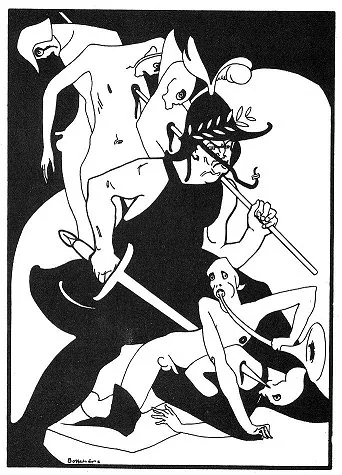
ELEGY IX
ON THE DEATH OF TIBULLUS.
|
IF the mother of Memnon, if the mother of Achilles, mourned for their dead sons; if the mighty goddesses are not insensible to the blows of, Fate, then, plaintive Elegy, unbind thy sorrowing tresses; never, alas, did thy name so well befit thee as at this hour. Tibullus, whom thou didst inspire, Tibullus thy glory, is but a lifeless corpse that the flames of the pyre will soon consume. See how Venus' son goes with his quiver reversed, with broken bow and extinguished torch. Look you how sadly he fares, with drooping wings; and how with cruel hand he strikes his naked breast. The tear-drops fall amid his floating hair; his mouth gives forth the sound of broken sobs. So from thy palace went he forth, gracious Iulus, to mourn for the death of Æneas, his brother. Venus herself grieved no less for the death of Tibullus, than for the death of her young lover, whose groin was pierced by a wild boar, before her eyes. And yet we poets are called sacred, the favourites of the gods. And some there are who behold in us a hint of the divine. Nevertheless, inexorable death profanes all hallowed things, and lays on all that lives his unseen hand. What could his mother, what could his father do, for Ismarian Orpheus? What did it avail him that he had tamed and softened with his song the creatures of the wilds? Linus came of the same father, and Apollo is said to have mourned him in the deep forest on his reluctant lyre. Then there is the Mæonian bard, the unfailing spring where the poets ever draw nigh to drink the Pierian spring. For him also came the day of death, the day that hurled him to the depths of dark Avernus. ’Tis poetry alone that 'scapes the all-consuming pyre. The work of the poet knows not death; the story of Troy's siege and all its toils and the unfinished web will ever be remembered. So Nemesis and Delia shall have a lasting name, the one his last, the other his first love. What now can sacrifices offered to the gods avail thee? What can the sistra of Egypt do for thee now? What boots it to lie apart in a lonely bed? When I see how even the most virtuous are snatched away by cruel fate, forgive me when I say I am tempted to believe that the gods do not exist. Live a holy life; despite your sanctity, you will surely die. Pay service to the gods; for all your piety, death will tear you from the temple and hurry you into the grave. Think you your poetry will save you? See how Tibullus lies low. With all that remains of so great a poet, you scarce could fill a tiny urn. What, is it thou, O sacred poet, that the flames of the pyre have just consumed? They have not feared to feast upon thy vitals. They might have devoured the gilded temples of the mightiest of the gods, seeing that to thee they were so cruel. Venus turned away her head, and some aver that she could not restrain her tears. Yet was the poet's lot less lamentable than if he had died among the Phæacians and had been buried unhonoured and unknown. Here at least a mother closed his misty eyes, and paid him the last sad rites. Here at least a sister shared her unhappy mother's grief, and with dishevelled locks came to sorrow over his grave. Nemesis and Delia both printed on thy lips a final kiss and quitted not thy pyre. Delia, as at length she turned away, said, "’Tis I was made the happier by your love; thou didst live while yet I was the object of your flame!" "What is that thou sayest?" said Nemesis. "What need for thee to bewail my loss? ’Twas me, as he lay dying, he clasped with his failing hand." Still if aught remains of us but a name and a shadow, Tibullus will live on in the valleys of Elysium. Come forth to meet him, learned Catullus, come with thy Calvus, and wreathe thy youthful brow with ivy. And Gallus come thou too (if they wrong thee who say thou wrongedst a friend), prodigal of thy blood and of thy life. Of these thy shade is the companion, and if a shade be aught, thou hast swelled the blessed throng, gracious Tibullus. Rest ye, his bones, at peace within the quiet urn, and may the earth lie lightly on his ashes. |
Memnona si mater, mater ploravit Achillem, |
ELEGY X
HE COMPLAINS TO CERES THAT, DURING HER FESTIVAL, HE IS NOT SUFFERED TO SHARE HIS MISTRESS' COUCH.
|
HERE is the yearly festival of Ceres come round again: and my lady has to sleep in a lonely bed. Golden-tressèd Ceres, with thy fine hair adorned with ears of corn, wherefore, on thy feast day, dost thou deny us our pleasure? All the world over, the nations laud thy generosity and no other divinity looks upon us mortals with more favouring eye. In the earliest times the rude inhabitants of the countryside never baked their bread, and the threshing floor was for them a name unknown. But upon the oaks, the earliest oracles, grew acorns; these and the tender shoots of grass were the food of man. It was Ceres who first taught him how to plant the seed in the earth so that it should swell and, with the sickle, to reap the golden corn; she it was who first compelled the bulls to bear the yoke and clove, with the plough's sharp tooth, the ground that too long had been lying fallow. Can anyone believe that she delights in the tears of lovers, and that the way to her favour is to lie in lonely misery? Nay, though she takes pleasure in the labour of the fields, she is not coy and awkward, nor is her heart impervious to love. I call the Cretans to witness, and ’tis not all fable that you hear in Crete, so proud of having nurtured mighty Jove. There was reared the Sovereign of the starry realms; ’twas there that with his baby lips he sucked the sweet milk. Here the witnesses are worthy of credence; their foster-child will vouch for the truth of what they tell and Ceres, I think, will confess to a frailty of which the whole world knows. At the foot of Mount Ida the goddess had perceived the youthful Iasius, who, with unerring aim, was slaying the wild beasts. She saw, and suddenly she felt her marrow on fire with a secret flame. On one side shame, on the other love, were striving to possess her heart. Love triumphed over shame. Thenceforth you might have seen the furrows grow dry, and the earth produced scarcely as many grains of corn as had been sown. When, with the mattock, he had thoroughly turned over the soil and with the plough had broken the stubborn glebe, when he had scattered the seed evenly over his wide fields, the hopes of the husbandman were brought to nought. The goddess who watches over the crops was dallying in the deep forests. The wreaths of corn had fallen from her long tresses. Only in Crete was the year fruitful and the harvests abundant. Wheresoever the goddess had passed, the earth was thick with crops. Ida, so rich in trees, grew white with corn and the wild boat cropped the corn in the woodlands. Minos, the lawgiver, wished for many such years and longed for the love of Ceres to endure. The pain thou wouldst have endured, O fair-tressed goddess, if thou hadst been compelled to sleep away from thy lover, I am forced to undergo on this day that is hallowed to thy mysteries. Wherefore must I be sad, when thou hast found again a daughter, a queen only less exalted than Juno herself? Such a holiday invites to Love, to Song and to Wine. Such are the offerings it behoves us to make to the gods that rule the world. |
Annua venerunt Cerealis tempora sacri; |
ELEGY XI
WEARY AT LENGTH OF HIS MISTRESS' INFIDELITIES, HE SWEARS THAT HE WILL LOVE HER NO LONGER.
|
I HAVE had a lot to put up with, and I've put up with it a great deal too long. I am completely out of patience with you. My heart is tired out. Away with you, base Love! My slavery is over; I have escaped my fetters, and what I bore without shame, it now shames me to have borne at all. I've won the day; Love is vanquished. I trample it beneath my feet. True, I've been a long time plucking up courage. Fight on, my soul, and faint not. It is a wrench, indeed, but some day you'll be glad you bore this present pain. A bitter potion has oftentimes brought succour to the sick. How could I have sunk so low, after so many rebuffs, as to he down on the hard ground outside your door? Could I for some other lover you had with you there, act the slave and play the watchman outside the door that was shut against me? I have seen him coming away from your house, looking a very worn-out warrior indeed. Seeing him was not so bad as being seen by him, all the same. May such a disgrace befall my enemies. Tell me when I have ever failed to be at your side, your escort, your lover, and your friend. You owe your popularity to going about with me. It's because I loved you that you got so many lovers. What's the use of my telling you about your lying tongue, and all the solemn oaths you've broken to deceive me? What's the good of referring to the ogling and winking that went on at dinner between you and your young admirers, and the code words employed to conceal the true sense of what you were saying. One day they told me she was ill. I nearly had a fit, and off I rushed. I get there and find-well, that she isn't too ill to entertain my rival. There! there are plenty of other instances I could give, but that's the sort of thing I've had to put up with. Look and see if you can find another man who would stand what I have stood. Already I can hear the water rippling behind my vessel's stern, hung with the votive wreath. Farewell. No, I don't want any more kisses; and it's no good talking like that any more; it's waste of time; your words don't move me now. I'm not the madman I used to be.-Yet oh, this wavering heart of mine! How it is torn this way and that, wrung simultaneously by love and hate; and love, I think, is winning the day. I will hate, if I am able; if not, I will love, but not willingly. The ox, too, loves not the yoke. He hates it; but still he bears it. Even as I fly your perfidy, your beauty draws me back. I hate the depravity of your soul; I love your body. Thus I can live neither with you nor without you, and I know not what I want myself I would that you were less fair or less wicked. Such loveliness goes ill with such evil ways. Your conduct bids me hate; your beauty bids me love. Hapless indeed am I; her charms outweigh the evil deeds of their possessor. Forgive me, I beseech you, by the laws of our mutual love; forgive me by all the gods who lend themselves so often to thy false oaths; by that face that seems to me a thing divine, and by thine eyes which have made captives of mine. Whatever you may be, you ever will be mine. Thine it is to say whether you would have me a willing or unwilling lover. Ah, let us spread our sails and profit by the prospering gales, that, though against my will, I shall yet be forced to love. | XIaMulta diuque tuli; vitiis patientia victa est; XIbLuctantur pectusque leve in contraria tendunt |
ELEGY XII
HE LAMENTS THAT HIS POEMS HAVE MADE HIS MISTRESS TOO WELL KNOWN.
|
WHAT day was that, ye birds of mournful plumage, when ye sang things of evil. presage to my love-affairs? What star shall I suspect is moving counter to my fate, what gods shall I complain are making war against me? The woman who but now confessed herself my own, of whom I was the first the only lover, to-day I fear I share with many rivals. Am I at fault, or is it my verses that have made her the talk? ’Tis even so. My genius hath made of her a wanton. And I deserve it. For why did I vaunt her beauty? If she sells herself to-day, mine is the fault. I am the power that hath made her please; ’tis I who have brought her lovers; these hands have opened the door to them. Whether verses are good for aught, I much misdoubt me; they have always wrought me ill. ’Twas they excited envy of my treasure. Though of Thebes I might sing, and Troy and Cæsar's mighty deeds, Corinna alone could fire my genius. Would to heaven that the Muses had been unfavourable to my songs and that Phœbus had deserted me when my task was but begun. Yet since it is the custom to give ear to what the poets say, I should not have wished my verses to have had no weight. ’Tis we who sang of Scylla stealing from her father's head his treasured locks and hiding in her womb the raging dogs. ’Tis we who have given wings to the feet and serpents to the hair, our song gave victory to Abos' child and the wingèd horse. ’Tis we gave Tityos his mighty stature, and to Cerberus gave his triple mouths and his serpent-crownèd head. Enceladus we made hurling the spear with a thousand arms, and through us a youthful sorceress overcame heroes by her magic spells. We imprisoned the winds of Æolus in the wine-skins of the Ithacan king; we made the prying Tantalus go mad with thirst, with water all around him; Niobe we changed into a rock, and a young maiden into a bear. ’Tis thanks to us that the bird of Cecrops sings Odrysian Itys; that Jove transforms himself into a bird, or into gold, or, taking on the semblance of a bull, cleaves the waters with a maiden on his back. Why tell of Proteus and those dragon's teeth whence sprang the Thebans? Shall I tell of the bulls that spewed forth flames, and of the tears of amber that flowed, Orega, from thy sister's cheeks; of ships changed into sea goddesses; of the sun shrinking in horror from the sight of Atreus' dreadful feast and of the rocks that followed the music of the lyre? Unceasing the genius of the poets pours forth, and recks not of the trammels of historic truth. Thus the praises of my mistress should have been looked upon as false. I have been undone by your credulity. |
Quis fuit ille dies, quo tristia semper amanti |
ELEGY XIII
THE FESTIVAL OF JUNO AT FALISCI.
|
AS my wife was born at fruitful Falisci, we went to visit those walls which long ago were conquered, Camillus, by thee. The priestesses were making ready to celebrate the festival of the chaste Juno by holding solemn games and by the sacrifice of a heifer native to the place. It was a strong motive for lingering there awhile, to witness the rite, though full steep is the path that leads to the scene of its performance. It is an immemorial grove, and so dense is the foliage there that the daylight cannot penetrate the gloom. One needs but to behold it, to realise that it is the abode of a divinity. An altar receives the prayers and incense offered by the faithful, a rough-hewn altar made by the artless folk of olden days. From this spot, once a year, as soon as the trumpet has given forth its solemn note, the procession sets out and makes its way along the carpeted paths. Snow-white heifers are led along amid the plaudits of the throng, heifers nourished by the grass of their native fields, and calves whose brows are not yet armed with threatening horns, and the humble pig, a lowlier victim, and the leader of the herd with horns curved back over his stubborn head. The goat alone is hateful to the lady goddess, ever since the day when by a goat her presence was betrayed in a deep wood and she was forced to abandon her flight. And so, even now, the boys pursue her with their darts and she is given as a prize to the one that brings her low. All along the way the goddess is to pass, boys and shy maidens strew the paths with carpets. Gold and gems sparkle in their virgin hair and the proud mantle hides their gold-decked feet. In the Grecian manner of their ancestors they pass on, Clad in white, and on their head they bear the sacred vessels entrusted to their care. Peep silence holds the people while the stately procession is passing by, and after her priestesses, follows the goddess herself. The whole procession tells of Greece. After the murder of Agamemnon, Halesus fled the scene of his crime and the rich lands of his forefathers. It was only after many adventures, both by land and sea, that with auspicious hands he reared a high-walled city. ’Twas he that taught the Falisci to celebrate the rites of Juno. May they to me, and to her own people, ever be propitious. |
Cum mihi pomiferis coniunx foret orta Faliscis, |
ELEGY XIV
TO HIS MISTRESS.
|
NAY, seeing how very beautiful you are, I won't deny you a few frailties. But what I don't want, and can't stand, is to know about them. No, I'm not going to take high moral ground; I'm not going to insist on your being a paragon of virtue and all that; but I want you to appear as if you were. A woman isn't guilty if she can deny the imputed delinquency. It's only confession that puts her out of court. How idiotic it is to prate every morning about what you did the night before, to proclaim in daylight what you did in the darkness. Why, even a strumpet, before she attends to her customers, takes care to see that the street door is securely fastened. But you go blabbing about your misdeeds all over the place and seem to take a pride in putting yourself in the pillory. In future, if you can't be good, at least be cautious--assume a virtue if you have it not. Let me think you're running straight, even if you're not. You went off the lines yesterday--go off 'em again to-day, only don't go and cackle about it, and don't blush to talk like a decent woman. The time and place invite, we'll say; and you really feel as if you must. Well then, let yourself go completely; do everything you can think of; fling modesty to the winds; but only while you're there. When you come away, no more naughtiness. Let your doings be buried under the bedclothes. But while you are there, slip off your chemise without a blush and let him get his thigh well over yours. And let him thrust his tongue as far as it will go into your coral mouth and let passion prompt you to all manner of pretty devices. Talk lovingly. Say all sorts of naughty things, and let the bed creak and groan as you writhe with pleasure. But as soon as you have got your things on again, look the nice demure little lady you ought to be, and let your modesty belie your wantonness. Bamboozle society, bamboozle me; but don't let me know it, that's all; and let me go on living in my fool's paradise. Why are you for ever sending and receiving letters under my very nose? Why is your bed creased and crumpled in every direction? How is it your hair is in such a tousled state? You don't get it like, that in your sleep; and that mark. on your neck there, as though someone had had his teeth in it, what's that? Very soon you'll be at it under my very eyes. If you don't care what people say and think about you, be a little thoughtful about me. I feel like crumpling up altogether every time you come and tell me these things. I feel as if my blood had all turned to ice. Then how I love! And how I try to hate what I can't help loving; then I wish I was dead but with you dead beside me. I shan't do any spying; I shan't keep on at you, when I see you ready to deny my charge. Your disavowal shall be your innocence. And even if I catch you in the act, even if I see you with my very eyes, just tell me it wasn't so and your words shall be more convincing than my eyes. It will be easy enough for you to vanquish a foe who only asks to be vanquished. But don't, oh don't, forget to let your tongue say "not guilty." When you can win so easily with those two words, well--just win, if not by the merits of your cause, at all events by the softness of your judge. |
Non ego, ne pecces, cum sis formosa, recuso, |
ELEGY XV
HE BIDS FAREWELL TO HIS WANTON MUSE, TO COURT ONE, MORE AUSTERE.
|
SEEK a new Poet, mother of tender Loves. I'm now rounding the last mark with my elegies. Those songs which I, a child of the Pelignian countryside, have written, have been a delight to me and they have not put me to shame. If it's anything to boast about, my title of Knight is an old ancestral one. I'm not a parvenu of the latest war. Mantua delights in Virgil, Verona in Catullus; I shall be called the glory of the Pelignians, of the people who so loved freedom that they did not hesitate to fight and die for it when Rome was menaced by confederate hosts. Some day when he sees Sulmo of many streams, close girdled by her narrow ramparts, the traveller will exclaim, "Little town, for all thy littleness, I'll call thee great, because thou wast able to produce so great a poet." Lovely boy, and thou, Venus, his mother, pluck from my fields your golden standards, The god of the hornèd brow, Lyæeus, hath struck me with a mightier thyrsus, and bids me urge my steeds over a wider plain. Farewell, ye dainty elegies, and thou, my kindly Muse, farewell; when I am gone, my work will still live on. |
Quaere novum vatem, tenerorum mater Amorum! |
THE ART OF LOVE
| P. OVIDI NASONIS LIBER PRIMVS ARTIS AMATORIAESiquis in hoc artem populo non novit amandi, |

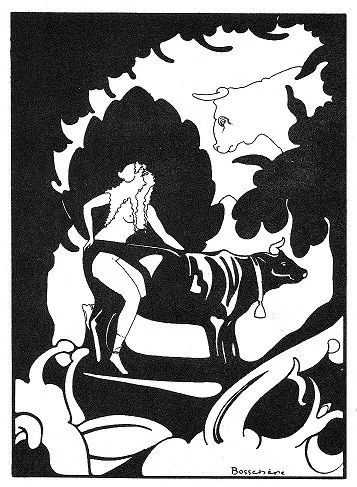
THE ART OF LOVE
| P. OVIDI NASONIS LIBER SECVNDVS ARTIS AMATORIAEDicite 'io Paean!' et 'io' bis dicite 'Paean!': |
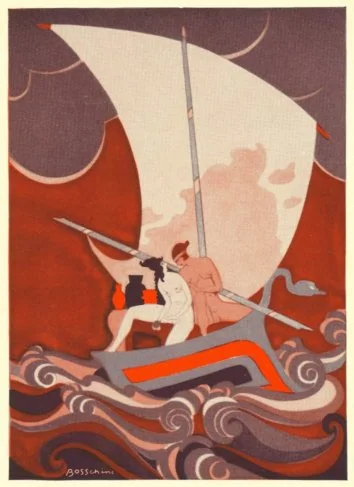
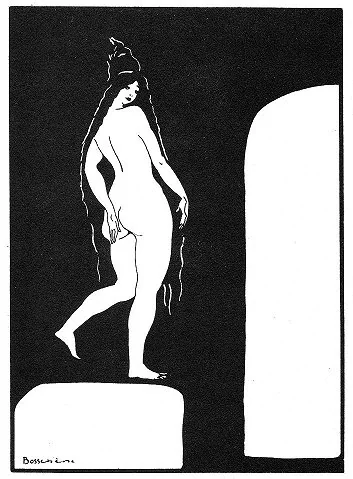
THE ART OF LOVE
| P. OVIDI NASONIS LIBER TERTIVS ARTIS AMATORIAEArma dedi Danais in Amazonas; arma supersunt, |
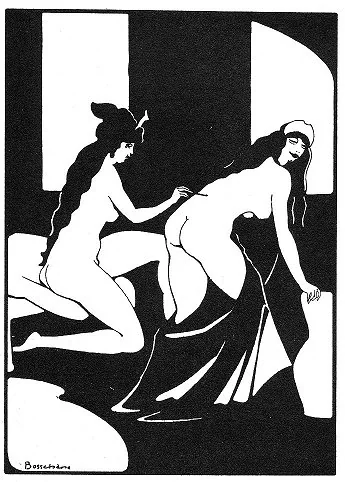
LOVE'S CURELOVE, had read the title of this work. "’Tis war," said he, "I see ’tis war that's now declared against me." O, Cupid, do not so accuse thy poet; do not so accuse me, who so oft beneath thy sway have carried the standards thou didst give into my care. No Diomede am I by whom thy mother was wounded when the steeds of Mars bore her, all. bleeding, to her skyey home. Other youths oft burn with a languid flame; but I have always loved; and wouldst thou know what I am doing at this moment? Why, I am loving still! Nay, more than that: I have taught unto others the art of winning thy favours; I have shown how the promptings of blind passion should give place to the dictates of reason. Ah, no; none shall behold me going back upon my lessons, betraying thee, sweet child, recanting all that I have sung, and so destroying the work of my own hands. Let every man who loves a woman that requites his love drink deep of his delight and spread his sails to prospering breezes. But if he is a hopeless wight that groans in the thraldom of an unworthy mistress, let him receive the assistance of my art so that he may escape from the toils. Wherefore would you have some poor unfortunate devil go and hang himself by a rope from a lofty beam and die a miserable death; or another plunge a dagger into his bowels? You, Cupid, are a lover of peace. The thought of murder fills you with horror. Now here is a man who, if he cannot cease to love, will die the miserable victim of an unhappy passion. Let him, therefore, cease to love, and you will not have his death upon your conscience. You are a child, and you should know of nought save merry sport. Be then king of the realm of play; ’tis a gentle sceptre, suited to thy years. We know that thou hast many a keen arrow in thy quiver; but never are those arrows tinged with blood. Leave it to Mars, thy stepfather, to wage dire war with sword and spear; let him come forth victorious, stained with the foeman's gore; but as for thee, never engage in battles save those in which Venus, thy mother, has instructed thee to fight. They, at least, involve no risk to life and limb, and never have they caused a mother to bewail the death of a beloved son. So ordain it, if you will, that someone's door may be broken down in a nocturnal brawl, and that others may be adorned with many a wreath; grant that young men and timid maids may meet in secret embraces, and that, by hook or by crook, the suspicious husband may be deceived. Let I lover alternately beg and pray, and curse and swear, at his beloved's door. And when she repels him, let him sing his doleful plaint. Be satisfied with causing tears to flow; let tears be your toll, but never a life. Thy torch was never made to light the funeral pyre. Thus spake I. And Love, stirring his gemmy wings, answered me and said, "Pursue thy self-allotted task." Come ye then and hear what I shall teach, unhappy youths whom your mistresses have deceived. To you I taught the art of love. Now learn from me the art of curing love. The hand that wounded you can also heal. The same soil brings forth the poisonous plants and likewise those that give balm and consolation. Often the rose beside the nettle blows. Telephus, the son of Hercules, had been wounded by the spear of Achilles, and that same spear did heal his wound. And you, ye girls, list to what I tell you. Whatsoever things I teach are as useful to you as to your lovers. Arms we bestow on both opposing sides. If among the lessons that I inculcate, some there be of which you can make no use, they at least set forth examples whereby you may take profit. My aim is practical: it is to extinguish cruel flames, an from love's fetters to free the captive heart. Phyllis had never died so soon had I been her preceptor. Nine times she came to the Ocean's brink; she would have come and gone more often had I been there. Nor yet with dying eyes would Dido have seen, from her lofty citadel, the Trojans spreading their sails to the winds. Despair would never have made that mother turn her cruel hand against the fruit of her own womb; the mother who slew her own brood to avenge herself upon her perjured spouse. Thanks to my art, Tereus, though mad with love for Philomel, would never have deserved to be changed into a bird for his sins. Were Phasiphaë my pupil, she'd love her bull no more. And Phædra? She'd be cured of her incestuous passion. Suppose I had to deal with Paris? Menelaus would have no trouble with Helen; and Troy would never be conquered and fall into the hands of the Greeks. If only the impious Scylla had read my verses, Nisus had still retained his purple lock of hair. My brothers and sisters, hearken me to words. Give up all tragic, sinister passions. Take me for your pilot; your bark and its fraughting souls shall voyage in safety towards the haven. Ovid you doubtless read when you learnt the art of love. ’Tis Ovid again that you must read to-day. I am the public champion. I will remove that perilous stuff that weighs upon the heart. But let each and every one of you second the efforts I shall make on your behalf. At the outset of m task I invoke thee. Be thou to me propitious, O Apollo, who didst invent both Poetry and Medicine! Help thou in me the Poet, help the Physician, for I am both; and both these arts are under thy protection. If you repent you of your love, stop on the threshold while you yet are able and ere yet your heart has been too deeply stirred. Suppress, ere yet they have gained too strong a hold, the evil signs of the sudden seizure; and at the very outset let your steed refuse to go another step. Time makes all things to increase; time ripens the grape upon the vine; it changes the blade of tender green into the sturdy stalk. The tree, that shelters the wayfarer beneath its spreading branches, was, when ’twas planted, but a feeble sapling. Then you might have dragged it from the surface of the soil; now it stands a mighty tree deep-rooted in the earth. Consider, in a rapid mental inventory, what it is you love, and withdraw your neck from the yoke that is bound one day to hurt you. Fight against it at the beginning. It is late in the day to make up physic when delay has given the disease time to get a hold on you. Make haste then, and don't put off till to-morrow the cure you can work to-day. If you are not ready to-day, to-morrow you will be less so. Love has always got its excuses and finds pretexts for delays. The first day that comes is not too soon to begin the cure. Rivers are never very broad near their source. It is the little tributaries that make them wide. If you had realised earlier how great a sin you were preparing to commit, never, Myrrha, would your features have been covered with the bark of a tree. I have known wounds which might easily have been cured if taken in hand at once, but which, through being neglected, grew past all healing. But we like to cull the flowers of pleasure, and every day we tell ourselves, "To-morrow will do just as well." Meanwhile the fire spreads along our veins, and the baneful tree drives its roots deep into the soil. If once the favourable moment has gone by, if Love has taken firm root in the heart, the physician's task is a far less easy one. But because I've been called in at a late hour, I must not for that reason leave the patient to his fate. When the hero, the son of Pœas, was wounded, he was compelled, with bold hand, to cut off the affected part; nevertheless he was cured, and report has, it that it was he who, many years afterwards, ended the Trojan War. A while ago I bade you take your malady in hand at once; now I bring you slow and tardy remedies. Endeavour, if you can, to master the fire at the outset, or, if you cannot, wait till it has burnt itself out. When the fit of madness is at its height, wait for the fit to pass. It is difficult to stop it in mid career. Foolish is the swimmer who, though he can cross a river slantwise, insists on swimming by steering right athwart the current. An impetuous spirit, a man who, as yet, is impatient of treatment, utterly refuses to listen to advice. Wait till he will let you examine his wounds; wait till he will listen to reason. Would any, save a madman, tell a mother not to weep at the burial of her son? At such a time as that, 'twere foolish to talk of resignation. When she has given full rein to her grief, and eased the burden of her affliction, then is the time, with words of consolation, to try to soften the blow. The art of medicine, one may almost say, is the art of choosing the moment to intervene. Given at the proper time, wine is beneficial; otherwise it does harm. If you don't undertake your treatment at the due and proper stage, you do but inflame and aggravate the malady. When, then, you feel in a clue frame of mind to profit by the assistance of my art, take my advice and eschew idleness. Love is born of idleness and, once born, by idleness is fostered. Sloth is at once the cause and nourishment of this sensuous malady. Put sloth aside, and at once you break in twain the shafts of Love; his torch is out, and henceforth is but a thing for jest and mockery. As the plane tree loveth wine, as the poplar loveth the pure stream, as the marshy reed loveth slimy soil, so doth Venus delight in idleness. Love flees from toil; if, then, you would banish love from your heart, find some work for your idle hands to do and then you will be safe. Dolce far niente, too much sleep, gambling, and overmuch wine-bibbing cloud the brain and, though they deal it no serious wound, filch away its energy. Then Love, finding the outposts all unmanned, captures the fortress at a blow. Cupid and idleness are boon companions. He shuns industrious folk. If your mind is unemployed, find work for it to do. There are the Courts of justice, there is the Law, there are your friends to be defended. Go forth and join the ranks of the candidates for civic offices; or join the forces and take part in warlike exercises. The pleasures of the senses will soon take to flight, a routed host. The fleeing Parthian offers you a chance to win distinction in the field. Score a double triumph over Love and over the Parthian and bring back your twofold trophy to the guardian deities of your country. The instant Venus was wounded by the Ætolian's spear, she left it to her lover to carry on the war. Do you want to know why Ægisthus became an adulterer? The reason is plain: he had nothing to do. The other princes were detained at Troy in everlasting combats. Greece had transported all her forces into Asia. It was vain for Ægisthus to think of carrying on a war; there was none to carry on. Or of pleading at the Bar, there were no lawsuits in. Argos. But he was unwilling to do nothing' so he did what he could; he made love. Thus it is that Love finds a way into our hearts, and takes up his abode there. The country, too, soothes our spirits, and the divers occupation of a farmer's life. There is no care that will not yield to these heart-healing tasks. Tame the steer and make him bow his neck beneath the yoke, in order that with the sharp ploughshare he may break the stubborn glebe. And when you've ploughed your furrows, sow therein the grain of Ceres, which, in due time, the soil will give back to you with bounteous interest. See how the branches bend beneath their weight of fruit; how the trees may scarce sustain the load of good things they have produced! See how the streams flow on with a sweet murmur, and how the sheep browse on the tender grass! Yonder the goats seek the mountain crags and scarped rocks, soon to come home to their young with their udders heavy with milk. The shepherd modulates his song upon his rustic pipe; close by him are his dogs, his trusty companions and the vigilant guardians of his flock. Yonder the deep woods resound with the lowing of kine. A heifer is crying for her lost calf. Shall I tell of the bees driven forth by smoke placed underneath their hives, so that their stores of honey may be removed? With Autumn come the fruits; Summer is beautiful with the ripening corn; Spring brings the flowers; and Winter, the cheerful fireside. Year by year, as the season comes round, the vine-dresser gathers the ripe grapes and treads out the new wine beneath his feet. Year by year, in due time, we see the harvester bind into sheaves the corn that he has reaped, and clear the shorn field with his wide-toothed rake. You can bed out plants in the moist loam of your kitchen-garden, and make little channels of fresh water to flow through it. And has the grafting season come? Then into the branch insert the alien branch, and lo, the tree will deck itself with borrowed leaves. When once these pleasures lay their healing charm upon your soul, Love has no further power to harm, and flutters away with weary pinion. Then there are also the pleasures of the chase. Many a time has Venus been put ignominiously to flight, vanquished by Apollo's sister. Sometimes, accompanied by a hound with a keen scent, you may hunt the flying hare; sometimes spread your nets on the wooded slopes of the hills; scare the timid stag by divers means, and lay the wild boar low, pierced with thy huntsman's spear. Tired out, the night will bring thee sleep and not desire of woman, and heavy slumber shall refresh thy limbs. There are other sports of a milder nature, yet none the less diverting: you may go a bird-hunting--’tis game of little value--and take them in nets, or snare them with limèd twigs. You may also hide the bent hook beneath the deceiving bait which the greedy fish devours apace. ’Tis by such means as these, or others like them, that you may beguile your time, until you have unlearned the art of love. Above all, go far away; however strong the bonds that hold you back, leave the place. Go on a long journey. You will weep at the very thought of your mistress's name; you will stay your steps ere you have gone halfway. Never mind, the less you may wish to do so, the more resolutely you should hasten your flight. Keep on; force your reluctant feet to run. Fear, nor rain, nor Sabbath, nor the tragic anniversary of the Allia; let nothing stop you. Never trouble your head about how far you've come; think how much farther you've got to go. Don't invent excuses for lingering about town. Don't count the days. Don't be always gazing towards Rome; but fly. The Parthian flies, and flying saves his skin from his adversary's blows. My treatment, you say, is drastic. I know it is; but if you want to be cured, you mustn't mind putting up with a deal of pain in the process. When I've been ill, I've often forced myself, much against my will, to swallow the most horribly bitter physic, and they wouldn't let me have any of the things I craved for. Why, to cure your body you'd suffer any mortal thing; and won't you slake your thirst with a drop of cold water, won't you do anything to get your mind well again? Yet that is the most precious part of you. In the treatment I prescribe, it's only the beginning that is difficult; it's only the early stages that are so painful. See how the yoke galls the ox that bears it for the first time; even as the harness galls the newly-broken colt. Perchance it causes you a pang to quit your ancestral home. You will quit it, notwithstanding; yet ere long you will be fain to see it again. Nevertheless, ’tis not your home that calls you back, ’tis Love. Home-sickness is merely a pretext to conceal your weakness. Once you've started, the country, your travelling companions, the very distance you have come, will all tend to bring consolation to your spirit. But do not imagine it is enough to go away. You must stay away, in order that the fires which consume you may be extinguished and no spark lurk beneath the embers. If you are too impatient, if you return again before your mind has recovered its poise, Love will undo your efforts; all his dreadful might he'll turn against you anew. What if you have been away and return both hungry and thirsty? Your absence will but have added to your malady. Let who will believe that magic and the noxious herbs of Hæmonia can be of any avail in love. Curses and spells have had their day. My Apollo, with his hallowed song, brings you lawful succour. No graves, at my command, will ope and wake their sleepers; nor will you see some ancient hag make the earth gape by the power of her unhallowed. incantations; you will not behold the corn removed from one field to another, or the sun's orb suddenly grow pale. But the Tiber, as is his wont, will flow into the sea; and the Moon, drawn by her white steeds, will follow her customary path. Nay, ’tis not spells that Love's malady shall be banished by magic from thy heart; and Cupid will not be scared away by the fumes of burning sulphur. What, O Maid of Colchos, did the herbs of the Phasian land avail thee when thou didst desire to remain in the home of thy fathers? And how, O Circe, did the herbs of Persa bestead thee when a favouring wind bore away the vessels of Ulysses? All didst thou do, so that thy crafty guest might not depart; nevertheless, unperturbed and unimpeded, he pursued his flight. Nought didst thou leave undone to allay the cruel fire that was devouring thee; still Love, for a long time to come, was to hold sway over thy reluctant breast. Thou, who couldst change men into countless divers shapes, had'st not the power to change the laws that ruled thy heart. ’Tis said. that when Ulysses was making ready to depart, thou wast fain to restrain him with these words: "No more do I entreat thee to become my spouse, albeit I remember I did, at first, conceive that hope. And yet, a goddess and the daughter of the Sun, it seemed to me that I was worth y to be thy wife. Oh, hasten not away, I do beseech thee; stay yet a little while, ’tis all I ask. What smaller boon than that could I implore? Look how high the seas are running; them oughtest thou to dread. Tarry awhile until the winds are favourable to thy sails. Wherefore wouldst thou flee? No new Troy is rising here. No one is calling his companions to arms. Here love and peace abide; here I alone suffer the pain of a grievous sorrow, and all this land shall be subject to, thy sway." Thus spake she; but none the less Ulysses unmoored his bark; vain were her words, and, with his sails, the south wind wafted them away. But still the fires of her passion burned, and Circe betook her to her wonted arts. Howbeit they could not mitigate the violence of her love. Whoever then thou mayest be that seekest succour from our art, put not thy faith in witchcraft and incantations. But if some potent reason retains you in the capital, hearken to the advice which I shall give you for your sojourn there. Full of courage is he who can win his liberty at a blow and, bursting all the bonds that bind him, find, then and there, ease for all his pain. If there breathes a man so strong of soul, he will compel even my admiration, and I shall say: "That man is in no need of any help from me." But you who, sick at heart, would fain unlearn to love the woman whom you love; but cannot; and yet still would--you shall be my pupil. Often revolve within your breast the deeds of your erring mistress; and keep before your eyes the losses she has caused you. Say to yourself, "She has filched from me this thing and that and, not content with larceny, her extravagance has compelled me to sell my patrimony. What vows she made, and how often has she broken them! How often has she left me lying before her door! To others she gives her love, to me only her disdain. A common broker enjoys with her the nights of love which she refuses me." Let all these grievances embitter your feelings towards her. Recall them incessantly to your mind, and let them sow the seeds of hatred in it. And when you reproach her, may you wax eloquent; but if only you grieve enough, eloquent you will be without an effort. I was of late much occupied with a certain wench. She was not, however, suited to my temperament. Like a sick Podalirius, I was for curing myself with my own herbs, and I confess that for a doctor I was a disgracefully bad patient. I derived considerable benefit from continually harping on the defects of my mistress. I persevered with this treatment and it unquestionably did me good. "What poor legs the girl has," I kept saying. Yet truth to tell, they were nothing of the sort. "How very far from beautiful are her arms." Yet truth to tell, they were beautiful. "How squat she is." She wasn't. "What a lot of money she wants." And that was, indeed, the main count in the indictment. The good is often so near neighbour to the bad, that we often confound the two and condemn as a fault what is, in reality, a virtue. So far as you can, depreciate the qualities of your mistress and warp your own judgment by crossing, to her prejudice, the narrow limit betwixt good and bad. If she's plump, say she's stodgy; if she's dark, say she's [black]; if she's slim, say she's a skeleton; if she's not coy, say she's brazen; if she's modest, say she's a bumpkin. Nay, further, endow her with accomplishments she conspicuously lacks, ask her, in the most persuasive manner in the world, to display them. If she has no voice, urge her to sing. If she can't move her arms with grace, beseech her to dance. If her speech is uneducated, make her keep on talking to you. If she can't play a note, beg her to play. If her breasts are covered with pimples, let there be no scarf to conceal them. If her teeth are bad, tell her something to make her laugh. Has she got watery eyes, tell her something to make her cry. It is also of service to appear before her suddenly, in the morning, before she's had time to complete her toilet. A pretty dress delights us, gold and jewellery cover a host of imperfections, and what one beholds of a woman is the least part of her. Amid all her extraneous adornments, it's no easy matter to find the genuine attractions. With the ægis of wealth does Love deceive the beholder. Take her unawares. You may do so with safety to yourself Her defects will suffice to dethrone her in your eyes. But that is not always so, for it often happens that "beauty unadorned's adorned the most " and captures many lovers. Moreover, there is no offence against decency in your putting in an appearance while she is smearing pomade on her face. You'll find she's got boxes containing concoctions of all the colours of the rainbow, and you'll see the paint trickling down in warm streams on to her breasts. The whole place stinks like Phineus' dinner-table, and I've often felt as if I was going to be sick. And now I'll tell you how to act when you're in the paroxysm of your pleasure. For Love, if you're going to win, must be attacked on every side. There are some details, however, which modesty will not permit one to describe; but you will be clever enough to fill up the blanks. For certain critics have recently come down rather heavily on my books. They complain that my Muse is too unrestrained. But so long as my work gives pleasure, so long as I am celebrated all the world over., it is of no importance to me what one or two pettifoggers say about me. Even great Homer was slandered by envious tongues. Whoever and wherever you may be, Zoilus, Envy is your real name. Have not sacrilegious tongues outraged thy poems, thou whose genius brought to our shores Troy and her conquered gods? Calumny ever pursues the great, even as the winds hurl themselves on high places, and as Jove's thunderbolts strike the mountain peaks. But you, whoever you may be, who are offended by the licentiousness of my poems, try, if you can, to acquire a sense of proportion. If we are going to sing of mighty wars, then let us sing them in the manner of Homer. But how could the pleasures of carnal love find a place therein? Tragedy sounds the lofty note. Noble rage should wear the tragic buskin. But our Muse should wear a moderate heel. The iambus can go what pace it will, now swift, now trailing its hinder foot, and is meet to be flung at the opposing foe. But let mild Elegy sing of Cupids and their quivers; she is a kindly mistress and should be suffered to, frolic as the fancy takes her. Achilles must not be sung to the strains of Callimachus; and thy voice, O Homer, is not the voice to sing of Cydippe. Who could bear to see Thaïs enacting the rôle of Andromache? And whoever acted Thaïs would cut a sorry figure as Andromache. But Thaïs belongs appropriately to my art. If my Muse is one with my subject, the victory is ours, and the charge brought against me fails. Out on thee, devouring Envy! Great already is the fame I enjoy. It will be greater still if I continue as I have begun. But you haste away too fast. If I do but live, you shall have many other causes of complaint, for I have many and many a song yet to sing. For glory delights me, and my zeal increases with. my love of glory. Our steed grows breathless at the beginning of the ascent. Elegy tells me that she owes me as deep a debt as the Epic owes to Virgil. This is the answer to give to Envy. Now, draw in thy reins, my poet, and revolve in thine own orbit. When you are called to taste the delights of love and youthful dalliance, when the night of promised bliss approaches, then, lest you should have too much joy of your mistress if you go to her with a full quiver, find another charmer with whom you may blunt the edge of your attack. The love that follows love is not so fierce. But sweeter than any is the love for which we have waited long. When it is cold, we love the sun; when hot, the shade. Water is pleasant to the parching tongue. I blush to say it, yet I will say it; when you're about the act of love with your mistress, take her in the posture that becomes her least. That will be easily accomplished. Rare is the woman who tells herself the truth. They deem themselves beautiful in every aspect. I bid you, too, fling open wide the windows of her room, and in the broad light of day, observe the blemishes of her body. But when you have attained the goal of pleasure; when you are o’erwearied both in body and in spirit; when your heart is heavy; when you are wishing you had never touched a woman, and deem it will be long ere you embrace another--then note in the tablets of your brain all the defects that you observe in her, and long let your gaze linger on her imperfections. "Feeble resources these," someone perchance will say. But means which, taken singly, are of no avail are potent when conjoined. The bite of a tiny adder will lay low a bull. Often a hound of modest size will hold a boar at bay. Gather all these remedies together; numbers will win. But seeing that temperaments, like faces, are infinitely varied, use your judgment and follow not my behests too blindly. A thing which, in your eyes, might convey no offence, in another's might be quite unpardonable. Some men have known their ardour checked because they've seen unveiled those parts which modesty should hide; others because, leaving the bed wherein they've had their joy, they have perceived the unclean traces of the fray. Ye who could be deterred by trifles such as these, your love was but a jest: feeble the flames that warmed your breasts. Well, let the wingèd boy bend his bow more fiercely; then, more sorely stricken you'll come in multitudes to beg for stronger medicine. What shall I say of him who hides that he may behold his mistress performing her natural needs, and see those things which decency forbids that we should look upon? God forbid that I should counsel anything so vile as that. Even were they effectual, such means should never be essayed. I would counsel you also to have two mistresses at a time. If you could have more, it would be still better. When your heart is thus divided between two loves, the two passions mutually moderate each other. The mightiest rivers lose their force when split up into several streams; the fire dies down when you take away the fuel that feeds it. One anchor will not hold several ships, and you should always fish with more than one hook in the water. The man who has taken the precaution to have two strings to his bow has thereby made his final victory sure. But if you have been so rash as to confine your affections to a single mistress, lose no time now in adding to the number. Minos extinguished his flame for Pasiphaë by conceiving a passion for Procris. His second consort banished his memory of the first. The brother of Amphilochus, lest he should love for ever the daughter of Phegeus, made Callirhoë the partner of his couch. Œnone would have held Paris captive for ever had she not been supplanted by the adulterous queen of Sparta. The Odrysian tyrant would have continued faithful to his spouse, had not Philomela outrivalled her sister in beauty. .But wherefore should I linger over examples, examples so many that it would weary me to cite them? A new love always triumphs over the one it follows. A mother with several children bears more easily the death of one of them than she who cries, in bitter sorrow, "My son, my, son, I had but thee!" Think not that herein I am expressing any new ideas. The son of Atreus, long before me, was familiar with this truth; and what did he not allow himself, that prince who was lord paramount of the whole of Greece! He loved his captive Chryseis whom as a victor he had taken as his spoil. But the maiden's father filled all the region round with his sorrowful lamentations. Wherefore weepest thou, wretched old man? They are getting on famously together, and you do but hurt your daughter with your ill-timed importunities. At last, relying on Achilles to support him, Calchas demands that she should be set at liberty, and she returns to her father's roof. Then said Agamemnon, "There is another maiden no less fair than her, whose name, save for the first syllable, is identical with hers. Let Achilles, if he be wise, yield her up to me; or if he does not, he shall feel the power of my dominion. If anyone among you, men of Greece, shall dare to blame my conduct in this matter, he shall learn what the sceptre wielded by a strong hand can accomplish. For if, king as I am, I do not win her to share my bed, then let Thersites take my place upon the throne." Thus he spake. In place of Chryseis, who had been snatched from him, he took this slave, and in the arms of Briseis he forgot his former love. Follow then the example of Agamemnon. Seek like him another object for your passion, and between two rival mistresses let your love, uncertain, hover. You ask me where you are to find them? Go read my Art of Love, voyage on, confident and fearless, and soon your bark shall be laden with pretty women. If my precepts are of any avail, if, by my voice, Apollo teaches aught that may be of use to mortal men, when your despairing heart is consumed with a passion fiercer than the fires of Ætna, act in such a manner that your mistress may deem you colder than ice. Pretend that you are cured, and if your heart still bleeds, never let her suspect it. Let laughter be upon your lips, though tears be in your heart. I do not bid you break with her in the very height of your passion. I lay upon you no mandate so severe as that. But learn to dissemble. Assume a calmness, if you have it not, and soon you'll really be as calm as now you feign to be. Often, so that I might drink no more, I've feigned to be asleep, and, in the midst of feigning, I've fallen asleep indeed. It's made me laugh sometimes to see how a man, acting the passionate lover, has, like an unskilled hunter, fallen into his own net. Love steals into our hearts, as it where, by habit; by habit also we can school ourselves to forget it. If you can pretend you're cured, cured you will be indeed. Your mistress, say, has promised you to lie with her a certain night. Go to her house. When you get there, you find the door barred and bolted against you. No matter. Be patient. Neither beg nor pray; but lie not down beside the cruel door. Next morning, never utter a reproach; and on your countenance wear no sign of grief. Seeing your cool indifference, she'll lay aside her arrogant disdain. That is some good, and for it you will have my art to thank. But try, and stint not, to deceive yourself, until you have forgot the way to love. A steed will oft refuse the bit that's offered him. Hide, even from yourself, the reason of your tactics, and, all unconsciously, You'll reach your goal. The bird is scared by the net when it is too plainly visible. So that your mistress; may not push her pride to the point of disdain, be round with her, and her arrogance will melt before your own. If you find her door open, as though by chance, and if she summons you by name again and again, pass by and take no heed. If she offers you an assignation for a given night, look doubtful and say, "I'm very much afraid I shall be unable to come." A man should easily be able to lay this discipline upon himself, if he's endowed with reason. Besides, you can always go and find immediate consolation in the arms of some woman of the town. It could hardly be said that my treatment was too severe, seeing that I make it my object to reconcile pleasure and good sense. But as people and dispositions are infinitely varied, so must our treatment be varied too. A thousand ills require a thousand cures. There are some illnesses which demand an operation; others which the juice of a herb will heal. If you are too weak to go away, do not attempt to shake off your fetters. Has cruel love got his foot upon your throat? Give up the hope less fight. Let the wind waft your vessel, and with your oar assist the waves that bear you along. You say you must find something to allay the thirst that consumes you? Well and good; you must. Drink then your fill, from the very middle of the river. Drink, not enough but too much, so that you vomit what you have taken in. Enjoy your mistress, drink unhindered of her charms. Spend your nights, our days, with her. Drink of her till you're sick. Satiety will cure you of your ills. Stay with her even when you think you could leave her without a pang. Never quit the house, which you have begun to hate, until you are worn out with those pleasures which excess has now turned to gall and wormwood in your heart. Love that is fed b jealousy dies hard. He who would banish love, must banish, first, mistrust. A man who is for ever on thorns lest he should lose his mistress, or fears that some rival will filch her from him, even Machaon himself could scarcely cure. If a woman has two sons and one of them is at the wars, ’tis he that is in danger whom she loves the more. There is, hard by the Collinian gate, a venerable temple to which the lofty Eryx gave its name. There reigns a deity whose name is Oblivion. He gives unfailing succour to the sick; he dips his torch into the cold waters of Lethe. Thither come young men and maidens, the victims of unrequited love. Thither they come to seek oblivion for their sorrow. This god (was it indeed a god, or but the shadow of a dream?), this god spake to me and said, "O Ovid, thou who alternately dost kindle and extinguish the restless flames of love, add this precept to thy lessons. Let but a lover ponder on all the ills that threaten him, and he will love no more. To all of us hath the god allotted more or less of ills. Whoso fears the Puteal and Janus and the swift-coming Kalends, the sum of money he has borrowed shall be his torment. The man that has a stern unbending father, even if all else be in accordance with his wishes, will ever have that father before his eyes. The man who has married a dowerless wife, and passes his days in poverty, will think his wife an obstacle to his success. Have you a vineyard where the grapes grow ripe on a rich soil? Beware lest the swelling grape be blighted. Another man has a ship on its way home: he will be always reminding himself that the sea is treacherous and fearing that the shore is strewn with his lost merchandise. Another man fears for his son on active service; another for his daughter, who is ripe for marriage. Who has not innumerable reasons for anxiety? Perchance you would have hated your mistress, Paris, if the death of your brothers, and the way they died, could have been brought before your, eyes" The god was still speaking when his childlike image vanished with my dream: if indeed he, too, were not a dream. What am I to do? Abandoned, without a helmsman, amid the welter of waters, my bark drifts at random over uncharted seas. Lover, whosoever thou art, shun solitude: solitude for you is dangerous. Wherefore shouldst thou avoid it? Because you will be safer amid the throng. ’Tis not well for you to be alone. Solitude increases the torments of love. You will find it will ease the burden of your heart to mix freely with your fellows. If you remain alone, melancholy will descend upon you. The vision of your forsaken mistress will be ever resent to your eyes; you will imagine that you see her more you in the flesh. That is why the night is sadder than the light of day. There is no company about you then no troops of friends, to help you banish your sorrows. Do not shut yourself up indoors; do not go and hide your tear-stained visage where none may see it. Let Pylades be ever at hand to comfort his Orestes. In such circumstances, a trusty friend is a great resource. What was it but the loneliness of the woods that brought such woe to Phyllis? There is no doubt that solitude was the cause of her death. She rushed with disordered tresses, like one of those Bacchantes--who every three years celebrate the feast of Bacchus on the Aonian hills. Sometimes she gazed out over the waste of waters; sometimes she flung herself down upon the sandy shore, fordone with weariness. "Faithless Demophoön," she cried to the unheeding waves; and her lamentations were broken by her sobs. By a narrow path, overhung with thick foliage, she often made her way to the seashore. And now she had just come thither for the ninth time. "The die is cast!" she cried. The colour left her cheeks, and she looked down at her girdle. She gazed also at the trees round about. Her courage faltered. She shuddered, and many times she clutched her throat with her hands. Ah, hapless Phyllis! Would to heaven thou hadst not been alone in that hour! The woods, that mourned thy death, would not have shed their leaves in grief for thee. And you, to whom your mistress has been unkind, or you, my fair one, jilted by your lover, think of Phyllis; be wise in time, and beware of too much solitude. A certain young man of my acquaintance had religiously followed the advice of my Muse; he was just reaching port; he was virtually safe when the unexpected encounter of two passionate lovers carried him out to sea again. Love had only been hiding his shafts; and he quickly seized them again. Whoever you may be, if you would recover from your malady, keep clear of other people who are suffering from it. It is horribly contagious: you've only got to look at some other sufferer's wounds, and you feel as if you had been hit yourself. Many ailments are spread in this way. It often happens that a dry and barren field suddenly becomes fertile, being watered by a stream that has changed its course. Similarly Love glides imperceptibly into our hearts; that is, if we don't keep clear of lovers. But, in this regard, every man-jack of us is an adept at self-deception. I know a man who had recovered; it was the next-door
neighbour that brought on his relapse. Another man ran across his mistress by accident. It was too much for him. The wound hadn't properly healed: it opened again, and all my skill was useless. It's no easy matter to protect yourself against fire when the house next door is burning. It's just as well to keep out of harm's way. Don't go near the portico where she is wont to walk; and don't let any duty visits cause you to run the risk of seeing her. What's the good of trying to blow the smouldering embers into flame. You would do better to go and live in another hemisphere if you could. If you're fasting, it's not easy to keep away from a table that's laid for dinner; and the sound of running water is a mighty stimulant to thirst. It takes a lot to hold in a bull when he catches sight of a heifer, and your doughty stallion always neighs when he sees a mare. When, after a deal of buffeting, you're just getting into harbour, it is not enough to give up your mistress, you must likewise keep out of the way of her mother, her nurse, her bosom friend; in short, of anyone and everyone connected with her. Mind some slave or servant-girl doesn't come with some message to you, and sham weeping as she delivers it. And don't, out of curiosity, inquire how she's getting on. It's dangerous. Hold your tongue: it will pay you. And don't go counting up the reasons you have had to break with your mistress. Give up accusing her. Silence will be the best way to pay her out; so keep silence till you don't care any more about her. It's far better to say nothing than to go about telling people you are no longer in love. The man who says to everybody, "I don't love her any more," is still in love. The best way to get a fire under is to tackle it methodically, steadily and surely. It's no good trying to smother it all at once. Drop her gradually. You'll reach safety in the end. A mountain stream is more impetuous than a river, but the course of the torrent is soon run; the river flows far and ceaselessly. Your love should be like a cloud, it should gradually melt away into the air. It's a brutal thing to hate a woman one day whom you worshipped the day before. To make such a sudden change as that, you'd have to have the heart of a barbarian. just give up paying her attentions; that's enough. If a man finishes up by hating a woman, he's .either really still in love with her, or else he's in a frame of mind for which he won't easily find a cure. It is a disgraceful thing that a man and a woman, who were but lately head over ears in love, should suddenly become at daggers drawn. Even Themis disapproves of conduct such as that. A man will often bring an action against a woman and, notwithstanding, still be in love with her. When love leaves no resentment in its train, it departs quite quietly and peaceably. The other day I had fallen in with a young acquaintance of mine. His mistress was close at hand in a litter. He was upbraiding her with the most violent reproaches. just as he was about to serve his writ he exclaimed, "Let her descend from her litter." She did so, and no sooner had he set eyes upon her than he was another man. His hands dropped to his side; his tablets fell from his hands. He flung himself into her arms, crying, "You have won! You have won!" It's much wiser and much surer to let things drop peaceably than to quit the bed for the law-courts. Let her keep the presents you have given her, without making a fuss. It's very often well worth while to make a slight sacrifice. And then, if by chance you do happen to run across her, be sure and make use of the weapons with which I have armed you. So, be of good cheer! Fight the good fight! Penthesilea will get the worst of it. Remember your fortunate rival; think of the door banged and bolted in your face; and think of all the lies your mistress has told you, and all her broken vows. Don't take a lot of extra trouble over your hair because you have to meet her, or spend ages getting yourself up regardless of expense. Don't worry about the impression you're going to make on a woman who henceforth is going to be a stranger to you. just treat her as you would treat an ordinary acquaintance. Shall I tell you what is the greatest obstacle to our success? Well, it's this. We give up our mistresses too late, because we flatter ourselves that we are still the object of their affections. Our self-conceit adds fuel to our credulity. Don't believe in vows, there's nothing more misleading; and don't trust their sacred oaths. Beware of being moved by their tears. They've learnt the art of weeping. A lover's heart is a prey to countless artifices; it is like the pebble on the beach, tossed hither and thither by the waves of the sea. Don't proclaim the reasons which impel you to break it off. Don't prate about your grief, and go on grieving in secret. Don't reproach her with her misdeeds, for fear she should justify them. On the contrary, play a generous game with her, so that her case may seem better than your own. The strong man is the silent man. If you heap insults upon her, you're inviting her to justify herself. I am not going to rival the King of Ithaca. I should never dare, like him, to plunge Love's arrows and flaming torches into the river. I shall not clip his roseate wings, nor would I aim at slackening his sacred bow. The object of my song is but to give advice. Follow the counsels I give, and do thou, O Phœbus, the Healer, continue, as you have done hitherto, to smile upon my efforts. Lo! Phœbus is here: I heard his lyre, I heard his quiver sound. By those signs I recognise the god. Lo! Phœbus is at hand, and he will lend his aid! Compare a stuff dyed with Tyrian purple to something dyed at Amyclæa. You wouldn't look at the latter. In the same way, let everyone of you compare his mistress with the illustrious beauties of the world, and he will blush for her. Paris thought Juno and Minerva were beautiful till he had seen Venus; after that, they were nowhere. And don't think merely of the face. Take character and accomplishments into account. And don't let love blind your judgment. The remedy that I am now going to propose to you is a little thing; yet despite its trifling nature, it has stood more than one lover in good stead, myself first of all. Do not keep, and read over, the letters your mistress has written you. The strongest resolution would be shaken by such a test. Never mind how great the pang it may cause you, give them to the flames, and, as you do so, say, "Thus may this fire destroy my love also." The daughter of Thestius, with the aid of an ember, burnt up her absent son. Will you then think twice before you cast these lying missives into the fire? Banish too, if you have strength of mind enough, the counterfeit presentment of her. Why keep doting on a lifeless image? ’Tis that that was Laodamia's undoing. Then there are certain places you must shun. Avoid the scenes where you've had her in your arms; they will be full of bitter memories for you. "It was there she used to sit. She used to lie there. There is the bed in which I slept with her arms about me; here, one night of pleasure, she gave me rapturous delight." Such recollections reawaken love. The old wound, not yet properly healed, opens again. Convalescents should never run risks. If you bring sulphur near an ember that is not quite extinguished, the fire springs up anew; a spark becomes a conflagration. So too, if you do not take care to avoid everything that might resuscitate your passion, you'll find the embers you think dead, flaming up once more. The Grecian fleet would fain have fled from Capherea and the misleading beacon which thou, old Nauplius, didst kindle to avenge the death of thy son. Glad at heart is the cautious mariner when he has passed through the straits of Scylla. Beware then of those regions which once were sweet to you. They may be your Syrtes. Avoid the rocks of Acroceraunia: ’tis here that cruel Charybdis ceaselessly spews forth again the waters that she swallows. There are other remedies which one can hardly advise you to employ of your own free will, but which, when they chance to come one's way, are often potent in their effect. Let Phædra but lose her riches and Neptune will spare his grandson, nor will he suffer the monstrous bull to terrify the horses of Hippolytus. Had Pasiphaë been reduced to poverty, she would have loved less inordinately. Voluptuous love is fostered by riches. Why did no man take Hecale, and no woman Irus? Because he and she were poor. Poverty has not the wherewithal to nourish love. Howbeit, this is no sufficient reason why you should wish to be poor. But this, at all events, is important, and you should bear it in mind: Never go to the theatre until Love has been completely ousted from your heart. The sound of flutes and lyres and the human voice, and arms waved in time to the music, are sore enervators of the mind. Fictitious loves are continually being represented there. It behoves me that I should, by my art, teach you what to avoid and what to cultivate. It pains me to say so; but have nought to do with poets who sing of love. I am robbing my own children of their birthright. Flee from Callimachus, for no enemy of love is he; and thou too, poet of Cos, thou workest ill, even as Callimachus. Sappho, of a surety, made me sweeter towards my mistress; nor did the poet of Teos impart rigidity to my morals. Who could read the poems of Tibullus without danger, or the verses of that bard who made Cynthia the sole burden of his song? Who could leave the reading of Gallus with heart untouched? And in my verses, too, there is an influence, I know not what, that prompts to love. But if Apollo, the god who is my guide, deceives not his singer, the greatest cause of our ills is a rival. Beware, therefore, of conjuring up to yourself the image of a rival, and resolutely persuade yourself that your mistress sleeps alone. What added fire to the passion of Orestes for Hermione was that she had taken another for her lover. Wherefore, Menelaus, dost thou grieve? Thou didst go without thy spouse to Crete, and wast able to remain a long while apart from her. But since Paris carried her off, you have not been able to live without your Helen. Your love for her was increased by another's. What made Achilles weep the more bitterly when Briseis was taken from him was that she was transferring her charms to the couch of Plisthenes. And, believe me, he had reason for his tears. The son of Atreus did what any man was bound to do if he were not. grossly inactive. He did what I should have done, had I been he, and I am no wiser than he. That was the choicest fruit of this case of jealousy. For when Agamemnon swore by his sceptre that he had never touched Briseis, he never bethought him that his sceptre was divine. The gods grant that you may be able resolutely to pass your late mistress's door, and that your feet may not belie your determination. And you will be able, if your will power is strong enough. But you must go on firmly, and dig the spurs deep into your horse's sides. Make believe that her house is a den of Lotophagi, a cave of Sirens. Crowd on full sail and row with all your might. It would be well, too, if you could bring yourself to look with calm indifference on the rival who lately caused you such an agony of grief. Even if you retain a particle of hate towards him, at least give him a civil nod. When you are able to embrace him, your cure will be complete. Now, as a sound doctor should, I am going to give you a few hints about diet, about the things to eat and the things to avoid. Everything of a bulbous nature, whether from Daunia, Libya, or Megara, you should shun like poison; and, just as religiously, you should avoid rocket and all such aphrodisiacs. You would find it beneficial to take rue, which clears the sight, and anything, in general, of a sedative nature. What about wine, you ask? I'll put the whole thing in a nutshell for you. Wine promotes sexual desire, provided you don't drink to intoxication. Wind fans a fire into flame; wind also puts it out. Either don't drink at all, or drink enough to drown your troubles. Half-way measures are injurious. And now my task is o’er. Crown my wearied bark with garlands. I have reached the haven towards which I set my course. Young men and pretty girls, healed by my song, you will soon be rendering pious thanks to your poet. | P. OVIDI NASONIS REMEDIA AMORISLegerat huius Amor titulum nomenque libelli: |
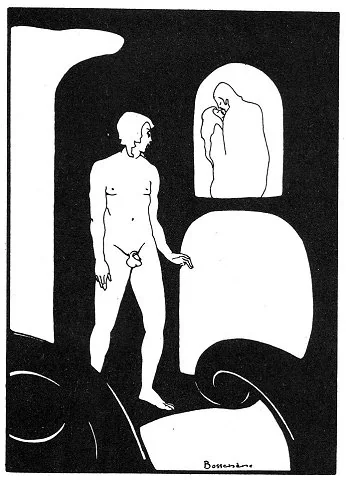

THE ART OF BEAUTYNOW learn, my dears, the art of beautifying your faces; learn by what means you can retain your charms. Cultivation makes the sterile ground bring forth fruit; it destroys the thorny brambles. Cultivation softens the sourness of the apple, and the grafted tree bears fruit both rich and strange. Art clothes all things with beauty. Lofty ceilings are gilded with gold; the dark soil is hidden by the marble edifices raised upon it. The fleeces are dyed many times in the brazen cauldrons with Tyrian purple, and ivory from India is carved and cut to suit the luxury of our times. Maybe, in those far-off days, when Tatius was king, the Sabine women thought more of dressing the fields of their forefathers than of dressing themselves. In those times, the red-faced matron, perched clumsily on her high stool, would spin and spin the livelong day. She put into the shed the flocks her daughter brought home from the meadows; she tended the fire herself by heaping furze and faggots on it. But your mothers' daughters are daintier and more refined than that. You must needs have dresses embroidered with gold; you like to do your perfumed hair in countless different ways; you must have sparkling rings upon your fingers. You adorn your necks with pearls brought from the East, pearls so big that your ears can scarcely bear the weight of them. Nevertheless we must not reproach you with the care which you bestow upon your person, since the men, in these days, pay immense attention to their dress. The men take a leaf out of the women's book, and the wives can hardly outdo their husbands in luxurious attire. Thus then let every woman strive to look her best. It matters not how love shall spread its lure. Tasteful simplicity no one can find fault with. There are women who, though buried in the country, are yet most careful about their hair. Even if rugged Athos should hide them from view, they would dress well-for Athos. They even take a pleasure in dressing to please themselves, and every young girl loves to make the most of her attractions. The bird of Juno, when his plumage is praised, spreads out his tail to be admired, and dumb though he be, is proud of his beauty. To kindle in us the fires of love, dress is more potent than the dread arts of the magician. Trust not to herbs, nor to philtres compounded of divers juices, and essay not the flux of the mare on heat. Serpents are not cut in two by the incantations of the Marsians; and rivers no longer flow backwards to their sources. You may bang the brass of Temesa as much as you will, it will never bring down the moon to earth. Your first preoccupation, my dears, should be your manners. When a woman's manners are good, she never fails to attract. Manners indeed are more than half the battle. Time will lay waste your beauty, and your pretty face will be lined with wrinkles. The day will come when you will be sorry you looked at yourself in the mirror, and regret for your vanished beauty will bring you still more wrinkles. But a good disposition is a virtue in itself, and it is lasting; the burden of the years cannot depress it, and love that is founded on it endures to the end. Now, when you have had your full of sleep, and your delicate limbs are refreshed, come learn from me how to impart a dazzling whiteness to your skin. Strip of its straw and husk the barley which our vessels bring to our shores from the fields of Libya. Take two pounds of
peeled barley and an equal quantity of vetches moistened with ten eggs. Dry the mixture in the air, and let the whole be ground beneath the mill-stone worked by the patient ass. Pound the first horns that drop from the head of a lusty stag. Of this take one-sixth of a pound. Crush and pound the whole to a fine powder, and pass through a deep sieve. Add twelve narcissus bulbs which have been skinned, and pound the whole together vigorously in a marble mortar. There should also be added two ounces of gum and Tuscan spelt, and nine times as much honey. Any woman who smears her face with this cosmetic will make it brighter than her mirror. Then make haste and bake pale lupins and windy beans. Of these take six pounds each and grind the whole in the mill. Add thereto white lead and the scum of ruddy nitre and Illyrian iris, which must be kneaded by young and sturdy arms. And when they are duly bruised, an ounce should be the proper weight. If you add the glutinous matter wherewith the Halcyon cements its nest, you will have a certain cure for spots and pimples. As for the dose, one ounce applied in two equal portions is what I prescribe. To bind the mixture and to make it easy of application, add some honey from the honeycombs of Attica. Although incense is pleasing to the gods and soothes their wrath, it must not be kept exclusively for their altars. A mixture of incense and nitre is good for black-heads. Take four ounces of each. Add an ounce of gum from the bark of a tree, and a little cube of oily myrrh. Crush the whole together and pass through a sieve. Bind the resultant powder by mixing with honey. Some people recommend that fennel should be added to the myrrh; nine scruples of myrrh and five of fennel is the proportion. Add a handful of dried rose-leaves, some sal-ammoniac and male frankincense. Pour on barley-water, and let the weight of the sal-ammoniac and the incense equal the weight of the roses. After employing very few applications of this mixture, you will have a charming complexion. I have seen a woman pound up poppies soaked in cold water and rub her cheeks with them. . . . | Medicamina Faciei Femineaediscite quae faciem commendet cura, puellae, |
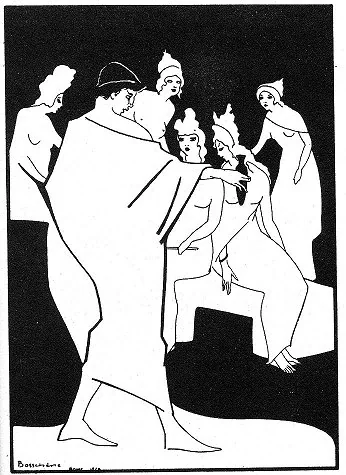
The Love Books of Ovid. 1930. Hermetic Cloud, https://hermeticcloud.com/library/may-the-love-books-of-ovid/. Public-domain text reproduced in full; markup only.
Scanned at sacred-texts.com, January, 2002. Proofed and Formatted by John Bruno Hare. Additional formatting June 2006. This edition is in the public domain in the United States because it was not published with a valid copyright message, and was not subsequently renewed at the US Copyright Office as required by law at the time.