7. When it was near sunrise, the next morning, the place of the executions was crowded with spectators. Many of the Zarathustrians believed that Zarathustra would liberate himself by the power upon him; and on the other hand, the king's people, especially the learned, desired to realize his execution, for they denounced him as an imposter.
8. The latter said: If he be the Master of the I'huans, let him prove his powers whilst he is hanging by the feet.
p. 245b
9. It was the law of Oas to keep twelve executioners, representing twelve moons, and at sunrise every morning they put to death whoever had been adjudged to death the previous day. Now, there were in prison with Zarathustra two thieves, condemned to the same ignoble death. And they were weeping and moaning! Zarathustra said to them: Weep not, nor moan, but rather rejoice. He Who gave you life is still with you. He will provide another and better home for your souls.
10. Behold, I weep not, nor moan. They who put us to death know not what they do. Rather should the multitude pity them than us. Ye shall this day escape from the tyrany of Oas.
11. Zarathustra preached till high noon, and when the light fell on the top of the temple (of the stars) the twelve executioners entered the prison and bound the prisoners' hands together behind their backs; then with another rope they tied the feet, bringing the rope up the back of the legs and passing it betwixt the arms; and they carried the end of the rope up over a beam and down again; and the executioners seized the rope and pulled upon it. And they swung the bodies of the victims high above the walls and made fast, leaving them hanging there.
12. Thus was Zarathustra hung betwixt two thieves; and whilst he was yet alive a bolt of light fell upon the temple of the stars, and it was rent in twain, and fell to the ground. And when the dust rose it was as a cloud that magnified itself, till the air of the whole city was choking; and there came another bolt of light, and, lo and behold, the walls of the city fell down, and Zhoo'das perished in the chamber of the wall.
13. The multitude ran for the king; and when they brought him out of the palace, another bolt of light fell on the palace, and it was crumbled into dust. The king called to his guards, but they obeyed him not, but fled; and so, the multitude slew the king.
14. The learned men then went down to the place of executions, and Zarathustra was not yet dead; but the two thieves were dead. And Zarathustra said unto the learned men: Now will I give up my body, and behold, ye p. 246b shall say I am dead. Let the executioners then take down my body and cast it into the lions' den, and ye shall witness that they will not eat of my flesh. And some shall say: Behold, the lions are not hungry. Thereupon shall ye cast in the bodies of the two thieves, and lo, the lions will fall upon them and eat their flesh.
15. Then shall the learned men say: Behold, Zarathustra's virtue laid in different flesh. Now I declare unto you, these things are not of the flesh, but of the spirit. For angels shall gather about my body and prevent the lions from tearing my flesh. Of which matter ye shall prove before the multitude; for in the time the lions are devouring the flesh of the thieves, the angels will go away from my body, and, behold, the lions will return and eat of my flesh also. Whereby it shall be proved to you that even lions, the most savage of beasts, have spiritual sight, and are governed by the unseen world, even more than man.
16. When Zarathustra had thus spoken to the learned men, he spake to the Father, saying: Receive Thou my soul, O Ormazd! And his spirit departed out of the body, and in that same moment the whole earth shook and trembled, and many houses fell down. So they cast the body into one of the dens, wherein were seventeen lions, but they fled from the body. Then the executioners cast in the bodies of the thieves, and, lo and behold, the lions fell upon them instantly.
17. And when the angels went away from Zarathustra's body, the lions returned to it and ate also. And the keepers turned in other lions, and all the flesh was eaten. And the multitude ran and brought the body of Zhoo'das and cast it in, and the lions ate it also. And next day they cast in the king's body, and the lions ate of it, and were appeased of their hunger.
18. Now when it was night, some of the Zarathustrians gathered together at a neighbor's house; and Asha was present, and they formed a living altar in order to pray for the soul of Zarathustra, and for the two thieves, and for Zhoo'das, and, lastly, for the king. And now, came the learned men, saying: Why have ye not, during all these years, notified us of these things? Behold, Zarathustra is dead! Asha said:
19. Have I not carried the alms-bowl publicly, proclaiming them from day p. 247b to day? And the learned people said: Pity, old Asha! A knave hath dethroned his reason! Now I declare unto you, it is the same now as in the olden time; the learned men are farther away from the Father than are those devouring lions. Ye look into the corporeal world for light, and truth, and power, but are blind to the spirit, which underlieth all things. I declare unto you, whether it be heat or light, or disease, that floateth in the air, or growth that cometh out of the air, in all things it is the unseen that ruleth over the seen. And more powerful than heat and light, and life and death, is Ormazd, the Person of all things.
20. Till ye have learned this, I can explain nothing that ye can comprehend. And yet, to know this, is the beginning of the foundation of everlasting happiness.
21. Whilst Asha was thus speaking, behold, the soul of Zarathustra came and stood before them, and he was arrayed in the semblance of his own flesh and color, and in his own clothes. And he spake, saying: Fear not; I am the same that was with you and was hanged and died, whose flesh was devoured by the lions; I am Zarathustra! Marvel not that I have the semblance of a corporeal body, for its substance is holden together by the power of my spirit. Neither is this a miracle, for the spirits of all the living hold in the same way, each its own corporeal body. As iron attracteth iron, the spirit learneth to attract from the air a corporeal body of its like and measure.
22. Then inquired one who was present: Where are the two thieves? To which Zarathustra said: As steam riseth from boiling water, without shape or form, so are their souls this hour. For this reason was I sent into the world by the Father. Let him who would become controller of his own spirit unto everlasting life, learn the Ormazdian law, seeking to grow in spirit, instead of living for the things of this world.
23. Behold, there are here present Lords of the Hosts of Heaven, who are Sons and Daughters of the Most High Ormazd, the Creator. They will now gather together and reclothe the thieves, and show you of what like they are. Presently the two drujas, the thieves who were hanged with p. 248b Zarathustra, stood before the people in sar'gis, and they raved, and cursed, and moaned; but they were blind and dumb as to the place. Then Asha inquired of them, as to who they were and what they wanted, but they only cursed him, and added that they were to be hanged.
24. Asha said: Behold, ye are already dead, and your spirits risen from the earth! To which they replied by curses against the king. And now the Lords of heaven sat up the spirit of the king, but he knew not that he was dead, and he cursed also; whereupon the spirits of the thieves fell upon him with evil intent, and all the people beheld these things. But the Lords of heaven took away the sar'gis, and the drujas could not be seen more by mortals.
25. Zarathustra said: As in the earth they were angered and dumb, they cling to the earth. For which reason ye shall sing anthems and pray for them three mornings at sunrise; three high-noons, and three evenings at sunset. Do ye this also, henceforth, forever, for three days, for all your kindred who die, or who are slain.
26. And ye shall utter only words of love for the dead; for whosoever uttereth curses for the dead, bringeth drujas upon himself. In your love and forgiveness do ye raise them out of the torments of hell. And inasmuch as ye raise up others, so doth Ormazd raise up your own souls.
27. One who was present asked how long a spirit lingered around about? To which Zarathustra said: Some for three days, some for a year, some for a hundred years, and some for a thousand years! Until they have wisdom and strength to get away. But after three days ye shall no longer desire the spirit of the dead to remain with you; rather shall ye say to Ormazd: Deal Thou with him and with us in Thine Own Way, O Father; we are content. Better is it for the spirits that ye call them not back from the higher heavens down to the earth; better for you is it, that ye remember them high up in paradise; for these thoughts will enable you to rise after ye are dead.
28. Remember that All Light answereth everything in heaven and earth after its own manner: If ye kill, ye are answered in torments sooner or later: If ye utter falsehood, ye are p. 249b answered in falsehood: If ye curse, ye will be cursed in return: If ye hate, ye will be hated: If ye seclude yourselves, ye will be excluded: If ye keep evil company in this world, ye will be bound in evil company in heaven: As ye seek to become a leader of men, remember that they whom ye rule over will be your burden in heaven: If ye teach not, ye shall not be taught: If ye lift not others up, none will lift you up: For in all things the same rule applieth in heaven as on earth, for it is a continuation in spirit of that which is practiced in the flesh.
Chapter XXX
1. ON the following evening, when the Zarathustrians were assembled for prayer and singing, the soul of Zarathustra again appeared before them in sar'gis, teaching the Word of Ormazd. He said:
2. Two people there are on the earth: the one is engrossed in the affairs of the earth; the other in the affairs of heaven. Better is it for ye to be of the latter. The fool will say: If all people are engrossed with the affairs of heaven, then who will provide on the earth? Such is the argument of all druks. Fear not, therefore, for the earth people becoming short of votaries.
3. So also will it be said of celibacy. The druks will say: If all people become celibates, then will the race of man terminate. Wherefore, I say again unto you, fear not, for there will be plenty left who are full of passion, and are unmindful of the kingdoms of heaven.
4. Let all who can, live for the Higher Light; the lower will ever be supplied sufficiently.
5. Even as ye find two peoples on earth, so also do two peoples exist in heaven. The one followeth the Highest Light, and ever riseth toward the highest heavens. The other followeth the affairs of earth, and riseth not, and hence is called druj. The latter engageth in sensualism, and quarrels amongst mortals, inspiring them to evil and low desires.
6. One present asked: How shall we know one another, whether we be of heaven or of earth? Then Zarathustra answered, saying: Seek to know thyself; thou art not thy neighbor's keeper. Search thine own soul a p. 250b hundred times every day, to know if thou practicest the All Highest according to thine own light. Neither shalt thou find excuses for thy shortness; nor reflect overmuch on past errors, but use them as inspiration to perfect thyself henceforth.
7. Another one present asked: How of thieves, and falsifiers, and murderers? Zarathustra said: The man who serveth himself only is worse than any of these; there is no resurrection in him. But if a man cease his evil way, and practice virtue, he is on the right road.
8. A falsifier is like one with a clean gown on, that goeth about casting filth upon it; he soileth his own spirit.
9. A thief is worse than an overburdened beast; he carrieth his stolen goods not only in this world, but in heaven, to the end of his memory.
10. A murderer is like a naked man, who is ashamed, and cannot hide from the multitude. When he is in heaven, his memory of the deed writeth in human blood a stain on his soul, which all others see.
11. Another one asked: According to the I'hua'Mazdian law, the highest, best men forsake the world, laboring to raise up the poor and ignorant, reciting prayers and anthems; taking no part in the affairs of people who are engrossed in the matters of earth; who, then, shall be the government of the wicked? To which Zarathustra answered, saying:
12. When there are not sufficient men and women for such purpose, there will be no wicked to govern. With all thy preaching, that the highest life is celibacy, there will be plenty left who will marry; with all thy preaching that the highest, best man will not be a leader of men, nor a king, nor a governor, yet there will be plenty left who will fill these places, even though they beheld the walls of hell opened up to receive them.
13. Another one asked: If the Zarathustrians separate, and live by themselves, what will be their power to do good amongst the evil? To which Zarathustra said:
14. As the highest heavens send Lords and masters down to mortals, so shall the Zarathustrians send emissaries amongst the wicked, preaching the truth, and citing the example of the Zarathustrian cities (communities).
p. 251b
15. For above all philosophy that man may preach, practice holdeth the highest place, and is most potent. See to it, therefore, that ye practice the Ormazdian law toward one another in all things. Avoid men of opinion; men of learning; who have pride therein; men of argument; men who quibble for proofs in unprovable things; men who wish to be known as wise men; men who deny; men that can see defects in everything, and have nothing good to offer in place thereof.
16. Shun the disbelieving man, for he is diseased, and may inoculate thee; the flatterer, for he is purchasing thee; a woman, for woman's sake; or a man, for man's sake; company, for company's sake; for all these imply that the Creator is less in thy sight, and not so well loved.
17. One asked concerning spirits. To which Zarathustra said: For the affairs of earth, consult the spirits of the earth, the drujas; for the affairs of everlasting resurrection, consult thy Creator, and His holy spirits will answer thee in His name. And to whichever thou hast made thyself companion, there will be thy abiding place after death.
18. See to it that thou becomest not inveigled by drujas, for spirits can assume any name and form; but weigh their words, whether they be wise, and according to the Ormazdian law. If they teach not the higher heavens, but profess a long life in the lower heavens, consider them by their words. To flatter thee, they will profess to remember thee in another life; and to please thee, say thou wert a king, and hath had many successions of lives on the earth.
19. But of what value under the sun is such philosophy? But to rise up, away from the earth, and from the lower heavens also; it was for bestowing this word unto men that I was sent into the world. It is to teach you to know the Father's upper heavens, and the way to reach them, that His words were given unto men.
20. As it was in the olden time, so will it be again ere another generation pass away. Drujas will teach that the spirits of the dead go into trees and flowers, and inhabit them; and into swine, and cattle, and birds, and into woman, and are born over again in mortal form. Argue not with them; their philosophy concerneth not thee. Whether they be in darkness or in light, judge thou by the glory and p. 252b beauty of the heavens where they live. If their words are of the earth, they belong to the earth; if they are servants to false Gods or false Lords, they will preach him whom they serve. But these matters are nothing to thee; for thou shalt serve the All Highest, the Creator. In this no man can err.
21. And in regard to the heaven, whither thou wouldst desire to ascend after death, magnify it with all thy ingenuity unto the All Highest Perfection. People it with thy highest ideals for thy companions. Then see to it that thou makest thyself a fit companion for them also. If thou do this with all thy wisdom and strength all the days of thy life, the Father will be with thee, and thou shalt be a glory in His works.
22. Thus preached Zarathustra after his resurrection from death; for three days and three nights preached he before his disciples; and Asha wrote down the substance of his words, and they were preserved unto the generations of Faithists from that time forth. And the words were called the Zarathustrian law, the I'hua'Mazdian law, the Ormazdian law. And they were the first heavenly words given on tablets and skins and cloth, and in books, to mortals, save what words were given in secret to the tribes of I'hins, of which the different nations of the earth knew nothing of their own knowledge as to what they were.
23. On the morning of the fourth day, when the disciples sat in crescent, which was called the living altar of God, Zarathustra again came in sar'gis. He said: Behold, the time hath come for me to rise out of hada, where I have dwelt for three days.
24. The Gods who were with me all my earth life are gathered together even here, and there are millions of them. Just near the river yonder standeth the boundary line of a heavenly ship of light! It is wider than the eye can see, and higher than the eye can see! A million of angels are singing in that ship! And there are great Gods and great Lords in it. So bright, mine eyes dare not look on them. They are all Sons and Daughters of the Great Spirit.
25. The drujas are all run away now. Their foolish gabble is hushed, gone! It is as if another world came alongside, so majestic that this one was lost. Above, high, very high, yonder! Something like a sun illumes the ship of fire! I know it is He Who hath come for me. I go now! Whither I go I will build for you all.
26. And thou, O Asha! The Gods have thrown a mantle of light over thee! A chain reacheth from thee to Ormazd! Asha was overcome, and fain would have gone to the spirit, Zarathustra. The latter said: Stand thou, and I may kiss thee! So, Zarathustra kissed Asha, and departed.
END OF BOOK OF GOD'S WORD.
Book of Divinity
WHICH DESCENDED TO THE EARTH AND BECAME KNOWN BY THE NAMES, DIV, AND DIVA, AND DIVAN LAWS. BEING GOD'S LABORS IN ATMOSPHEREA (HADA), FOR A PERIOD OF THREE THOUSAND AND ONE HUNDRED YEARS, DURING THE PASSAGE OF THE EARTH FROM THE ARC OF LOO TO THE ARC OF SPE'TA, IN ETHEREA; AND ON THE EARTH, FROM THE TIME OF ZARATHUSTRA TO THE TIME OF ABRAHAM AND BRAHMA.
Chapter I
1. GOD, Son of Jehovih, said: By virtue of mine own authority, and in the name of Jehovih, Creator of all things, peace and comprehensive judgment be unto angels and mortals.
2. That ye may be taught from the little that has been demonstrated in the world, of governments and principalities being manifest on earth, that similar organic bodies exist in the heavens belonging to the earth.
3. Which heavenly places and governments were the cause and forerunners of good governments manifested amongst mortals.
4. Jehovih said: He that is chief of a government on earth shall be called king, but he who is Chief of My heavenly government shall be called God. And it was so.
5. I, who am God in mine own behalf, for the enlightenment of the world, declare the Glory and Wisdom of Jehovih above all things on the earth or in the heavens above.
6. Wherein Jehovih provided that no man could be a king forever, but must give way to a successor, even so, in His heavens, provided He also unto His Gods and Lords for successors at certain periods of time.
7. That the way might be open for the everlasting resurrection of all men, whereby all who choose may, in time, become also Lords and Gods for the countless worlds that now are, and shall yet be created.
8. Jehovih said: I blow My breath outward, and, behold, all things are created. They go away in disorder, but they come back to Me orderly and in organic companies. And every individual member is like a tree, bloomed in perfection in every branch.
9.Jehovih said: These companies, returning to Me in all their glory, are marshaled in decorum and discipline by My Gods, for such is their labor.
10. Jehovih said: The labors of My Gods shall be chiefly in atmospherea (hada). Nevertheless, My Gods and Lords shall not only labor with the spirits of the dead to teach them organic discipline and harmony, but they shall provide unto mortals that they also may learn the system and glory of My creations.
11. In the time of Fragapatti, in the dawn of the cycle of Loo in heaven, Jehovih commanded the founding of an organic Congress for His God and Lords, and His Lord Gods.
12. And Fragapatti thus created the organic body, and named it, the Diva, making God the Chief thereof, with the title, Div, even as is known to this day in the sacred books of mortals.
13. Jehovih said: In the early days of a world I give the races of man (on the earth) a despot to rule over them. But in time after I give them representative governments with many voices, having a right to help make the laws. Even so do I provide unto the hadan heavens. In the early days I provide a God who shall be dictator and governor in his own way. But in after times I provide a parliament in heaven, wherein My God and My Lords shall jointly consult together in framing laws for angels and mortals. And these shall be called Divan laws.
14. Jehovih said: Behold, My God and Lords and sub-Gods shall teach the same things in the different parts of the earth and these heavens. I will not have one Lord teaching one thing in one place, and another teaching the same thing differently in another place.
15. Jehovih said: My God and Lords shall provide comprehensively, so that all peoples, on earth and in heaven, may be drawn toward Me in harmony and discipline.
16. God said: I, God of earth, being made Div, by Jehovih's will, through His Son, Fragapatti, heard the Creator's voice, saying:
17. Div, My Son, proclaim thou the Ormazdian law, and the I'hua'Mazdian law, and the Zarathustrian law.
18. God said: This, then, is the Ormazdian law: Ormazd, the Creator, displayeth His creations, which He created. He set the stars in the firmament; these are the words of the book of the Almighty. He made the earth-substances of the earth, and all the things thereon and therein. These are the words of the Creator, Ormazd, the Jehovih.
19. The substances of things going and coming forever; creating and dissolving from one shape into another, these are the Ormazdian law, the Jehovih'yan law. By virtue of His presence these things speak (impress) upon one another forever. What these things speak upon the soul of man, write upon the soul of man, these are man's knowledge, acquired by the Ormazdian law, the Jehovih'yan law. What these things speak upon the souls of angels, write upon the souls of angels, these are the angels' knowledge, acquired by the Ormazdian law, the Jehovih'yan law.
20. God said: This also is the Ormazdian law: Perpetual growth. As a man, being brought forth out of what was not an entity, thereby becoming an entity, this is brought about by the Ormazdian law.
21. With capacity in man for life everlasting; with capacity to acquire knowledge and power forever, and never attain to the Almighty. As a road, whereon a man may run in full liberty forever, and never come to the end thereof; rejoicing on his journey, this is the Ormazdian law.
22. As the actions of corporeal substances produce light; as light is the expression and speech of certain corporeal changes, so is Ormazd, the Master Light, the Creator, that which illuminateth the soul of man, making man conscious that he is; making man express his impressions. This is the Ormazdian law, this is the Ever Presence that terminateth not forever.
23. Though worlds come into being and go out of being (as such), yet Ormazd remaineth; He is the Forever; and within Him are all creations created. These are the Ormazdian law, the Jehovih'yan law.
24. God said: This, then, that followeth, is the I'hua'Mazdian law: The school of knowledge, kept by God and his Lords, for teaching mortals and angels.
25. Wherein certain discipline and words are necessary to cause the congregating of men and angels, to dwell together and to travel onward forever, in harmony and rejoicing.
26. Behold, a great multitude was in disorder and confusion, and unhappiness resulted. Then came order and discipline, and the multitude were harmonized and filled with rejoicing. This that accomplished it, was the I'hua'Mazdian law.
27. Jehovih had said: Behold, I create man with the possibility of becoming a creator under Me. The first lesson of creation I gave into man's hands, is, that he shall create harmony and affiliation within himself and with his neighbors, that the many may become in concert, even as one man.
28. God said: Such was the Ormazdian law; to create man with the possibility of becoming a creator under Jehovih (Ormazd). But wherein man and angels, through their God and Lords, began to make, to create, harmony and discipline, this was the I'hua'Mazdian law.
29. As the manual of arms is to soldiers, making them a unit in motion, so is the I'hua'Mazdian law in making and teaching peace and order and unity amongst mortals on earth and angels in heaven.
30. By the I'hua'Mazdian law are the heavenly kingdoms in hada maintained; and by the same law are great kingdoms and nations on earth built up. The discipline of God and the Lords, through their ashars, in ruling over mortals, for the comprehensive benefit of the whole; this is the I'hua'Mazdian law. It is called the I'hua'Mazdian law because God and his Lords, through their ashars, keep guard and rule over all good mortals and angels for their own exaltation in the heavens above.
31. God said: Here followeth then the Zarathustrian law: The bestowal of words to mortals, of the dominion of God and his Lords: The making of all good mortals joint heirs and members of the same heavenly kingdoms, wherein God and his Lords and their Holy Council in heaven devise and administer laws for the ultimate resurrection of all men.
32. The revealed word of heaven, to mortals; this is the Zarathustrian law.
33. The word was with God, and God became the word; this is the Zarathustrian law.
34. For the word being established through Zarathustra became the life of God in flesh, being perpetual to the end of the world.
35. For though Zarathustra be forgotten, and the words of his mouth remembered not on the whole earth, yet the Zarathustrian law (the revelations of God to man) became everlasting in the souls of mortals from that time forth, forever and ever.
36. For man to know of, and to desire to become one with the All Highest, this is the Zarathustrian law. Nor mattereth it through what name he striveth, even so he strive to know the will of God.
37. When a king desireth soldiers for his army, he sendeth recruiting emissaries, calling: Come ye, join the armies of the king. Even so, but for peace and righteousness, sendeth God his Lords and holy angels down to mortals, saying: Come ye, join the kingdom of God. And when they come, behold, they use certain rites and ceremonies, with words and sacred days: The name of these rites and ceremonies and the words revealed by God, these are the Zarathustrian laws. For they are the initiative, by which mortals become joint workers with God and his Lords.
Chapter II
1. GOD said: Be attentive, O man, to the voice of thy Lord and his angels; be patient, that thou mayest understand the dominion of thy God, and add glory unto the Almighty.
2. The Div was the chief, and the Lords and their officers comprised the Divan Congress, of the period of time whereof this book pertaineth.
3. And such mortals of that day, who joined in the armies of God, were represented by the voice of guardian angels through their Lord, according to the nation or place represented.
4. And the ashars reported to their Lord, as to the conditions and places of mortals, and as to the conditions and places of angels also, and the Lords spake thereon in the Diva.
5. And the Div decreed laws and governments, unto mortals and angels, according to what was best for them.
6. Jehovih said: I am the Light and the Life; behold Me, I am Ormazd. When I shape My thoughts into words, behold, I am I'hua'Mazda; I am the word. When the words of My kingdom are registered with mortals, behold Me; I am the Zarathustrian law. I am three in one.
7. Even so have I given unto thee, O Div, and to My angels and My mortals; for ye three shall be a unit in the furtherance of My kingdoms.
8. Behold, your labors shall be henceforth called Divinity (Divan). And whoso falleth under your inspiration shall be called Divine (Divas).
9. God said: Consider, O man, the wisdom of thy God, to perceive what is feasible to thine own judgment, and be thou far-reaching with thine own members.
10. The Div decreed: To carry birth rites down to mortals; to teach mortals when their children were born to consecrate them to Diva, under a rod with water, after the same manner es'yans were baptized in heaven. With rites and ceremonies, and words, according to the Zarathustrian law, the I'hua'Mazdian law, the Ormazdian law.
11. God said: In the time of the baptismal of mortal children, behold, my Lords appointed ashars unto such children, to keep them in the way of the Almighty.
12. This was the first Divan (Divine) law.
13. The Div decreed: To establish wedding rites and ceremonies with words and processions, in order to bind firmly monogamic marriages, according to the Zarathustrian law, the I'hua'Mazdian law, the Ormazdian law.
14. God said: In the time of marriages, behold, my Lords appointed new ashars unto man and wife, whose duties were to minister unto them as unto a small kingdom, for the glory of Jehovih.
15. This was the second Divan (Divine) law.
16. The Div decreed: To establish funeral rites and ceremonies, with words, according to the Diva, that is, the Zarathustrian, the I'hua'Mazdian, and the Ormazdian law.
17. This was the third Divan law.
18. God said: In the birth rites; in the marriage rites, and in the funeral rites, recording angels of the Lord were present; and afterward, they reported these things to my kingdom in heaven.
19. And all such mortals as carried out these rites and ceremonies, with words, were named Zarathustrians. Nevertheless there were many others, who, not being capable of the inspiration, stood aloof from me and my kingdoms.
20. Jehovih said: I blame not My God and My Lords that their love ran more to the favor of such mortals as became Zarathustrians, than to such as rejected God and his Lords. Neither do I censure God and His Lords for favoring their chosen in building cities, nations and empires, leaving such other mortals as were enemies to perish in their cities, kingdoms and nations.
21. God said: Ye who are one with the Divine law, are free from the law; but they that reject me and my kingdom are bound by the law.
22. Of the first three Divine laws, God said: These are the sacred words decreed to mortals: By father or mother: I bestow this, my child, to be a good Zarathustrian, according to the Diva. And in marriage: By the Bride and Bridegroom: I bestow myself to this my mate, a good Zarathustrian, according to the Diva. And in sacrament previous to death: I confess, with repentance, I a good Zarathustrian, unto Thee, O Ormazd; and to Thy Lords of the heavenly hosts of Diva.
Chapter III
1. GOD said: Behold, I come to reveal what was done in heaven, that thou, O man, mayest understand the cause of things being done on earth.
2. These Divan laws were made in heaven, and by the Lords of that day, through their angels, given to mortals, whereby mortals became a manifestation of heavenly things.
3. Here, then, followeth, to wit:
4. If a man be not too weak he shall confess to all the Lords with repentance. On the other hand, if he be too weak to utter words, than shall the priest confess him by holding the right hand whilst he saith the holy words. And whilst this is being done, the ashars shall provide a sufficient number of spirits to receive the newborn, and bring him to the place in heaven that hath been previously selected for him.
5. The third Divan law also decreed as followeth: If the es'yan be a Zarathustrian, and his kin in heaven be drujas, he shall not be taken to the heaven where they are; nor shall his kin be permitted to see him for thirty days. But after thirty days in his own place in heaven, his kin, if drujas, may be permitted to see him, but only under guard.
6. The fourth Divan law: If the es'yan be a Zarathustrian and his kin in heaven belong to the organic heavens, then he shall be taken to them, and his abiding place shall be with them for a season.
7. The fifth Divan law: If the es'yan be a Zarathustrian, his spirit shall not be suffered to remain longer than three days and three nights about his mortal kindred. And then he shall be taken to his place in heaven, and given into the keeping of the asaphs, who shall explain all things to him.
8. God said: Whilst the mortal priest is reciting prayers after death, in the morning, at noon, and at sunset, the ashars shall assemble in the same house, along with the newborn spirit, and join in the singing and praying, for it will pacify the spirit and restore him to know what hath taken place. And this shall be called the sixth Divan law.
9. God said: And the same law shall apply in the case of a Zarathustrian woman as with a man. In the case of a Zarathustrian child, that died in infancy, the Div decreed:
10. The seventh Divan law: The child of a Zarathustrian being too young to speak, shall not make confession, even through the priest. The mortal priest shall say: O Thou Master Light! Behold, my child is dead! Receive Thou its little, tender spirit! Take it to Thy heavenly place of delight! And the ashars shall take the young es'yan to a place suited to it, and deliver it to the asaphs; and the asaphs shall examine it, and, if it require fetal, they shall provide it in heaven, if possible. But if it be too young, then the asaphs, with a sufficient guard, shall take it back to its mortal mother, or to its mortal father, or to its brother, or its sister, or other near king, or to whomsoever the asaphs find most advisable. And the spirit child shall be put to bed every night with its fetal mother, or fetal father, that its spirit may draw sustenance sufficient to grow into everlasting life. But the asaphs who have it in charge shall bring it away in the morning to its place in heaven. But in no case shall a Zarathustrian spirit child be left to fetal with a contentious mortal woman, nor with a drunken mortal man.
11. God propounded: If a Zarathustrian be dead, and his spirit many years in a place of heavenly delight,
and then his mortal wife die, and she be not a Zarathustrian?
12. The members of the Diva all spake. Then God decreed the eighth Divan law, which was: The spirit of such a woman shall not be suffered to go to the place of her husband. For thirty days she shall be kept in a place suitable for her. After that she may visit her husband under guard; but until she accept the Ormazdian law, she shall not dwell with the husband, in heaven, nor with her children, in heaven. And if she have mortal children, she shall not be permitted to see them, save under guard.
13. The ninth Divan law was the same, wherein a Zarathustrian woman whose husband was not a Zarathustrian; for he was bound by the same law, and thus kept separate in heaven until he accepted the Ormazdian law.
14. God propounded: If a Zarathustrian have a wife who is not a Zarathustrian, and she have an untimely birth, whether by accident or abortion, what then of the spirit of that child? On this, all the members of Diva spake, and after that, God decreed:
15. Such spirit shall not be brought to heaven for a season, but shall be fetaled on its natural mother or father, day and night, until the full nine months are completed, and then it shall be delivered with due ceremonies by the ashars. After that it shall be fetaled the same as in the seventh Divan law. And this was the tenth Divan law.
16. The eleventh Divan law: If a Zarathustrian attain to maturity before he die, his spirit shall be es'yan two years. And during this time he shall be attended by not less than two asaphs when he goeth away from his heavenly home; and the asaphs shall teach him the mode of travel, the manner of knowing localities, both on the earth and in the first resurrection. And they shall teach him the varieties and kinds of food suited to the highest best education of a spirit. But when he traveleth with his companions of his own heavenly group, then the asaphs of the group shall go along with him and them. And, during the two years, he shall be provided from the stores in heaven with food and clothes, and he shall not labor to provide himself with anything.
17. The twelfth Divan law was in reference to the same spirit, which was: At the end of two years the asaphs shall deliver him, and such of his group as are prepared, into the department of first instruction, and his name shall be entered in the library of that department of heaven as ENTERED APPRENTICE, IN THE FIRST RESURRECTION. Here his first lessons shall be as to making clothes and providing food for himself and others. And he shall be entitled to participate, if he so desire, in the recreations of the entered apprentices, such as music, dancing, marching, painting, or other arts.
18. The thirteenth Divan law was in reference to the same spirit, which was: Not less than two years shall he serve as entered apprentice, and longer if his proficiency be not sufficient for advancement. But when he is advanced, he shall no longer be called entered apprentice, but a CRAFTSMAN. And he shall be taken to a place suitable, where his labor will contribute to the heavenly kingdoms. And his recreations shall entitle him to instruction in both corporeal and es'sean knowledge, and their correspondence. As a craftsman he shall serve seven years.
19. The fourteenth Divan law was in reference to the same spirit, which was: The craftman's examination being completed, he shall then return to labor in the nurseries in heaven, becoming assistant to the asaphs. And during this period he shall report himself at the roll call. And his teachers shall take him with them down to mortals and teach him how to see and hear corporeal things. And they shall also explain to him fetalism and the obsession of mortals by drujas, that he may understand the cause of lying, and of stealing, and of tattling, and of conspiracies, and of murders amongst mortals.
20. The fifteenth Divan law was of the same spirit, which was: After he hath served three years as nurse-assistant to the asaphs, he shall be promoted to the hospitals in heaven, as assistant to the physicians. And they shall teach him the restoration of spirits in chaos, and crazy spirits, and deformed spirits, and of sick spirits, and of spirits afflicted with foul smells, that cannot clean themselves, especially of the spirits of women who produced abortion on themselves, or suffered it to be done unto them, and of monomaniacs, and all manner of diseased spirits. And the physicians shall take him with them when they go down to mortals to remove fetals, and he shall learn how they are severed, safely to both. And they shall take him to the battle-fields, where mortals slay one another, whose spirits are in chaos, or are still fighting, and he shall assist in bringing them away from the corporeal place, and also learn how to restore them, and where to deliver them when restored. And if there be knots in any region near at hand, the physician shall take him to the knot, and show him how they are untied, and how they are mastered and delivered. And if there be any hell near at hand, the physicians shall take him thither and teach him how hell is delivered and its people restored. For ten years shall he serve as assistant to the physicians.
21. The sixteenth Divan law was of the same spirit, which was: Having fulfilled the part of assistant physician, he shall be promoted to the full rank of NURSE. And in that department he shall serve ten years, which completeth his emancipation in that order, and thereafter any and all the nurseries of the lower heavens shall be free and open to him, and he shall go to whatsoever one he desireth, save when specially commanded for a certain work by his Lord, or by the God of his division.
22, The seventeenth Divan law was of the same spirit, which was: Having passed a satisfactory examination by his Lord, or his Lord's attendants, he shall be promoted to the full rank of PHYSICIAN. And in that department in heaven he shall serve fifty years. And then his emancipation in that order shall be complete. And all the hospitals in the lower heavens shall be open to him, and he shall choose whichever of them he desireth as his place of labor, unless specially required by his Lord, or by the God of his division.
23. The eighteenth Divan law was of the same spirit, which was: He shall now pass an examination by his Lord or his Lord's deputy, and if he prove himself in a knowledge of the structure of both the corporeal and spiritual man, he shall be registered as ENTERED FACTOR, and he shall serve twelve years in forming and making fabrics for raiment, and for other useful and ornamental purposes.
24. The nineteenth Divan law was like unto the eighteenth, save that his labor shall be gathering and transporting food for other twelve years. And the twentieth Divan law was like unto the nineteenth, save that his labor shall be the wielding of large bodies, and of carrying the same long distances.
25. The twenty-first Divan law of the same spirit, was: He shall now enter the CREATIF as an apprentice. Thirty years shall he serve in the CREATIF, learning how to create. And the twenty-second Divan law was like unto the twenty-first, save that he shall dwell in Uz and serve twelve years in learning Uz.
26. The twenty-third Divan law of the same spirit was: He shall now enter college, and serve according to his talents, from five to forty years, learning measuring, and distances, rotations, velocities, magnets, corporeal and es'sean; currents of vortices; roadways in vortices, and how to measure roadways by their spiral force; how to find the centre and periphery of vortices. And if he serve the full term of forty years, he shall have the freedom of the eighteenth, nineteenth, twentieth, twenty-first, twenty-second and twenty-third commandments; and all such places shall be forever open for him. And if he choose to go into any of them he shall do so, unless especially ordered to some other emergent place by his Lord, or the God of his division.
27. The twenty-fourth Divan law of the same spirit was: He shall now enter architecture as an apprentice, and learn the building of heavenly mansions and cities; and he shall serve eight years, and be promoted to build judgment seats and thrones, and serve sixteen years more.
28. The twenty-fifth Divan law of the same spirit was: He shall now be eligible to the SCHOOL OF LIGHT AND DARKNESS, and learn the relative power of attraction and propulsion belonging to them; and his education here shall embrace practice and experiment; and he shall serve seventy years for the full course. After which, if he be proficient in creating light and darkness, he shall be emancipated from the twenty-fourth and twenty-fifth Divan laws, and all such places shall be open and free to him forever.
29. The twenty-sixth Divan law of the same spirit was: He shall now serve twenty-four years in building and propelling heavenly boats, and small ships. And the twenty-sixth Divan law was of like kind, which was: That he shall now travel fifty years in atmospherea, and on the earth, and on the oceans of the earth.
30. This completeth the primary education in the first resurrection.
Chapter IV
1. GOD said: For the spirit of a Zarathustrian who hath completed his primary education, what then? On which all the members spake. After that Div decreed:
2. He shall serve two hundred years as an apprenticed loo'is. He shall become proficient in the knowledge of procreation of mortals. Learning to prophesy what the off-spring will be, according to the parentage; to become wise in discerning how the es of a living mortal governeth the flesh, to good or evil; how the es of a mortal controlleth the sex and ultimate size and health and strength of the offspring.
3. To learn which, the loo'is shall take him to thousands of mortals, and he shall make a record of what he hath under observation; and when such mortals have offspring born unto them, he shall make a record thereof; and he shall observe the character of the birth, and the foundation of the child, together with what conditions surrounded the mother of the child. And he shall follow that child till it hath grown up, and also married, and begotten a child, or children, and so on to the sixth generation. This is the twenty-eighth Divan law.
4. Div decreed: After he hath served two hundred years he shall be examined by his Lord, or his Lord's deputy, and if proficient in prophesying to the sixth generation, he shall be entered as an ashar on a list of four twelves for every moon's change. But the forty-eight ashars shall not be ashars to more than one hundred and ninety-two mortals, unless otherwise specially allotted by the Lord or God in dominion.
5. For four generations, of one hundred and thirty-three years, shall he serve as an ashar. And he shall learn to have dominion over his mortal proteges night and day, not suffering them, however, to know his presence. To accomplish which, he shall begin with his proteges in their first infancy; remaining with them whilst they sleep, talking to the spirit of the mortal, teaching and persuading. This was the twenty-ninth Divan law.
6. Div decreed: Having served as ashar, the full term of ashar, he shall be entitled to examination by his Lord or deputy. But herein beginneth a new examination; which is, that the examination pertaineth to his protoges, as to what kind of fruit he hath sent to heaven, the grade of his es'yans being the standard. This was the thirtieth Divan law.
7. Div decreed: Having passed the examination as ashar, he shall now be promoted as asaph, where he shall serve sixty-six years. Here again his examination shall be not of himself but of the harvest of his department. This was the thirty-first Divan law.
8. Div decreed: His examination being complete, he shall now receive emancipation for all preceding departments and decrees; and he shall have his choice in all places he hath passed, unless otherwise specially detailed by his Lord or God of his division. This was the thirty-second Divan law.
9. Div decreed: He shall now be entitled to enter the CHAPTER OF THE PRIMARY SOUL. His first lessons shall be in colors and sounds both of corpor and es. First, beginning with gray of not more than three combinations; and when he hath mastered these, he shall have four, then five, then ten, then a hundred, and so on, until, when any combination of colors is placed before him, he can instantly perceive every color, shade, tint, and the velocity of light, and its force (actinic) emanating. And he shall pursue this study until he can create in es the counterpart of anything in corpor, or create in corpor the counterpart of anything in es. And of sounds he shall proceed in the same way; first, learning a combination of three, so that when his teacher produceth any three sounds together, he can hear them and determine the exact velocity of wave. Then he shall begin with four sounds (notes), then five, then ten, then a hundred, and even a thousand, the which, even though made in the same instant, he shall detect every one, and the velocity and force of each. This was the thirty-third Divan law.
10. Div decreed: He shall now begin the practice of combining and creating color by sounds, and sounds by colors, both in corpor and es. His teachers shall make explosions with light, and explosions without light, and by his eye and ear only shall he be able to determine with what elements the explosions were made. This was the thirty-fourth Divan law.
11. Div decreed: He shall go far away from the explosions, and when the waves come to him, even though he heareth not the explosion, he shall be able to determine, by the waves, of what substance the explosion was made, and whether in light or darkness. And, if in light, what colors were manifested. This was the thirty-fifth Divan law.
12. Div decreed: He shall now receive instruction in the sounds of conversation. First, his teacher shall cause him to hear two people conversing at the same time, missing nothing that is said; then three, then four, then five, then ten, then a hundred, and then a thousand, but no greater number in this department. This was the thirty-sixth Divan law.
13. Div decreed: He shall now analyze the waves of voice, wherein he cannot hear the sounds thereof. His teacher shall station him in a certain place and cause him to read the waves of light and sound that come to him, so that he knoweth not only the words spoken, but the kind of person speaking or singing. This was the thirty-seventh Divan law.
14. Div decreed: His teacher shall now cause him to read the waves of light and sound emanating from two persons talking at the same time, whom he cannot hear, and he shall understand not only the words spoken, but the kind of persons speaking. Then, he shall read the waves in the same way for three persons, then four, then eight, then a hundred, and even a thousand. This was the thirty-eighth Divan law.
15. Div decreed: Then he shall be taken to a distance from a battle-field, where mortals are in deadly conflict, but he shall not be sufficiently near to hear the sounds; but when the waves come to him, he shall read them and know the number of the men in battle, the kind of weapons in use, and the cause of contention. This was the thirty-ninth Divan law.
16. Div decreed: He shall now be promoted to be a messenger between Lords, and between Lords and Gods. This was the fortieth Divan law.
17. Div decreed: For one hundred years he shall serve as messenger, and at the end of that time his Lords and Gods shall render his record, and promote him to be marshal. And hereupon the emancipation of all the preceding decrees and departments shall be open to him, to choose whatsoever he will, save on such time and occasion as specially required by his Lord or God. This was the forty-first Divan law.
18. Div decreed: For two hundred years he shall serve as marshal, and under as many as forty Lords and Gods, and in as many as twenty heavenly kingdoms. This was the forty-second Divan law.
19. Div decreed: He shall now be promoted Lord, and have dominion over a city or nation of mortals, and over the spirits belonging to that city or nation. This was the forty-third Divan law.
Chapter V
1. GOD propounded: If a man die, and be not a Zarathustrian, what then? All the members spake, and then:
2. Div decreed: Inasmuch as he accepted not the Zarathustrian law whilst mortal, he is unsuited to the highest exalted places of delight. For all official preference shall be to the Zarathustrian. This was the forty-fourth Divan law.
3. Div decreed of the same spirit, who not being a Zarathustrian: His education shall not run to the Lord-head, nor to the God-head. He shall not be a column in the Father's building, nor of the arch-stones of great strength, but he shall stand as a plain brick in the wall.
4. Div said: I am not created God to merely serve my time, and there an end. I am to look far ahead as to who shall be Lords and Gods over the earth and atmospherea.
5. Div propounded: What, then, shall be the course of a spirit who was not a Zarathustrian? And this was made the forty-sixth Divan law: He shall be delivered to the asaphs, who shall enter him in the nurseries as an es'yan, where he shall remain six years, learning the elementary powers and expressions.
6. Div decreed the forty-seventh Divan law: The same spirit shall then be apprenticed in manufacturing and general labor, where he shall serve twelve years, unless previously instructed in these things whilst mortal.
7. Div decreed the forty-eighth Divan law: He shall now enter school and learn surveying and measuring without instruments, and determining the kind of emanations that rise up from the earth, their altitude and density; and he shall learn exploration and enumeration in both corpor and es; the building of piedmazrs and otevans; the constructing of arrow-ships, and all other vessels used in the heavens to carry things from place to place. And he shall serve thirty years in these things.
8. Div decreed the forty-ninth Divan law: He shall now be promoted to restoring, nursing and caring for the drujas who are being rescued by the captains, generals and Lords; in which service he shall be for thirty years. But in both the forty-eighth and forty-ninth Divan laws it was afterward decreed: Whatsoever service he did in mortal life, in these respects, shall stand to his credit two-fold in spirit.
9. Div decreed: If he now acknowledge and practice faith in the Great Spirit, he shall be promoted to the COLLEGE OF CREATION, and taught to create light and darkness. After this, he shall be taught to sar'gis flowers and trees and clothes, and to take elementary lessons in music and expression, in which branches he shall serve fifty years. And then, he shall be entitled to examination, and if he can withstand the third grade of light, he shall be ranked BRIDEGROOM OF OM. This was the fiftieth Divan law. The fifty-first thus provideth:
10. If he doth not yet comprehend faith in the All Person, he shall be granted freedom to all the places where he hath served, and he shall be emancipated from all Lords and Gods, and from all labor and education, and honorably discharged, to pursue whatsoever he desireth in any place in heaven or earth. Nor shall the Lords nor Gods take more notice of him than due respect and honor.
11. Whereupon, Div, SON OF ALL LIGHT, spake, saying: This also shall be part and parcel of the Divan law, which is to say: Of the latter class rise the false Gods and false Lords, that oft set up kingdoms of their own in atmospherea. They shall not rise above the second resurrection.
12. The Voice of Jehovih came to God, saying: Without the disbeliever in spirits, mortals could not find courage to smite serpents; without false Gods and false Lords the lowest drujas would never be put to work. They who cannot be risen by persuasion, may be aroused by less scrupulous masters, who make slaves of them.
Chapter VI
1. IN the twelfth moon of the Diva the Voice of Jehovih came to Div, saying: That My Lords and My Gods may not err, thou shalt promulgate the foundation of the Divan law. God perceived, and in the name of Div he decreed:
2. Hear me, O Gods and Lords! This is the foundation of Divan law: The decrees of God and his Lords, his Lord Gods, his Gods, and his Lords; not singly, but by all members, and ratified by the Council of Diva under Div, Son of All Light. That is to say:
3. A kingdom in heaven riseth or falleth by Divan law; a kingdom or nation on earth riseth or falleth by Divan law. The virtuous are rewarded and exalted by Divan law; the wicked are cast into trials by Divan law.
4. But this is not Divan law: Man to be created and live; to live a time on earth, then die and enter heaven: These are done by the Ever Presence, the All Light, the Creator, and not by the Diva.
5. This is Divan law, to wit: To assist man out of darkness into light; to give security to the helpless; to raise the souls of man to everlasting light; to minister unto the needy; to deliver them that are in pain; to teach man to desist laboring for himself; to teach him to labor for others.
6. But this is not Divan law: For seed to grow; for a tree to grow; for a spider to weave its web; these are done by the Ever Living Presence, the All Master, Creator!
7. This is Divan law, to wit: To regulate the affairs of angels and mortals, for their ultimate resurrection; to lay the foundation for harmony in community; to gather together the inharmonious, and put them in tune.
8. But this is not Divan law: To provide the earth with life, or to hold it in its place; to build the place of the higher or lower heavens; to provide corpor or to provide es; these things are by the Ever Personal Presence, the Creator, and shaped and molded by His hand through the Chiefs of the higher heavens.
9. This is Divan law: To bring together in marriage wisely for the child's sake, and for the joy of all.
10. But this is not Divan law: To give desire to marriage, or desire for marriage; these are from the All Person, the Master Light.
11. This is Divan law: When a man walketh along, to take him by the hand and bend him to the right or left.
12. But this is not Divan law: For the man to go forth; this he doeth by the Ever Presence, Jehovih, the Ormazd.
13. A carpenter buildeth a house, but he built not the logs nor the stone. The Diva buildeth kingdoms in heaven and kingdoms on earth, and shapeth them for usefulness and beauty; and when they are old and out of sorts, the Diva abandoneth them, and they fall to pieces. Nevertheless, Ormazd provided and provideth the wherewithal for the whole.
14. Div decreed: This also shall ye promulgate in heaven and earth, lest angels and mortals worship Div and Diva. For though the Diva appoint mortal kings, yet mortals shall not worship Div (Divinity).
Chapter VII
1. IN the sixth Diva, Div decreed: The Divan law shall be the higher law; and ye shall give to mortals a law copied after it, and the mortal law shall be called the lower law.
2. One of the members of Diva said: If a mortal judge, being in judgment between certain men, by which law shall he judge? On this matter the members spake at great length, and--
3. Div decreed: He cannot discern the higher law but dimly; the lower law he can read plainly in a book. He shall therefore judge by the lower, but by the highest interpretation. And then Div on his own account said:
4. For the priests of the Zarathustrians, who have carried the alms-bowl and lived in all things pure, being celibates, serving the Creator, Ormazd, only, going about doing good, they have the higher law, the Divan law, within their hearts; they shall judge by it. Nevertheless trouble cometh not into any of the worlds by those who strive to do aright, but by those who evade. The time shall come when the judge shall not interpret according to the higher law; he will strive to hide justice in a corner, using words to conceal his own perversity. It is by such men and such angels that heaven and earth will be blighted in coming time.
5. For, as through Zarathustra, God's Word hath been established on the earth; and since words themselves perish and are supplemented by new words, the time shall come when the higher law will fall, as a house on sand. For there are no words that are everlasting, and that are understood by all men alike; words themselves are but as husks that surround the corn. Men in darkness quibble on the husks, but discern not the fruit within.
6. Jehovih spake to Div, saying: Man buildeth a house, and it perisheth. Succeeding generations must also build, otherwise the art of building would perish. Better the building perish, than the art of building. I created all men to labor and to learn. What less requireth My Gods and angels? Because language melteth away, the language-makers, that is, My Lords and ashars, have constant employment of delight.
7. Div said: Foolish men run after a language that is dead and moldered away; but the wise seek language to express the spirit of things. The latter is under the Divan law; the former is bound as a druk. And herein shall ye be circumspect; because mortal judges, who judge by the lower law, are bound in words.
8. Copies of these Divan laws were given to mortals through the Lords and ashars, either by inspiration or by words spoken in sar'gissa. And in Jaffeth and Shem and Arabin'ya mortal kings decreed mortal laws and revelations, based on the Divan laws, and on the Zarathustrian laws.
9. Div propounded: A man and woman in mortal life were as druks, being filthy, and idle, begging from day to day, and yet they had born to them many children. And the children were alike lazy and worthless, being beggars also. Now in course of time, the man and woman die, and in time after, the children die also, and none of them are yet entered into the first resurrection in heaven, being beggars still and dwelling around their old haunts. What of them?
10. The Lords all spake on this subject, and after that Div decreed: Such spirits shall be reported by the ashars to the Lord, and the Lord shall send a captain with sufficient army to arrest them, and bring them away from the earth, and enter them in a colony for such purpose. This was called Divan act, the first.
11. Act, the second: For thirty days such drujas shall be clothed and fed. If by this time they manifest no inclination to labor, but are still lazy, they shall be removed into another region, where food can be obtained only by exertion.
12. Act, the third: This law shall apply also to mortals; through the ashars shall they be inspired to migrate to cold and unproductive regions. Div said: Herein hast Thou wisely planned, O Jehovih! For all Thy places in heaven and earth shall be subdued, and made to glorify Thee!
Chapter VIII
1. THE Diva met thrice every year in Mouru, and enacted many acts, after the manner herein before related; and the number was so great that all the spirits in heaven and mortals on earth, were fore-planned, from before birth until they became Brides and Bridegrooms in heaven.
2. And heaven and earth became as one country, with one king, who was God; and his word ruled over all. And the Lords' kingdoms prospered, and the kingdoms of the sub-Gods and Goddesses; the like of which glory had not been since the earth was created. And there were rites and ceremonies, and recreations, and games, and pageantry on earth and in heaven, so great that one might write a thousand books thereon, and yet not have told the tenth part.
3. So, after God had reigned one hundred and ninety years, he descended from his heavenly place, and went about in all the Lords' dominions, and the sub-Gods' dominions in the lower heavens, that he might rejoice before Jehovih in the great good works he had done.
4. And in all the heavenly places there was great rejoicing before God; and the singers made and sang hymns of rejoicing; and trumpeters and harpists proclaimed the glory of Jehovih's Presence.
5. So God had the people numbered, that the Gods of the etherean worlds might send in dan for the great resurrection. And the number of Brides and Bridegrooms to Jehovih would be sixteen thousand millions!
6. After that, God directed his fire-ship to run close to the earth, that he might survey mortals and their kingdoms. And he visited all the great nations of earth, to the south, and north, and east, and west. And now his soul cried out with great sorrow! The great peoples of the earth were turning celibates!
7. And the Voice of Jehovih came to him, saying: God, My Son, Hoab, why sorrowest thou? And God answered, saying: Behold, the earth is not peopled over; the plains and mountains are not subdued; the wilderness is filled with beasts of prey; the Zarathustrians are running into the same line as the I'hins; they kill nothing; they live for the soul only. And since they have learned the bondage of the lower heavens, they will not marry and beget offspring.
8. Again Jehovih spake to God, saying: Call not down a'ji nor ji'ay, My Son! Fear not. In ten years, behold, I will bring the earth into dan, and thou shalt bring thy harvest into My emancipated worlds.
9. So God sorrowed no more; and on his return to Mouru, and in the next following meeting of the Diva, he propounded: If a husband and wife have a child born unto them, they both being Zarathustrians: What then? When the members had spoken,--
10. Div decreed: They shall have rites and ceremonies, that the ashars of the order of Zarathustra may be appointed unto it. What the ashars do in spirit shall the corporeans do in corpor. And this was the first supplemental Divan law.
11. Through the commandment of the different Lords, the ashars assembled in the house of a Zarathustrian at the time of the birth of a child, and these spirits baptized the child with a rod, sprinkling water on its head, after the manner of selecting victims who have been delivered out of hell. And by inspiration the angels induced the mortals to go through the same ceremony, having a priest to perform with the rod, which had been dipped in water.
12. Div decreed: A baptized child showeth it hath sprung from the Zarathustrians, and it hath inherent in it high possibilities. And if it die in infancy, it shall be received not with the children of druks in heaven, but in such place as will enable the parents, after death, to visit it with delight. This was the second supplemental Divan law.
13. So it became common on the earth for mortals to have their children baptized in infancy, that in case of death they should be taken to a place of delight, and not fall into the power of drujas, the evil spirits.
14. Div propounded: If a young man, who is a Zarathustrian, and a young woman, who is also a Zarathustrian, and both every way obedient to the Ormazdian law, and to the I'hua'Mazdian law, what shall be the rites and ceremonies of marriage for them? On the all the members spake, and after that,--
15. Div decreed: They shall be married by a rab'bah, with kin and friends present. The rab'bah shall say: Ormazd hath united you forever; live ye in peace and love on earth, and ye shall dwell together in a heavenly place of delight after death. What Ormazd hath joined, no man can separate forever. And whilst the mortal ceremony is being performed, the ashars and spirits akin shall have rites and ceremonies in the same house, and this shall be called the beginning of a new heavenly kingdom. This was the third supplemental Divan law.
16. Besides these, there were passed a hundred and eight supplemental Divan laws; and they comprehended all things in life and death of mortals, and all things pertaining to the resurrection after death. And so great was the power of the Zarathustrian religion on earth that war ceased, and the tribes and nations dwelt together in peace. The people ceased to build large cities, and ceased striving for the things of earth.
17. But they learned little, save rites and ceremonies, and prayers, and singing hymns of praise unto Ormazd, and to his Gods and Lords, and to Zarathustra, the All Pure. Thus ended the dominion of Hoab's reign in heaven and earth, the like of whose greatness had never been surpassed.
18. So Jehovih brought the regions of dan, and sent seven ships, and delivered God and his harvest of sixteen thousand million angels into places of delight, the Nirvanian fields of Niscrossawotcha, in etherea.
Chapter IX
1. THEN God bewailed the state of the earth, because man ceased to love anything thereon. His whole mind and heart were set upon heavenly things, and the earth was becoming like a neglected farm grown up with weeds and briars. So Jehovih answered God's prayers, saying: Behold, I will bring darkness around about the earth on every side. See to it then, My Son, for not only will man desire of the earth, but the angels in thy high heavenly places will forsake them, and go down to the earth.
2. So it came to pass, Jehovih brought ji'ya upon the earth, and it was in a state of darkness for four hundred years, and the sun shone not, but was like a red ball of fire, and mortal beings were without lights and shadows.
3. And men's minds and hearts took after the nature of the corporeal world, losing sight of Ormazd and His heavenly promises, and they bethought them of the desires of earth, and of the pleasures of flesh-life. Now during ji'ay there fell perpetual atmospherean substance on the earth, and it was of the nature and kind of substance of which the earth is made, but atmospheric, and this is that which is called ji'ya.
4. And the plateau of Haraiti and Zeredho were driven down to the earth and near the earth; and the belt of meteoris was moved nearer by thousands of miles, and meteoric stones fell in many places upon the earth, like a rain shower, but burning hot, and with suffocating smell. And the affairs of mortals were changed; they built new cities, and became great hunters, applying the wisdom of their forefathers to the matters of the earth.
5. And the heavenly places of delight were broken up and descended to the earth; and the angels were cast upon the earth, turning away from faith in Ormazd, seeking joy in the affairs of earth. And God and his Lords were powerless unto righteous works, either with mortals or angels. But man and woman became prolific, and they grew large, and full of resolution and power.
6. The Voice of Jehovih spake to God, saying: Maintain thou thy kingdom; and thy Gods and thy Lords under thee shall also maintain their kingdoms. Nor suffer thou My people to be discouraged with My works.
7. Because I have sent darkness upon the earth to benefit mortals in mortality, so have I also given My heavenly hosts lessons in My es worlds. Nor shall they call this a judgment upon them, nor say, I do these things in anger, nor as punishment, nor for benefit of one to the injury of others.
8. Because thou wert guided by My voice and My commandments in bestowing the Divan law, behold the strength and wisdom of thy pupils! For inasmuch as they learn to master the elements I created in atmospherea, so will they become triumphant in My etherean worlds.
9. God perceived, and he and his Lords and sub-Gods fortified their kingdoms on all hands, and provided assistance to their colleges, factories, hospitals and places of education, in order to maintain the angels who had sought resurrection.
10. Nevertheless, it came to pass, many angels believed a new order of light was coming on the earth, wherein the earth would become the all highest abode for angels and Gods. Others having lived two or three hundred years in atmospherea, and never having been in etherea, began to disbelieve in the higher heavens, and finally to disbelieve in Jehovih, also.
11. And in two hundred years later, God and his Lords lost influence and power with both angels and mortals. And the latter took to war, and the angels who had ministered unto them became wanderers and adventurers, without organization, and cared neither for truth nor wisdom, but flattered mortals for their own glory.
12. And the kings and queens of the earth built temples for their familiar spirits, who assumed the ancient names of Gods and Lords. Now, when the next arc of dan was near at hand, God enumerated his upraised hosts, and there were prepared as Brides and Bridegrooms for Jehovih's higher heavens twelve thousand millions.
13. And because it was less than the number of his predecessor, he cried out unto Jehovih, bewailing his weakness. And Jehovih answered him, saying: Bewail not, My Son! Thou hast done a great work. Neither ask thou that thou mayst remain another dan, for the next will not be so fair a harvest. So God grieved no more, but bestowed his kingdom on his successor; and his Lords did likewise, and so did his sub-Gods and all other persons having protégés. And God called together the Brides and Bridegrooms of Jehovih; and the latter sent down from etherea five great ships of fire, and delivered God and his hosts into the emancipated worlds.
Chapter X
1. IN the twelve hundredth year after Fragapatti, in the east colony of Haraiti, one Ctusk, a former Lord of Jehovih's host, renounced Jehovih, the Creator, and falsely proclaimed himself Ahura, the All Master; and he took with him three Lords of grade eighty-eight, and twelve sub-Gods of grade sixty-four, and one thousand six hundred students of eight hundred years' resurrection, none of whom were less than grade sixty, and were sufficient to pass as Brides and Bridegrooms. And these students took with them thirty-six thousand teachers, factors, and physicians, and nurses, all of whom were upward of grade forty.
2. And Ahura appropriated to himself one colony of one hundred and ten million angels, together with the colleges, schools, factories, and all things whatsoever belonging therein. And the three Lords took their kingdoms, and by annexation made them part and parcel with Ahura's kingdom. Now these three Lords' kingdoms comprised the largest habitable places of mortals in Vindyu and Jaffeth, and the greatest heavenly places of angels in the first resurrection.
3. And Ahura divided up the regions he thus obtained, making confederate heavenly kingdoms, sufficient in number to give place of dominion to his Lords and Gods, and to make sub-Gods out of all the one thousand six hundred students. And after that, Ahura numbered his people, and there were in his heavens more than three thousand million souls!
4. God sent messengers to Ctusk, who had assumed the name Ahura'Mazda, inquiring, admonishing and inquiring: My Lord, whom I have loved, whom by mine own hand was crowned in the name of Jehovih, why has thou deserted the Father's kingdoms? Wherein hast thou had cause to complain against Jehovih? Wherein, against me, thy God? O my son, my Lord, say not thou hast gone so far thou canst not return! What canst thou ask of me that I will not grant unto thee? Nay, even judge thou me, and if thou desirest all the heavens and earth in my place, I will abdicate unto thee, and become thy lowest servant, or whatsoever thou wilt put upon me.
5. Ahura returned this answer, to wit: Because I have nothing against thee, I have alienated myself and my kingdom from thee. I desire not thy kingdom, nor even mine own. Behold, I looked upon thee, and thou wert pure and holy. I looked upon the kingdoms of heaven, and the kingdoms of earth, and they were impure and unholy. Then came certain brother Lords to me, most wise Lords, and they said: A less pure God, a less holy God, would be more efficient. So, I was persuaded to my course.
6. God replied to this, saying: Behold, we have a Diva! Why spakest thou not thus before me, face to face? And thy three great Lords were also Divans; and they were silent on the matter likewise. The Div would have decreed whatever was all wise. Because I was in darkness, I saw not thy thoughts, nor thy Lords, and ye have heaped shame upon me. How shall I send my record to etherea? Shall I say, Behold, certain Lords consulted clandestinely, and then concluded to overthrow the Creator? And, forsooth, they have gone and set up a kingdom of their own, calling it the All Highest.
7. Hear me yet, and I will endeavor to speak wisely unto thee. Thy messengers notified me some days since that thou hadst repudiated Jehovih, saying: There is no All Highest Person; I can make myself high as the highest! And thereupon, thy messenger gave me a map, saying: Behold thou, here are the boundaries of the kingdom of Ahura'Mazda, the All Sufficient High God!
8. I looked over the map, and beheld its great extent; and I surmised to myself: He is a great God that can rule over all that! For I knew thee and thy education, which is as great as any Lord's in atmospherea. And thou knowest thou canst not control even a plateau! Canst thou raise thine hand and stay the a'ji, or the ji'ya, or the nebulae! Scarce canst thou change a single current of wind; nor canst thou cast a drouth on any land. And yet thou knowest there are Gods who can do these things by a motion of one finger! How darest thou, then, proclaim thyself an All Sufficient High God!
9. But I will not rebuke thee, for I desire thy love and thy help. I would win thee by any sacrifice I can make. Behold, there is great darkness in heaven and on earth. Wherein I may be short, I will rebuke myself in after ages. I pray thee, then, return thou to me, and make exactions upon me and my kingdoms. With thy loss, behold, Diva is broken up. With thy dismemberment of heavens, others will follow. Alas, I will not look upon even that which my soul seeth. I plead for thy love and for thy assistance. Nevertheless, if the All Highest Light, for the All Best Good, showeth thee that thou art right, come not to me! I know the Great Spirit will sustain me, even though my soul is well nigh crushed to pieces by the loss of so fair a love.
10. To this Ahura replied: How came the thought to me to do as I did, if it be not the wisest, best course?
11. God replied: Because of the long reign of ji'ya, thou wert inoculated with darkness; even as a mortal, on a rainy day, loseth his patience to be wise.
12. Then Ahura sent the following, to wit: I have been patient in mine answers; but now I will speak plainly. First of all, thou art All Pure, and Most Wise, above all other Gods. For more than two hundred years I have been a faithful Lord unto thee and thy kingdoms. At first the Great Light came to thee, and a voice came out of the light! Then I feared, and was awe-stricken. Because I believed thee so near the Creator, thine every word and act were to me worshipful.
13. At last I rebuked myself, saying to myself: Fool! Givest thou worship to man born of woman! Remember thy Creator only!
14. But the times changed; ji'ya fell upon heaven and earth. Our glorious kingdoms were cast down by the great darkness. Then I reasoned, saying to myself: Behold, when we were in light, Jehovih's Voice spake unto us. When the darkness came, the Voice came not. We sat in the Diva, in the altar circle, praying for light from the Father, but it came not. And I said: More we need the Voice in darkness than in light. For a hundred years we saw not the light of the Voice, nor heard the Voice speak. Thou hast said thou heardst in thy soul! Who is there in heaven or earth that cannot say as much?
15. In my soul I no longer believe there is an All Person. There are great Gods, a thousand times greater than I; but there is the end! Yea, some of those great Gods may have cast the ji'ya upon us. But that is not my matter. There is room for thee and thy people. Here is room for me and my people.
16. Jehovih spake to God, saying: Answer thou not Ahura more. Behold, I will interpret him to thee: He will even yet persuade angels and mortals that it was he who inspired Zarathustra. But he seeth it not himself. Suffer him, therefore, to go his way; neither take sorrow to thy soul. Have I not, from the lowest to the highest, given unto all men even that which they desired? Behold, I can use even bad men in the far future!
17. Jehovih said: For a long season Ahura will strive to walk upright, but because he hath cut Me off, he will also cut himself off in time to come. Behold, a mortal man striveth for riches honorably, and when he is rich, his riches cut him off from Me by the ruin he casteth upon his competitors. Nor can he extricate himself. Even so will it be with Ahura: His kingdom and his sub-kingdoms, and his multitude of officers will cause him to enslave hundreds of millions of drujas, and they will draw him into a vortex from which he cannot escape.
18. So God answered Ahura no more; but nevertheless, his heart was full of sorrow. Now, when the time of the meeting of Diva came, God foresaw that not more than one-half of them would be present, and he feared the questions that might come up.
19. But Jehovih said unto him: Fear not, My Son; for even though many more leave thee, yet shalt thou preserve the Diva to the end of this cycle. So it came to pass that Jehovih stilled the tongues of all the Gods and Lords of the Diva in reference to Ahura, even as if they had never known him. And Ahura sent quizzers to different Gods and Lords afterward, to learn what action the Diva had taken in his case. But when he was told that he had not been mentioned, he became angered, and he swore an oath that he would build the largest of all heavenly kingdoms.
20. Because of the great darkness on heaven and earth, God sent hope and promise into all the kingdoms, urging his Lords and his sub-Gods to maintain faith, not only in themselves, but within the hearts of their respective inhabitants. Now, from the time of the secession of Ahura to the next dan would be three hundred years, and God knew this, though the multitudes in heaven and earth knew it not. And God commanded great recreation and extensive labors in order to prevent further dismemberment. But in the course of a hundred years many were carried away by the extravagant stories told about Ahura's kingdoms being places of great delight, and of ease and idleness.
21. Ahura's Lords said unto him: Thou shalt adorn thy kingdom; thy throne and thy capital, Ctusk, shall be the largest and most ornamental of all places in the universe; and our sub-kingdoms shall be places of great delight. And Ahura was persuaded, and so began self-glorification, and his Lords with him.
22. And in another hundred years Ahura had withdrawn and annexed unto him in heaven the following provinces, with their sub-Gods: Etyisiv, with seventy million souls; Howwak, with one hundred million souls; Hyn, with twenty million souls; D'nayotto, with eighty million souls; Erefrovish, with one hundred and ninety million souls; the whole of the kingdom of Gir-ak-shi, six hundred million souls; the whole of the kingdom of Soo'fwa, with eight hundred million souls. And all of these confederated in the lower heavens, making the kingdom of Ctusk, with Ahura as MAZDA IN CHIEF, the central kingdom.
23. The Diva was by this reduced to seven members, but these remained faithful. And God kept up the standard of resurrection for yet one hundred more years. And then Jehovih sent a region of dan to heaven and earth, and the Most High heavenly hosts descended in fire-ships and took God and his harvest up to Jehovih. And with all the misfortune that befell God and his Lords, there were, nevertheless, six thousand million Brides and Bridegrooms to Jehovih raised up to the higher heavens.
24. Now, when the etherean hosts came for the resurrection, knowing the darkness upon the lower heaven and the earth, they sent otevans, with heralds and trumpeters around the earth, proclaiming the resurrection at hand, and asking all who chose, to repair to Mouru, in Haraiti. And the word was whispered throughout Ahura's kingdom: What! Then, of a truth, there must be higher heavens than this! Alas, had we been faithful till now, we had been Brides and Bridegrooms! So potent was this disaffection for Ahura, that five of his Lords broke membership, and re-affiliated with God and his kingdoms.
25. And thus matters stood when God's successor came to the throne.
Chapter XI
1. THE next dan was five hundred years, and God and his heavenly kingdoms prospered before Jehovih. But as to the Lord's kingdoms on earth, and as to mortal kingdoms and empires, not much light was manifested in them.
2. Ahura, who had thus falsely taken, and was known by, the name of Ahura'Mazda, established Lords to rule over mortals. And these Lords were in direct opposition to God's Lords; for the latter taught the higher heavens and the All Person, Jehovih, or Ormazd, according to the language of mortals. But Ahura's Lords taught only one heavenly kingdom, which was Ahura's, called Ctusk, the All Holy Highest Heaven.
3. God's Lords inspired mortals to everlasting resurrection; Ahura's Lords inspired mortals to Ahura's kingdom, and there the end. And since mortals had built temples for their priests (rab'bahs), who were gifted with su'is, the spirits congregated in the temples, and oft appeared in sar'gis, teaching openly their several doctrines. And the ashars that labored for Ahura extolled the glory and the delight of Ctusk, and the wonderful majesty and power of Ahura. But the ashars of God's hosts inspired and taught of the Great Spirit, Unapproachable.
4. For five hundred years were God's hosts confronted with this opposition; and it came to pass that mortals, especially in Vindyu, were divided into two great classes of worshippers. And just before God's successor came into dominion, he propounded the matter in Diva; whereupon all the members spake at great length. Afterward, Div decreed:
5. Whatsoever is worshipped, having comprehensible form or figure, is an idol. He that worshippeth an idol, whether of stone or wood, or whether it be a man or an angel, sinneth against the Creator. This was given unto all of God's Lords, and by them to the ashars, and commanded to be taught to mortals by inspiration and otherwise.
6. When the time of dan came there were seven thousand million Brides and Bridegrooms raised up to Jehovih's emancipated worlds, and the succeeding God and Lords came into dominion under more favorable auspices, but which were not to continue long.
7. The Diva had extended to fourteen members; and God's Lords had succeeded in securing kingdoms in the principal parts of Jaffeth, Vind'yu and Arabin'ya. On the other hand, the emissaries of Ahura, the false, had been most active in extending the kingdom of their idol. Ahura was most cunning with the last Divan act: Instead of interdicting it, he altered it, so it read as followeth, to wit: Whatsoever is worshipped, having comprehensible form or figure, is an idol. He that worshippeth an idol, whether of stone or wood, or whether it be a man or an angel, sinneth against the All Highest, who is personated in Ahura'Mazda, the Holy Begotten Son of all created creations!
8. And next, Ahura, determined to found a second heaven, decreeing to his emissaries as followeth, to wit: Behold Gir-ak-shi, the heavenly region belonging above the lands of Heleste! Thither will I build a new heaven, greater than all other heavens, save Ctusk. And Gir-ak-shi is well founded, I will people it with many millions of mighty angels, Gods and Lords. And my hosts shall descend to the corporeal earth, to the lands of Parsi'e and Arabin'ya, and they shall obsess mortals day and night, and inspire them to go to Heleste, where they shall build great cities and kingdoms unto me and my hosts.
9. And when these things are fulfilled, behold, I will send my hosts to Uropa, and build there also heavenly kingdoms and mortal kingdoms; and when these are established, behold, I will send into other countries, one after another, until my heavenly kingdoms embrace all places, and until all the earth is mine.
10. For I will be God over all, and ye that labor with me shall be my Lords and sub-Gods forever. And my kingdoms and your kingdoms shall be bestowed with glories and ornaments, the like of which never was. Neither shall the Gods of other worlds come against me or mine to carry away my people. They shall no longer flatter them, calling them Brides and Bridegrooms to Jehovih, a thing, none can see or comprehend.
11. And Ahura and his emissaries set to work to carry out these decrees, and in two hundred years they had inspired the Parsi'e'ans and the Arabin'yans to emigrate by tens of thousands to the land of Heleste, which was inhabited by druks and wanderers, full of wickedness. Ahura inspired his immigrants to fall upon the native druks, and destroy them. Wherein had come to pass that which Jehovih spake in Mouru, saying: They who cannot be risen by persuasion may be aroused by less scrupulous masters.
12. For whilst Ahura's hosts were slaying the druks of Heleste by tens of thousands, God's heavenly hosts were receiving their spirits and conducting them away to other atmospherean regions.
13. These, then, were the divisions of mortals on earth at this time: First, the I'hins, who were the original Faithists. And they were capable of prophecies and miracles to such an exten that all other people called them the sacred people. Neither did the great warriors of other nations and peoples molest them. The I'hins lived secluded and separate from all other people. Nevertheless, they were the seed of everlasting life on the earth, and the foundation for raising up prophets and seers unto other peoples. Even as the mother of Zarathustra was of the I'hins, so was it with all men and women born into the world with su'is and sar'gis. For being near Jehovih, they had faith in Him, and Him only. The second race, equally ancient, was the druks, the barbarian hordes, incapable of inspiration, save for their stomachs' sake. And though they were told a thousand times: Behold, ye have a spiritual body! they understood not, cared not, and forgot it a moment after. And though it were said to them: Behold, there is a Great Spirit! they heard it not, nor understood, nor heeded the words. The third race was the I'huans, born betwixt the I'hins and the druks. To this race, in its early days, a commandment was given by God not to marry with the druks, and they had maintained that law amongst themselves by the sign of circumcision. This, then, was the first beginning of persecution against Faithists in Jehovih.
14. When Ahura usurped his heavenly kingdom, and appointed guardian angels over mortals, he determined to leave nothing undone in order to overthrow the doctrine of Jehovih, the All Person. So he decreed as followeth, to wit:
15. Since, by the mark of circumcision, they have pride in being Faithists, I will not have circumcision. After the third generation (one hundred years) whosoever hath this mark upon him is my enemy. He shall be pursued, and no profit shall fall to his lot. Suffer not little children to be maimed for my sake; rather let them be circumcised in heart.
16. And Ahura put no restriction upon his mortal followers marrying, and it came to pass that those druks not slain in Heleste married with the worshippers of Ahura.
17. And about this same period of time Jehovih brought the earth into a light region for two hundred years. And when the Diva was in session, Jehovih's Voice spake to Div, saying: Let My Sons be not cast down because of the sins of Ahura; rather be ye wise and appropriate from his wickedness that which will be good in the end. For as it was not lawful for My people to marry with the druks, behold, Ahura hath made a law on his own account against circumcision, and it shall come to pass that by their sins even druks shall be raised up to learn of Me and My kingdoms.
18. And it came to pass that a fourth race rose up in the world, and it was mongrel, being dark and short and less noble. The I'huans were red, and brown, and tall, and majestic; the I'hins small, and white, and yellow. And Jehovih put these marks upon His peoples that the races might be read in thousands of years.
19. Ahura perceived this. One of his Lords said unto him: Behold, the marks of su'is are written! Then Ahura sought to disprove Jehovih in this. He said:
20. Behold, there are two senses to all men, the es and the corpor. When one is in abeyance the other acteth. This is su'is. Call together thy companions, and find a remedy; for I will prove all things in heaven and earth.
21. For fifty years Ahura and his hosts tried by other means to have born into the world a great prophet and seer, but failed. Ahura said: I know the way of the loo'is: They decoy the I'hin men to go with the I'huan damsels. But I have sworn there is no Jehovih; how, then, shall I go to the sacred people? And, after all, such a prophet might prove treacherous to my kingdom. So Ahura commanded his emissaries to weigh the matter for other fifty years, and then to solve the problem.
22. So Ahura's emissaries inspired thousands of experiments to be made, whereby a prophet or seer could be made amongst the mongrels. And Jehovih suffered them to discover that by pressing down the front brain of infants they could be made capable of su'is. And infants were strapped on boards, and another board strapped on the forehead to press the head flat; and every day the head-board was strapped on anew, tighter and tighter, until the forehead, which holdeth the corporeal judgment, was pressed flat, and the judgment of the brain driven up into light-perceiving regions at the top of the head.
23. Ahura thus raised up prophets and seers, and they were willing instruments in his hands. And he sent into all the divisions of the earth tens of thousands of angels, teaching this to mortals, thus lying down the foundation for his grand scheme of reducing heaven and earth into his own kingdoms.
24. Jehovih spake in the Diva, saying: Even this permit ye. The druks will heed more what one of their own people saith as a seer, than if the same thing were said a hundred times over by an I'hin.
Chapter XII
1. THE next resurrection was six thousand million souls, and God and his Lords and his sub-Gods had maintained the Diva, and maintained all the orders of heaven, and the divisions and kingdoms, save what had confederated with Ahura and his kingdoms. And God and his Lords had preserved their colleges, schools, factories, hospitals and nurseries, and their standard in the temples with mortals. And of mortals who remained Faithist, that is, the I'huan race preserved in purity, God, his Lords and ashars held command for the glory of Jehovih.
2. But of the mongrels, who were multiplying fast on the earth, Ahura, his Lords and ashars held command. But alas for the grade of Ahura's hosts in heaven! In less than one thousand years he had abolished his colleges and schools, save what pertained to acquiring a knowledge of the earth and atmospherea. He taught not his people to look higher for other worlds, and herein he began the work which was in after time to be his own downfall.
3. Jehovih had said: Whoever provideth not a philosophy for the endless acquisition of knowledge, dammeth up the running waters I have made. Suffer Ahura to teach what he will; the time will come when he will be obliged to find an outlet for My created beings. And rather than acknowledge Me in My Person, he will profess to send souls back into earth to be re-incarnated.
4. Ahura's heavenly kingdoms numbered more than six thousand million souls, and half of them were little better than drujas, being slaves to certain masters, doing whatsoever they were bidden without knowing, or desiring to know, the reason therefor.
5. As yet there were six hundred years to pass before another dawn of dan, in which God, his Lords and their people had faith that Jehovih's hosts would come from on high to help deliver heaven and earth out of darkness.
6. On the other hand, Ahura, although having been taught the cycles in his early education, spread the word abroad in heaven and earth, that there were no cycles; that, as things are, they had been, and would continue to be.
7. So, as much as God's hosts prophesied a coming light, Ahura and his hosts prophesied that nothing of the kind would come. Ahura, moreover, sent the following order to his Lords, to be taught in heaven and earth, to wit: Am I not he who inspired Zarathustra, the All Pure? Spake I not to him, face to face? Are not all created things mine own? Who, then, knoweth but I will light up the world again? Behold, I am the Personation of Ormazd, Who was VOIDANCE, but now is Me, Ahura'Mazda. In Me only is life and death and resurrection. Whosoever calleth: Ahura'Mazda, Ahura'Mazda! is mine, and within My keeping. Suffer not thy judgment to be warped by prophets who hope for impossible things.
8. In the sixth dan and the eightieth year, Ahura's numberless heavenly kingdoms began to be disturbed by his sub-Gods' lack of advancement, and so, sixty of them congregated together and appealed to Ahura, saying;
9. In reverence to thee, O thou All Highest God! Many hundreds of years have we served thee. And we have paid thee tribute whenever thou requiredst of us. We have helped to adorn thy capital, Ctusk; with diamonds and pearls we have laid thy streets. Thy mansions have we built with precious gems. And as to thy throne, what one of us is there but hath contributed to glorify it before thee. Yea, in all things have we been most loyal and tributary to thee.
10. Nor are we unmindful of our own wisdom. We remember thy arguments of old. Thou didst say to thy God: Behold, thou hast long promised we should be raised to more exalted kingdoms, but, behold, two hundred years have elapsed, and there is no advancement. This thou didst use as an argument for seceding from thy God's kingdoms. Behold, now we have served thee and thy kingdoms more than a thousand years. We come to thee to know wherein we can now serve thee that thou mayst exalt us into kingdoms commensurate with our wisdom and power?
11. To this Ahura replied, saying: Most humble and well-meaning Lords and sub-Gods, why came ye not before me, face to face? Why have ye consorted in private? Was not my capital, and before my throne, the proper place for your argument? Had ye suggested any way whereby advancement was possible unto you, I had answered your demands.
12. But his Lords and sub-Gods came not before him, but sent this answer, to wit: As thou promisedst us advancement provided we served thee, so promised we our ashars, and our marshals and captains. Now they come to us, saying: For hundreds of years have we served; give us preferment. But we have nothing to give. Think not, O God, that we are unwise, or that we hunger and come begging; or that diadems, or gems, or costly thrones, would satisfy us. We know what thou hast to give--promises! We know every corner of thy vast kingdom, and that all places are full, and that thou canst not exalt us. Wherefore, then, shouldst we have spoken before the throne in Ctusk? Would not our voices but breed mischief amongst thy other Gods and Lords? Rather let us err in our proceeding, bringing just punishment upon ourselves, than that we should injure thee and thy kingdoms. Hear us then, O Ahura'Mazda:
13. Whence the desire for endless advancement if this heaven be all? If a little knowledge giveth power, wherein is not great knowledge desirable. We have destroyed our great colleges, saying: Higher than we, ye must not go. Remember thou, O Ahura, we were students under the Faithist's God and Lords when thou secededst; and thou said unto us: Behold the long training of your course; a curriculum of a thousand years! Come with me; I will give you kingdoms at once.
14. So we came to thee, and we were suddenly puffed up with great pride. Behold, now we look abroad and the same stars shine upon us. We have not visited them. We know not how to go so far. The countless etherean worlds lay beyond ours. We are told that they are habitable. We know not. We have no knowledge enabling us to get away from these heavens; save, indeed, back to the filthy earth.
15. To this Ahura replied, saying: It is plain to me ye are beside yourselves. This heaven is good enough. If there be higher heavens, let them come or stay. I go not to them. But, in truth, with your present convictions, I would be an unwise God not to grant you dismissal from my kingdoms.
16. This ended the matter, and the sixty sub-Gods then deliberated on their course, and finally sent to God, in Mouru, the following address, to wit:
17. In reverence to thee, God of the Faithists in Jehovih: We have had sub-kingdoms, and know our rank is beneath thine. But we are reaching outward and onward; to thee we submit our cause. First, then, there are sixty of us, of the rank of sub-Gods, and we hold seven hundred million subjects. Disaffection hath risen betwixt ourselves and Ahura'Mazda, from whom we are alienated. But whether we shall unite our hosts into a new kingdom of our own, or affiliate with some might God, that is our question?
18. What preferment canst thou give unto us if we turn our subjects over to thee?
19. God answered them, saying: Brothers, hear me patiently, and consider my words. First, then, I am not God of the Faithists, nor of any other people, but God of the locality which was assigned me by the Father, through His Son. Neither can ye give your subjects unto me; for by my service to Jehovih I can have nothing, and, least of all, my brothers and sisters.
20. In the next place, I can give you no preferment; I have nothing, neither to give nor to sell. Wherein the Father giveth me wisdom and power, I impart them unto others. Besides, until ye have also learned to know that ye have nothing, neither subjects nor jewels, also desiring nothing, save wisdom and strength to impart to others, how hope ye to gain admittance into my places of learning?
21. And lastly, since ye have kingdoms of your own already, raise ye them up, and thus prove unto me your just merit.
22. To this the confederated Gods replied: What meanest thou? That Gods and angels must labor for others than themselves forever, and receive nothing therefor?
23. God answered them: Even so; save and except ye shall receive an abundance of happiness, and it will endure forever! Here the matter ended for two whole years; and the sub-Gods understood not the plan of Jehovih's kingdoms. But their kingdoms were out of sorts, having no head; and hundreds of thousands of their subjects were deserting them and returning down to the corporeal earth, becoming wanderers and drujas.
24. Finally the sub-Gods again appealed to God in Mouru, inquiring as followeth, to wit: Is not a God a God, whether he be for another or for himself? Behold, we have helped to build up Ahura; he is a mighty God! If we affiliate with thee, we will labor to build thee up also. Yea, we will adorn thy throne and thy great heavenly city. But since we have been sub-Gods we desire not to enter thy service as menials and servants. What, then, shall we do, that both thee and ourselves may have honor and glory?
25. God answered them, saying: Ye cannot serve me; I have no servants. Serve ye Jehovih only. Behold, we are all brothers, being Sons of the same Great Spirit. As for building me up, sufficient is it for me that He who created me will build me up according to my just deserts. As for adorning my throne, ye can only bring substance to it from the lower kingdoms, which I desire not. Why will ye adorn the heavenly city of Mouru? Behold, it is but a resting place on the great journey to the kingdoms of endless light. In a few hundred years, at most, not only I but my hosts will rise from this place to return not to it forever.
26. And lastly, to be a self-God, as is Ahura, is to own all things possible, and hold on thereto; to be a God as I am, is to own nothing, and to retain nothing; but to be forever giving away all one receiveth. Said I not to you before: Begin with your own hosts and exalt them. Inasmuch as ye asked for subjects, behold, the Father gave unto you. Think not that He will suffer ye now to cast them aside or barter them off. Nor shall ye suffer them to become wanderers, nor to return back to the earth as drujas. As much as ye raise up the kingdoms that have been intrusted to you, so will ye also be raised up.
27. Nevertheless, if ye desire to affiliate with Jehovih's kingdoms, the way is open unto you; and your first labor would be, to gather together all your own hosts, and to labor amongst them, teaching them wisdom, strength and individuality equal with yourselves; and when the lowest of them is so risen, then can ye enter the kingdoms of the Father. As ye have had the profit of your subjects for hundreds of years, return ye now unto them service for service. Jehovih is Justice!
28. The sub-Gods made no answer to this for awhile, but Jehovih moved upon their hearts, and they perceived wisdom and justice, and they repented, bitterly bewailing the loss of the thousand years in which they had espoused kingdoms. But they had neither power nor learning sufficient to extricate themselves; so they petitioned God for more light. Whereupon, God affiliated them, and appointed Vishnu Lord unto them and their hosts.
29. And Vishnu took three hundred thousand teachers, captains, physicians, nurses and laborers, and went to them in Maitraias, a heavenly place to the west of Vindyu, and there established a Lordly division, with messengers in connection with Mouru, in Haraiti. And Vishnu sent his captains with sufficient forces, under command of the sub-Gods, to arrest such as had become wandering spirits, or had returned to the eart as drujas. And whilst these were on this duty, Vishnu organized his Lord-dom, and this was the first Lord-dom established in heaven, which is to say, as mortals on earth have military stations, so was the Lord-dom of Vishnu.
30. Jehovih's Voice had spoken to God in Diva, saying: Behold, the time is coming when the sub-kingdom of Ahura, the false, will begin to revolt. And they have thousands of millions of slaves who will strive to go back to the earth to dwell with mortals. They dwell in darkness, and thou shalt not suffer them to regain the earth, lest the races of men go down in darkness, even as before the submersion of Pan. For which reason, thou shalt establish a Lord-dom, and raise a sufficient army to shield the inhabitants of the earth. And thou shalt make Vishnu thy Lord in My behalf.
31. When it was known in Ctusk, the heavenly place of Ahura, that sixty sub-Gods, with their hosts, had affiliated with Jehovih's kingdoms, general disobedience to Ahura was manifested by the remaining sub-Gods, of whom there were yet more than eight hundred, who had within their dominions upward of two thousand million angels, all slaves, and with light of no other heavenly place than the small precinct where they had been kept in drudgery hundreds of years.
32. The Voice of Jehovih came to God, saying: My Son, take advantage of the seed of disaffection in Ahura's kingdom. Send thou an otevan of great power throughout the heavenly kingdoms. And thou shalt put trumpeters in the otevan, and they shall prophesy the dawn of dan within two hundred years.
33. God perceived, and he had his workmen build an otevan of great power; and he provided trumpeters, and sent them forth, saying to them: Ten years shall ye travel in the heavenly places around about the whole earth, prophesying: In less than two hundred years, Jehovih's etherean hosts are coming. Prepare ye for the resurrection; His kingdoms are open for the weary; His Lords and Gods will give you rest!
34. Ahura summoned his Council of false Gods, hoping they might invent a remedy to counteract so great a prophecy. And he and his Council sat forty days and forty nights in their heavenly capital; but there was no high light amongst them, merely each one giving his opinion. But at the end of forty days Ahura resolved upon the following method, to send a prophecy of his own.
35. Accordingly, he had an otevan built, and sent trumpeters forth with these words, to wit: I, Ahura'Mazda, Only Son of the All Nothing Presence, personated in My Very Self, proclaim from My All Highest Heavenly Judgment Seat! Hear My words, O ye Gods, and tremble! Hear Me, O ye angels, and fall down! Hear Me, O mortals, and bow down to My decrees. Behold, I sent My fire-ship, prophesying that in less than two hundred years I would come in a dawn of dan! But ye obeyed not; ye were defiant before Me! Then I swore an oath against all the world! Ye shall know My power! Then I came down out of My holy, high heaven; and I am already come. Now is the dawn of dan! I send My trumpeters first; after them come my lashers and enchainers, whose captain is Daevas, whose God is Anra'mainyus. I will have Mine, and I will give druks and drujas by thousands and tens of thousands over to everlasting torments.
36. Ahura's Gods had become acquainted with him, during the hundreds and hundreds of years, and they no longer trembled at his commandments. In their hearts they knew he could not do what he professed; they knew his prophesies were vain boastings. Yea, his very trumpeters believed not what they proclaimed.
Chapter XIII
JEHOVIH PREPARES A WAY FOR THE BIRTH OF ABRAM, PO, BRAHMA, AND EA-WAH-TAH.
1. IN the one hundred and eightieth year preceding the dawn of dan; that is to say, two thousand nine hundred and twenty years after Fragapatti and Zarathustra, Jehovih sent swift messengers with six thousand etherean loo'is from the Nirvanian fields of Chen'gotha in etherea.
2. And the swift messengers brought these words with them, to wit: Greeting to thee, God of the red star and her heavens, in the name of Jehovih! By the love and wisdom of Cpenta-armij, Nirvanian Goddess of Haotsaiti, we speak in the Father's name. Peace and joy be unto thee, O God, and to thy sub-Gods and Lords, and Lord Gods and Goddesses. One hundred and eighty years of darkness will now come upon thy kingdoms. And then the darkness will go away, and dawn will be in the places thereof. And in the time of darkness, behold, the nations of the earth will go down in great darkness.
3. But the light of the Father's Presence will not be destroyed. A little seed shall endure amongst mortals. That that seed may be propitious to the labor of thy Goddess, who will come in that day, she sendeth herewith two thousand etherean loo'is for Vindyu; two thousand for Jaffeth, and two thousand for Arabin'ya.
4. And thy Goddess decreeth that thou shalt appoint unto these loo'is one of thy Gods, high raised, and he shall go with them, and his labor shall be with them.
5. And the business of this, thy God, and of these, my loo'is, shall be to raise up heirs and followers, who shall be grown to maturity when I come. For through these that they raise up will I deliver the Father's chosen out of the afflictions that will be upon them in that day.
6. To this God replied: In the name of Jehovih, greeting and love unto Cpenta-armij, Goddess of Haot-saiti. I receive thy loo'is with joy, and I appoint unto them my favored God, Yima, God of a thousand years' tuition, namesake of Yima, son of Vivanho, the Sweet Singer.
7. So the swift messengers, with due ceremonies, left the six thousand etherean loo'is and then departed. And God sent messengers to Yima, commanding him to come to Mouru at once, deputing his assistant God to take his place and to retain it until dawn. So Yima appeared presently before the throne of God, and the latter instructed him in all that had been commanded from on high. And Yima sent word to his former kingdom for a thousand of his attendants, and they came also. Meanwhile Yima conferred with the loo'is, who explained to him what all they required. And after this they provided a piedmazr, and descended to the earth, to Jaffeth and Vindyu and Arabin'ya.
8. And Yima stationed his piedmazr midway betwixt the three countries, in the first plateau above the clouds, and called the place Hored, in honor of the first heavenly kingdom on the earth. And when he had founded his place and named it, he sent word to God, Jehovih's Son, who gave him five hundred messengers, mostly college students. And God gave them, to return, heine currents, so the ethereans could be supplied with regimen of their own order.
9. Yima made the watches twenty-four hours, changing at dawn of sunrise every morning, half on and half off. And he called in all ashars from the regions of mortals where he designed labor; and when they had assembled in Hored, he thus addressed them, saying:
10. Behold, it is yet one hundred and eighty years till dawn of dan. In that time Cpenta-armij, Goddess of Haot-saiti, situated in the Nirvanian fields of Chen-gotha, will come in the Father's name, and with wisdom and power!
11. But until that time, alas, great darkness will be in heaven and earth, especially in these regions. And it shall come to pass that the mongrels, the worshippers of Ahura'Mazda, will triumph in these lands. They will build great cities and kingdoms, and they will rule over the I'huans to great injury. But the druks (aborigines), will be redeemed to everlasting life during this period; for the mongrels will wed with them, and their progeny will be capable of receiving light, even in mortality.
12. But these mongrels will be great savages, nevertheless, and there will be cannibals all over these three great lands. And they that are slain in battle will be cut up and put in vessels with salt, and their flesh will be thus preserved for food.
13. But because the I'huans, the Zarathustrians, will not war, they will be enslaved by the mongrels, save such as escape to the forests. And betwixt celibacy and torments, the Zarathustrians will have great suffering and bondage, and many of them will be discouraged and lose faith in the Creator.
14. But that their seed may be preserved and delivered out of bondage, ye shall raise up many who are capable of su'is; and in the time of dawn they shall be rescued from their enemies. Behold, here are present etherean loo'is who will go with you throughout these lands and survey the people, and provide also for such great lights as shall lead the people.
15. After Yima thus instructed the ashars in a general way, he handed them over to the loo'is, who divided them into companies of thousands, and each and every loo'is had one company of ashars. And when this was completed they departed out of Hored, going to their several places.
16. And in eleven days thereafter, behold, a'ji began to fall on heaven and earth. The belt of meteoris gave up its stones, and showers of them rained down on the earth, and the sun became as a red ball of fire, and remained so for one hundred and sixty-six years. And the peoples of Arabin'ya and Vindyu and Jaffeth fell from holiness; the Zarathustrians gave up celibacy by hundreds of thousands, and married, and begot children in great numbers; many women giving birth to twenty and some even to give and twenty children. And some men were the fathers of seventy children, and not a few even of a hundred. And the Zarathustrians, even the Faithists with the mark of circumcision, went and married with the mongrels, and they with the druks, so that the foundations of caste were broken up.
17. So great was the power of a'ji that even the I'hins oft broke their vows and lived clandestinely with the world's people, begetting offspring in great numbers, not eligible to enter their sacred cities. And yet mortals saw not the a'ji; saw their cities and temples as it were, sinking in the ground; but they sank not; it was the a'ji falling and condensing.
18. Jehovih had said: What I give that groweth the corpor, inspireth man to corpor; what I give that groweth the es, inspireth man to es. And in the days of a'ji, neither angels or men can enthuse mortals with spiritual things, only they that are organically grown in spirit can withstand.
Chapter XIV
1. JEHOVIH said: When a'ji cometh near a dawn of dan, let my loo'is be swift in duty; far-seeing in the races of men. I not only break up the old foundations of temples and cities in those days, but the foundations of the abuse of the caste of men. My Voice is upon the races of men. To-day I say: Preserve ye the caste of men; marry ye thus and so, every one to their own line. For I perceive it is wisdom. To-morrow I say: I will have no caste, for the races are becoming impoverished in blood; marry here, marry there! And I give them a'ji, and their desires break all bounds, and I raise them up giants and strong limbed.
2. But in those days my loo'is shall fly swiftly and with great power, that a seed may be preserved unto Me and My kingdoms. I come not for one race alone; but unto all men; as by My Spirit created I them all alive, so is My hand over them all to eternity.
3. And when the shower of a'ji is over and gone, I send My high-raised Gods and Goddesses to gather together My flocks, and to proclaim unto them anew My Wisdom and Power. And those that have been selected and preserved by My loo'is are the foundations of My new order.
4. Ahura took advantage of the age of darkness to sow disbelief in Jehovih broadcast over earth and, and to gather in his harvest for the glory of his own kingdom. And when war and murder and lust were thus reigning on earth, Ahura decreed to his Lords, and they again to his ashars, and they again to mortals: That all that was required of any man or woman was not celibacy, nor carrying the alms-bowl, nor any sacrifice whatever; but by saying prayers to Ahura'Mazda, and to his Lords, and to wish them hither with praise was all sufficient; that on the third day after death they would ascend and dwell in Ahura's paradise. Nevertheless, such was not truth, for Ahura's emissaries caught the newborn spirits, and made slaves of them, commanding them to gather regimen and substance for the glory of Ahura's heavenly kingdoms.
5. In the fortieth year before dawn, the Voice of the Father came to God, saying: Mouru is becoming inhabitable; Haraiti shall be moved into the earth; Zeredho shall be no more. Go not to Ahura with this prophecy; he hath denied My Voice; he will not hear. But I will take the foundations of Ctusk from under him, and it shall go downward into the earth.
6. But thou, O God, My Son, I forewarn; for thy kingdoms and thy upraised sons and daughters shall be preserved through the darkness. They shall become My Brides and Bridegrooms; I will prepare a place for them in great glory.
7. Call together the Diva, and I will speak before them, and My Voice shall be proclaimed throughout all these heavens, save in the heavens of Ahura, where My Voice shall not be proclaimed.
8. So God called the Diva, and they came and sat in the sacred circle, and the light, like a sun, gathered above God's head, saying: Come up above Haraiti; behold, I have broken up meteoris; I have fashioned a new plateau in the firmament above; whereon are all things plentiful for heavenly kingdoms. Come thither with thy Lord Gods, and with Thy Lords and Gods, and I will show thee. And when thou hast seen, thou shalt possess the place and begin its inhabitation, taking thither thy hosts of thousands of millions.
9. When the Light ceased speaking, it took wing and rose upward, and Div and Diva rose also and followed after; and thus Jehovih led them to the plateau; hence it was called Craoshivi, signifying, THE LIGHT HATH CHOSEN.
10. And God and his sub-Gods possessed the place, and laid the foundation for habitation; and after that he and his Lords and Gods returned and counseled on the manner of removal.
11. At this time there were four thousand million Faithists belonging to God's kingdoms, most wise and upright, full of purity and good works. But God and his Lords, and Lord Gods, had not sufficient power to remove so many angels, especially as many of them were yet below grade fifty, and hence gravitated downward more than upward. So, after due counsel, God decreed to build an avalanza capable of two hundred thousand, and to begin with the highest grades.
12. And God foresaw of his own wisdom that he should render unto Vishnu and his Lord-dom an all sufficient force to protect the mortals of Vindyu and Jaffeth and Arabin'ya, which were soon to be flooded by the hosts of Ahura being cast down on the earth. Accordingly, he sent for Vishnu, and when Vishnu was before the throne of God, the latter told him all the words Jehovih had said in regard to Ahura and his kingdoms, to be precipitated to the earth; and told him about the new plateau, Craoshivi, whither the light had conducted them. And he further commanded Vishnu to return again to his own place, Maitraias, and survey the dominions, and estimate what force he should require in order to protect the mortals of those three earth divisions.
13. Vishnu replied: As to the latter part of thy commandment, O God, I have already accomplished. For I feared these things might come to pass, and I provided accordingly. The number I will require of and above grade eighty will be six hundred millions! For I must have at least one angel for each and every mortal.
14. God answered him, saying: Thou shalt have eight hundred hundred millions! Whereupon, Vishnu took leave and returned to his lwon place, Matraias. God immediately sent forth selectors with power; and they went into all the colleges and factories, and other places of Jehovih's kingdoms, and selected out the eight hundred million angels required by Vishnu, and God sent them to Maitraias as soon as possible.
15. Of the six hundred million angels taken to Maitraias, who had been subjects to sub-Gods, besides a hundred million that had strayed off, becoming wanderers and drujas, Vishnu found thirty millions above grade fifty, and these he appropriated at once, to work in concert with the sub-Gods in building schools, colleges, factories, and all such required places for the elevation of man. When he had thus established order, he called together the sub-Gods and said unto them:
16. Think not that I am about to leave you; I am not about to leave you. But ye are not mine to keep; nor are ye hosts of mine. Ye asked for them in the first place, and Jehovih gave them to you. I have restored order; the time is now come when one of you must be chief captain over all the rest, and he shall apportion you according to his highest light. Choose ye, therefore, your captain, and I will give him a judgment seat and badge of office, and ye together shall comprise a Council. For I will make this a kingdom when the majority hath passed grade fifty.
17. The sub-Gods deliberated for eight days, but, perceiving the responsibility of leadership, not one of them would accept the place. So they came before Vishnu, saying: We pray thee, release us, and raise thou up another person, and he shall be our captain.
18. Vishnu said: A certain man and woman married, and they prayed Jehovih for offspring, and he answered their prayer, and they had many children. And now, when they beheld their responsibility to the children, they said unto the Great Spirit: We pray Thee, give the responsibility to some other persons. What think ye of them?
19. Now I say unto you, Jehovih heard their first prayer, but not the second. If I serve Jehovih, how, then, shall I answer your prayers and appoint another person in your stead? It is a wise man that rusheth not into leadership and responsibility; but he is a good man, indeed, who, having gotten in, saith: Now will I go ahead in Jehovih's wisdom and power with all my might. The Gods who are above us come to such a man and help him! Go ye, then, once more into Council, and appoint a chief captain.
20. Hardly had Vishnu said this, when the sub-Gods perceived what was meant by the higher light, and the whole sixty held up their hands, saying: I will serve Thee, O Jehovih! Give me whatsoever thou wilt!
21. With that, Vishnu commanded them to appoint the one with the highest grade. This they did, and it fell upon Subdga; and accordingly, Subdga was made captain in chief of Maitraias, with rank sixty on the first list. So Vishnu created a judgment seat for Subdga and gave him a badge of office. And the other sub-Gods were made captains of divisions, and numbered according to their assignment, and none of them were humiliated before their former subjects, but became trainers and disciplinarians in new fields of labor. And their former subjects were no longer called subjects, but hosts, and they were liberated in all things, save with no liberty to return to mortals.
22. Hardly had Vishnu these matters settled, when the hosts, eight hundred millions, came as the guard and shields of mortals. These Vishnu organized, making Maitraias the central throne over them; and he divided them into companies of one million, and gave to each company one marshal and one thousand messengers. And the marshals again sub-divided their hosts into thousands, and numbered them, and to each thousand he gave one master, with his quota of messengers.
23. Next, Vishnu divided the three great countries, Vindyu, Jaffeth and Arabin'ya, into as many parts as he had appointed marshals; and the lands were mapped out, cities and towns and country places, and each marshal was assigned his place. And there was made a record of these things, with the maps and divisions, and the names of the marshals and masters; and it was registered in the libraries of heaven.
24. So Vishnu's hosts were sent to their places and commanded to give daily reports of their labors, which were to be carried by the messengers to Vishnu.
Chapter XV
1. IN Mouru, God and his officers were using all their strength and wisdom to provide for the removal of his hosts to Craosivi. The demand for builders, surveyors and carriers, with power, was so great that God determined to send trumpeters through the kingdoms of Ahura, the false, asking for volunteers.
2. For this purpose he sent twelve otevans in different directions, some even going through the city of Ctusk, Ahura's capital, and they proclaimed aloud what they wanted. And it came to pass that in less than one year the otevans gathered out of Ahura's kingdoms seven million angels capable of grade seventy, who were able to fill the places required.
3. This was the most damaging blow of all to Ahura's kingdoms, for he thus lost the wisest and most powerful of his people. And this news went like fire before the wind. His sub-Gods began to revolt against him, claiming their own kingdoms. Many of them openly preached in their heavenly places against him, accusing him of falsehood and of being a mere pretender, with little power.
4. Nevertheless, he had great power in the name Ahura'Mazda, for he was believed in heaven, to be the same God, even I'hua'Mazda, that inspired Zarathustra. And mortals also, living and dying in this belief, could not be convinced otherwise. And when their spirits left their mortal bodies, Ahura's angels took them to the heavenly city of Ctusk, where they beheld its glory, shining and magnificent. And they took them in sight of Ahura's throne, but not near it, and they were obliged to crawl on their bellies a long distance even for this purpose. And the throne was kept radiant with perpetual fire. Then they were made to re-crawl their way back again, until out of the city. After that it was said unto them: Behold, we have shown thee Ahura'Mazda's heavenly city and the glory of his throne. Himself thou canst not behold till thou hast performed the service which is required of all souls entering heaven. Nor canst thou come again to this city, most brilliant, majestic, till thou hast served under thy Lords and masters thy allotted time. After that thou shalt come here and dwell in peace and rest and happiness forever!
5. And these spirits knew not otherwise, nor would they believe, if told; and they thus willingly made slaves of themselves hundreds of years, carrying provender, or doing drudgery to certain masters who were again serving the Lords and the sub-Gods, going through the same rites and ceremonies in heaven as they were accustomed to on earth.
6. But Jehovih provided for all things, wiser than the wisest Gods. He created His creations with a door on every side, full of glory and freedom. Out of earth and atmosphere conjoined, He created animal and vegetable kingdoms. And He created the trees of the earth and the flesh of animals out of these two things, the dust of the earth and the air of heaven.
7. With this possibility created He them; that in death their corporeal elements should go to their respective places, where they belong. But this possibility created the Creator, that in the death of a vegetable and in the death of an animal, when the atmospherean part flieth upward, that it should carry with it a small possible part of the dust of the earth, and it thus doeth His bidding.
8. With this possibility created He His creations: that the earth giveth away of its substance into atmospherea hundreds of years; and the fields become barren, and produce not; and certain animals become barren and produce not, and their races go out of existence. And He created man subject to the same forces; and when the earth is in the giving-off period, behold, man ceaseth to desire of the earth; he crieth out to his Father in heaven for the light of heaven.
9. With this possibility created the Creator the earth and the heavens above the earth: a time for the earth to give off its substance, the which flieth upward hundreds of years; and a time for the earth to receive from the atmosphere, surcharged from the regions far away, an addition of substance, for hundreds of years. And when it is thus receiving, it is called the time of a'ji, because that which falleth (condenseth) is aji.
10. When a'ji cometh upon the earth, the drujas come also. The days of the darkness of earth are their delight; their harvest is in the rich falling a'ji; it suiteth their laziness and their inclination to bask about. They become in those days like an over-fed animal; and to their masters, the false Gods, they become worthless, for they derive their existence without labor. A'ji is their delight; but they are also like a foolish man drinking wine with delight, who continueth till his delight turneth to madness. So the drujas feast and disobey their masters; and then they become boisterous and unruly, full of disorder and evil intent, defiant, believing themselves to be Gods and Goddesses. Like a beggar with a pocket full of money, who lacketh discipline and determineth to glut his passions to the fill, so is it with the drujas in the time of a'ji.
11. Thus Ahura counted without Jehovih; in his heart he had conceived great power in his kingdom; but the long a'ji told upon his heavenly places seriously. His sub-Gods no longer paid him tribute, to support in ease and glory his five millions of heralds, his five millions of musicians, his five millions of ceremonious paraders, giving and providing for them constantly new costumes and new palaces and decorations.
12. So, first one and then another of his sub-Gods revolted; and Ahura was powerless to enforce obedience, for so dense was a'ji that whoever Ahura sent forth only reveled in sumptuous feastings. And it came to pass that, in years after a'ji sat in, when over six hundred of Ahura's sub-Gods had dissolved all connection with him, and of the two hundred yet remaining, who were situated close about Ctusk, Ahura's heavenly place, not ten of them could be relied upon in emergency.
13. At this time Ahura resolved upon regaining his lost dominions, and it was like a man having lost heavily at the games, resolving to win all or lose all. Accordingly, Ahura set his workmen to building parade ships, fifty thousand. He said unto his remaining sub-Gods: Behold I will traverse the heavens in such magnificence and glory that all angels and mortals shall fall down and worship me. And surely, too, this time of a'ji must come to an end; and in that day I will remember those that have been faithful unto me. And I will also remember, with a curse, those who have been unfaithful to me.
14. For fourteen years the workmen were building Ahura's fleet, and yet they had built but thirty thousand ships. For so great was the desertion of his skilled men that failure met him on all sides. But with these thirty thousand ships Ahura determined to travel throughout all the atmospherean heavens.
15. Accordingly, he called together his heralds, five millions; his musicians, five millions; his masters of rites, five millions; his marshals, ten millions; his captains, twenty millions; his generals, three millions; his Lords, one million, and of his sub-Gods, one hundred and fifty, with their attendants, twenty millions; his bearers of trophies, ten millions; his light makers, ten millions; his waterers, ten millions; his torch-bearers, five millions; his body-guard, thirty millions. Besides these there were the bearers of banners, the proclaimers, the road makers, the surveyors, the directors, and so on, more than fifty millions. And yet the traveling hosts, one hundred millions, and waiters for them, one hundred millions. In all there were upward of four hundred millions of spirits that went within the thirty thousand ships, and the ships were not full.
16. And the ships traveled in the form of a pyramid, but not touching one another, and yet fastened together. And the base of the pyramid was four hundred miles wide every way, and four hundred miles high. And the belt of light around the pyramid was a thousand miles in diameter every way; and it was ballasted to run within fifty miles of the earth's surface.
17. Thus sat out Ahura for a whole year's cruise in atmospherea; and wherever he went he proclaimed himself thus: Ahura'Mazda, the Creator! The Only Begotten Son of the Unknowable! Behold, I come; I, the Creator! I have come to judge heaven and earth! Whoever is for Me I will raise up to Nirvana; whoever is against Me I will cast into hell.
18. The pyramid reflected light in its travel; and Ahura's emissaries on earth used this as a testimony that all things were about to come to an end; the earth to be cast out, and heaven and hell to be filled up with spirits, each to its place, according to its obedience or disobedience to Ahura'Mazda.
19. On the other hand, Ahura's revolted sub-Gods laughed at him; and, as for the over-fed and debauched drujas, they mocked at him. So it came to pass that when Ahura visited his revolted sub-Gods in their kingdoms, instead of regaining their allegiance, he was sent on his way with hisses and groans. And yet never since the earth and her heavens were, had there been such great show and pageantry.
20. Before Ahura had visited half the kingdoms in atmospherea he foresaw the futility of his project; the probable downfall of his own mighty kingdoms began to break in on his heart. Enthusiasm for his name was on the wane, and all his magnificence had failed to restore him to what he had been.
21. Now, whilst he was absent from Ctusk, the capital of his kingdoms, he had deputed Fravaitiwagga to reign in his stead, and to maintain the order and glory of his throne. Fravaitiwagga was a deserter from God's Haienne colony in Haraiti, where he had been educated two hundred years, and was expert in primary surveys and buildings, but impatient for advancement beyond his capacity. He had now been with Ahura three hundred years, learning little, but feasting and frolicking, being a great flatterer of Ahura, and given to long speeches and flowery words.
22. Whilst Fravaitiwagga was on the throne, and after the departure of Ahura on his excursion, there came to him one Ootgowski, a deserter from Hestinai in Zeredho, who had been in Ahura's service a hundred and fifty years, but banished from his heavenly place by Ahura on account of gluttony and drunkenness, since which time he had been a wandering spirit, dwelling sometimes in one kingdom and then in another, and oft visiting the earth and gaining access to the oracles, and even to mortal priests, where he represented himself, sometimes as Ahura'Mazda, sometimes as God, sometimes a favorite Lord, sometimes Fragapatti, and Thor, and Osire, and, in fact, any name he chose, issuing decrees and commandments to mortals, then flying away to return no more.
23.Ootgowski came to Fravaitiwagga and he said unto him: Greeting to thee, O God, in the name of Ahura'Mazda! Behold, I am sent to thee in great haste by our Creator, Ahura; who commandeth thy presence in the province of Veatsagh, where is holden a mighty Council with Ahura's re-affiliated sub-Gods. What preferment Ahura'Mazda hath fashioned for thee I know not. To this Fravaitiwagga answered as followeth, to wit:
24. Who are thou, and from what kingdom? And above all, why art thou come without heralds and attendants? To this Ootgowski answered, saying: Behold me! Knowest thou not me? I am Haaron, God of Sutuyotha! Who else could come so quickly? Who else but I runneth fearlessly unattended betwixt the kingdoms of the Gods?
25. Fravaitiwagga had been drunk many days, and was so dazed with the pretentious Ootgowski that he took for granted that he was indeed Haaron, a great friend to Ahura. Fravaitiwagga called his Council together and appointed Semmes to be God in his stead; and so Fravaitiwagga departed in a arrow-ship, with messengers, for Veatsagh, which lies in an entirely different direction to where Ahura was traveling.
26. Semmes, the deputized God of Ctusk, was faithful to his office for four days, and then proclaimed recreation until the trumpet call from the throne. And in this interval the debauchee, Ootgowski, obtained access to the floor of the inner chamber, and seduced Semmes to accompany him, carrying off all the costly gems and jewels of the throne! And when without the capital, they embarked with their plunder in an arrow-ship to some unknown region.
27. For many days the members of the Council waited for the trumpet call, but not hearing it, resolved to learn the cause. And after diligent search, not finding Semmes, but discovering that the throne had been plundered of its valuables, they were thrown into great confusion. In two days after this the throne was destroyed, the Council divided and gone, and the heavenly city of Ctusk turned to riot and plunder.
28. And there were in Ctusk and near about, upward of four thousand million angels with no God, nor leader, nor any head whatsoever. Thus it came to pass that Jehovih took the throne from Ahura, as had been prophesied.
29. And whilst this was going on, Ahura was away with his pyramid fleet, being discomfited wherever he went. But in two hundred and twelve days after his departure on his journey, messengers came to him and told him what had happened in Ctusk.
30. Ahura gave orders to sail at once for his capital; which was done, and his pyramid fleet hastened with all possible power. Suffice it, in a few days he was back in Ctusk, a witness to the rioting and plundering going on. But the majesty and splendor of his fleet quieted the people, and restored order for the time being; nevertheless he was without a throne and without a Council.
Chapter XVI
1. DURING the fall of a'ji, God decreed to his Lord Gods, to his Gods and Lords, and Goddesses, as followeth, to wit: As ye have gathered of the rising atmospherean part of the living earth-substance, so shall ye now turn for your regimen above. It is in heaven now like unto the waters of the earth. When it raineth not, mortals go to the well and fetch up water out of the earth; but when it raineth they go not to the well for water, but set out vessels, and the rain filleth them.
2. So, in the times of dan and half dan and quarter dan, our hosts bring their regimen up from the earth. Wherein ye have many employed as laborers. Behold now, a'ji will rain down upon us sufficient and more than sufficient regimen for one hundred and eighty years. Suffer not, therefore, your laborers to fall into idleness, for this will lead to mischief. But immediately put them to other occupations; suffer them to have no spare time.
3. The mathematicians discovered there would fall no a'ji in Yaton'te, nor on the lands of Guatama. So, God sent from several divisions in the heavens laborers for those regions.
4. Two heavenly kingdoms, Gir-ak-shi and Soo'fwa, of Heleste and Japan, grieved God more than all the rest. For these had become strongholds for Ahura, who had pursued the warfare on earth till in those two great divisions all the Faithists, the Zarathustrians, had been put to death. And the mortal kings of those countries had issued laws commanding all people to be put to death that professed the Great Spirit, Ormazd (Jehovih). And the law had been carried out effectually.
5. So God bewailed Soo'fwa with lamentations. He said: O Japan, my beloved, down stricken! How can I restore top thee mortal seed? Thou art afar; no man on thy soil heareth the Creator's voice! How can I carry her; she lieth down with cold feet.
6. Whilst God lamented, the voice of the Father came to him, saying: Hear Me in My wisdom, O My Son. I will not suffer Ahura to go thither. Withdraw thy guards from the evilest of men. Suffer him to go his way. Ahura shall be brought home before he visiteth Soo'fwa and Gir-ak-shi.
7. God perceived; and he sent messengers to the guard over Ootgowski, saying to them: When ye come to the guard, even to the captains, ask permission to speak to Ootgowski. And the captain will permit. Whereupon, ye shall say to Ootgowski: My son, thou camest hither, saying: Put a guard over me, for I am obsessed of Satan with the seven horns (tetracts). And God appointed a guard over thee. In this day, behold, God sendethto thee, saying: I will no longer guard Ootgowski. For his glory he shall enter the kingdoms of Jehovih and become a worker for righteousness' sake.
8. When the messengers had said this much to Ootgowski, the latter said unto them: God is wise; I volunteered to have myself put under guard, but I am tired thereof. Say to God, his Lords and sub-Gods, I will come to Jehovih's kingdoms and work, for righteousness' sake. But yet a little while I desire rest and travel. So Ootgowski was granted freedom purposely, and of his own accord he went and destroyed the foundations of Ahura's throne, as hath been told. And Ahura thus hastened home without completing the travel of the heavens.
9. Jehovih said: What mattereth a name? Let them call the Creator Ahura'Mazda, and call Ahura'Mazda the Creator. Since He hath not shown Himself in a ship, or in the figure of a man, behold, thy inspirers shall teach His Ever Presence.
10. God perceived, and a record of the name was made and entered in the libraries of heaven. And God looked abroad and saw that the same thing was even so in Gir-ak-shi and Heleste. And God entered this also in the libraries of heaven. And the reading thereof, translated, is as followeth: In the land of Celeste, the highest, most sacred name of the Great Spirit, the Creator, was decreed by God to be Mazda; and the same thing is decreed of Japan.
11. Hence it was known from that time forth that the origin of the word Master, as applied to the Creator, sprang from those two countries only, and from no other division of the earth. Of this matter, God said: In thousands of years this word shall be testimony to mortals of the war in heaven of this day, which reached not to the heavens of these two lands. And it was so, and will continue forever!
12. So God had no footing in Japan nor in Heleste, nor had he sufficient power to establish a God or Lord in either country, or in the heavens belonging to them.
13. And when Diva assembled, God propounded this matter, on which the fourteen members spake at length. And then Div decreed: To the swift messengers in attendance, and through them to the etherean Godess, Cpenta-armij, deploring of Diva in Jehovih's name: Two heavenly kingdoms and two corporeal divisions have walled themselves about in idolatry. A'ji hath yet six years, and dawn twenty-six.
14. In thirty days thereafter the star-ship, Gee'onea, from Haot-saiti, in etherea, made its appearance in the heavens above, first observed on the borders of the bridge Chinvat. God sent immediately a swift-rising Ometr to meet the star-ship and conduct it to Craoshivi, whither he had gone with one of the transports, with two hundred millions, well selected, to found a new city in heaven. Suffice it, in three days' time the star ship landed in Craoshivi with one million laborers provided to endure till the coming dawn.
15. After due salutations, Os, chief Captain of the ethereans, said unto God: In Jehovih's name am I come to possess the heavenly places, Soo'fwa and Gir-ak-shi, and their lands, Japan and Heleste. This work must be accomplished before dawn; before the coming of Cpenta-armij. Send thou, therefore, thy messengers who know the places, that I may conduct my hosts thither to labor.
16. God then gave messengers to Os, and the latter departed and went to the kingdoms named; and it so happened, by the wisdom of Jehovih, that this took place at the same time that Ahura had returned and found his capital and throne demolished. Hence Ahura was powerless to interfere with the labor of Os and his hosts.
17. So Os divided his forces and possessed both Soo'fwa and Gir-ak-shi, together with the divisions of the earth thereunto belonging. And Os possessed the corporeal temples of worship, and the places of the oracles, and all places for consulting spirits. And he taught not the name of Jehovih, nor of the Great Spirit, nor of the Father; for none of these would be received. But this he taught; thus he extolled; thus inspired OF THE MAZDA, THE CREATOR; OF THE VOICE THAT SPAKE TO ZARATHUSTRA, THE ALL PURE. To goodness and good works; to self-denial and love; to justice and truth; of mercy and obedience to the all highest light in the soul.
Chapter XVII
1. BUT even Gods fail at times. For by failures do all persons learn there are higher powers. Only Jehovih never faileth.
2. In the last month of the last year of a'ji, even whilst God, Jehovih's Son, and his Lord Gods, and his Lords and sub-Gods, were proud of heart that they should carry the earth and her heavens through safely, they met sore trials. This, then, is what happened: A comet came within the earth's vortex, and was drawn in, even as floating drift is drawn within a whirlpool in a river. The substance of the comet was condensed, and fell on the earth in mist, and dust and ashes. And the earth, and the heavens above the earth, were in darkness twelve days, and the darkness was so great that a man could not see his hand before him.
3. And during those days of darkness there were more than four score hells founded within Ahura's heavenly regions, and he himself was cast into one of them, and he was walled about by more than three thousand million angels; pilfered and stripped of all he had. And his remaining sub-Gods were also bound in hell and robbed of all they had.
4. And presently the spirits ran for the kings' and queens' souls (of them who had been tyrants on earth), and they caught them, and brought them and cast them into hell also, taking vengeance on them with stripes and foul smells. And hundreds of thousands of spirits went and gathered foul smells and cast them into hell, and surrounded the hells on every side with foul gases, so that none could escape.
5. So desperate became the madness upon them, that even the tormentors rushed in, making a frolic of madness. And whosoever had ever had an enemy on earth now ran for him and caught him in hada and brought him; and others helped; and they took and cast him into the torments of hell. And those who had been slaves hundreds of years to Ahura and his Gods, now caught every one they could lay hands on, and dragged them into hell.
6. As soon as God's messengers came and told him what had happened, God sent all his available forces to overthrow the place if possible. Vishnu, full of hope and courage, sent one-half of this forces to God's assistance, thereby risking the guardianship of the three great mortal kingdoms, Vindyu, Jaffeth and Arabin'ya. And God sent messengers to the heavenly kingdoms of North and South Guatama, saying to the Gods of those places: Behold, Ahura, the false, is involved in torments; his hosts are upon him, three thousand millions! Send all above grade seventy at once. To Uropa he sent also, saying the same thing, and adding thereto: Alas, my little wisdom in sending off a thousand million of mine own hosts to Craoshivi at such a time!
7. Craoshivi was the new plateau, difficult of access, and it was scarcely possible to recall his hosts in the time required. And God summoned the Diva, that they might sit for the Father's Voice; and the members came and sat in the usual way, and Jehovih spake unto God, saying:
8. Peace be unto Thee, My Son! Neither regret thou that thou sent thy most exalted hosts to Craoshivi. Did not I lead thee thither? And I said unto thee: Possess this place, and send thou thy hosts hither. Neither grieve thou because I sent the nebulae and the darkness of that time. Is it more to thee to behold these things, than for mortals to witness the spring floods that wash away the summer's coming harvest?
9. To learn to provide against contingencies, this is wisdom. Yet not All Wisdom is in man's heart, nor yet with My Gods. How canst thou perceive how it is with Ahura's soul, whether this hell be good or evil unto him in the end?
10. If thou behold My sudden power, how much more must not Ahura feel it? Yet thou shalt deliver him out of hell; by thy hosts shall he and his sub-Gods be delivered. But far greater shall be the torments of his own soul, than what his drujas can heap upon him.
11. Then God inquired of Jehovih, saying: What is the best, most perfect way, to deliver Ahura and his subjects out of hell?
12. Jehovih answered him, saying: Whom he hath despised, send; whom he hath ill-treated, send; whom he hath humbled, send. And when thy Lords and Gods are come to the place, let these, his abused enemies, take the hand of thy Lord or thy God, and they shall call out to Me in the name, Ormazd, the which name Ahura hath tried to destroy for the glory of his own. And at the sound of the name, Ormazd, thy hosts shall cast burning light into the faces of the drujas, and thus scatter them away till Ahura be released; and he shall witness that he hath been released through the name, Ormazd.
13. God sent E'chad, and Ah'oan, to deliver Ahura out of hell, and they labored four years in accomplishing it, and then Ahura was free, and his hosts were divided into groups of tens of thousands, and hundreds of thousands; and God appointed generals and captains over them. Save and except eight hundred million drujas that escaped from hell and through the guards' fires, and descended back to the earth, to torment and to deceive mortals.
14. So it turned out that Vishnu failed in some degree to save the nations of the earth from the approach of evil spirits. Jehovih spake to Vishnu, comforting, saying: Because thou hast helped to deliver Ahura, thou shalt not take sorrow to thy heart. What are eight hundred millions to thee? So Vishnu grieved no more.
15. Now during the time of the deliverance of Ahura, no less than six knots had been tied in hell, and in one of these Ahura and his sub-Gods had become bound, so there was no escape for them. But the outer and extreme knots were untied first, and as fast as the delirious spirits were rescued, they were carried without and beyond the firewalls and placed under guard.
16. Thus in sections was Ahura's hell cast out; and when the deliverers came to Ahura and his confederates they were all, save Ahura, in a state of chaos, frenzied with fear. But Ahura was not beside himself, though in serious fright. Ah'oan, Lord of Jaffeth, spake to him, saying: In the name of God, and of Ormazd, I have delivered thee. How is it with thee?
17. Ahura said: I am done! I am nothing! One God alone can do nothing. Do with me whatsoever thou wilt. I am thy servant.
18. Ah'oan said: Nay, be thou servant to none save Ormazd, thy Creator. His name is the watch-word and the power in all the high heavens. By his name thou shalt become one amongst Godly companions.
19. Ahura said: But thou must torment me first! Ah'oan said: Wherefore? My work is not to cast down but to lift up. So it is with all of Ormazd's Gods. Behold thou here, even thy sub-Gods, and such as thou hast in times past evilly used! See, they hold up their hands in prayer to Ormazd for thee!
20. And is this not the way of knowing angels and mortals, whether they be of the Creator? If they pull down, they are not His. If they slander or torment, or speak evil of one another, or give pain, they are not His. How, then, shall I not do good for thee and restore thee to thy kingdom?
21. Ahura said: Give me anything, but give me not my kingdom again; for of all torments this is the worst. Ah'oan said: Wouldst thou evilly treat them that had been thy subjects? If so, thou art not of the everlasting resurrection. Ahura said: Nay, I would see them not forever! I would hear them not, know them not forever. If, therefore, thou wilt do me good instead of evil, I pray thee take me afar off, and alone, that I may meditate forever on the horrors I have passed through.
22. Ah'oan said: Hear me now, once for all, and I speak in the name of God and of the Great Spirit, Ormazd: Because thou hast served thyself and compelled others to serve thee for nearly two thousand years, thou hast become blind to the Ormazdian law, which is: That thine own peace and happiness can only come by making restitution to thy servants, and by lifting up those whom thou hast cast down. How can I deliver thee away from them? I may take away thy person, but I cannot deliver thy memory. No man can be delivered from himself.
23. One way only is open for thee, which is under the Ormazdian law; which is, that thou shalt take thy kingdom again, and deliver it unto righteousness, intelligence and good works. Serving Ormazd by doing good unto them whom the Creator gave thee. Many of them have served thee more than a thousand years; wouldst thou now cast them off without recompense?
24. Ahura said: Thou art just, O Ormazd! I perceive the wisdom of Thy Gods, and the bondage of men. Take me, O Ah'oan, put me in a way to carry out this great light.
25. Ah'oan said: Hear thou thy sentence, in the name of Ormazd, the Creator; which is, that thou shalt be taken to a place of safety, which E'chad shall select; and thither shall thy best, most exalted people be taken, and put to work and to school, and in nurseries and hospitals; and thou shalt go about amongst them, teaching and encouraging them in industry and righteousness, for Ormazd's sake. And when thou hast certain ones disciplined in this way, thou shalt receive another installment of thy people, and they shall be disciplined in the same way. And then another installment, and so on, until thou hast all thy kingdom.
26. And that thou shalt be successful, these, my Lords, and generals, and captains, shall go with thee and labor with thee and thy hosts. And thou and thy people shall have no ornaments; and your raiment shall be white-gray, alike and like, teachers and pupils, save when especially ordered otherwise by God and his deputies.
27. And when thou and the majority of thy hosts have risen above grade fifty, thou shalt be crowned in the name of Ormazd, and thy kingdom shall have a throne, and thou shalt be one amongst the united hosts of the higher heavens. Till then, go thou to thy labors diligently, and may Ormazd abide with thee in wisdom and power.
28. Ahura said: Thou art just, O Ormazd. I will henceforth, forever, serve Thee with all my wisdom and strength!
29. And then E'chad and his attendants led the way, and the marshals and geneerals and captains brought Ahura's hosts, the first installment, and they went to a place called Ailkin, a heavenly place capable of seven thousand millions, and there they founded the new colony for Ahura.
30. But Ah'oan and his hosts continued their labors in delivering the hells, until they delivered the four score and placed all the spirits under guard and discipline.
Chapter XVIII
1. THUS drew to a close the cycle of Fragapatti, being three thousand and one hundred years. And at this time there were but few people on earth or in heaven but were capable of everlasting life, even the druks and drujas also.
2. Jehovih spake to God, saying: Now shalt thou enumerate earth and heaven, as to all that I have created capable of everlasting life; and of My harvests since the habitation of the earth, when man first walked upright. And thy numbers shall be entered in the libraries of heaven, to remain forever.
3. So God called together a council of mathematicians, and they numbered mortals and angels, and recorded their labor in the libraries of heaven, where the wise men of heaven and earth may read the records.
4. In Fragapatti's cycle were born alive ninety-two thousand millions. Of these ninety percent were born to everlasting life. Ten percent went into dissolution, as a drop of water evaporateth before the sun and is seen no more.
5. In Osiris' cycle, ninety-one thousand millions. Of these eighty-seven percent were born to everlasting life. Thirteen percent went into dissolution and were seen no more.
6. In Thor's cycle, eighty-eight thousand millions. Of these eighty-five percent were born to everlasting life, and fifteen percent to dissolution.
7. In Apollo's cycle, eighty thousand millions. Of these seventy-two percent were born to everlasting life.
8. In Sue's cycle, eighty-seven thousand millions. Of these sixty-two percent were born to everlasting life, and thirty-eight percent went into dissolution.
9. In Aph's cycle, sixty-six thousand millions. Of these fifty-four percent wer born to everlasting life, and forty-six percent went into dissolution.
10. In Neph's cycle, before the submersion of Pan, one hundred and twenty-four thousand millions. Of these twenty-one percent were born to everlasting life, and seventy-nine percent went into dissolution.
11. And this comprised one-sixth of the people that had been created alive on the earth since man walked upright; that is to say, three thousand six hundred and seventy-eight billions.
12. But in the early days of man only a small percentage were born to everlasting life; and, first of all, only one percent.
13. And God gave thanks unto Jehovih, the Creator, because all the races of men on earth were now capable of everlasting life.
14. Of the hells and knots springing out of hada since the days of Wan, this was the proportion, to wit:
15. In the cycle of Fragapatti, two hundred and seventy-six hells, of average duragion, thirty years. Involved in these hells, two thousand million angels. Sixty-four knots, of average duration, two years. Involved in these knots, one thousand million angels.
16. In the cycle of Osiris, three hundred and eighty-nine hells, of average duration, four hundred years. Involved in these hells, seven thousand millions. Two hundred and twelve knots, of average duration, three years. Involved in these knots, three thousand millions.
17. In the cycle of Thor, five hundred and ninety-one hells, of average duration, six hundred years. Involved in these hells, nine thousand million angels. Four hundred and thirty-six knots, of average duration, six years. Involved in these knots, four thousand million angels.
18. In Apollo's cycle, seven hundred and forty-two hells, of average duration, eight hundred years. Involved in these hells, ten thousand million angels. Six hundred and four knots, of average duration, twelve years. Involved in these knots, five thousand millions.
19. In Sue's cycle, twelve hundred and seventy-three hells, of average duration, one thousand years. Involved in these hells, thirteen thousand million angels. One thousand and five knots, of average duration, thirty years. Involved in these knots, eight thousand millions.
20. In Aph's cycle, three thousand five hundred hells, of average duration, two thousand years. Involved in these hells, twenty-eight thousand million angels. Two thousand knots, of average duration, fifty years. Involved in these knots, twenty-five thousand millions. And these were the numbers of spirits cast into hell and into knots,from the submersion of Pan to the end of the cycle of Zarathustra; but at the dawn of each and every cycle, both the hells and the knots were delivered by the etherean Gods. Save in Fragapatti's cycle, when they were almost entirely delivered by the atmospherean God.
21. Prior to the submersion of Pan, commonly called the flood, more than half the people entering the first es world went into hells and knots. And in all ages of the world there have been thousands and millions of spirits who delight in hell for certain seasons, even as is manifested in mortals who delight in debauchery, and vengeance, and war. Nor is a hell widely different, as regards the spirit, from what war is amongst mortals. And as mortals of this day glorify themselves and their generals and captains for the magnitude of their havoc in war, so in the olden times, in atmospherea, there were great boastings and laudations for such as inflicted the greatest torments and horrors in hell.
22. As mortals of the druk order oft leave their evil ways for a season, and become upright and virtuous, loving decency and righteousness, and then break away and indulge in a season of debauchery, so in the es world hath it been with millions and thousands of millions of angels. In one day the teachers and physicians were rejoicing before Jehovih because of the steadfastness of their wards to righteousness; and in the next day were left to deplore the loss of hundreds and thousands who had broken faith and gone off for indulgence's sake in some of the hells. And these had to be rescued, persuaded, threatened and coaxed back again and again to the nurseries and hospitals, or to the factories and colleges.
23. Neither knoweth any one, save Jehovih, the labor and fretting and anxiety that were undergone by the teachers and physicians, and Lords and Gods, who had such drujas in charge. For even as it is beholden on earth that men of great learning and high estate oft fall, becoming lower than the beasts of the fields, so in heaven were there hundreds of thousands, and even millions, oft high raised in the grades, that would stumble and fall into the lowest of hells, and even into the knots.
24. So Jehovih brought the earth and her heavens into another dawn of dan, in the arc of Spe-ta, in the Nirvanian roads of Salk-watka, in etherea.
25. Now, up to the last, God and his Lords maintained the Diva; and mortals somewhat understood the matter, that there were certain Divine laws in heaven that ruled over mortal kingdoms and empires. So that the words Div, and Diva, and Divine rights, began to be realized as a concerted power in heaven greater than man's power.
End of Book of Divinity.
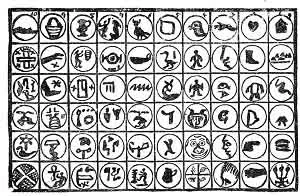
Plate 14.--THE DIVINE SEAL (see p. 613}
p. 311a
Book of Cpenta-Armij, Daughter of Jehovih
BEING OF THE FIRST DELIVERANCE OF GOD'S CHOSEN PEOPLE.
Chapter I
1. JEHOVIH spake to Cpenta-armij, Goddess of Haot-saiti, in Nirvana, in the arc of Spe-ta, Commander of the South fields of Abarom, in the Orian Plains of Bilothowitchieun, of a reign of two hundred thousand years; Surveyor for Otsias, ten thousand years; Leader of the Oixan, seventy thousand years; Captain of Geliyas' roadways, in the forest of Lugga, twenty thousand years; Founder and Ruler of Isaas, thirty thousand years; Trencher of the Haigusets swamps, four thousand years; Goddess of Nor, Goddess of Eunigi, Goddess of Poutu, each ten thousand years, saying:
2. My Daughter, behold, the red star and her heavens come thy way. She will cross the arc of Spe-ta, four years and thirty-two days' riding. Open thou thy fields in Abarom, and give her forty years' indulgence, for this is the first of her deliverances.
3. Cpenta-armij answered, saying: I see the red star, the earth, O Jehovih! Like a wandering ship in a wide ocean she cometh through my fields, the young earth, traveling on, carefully, in the roads of Salkwatka. Hath she so soon, but little more than sixty thousand years, overcome her enduring knots and torturing hells?
4. In Thy Wisdom and Power, O Jehovih, I will go in person to this corporeal world, and encourage her God and Lords for the excellent labor done.
5. Jehovih said: Call thy Council, and proclaim from My throne the FEAST OF THE ARC OF SPE-TA. Then Cpenta-Armij called her High Council, p. 312a a hundred millions, Sons and Daughters of Jehovih, and she ascended to her place in the midst of the throne of the Great Spirit.
6. And there were present: Obed, God of Oise, in Embrahk; Gavaini, Goddess of Ipthor, of the Solastis Plains; Ab, First Shriever of Riv-Seing; Holon-ho, God of Loo-Gam; Raisi, Goddess of Esdras; Wish-tse, God of Zuth, in Ronega; and all these Gods and Goddesses were above a hundred thousand years raised in etherean realms, and knew the earth before inhabited by man.
7. On a visit to Cpenta-armij were: Owks, Orian Chief of Maiter-lan, fifty thousand years, Marshal of Wiski-loo, thirty thousand years, God of Tunsin, in the Tarps Roads, ninety thousand years; and See-wah-Gon, Chieftainess of the Orian arc of Su-los, two hundred thousand years, Mistress of Aftong, in the Plains of Bel, three hundred thousand years, Pilotess of Lu-wow-lu, one hundred thousand years, Goddess of Eune, in the Mountains of Gem-king; and Ha-o-ha, Founder of Ogee, of Siam, of Wick-a-wick, and the twelve Nirvanian Old-tse, in Lo-owtz, Eli-hagam, together with their traveling hosts, each five millions.
8. Cpenta-armij said: For Thy glory, O Jehovih, I proclaim the FEAST OF THE ARC OF SPE-TA. And these, my visiting hosts, shall enjoy the four years' deliverance of the red star and her heavens!
9. Then responded Owks, and then See-wah-Gon, then Ha-o-ha, speaking at great length, and rejoicing for the invitation. And they related many adventures on other stars in the time of the arc of deliverance, the arc of Spe-ta, and with what Gods and Goddesses they journeyed, and what Chiefs and Chieftainesses.
10. So Cpenta-armij spake to her chief marshal, saying: Send thou heralds to the builders, and order me an airavagna capable of five hundred millions, and of speed, grade sixty. After this thou shalt select from my attendants one hundred millions, and after that three hundred millions of the Egisi.
11. With these, and with my visitors, I will start for the red star in twenty days.
The proper officers attended to these things, and whilst they were moving about, behold, the red star, the earth, rose up in the far-off place, the roadway, and the es'enaurs saw it, and they chanted:
12. What is yonder? The red star, Jehovih! Thy breath hath spoken. Thy voice, the silent motion. O Thy endless power, Jehovih!
p. 313a
13. Around about her, close; what is that filled with angels, thousands of millions! Wondrous are Thy works, O Jehovih, and measureless. She rideth around the sun, two hundred and seventy million miles.
14. It is her atmosphere, traveling with her; its boundary, Chinvat. How fearfully hast thou created, O Jehovih! And the magnitude of Thy places! That little red star is a world, O Father! And the thousands of millions of angels, why do they stay in such heavens, O Jehovih!
15. Then the trumpeters afar off answered: She that spinneth round the sun, the red star, the earth, a new world, a generator of the souls of men. The Gods have called her, but she will not hear. Her atmosphere is full of angels struggling for the earth. But Thy hand is upon them, O Jehovih. Thy trumpeters will line the roads of Salkwatka.
16. Then sang the es'enaurs: How lovely are Thy works, O Jehovih! Too lovely are Thy places, O Jehovih! Too lovely is the red star, the earth, O Jehovih! Thy children love it while in mortal form; after death too much they love it, O Jehovih!
17. The pipers answer for Jehovih from the Wide East: O so little to love, made I the earth, the red star. I gave her poisoned weeds and vines and grasses; millions of death-dealing serpents. Then I created poisoned marshes and terrible fevers. In sore travail, and full of misery, created I man on the earth, that he should turn and look upward for a holier place.
18. Then sang the en'enaurs: Too lovely createdst Thou Thy atmospherean heavens, O Jehovih! Thy bounden heavens that travel with the red star, the earth. The spirits raised up from the mortal earth find too much to love in Thy lower heavens, O Jehovih!
19. The pipers again answered for Jehovih: My lower heavens created I full of darkness and evil possibilities. A place for madness created I it; a place for lying and deceit; full of hell and torments. To drive man upward; to blow My breath upon him, to lift him up, as one lighteth the fire by blowing.
20. Cpenta-armij spake from Jehovih's throne, saying: What is the deliverance of man? Is it from his mother's womb? Is it from his corporeal body? Is it from the corporeal world and her atmosphere? Three births hath the Father given unto all men. In the first, man hath nothing to do, as to his shaping or time in his mother's womb. In the second he p. 314a hath a little more to do as to directing his course during his mortal life; but for the third, for the higher heavens, he must work for his own deliverance.
21. Cpenta-armij said: Three kinds of earth deliverance for man created the Creator; First from his mother's womb, coming crying, blank and helpless; second, from the tetracts (earthly passions and desires), serious and full of fear; third, from the enemies of the Great Spirit. This is the Feast of Spe-ta.
Chapter II
1. CPENTA-ARMIJ said: I looked afar, and saw the earth and her heavens traveling on. I listened to the voice of mortals! A merchant counted over his gains; he said: This is heaven! A drunkard quaffed a cup of poison; he said: This is heaven! A wanton said: This is heaven! A general, red with blood, counted the badges on his breast; he said: This is heaven! A tyrant, rich in toiling slaves, said: This is heaven! Then a vast multitude, all smeared with the blood of war, pointed to a field of mortals slain, and said: This is heaven! A farmer stretched wide his arms, toward his great possessions, uncultivated; he said: This is heaven! A little child with a toy said: This is heaven!
2. Then spake Jehovih, saying: None of these canst thou convince to the contrary. They are not ready for deliverance.
3. I listened to the voice of spirits, the angels traveling with the earth. A wanderer, going about, with nothing to do, said: This is heaven! An obsessor of mortals and of other angels said: This is heaven! The fairies, the butterfly angels, the triflers, that forever look in crystal waters to behold their own forms, said: This is heaven! The rollicking, deceiving angels, went and inspired mortals to falsehood; these angels said: This is heaven! Vampire angels, that nestle in the atmosphere of mortals, largely living on their substance, said: This is heaven! Evil angels, obsessing mortals for murder's sake, to make mortals burn houses and torture helpless creatures, said: This is heaven!
4. Then spake Jehovih, saying: None of these canst thou convince to the contrary. They are not ready for deliverance.
5. Again I listened to the sounds coming from the far-off earth. And I heard the prayers of mortals. The king prayed for his kingdom and for p. 315a himself. The general prayed for success in war. The merchant for great gains; the tyrant for great authority.
6. Jehovih said: Only the earth can answer such prayers.
7. I listened again for the prayers of mortals; they had great afflictions, dire diseases, and famines, and wars; the merchants were bankrupt, and there was great suffering, and they prayed for deliverance.
8. Jehovih said: Shouldst thou deliver them they would return to their old, evil habits. I say unto thee, the merchant shall be bankrupt; the king shall fail; the general be overthrown; the healthy shall be sick for a season. Save they know My power, they cannot learn; save they feel affliction, they will not help one another. Shall a man say: O Jehovih, come Thou and heal the sick? Shall he not first of all recognize My will and know My power?
9. To give money to the drunkard, what good is that? To give wealth and earthly prosperity to them that acknowledge not Me, is to set them against Me. To give healing to the fevered, is to teach them that I have no power in the unseen air. Answer not thou the prayers of these.
10. I listened once more to the prayers of mortals. And they were such as lived according to their highest light; they purified the flesh by pure food, and by bathing every day; and they went about doing good constantly, hoarding up neither clothes, nor silver, nor gold, nor anything earthly. And they purified their thoughts by putting away the evil tongue, and the evil eye, and evil ear; and many of them were bound by the kings, and the tyrants, and the laws of mortals; and some of them were sick. And they prayed, saying: Great is my affliction, O Jehovih. I know that in Thy sight I am justly punished.
11. But hear Thou my prayer, O Father! Make me strong, that I may carry heavy burdens for the weary; give me liberty, that I may go about helping the poor forever. Give me wisdom, that I may uncover Thy glories before men.
12. Jehovih said: Go thou, My Daughter, and deliver them. They are ready for deliverance! Answer thou the prayers of such.
13. Then I called my hosts together, five hundred millions, in the Nirvanian heavens in Haot-saiti, in etherea, the highest heaven. And we entered into the airavagna, as, swelling high on every side, the music of millions cheered us on. Upward, high up, shone the glimmering red star, whereon now our steersman pointed the fire-arrow, p. 316a to shoot meteor-like across Jehovih's pathway, and thitherward turned our buoyant souls, saluting our starters with a happy good-by!
14. Arise! Arise! By my vested power in thee, O Jehovih, shall the elements fall before my will! Arise; onward! To the red star, speed on! Airavagna, upward, on!
15. Thus spake Cpenta-armij, her voice mellow and sweet, but so tuned to the spheres it could be heard the breadth of a world. And Jehovih, with whose power and will she had learned to be as one, by long experience and studying submission to His will, lent a willing ear and strong hand. Out shot the flames, the buoyant force manufactured by less skilled workmen learning the trade of Gods, where whirled the million screws of fire, propelling, till the mighty ship reeled, and turned, and rose from its foundation, with all its joyous hosts aboard, shouting loud, and singing praise to Him who ruleth over all. Then turning round and round, slowly, spiral like, the great secret form and force of vortices now first revealed to man, to show the plan of worlds, and how holden in their places and moved in universal harmony and endless creation, the great airavagna began her course in the roadway of Salkwatka, in etherea, shooting toward the red star, the young earth.
16. Nearing first the Oixanian Spars of Ochesu, where were gathered near the road ten million spectators to see the Goddess pass in her ship; and their banners waved, and their music burst forth most exhilarating; the which were answered by the airavagna's cheering hosts and sailing streamers. She halted, to salute in honor, the Goddess Yuetisiv, and then upward shot a thousand miles suddenly.
17. Again onward, turning the breadth of the road, a million miles, to the right, to salute Vultanya, Goddess of the swamps of Ailassasak, where stood by the portico of her heavenly palace seventy million pupils, in their thousandth year of tuition, to receive the passing blessing of the Orian Chieftainess, Cpenta-armij. And thither, but a halt, as it were a nod, and downward on their heads Cpenta-armij sent a shower of newly-created flowers from the sphere above, and in turn heard their chorus rise joyfully, in as many million words of love and admiration.
18. Still onward, upward sped the airavagna, her hosts viewing the scenes on every side, here most, the richest part and most glorious places of p. 317a Salkwatka. Where the etherean worlds, rich in the glitter of swamps shining on the countless rainbow arches and crystal pyramids, afford an extensive view of the new Orian boundaries of Oteson's broad kingdoms. Here course the thousands of excursionists from the measureless regions of the Huan lights, where are to be seen a million varieties of fire-ships, of sizes from ten miles across to the breadth of a world, in unceasing travel, in tens of thousands of directions, onward in their ways, every several one a history of millions of years, and of thousands of millions of souls, and every soul rich in the knowledge of thousands of worlds.
19. By music alone, some their ships propelled, the vibratory chords affording power sufficient in such high-skilled hands, and the tunes changing according to the regions traversed. Others, even by colors made in the waves of sound, went forward, carrying millions of angels, every one attuned so perfectly that his very presence lent power and beauty to the monarch vessel. And downward and upward, and east and west, and north and south, and of every angle and course; such were the traveling regions of Wellagowthiij, in the etherean fields of Oteson.
20. And of the million ships, with their tens of thousands of millions of spirits, who so great a Goddess, like Cpenta-armij, could turn her well-learned eyes on any one, and know its home regions, and from what Orian pastures sailed; or perhaps Nirvanian rivers! Or, like her visiting friends now with her, great Owks, and See-wah-Gon, and Ha-o-ha, that with her stood side by side, reading the coursing fleets, and relating to one another who they were, and the great Chiefs aboard, with whom thousands of years ago they had been together taming some rambling star and quieting its disturbed vortex, or perhaps surveying a roadway many millions of miles through an a'ji'an forest.
21. And the while the airavagna was shooting on in the hands of her proper officers, every one to his part and all the hosts in varied amusement; for such is the labor of the high raised in heaven, labor itself becometh an amusement of great relish. Coming then to the Crossings, near Bilothowitchieun, where was a small colony, ninety million etherean weavers, superintended by Cpenta-armij's ward, Hoewuel, God of two thousand years, who knew she was coming his way, and had lighted the roadway a hundred thousand miles in honor thereof, p. 318a she turned the airavagna and cast the streamers and banners, saluting. Here again Cpenta-armij sent down to her beloved sons and daughters, for every one, flowers and keepsakes; and on every flower was written the history and mission to the earth and her heavens. And then again the airavagna upward rose and sped on.
22. Thus in Jehovih's wide universe went forth the Goddess, the Chieftainess, Cpenta-armij, went toward the red star; passing through ten thousand varieties of etherean worlds and roadways in the ji'ay'an fields and forests of high heaven, seeing millions of etherean ships going hither and thither, every one knowing its own mission and field of labor, whilst the highest raised Gods and Goddesses could exchange courtesies with the fiery vehicles, and speak them, to know whither bent, and for what purpose.
23. Then rising high; here on a level lieth the earth, here the boundary of her vortex, Chinvat; just beyond the sweep of the moon; halteth here to view the rolling earth, her land and water; and her atmospherean heavens, the sojourning place of the newly dead, and of such as have not aspired to rise to holier heavens.
24. Quickly, now, Cpenta-armij taketh in the situation, and ordereth on the airavagna, which now taketh a downward course, steering straight toward the habitable earth. Slowly now, turning slowly, and descending; viewing all the regions on every side in the great vortex, she spies the plateau Craoshivi, the place of God, new founded.
25. And to her companions and to her hosts quickly Cpenta-armij, of the Nirvanian Chengotha, explaineth the place; and, stretching forth her slender hand, itself most like a stream of fire, she crieth out: Behold my anchorage! Here bring my ship and make fast, where riseth now the voices of my weary God and his Lords, of me so long expectant. In Thy wisdom and power, O Jehovih, I will raise them up!
Chapter III
1. JEHOVIH spake to God, ruler of atmospherea and of the earth, saying: Well done, O My Son! The beginning of the end of thy trials is at hand. I have spoken in the highest heavens, in My etherean worlds; in the gardens of Haot-saiti, near the arc of Spe-ta, to My Daughter, who hath attained to One with Me, a p. 319a Nirvanian in the regions of Chen-gotha, the holy Cpenta-armij.
2. Her ship, an airavagna, with five hundred million etherean deliverers on board, hath started on the road Salkwatka, swiftly bound to thy regions, to thy new plateau, Craoshivi.
3. Send thou word to Yima to come, and to Vishnu, and to Os, each to come in rank, attended by ten millions, grade above seventy, with es'enaurs, and marshals, and captains, and generals, to come to Craoshivi.
4. And send thou invitations to thy Diva to come, and to thy sub-Gods, and to thy Lord Gods, and to thy Lords, in all the divisions of heaven and the divisions of the earth; and to bring of their people all above grade fifty. And to thy marshals give thou a list of all who will be with thee in Craoshivi on that day. And thy marshals shall apportion and divide and arrange all thy hosts thus assembled in Craoshivi, according to grade, approaching thy throne in four lines, east and west and north and south, and thy throne shall be the extreme east.
5. And in the centre of the cross shall thy marshal provide space sufficient for the hosts of Cpenta-armij to land her airavagna, and to disembark. But at the extreme boundary of the lines of thy hosts thou shalt draw a circle, and thither shall thy light makers erect pillars of light, making the circle as a wall of light; and, as the diameter of the circle is to the distance down to the earth's surface, so a tenth thereof shalt thou make as the summit of the apex of the canopy of thy capital chamber, for the Holy Council of thy Goddess, Cpenta-armij.
6. God said: Thy will be done, O Jehovih! And thereupon God sent word by his messengers, as commanded by the Great Spirit; sent invitations to all the Gods and Lords of heaven and earth, commanding them to come to Craoshivi.
7. And the Lord Gods, and Gods and Lords, thus notified, appointed substitutes to rule in their places. And they made otevans, every one suitable to the number of angels he was to take with him, and they embarked and rose up from their several places in atmospherea and the earth, and, being guided in their courses by such experts as had learned the way, they came to Craoshivi, where they were received by the chief marshal of God and his officers, and allotted their several places, according to their respective grades. But as the plateau was above grade fifty in the earth's vortex, so p. 320a there were no angels of less grade than fifty amongst all the hosts assembled.
8. And Jehovih commanded God to number the angels thus assembled in Craoshivi, and there were seven thousand millions, and nine hundred and seventy-five millions, and eight hundred thousand, officers and all.
9. And the day and the hour of their assembling, when they were numbered, was the self same time that Cpenta-armij's fire-ship arrived at Chinvat, when her light burst in full view to the hosts of God in Craoshivi. And they all beheld her coming; saw the manner in which a Chieftainess cometh to the lower heavens. And because of the great glory before them, they burst forth in a song of praise to Jehovih, the seven thousand millions.
10. Jehovih spake to God, saying: Ascend thy throne, My Son, and allot the Council and thy officers to their place, for quickly now, behold, My Daughter will descend. And when she cometh. My Voice will be with her for the years and the days of the dawn of dan.
11. So God caused his Council and his marshal and his Diva to take their places and be in readiness for the emancipated Sons and Daughters. And presently the descending star grew brighter and larger, larger and brighter, till like a sun she shone abroad over all the plateau of Craoshivi.
12. In awe stood the Gods at sight of the sublime spectacle; for the light of the airavagna was brilliant, and unlike all the lights of the lower heavens, and new to nearly all the people.
13. Nearer and nearer descended the ship of light, till soon the music of her hosts descended down to those beneath, who, awe-stricken and buoyant with delight, burst forth, entranced with the glory thereof, singing, by the force of Jehovih's light upon them, the same glorious anthem.
14. And now the marshals spread the way, for close at hand came the airavagna, over the bows of which Cpenta-armij shone like a central sun, and with her, her visiting hosts, Owks and Ha-o-ha and See-wah-Gon; so, but for Cpenta-armij holding out her taper hand, the hosts below had hardly known which of the four great lights Jehovih had sent. Presently the curtains swept across the high pyramid of the capital, and then the transparent blankets and crystal frame-work; and now shot down the anchors, three hundred thousand; lower and lower, slowly came the mighty ship, till her screen-work, from which the anchors hung, touched the very floors of the p. 321a capital; and, all radiant with holiness, before God and his hosts stood the ethereans, the glory of the most high heavens.
15. The attendants then quickly spread the homa; the masters of arches opened the floor and sides of the airavagna, and there, seated or standing, was ready the central part of the etherean Council chamber, even as if the throne of God had been built for it. Then came forth the Chieftainess, Cpenta-armij, accompanied by Owks and Ha-o-ha and See-wa-Gon, and arriving before the throne stood, waiting for the salutation and the sign.
16. God, still sitting on the throne, said: Daughter of Jehovih, Chieftainess of Haotsaiti, in the name of the Father! And hereupon he gave the sign ARC OF SPE-TA! Cpenta-armij and her three companions saluted in the SIGN OF THE CIRCUIT! Which was the highest compliment any God of the earth had ever received.
17. Cpenta-armij said: By Jehovih's command am I before thee, O God. In Love and Wisdom and Power am I come. Behold, My Voice is His Voice, Creator of Worlds!
18. God said: My throne is founded in Jehovih's name. Come thou and honor it, and bring thy most high Gods and Goddesses with thee.
19. They went forward then, and all the Gods and Goddesses, and Lords and Lordesses stood up, saluting by shaking hands; and then Cpenta-armij went and sat in the midst of the throne. Meanwhile, the es'enaurs chanted a hymn of thanksgiving.
20. Cpenta-armij, being under the Voice of Jehovih said: For joy created I man and woman; for seasons of labor and seasons of recreation. Be ye mirthful before Me, and jubilant toward one another, in remembrance of My creations. And when I call you to labor, behold, My hand will move upon you for the furtherance of My kingdoms in their resurrections.
21. Hereupon the multitude broke off from their places and stateliness, and commingled together joyfully. And all that were on the throne came down and went into the multitude, saluting and rejoicing.
Chapter IV
OF THE BIRTH OF PO, ABRAM, BRAHMA AND EAWAHTAH.
1. FOR two whole days Cpenta-armij left the people in recreation, but on the third she ascended the throne, p. 322a and lo and behold, even in that same moment of time, a light spread abroad over all the place, so that the people comprehended indeed what was meant by Jehovih's hand being upon them. And they all resumed their places, whereupon Jehovih spake through Cpenta-armij, saying:
2. Whom I brought with Me from Haotsaiti shall be My Council during dawn; but the portals shall remain open on every side.
3. Who are not of My Council are not bound unto these, My labors, and the same shall go and come as they choose, remembering the call of their respective Gods.
4. For know ye all, that whoever aspireth to Me shall come to Me; but the nearest way for many is round about. Ye being above grade fifty are already more to Me and for Me than against Me or from Me, and in equal degree are cast upon your own responsibility. For such is the light of My kingdoms, from the first to the highest: To the child, no responsibility; to grade twenty-five, one quarter; to fifty, one-half; to seventy-five, three-quarters; but to the emancipated in My etherean realms, responsibility not only to self but to all who are beneath.
5. Wherein My highest worlds are responsible for the lowest, being bound unto one another through Me for the resurrection of all.
6. In this day am I come to deliver My Gods down to the earth, to walk on the earth with mortals, raising them up in My name.
7. They who shall be raised up in Me, even though still of the earth, shall be holden alike responsible for all who are beneath them; for with My light and power before them, and doing in My name, they that are beneath them will hold them, not only on the earth, but in heaven, for their labors and words.
8. The Voice departed, and then Cpenta-armij spake in her own behalf, saying: Once around earth and heaven will I now travel, seeing with mine own eyes and hearing with mine own ears, even as is commanded of me by the Father; that I may know of mine own knowledge the condition of mortals and of the spirits who dwell both with them and in the lowest heavens. He who is still your God shall abide with you, and on this throne, until I return.
9. Cpenta-armij then descended and sat at the foot of the throne, and Owks and Ha-o-ha and See-wah-Gon with her, whereupon God went down and took her hand, saying: Arise, O Goddess, and go thy way. And then he p. 323a raised up the other three in the same way, and they saluted and stood aside. Now, as soon as God raised them up, the All Light settled upon him, and he again ascended the throne, and sat in the midst. Then spake Cpenta-armij, saying to God:
10. Jehovih hath commanded the raising of a voice in four divisions of the earth; what is thy light, O God? God said:
11. In Jaffeth I have raised up a man named Po, an Ihuan of the I'hin side, of grade ninety-five. In Arabin'ya I have raised up a man named Abram, an I'huan of the I'hin side, of grade ninety-five. In Vind'yu I have raised up a man named Brahma, an I'huan of the I'hin side, of grade ninety-nine. I Guatama I have raised up a man named Eawahtah, an I'huan of the I'hin side, of grade ninety-five.
12. The loo'is who have accomplished this labor are still with their wards, but are apprised of thy coming. Behold, I send with thee messengers who will answer thy commands.
13. Hereupon, Cpenta-armij, with her hosts, departed, and entered an otevan which God had had previously prepared for her; and she took with her one million attendants, going straight down to the earth. And first of all to visit mortals and mortal kingdoms, kings and queens, temples and oracles, and then to see Po and Abram and Brahma and Eawahtah, all of whom were sufficiently illumined to see her and to know she was the Person of the All Voice.
14. Next after these she visited all the heavenly kingdoms belonging to the earth, going first to the heavenly kingdom, belonging to Japan, thence to Ah'oan, of Jaffeth, thence to E'chad, and so on until she saw them all.
15. After that Cpenta-armij returned to Craoshivi, making a circuit sufficient to examine all the plateaux below the belt meteoris.
16. Now the whole time Cpenta-armij had been gone was thirty and two days. Whilst she had been absent, God extended the receiving grounds of Craoshivi twelve thousand miles in breadth toward the south, and founded sixty colonies. For even now were, and would be, for the four years to come, ships arriving daily with hundreds of thousands of angels who were being prepared for the degree of Brides and Bridegrooms to Jehovih, ready for the third resurrection.
17. Messengers had arrived in Craoshivi daily from Cpenta-armij, so that God knew when she would return. p. 324a And accordingly he had prepared all things in readiness, and she was received in the name of the Father, in due ceremony.
18. And Cpenta-armij ascended the throne of God and sat in the midst, and a light like a sun settled around about her. Her companions, Gods and Goddesses, now sat not near her, though on the throne to the right and left. Whilst they were taking in their respective places, the es'enaurs were chanting anthems, and the awe and majesty of the scene were magnified to the utmost.
Chapter V
1. WHEN the light fell upon Cpenta-armij, the Voice of Jehovih spake through her, saying:
2. In thee whom I made God over the earth and her heavens I am well pleased; by My hand hast thou raised them up; through thee have I maintained the Diva even unto this day.
3. Thou shalt have honor in My exalted heavens because thou art the first in Spe-ta; but thou shalt crown thy glory by descending to the earth and walking with mortals for the term of four years, even with My Son, Brahma. And when thy time is completed, I will come and deliver thee and Brahma.
4. In My name shalt thou raise thy voice and establish Me amongst men; and I will be with thee in Wisdom and Power. Take thy attendants and proceed to thy labor; in whatsoever thou desirest of Me, call, and I will answer, for I have messengers who shall labor betwixt us.
5. God then saluted, and withdrew. Next came Yima, and to him Jehovih spake, saying:
6. Being one with God, thou shalt labor even as he laboreth; and thou shalt descend to the earth, even to My corporeal Son, Po, who hath been prepared in My name, and with him shalt thou walk the earth four years. And thou shalt speak in My name, establishing Me amongst mortals, to the end that My chosen shall be delivered into My kingdoms. For thou shalt lead them away from the mortal kings, and teach them to know Me as their only King.
7. Take, then, thy attendants and go to thy labor, and at the end of four years I will appoint a successor to thee, and I will deliver thee into My etherean kingdoms.
8. Yima then saluted and stood aside. Next came Vishnu, renowned p. 325a for his labor in Vind'yu and her heavens. To him Jehovih said:
9. Being one with God, thou shalt with him fulfill the completion of Spe-ta in My name. To which end thou shalt descend to the corporeal earth, even Arabin'ya, and dwell thereon for the period of four years, with My corporeal Son, Abram. With Abram shalt thou walk and sojourn day and night, speaking and laboring in Me as fully as My very Self. And thou shalt deliver My chosen away from the kings' peoples, teaching them to have no king but Me, their Creator. To Abram shalt thou reveal My name, JEHOVIH, and establish it in secret, with due rites and ceremonies. And at the end of four years will I appoint a successor to thee; and thee will I deliver into My emancipated worlds. Take, then, thy attendants and depart to thy labor, and I will be with thee in wisdom and power. Vishnu then saluted and stood aside.
10. Next came Os, sent by the etherean regions of Haot-saiti to deliver the kingdoms of Japan and Heleste and their heavens, but who was now relieved by the Divan successor. To Os Jehovih spake, saying:
11. In honor of thy volunteering in the days of darkness for the relief of God and his kingdoms, I now create thee God of the first Spe-ta of the red star, and crown thee with Mine Own hand.
12. And, lo and behold, even with these spoken words, a light descended in the form of a crown and settled upon his head. Thereupon Jehovih said: In which I have made thee a lawful Div with corporeal power.
13. And thou shalt descend to the corporeal earth, even to Guatama, and walk with My Son, Eawahtah, whom the loo'is have bred for My Voice, for the term of four years, sojourning with him day and night, gathering together the remnants of My lost tribes, and establishing them in faith of the Great Spirit, in My name, Egoquim, suitable to the utterance I have created them.
14. And at the end of four years I will appoint a successor to thee; and thee I will restore into My etherean worlds. Take, then, thy attendants and depart to thy labor, and I will be with thee in wisdom and power.
15. Then Os saluted and stood aside, and the Voice departed; then Cpenta-armij, on her own account, said: This hour, even now, I dissolve the Diva with honor and glory unto them. The kingdoms ye ruled over shall be my kingdoms during dawn; in the Father's name I assume them and their affairs. p. 326a Peace and love and wisdom and power be with you all, amen.
16. The four inspiring Gods then departed, and in the outer circuit of Craoshivi they had in waiting, which their attendants had prepared beforehand, each one an otevan fully equipped and ready, into which they embarked, with their attendants, fifty thousand each. The musicians then saluted them, even as they moved off, severally, in direct lines for the earth.
17. Cpenta-armij then lowered the light a little, and her three visiting companions, Owks, Ha-o-ha and See-wah-Gon, sat near her on the throne, even before her etherean Council, five hundred millions.
18. Cpenta-armij said: I have visited the earth and her heavens, even her heavens on her very surface. By the power vested in me, I relieve from duty all Lords and Gods, and sub-Gods, and sub-Lords, on the earth and in the heavens of the earth. This my messengers will communicate to them, commanding them, in my love and wisdom, which are one with the Father, to come at once to Craoshivi, that I may honor them and apportion them for the third resurrection, which will occur in four years.
19. To the Lord-dom, Maitraias, founded by Vishnu, I appoint and allot Yugsaesu Lord, with thirty millions of my etherean hosts, to be chosen by himself. Let Yugsaesu come before me! Yugsaesu then came before Jehovih's throne, and Cpenta-armij said unto him: Repair thou unto Maitraias, taking thy hosts with thee. And when thou art come to the place, possess it in Jehovih's name, and order it after the manner of a Lord-dom, providing sub-kingdoms unto thy place as may be required.
20. And thou shalt have dominion over all angels that are already with the plateau of Maitraias, or such as may be hereafter sent to thee from the other heavenly divisions and from the earth. And thou shalt provide thy kingdom unto the service of the Father, chiefly to prevent angels returning to the earth to obsess and pollute mortals. For thou shalt find hundreds of millions of them who have no aspiration but destruction. Many of them were slain in wars on the earth, and are still seeking vengeance, and if escaping to the earth, obsess mortals to burn cities, and to murder, and to all manner of wickedness.
21. Thy labor, O Lord, is not to reform them or teach them, for I shall appoint and allot others to that end; but thou shalt labor wholly and p. 327a entirely to prevent the return of Maitraisans to mortals. And that thou shalt be strong before them, thou shalt draw from all other heavenly kingdoms, which I shall found, a sufficient guard to enforce my commandments.
22. For four years shalt thou labor in this matter, and thou shalt also raise up one with thy Lord-dom, to be thy successor after thee. Take, then, thy hosts and go to thy labors, and the Father will be with thee in wisdom and power.
23. Yugsaesu then made his selections from Cpenta-armij's hosts, and they came and passed before Jehovih's throne, saluting, and then withdrew and went into a ship which had, likewise, been prepared for them by the proper persons, whose labor lies in that matter; and, having saluted with music, they departed, Yugaesu and his hosts, rejoicing.
24. Again Cpenta-armij spake, saying: Behold, the time is now come upon the earth when I will divide and allot unto each of its several great divisions heavenly kingdoms accordingly.
25. To Japan, because she is a remnant of the submerged continent, I establish a heavenly kingdom, and it shall be called SUASU.
26. To Jaffeth, because she has preserved much of the first language, I establish a heavenly kingdom, and it shall be called HI-JEE-TSE.
27. To Vind'yu, because she is the most advanced in holiness of all the earth, I establish a heavenly kingdom, and it shall be called VRI-MIJ.
28. To Arabin'ya, because she is the foundation of Jehovih's migratory hosts who shall go forth around the earth, I establish a heavenly kingdom, and it shall be called PARADISE.
29. To Heleste, because she was rescued from darkness by Os in time to meet this arc, I establish a heavenly kingdom, and it shall be called SPE-TA.
30. To Uropa, because she was first founded by a woman, I establish a heavenly kingdom, and it shall be called HIMMEL.
31. To South Guatama, because she is the least inhabited of all the great divisions of the earth, I establish a heavenly kingdom, and it shall be called AHDEN.
32. To North Guatama, because she is the ground on which the circumscribing of the earth by the different nations shall take place, where the revelations of heaven and earth shall be made to man, I establish a heavenly kingdom, and it shall be called KOSMON.
p. 328a
33. To all the South Islands, I establish a heavenly kingdom, and it shall be called FLUE.
34. To all the North Islands, I establish a heavenly kingdom, and it shall be called SIN-YOT.
35. Hereupon the light of Jehovih overspread Cpenta-armij, and His voice spake through her, saying: To My ten heavenly kingdoms which I have made through My Daughter, behold, I choose ten Lords, and My ten Lords shall go to the kingdoms I apportion unto them. In My name shall My Lords build unto Me ten heavenly places of delight, for the spirits of the dead that rise up from the earth.
36. And My Lords shall establish in My kingdoms places of learning and places of labor; places for the sick and helpless angels that arise up from the earth, that My Lords shall raise them up, to know Me and the glory of the worlds I have created for them; inspiring them to perfect themselves in wisdom and purity and power, that they may arise and inherit My etherean heavens.
37. And My Lords shall appoint ashars unto mortals at the time of their corporeal birth; and the said ashars shall be appointed in watch and watch, that they may relieve one another, having a time of labor and a time of rest. And My Lords shall so appoint My ashars that each and every ashar shall have a hundred changes of labor with a hundred different mortals, in order to learn all the varieties of men and women I have created. And the number of ashars shall be equal to the number of mortals dwelling on the earth.
38. And My Lords shall appoint asaphs to reside in heaven, sufficient in number to receive the spirits of all who die on the earth, which they shall receive from the ashars in My name. And the asaphs shall take such angels, thus received, and place them in the regions My Lords shall have prepared for them, where there shall be sufficient of teachers and nurses and physicians in My heavenly places to administer unto them.
39. And My Lords shall provide discipline to the spirits thus received, who shall be trained according to the Divan law which I established through My Gods, which shall extend beyond the es'yan even to the thirtieth grade.
40. And My Lords shall provide for them that have attained to the thirtieth grade to be sent in suitable ships to this place, Craoshivi, and deliver them to My daughter, Cpenta-armij, p. 329a and to her successor, God or Goddess, who shall have dominion over the whole earth and her heavens.
41. For behold, it is the nature of man on the earth to go after earthly things instead of heavenly; and it is the nature of the es'yan to strive for the earth instead of My higher heavens. Be ye guarded, therefore, to lay a foundation to prevent angels and mortals from going downward; to provide inspiration to make them desire to ascend to My holy regions.
42. The Voice now departed, and Cpenta-armij spake on her own account in Jehovih's name, saying:
43. Whosoever I call, let them come before Jehovih's throne, for they shall be the Lords whom I shall anoint for the heavenly kingdoms I have established:
44. Le-tzoo, Lord of Suasu, a heavenly place over Japan.
45. Oe-wah, Lord of Hi-jee-tse, a heavenly place over Jaffeth.
46. Loo-gam, Lord of Vri-mij, a heavenly place over Vind'yu.
47. Ha-kappa, Lord of Paradise, a heavenly place over Arabin'ya.
48. Jes-Sie, Lordess of Spe-ta, a heavenly place over Heleste.
49. Yo-han, Lord of Himmel, a heavenly place over Uropa.
50. Hinot-tse, Lordess of Ahden, a heavenly place over South Guatama.
51. Ami, Lordess of Kosmon, a heavenly place over North Guatama.
52. Horam, Lord of Flue, a heavenly place over the Southern Islands.
53. Puetse, Lordess of Sin-Yot, a heavenly place over the Northern Islands.
54. All the angels named came before Cpenta-armij when called, and they now stood abreast Jehovih's throne, whereupon the All Light overspread the place, and the Father's Voice spake through Cpenta'armij, saying:
55. Ye are My Lords and Lordesses, by Me raised up and allotted your places. For four years shall ye labor, even to the end of this dawn; and ye shall provide successors to take your places after you. And herein lies your greatest glory and Mine. For they that succeed you shall hold dominion two hundred years. And they in turn shall provide successors after them, and so on, for these successions shall continue till the arc of Bon.
56. With Mine own hand weave I crowns, and crown you severally for my kingdoms!
57. When these words were spoken, the now fast gathering light, of a variety of colors, took the shape of ten separate crowns, and descended on p. 330a the heads of the Lords and Lordesses. The Voice ceased, but Cpenta-armij spake on her own account, in Jehovih's name, saying:
58. My Lords and Lordesses, go to your labors in the love, wisdom and power of the Father, and He will be with you; and ye shall be a glory in His kingdoms. Choose ye, therefore, each and every one ten millions of my hosts, who shall go with you to your places, to be afterward exchanged or divided, as I may direct. That ye may choose in order, he who was first appointed shall choose first; the second next, and so on until ye have your chosen.
59. All these Lords and Lordesses were of the Higher Light, and knew beforehand, and had in like manner already chosen their attendants, so that at a given signal the multitudes thus chosen rose up and came before the throne, forming ten groups of ten millions each. And they at once formed in line and passed before Jehovih's throne, saluting in the sign, BIRTH OF SPE-TA ON THE EARTH, and Cpenta-Armij answered in the sign, JEHOVIH AND THE LOWER HEAVENS.
60. Cpenta-armij said: For the glory of this scene, I bequeath a day of rest, that my hosts may witness the departure of the fleets of Jehovih's Lords and Lordesses. At once the hosts joined in a mighty chorus of thanksgiving and praise; and they went without and saw the ships laden with the joyous crews; saw them set their great fleet in motion; sang and shouted to them in Jehovih's love, for the glory of His high heavens.
Chapter VI
1. IN the beginning of the second year of Cpenta-armij in Craoshivi, messengers came before Jehovih's throne, saluting, and greeting from Ctusk, who now lived under the name, Ahura, and submitted the following communication, to wit:
2. Ctusk, who hath become Ahura, a servant of Jehovih, and is now God of Ailkin by just judgment of Jehovih, desireth audience with the Most High-Raised Cpenta-armij, Daughter of the Great Spirit.
3. To this Cpenta-armij answered: Greeting, in love to my brother, Ahura. By the Grace and Power of Jehovih, come and see me, bringing thy attendants. Now, after the lapse of a few days, Ahura came to Craoshivi, attended by one million, escorted p. 331a by music, and proclaimed according to the discipline of the higher heavens, with heralds and trumpeters. And Cpenta-armij's hosts received Ahura and conducted him and his hosts within the capital chamber; and Ahura went before Jehovih's throne, saluting on the sign, SECOND PLATEAU, and Cpenta-armij answered in NIRVANIAN ROAD, SALKWATKA. She said:
4. In the name of the Great Spirit, Whose Daughter I am, I welcome thee in love and high esteem. I know all thy past record, and do look upon thee as the foundation of one of Jehovih's brightest suns. Long have I desired that thou shouldst petition to come to see me; and much desired I to see thee and greet thee in the Father's name.
5. Ahura said: O thou Most High Chieftainess, of hundreds of thousands of years, how can I stand before thee? I know thou hast seen many truants in thy day, and watched their course thousands of years. Thou canst see before me all that awaiteth me and mine; the past and the future are as an open book before thee. That I have stood before thee and looked upon thee, I am blessed above all things since the day of my birth.
6. Behold, the hand of the Great Spirit hath appeared before me; I comprehend the only road that leadeth on to everlasting resurrections; I know that the ONE ALL PERSON must ever stand as the key-note for angels and mortals. Without Him, a man is as a ship without a rudder; the seas around about him drive him to ruin in the end. Blessed is he who hath had the experience of this in an early day of his life. Nervous and full of fear is he who hath been tried two thousand years!
7. Then spake Cpenta-armij, saying: I perceive thy desires, O Ahura! I understand why thou art before me. Thy wisdom is great indeed. Thou perceivest that thy plateau is in the second removal from the earth. Thou fearest that some of thy hosts will forsake Jehovih, and usurp kingdoms of their own, even as thou didst in time past. Thou desirest me to raise thy plateau farther away from the corporeal earth.
8. Ahura said: If it be Jehovih's will, even for this purpose am I come before thee!
9. Now came a great light, bright, like a sun, and settled over the throne, enveloping the Goddess, Cpenta-armij, and Jehovih's Voice spake out of the light to Ahura, saying:
10. My Son, My Son, why hast thou p. 332a so little faith! Behold, I am with thee even as with this, My Daughter. All thou lackest is faith. Go thou back to thy plateau and raise thou it thyself. My Daughter shall come to thee, and show thee, and thou shalt not fail. To have faith in Me is to be one with Me; to lack faith in Me is to be far removed from Me.
11. Ahura said: O Jehovih, teach Thou me how to begin to have faith. To find the beginning, there is my stumbling block!
12. Jehovih said: By trying Me, there is the beginning. By learning to know thine own power in Me; and to know My power in thee; this is the sum of all power and wisdom. By the lack of faith in Me, man setteth up himself; by the lack of faith in Me, the self-assuming Gods build kingdoms for themselves.
13. The failure of man is proof of My power; the failure of all kingdoms is proof of the lack of faith in Me, whereby My power is manifested over them. First, after the abjuring of self, cometh the constant manifestation of power through faith, the example of which holdeth the multitude to Me and My works.
14. Inasmuch as thou hast suffered fear in thy soul for a relapse in thy kingdom, thou hast opened the door for disaster. Have I not proved this on earth?--wherein the faith of a captain leadeth his soldiers on a victory, and his lack of faith breaketh them down in weakness. Think not, O Ahura, that My examples are less with My Gods.
15. If, therefore, My Daughter should come to thy kingdom and raise it up, behold, she would lessen thy hosts' faith in thee. For which reason thou shalt return to Ailkin, and proclaim to thy people that thou wilt raise thy plateau. And though millions of them will consider it vanity, and beyond thy power, behold, I will provide unto thee that thou shalt not fail.
16. Ahura said: I perceive Thy Wisdom, O Jehovih! That which Thou hast put upon me, I know I shall accomplish through Thee. The Voice departed, and Cpenta-armij spake on her own account, saying: Thou shalt proclaim a day for this great work; and thou shalt send invitations to me and my hosts, and to my Gods and Lords, Goddesses and Lordesses. Send thou, therefore, thy surveyors and inspectors, and determine whither thou wouldst raise thy plateau, and thou shalt be provided from my hosts whatever assistance thou mayst need.
17. Ahura then saluted, and he and his hosts departed without the capital p. 333a chamber, where they rested awhile in recreation with the etherean hosts, and then they entered their ship and departed, and returned to Ailkin. After which Ahura appointed the day for the resurrection, and sent messengers throughout atmospherea, proclaiming what he would do, inviting Gods and Lords, with their attendants, to come and spend the day with him.
18. Jehovih spake to Cpenta-armij, saying: Send thou thy mathematicians to estimate the grade of Ahura's plateau; and send thy surveyors to the place he hath chosen, that thy hosts may know the power required; and provide thou from thine own hosts, privily, suitable stationers that Ahura shall not fail. For, in time to come, Ahura shall be one of My greatest of Gods.
Chapter VII
1. AHURA immediately on his return to his kingdom set about accomplishing this great labor.
2. Now there were with Ahura many who had been sub-Gods and were captains and generals under him whilst he was in rebellion against Jehovih and His kingdoms; and when they heard of the proclamation they said within their souls: What, is it possible Ahura is at his old games? For they knew not his concert with the kingdoms above, and so believed not in his power.
3. Jehovih moved upon Ahura, and induced him to send numerators and graders throughout his kingdom, to take the measure of those who had faith, and of those who had no faith; and of those who had neither faith nor non-faith. And these Ahura graded and numbered, so when the time came he should know where to place them. Then he numbered the unlearned and dumb; and then the enthusiastic; and he graded them and arranged them also.
4. When he had this much accomplished, there came to him one Anuhasaj, a former sub-God, and he said to Ahura, privily: I love thee, Ahura, and for that reason come before thee. Thou shalt meet only failure and disaster in thy undertaking. How many times, in thy mighty kingdom of Ctusk, didst the All High fail to come to thee?
5. Ahura said: Because of thy love I rejoice in thee; but because of thy lack in faith I deplore thee. How long will it be before angels and mortals understand the Father and His kingdoms? Behold, in the days of Ctusk I labored not for Jehovih, but for myself and my exaltation, and for p. 334a the exaltation of my kingdom for mine own ends. Hence the All High came not to answer my prayers. Now, in this matter, I am doing that which is not for me, nor for my kingdom for mine own sake, but for the Father's sake only. And I know He will not fail me.
6. Anuhasaj said: Hath it not been from the time of the ancients till now, that certain ones say that by prayer and faith all things are possible, assuring us, moreover, that by such are all things accomplished in earth and in heaven? And yet, who hath not witnessed more failure than success? I do not desire to discourage thee, O Ahura, but I know so well the lack of faith on the part of all men, and that to get one's self weaned away from self is the weakest talent in the soul. And, for which reason, too, it is ultimately the greatest glory. But this would seem to me expedient: To have Cpenta-armij and her hosts do this resurrection for thee.
7. Ahura said: Even thine every thought have I already fulfilled. And through the Chieftainess came the Father's Voice, commanding me to do this resurrection on mine own account.
8. To this Anuhasaj made no reply, but in his soul he was not free from the tetracts, being jealous that Ahura had advanced him in obtaining the Father's commands. But Ahura perceived it not, and he said unto Anuhasaj: The hosts of Ailkin have been numbered, and there are four thousand millions and five hundred millions. And within the grades above es'yan there are one hundred and seventy thousand schools, two hundred and thirty thousand colleges, four hundred thousand factories, and two hundred thousand hospitals.
9. Behold, on the day of resurrection I shall have the Han-od-wotcha recreation for my hosts. Let this, then, be thy labor, to have the matter proclaimed throughout Ailkin. Anuhasaj said: By Jehovih's leave and thine, I am satisfied.
10. Thus ended the matter, and Ahura remembered afterward, that Anuhasaj had not answered positive acceptance, and so Ahura feared, and, to make doubly sure, called Evasan, and committed the same charge to him.
11. Now when the time came, lo and behold, Anuhasaj fulfilled not his part, but Evasan did; and Evasan, moreover, came to Ahura, bringing answers from all the departments.
12. In the morning of the day of the resurrection, Ahura sent for Anuhasaj and inquired concerning the p. 335a matter. Anuhasaj said: Nay, I issued not thy proclamation nor thy invitation; for I reasoned on the matter, saying to myself: If the resurrection be a failure, then would it indeed be better that the ignorant know not of it.
13. Ahura said: To do well one's own part; is this not the highest? Anuhasaj said: It is the highest. Even so have I done that which seemed the highest in mine own sight.
14. Ahura said: The resurrection was not for thee nor for me, but for the hosts. For thou hadst previously admitted that the resurrection of this plateau was the highest, best thing to be done. Because it seemed impracticable in thy sight, thou wert not justified in withholding thy hand. Thou shouldst have striven to accomplish that which was for the universal good, not even whispering thy distrust to any one. Then, had it failed, thine own soul had been clear. For which reason Jehovih came to me, and I was so admonished to depute Evasan in thy stead, and he hath fulfilled my commands.
15. Anuhasaj made no reply, but went away in displeasure, and for the present the matter was dismissed.
16. Ahura had sent invitations to the Lords of all the divisions of the earth, asking them to come, bringing their attendants with them. Of these the following came, to wit: Oe-wah, Lord of Hi-jee-tse; Ha-kappa, Lord of Paradise; Loo-gam, Lord of Vri-mij; Jes-Sie, Lordess of Spe-ta; Ami, Lordess of Kosmon; Horam, Lord of Flue; and Puetse, Lordess of Sin-Yot, each bringing one million attendants, besides hundred of thousands of visitors of lower grade.
17. Cpenta-armij, with her visitors, Owks, and See-wah=Gon, and Ha-o-ha, and five million attendants, and five and thirty million visitors, from Craoshivi, came in an avalanza made for the purpose.
18. The place of removal which Ahura had decided to inherit was in the second belt below meteoris, known in atmospherea at that time as Vara-pishanaha, which laid betwixt the land of Vind'yu and the star-region known as the HORSE AND COW AND CALF PASTURES, a heavenly place, uninhabited. From Ailkin to Vara-pishanaha was fourteen hours in grade twenty-five, which was the average of Ahura's hosts; but its enlargement in the upper belt would be as fifteen to nine.
19. Cpenta-armij and her hosts were p. 336a the first to arrive in Ahura's dominion; for she had determined that nothing should lead to failure in Ahura's enterprise. Through her advice Ahura stationed water-bearers the entire distance of travel, lest, in the excitement, the drujas might run into knots or riot. For such is the nature of darkness, both on earth and in the lower heavens: the low delight to dwell in a city, or near a place of filth, if companionable, rather than go to a place of isolation where improvement is possible.
20. Jehovih had said to Ahura: Suffer not thy drujas to know thou wilt remove them so far from the earth; confide thou only with the wise in reference to thy destiny. Cpenta-armij had said to Ahura: Provide thy drujas a holiday in parade, with rites and ceremonies. And Ahura perceived how the matter had to be, and he apportioned eighty millions of his hosts to provide parades, rites and ceremonies for the drujas of his hosts, and of these drujas, ranking below grade five, there were one thousand millions and two hundred millions, being such angels as knew not the left hand from the right, nor could remember to count five from one day to the next. And yet the next thousand million, rating below grade twelve, knew so little more, they were scarcely wiser than beasts in the field.
21. Cpenta-armij, seeing these, exclaimed: O Jehovih, how long must Ahura labor with these in order to raise them to grade ninety-nine! O that they who set themselves up as Gods knew what lay before them! O that leaders of men knew! O that mortal kings and queens knew the bondage that they lay down for themselves! What a work in the lower heavens for them before they can ascend! And yet, O Jehovih, Thou art just. Some one must labor with these unfortunates. It is well that man aspireth to be king, and Lord and God.
Chapter VIII
1. WHEN they were assembled for the resurrection, the thousands of millions, Cpenta-armij went and stood at the right hand of Ahura, and next to her stood Owks; and on the left hand stood See-wah-Gon and Ha-o-ha, and the Voice of Jehovih fell upon Ahura, saying: Extend My lines to the four corners of the world; give into My labor the highest grades.
2. Accordingly, the marshals drew p. 337a the line on the plateau, and the hosts of etherea stood equally toward every corner, arranged in phalanxes of ten millions each; each having the form of a quarter of a circle; leaving the lines of power from centre to circumference, and the distance thereof was equal to the width of Vind'yu on the corporeal earth. And the centre of the plateau was high raised, so that Ahura stood on the highest place, which laid near the CAPITAL OF THE COUNCIL.
3. Now it so happened that the jealous Anuhasaj stood twelfth on the east line, being the thirteenth from Ahura's left hand. Cpenta-armij said to Ahura: Behold, the line is shattered. Ahura said: I feel nothing; how sayest Thou, The line is shattered? She answered him, saying: He who doeth Jehovih's work must deal as Jehovih dealeth. Only those who are in concert with thee must labor with thee. Otherwise thy best endeavors will be thwarted. Ahura said:
4. O thou far-perceiving Goddess! In my much love and sympathy I admitted Anuhasaj to the lines. He hath been my best friend. Cpenta-armij said: Thou shalt know but One Friend, Jehovih.
5. Ahura perceived, and he now felt the shattered place, and he sent his chief marshal to Anuhasaj to bring him from the rank. And when Anuhasaj was before Ahura, the latter said unto him: Because thou servest thyself, thou shalt not stand in line; behold, there is but ONE to serve, even Jehovih. Anuhasaj said: A joy upon thee and thy scheme. Because thou art powerless, thou hast singled me out as an excuse before these Gods and Goddesses!
6. Ahura made no answer, but spake before Jehovih, saying: Give me strength for Thy Children's sake, O Father! Behold, I have cut loose the foundations of Ailkin; with high-extending cords I have bound her to Vara-pishanaha. By virtue of Thy power in me I will raise her up. In Thy name, let my hosts in will command: ARISE! UPWARD! ONWARD! O AILKIN! ARISE, UPWARD, ONWARD, O AILKIN! ARISE, UPWARD, ONWARD, O AILKIN!
7. With the third enunciation, which came from the thousands of millions in concert, behold, the plateau moved from her foundation; turned a little, then slowly, upward arose. Loud shouted all the inhabitants of that heaven; with their own universal will the Great Spirit stretched forth His hand and raised up the heavenly continent. Even as with His hand He p. 338a toucheth a corporeal continent and sendeth it beneath the ocean, so raiseth He His heavenly places toward His emancipated worlds. Yea, because of His Spirit upon His people, they desire it risen; with them and Him, ALL IS ONE.
8. And now, the Gods, with unbroken will, held their places as it were a day for the corporeal earth, and not a God or Goddess from the single purpose in thought strayed a moment of time and no distracting thought intervening; for such is the will and mastery of Gods over their own thoughts. Even then, to keep up the concerted force joyously, those who had the drujas in charge sat the games and tournaments going, with racing and music, such as should leave not one idle moment for all the hosts of Ailkin, nearly five thousand millions.
9. Upward and onward rose the great plateau, making straight course for Vara-pishanaha. Ahura stood in the eyes of the unlearned populace as the greatest and most masterly of all the Gods. One alone, even Anuhasaj, stood a while transfixed with disappointment and chagrin, even hoping some mishap to Jehovih's proceedings. And finally, he went wandering about, sore and out of sorts with all righteousness. Thus was raised the heavenly place, and no longer called Ailkin, but Vara-pishanaha, home of Ahura and his hosts. And now, when they were securely established in the place, and the Gods and Goddesses broke from line, they all came greeting to Ahura. And, even in the same moment of time, a messenger came from God, who was with Brahma on the corporeal earth, bringing to Cpenta-armij the following commandment, by proxy, to wit:
11. In Jehovih's name, give thou a throne and crown to Ahura for Me, and in My name. I promised him thus!
12. The light came upon Cpenta-armij, and Jehovih spake through her, saying: Behold the work of My hand, O Ahura, My Son! In the substance of heaven fashion I thee a throne and high-raised capital. And with Mine own hands weave thee a crown. From this time forth thou shalt be My God, and I will abide with thee.
13. Whilst the words were being spoken, the throne rose up before Cpenta-armij's hand, and a high-raised capital came and stood over and about the throne. And there descended from the heavens above bows of light and color, which in Cpenta-armij's fingers were shaped and woven into a crown which alighted on Ahura's head. And there went up from the hosts a universal p. 339a shout of praise and thanksgiving. Then broke in the trumpeters, seven millions, and after they prayed a while, the es'enaurs chanted, THE CONCERTED HOSTS OF JEHOVIH!
14. Thus was founded Jehovih's heavenly kingdom, Vara-pishanaha; thus established Ahura his dominions where rebellion and seccession were cut off forever. And Cpenta-armij gave to Ahura a thousand messengers, and opened a roadway to Craoshivi. Ahura ascended his throne, and the Gods and Goddesses saluted him, GOD OF VARA-PISHANAHA, and they and their attendants departed to their several places.
Chapter IX
1. IN the third year of dawn Jehovih spake to Cpenta-armij, saying: Gather together the officers of thy traveling hosts, and take with thee thy companions, and go visit all the Lords and Lordesses of the earth, of thy appointing. And let thy recorders make their accounts of the affairs of the earth and her heavenly kingdoms, that they may be taken to, and entered in, the libraries of the Nirvanian kingdoms.
2. Also shalt thou set thy collectors of Brides and Bridegrooms to work in Craoshivi; and give to thy collectors otevans, that they may also visit thy Lords' kingdoms and collect all the angels prepared for the next resurrection, and bring them to Craoshivi, where they shall be classified. For in the coming resurrection thou shalt provide twelve avalanzas, and those who are raised to the etherean heavens thou shalt cause to be divided according to their grade and rate, and have them delivered into regions suitable to their advancement.
3. During the time prior to this, the Lords had contributed largely to Craoshivi, and already there were upward of twenty thousand million angels capable of taking the third resurrection. The departure of Cpenta-armij on this visit was important, for it involved the selection of the next succeeding God of earth and heaven, who should sit on the throne during her absence. At this time, the reigning God was with Brahma on the earth. To him Cpenta-armij sent messengers, acquainting him with the commandments of Jehovih.
4. God answered through his messengers, saying: Greeting, in the name of Jehovih, to Cpenta-armij, His Daughter, Chieftainess! The reigning p. 340a God deputeth thee, O Goddess, to make the selection in his stead, to be crowned at the termination of dawn. And now, accordingly, Cpenta-armij sent forth her examiners, to search after the highest, best, most learned of all that had been raised up of the earth, capable of the God-head. For sixty days her examiners were at work, and on the sixtieth day, in the evening, they had completed the search. And it fell upon Thale of Peola, of corporeal birth, five thousand years.
5. Thale, a tiller of the soil in corpor, born in spirit in Yueson, ninety years; five years in es'yan; thirty years in factories; in the nurseries, ninety years; in the colleges, one hundred and eighty years; projector, seventy years; surveyor, sixty-five years; measurer, two hundred years; entered an etherean airavagna, and traveled seven hundred years; returned to the lower heavens of the earth and was Lord in six successions for each of the chief earth divisions twelve hundred years; was called by Onavissa, Goddess of Ni-ya-ag-ag-ha to clear the roads of Chenshaya, beyond Chinvat, where he labored six hundred years. Returned again to the earth and her heavens, and served as captain and general four hundred years; served as marshal seven hundred years, under four different Gods and Lords; and the balance of the time traveled as messenger and swift messenger. Of the rates in a thousand, he was nine hundred and ninety-nine. And he knew the whole earth and her capabilities; could read a thousand million voices at the same time, and interpret them and answer them, and had even created plateaux. He knew the atmospherean heavens, habitable and uninhabitable; the roadways; the oceans and nebulous regions; knew the ascending and descending ethe; knew the power in the different rings of the earth's vortex; knew the c-vork-um, and its times and places.
6. Cpenta-armij sent a delegation of one million angels to wait on Thale and bring him before the throne at Craoshivi, sending them in their private otevan, and under the guardianship of her chief marshal, with this commandment:
7. Thale, of Peola, greeting to thee, in the name of Jehovih, Who commandeth thy immediate presence at the throne in Craoshivi. Of all the honored in these heavens, thou standest first on the list, and art appointed by our Father the next succeeding God, through His Daughter, Chieftainess of Haotsaiti. In my p. 341a stead thou shalt sit on the throne whilst I complete my labor in dawn; after which thou shalt be crowned, of the earth and her heavens, Jehovih's God!
8. Cpenta-armij knew Thale, for he had sojourned in Otsias, in etherea, three hundred years, where she had been Surveyor ten thousand years. So when he came before Jehovih's throne, Cpenta-armij was rejoiced to meet him in person; nevertheless, she first saluted in rank, saying:
9. My brother, welcome in the Father's name, and joy be unto thee. Jehovih hath called thee to this throne; thou shalt be one of the pillars of His everlasting temples. What I put upon thee in the Father's name, thou shalt consider from Him.
10. Thale said: Before Thee, O Jehovih, I bow to Thy decrees, which come through Thy High-Raised Daughter, Chieftainess of Haot-saiti. I accept whatsoever is given me to do, that will raise up man to rejoice in his creation. By virtue of Thy power in me, O Jehovih, I know I shall not fail. May Thy Light be upon me!
11. Cpenta-armij now raised the light to the highest atmospherean grade, and said unto Thale: Approach Jehovih's throne, O my brother, and hold up thy hands toward High Noon, as the symbol of the highest light, for as the sun is to the earth and atmospherea, so is Jehovih to the soul of man and to the etherean worlds.
12. Thale stepped on the foot of the throne, and the marshal stood at his side. The whole Council were seated, and sweet music rose from the es'enaurs, and added to the solemn scene. Thale then faced the place of High Noon in the temple and held up his hands, saying: I am in Thy Will, O Father!
13. Jehovih spake in the light over Cpenta-armij's head, saying: Thale, My Son, Thou art My God, and thou shalt have dominion over the earth and her heavens for two hundred years. Whatsoever thou shalt do shall be of Me and My doing. Thy word shall be My word; thy labor My labor. And thou shalt have Lords and kingdoms, and all manner of heavenly places; and all of them shall be My places through thee.
14. And at the expiration of thy service, thou shalt raise up a successor to thee, who shall be worthy of thee and Me. And he shall likewise have dominion in Me and in My places; and likewise raise up a successor to come after him, and so on until the next dawn of dan. Be thou joyful in dominion; My worlds are places of p. 342a delight, and mirth, and peace, and love, and righteousness, and good works.
15. The Voice ceased, and then Cpenta-Armij spake on her own account, saying: He who will crown thee will come at the end of dawn; till then thou shalt hold dominion in the RED HAT in remembrance of the FEAST OF LIONS. Approach the Judgment Seat, my brother, and I will give to thee in Jehovih's name. With that, Cpenta-armij gathered from the colored rays of light a substance light as ethe, and made a red hat and put it on Thale's head, saying: Sit on the throne in remembrance of the FEAST OF LIONS, that I may be honored of thee, and rejoice before my hosts.
16. Thale then sat down on the throne, and the Council proclaimed in the sign, LION'S DEATH! Thale answered in the sign, DOMINION OF THE LAMB! Thereupon Cpenta-armij said: Council of Jehovih, hear my voice. A new God have I raised up unto my labor. And thou, O God, hear my voice. A new dominion have I given into thy keeping.
17. For one year I shall now visit my Lords and Lordesses in the first plateaux of the earth, for it is a part of my labor for the Father. And when I shall have finished with them, I shall return to my present reigning God of the earth, who is with Brahma, and I will deliver him and Brahma, and return again to this kingdom, whence the etherean resurrection will take place.
18. Provide ye accordingly in all things, even as I would were I here; and number the Brides and Bridegrooms one hundred and sixty days in advance, and send swift messengers to etherea, to the Nirvanian fields and forests in Chan-us-hoag, and thence through Salkwatka to Haot-saiti, in the etherean Abarom, finding six regions, suitable for grades from sixty to ninety. And ye shall send greeting to my sister, Chue-in-ista, Goddess of Oambuyu, asking her to deliver us.
19. Thus saying, Cpenta-armij, and Owks, and See-wah-Gon, and Ha-o-ha took leave, and in their own proper way departed out of Craoshivi, and in the airavagna descended to the lowest plateau, and so visited the Lords of the lower kingdoms.
Chapter X
1. THE Lords and Lordesses gave not much labor to Cpenta-armij; for they had long been high-raised Gods and Goddesses in other worlds, and p. 343a knew their parts well. But to each heavenly place Cpenta-armij sent her heralds in advance, and the Lords and Lordesses in turn sent receiving escorts to meet the airavagna. And when the Chieftainess arrived, she was asked in the usual manner to honor the throne, and she thus sat on all the thrones, ruling in very person, and in her presence the Voice of Jehovih spake in the Light before the assembled COUNCIL OF THE HOSTS, and it was thus fulfilled in the ARC OF SPE-TA that the Voice had circumscribed the whole earth.
2. And when Cpenta-armij was about to depart from each heavenly place, she always descended to the foot of the throne of the Lord, and sat thereon; and the Lord went down and took her hand, saying: Arise, O Goddess, and go thy way; the Father calleth thee! And then would she arise and depart to another Lord or Lordess, in like manner.
3. Cpenta-armij took with her three thousand angel scribes and recorders; three thousand angel artists; three thousand angel geologists and mineralogists, besides many others; whose trade was to make reports of the lands of the earth, and the waters of the earth, and the air above the earth, with pictures thereof.
4. Jehovih had said to Cpenta-armij: Thou shalt make reports of the land and water and air of the earth; and of all the living thereon and therein, with pictures thereof; two copies shalt thou make; and when the end of dawn is come, thou shalt take the two copies with thee in thy ascension to My etherean worlds. One copy shalt thou put on record in the library of Haot-saiti, and the other copy shalt thou send to the Hyperiis Council of the United Chiefs and Chieftainesses, for their own deliberation.
5. For the Hyperiis Council shall determine from this, thy report, what is good for the earth; as to whether she shall be changed in her course, or broken up and divided; or whether she needeth a'ji or dan; and they shall send out road-makers to that end, or send vortices against her vortex, to break it or rule over it, according to My light upon them.
6. Besides these, Cpenta-armij had a thousand recorders, whose business it was to prepare reports of the Lords' kingdoms, and of the factories, colleges, nurseries, hospitals, the hells, if any, and knots, if any; to record the grade and number of spirits in each heavenly place; to record the earthly kingdoms, and kings and queens and their subjects, their occupations and p. 344a grades, and their rate of corporeal life age. To record the percentage of familiar spirits with mortals; the fetals, the drujas; as well as the ashars and asaphs; and the temples and oracles in use by mortals; the altars and places of worship. To record the number of I'hins still inhabiting the earth; the number of pure I'huans, who worshipped only one Great Spirit; the druk order, who always have idols or saviors, and are given to war.
7. One full moon of four quarters remained Cpenta-armij with each one of the Lords of the earth; and then she departed, going into all the habitable places on the earth, and in the heavens that rested on the earth. In ten moons she had completed her labor with the Lords of the first resurrection; had witnessed the manner in which the Lords sent away the upraised to Craoshivi, to enter the second resurrection. And her scribes and recorders had completed their labor also.
8. And now the Chieftainess sent her airavagna back to Craoshivi, with her visitors, Owks, See-wah-Gon and Ha-o-ha. But for herself she had a piedmazr build; and, taking ten thousand attendants, besides the workers of the boat, she descended on to the very earth, to visit the four Gods, in the four great divisions of the earth; with Wah-tah; with Brahma, with Abram, and with Po. With each of these she spent twelve days, and then she departed and went to Maitraias, the heavenly place, the only Lord-dom of the earth, where ruled Yug-sae-su, with thirty millions. Here she remained twelve days also; and the inhabitants gave a tournament and festival.
9. After this Cpenta-armij departed for Craoshivi, for the end of dawn was near at hand.
Chapter XI
1. IN the Council of Craoshivi the Voice of Jehovih came to Cpenta-armij, saying: Behold, the time of thy sun and stars riseth in the Road of Salkwatka. The red star neareth the fields of Abarom; Great Oteson hath filled the sinks and slues of Yosawakak; thousands of millions of My Sons and Daughters behold the Feast of Spe-ta.
2. Hear thou thy Creator, O Cpenta-armij! For thou shalt spread broad the table of My hosts; such like as hath never been before in Haot-saiti. And thou shalt send Obed, God of Oise; Gavaini, Goddess of Ipthor; Ab, Shriever of Riv-Seing; Raisi, Goddess of Esdras; Wish-tse, God of Zuth; p. 345a Harava, God of Yon-yon; Vraga-piet, Goddess of Zoe; and Loo-chung, God of Ata-bonaswitchahaha. And thou shalt send for the Gods and Goddesses of the Plains of Cnoe-Chang; and for the Gods and Goddesses of the Chi-ha-wogo Roads; and for all the Gods and Goddesses in their own Nirvanian fields; and for the Great Chief, Shoo-lo, of the Roads of Jinihassij, and for all the Gods and Goddesses in his dominions in My etherean worlds.
3. And yet thou shalt remember of thine own knowledge many Gods and Goddesses; and thou shalt charge thy companions, Owks, and See-wah-Gon, and Ha-o-ha, to sit in Council with thee, that ye may remember whomsoever of Chiefs and Chieftainesses, of Shrievers and Gods and Goddesses, that may be delightful:
4. And thou shalt command them in My name to meet in the Feast of Spe-ta, for it is the first in this, My new world. Make way for them; make place for them, O My Daughter! Make wide the roadways in My lower heaven; make My Holy Feast glorious.
5. Cpenta-armij said: Too wide are the dans of earth; too far apart and cumbersome, O Father! More than two thousand millions and four thousand millions will be my harvest unto Thee, O Jehovih! Great is Thy wisdom in Spe-ta; the time for the beginning of quarter ascensions, fifty years.
6. Thy Gods and Goddesses, O Jehovih, and Thy Chiefs and Chieftainesses, will bind up these loose heavens into wholesome discipline. I will send my swift messengers into Thy far-off etherean worlds, and bring Thy Sons and Daughters to Thy Feast.
7. Cpenta-armij sent off into the wide heavens, high beyond the earth heavens, invitations to tens of thousands of high-raised Sons and Daughters of the Great Spirit. Then she called her surveyors and table-makers before Jehovih's throne, and said unto them:
8. The end of dawn is near at hand; I will give a feast, a very great feast. Go ye and survey the ground from Craoshivi to the Lakes of Oochi-loo, in etherea, and for the length thereof make ye a width in the form of Fete; and the road of the Fete shall be sufficient for the passage of twelve avalanzas abreast; and the depth of the Fete shall be as from the surface of the earth unto Chinvat. Within twelve sios of Abarom, and of the height of the circuit of Bilothowitchieun shall ye carry the border flames; and the flames shall be of double currents, going and coming, that the food of the feast may be p. 346a brought from any region suited to the high-raised grades.
9. And the arc of the feast shall encompass the whole earth, and extend outward to the belt of Craoshivi, and then downward in two lines, east and west; and the downward lines shall be like the feet of a compass, one stationary and the other movable. And the light that extendeth from the arc down the movable line shall rest on the delivered hosts of Abram, and it shall bear upon his people, that they may hereafter draw Light direct from the Father's throne in Craoshivi; and it shall move westward and be as an inheritance of Jehovih's light upon His corporeal sons and daughters.
10. But the line that standeth in the east shall be a base line and centre, whither shall descend the Father's light upon the delivered sons and daughters of the hosts of Brahma and Po. And because of the arc of Spe-ta upon them, they shall remain in their own divisions of the earth.
11. And for the deliverance of the harvests of the quarter, the high-raised horns of the arc shall stand to the four quarters, east, west, north and south.
12. Jehovih then spake through Cpenta-armij, saying: For I will illume the horns thereof, and My new world, the earth and her heavens, shall rest in the light of My Roads forever. That no man, having My examples before him, can misunderstand Me.
13. Behold, it is given to a child, only one lesson a day; and to a youth, two lessons a day; and to a mature man, many lessons a day; so, in the early creation of man, I give few lessons; then in the youthful age of the race, many more lessons; but when the race hath attained to full manhood, behold, I lay My light at their feet, that they may take My lessons every day.
14. In one time I send the angels of the dead to lead man up to a knowledge of Me and My places; but when man hath attained to think for himself, I set up my arc of Spe-ta; and it is as a candle in the firmament of heaven, wherefrom My Light falleth upon the soul of My people, without any interpreter, save Mine Own Voice.
15. For which reason, when one of My worlds hath attained to Spe-ta, I come to deliver them from kings, and queens, and priests, and angels, and it is as the maturity of a son in his father's house, when he inviteth his neighbors and spreadeth a feast.
p. 347a
16. Open wide thy places, O Cpenta-armij! A great joy is upon My etherean worlds; My high-raised Sons and Daughters shall have great glory in the earth and her heavens. Behold, I have proclaimed Myself in the words of mortals; four high-raised sons have learned to know their Father in heaven.
Chapter XII
1. CPENTA-ARMIJ said: Who can understand Thy models, O Jehovih! Who cannot understand Thy models, O Jehovih! Thou hast shown to mortals the food of the flesh, and the source of the substance of the blood. As a symbol before them of Thy es'sean worlds and Thy es'sean peoples, Thou hast created Thy corporean members; to receive and to impart, but this is not all. Thou createdst poison, to show man that that which receiveth not, and imparteth not, is death.
2. Most wisely, O Father, hast Thou provided the degrees of subsistence unto all Thy creations: To the corporean, corporeal food; to the atmospherean, atmospheric food; to the etherean, ethe'ic food. Wide will I spread my tables, O Jehovih. Thy Gods and Goddesses, and Thy high-raised Chieftains, shall sit at the Feast of Spe-ta.
3. The Chieftainess sent swift messengers into the regions of etherean worlds, near the Roadway of the Great Serpent, five hundred thousand swift messengers. Down to the atmospherean regions she sent messengers to the Gods and Lords, her laborers, ten thousand messengers. To her invited guests she privileged each one million attendants.
4. Next Cpenta-armij sent fifty thousand arrow-ship makers in the regions of Cventagma, in the etherean Itis, to prepare ceremonial salvers and connecting rods, so that all the thousands of millions, being united, could hear the Voice of Jehovih from her throne, movable, in her airavagna. Twelve counterparts to these she sent down to the lowest heavenly regions, so the All Light should pierce the corporeal earth.
5. And now, when her well-skilled workmen, of tens of thousands of years' experience, had saluted and gone off to their respective labors, the Chieftainess spake before the Council, saying: Because of my arc upon the earth and her heavens, the Light of our Father will forever remain with mortals p. 348a and in the hadan fields. But, behold, even as a young man, coming to maturity, goeth away on his own account, in great hope and self-conceit of his powers, to meet many misfortunes and great darkness, so will it be with the earth and her heavens after Spe-ta. Because I plant my arc in these heavens, and say to the Gods thereof, Ye are free! Behold, there shall rise numerous false Gods of great power. And as a young man going forth is puffed up with conceit, so will the atmospherean Gods believe they know all things, and so bring great darkness and misery upon their kingdoms and upon themselves.
6. But the Light of my arc shall stand; shall grow like a small seed planted; and in time to come, both angels and mortals shall understand that there is but ONE ALL LIGHT, a very center, to Whom all Gods are but as small diadems. As a young man of the earth must have experience of his own to realize his own shortness, so must even the Gods of these lower heavens be left to run with a loose rein, for the glory of Jehovih, and for themselves in final deliverance. For which reason, hereafter, the bondage of the discipline of the God and his Lords shall be as nothing. Only hells and knots shall they longer cast out with fire and water; only by persuasion, and the example of practice, shall they hold dominion in their respective places.
7. As in the early days, a king ruleth with a rod and with tyrannous laws; and as, in a riper age, the king and his armies give way to a power vested in the people, so shall my arc be the giving of the lower heavens, and the earth beneath, into the keeping of themselves. But my arc, which is the foundation of the Father's upper kingdoms within the lower heavens, shall stand forever.
8. I go, now, on my journey down to the earth, in my airavagna, to receive and deliver my four Gods, Os, and Vishnu, and Yima, and Ela-elia, God in Chief.
9. Thus saying, Cpenta-armij descended to the foot of Jehovih's throne, and the light fell upon Thale, and he rose up from the throne and descended, taking her hand, saying: Arise, O Goddess, and hear thou the Voice of thy Father, Creator and Ruler! Behold, thy labor on the earth and her heavens is near the end; and because of thy steadfastness, I am honored in thee, My Daughter.
10. Whilst thou art delivering My Gods, behold, I will be with thee, and whatsoever thou desireth of Me I will p. 349a give unto thee. My Sons and Daughters shall receive the visiting hosts from the high heavens, and allot them places in the feast; and My Sons and Daughters shall receive and adorn My Brides and Bridegrooms; and My trumpeters shall proclaim Me in My works, from the surface of the earth to the farthest places in Salkwatka. Yea, My Light-makers shall plant the staff of My holy fire in the throne of Craoshivi, and the foot thereof shall pierce the earth in the land of Vind'yu, to receive and deliver My earth Son, Brahma.
11. Go thou, O Chieftainess, Holy one, of Great Wisdom and Power; it is the Voice of thy Father!
12. Cpenta-armij stood aside, and then said: To ye, my beloved companions, Owks, and See-wah-Gon, and Ha-o-ha, when the staff of the Father's light hath descended to the earth, come ye then to me quickly in my arrow-ship of fire, for it shall be a signal betwixt us that in that hour I will raise up my Gods from the corporeal earth; and I will open the earth and bring forth the bodies of my son, Brahma, and his wife, Yu-tiv, whose youngest son holdeth the leaven of the Osirian law. And I will have there assembled the hosts of my ten Lords, and I will deliver into their hands, for their successors, the fulfillment of the Divan laws.
13. Her companions responded: In Jehovih's wisdom and power, we will be there.
Chapter XIII
1. THE Light of Jehovih now spread over Haot-saiti and lined the Road of Salkwatka, in etherea, extending from the Orian Banks of Loo-che-wan to the Oixanian Spars of Ochesu. The Cross Roads, Chi-ea-wha-chong, and the plains of Sha-tumatz, were as seas and worlds of crystal fire. And in the piercing light, the old-time Gods, of millions of years agone, sped forth in awful majesty, in answer to the prayers of Cpenta-armij.
2. And there rose over the earth and her heavens, farther than Chinvat, a trident arc, broad as a world, of shimmering light, the countless rays of ethe, as mortals see the glimmering air in a summer's day; but the ethe was of every color, hue and tint, reflective and brilliant, the clear soul of things separate, the very breath of Jehovih. It was the beginning of the form of the arc of Spe-ta, the deliverance of the earth and her heavens into p. 350a a new condition; to give, to bestow it upon itself, ratified by the ceremony of a festival for the Gods and Goddesses of that neighborhood, hundreds of millions of miles around about!
3. Meanwhile, their high-raised companion, Cpenta-armij, known and loved in hundreds of etherean worlds, was down on the low earth, laying the corner-stone for Jehovih's everlasting kingdom, whereon should fall, presently, from out the arc of Spe-ta, a shaft of fire, the feast for the purified Chieftainess, who had for four years subsisted on the coarse provender of the lower heavens!
4. And, touched by the hand of Immortal Light, was Brahma, long trained to look toward Jehovih; for his angel wife rose upward, leading his vision toward a realm amongst the Gods and Goddesses, whom he beheld in countless numbers receiving her most royally. Thus gazing on the glorious scene, the great man in soul came forth, leaving his corporeal part stretched on the ground. And Cpenta-armij and God took him; received the soul of Brahma, and held, in obedience to the sacred purpose, his place in the sacred circle with mortals three days.
5. Then, on the fourth, the Chieftainess signaled her swift messengers; and they touched the currents along, till they ran high beyond the earth's vortex, where the stationed Gods of etherea fastened on the ethe'ic wave, extending to the great arc over all.
6. It was the signal for the shaft of light; of which mortals have a weak and coarse symbol in the electric currents which tear things unmeaningly and without judgment; but the ethe'ic current is not so small and purposeless, but mighty, and a tool from Jehovih's fountain of All Power, with skill, and learnedly directed by such high-raised angels as have had millions of years of experience, who know well what prayers deserve an answer from the Immortal spheres.
7. And Cpenta-armij's name, and word, and wisdom, had long been in fellowship with mighty works on many worlds; and her well-trained thought, so tuned to the Creator's purpose, kept ever in concert with the ethe'ic foundation of the place and administration of thousands of Gods and Goddesses.
8. And when the signal shot upward, and the shaft of light began to pierce the earth's vortex, making way for Craoshivi, it was also the signal for Owks, and See-wah-Gon, and Ha-o-ha, to fly instantly for their arrow-ship and make all speed for Cpenta-armij; the which they did now, even as a flash p. 351a of light darteth forth, guides and directors of Jehovih's flame to the grave of Brahma and Yu-tiv.
9. As Cpenta-armij, standing by her ship, saw the shaft descending, she flew forth to the centre of the circle; her hand pointing to the graves, she said: There, O Jehovih! Come forth, O earth! Earth, in Jehovih's name! 'Tis I command!
10. And down fell the bolt of light, piercing the new disturbed ground, rich with mortal tears, and thus made powerful to the soul current; and as a breath of wind would move a heap of feathers, so did the light, by the wave of Cpenta'armij's hand, blow the earth away, and lift up the buried forms of two dead lovers, Brahma and Yu-tiv, and marched them full before the mortal audience, newly animated, and lovingly, hand in hand, triumphant over death.
11. Then spake Hog, the youngest mortal son, an Osirian in belief, seeing the resurrected forms: It is, it is! The very Brahma! And Yu-tiv! My father and mother!
12. The great Brahma, now quickened in Cpenta-armij's arms, and God's, spake from Jehovih's throne, a few words, to the loving sons and mortal concourse, then took final leave. Cpenta-armij seized the folds of the shaft of light, as a mortal would the ropes and canvas of a toy ship, and wrapping the earthly part of Brahma and Yu-tiv about securely, then wheeled in line her own ship and raked in the etherean current from high heavens.
13. Tossing up her hand, the known signal to the great workers in the trident arc above, the exchanging currents of the traveling flame began, and now raised up the whole etherean hosts and the bodies of Brahma and Yu-tiv, the which had not raised a mile before they were etherealized, scattered and gone, and the souls of the two sweet loves in cognizance and fellowship with the millions of Jehovih's Sons and Daughters now swiftly making way for Craoshivi.
14. Cpenta'armij's work was done. In the arc of light and companionship of her compeers, the feast was open, and the thousands of millions in rapport sat along the series of tables, hundreds of millions of miles, to relish soul food brought from more than a thousand worlds.
15. Meanwhile, God, to finish his labors, resumed his throne in Craoshivi, just in time to receive the twelve avalanzas sent from Yuckowts' factories, in Abarom, in etherea, to receive p. 352a the four and twenty thousand million Brides and Bridegrooms in Jehovih's name, who were to take the degree of third resurrection and be raised beyond the earth's vortex and emancipated in the etherean realms of Hoat-saiti.
16. Chue-in-ista, Goddess of Oambuyu, chief commandress of the fleet, having been apprised of the number of initiates, had prepared twelve thousand rings, a thousand for each avalanza; and the fleet in turn was in a ring, and the ring extended sufficiently wide to encircle the holy capital and throne in Craoshivi, so that when it had descended to its place, God and his officers, and the Holy Council of heaven and earth, now thirty million members, were in the centre of the audience. On every side, far as the eye could see, stood the Brides and Bridegrooms of Jehovih, arrayed in spotless white, fearless before the Light and ceremonies.
17. When the fleet landed, Chue-in-ista, the commandress, came forth from the east, facing God on the throne. She said: Thy voice, O God, hath called the name of Jehovih. Behold, I am His Daughter, sent by Him to know thy will and Holy Desires ?
18. God said: Behold, I am His Son! Thou art my Sister! Hear me, then, in our Father's name. I have here a harvest of four and twenty thousand million angels brought up out of the earth, pure and holy, for Jehovih's emancipated kingdoms.
19. Chue-in-ista said: In His name let them answer before me, that I may witness their wisdom and power sufficient to dwell in All Purity. My Father and I are one; my hosts have crossed the Nirvanian pastures; they no longer feed on substance rising from below, but on the Light emanating from etherean realms above.
20. God said: I know Thou hast provided me, O Jehovih!
21. Then here responded the hosts of Brides and Bridegrooms, saying: By Faith I know I am safe in Thy kingdoms, O Jehovih. Take me to Thy emancipated worlds; give me scope and power and wisdom for greater works.
22. Then followed the full ceremony in the usual way of the third resurrection; and when it was completed, the which had been witnessed by Cpenta-armij and other Chieftainesses and Chiefs above, who were at the feast of the arc of Spe-ta; and when God had said: O Jehovih, give me crowns for Thy Sons and Daughters, Brides and Bridegrooms for Thy etherean worlds!--there were cast down by Cpenta-armij and her hosts, p. 353a four and twenty thousand million crowns; and they alighted on Jehovih's Brides' and Bridegrooms' heads.
23. And now God turned to Thale, who was to be his successor for the next two hundred years. God said: In Jehovih's name, to thee I bestow the crown of earth and her heavens. And to thee also do I bequeath the triangle, symbol of these regions and the inqua, and the trident, the latter being new in these worlds, and symbolical of the arc of Spe-ta; and the interpretation of the trident shall be The Three Lights, Jehovih, His Son, God, and the Star in the mortal soul, emblem of resurrection.
24. Thale said: In Thy name, O Jehovih, will I be God of earth and her heavens till the next rise of dan! Be Thou with me, O Father!
25. Thereupon, he that had been God laid the crown and jewels on Thale, saying: Hail, O God of earth and heaven! Hail, O God of earth and heaven! Hail, O God of earth and heaven!
26. Thus ended the ceremonies. He that had been God descended to the foot of the throne and sat down; and then God, who had been Thale, came down and took his hand, saying: Arise, O God, and go thy way! And he rose up and prepared to depart, for now had the ceremonies lasted one full day.
27. Cpenta-armij, seeing it was finished, signaled the hosts for the close of the festival, and with her airavagna passed over and above the fleet, and gave Chue-in-ista, the commandress, the sign, whereupon the ascent began. The tens of thousands of millions of angels entered their respective places. The music of the es'enaurs and of the trumpeters sounded, and resounded, to the distance of a hundred worlds.
28. Upward rose the fleets; downward fell the showers of flowers and perfumes to those left behind. Higher and higher the great world of lights; higher and higher, till soon they passed beyond the earth's vortex, the boundary Chinvat.
END OF BOOK OF CPENTA-ARMIJ, DAUGHTER OF JEHOVIH.
p. 311b
First Book of God
BEING COTEMPORANEOUS WITH THE BOOK OF CPENTA-ARMIJ, DAUGHTER OF JEHOVIH. AS THE UPPER BOOK RELATETH TO THE HIGHER HEAVENS, SO IN LIKE MANNER DEALETH THE FIRST BOOK OF GOD WITH THE LOWER HEAVENS AND WITH THE EARTH, FOR THE SAME PERIOD OF TIME. FOR WHICH REASON THIS BOOK IS PLACED BELOW THE OTHER. THIS BOOK TREATETH FULLY OF THE FOUR GREAT PERSONS CHOSEN BY GOD, NAMELY: PO, OF CHINE'YA, INSPIRED BY THE GOD YIMA; BRAHMA, OF VIND'YU, INSPIRED BY THE GOD DIV; ABRAM, OF PARSI'E, AND AFTERWARD OF EGUPT, INSPIRED BY THE GOD VISHNU; AND EA-WAH-TAH, OF NORTH GUATAMA, INSPIRED BY THE GOD OS. AND THESE INSPIRATIONS WERE FOR THE SAME PERIOD OF TIME, KNOWN IN THE KINGDOMS OF HEAVEN AS THE TIME OF THE ARC OF BON. THESE FOUR GODS WERE THE CHIEF DIVAN GODS OF THAT DAY, HA'CHUE BEING DIV IN CHIEF.
Chapter I
1. THE Creator of creations: Out of Whom are all voices: Of Whom are all things in semblance. From Him and in Him these utterances. By His Gods and Lords and high-raised angels and mortals.
2. Into Whose dominion gave He the earth for the glory of Jehovih, Whose God came and walked and talked with such as had been prepared for the deliverance of His chosen.
3. For the four preserved divisions of the earth gave he four Sons of holy light and power for the voice of God and his Lords:
p. 312b
4. Po, of Jaffeth; Abram, of Arabin'ya; Brahma, of Vindyu, and Eawahtah, of Guatama, whose records are everlasting on the earth, which are testimony that these men were raised up by the Father for His Own glory, and for the deliverance of men.
Chapter II
THE FIRST CHINESE BIBLE.--BEING OF PO, AN IESU, CHOSEN BY GOD FOR THE CHILDREN OF JAFFETH.
1. THESE are the generations of the line of Light from the time of Zarathustra:
2. Shu sa, Gwan, Loo, Sam, Dhi Jo, Wee, Him, Gow, See, Wing, He Wen, Tse Kong, Lam Ne, Moo Yow Tine, Luts, Hime, Mai Se, Hong, Ghee, Wan Ghee, Tse Loo, succeeding one another.
3. All the foregoing were seers and prophets of God (Light), having the Voice from their youth up, and were each in turn a shield and guardian unto the chosen of God (Faithists).
4. God (Light) said: With Tse Loo, behold, the Voice was lost. But I called aloud on the face of the earth, and my Light spread abroad.
5. And there came a woman of Che Song, named Ha-se, an I'hin, through whom the Voice was regained.
6. Ha-se had seven sons and seven daughters, all of whom heard the Voice, and saw the Light.
7. And God divided the fourteen sons and daughters, one from another, and sent them in different ways.
8. These, then, are the tribes than sprung of them: King, Si, Gwe, Loo, Hi-Gah, Hi-se-Gua, Yo, Ha Fung, Ne, Hi Lam, Se'ing, Yuth, Lo, Jon, Ying'e and Ho Lun Gow.
9. From the line of Ha Fung sprang Enam-jo and Ze'zoo (half I'hin). From Ying'e sprang No'e and Yu Laim; also Yu'tse and He-ah. And God commanded the He-ahns to dwell toward the south, and they so dwelt.
10. From the line of King descended the We Yah-ho; and they lived toward the north and made fellowship with the Foe-Sim, who were I'huans by blood, and also followers of the Zarathustrian law under the name Sa Sin, having rab'bahs whom they called bah, the same as to this day.
p. 313b
11. From the tribes of Foe-Sim sprang Han; and from We Yah-Ho sprang Hi and Te-Wing'e; both of which tribes had the Light and the Voice.
12. And all the north regions of Jaffeth dwelt in peace and happiness.
13. And God looked upon them and blessed them in all things.
14. Nevertheless, it came to pass that the tribes of Han forgot the commandments of God; and Le Han, a mighty chieftain, rose up amongst them, and re-established the Osirian doctrines; that corporeal knowledge should stand higher than the Ormazdian law.
15. Han usurped the central throne of Jaffeth, calling himself HAN, KING OF THE SUN. And so Han gave himself up to getting knowledge, and to enforcing knowledge upon the people.
16. Han issued the following decree: Han, King of the Sun! Behold, there is one sun and his satellites. There shall be but one kingdom, with satellites.
17. Behold me, I am the sun king! I will put away all other doctrines and learning. Let all the world bow down to me!
18. Han was asked: Shall a man not worship the Unseen? He answered: Better is it to worship a stone, which thou canst see.
19. Han said: Worship not in words, but in works; worship not in prayer, but in doing righteously. What is prayer but crying to one's own weakness?
20. If there be an Unseen Light, He will do His own way. What is the use of praying to Him? Rites and ceremonies to Him are the expression of folly. Rites and ceremonies to our forefathers are excusable. If their souls continue to exist, the rites and ceremonies may give them good pleasure.
21. So, Han abolished the worship of Jehovih (Light) and His God and Lords.
22. God looked down from his holy hill in heaven, and he said: It is well; let Han have dominion. Behold, Han enraptureth the multitude with his new doctrines, remembering not that these doctrines were tried thousands of years before.
23. God prophesied through his prophet Ze-wing'e, saying: Hear me, O Han, and all ye people of the whole world. I prophesy by the Voice and Light (God and Jehovih); I know my words are true words; By words the p. 314b soul is bent; by not praying to the Unseen, the Unseen will be forgotten. By the abolition of rites and ceremonies to the Gods, the Gods will be forgotten. Man will rise up in self-conceit against his Creator, saying: Behold me; I am the highest of all things; my judgment is the greatest of all wisdom. And the tribes of men will aspire to establish opinions as fundamental doctrines. War and destruction will come upon the nations!
24. Han would not heed the prophecy of God. Han established what was called THE FIRST HAN DYNASTY, and it overspread the land of Jaffeth from centre to circumference.
25. And there came of the laws of Han great persecution against the Faithists, the worshippers of Jehovih (Light).
26. Han said: Try them by the food they eat; and whoso refuseth to eat fish or flesh shall suffer death. Neither shall any man nor woman have favor in the courts, who holdeth sacred the life of a cow, or a horse, or a dog, or any other animal on the face of the earth, or in the waters, or in the air above the earth.
27. So, the Faithists, the followers of the Zarathustrian law, were outlawed, and were tortured and put to death on every hand. And it had come true as prophesied by Ze-wing'e.
28. God said: Behold, they have not only forgotten the Creator, and denied His Person in words, but in behavior also. For they no longer hold sacred anything He created alive, even man.
Chapter III
1. FROM Ze-wing'e, God raised up prophets for seven generations. Ze'wing'e begat Do Tse, who begat Yin, who begat Hi Ne, who begat Lan Se'ang, who begat Dhi Hsotch'e, who begat Ho Lon, who begat Po, who was an iesu in birth.
2. When Po was yet very young, the voice of God came to him, saying: Be steadfast in the doctrines of thy forefathers, eating neither fish nor flesh; thy God will not only preserve thee alive, but thou shalt gather together the scattered tribes of Zarathustrians, the Faithists, and re-establish them in this great land.
3. In those days many of the Zarathustrians p. 315b were celibates; and the king saw his people being reduced by war, and he made a law against celibacy, commanding all men to marry, and all women to bring forth children, or be put to death.
4. When Po was grown up, God said to him: Behold, thou canst not fulfill the law, for thou art iesu-born. But I will fetch thee a wife like unto thee, who is also barren, but ye twain shall be blessed with three children, and thou shalt call them Wan-le, Toghan, and Tse Loo.
5. And it came to pass that a woman of Hong Ge, with three adopted children, escaped from the tyranny of Dhi'wan, fleeing for the southern tribes of HiSeeGua and Yo, and Gwan Goon; and with her, Po wed, and he named his wife Ah T'dowh Jee.
6. Po was twenty years old when he married, and he went with his wife and three children to the country of Heng'a Di, which name signified brother land, and he labored at scutching flax and hemp.
7. And God came to Po, saying: What is the extent of thy fidelity to the All Highest Light?
8. Po said: I will obey him in all things.
9. God said: Wouldst thou sacrifice thy three sons, if commanded by thy Creator?
10. Po said: They are the Creator's, not mine. How dare I sacrifice that which is another's?
11. God said: Thou art wise; thou knowest the Ormazdian law.
12. Then Po asked: Who art thou? Who is this that cometh upon me silently, asking questions?
13. God said: Go thou, visit Hi Seiang, the philosopher, and question him.
14. Hi Seiang was governor of the south province of Heng'a Di, and was, withal, a man of great learning.
15. Po came to him and questioned him, saying: What is this that asketh us questions? Why do we question and answer ourselves all day long?
16. Hi Seiang answered: Are we not two selfs? Do we not discourse within ourselves like two selfs?
17. Po said: Which, sayest thou, is the superior self, that which questioneth within us forever, or that which is forever answering?
18. The governor said: That which asketh questions must be the superior self.
p. 316b
19. Po said: Who is it?
20. Hi said: It is nothing, it is something. Po answered him, saying: It appeareth to me, these two selfs are two different persons; one belongeth to the flesh, the other to the Creator. Because this questioning self is the same one that seeth and heareth Gods and angels.
21. Hi said: What sayest thou? God and angels?
22. Po replied: God and angels.
23. To which the governor took exception, saying: Dost thou too defy the law?
24. Po said: What I see I see, what I hear I hear. Something external to ourselves made us, and ruleth over us.
25. The governor asked: Have we not rid the world of superstition? Why dealest thou with doctrines that were in the dark ages? I tell thee there are two things only in all the universe; the unseen firmament, and the corporeal worlds that float therein. Their action and reaction on each other produce what we call life, which is but an effervescence that cometh and goeth, and there is the end. The laws are right. Han hath done a good thing in abolishing the doctrines of the ancients.
26. Whilst they were yet talking, God sent a blaze of fire into a bush standing nearby, and a voice spake out of the flame, saying: Who, then, sayest thou I am? For verily I am!
27. The governor saw the light, and beheld that the bush was not burnt; and he also heard the voice. But God suffered him to be hard of heart, and Hi said: Behold, thou comest to me, knowing I am a philosopher, and thou castest thy spell in the bush, like a magician. I am master of a thousand books, and am registered as a man of great learning. Thou hast offended me.
28. Po said: Why accusest thou me? For is it not just for me to accuse thee of casting the spell? I cast it not.
29. Again did God appear and speak, saying: Accuse thou not this, my son, Po. Thou shalt labor with him. Behold, I give into thy keeping the country of Feh; for even this hour hath died Moo Gwon. The tribes of Ghan shall be gathered together in Feh and Heng'a Di.
30. Hi Seiang, the governor, was astonished at the words of the Light; p. 317b and he sent a servant, to ascertain if Moo Gwon was dead; and it turned out to be true, though the distance was a day's journey each way.
Chapter IV
1. HI Seiang, the governor, sent for Ah Sin to come and investigate the nature of Po. So, when the three were together, God wrote in the sand the word TE-IN, and it was as if a flame of fire pierced the ground.
2. Po said: From this time forth Te-in shall be the name of the tribes who have faith in the Creator only. Because he alone hath written it.
3. Ah Sin said: How canst thou distinguish betwixt that which is written by the spirits of the dead, and that which is written by the Creator?
4. Po said: Light cometh in light; darkness cometh in darkness.
5. Hi Seiang asked: Sayest thou, thou canst see the angels and the Gods?
6. Po said: I see the angels, but the Gods I cannot see. Angels are like ourselves; but the Gods are as a flame of fire.
7. Now, whilst they were thus discoursing, a light in the form of a triangle came and rested on Po's head, and the word Te-in was inscribed on the sides of the triangle.
8. The governor said: What signifieth this? And Po, being under the influence of the light of God, said:
9. Call me Te-in; I am the Father (rab'bah, or bah) over all the living. I write in the sand, and speak in the mouths of my seers and prophets. He that ye call Po is My Son, begotten for the deliverance of My chosen out of the bondage of Han and his satellites (sub-kingdoms).
10. Behold, My people are imprisoned and tortured; persecuted and abused. And ye twain have kingdoms taxed for the glory of Han in his unrighteous work.
11. Provide ye also triangles, and espouse Me, and I will deliver your kingdoms also.
12. Hi Seiang and Ah Sin both desired some pretext to throw off the yoke of the Han dynasty, and now lent willing ears to the instruction of Po and the Voice (Te-in).
13. Accordingly, the learned men of p. 318b these provinces were called together, to learn of God, through Po, the mysteries of earth and heaven, and especially as to the great monarchy.
14. When these Councils were assembled, God cast his light upon Po, and they all saw it. And the words Po spake were called GOD'S WORDS (Vede'or). Word by word learned they the wisdom of God, repeating them over and over, which was called LEARNING BY THE MOUTH, being in contradistinction from learning by books and tablets.
15. God said: Great trials will come upon My people. The kings will seek to destroy the doctrines of the Lord thy God (Te-in).
16. For which reason ye shall not write nor engrave My words until I come in judgment of the world.
17. These, then, that follow, are the sacred laws given through Po, by God (Te-in):
18. Seek to bring forth heirs that will be a glory to thy Creator.
19. Marry not because of the impulse of the beast (the natural man), but consider thine own spirit and the spirit of thy spouse.
20. Shut not up thyself in celibacy, but multiply and adorn the earth.
21. Thy Creator provided milk for the infant; but with the coming of the teeth, thou shalt provide for their service also.
22. Feed thou him according to the Ormazdian law. To make him a warrior, give thou him fish and flesh. To make him patient and strong, with docility, remember the camel and the ox, feeding on the herbs that grow on the earth.
23. Ne-gwon asked: Was not celibacy the highest of all laws? Is it not so now?
24. God said: There are times for all things. In the days of Zarathustra celibacy was the first of laws. In those days man was not ready for God's laws. Yet thou shalt not call the one law higher than the other.
25. The fullness of earth knowledge requireth marriage, yet the bondage after death holdeth the spirit of man for six generations to his own heirs. By celibacy, a man's soul is not bound after death (by the love he beareth his children) to linger about the earth, and he may ascend quickly into paradise.
26. The man or woman that is weak, or deformed, or blind, or deaf, or with p. 319b running sores, or with hidden sickness, shall not marry, nor bring forth heirs. Nor shall man take sorrow to his soul for this; for it is the testimony of the Father that his race is emancipated from the earth.
27. Thou shalt keep sacred the Panic language; nor shall these, my holy words, be given in any language till my time is fulfilled on the earth.
28. Thy sons at the age of eleven years, and daughters at the age of nine years, shall begin to learn maxims. And at that same time they shall be consecrated to the Creator and committed to His service. And of the sixth law this is made a part, to wit: Teachers in public shall be celibates; children who decide that they will become teachers, or priests, or priestesses, shall take the vows of celibacy. For such persons are married to the Great Spirit; and they shall be as Gods and Goddesses, knowing no more love to one person than another.
29. Remember that they who marry, are chosen by Ormazd to raise up offspring for the glory of heaven and earth; and they shall dwell together in peace, love and harmony.
Chapter V
1. THE wise shall rule over the foolish, but to raise them up.
2. The rich shall apportion their riches for the benefit of the city.
3. The poor shall reverence the rich and take counsel from them.
4. Behold, I have given many gifts unto my people: the woman to give suck; the very strong man to carry burdens; the wise man to oversee the city; the learned man to explain the ancients; the prophet to hear my voice; the magician to hear the voice of angels; the physician to heal the sick; every several one gave I good gifts.
5. Thou shalt not covet another man's gifts, but be wise in discovering thine own, and using them for the benefit of the city.
6. Neither shalt thou covet another man's riches, nor anything that is his. What more is a rich man than a watch-dog? Behold, it is his matter, whether he fulfilleth my commandments.
7. According to every man's gifts do I require of him, as to what he can do for the people of his city.
8. To the poor man, my exactions p. 320b are lighter than a straw on a camel's back.
9. For the ignorant man, and for the very young child, I provided the wise and rich as Gods to raise them up. As they minister unto them, so do I bless them for their labor.
10. What they do corporeally for the resurrection of those beneath them, so do I answer them in spirit in my resurrections in the heavens.
11. Thou shalt not marry but once; neither shalt thou look after any other partner all the days of thy life.
12. The husband shall be the master of the house; but when he is not present, the wife shall be master.
13. Seven castes have I made for my chosen: The first are the prophets; the second, such as have the highest geneology; the third, the rab'bahs and priests; the fourth, the nuns (spe-e-su); the fifth, physicians; the sixth, the rich; and seventh, the very poor.
14. Each and every caste shall remain by itself; all of them are worthy before me, and are equally my children.
15. Thou shalt not kill, for food to eat, anything that breathes the breath of life.
16. Thou shalt love to search for thy Creator in all things on the earth, in the earth, in the waters, and in the air above the earth.
17. Thou shalt love to search for all that is good in thy neighbor; but to excuse all the evil that is in him.
18. Thou shalt keep the sacred days of thy God, and cause all thy people to rejoice in the delightful creations of thy Creator.
19. Thou shalt obey the prophet of thy God; and be obedient to the father (rab'bah) of the city. Next to these, thou shalt honor thy father and thy mother, and pay reverence to thy grandfather and grandmother.
20. In the house (temple) of thy God, remember that all men are alike; for even as death layeth the high and the low alike, so stand my people in the house I have built.
21. Thou shalt respect the opinions of all men; for even thyself may be in error.
22. Thou shalt speak but little of thyself or anything that is thine; for all others have a history also.
23. Thou shalt make thyself compatible unto others in all righteousness.
p. 321b
Chapter VI
OF CITIES AND GOVERNMENT.
1. TO re-instate the Zarathustrian law, the largest city shall not exceed two thousand souls; and the smallest shall be ten families. Save they are celibates, in which case a city may be as small as eight souls, having one rab'bah or priest.
2. The best, highest learned man, who shall be a celibate, shall be the priest and ruler of the city; and the sins of the people of the city shall be upon his head. But if it be a large city he may choose one, or as many as six priests, to rule with him; and in that case the sins of the city shall be upon them.
3. When a matter cometh up, the priest shall call whom he will to speak thereon; and when they have spoken, he shall decree by his highest light, and that shall be the law without repeal, save by himself.
4. It shall be lawful for the governor, who is the chief priest, prior to death, to repeal all his laws; so that his successor shall make new laws. For no man shall be bound after death by his own laws, in which case he could not come back and repeal them.
5. But as regardeth the laws a governor or chief priest maketh whilst he ruleth over a city, and over all persons whom he hath ruled during his life-time, he shall be responsible for them, both in this world and the next. For if a priest or governor maketh a law of darkness, and his people live by that law, their souls will be in darkness in the next world through his fault, and he shall answer to them in the soul world for what he hath done in this.
6. Wherein the manufacture of copper or iron, or other things, require more than two thousand people, there shall be another city, with five breadths of the first city between them. And the government of the second city shall be like unto the government of the first. But in no case shall there be more than four cities near about in the same country.
7. Ye shall neither hire nor be hired; neither amongst yourselves nor with the king's peoples. Nor shall ye have servants nor masters, for all shall be alike servants to Ormazd only.
p. 322b
8. Sin-wah inquired: Was it not taught in the Zarathustrian age to respect the caste of men according to the number of their servants? And whether, according to the descent of men, they were born of parents who had risen above servitude for many generations?
9. God said: The old law was for the olden time. It was a good law to improve the breed of men for special trades and learning. And that law hath fulfilled its purpose. The physician hath found great cures; and he knoweth all the parts of the flesh and the blood. The miner knoweth the different kinds of stone, and the metals in them, and how to extract them. The farmer knoweth grounds and the yield thereof, and what they will best bring forth. The spinner and weaver have found the best of fibres for paper and for cloth. And so hath it come to pass in all departments; by the Zarathustrian law of caste have they perfected these things sufficient unto the requirement of man.
10. For which reason ye shall teach all things unto all; and they shall work with their own hands at all industries; remembering that the highest, best, most perfect man is he that can do all things.
11. Jon-Le inquired: Since a man dieth in a few years at most, why shall he strive to learn things that pertain to the earth?
12. God said: All learning is as a gymnasium to the spirit. Knowledge is the strength of the soul.
13. Ye shall teach all things unto your sons and daughters, perfecting them in the talents created withal. First, to useful labors; second, to learning; third, to music and art, in sculpture and painting; fourth, to mining; and fifth, to perfectness.
14. And ye shall intersperse labor and learning with recreation, not only in rites and ceremonies, but in harmless games, as in dancing, racing and playing, old and young.
15. Cultivating joyous hearts, for these are outspoken words of glory to the Great Spirit.
16. Every governor, and priest, and rab'bah, shall provide for a successor; after the light of the Counsel of the All Highest shall they be chosen.
p. 323b
Chapter VII
1. HI Seiang became converted to the doctrines of Po as taught by God, who was called Te-in in those days in that country.
2. Ah Sin and Hi Seiang and Tse Gow entered into compact to throw off the dominion of Han, and so notified him. Han therepon declared war against them. And he pursued them cruelly, laying waste a great country.
3. Po and his followers were thus driven toward the south; and on their way they gathered up the Faithists of the tribes of He-ah.
4. Now it came to pass that Han's success in war was so great that he concentrated not his armies, but caused them to scatter in different ways. And behold, he went so far that the barbarians fell upon his armies and destroyed them. And Han himself perished by the blow of a barbarian woman.
5. In the fourth year of the inspiration of Po, he returned and possessed the countries of Feh, Heng'a Di and Se Lov, and he reinstated Ah Sin and Hi Seiang as governors.
6. Hi Seiang called a council of thirteen kingdoms of Jaffeth, and after seventy days' deliberation Hi Seiang was made ruler over Jaffeth, receiving the title, KING OF THE SUN.
7. And he established the doctrines of Po by law, changing the name of All Light, to Te-in, signifying God. And he stopped all persecution against the Faithists; and he prohibited idol worship.
8. And Po traveled east and west, north and south; teaching and displaying miraculous things. And God was with him at all times and places.
9. Gathering together the chosen; explaining and practicing the commaments of God (Te-in).
10. And man ceased to worship all idols and Gods and saviors; worshipping the Creator only.
END OF THE FIRST CHINESE BIBLE.
p. 324b
Chapter VIII
THE FIRST FONECEAN BIBLE.--BEING OF ABRAM, A MAN CHOSEN BY GOD FOR THE CHILDREN OF ARABIN'YA.
1. OUT of the hosts of Parsi'e, who were of the people of Shem, who were since the days of the flood, came Abram, a man chosen by God, in the arcs of Spe-ta and Bon, for the deliverance of the Faithists of Arabin'ya. God said: Because they have not raised up one out of the sons of Ham, thy name shall be, henceforth, Abra-Ham, and it shall be testimony in thousands of years of my records in the libraries of heaven.
2. And it came to pass that forgers and deceivers, not having the fear of Jehovih before them, falsely gave the interpretation of the meaning of the words of Abra and Ham, not knowing (in thousands of years) that in so small a matter He would display the truth and glory of His revealed word.
3. God led Abram away from He-sa, his native place, where he was a maker of baskets, and took him to the ancient land of Ham, which had been destroyed by druks, before the flood, as the name signifieth; whereafter God surnamed him Abraham, and made him chief rab'bah over the Faithists of Arabin'ya.
4. These, then, are the generations of the line whence came Abram, that is to say: Of Shem and the seventy tribes, first going forth beyond the mountains of Owatchab-habal, Tur who settled in Parsi'e, and his descendants Raf-bak, and his descendants Goe, and his descendants Wawa, and his descendants Sadr.
5. In Sadr the line was lost, but through his daughter Bar-bar regained through the I'hins in the land of Goats, where the Listians lived, having fled from the tyranny of the kings of Oas.
6. From Bar-bar was descended Egount, from him Dir, from him Wow-sha, from him He-lial, from him Rac-ca. And here the line ran by female heirs, beginning in Rac-ca's daughter, Hess, from whom was descended Gil-gil, from whom was descended Thussa, from whom was descended She, from whom was descended seven generations in su-is; and it was lost in We-ta-koo, but regained again through I'hin seed, and appeared in Re-both, and again su'-is extended p. 325b through these generations: Arfaxad, Sala, Eber, Peleg, Roo, Sa-rug, Na-hor and Terah; but in Terah the line was lost, but regained by I'hin seed, from whom sprang Geth, from whom sprang Choe, from whom sprang Gus, from whom sprang Ra-bak, from whom sprang Ya-shem, and by I'hin seed sprang Ti-lot, and by I'hin seed Shi-ar, and by I'hin seed Shir-ra, from whom descended Na-hor the second, from whom sprang Abram.
7. Abram was of pure blood, an I'huan; and the light of su-is had been with his forefathers and foremothers since the flood, and he was large and red, like new copper, and had black hair and long beard, fierce to look upon; but his soul was gentle as a woman's.
8. Abram could see without eyes and hear without ears, knowing things by the light of God which dwelt in him. Wherefore God chose Abram to gather together the Faithists in Arabin'ya and the adjacent countries, even as he had appointed Po in Jaffeth.
9. In those days there were great kings and men of great learning, and they had books of learning and instruments for measuring things far and near.
10. And Abram knew these things, for he had been a servant in a king's family where learned men and women congregated. And so, knowing the power of God was upon him, he ran away in his youth, and lived amongst the Listians, who made baskets and trinkets in the forests, which they sold to the king's peoples.
11. God spake to Abram, saying: Fear not for men of learning; neither grieve thou for the learning in books. When they are forgotten, thy words and thy labors will overspread the world.
12. And God lived with Abram, teaching him and working miracles through him. And it came to pass that the Listians in their rambles, selling wares, told the slaves of the kings about the wonders of Abram.
13. And the slaves fled from bondage and went into the wilderness in search of Abram. And when they came before him, he spake unto them, day by day, as they came, saying:
14. Why have ye come? I called you not! And when they could not answer, Abram said unto them: God brought you. Man of himself doeth nothing. Search, then, the records of your generations; for ye are descended from the Faithists of old.
p. 326b
15. And they searched, and found not one had came but was descended from before the time of Zarathustra.
16. Abram said: Think not that God cometh to one man alone; when he provideth a voice he also provideth ears and hearts. Because ye have been faithful unto him, he calleth you to deliverance from your enemies, who are God's enemies also.
Chapter IX
1. WHEN there had come to Abram in She-a-do-wan four thousand five hundred souls, God spake to Abram, saying: Come, now; I will lead thee and thy people into another country.
2. So Abram led them thence and came into Lower Howd-Lutz. And it came to pass that in the next year after they departed out of She-a-do-wan a famine came upon the land and the enemies of God were cut off, and could not pursue Abram and his people.
3. After this it was that Abram was called Abraham, and he built altars of worship and altars of sacrifice, according to the commandments of God.
4. Now it came to pass in the early days of Abraham, he told his brothers that the light and power of God were with him; and, though others believed in Abraham, yet Lot, Abram's brother, and Lot, Abram's nephew, believed not in Abraham, saying of him: He was born naturally, and is wise of his own judgment.
5. God said to Abraham: Behold, it is an easy matter to commune with spirits, but to judge righteously of them is not so easy. For which reason thou and thy wife, and one hundred picked men, shall go and visit Sodom and Gomorrah in the valley of Siddim.
6. And Abraham and his people went as commanded by God, and visited the cities of Sodom and Gomorrah; and God spake privily to Abraham, saying: I will destroy these cities, for they are as hells for evil spirits; but Lot shall escape for thy sake.
7. And when they came to Sodom, behold, angels walked amongst the people, and the people knew they were angels, but cared not for them. And there were laws made by Bera, king of Sodom, regarding the behavior betwixt angels and men.
8. And Abraham, being pressed by the presence of God, said unto his p. 327b people: Behold, there are angels that love to dwell in lust, and to partake with mortals; to eat with them, to lie down with them, and to partake in all ungodly pleasures.
9. God, through his angels, rained down fire and brimstone on Sodom and Gomorrah, and they were burnt and destroyed. Lot, the elder, escaped, and went and lived in a cave.
10. Now, after Abraham and his people were returned to Jireh, his camp, and it was night, God said to Abraham: Be thou steadfast, and show thy people that they may understand my words.
11. And whilst they were yet praying before the altar, God withdrew from Abraham, and suffered the evil angels, who had followed them from Sodom and Gomorrah, to draw near about the altar. And one of the angels clothed himself in a great light, and with a crown, and with sparkling gems, and he appeared, so all the multitude of people could look upon him.
12. Abraham said: Who art thou? And the spirit said: I am thy God, ruler of heaven and earth! Abraham said: I am thy servant; what wouldst thou? And the spirit said: Thou shalt take thine only son, Isaac, and thy hosts who were with thee at Sodom and Gomorrah, and go with me whither I will lead thee, for I have a great work for thee.
13. Abraham said: Whatsoever thou puttest upon me to do, that will I do.
14. So in the morning Abraham and his son Isaac, and the hosts who had been with Abraham to Sodom and Gomorrah, assembled together. And Abraham spake, saying: Whither, O God?
15. The spirit answered, saying: Take sticks and a fire-brand and come thou to the summit of yonder hill, for thou shalt restore the rites of burnt offerings. So Abraham told what God had said, and they started, and Isaac carried the bundle of willows, such as basket-makers use, saying: This will light the large pieces; but what wilt thou burn for an offering, O Father? And Abraham said: God will provide.
16. And when they ascended to the place, Abraham gathered logs and heaped them up, and Isaac placed the willows.
17. Then spake the spirit, saying: What shall a man love above all things in the world? And Abraham said: p. 328b God. And the spirit said: For which reason thou shalt offer thine only son, Isaac, as a burnt offering. And it shall be testimony before thy people that thou wilt obey God even to the sacrifice of thine own flesh and kin.
18. Abraham said: Show me that thou art God, that I may not err, for I have been commanded not to kill.
19. And the spirit departed away from Abraham, perceiving that he knew the higher law. And Isaac was grieved at heart, for he desired to witness what a sacrifice was. And the people, seeing a ram near at hand, went and caught it, and slaughtered it, and sprinkled the blood on the sacrifice, and they lighted the fire and roasted the flesh, and took it and gave it to the poor.
20. And Abraham called the place Jehovih-Jireh, and they returned to the camp; and Abraham, being moved of God, spake before the people.
Chapter X
1. ABRAHAM said: This testimony declare I unto you, whereof witnesses are of your own brethren, that even the chosen of God can be deceived by evil angels; for they can take any name and form; and, having no fear of God before them, declare falsehood for truth and darkness for light.
2. And, as ye have seen, the evilest of cities, even as well as the purest, may be the abiding place of angels.
3. For which reason ye shall not seek signs and miracles, for these may be of evil spirits, even to the showing of their bodies and of conversing learnedly. It is not in the power of man to know by words and signs, or by oaths or promises, what is truth.
4. One thing hath the Father created withal, which is His Own Light. Wherefore be ye believing toward men and angels; and wherein they teach ye according to Jehovih, which is life unto all, and happiness unto all, without sacrifice to any, they are holy.
5. If man or angel say: Visit the sick, and administer to the distressed, follow his advice, for it is of the Father.
6. But if man or angel say: Do thou thus, and thou shalt have profit, or glory, or applause, obey him not, for he adviseth for thyself and not for the brotherhood of men. He is not of God.
7. For spirits will come in disguise of your fathers and mothers who are p. 329b dead, professing love and profit to you. Believe them not, save they teach you to sacrifice self for the good of others.
8. The wicked in heart, having profited in herds, and in gold and silver, say: Behold, God hath blessed me! But I say unto you, they are cursed, and not of God. Hath he here gathered you together because ye were rich? Ye were slaves, and in poverty; sick, and in bondage. And he came and delivered you. Be ye like unto him, and he will abide with you.
9. If a man come, saying: Behold, this is my coat; give it me! Thou shalt say: Prove thyself as to who thou art. But if a man come to thee, saying: Thy herd has gone astray; thou shalt not say to him: Prove thyself as to who thou art. But go thou, and see after thy herd.
10. If a spirit say: Behold, I am thy father, say to him: It is well; what wouldst thou? And when he answereth thee, consider if his words be of God. And if his words be not of God, which are for the glory of the Creator, thou shalt challenge him to prove himself.
11. As God is captain of heaven and earth unto all righteous souls, so is there a satan who is captain over evil spirits.
12. And inasmuch as the kings' peoples have not faith in the Father, their souls fall a prey to satan and his hosts.
13. Let not any man flatter himself, saying: Behold, I have joined the Faithists (Israelites); my soul shall escape hell. For in that day and hour God may be putting him to the test, to see if his heart be for good works and holiness. For as ye profess God, ye are doubly bound to practice godliness in your behavior toward men and angels.
Chapter XI
1. WHEN Lot the younger escaped out of Sodom, he halted in a small city called Ben-ah, and tarried there whilst Sodom and Gomorrah were being consumed with fire; and because he was saved, he called the place Zoar, because he was a worshipper of the doctrines of Zarathustra, who was called in the Fonecean language Zoa-raastra. And the place was called Zoar for more than a thousand years.
p. 330b
2. When Lot departed out of Zoar, there went with him two tribes, and there were born of the house of Lot, offspring to the two tribes who accompanied him, and these became the nations in after years known as Moabites and Ammonites, who were of the Foneceans, as their names show, and they followed the doctrines of Zarathustra.
3. In former years God appeared to Abraham in a dream, and said unto Abraham: Thou shalt be a father to many peoples.
4. When Abraham awoke he told Sarai, his wife, and she was troubled, being barren, and she prayed God for Abraham's sake.
5. Now it came to pass that Hagar, Sarai's maid, had a son, and called his name Ishmael; and Sarai was jealous of Hagar, and abused her during pregnancy. And the Lord spake to Abraham, saying: Because of the hatred betwixt thy women, Hagar's son will be as a wild man; his hand shall be against every man, and every man shall be against him.
6. Abraham said: How, O God? And God said: I told thee thou shouldst be a father of many peoples, and thou toldst Sarai, thy wife. Now Sarai became vain in her desires for offspring, and, in her eagerness, she opened the door of thy house to satan, and hence this matter is upon thee.
7. Go, therefore, my son, and reconcile thy women. And Abraham told Sarai what God had said. And Sarai inquired of Abraham, saying: Before God, tell me, is Ishmael thy son? And God shall judge betwixt us. Abraham said:
8. Teach me, O God, to answer Sarai, that I may reconcile them. And God said: Behold, thy Creator is the Father of all the living.
9. And when Abraham told Sarai God's words, she cried in sorrow and repentence, saying: Thou art wise, O God! For what matter is it to me, since I know that Ishmael is thy son, and Hagar is thy daughter?
10. And Sarai went to Hagar and said: O my sister, I have sinned before the Lord, my God. I saw thy son, and knew God gave him, but I turned against mine own soul, and loved not thy treasure.
11. Hagar said: Saidst thy God that Abraham was father to my child? And Sarai said: Nay, O Hagar. Hagar said: Neither said I thy husband was Ishmael's father.
p. 331b
12. So they were reconciled, and by right of the beginning of Abraham's nations, Ishmael was Abraham's son before God, but not in the flesh.
13. Sarai had a son, and he was called Isaac, because he was born of Sarai after she had passed the time of child-bearing.
14. And when Hagar beheld that Sarai bore a son, Hagar became jealous for Ishmael's sake, and she wept before Abraham. Hagar said:
15. I am an Egyptian woman, and I left my people for thee. Behold, I am not favored of thy God. Abraham said: Have I not been as a father to thee and thy son? Yea, when all people reviled thee because thou hadst a child in maidenhood, laying it on me, I denied thee not nor justified myself before the king's people, suffering these things for God's sake, and thine, and thy child's.
16. Complain not, then, against my house, nor my wife, nor my son, Isaac; all things are of the Creator. And Hagar was pacified for a season, but afterward returned to grief and jealousy, and finally resolved to depart away from Abraham's house.
17. Then said Abraham to Hagar: The matter lieth with thee. And I give thee, according to the custom of the Egyptians, a jug with water, and bread and blankets.
18. So Hagar persisted, and Abraham provided her, and she departed, taking Ishmael with her, and she went into Par-an and dwelt there.
19. In those days Arabin'ya was divided into many kingdoms, some having one city and some two, and some as many as six cities. And they were constantly at war one with another, and the victors always changed the names of the kingdoms. The largest and most powerful always called itself the Sun Kingdom, after the manner of the Par'si'e'ans (Persians).
20. In the Sun Kingdom dwelt men and women of learning, and they had tablets and books and maps relating to heaven and earth, which books, maps, and tablets were kept in a library, the summit of which building was used as an oracle for consulting with the spirits, called Lords of heaven.
21. For which purpose, a man or woman, whose head had been flattened in infancy, sat by a table covered with sand, whereon the spirits wrote with the finger. And the person so communing p. 332b with the spirits was called Æ'jin in the Egyptian language, and was in rank next to the Sun King. Now, no matter what wars took place, the library, the temple of the oracle and the Æ'jin were sacred, and never suffered harm even betwixt enemies.
22. The kings kept scribes whose business was to write and to translate, and to keep the records of the kingdom. Besides these, there were gatherers of news, who held the second rank of scribes.
23. Now when Abraham and his people came into Arabin'ya, especially into Egupt, the matter was entered in the records of the different kingdoms, with especial reference to Abraham's professing to hear the voice of God, for he had not a flat head, and moreover, had good judgement of his own, quite unlike the AEjins in the temples.
24. But because Abraham gave no counsel as to war or to earthly gain, he was not favored by any of the kings, and was suffered to go his way unmolested.
25. When Sodom and Gomorrah were destroyed, the kings' people heaped the blame of it on Abraham's head, and there rose up enemies against Abraham in those regions.
26. And they also accused him of attempting to burn his son Isaac as a sacrifice to his God, after the manner of the heathen of old.
27. And they accused Abraham of being the father of Ishmael, by his servant-maid, and of driving Hagar and Ishmael away to Par-an after he tired of her.
28. And these accusations, and many more of like wickedness, were heard of by the news gatherers, the scribes, and they wrote them down, not knowing of a truth what they were doing before God; and so, their records were entered into the libraries of the kings of Arabin'ya, especially of Egupt.
29. Abraham perceived these matters, and he wept before God, saying: Alas, O God, would that I had great learning and could write my record truthfully before men! God answered him, saying:
30. Thy faith being in Jehovih, it is well with thee. In thousands of years, one Ezra shall send his scribes into these countries to gather news, even as do the kings of this day. And his scribes shall translate from these records, p. 333b with all their errors and falsehoods, and Ezra shall publish the matter as the history of THE DELIVERANCE.
31. Abraham hearing this of God, bowed down his head and wept, saying: Thy will be done! And God comforted him, saying: I am the Light and the Life!
32. The God of heaven and earth will come afterward and render the records of thy life, which are not dead, but of life everlasting. Since, then, thy people shall be honored by even that which shall come from their enemies, how much greater will be their glory when God of heaven speaketh for thee and them!
Chapter XII
1. ABRAHAM inquired of God concerning the peoples of the kings and of the Faithists. And God said: Whoever I lead to thee shall be thine; thou shalt henceforth be father to all men and women and children that are thine. And they shall be thy family. But all other peoples shall not be thine; nor shalt thou be to them a father nor a prophet. Neither shalt thou make laws for the kings' peoples; nor laws betwixt thy people and them. Of thine own people shalt thou be, and for thine own people shalt thou be forever.
2. Nor shall thy people have anything in common with the kings' peoples, nor with any other people under the sun. Nor enter into treaties, nor alliances, nor in any way whatsoever. Both thy labor and the labor of thy people are for Jehovih, through the Lord thy God.
3. But touching the intercourse betwixt thine and the kings' peoples, be circumspect to the value of a fraction in buying and selling, to give the full value. Neither suffer my chosen to accept presents, or otherwise to become obligated to other peoples, for it is the law of thy God. For it shall not be said by the kings' peoples: Behold, I made them!
4. For I say unto thee, neither kings nor rich men make the people of thy God.
5. Whosoever would give thee gifts, let him quit his people and come and dwell with my people in person and spirit. I cannot be put off with money and with gifts, like a peevish child or a wanton woman.
p. 334b
6. Shall a man say: Here are gifts for thy God, he is a good enough God! But as for my soul it is too good to give to thee or thy God.
7. Neither shalt thou suffer thy people to marry with the kings' peoples, for the same reason. But whosoever will marry my daughters, let him come and dwell, first with my people, proving that he hath forsaken all the idolatrous gods for Jehovih's sake. It shall be the same of thy sons; if they desire strange damsels or wives, they shall first bring them to dwell one year amongst my chosen.
8. Abraham inquired concerning government. And God said unto Abraham: To teach people to dwell together in peace, order, harmony and love; being disciplined to these, what more is required? Government belongeth to the kings' peoples.
9. Abraham said: That I have spoken before thee, O God, teach thou me, for I am as one in the dark cellar groping about? Behold. my people are unlearned!
10. God said: Who is learned? I say unto thee, he who knoweth the stars and the rocks, and the mountains and valleys, and all that is living and dead, and the tongues of the ancients, but knoweth not the Creator, is unlearned. But he that knoweth the Creator is learned indeed.
11. Better is it that thy people dwell in tents and under trees; and their children roll on the ground, and die not, but grow strong in person and in spirit for the glory of the Creator, than to dwell as the kings' peoples, in magnificent cities, and in lust and death. Before thy God, thy people are a most learned people.
12. Abraham inquired of the Lord concerning servitude. And God answered him, saying: There is but one Master, even Jehovih; thy people shall be His servants only. But all people have loves; a damsel saith to her lover: I will be thy servant, and he marrieth her. A man saith to another: Thy judgment is greater than mine; I will be thy servant. And the man taketh him in love to work for him.
13. Therefore, for convenience sake, thou mayst say, master and servant. Nevertheless, my chosen shall not, in fact, have either masters or servants, for the one shall not have authority over the other but by love and free consent.
14. Abraham asked concerning the products of labor. God said unto p. 335b Abraham: Even as I have said of servants and masters, so also is it of the productions that come out of the earth. Nothing belongeth to any man, for all things are Mine, saith the Creator.
15. Nevertheless, for convenience sake, thou mayst say: This is his product, or that is such an one's product. But still he holdeth it only by his Creator's consent.
16. Let all men render unto the Creator His creations, for they are Jehovih's. After that, Abraham said: Some men grow flax, and some wool, and some corn; but the seasons bring forth not alike unto all. Others spin and weave; and others make butter and cheese. And yet this happeneth also: One man is strong, another weak; one riseth with the sun and toileth all day; another sitteth on the bank, fishing.
17. Now when the products are brought in, lo and behold, there are no two that are equal.
18. And God said: Every man's matter is betwixt him and his Creator. According to diligence and industry He rewardeth them in the end. He that perceiveth this, knoweth his heavenly Father; he that perceiveth it not, dwelleth in darkness.
19. Abraham said: Shall the lazy be rebuked, and they that shirk be upbraided?
20. And God said: Nay. Let all thy people bring their products and cast them before thee, saying: This is my sacrifice unto Jehovih; distribute thou it. And if some bring not anything, neither rebuke them nor pity them; they are the sons and daughters of thy God. And if some decorate themselves with fine raiment, or jewels, censure them not; thy God searcheth their hearts.
21. Abraham asked concerning lands. God said: Consider thy God. Did I go to the king and to the rich man and say: Give thou me thy sons and daughters? Nay, but I went to them that were despised by the rich, and by the king, and I said: Come ye! and they came.
22. And when thou wert come hither, did I say: Take thou the king's lands, or the rich man's? Nay, but I led thee to that which was neglected and waste in the eyes of the kings' peoples, and I said: This is thy inheritance.
23. Sufficient is it for thee and thy people to buy burying-places for the dead, which shall not be disturbed. But of all other lands, neither buy nor sell.
p. 336b
24. And after thy people have improved a place, and a king cometh against thee, saying: Either by purchase or by battle, I will have this land; thou shalt say: Nay, neither by purchase nor by battle, shalt thou inherit that which is Jehovih's. But if thou desirest the land, then will I give it thee without money and without battle.
25. And it shall come to pass upon my chosen that they shall be driven from place to place, whither I will lead them; and they shall make the waste lands to bloom like gardens, and the deserts to yield ample harvests; for they shall dig wells, and till the soil, and prove unto the nations of the earth the glory of thy works.
26. And they shall be cut down and driven away, and scattered, but I will come and gather them together. Their places shall be inherited by idolators and worshippers of strange gods, who will build mighty temples. But my people shall not build in stone, nor wood, nor iron, that shall endure; for they shall go from place to place, proclaiming me and my works; but where they have been, there shall be nothing left on the earth to show their labors.
27. But when I have taken them across all the earth, and they are scattered as dust before the wind, and no man can say: Here is a nation of the children of Abraham, lo. I will raise up my voice for them, even I, the God of heaven and earth. And in that day the idolators and worshippers of strange Gods will be on the wane; their temples of stone and mortar will still be standing.
28. But a voice shall go up from the whole earth, even from the far-off nations of the earth, saying: What of them who laid the foundations of the temple of ONE GOD, EVEN JEHOVIH! Who were the sons and daughters of Abraham! O that mine eyes could have beholden the Faithists of that!
Chapter XIII
1. WHEN Abraham's wife was getting old, her ears were opened to hear the voice of God. And God said unto her:
2. Concerning thy son, Isaac, hear thou thy God, even the God of Abraham: My labors are not for a day, nor without judgment.
3. Behold, in the land of Es-seth, the p. 337b place of thy husband in his youth, have I built for many generations concerning the seed of my people. For which reason thy son Isaac shall take a wife that shall inherit my voice.
4. Before the time of thy husband's father's father, I sent my angel from heaven, saying: Go thou and raise me up an heir to hear my voice, for I will dwell for a season with the children of men.
5. And my angel fulfilled his part, and I have come and talked with thee and with thy husband face to face. And even in like manner can I talk to thy son, Isaac, and he can hear me also. And Isaac shall raise up heirs to my voice through his wife, to whom he is not known in this day.
6. Sarai told Abraham what God had said to her; and so Abraham and Sarai went to the altar which Abraham had built, and they prayed alone; and God came and spake, saying: What would ye?
7. And Abraham said: Concerning our son Isaac's wife? And God said: Because of the blessing of Sarai, thy wife, who hath been upright all her days, I will give her comfort in her old age.
8. Send thy servant to the land of thy fathers, and I will send my angel with thy servant, and he shall come to a maiden who shall be Isaac's wife. So, Abraham called his servant, who was overseer over his goods, and he said to him: Equip thyself with camels and asses, and with servants, and with jewels I will give thee, and go thou to Syria, the land of my fathers, and bring a damsel hither, who shall be Isaac's wife.
9. The overseer said unto Abraham: Alas me! How shall thy servant choose a wife for thy son? Or, if choosing, how shall he induce her to come so far? Abraham said: That which God hath commanded of me, I have told thee, save that God saith: My angel shall go with thy servant, and he shall not err.
10. So the servant of Abraham, in fear and trembling, equipped himself with ten camels and twenty asses, and with thirty servants, taking presents and goods, and departed, and the journey occupied two and twenty days. And all the while the overseer reasoned upon what he should say, for he had misgivings that he was on a fool's errand.
11. Nevertheless, he prayed to God that he might do his own part wisely. p. 338b So when he came near Abraham's father's people, the angel of God spake in his heart saying: She that cometh with a pitcher on her head shall be Isaac's wife. Say thou to her: Wilt thou give me a drink? And she will say: I will give thee a drink, and also draw water for thy servants, and for thy camels.
12. And the overseer looked, but saw no damsel, and he marveled; but presently he saw many damsels, one of whom had a pitcher on her head; and his heart failed him till she came near, and he said: Give me a drink? And she gave him a drink and said unto him: Thou art a stranger: pray thee, I will water thy camels and give drink unto thy servants.
13. And she so gave as she said; and when she had finished, the overseer said unto her: Who art thou? And she answered him, and he perceived she was Isaac's niece by Abraham's father's second wife, but of no blood kin. And then she asked the overseer who he was and whence he came; and he told her, even from Abraham, whose servant he was. So she invited him to her people's houses, and she ran ahead with joy to tell who had come so far, bringing word from Abraham.
14. Now when the camels and asses had been fed, and straw spread for the travelers to lie upon, and when the repast was spread for them to eat, the overseer rose up, perceiving the way of God, and he said: Till I have spoken, eat not, but hear ye the words of God. So he related the object of his visit as commanded by God, and in reference to the angel of God, and the words that came to him.
15. And when he had finished, the power of God came upon the damsel, whose name was Rebecca, and she rose up and spake, saying: Isaac shall be my husband, and I shall be his wife, for I know this matter is of God!
16. So it came to pass after some days, Rebecca departed from her people, and by her faith in God came to Abraham's home, and Isaac took her to wife, and Sarai rejoiced before God because of the light of his kingdom through Abraham's heirs.
17. And God said unto Abraham: Divide thou thy people into families of tens, and families of hundreds, and families of thousands, and give to each family one rab'bah, and yet to all of them together one chief rab'bah. And p. 339b make thou thy will, and appoint thy son Isaac and his heirs by his wife Rebecca to be thy successor, that My voice may remain with My chosen.
18. And Abraham made his will and did in all things as God commanded; and he further made the rab'bah officers in the rites of emethachavah, and communicated to them the sacred name of the Creator (E-O-Ih), and the plans of the upper and lower heavens, the dominion of God and the dominion of satan, which were kept secret with the rab'bah.
* * * *
19. God said: Behold, there is a time to clear up all things, present and past: Were Abraham father to Hagar's son, Ishmael, and had he been true to the law of sacrifice amongst the heathen, then, Ishmael, being first-born, would have been chosen for the burnt offering.
20. In which matter the Ezra Bible is shown to be false before Jehovih, in regard to Abraham and Ishmael and Isaac, and the burnt offering also.
21. Which words were not my words, nor the words of my angels, but the words of the Eguptian record.
END OF ABRAHAM'S HISTORY, AND OF THE FIRST FONECEAN BIBLE.
Chapter XIV
THE FIRST BIBLE OF VIND'YU.--BEING OF BRAHMA, A MAN CHOSEN BY GOD FOR THE CHILDREN OF VIND'YU. GIVING AN ACCOUNT OF BRAHMA BECOMING AN IESU; OF HIS LABORS AND HIS RESURRECTION AFTER DEATH.
1. THESE are the races of Brahma: Gons, Shone, Gamma, This, Ram, Zerl, Mex, Shriv, Vat, Eun and Delta, each a thousand years. Of Gamma and Delta, in the upper country (Wa-wa-o-gan), were born Gu-sem and Hagu by Gamma, and by Delta, Yots, Rammus, Borgl, Otesiv and Riv. Gamma was of the fourth descent of Git-ow; and Delta the third descent of E'wangga--I'hins from the land of Jaffeth.
2. The ascending caste of light in the lower country (Ho-jon-da-tivi) was by Ram, first; then Zerl, I'hin migrants p. 340b from the land of Ham; then Shriv, then Vat, then Gons and Eun, the half-breed Druks; then Shone, and then This.
3. Jehovih, who by the Brahmins was called Ormazd, sent His light to the earth world once for every hundred generations. And the light fell upon His sons, prepared from before their births by the angels of Ormazd. Of the times before the submersion of Pan, each cycle was called one man, and the length of his life three thousand years.
4. But of the times after, Ormazd commanded the nations of the earth to be rated as a man, and it was so. Ormazd said: That man may not be confounded, thou shalt number Osiris with the generations that believe not, save in the sun; but of the Zarathustrians, their number shall be as those who survived in the darkness of his cycle.
5. Which were: Zarathustra from the races of Shone and This; and of Zarathustra, Haman; of Haman, Wonchakaka, who begat Zoar, who begat Theo, who begat Andassah, who begat Mur, who begat Romsat; these were tribes of the Zarathustrian order, who rejected idols, Lords, Gods, Saviors, kings, queens, and all other rulers on the earth or in the heavens above the earth, save Ormazd, the Creator. And in Him had faith that to do righteously, and practice good works, made the best, nearest perfect man.
6. The Light by the Voice was lost in the sixth hundredth year after Zarathustra, but regained in Romsat by the I'hins, whence came the tribe Lo-jon, who begat Thonegalahogreif, who begat Subinij, and from him to Wowthutchi-subinij, which were forty-four generations, the Voice always came to the chief rab'bah.
7. In Chusa-king the Voice was lost, but again restored by the I'hins, whose heirs were called Wah-sin-chung, who begat Avar, who begat Irigavagna, who begat Ben-haoma, from whom was descended thirty generations, the chief rab'bah of whom could hear the Voice.
8. Ben-haoma numbered the Faithists of his day, and there were of them four thousand, men, women and children, and all other nations and tribes in Vind'yu were idolators.
9. Through the descendants of Romsat the Voice was again regained by the I'hins, through a tribe called p. 341b Shriviyata, who begat Them-saga, who begat Friavamargalum, who bred with the I'hins and begat Thace, who begat with the I'hins Anu, who begat the I'hins Maha, who begat with the I'hins Brah, who had both voice and power from the Father. And he was called Brahma because of his great wisdom.
10. The angels of Ormazd had prophesied, saying: Out of thy seed shall come one called BRAHMA, who shall have su'is with power. Things that were revealed to Zarathustra have been lost, but shall be recovered in Brahma.
11. Romsat had prophesied, moreover: With the coming of Brahma is the end of the I'hin race in Shem (Vind'yu).
12. God spake in kosmon, saying: Let no man say: With Brahma, or with Abram, or with Po, or with Eawahtah, was the beginning of the doctrine of One Spirit. For since man walked upright on the earth, behold, I have said unto him: Thou shalt have but one God, even the Creator. And in the cycles of my times I have raised up many who have comprehended my words, but others constantly put away the I AM, and raise up idols instead.
13. But let all men understand who and what, is meant by the terms, Po, and Abram, and Brahma, and Eawahtah, which is, that though I walked the earth with these, teaching and speaking through them, yet none of these were idolized by men. For the nations of the earth, in the time of these four men, comprehended that they were not Gods, but men through whom, and to whom, I, even God, had spoken.
14. Brahma said: Have all men stars? Behold, since my childhood up, I have had a star above my forehead.
15. No man could answer Brahma. They said: Brahma is foolish, with all his wisdom.
16. Brahma asked the star: Who art thou?
17. God said: I am thy star; I am the light of the second heavens.
18. Brahma asked: What is thy name, O star, thou mysterious light?
19. God said: Call me Ormazd; I am the same light that spoke to Zarathustra in the olden time.
20. Brahma asked: Who art thou, O Ormazd, thou voice of light?
21. God said: With one only shalt thou commune, thy Creator; one only shalt thou worship, He who made thee alive.
p. 342b
22. Brahma said: Why hast thou taken up thy abode above my head?
23. God said: Attain thou to be one with thy Creator, in wisdom, and goodness, and purity, and thou shalt answer thine own questions.
24. Then Brahma applied to the rab'bah, the Zarathustrian priests, and he learned abnegation of self, and the rites and ceremonies of the ancients.
25. When Brahma was grown up, God said to him: Arise on the morrow, my son, and I will lead thee into another country, where thou shalt marry, and settle down for a long season.
26. Brahma said: Peaceful have been my slumbers, and joyous my wakeful hours all my life. I have made labor a pleasure, and I give all I have to the poor, doing Thy commandments with all my wisdom and strength.
27. From my youth up I have killed not any living creature of Thine that goeth on the earth, or swimmeth in the waters, or flieth in the air. Neither ate I of anything that had ever breathed the breath of life; and I have been most abstemious in plain food and water only, according to the Zarathustrian law. Hear Thou me, O Ormazd; for I will break my soul unto Thee, and hold nothing back.
Ormazd said: It is well.
28. Brahma said: Woe is me, if my soul turneth toward woman! Was I not wed to Thee, O Ormazd? Was I not Thy Bridegroom from my youth up?
29. Why, then, protectest not Thou me unto Thyself? Ormazd said: In times past I raised up many an iesu, and they were without flesh desires all their days.
30. Such men could not perpetuate the earth; they were good for their day. Zarathustra was an iesu. My Light is now for them that can perpetuate. All things are possible in my hands. Grieve not, nor smother out any talent I created unto the pure in flesh.
31. Brahma said: If I love a woman, O Ormazd, may I not lose my love for Thee? Ormazd said: By faith in Me thou shalt triumph by the road I marked out for thee, since before thou wert born. Arise, then, O Brahma, and follow thy star. I will lead thee.
32. Brahma said: Can there be another way than by celibacy? Can a married man serve Ormazd?
33. So, Brahma traveled, and came into the country of Etchoyosin, where p. 343b lay the mountains of Talavitcha, under King Tyama, who had enforced the Zarathustrian religion with sword and spear, and with chains and death, being himself sole interpreter.
34. When Brahma came to Au'watcha, he halted to inquire the way to the high priest's house, that he might be absolved for twenty days in Tyama's kingdom, according to law, paying the price as apportioned for strangers.
35. In answer to his summons, there came to the gate, the damsel Yu-tiv, fairest of women, draped, also, to go before the priest for confession. Brahma inquired of her concerning the priest and the tax. Yu'tiv informed him, and, moreover, said: I am going thither, and shall delight to lead thee to the place. So Brahma went with Yu-tiv, and when they were gone a little way she said unto him: Whence camest thou, and what is thy mission? Peradventure, I may serve thee. Behold, I see a star above thy head!
36. Brahma said: Seest thou a star? Now I say unto thee, there is an old legend that the pure in heart, looking upward, oft see their own paroda, and think it belongeth to another. Yu-tiv reassured Brahma that she saw the star, whereupon Brahma took heart and said:
37. Yea, I have a star, and the Voice of Ormazd cometh to me at times. For some years I strove to be a priest, for I saw the wickedness of the world, and, moreover, the tyranny and tortures of the church (ha'oke), and my soul cried out for the oppressed who had faith in the Great Spirit more than in the priests. And Ormazd came to me and said: Brahma, my son, forsake thy studies, and take thy broad-axe, and go and hew logs. Behold, I will come to thee some time, and thou shalt bless the earth.
38. So I gave up my studies and became a hewer of wood, living abstemiously day and night, and praying and striving with all my soul and with all my strength to purge myself of all earthly thoughts. So I grew, as thou beholdest, to be a large man of great strength. But, alas, evil overtook me; my soul desired a woman. And I cried out unto Ormazd, saying: Why hast Thou put this matter upon thy son? Lo, I strove to be wedded to thee only; I shut my eyes to all the earth, but p. 344b thou hast suffered me to fall. Rescue thou me, I pray.
39. Then spake Ormazd to me, saying: Behold, I have revealed my word through such as have no earth desires; but that time is past. I will now prove unto the nations of the earth that I have power in directing the flesh, that heirs may be born unto me. Arise, therefore, and go whither I will lead thee, for thou shalt take a wife and raise up seven sons, and I will deliver my edifice (church), unto liberty.
40. So I rose up and walked after the light of my star; thus far have I come, but how much further I must go I know not; but I will go to the end of the earth if Ormazd require it of me.
41. Yu-tiv said: I pity thee, O man! One so holy should never with woman wed. To win such a man's love, the best of women would forget her God! To bear thee one child, instead of seven, a woman would cleave the earth in twain. It would be like peopling the world with Gods and Goddesses.
42. O promise me, stranger, thou wilt turn from such unholy desires. I know not what moveth me past all modesty thus to speak to thee, but before Ormazd, Creator of heaven and earth, erst thou camest to my father's gate a voice spake in mine ear, saying: Quickly, thou, put on thy robes for confession, and hasten to the priest.
43. I tell thee, O man, to save thee, the angels of Ormazd came to me. It is true that two can see more than one.
44. Brahma said: Who are thou, O woman? Yu-tiv said: A weaver of mats; no more. My father liveth in yonder thatch; my mother's soul ascended to heaven, giving me birth. She was of the I'hins. From place to place my father and I have been driven; all the ills of earth are written on my soul. And the rudeness of men; the light-heartedness of women! By day and by night my soul crieth out for the miseries of the earth. O the sins of the earth! O the death of little infants! O the trials of the poor! O the suffering of the sick! O the anguish of the imprisoned! O stranger, stranger, stranger! People not this world more!
45. Let us turn our souls upward; to Nirvana; to the regions of endless paradise! To the voices of angels and Gods! To wisdom that erreth not; to p. 345b music never discordant! To love that never separateth! Never!
46. Brahma said: Now I beseech Thee, O Ormazd, that I may never marry! But because Thou hast raised up here so fair a woman, and withal so wise, give me leave that I may dwell near at hand!
47. Then spake Ormazd, out of the midsts of the voices of their stars, saying: Hold up thy hand, O man! Hold up thy hand, O woman! And they held up their hands, and Ormazd said: I am the Father, and ye are My children. That I may have joy, dwell ye near together.
48. Now after this, Brahma and she proceeded to the priest's house and made their sacrifices, and returned and came to Yu-tiv's father's house, and the father's name was Aliegan-is, called Ali. And Yu-tiv told her father all that had happened, but Brahma said little. Ali said: What the All Light doeth is well done. My house is ample. Brahma shall sojourn so long as he desireth.
49. Brahma said: Of mine own accord I am not master of many words. When it pleaseth Ormazd to speak with me, I will raise my voice. Then Yu-tiv spread mats and provided food, and sat it before Brahma, and he ate; and after that they said prayers according to the laws of the king, and then retired to sleep.
Chapter XV
1. WHEN morning came, Brahma and Yu-tiv rose early, and came and spake together, in joy greeting, and they were moved to shake hands, though such a proceeding was not according to the fashion of the country, save betwixt relatives. And it came to pass that they were much together during the day, and in the evening they walked together, but touched not one the other.
2. Now on the second day, when they walked together, they held hands. And on the third day they joined arms. And on the fourth day they kissed each other. And after that they were only separated at night when they slept. But it came to pass that they were so delighted with each other that they sat up nearly all night, so as not to be separate.
3. And all the while they neglected p. 346b not their devotion to Ormazd; but finally they sat up all night, sleeping not, save in each other's arms.
4. Yu-tiv said: Since we sit up all night, it is wiser to sit on mats than on stools. Brahma said: It is wiser. So they provided mats, half raised and half spread down, for a season, and finally laid the mats full length, and they laid down together. More than that, history saith not.
5. But Brahma followed his trade in that country, and it came to pass they had a son born to them, and his name was Whe-ish; and in time another son, and his name was Vus, and then Git-un, and Vede, and Oos, and Sa-it.
6. Now after they lived together as man and wife, the voice of Ormazd came not to Brahma; though the angel of Ormazd remained, and at times talked to both Brahma and Yu-tiv, his wife. Now during all the time, until after the birth of the sixth son, Yu-tiv had faith in Ormazd, and was a Faithist in her whole heart. But during all these years she had only communion with the angels, and withal had suffered many hardships in common with Brahma.
7. And their love abated not one jot or tittle, and Yu-tiv believed in her husband, and encouraged his aspirations. He had said to her ten thousand times: I know Ormazd will come; through me will He deliver the Faithists out of bondage.
8. And she believed in him; and believed these things would come to pass, and believed her sons would have the Voice of the Creator with them also. But after the birth of the sixth child, Yu-tiv lost faith in the Father! She said: All my life I have been in error. There is no All Person. There is no Voice, save the spirits of the dead. And they know little more of heaven than we. The Creator is dumb, like the wind; His voice is like the wind, it speaketh nothing.
9. And after that, she ceased to use the name Ormazd, or Father, but said, Eolin, after the manner of the ancients. And Brahma ceased more to speak in presence of Yu-tiv of the coming of Ormazd to himself; and he also adopted the name Eolin, signifying, like the wind, void of shape or person.
10. Whilst this state of unbelief was upon them, they had another child born to them, and they called his name Hog, signifying, FACT, or without inspiration; p. 347b an animal that rooteth in the ground.
11. Yu-tiv weaned Hog when he was three years old, and, on the day following, the voice of God came to Brahma, saying: Brahma! Brahma! And Brahma said: Here am I, O Eolin. And the Father said: Be thou faithful another eighteen years! I shall be with thee to the end!
12. Brahma was so delighted, he ran home and told Yu-tiv, but she rejoiced not; she made no answer. Silently she looked upward for a long while, and then she said: Eighteen years! Hog will be twenty-one. And thou and I will be old.
Chapter XVI
1. FOR eighteen years more God spake not to Brahma, but Brahma remained faithful, and Yu-tiv was full of hope. But when the time was fulfilled in Ormazd's own way, He came with renewed light, which was on the twenty-first birthday of Hog.
2. Whilst Brahma and his fmaily were seated on mats, eating breakfast at sunrise, lo, a light, as of a sun, came within the hut, and passed over Brahma's head, and then disappeared. And out of the void, in the space above their heads, came these words, to wit: From this time forth the twenty-first birthday shall be the time of maturity for man. Be ye watchful for the voice of Ormazd; He is Ever Present!
3. And all of them saw the light and heard the words, save Hog, and Hog, having been begotten in unbelief, neither saw the light nor heard the voice. And when they all had exclaimed: Behold the light! Hear that voice!--Hog thus spake before them:
4. For many a year ye have prophesied this should come to pass when I should reach my twenty-first birthday. For the love ye all bear me, I know ye would not put a joke upon me; but I am seriously grieved that ye say: Behold the light, and hear the voice! For I say unto you, these things are not in reason, and cannot be so. But in much hope and faith and belief, all of which ye have cultivated for years, ye suffer your imaginings to stand for realities.
p. 348b
5. Now whilst Hog thus spake, the light came again and stood over Brahma's head whilst one might count twenty; and the Voice said: Blessed art thou, O Brahma; blessed thou, O Yu-tiv! These things had to be fulfilled. I preach not by reason alone, but provide living examples! (In his old age Brahma had atained iesu!)
6. Again all of them saw and heard the manifestation of Ormazd, save Hog, and he saw not, and heard not what came of the Spirit. Hog said: Have I not eyes good as the best? Show me a hair that I cannot see; let fall a mite that I cannot hear. Then Whe-ish, the first-born, answered him, saying:
7. First, my brother, I greet thee with my love, for thou art the fairest and best of all the great born sons of this God and Goddess, our father and mother. And I appeal to thee in thy great wisdom, how have we all imagined the same light at the same time and place? And greater yet, how have we imagined the same spoken words? Hog replied:
8. How can my answers cope with one who hath wisdom like unto thee, O my brother? Thou hast confounded me; but yet I understand not wherein thou, and ye, my most loving brothers, can see and hear things that I cannot. Have we not all the same parts, so like unto one another that our neighbors scarce distinguish us? And above all, we are all the same fruit from a father and mother, the holiest and wisest of created beings.
9. Now spake Yu-tiv saying: I am before Thy judgment, O Ormazd! That which I have done, I have done! Deal Thou with me for my great unbelief; I have sinned against heaven and earth. Even whilst Thou quickenedst into life within my womb this star of everlasting light, lo, I put out his eyes and stopped up his ears against Thee. The unbelief of my soul penetrated the walls of my womb and shaped the fruit of my holy husband into a man of darkness. O Ormazd, why was Thy daughter born!
10. Hog said: O thou Goddess, mother! Weep not, but rejoice for the glory of my birth. That thou and my holy father, a very God amongst men, brought me into life, my soul is boundless in rejoicing. I declare unto thee, O mother, I am not in darkness, nor am I blind and deaf. If there be p. 349b another world, what mattereth it to me? The glories of this one are boundless. And if there be a Great Light and a Voice, what are they to me! Thou hast so filled my every vein of blood with thy warm love, and with the sweet love of these, my holy brothers, and with the wisdom of my father, God of men, that I know nothing but to rejoice and to invent praises and thanks to you all, with all my wisdom and strength.
11. And now the Light gathered within the soul of Brahma, and he was as one with the Father. Ormazd, the Creator, then spake through Brahma, saying:
12. I created the earth not to be despised, as do the Zarathustrians through the hearts of monarchs and priests, but that it should be the glory of man. This was the Zarathustrian law, but, for sake of profit, and bondage, and evil, they have perverted My doctrines and bound up My peoples. They profess Me, even Ormazd; but they have turned My commandments and My doctrines upside down.
13. I came through Zarathustra and delivered them that called on Me in faith; and they became My chosen for a season; but they suffered evil to usurp their hearts; they squandered My substance in building temples and providing a superabundance of priests and priestesses. They raised up the sword and spear for me; by blood and death they established kingdoms and called them by My name, Ormazd!
14. The spirit of My Voice they put aside; but the words they retained, and added earthly meaning thereto. Whereby they proclaim darkness for light, and light for darkness. And the poor and distressed that worship Me in truth and spirit have learned to hate the words established. For which reason they are persecuted, and bound, and taxed, and despitefully used.
15. Yea, they that would kill not because of their natural love to Me and My created sons and daughters, they impress into service of war, taking them from their kindred, saying to them: Come away from peace and kill! Be thou a slayer of men; be a soldier of death for the glory of the king.
16. I commanded them, in the olden time, to kill not at all. My words were plain. But the kings commanded the priests to interpret My words round about, whereby war might be justified.
p. 350b
17. I commanded them against taking that which was another's. My words were plain. But the kings commanded the priests to interpret the meaning, so the kings could exact tribute for their own glory. And so they levy wheresoever and whensoever they will, saying: For the defense of the king and the country!
18. Thus have they perverted My commandments from beginning to end. But I declare unto you, that in My sight, to kill one man, I will hold him accountable who doeth it; and ten times accountable if he kill ten men, and a hundred times for a hundred. They shall not hide death and murder from My sight by the word war.
19. Neither shall they excuse stealing by levying tax for the king or the country's protection. For by their own evil, hath it come to pass that they talk about protection. Have I made a law that one king or one country shall protect itself against another? Seest not any man that these doctrines come of the flesh and not of the spirit?
20. They profess to be Faithists in Me. But straight away they go and build fortifications of earth, and stone, and wood. And they that know Me in spirit and truth, perceiving I am wrongly interpreted for evil's sake, being such as rebel in their souls against these iniquities, they seize and impress for their lifetime as slaves, or, if refusing, they kill them.
21. And they that work such wickedness say: Behold, we have the Zarathustrian law, the I'hua'Mazdian law, the Ormazdian law; ours is the holy, the revealed word. Let no man raise up his voice against these truths, or he shall surely be put to death!
22. But I looked down from My holy heavens and saw, and Mine ears heard; and I cried out in My soul for the evils of the earth. I said: Behold, I will go and deliver them that have faith in Me in spirit and truth. And I went over the lands of the earth, but I found no man in whom My light could shine. And I called My holy masters of generations, My angels high raised in heaven, and I said unto them: Come ye and dwell on the earth many generations, and by inspiration raise ye up one in whom My light shall shine, for I will surely deliver My people.
23. Now I declare unto you who are p. 351b assembled, the time is at hand, and ye are all so many parts in My work. Even through My angels named ye these sons; according to their names, so will I establish My kingdom.
24. Suffer, therefore, Vede to write down the words I have spoken, for lo, he hath learning and memory provided to that end. Be ye watchful, when I come again!
25. Jehovih (Ormazd) ceased, and Brahma woke as from a trance, though he had heard all that was said. So Vede remembered the spoken words, every one, and he wrote them down on cloth prepared for that purpose. And this was the beginning of a new name of a people on the earth, though they were Faithists in fact, and nothing but Faithists; but they were called by their neighbors sometimes Vedans and sometimes Brahmins.
Chapter XVII
1. THE next morning, at sunrise, Jehovih came again, speaking through Brahma, saying:
2. As I prepared a way for My voice, be ye wise in laboring to show this light unto all peoples. Neither take ye sorrow to your souls for the latest born, even Hog; for he is also in My keeping, and his wisdom shall be the glory of the earth.
3. For is not all fact interpreted by each and every man from the light of his own standing place? Wherein error cometh into the world by the darkness of men, in not perceiving rightly the things I have created. Behold, one man seeth the forest with reference to its value in logs; another for splints for mats; another for shade to lie in; another for its solitude; and they all alike see by what dwelleth in them, but they see through their own several windows.
4. Consider, then, the injustice of man that saith: Ye shall see as I see; hear as I hear; or who saith: This I have proven for a truth, and that for an untruth; or who saith: Behold, we are many witnesses, and we attest.
5. Whilst Jehovih was thus speaking, His angel appeared and stood in the doorway of the hut, and all save Hog looked and saw the angel, and witnessed the color of the angel's hair and eyes, and the clothes he wore. And they pointed, saying in a whisper: Behold, an angel of heaven.
p. 352b
6. Then spake Jehovih, illustrating, saying: Whilst yet no one hath spoken, let one at a time privily describe to Hog the appearance of My angel in the doorway.
7. Accordingly, they all, save Brahma, told Hog all that pertained to the angel, and they accorded one with another. And Jehovih said: Speak thou, My Son, Hog. Hog said:
8. To whom shall I speak? For, be Thou my very father, or, of a truth, the Creator, I know not. God said: Who sayest thou the Creator is? Hog said: Even as the wind; the great void; without person, or shape, or sense.
9. God said unto him: For which reason I say unto thee, because of the unbelief of thy father and thy mother, whilst thou wert in thy mother's womb, thou art as thou art. This have they attested unto thee thousands of times since thou wert weaned. And they have also attested to thee as often, that during the bringing forth of thy brothers, they were in the fullness of faith in Jehovih (Ormazd).
10. Thou wert born of the earth, and can only see with earthly eyes, and hear with earthly ears, and can reason only with earthly reason. Hog said: Then of a truth I shall go down to earth and there shall be no more of me; but these, my sweet brothers, and this Goddess and this God, my very father and mother, shall inherit everlasting life?
11. God said: I would place two eggs before thee, with the birds within them nearly hatched; now with one thou shalt open the shell a little, and the young bird seeth out, but the other thou leavest closed. Sayest thou one bird will have much advantage over the other when they are hatched? Or that one shall not live, because, forsooth, it saw not through the shell? Such, then, is thy way to everlasting life. Of thy darkness will I make light that will reach unto millions. Thy sacrifice is the sacrifice of a very God amongst Gods.
12. Hog said: Because of Thy great wisdom, I fear to speak in thy presence. But thy words come out of his mouth who is the sweetest and holiest of created beings. Therefore I take courage in mine argument.
13. Now, behold, they have all described the angel in the door; alike and like have they described it in all particulars. And the wisdom of thy p. 353b words goeth to the bottom of things, not like the words of man, but faultlessly. Thou hast made me to behold I am bound as with iron hoops, and must go my way all my days. Against this I complain not; for I perceive it is not within my judgment to know even myself, as to what is good for me or not good for me. This, however, thou hast shown me. I was molded as I am; I am as I am. If I have faults, they are not my faults. Neither are they of my father or my mother; for the cause of their unbelief at that time lay not with themselves, but with thee.
14. God said: Thy words shall Vede also write down; the glory and the wisdom of the earth shall come out of thy mouth. The manner of my edifice shall be shown unto the inhabitants of the earth. Thou hast seen the king's temple and how he buildeth it. For the fine posts he sendeth his best hewers into the forest, and they choose the straightest and strongest trees, and fall them and hew them, and polish and engrave them, and the posts are set up in the front as strength and ornament. But as to the walls of the temple, the king calleth not the best hewers, but the choppers, and they also go into the forest to fetch logs, not the straightest and handsomest, but whatsoever their axes come upon. And their timbers are put in the walls with mortar and withes. And the temple is completed to the king's will.
15. Jehovih said: Of such like is My heavenly edifice; I send not winter to please one man, nor summer; nor the rain. I consider in what way I shall induce men to raise up one another and to be considerate. Through Me, thy father and thy mother and thy brethren, and all Faithists that come after these, My doctrines, learn to consider the unbelief of mortals, and the impossibility of one man seeing through another man's eyes.
16. For as I have raised you up a house in love, one to another, so will I show the wisdom of disbelief, and its necessity on the earth.
17. The foremost of all lessons is that all men shall have liberty; and no man's judgment be binding on another's; for all do not see alike, nor can they understand alike.
18. That ye shall be alike considerate to them that see not My light, or My Person, even as to them who are born in su'is; for they are of the same flesh and blood, and their spirits have they even from the same Creator.
19. For in the evidence of the past and of the present it is before you, that men endeavor to enforce their doctrines by saying: BEHOLD THE WORD OF ORMAZD! THUS HATH HE SPOKEN! AND I AM HIS PRIEST! BOW DOWN YOUR HEADS!
20. Whereas, man shall not bow down, but hold up his head and rejoice. They that seek to enforce Me are My enemies.
21. Nor have I said of this man or that: Hear ye him, for he is Truth. Shall the Creator make one greater than Himself, and thus cut Himself off? And yet the kings and the priests of this day assume this in Ihua's name. And the mothers and fathers of many have become discouraged because of their great hardships; and they bring forth heirs that have eyes but see not, ears but hear not.
22. God said: In the days of Zarathustra, I came to deliver them that had faith but were in bondage; to-day I am come to prove three worlds unto men, and to teach them how they shall bring forth heirs with eyes to see, and with ears to hear spiritual things, with liberty unto all men.
23. First, of the earth and its fullness; second, the intermediate world of spirits, where all shall sojourn for a season; and, third, the Nirvanian worlds beyond Chinvat, where lieth unending paradise for the pure and wise.
Chapter XVIII
1. ON the next morning, at sunrise, God spake again to Brahma, saying:
2. Consider the fruit of the earth, and the pasturage in the fields. The male and the female feed on the same grass; the one yieldeth milk, the other is for the yoke; neither can any man change these creations.
3. What man shall say to another: Feed thou on this; or on that? But they take of them that are born in darkness, and raise up priests! The food for the flesh, or even fasting, cannot bring su'is. The air warmeth the earth, and not the earth the air. The spirit enlighteneth the corporeal part, and not the corporeal part the spirit.
4. Light is the freedom of all; to know this is the beginning of wisdom. Nevertheless, without suffering, some that are bound would not know they are bound, or, if knowing, would not desire freedom.
5. At this time, Hog, the youngest born, was greatly moved, whereupon God bade him speak.
6. Hog said: O that I could believe these things! O that I could see! O that I could hear! O the misery of my darkness! O the horrors of the suspense of not knowing a matter! Bitter is my soul, and full of anguish! O the madness of this hour upon me!
7. Wherein, O Wisdom, forgottest Thou the time of my begetting, to let me spring up as an offensive weed in such a garden of paradise!
8. And he bowed his head and wept; and then spake Yu-tiv, his mother, that brought him forth. She said: I perceive Thy light, O Father, but I cannot bear it. Thou didst unlock my members to bring forth these seven Gods! Never woman on the whole earth brought forth so rich a harvest; but yet my soul is tortured to the very centre! O that the light of my soul could be transferred to this God of men! And she also wept.
9. Now spake Sa'it, saying: Next nearest am I to thee, O my sweet brother, Hog. No love lieth so fondly to thee as mine. And as to thee, Yu-tiv, my Goddess mother, thou hast most wisely named me ABUNDANT. For in our love hath Ormazd provided us equal to the highest of Gods. Because I have witnessed that this purest and best of brothers cannot see spiritually, my soul is mellowed toward all the world. Yea, my outstretched arms shall receive the darkest of men, and my soul shall go up in praise of Ormazd forever!
10. Oos spake next; he said: Most wisely am I named SPACE; for it hath pleased Ormazd to show me the breadth of His Creations. What belief or unbelief is there that He hath not provided a glory for it! Because my sweet brother, Hog, has been thus blessed with darkness, he shall be guardian unto me in earthly wisdom all my days. In my faith I know it is well with him; yet in my love I would that he could see as we all see!
11. Then spake Git-un, whose name signified TIME. He said: Behold, I am the fourth born, and, as it were, in the middle. Whose love is so delightfully hedged about as mine! Who so surrounded by the Light of heaven and earth! At one end behold my father, God of men; the very voice of heaven and earth; interpreter of the Creator's words! At the other end, the best, sweetest brother ever created on the earth, with all the wisdom of men and angels. O the glory of this hour! O the delight to be with these Gods, and with Yu-tiv, Goddess of women!
12. Then Vus, the second born, spake. He said: Wherein shall I glorify Thee, O Ormazd, and not glorify myself! I am full to overflowing with delight for the love of these, my brothers, and father, very Gods! But for Yu-tiv I have more than love. I perceive through my own sweet mother how the different castes of men are made! O mother, how nearly a righteous woman dwelleth with the Creator!
13. Whe-ish said: To rank one's thoughts and desires ever high; would not this deliver the world? Vede said: To know the truth and ever speak it in love and kindness, would not this deliver the world and establish Ormazd?
14. Now woke Brahma from his trance, and he spake, saying: To find the Father; to know Him; to reveal Him; these are all, and for His glory only.
15. Now again spake God, saying: Wiser than all the rest is Brahma. Who of ye all hath not spoken of himself or herself? Who hath uttered a word of praise or of thanks, and left out self? Judge ye, then, what is required of men that my spirit may find utterance through their lips.
16. Then the Voice departed for that day; and the angel of God appeared in the door, so all save Hog could see him. The angel said: That ye may see the spirits of the intermediate world, come ye at midnight and sit in the sacred circle in the grove of Ebon. We will appear in sar'gis.
17. Hog heard not the angel, but the others told him what the angel said. Accordingly, at midnight they sat in circle in the grove of Ebon.
Chapter XIX
1. AND the angel of God appeared in the midst of the circle, in sar'gis, and talked with them face to face. And Hog said unto the angel: Of a truth, I know thou art not mortal, and yet thou hast the semblance of flesh, and limbs, and arms, and a very body, and art clothed withal, and thy clothes are like mortal clothes.
2. Now I tell thee face to face, I believe thou art no angel of the dead, but a very reflected self-substance, produced out of the substance of my father. How sayest thou? The angel answered, saying:
3. Mortal words cannot convince thee; neither the words of a spirit. Behold, I will show thee a friend of thine who is dead. With that, the angel showed the spirit of Hog's friend who was dead, and the man's name was Aara-acta; and so Hog said unto him:
4. Thou art a very counterpart of him I knew. What is thy name? The spirit answered: Aara-acta! I tell thee, O Hog, these things are true. I am the spirit of thy friend; yea, I am that very friend. Hog said: Where dwellest thou? Where hast thou been? Art thou happy? Hast thou visited all the heavens?
5. The spirit answered him, saying: I dwell on the earth even as before death; around about. I am happy; the glory of my present world surpasseth the earth. I have not visited the highest heavens. I am only as yet in the first resurrection. Up above us there are heavens where all the people are Gods and Goddesses. I cannot go there; they are too white. The spirit then disappeared, and Hog said:
6. What I have seen I have seen; what I have heard I have heard. Yet I believe not that I have seen a spirit nor heard one. A spirit must in reason be thin and subtle and air-like.
7. Then spake the angel of God, saying: How shall I please this man, O Ormazd? This day I showed myself in the door of the hut, thin and subtle and air-like, and he saw me not, nor heard me. Who can find a way to open this man's soul to Thy Wisdom, O Ormazd?
8. Now spake Yu-tiv: Great is the glory of Thy angel, O Ormazd! Heavenly are the spirits of the dead. Welcome, O ye angels of heaven! Then spake Whe-ish, saying: Even the lowest of heavens hath great glory! O the delight to dwell in such a paradise! Then Vus spake, saying: Such wisdom and truth! What are Thy kingdoms, O Father, when even the first heaven hath such glory. Git-un said: Because I have lived to behold these things, I will proclaim Thy wonders, O Ormazd, as long as I live! Vede said: Truth is Thy mightiest work, O Ormazd! Oos said: How wisely hast Thou framed Thy worlds, O Ormazd! Even Thy lowest of angels are a delight of my soul! Next spake Sa-it; he said: Give us of Thy abundance, O Ormazd. Open wide the gates of the lower heavens. I will take Thy angels to my arms and rejoice forever!
9. Brahma then came out of his trance, though he had heard and seen all. He said: Whoever cometh that can make me better, and show me how most to benefit Thy world, him, O Ormazd, send Thou unto me. And, lo, first of all, Brahma was answered! A light, bright as a sun, stood in the midst of the circle, and it was higher than the clouds, and displayed a staff on which was a banner of gold and silver; and on the banner, stars clustered to spell the words, Love, Wisdom and Power!
10. Presently the scene changed, and the angel of God said: He that spake last (Brahma) hath been answered first, because his words reached to the Fountain Head. Wheresoever ye send your prayers, there are ye answered. To which end I will now open the gates of the lower heavens, and ye shall witness what ye may.
11. The angel withdrew all the lights around about, so that great darkness might be upon the circle. Presently, Yu-tiv started as if affrighted somewhat. Then Vus sprang up, saying: What was that? And then another started, till presently all but Brahma and Hog were wild and startled, whispering: What do mine eyes behold! O that foul smell! O that vulgar touch! And then one screamed; and another, and another, until all broke and fled, screaming and crying out in fear and distress; flying in the darkness of the grove, frantic; almost dead with fear!
12. Hog ran not; saw nothing to fear; heard nothing to dread; felt nothing to make him ashamed.
13. And his father, Brahma, ran not, nor was afraid, and the twain called to the rest, pleaded, coaxed and called in vain; could not stop them; could not find them in the darkness. They returned to the hut, Brahma and Hog; saw the torches burning brightly, and came in and found Yu-tiv and her sons huddled together in each other's arms, white and pale as death.
14. Hog asked the reason. Yu-tiv said: Sh----, are they gone? Sh----, keep them away! Then spake Vus, saying: O my brother, ask not what we saw! Ask not what we felt, and what felt us! These things would not be lawful to mention! Say no more, in heaven's name! The air of heaven is full of demons (drujas).
15. Now spake Vede, saying: Alas, O my father, I dropped the holy book, the Veda I am writing. In my fright I let it fall. It is not sized yet, and should it rain ere morning, the holy words will be lost! And not for a thousand worlds would I go back to the grove this night. Oos said: Nor I, for a thousand worlds! Whe-ish said: For all the gold and silver in the world I would not go there this night.
16. So they all spake save Hog, and with all the love they bore for Ormazd's words, nothing doubting they were His very words, not one would venture amongst the evil spirits they had seen, to recover the book.
17. Then spake Brahma, saying: For many generations Ormazd hath labored for this; I will go myself; I know He will protect me at all times and in all places. And Brahma rose up to depart; but then spake Hog, saying: Nay, father; thou art old; I am fresh and young, and withal, know there are no spirits but in the imagination of men. I will go alone!
18. Nor will I bear a lantern nor a torch; nor will I whistle nor sing. I will confront all the evil spirits of hell and their captains. I will recover that book this night though I scrape every leaf from Ebon grove! And mark ye, too, I will return unscathed; nor will I see nor hear a spirit the while I am gone. So, Hog and Brahma only were fearless.
19. With that Hog departed, and after a while he returned, rejoicing, bringing the book; and he said: I neither saw nor heard a spirit, and I declare unto you, that none of you saw nor heard them, for there are none. By the extreme bent of your minds, these imaginings seem real. And as to the great Light, with the words, Love, Wisdom and Power, which I also saw, I say unto you it is some emanation from this, our holy and most loved father. How oft have we heard him use those same words! And as to those figures that talked, and had the semblance of men and women, even to their garments, I say unto you all, they emanate from the same source, even from our father, even Brahma.
20. Now spake Yu-tiv, saying: O happy unbelief, my son! O that I had been born as thou! O that I had never seen such sights as I saw this night!
21. Then said Oos: O happy brother, our youngest born! Would that I were like unto thee! O the vulgarity of those hands that came upon me this night!
22. Vus said: O that I had never known the unseen world! O that I had been born in darkness like unto thee, our most favored brother!
23. After that manner they all spake deploringly of their gift of su'is; and when they had thus spoken, the angel of God spake through Brahma, saying: Whilst it is yet night, I speak. With the dawn, at sunrise, is the Father's Voice. Hear me, then, briefly, expecting not much wisdom, for I am not long born in heaven.
24. Two great men created the Creator, the Faithist and the unbeliever; the one who hath passed through the trials of the flesh, and attained to the Father's Voice; for in becoming one with the Father, he no longer standeth in fear of anything in heaven or earth. The glory of constant resurrection is before him forever.
25. All men who have not attained to this may be likened unto a man going up a slippery hillside, who oft riseth high, but suddenly slideth low. They glorify themselves for their own light and wisdom and good gifts, rejoicing for self-sake for the glories that have fallen upon them. But they are cowards.
26. Nevertheless, the Creator created a great man amongst these; and such is the unbelieving man. He hath neither gold nor silver, nor house nor land; and he is without spiritual sight or spiritual hearing; but his glory is in understanding his own understanding.
27. He it is that subdueth the forest, and tameth the beasts of the field to man's service. He goeth alone in the dark, fearing naught. He followeth not the course of any man, but searcheth for himself; the priest cannot make him believe, nor can the angels of heaven; none can subdue his judgment. He beholdeth the glory of the earth and of manhood. He calleth to the multitude, saying: Why permit ye others, even priests, to think for you? Arise, O thou, and be a man! Arise, O thou, and be a woman!
28. He inspireth of the earth and for the earth; through his arms are tyrants and evil kings overthrown. Through him are doctrines and religions sifted to the bottom, and the falsehood and evil in them cast aside. Yea, who but Ormazd could have created so great a man as the unbeliever?
29. And these two men, the Faithist and the unbeliever, do mostly all the good that is done in the world; the one laboreth at the top of the hill, calling upward; the other laboreth at the bottom of the hill, pushing upward.
Chapter XX
1. ON the next morning, at sunrise, Ormazd spake again through Brahma, and Vede wrote down the words; and on the succeeding morning, in like manner; and so continued for forty days; and in forty days, behold, the Veda was completed; the holy words of Brahma were written.
2. God said to Brahma: Go now, and preach my gospel unto whosoever will hear; proclaiming liberty to all who will follow thee. I will be with thee to the end. And thou shalt take Yu-tiv, thy wife, and all thy sons with thee, even Hog, the youngest born.
3. So Brahma went forth preaching by day, and exhibiting the spirits of the dead by night. But to the chosen he spake at dawn, in the early morning, the time the All Light was upon him. And his sons also preached and explained; and Yu-tiv explained to all women how it was with her when pregnant with her sons. Only Hog preached not; neither opened he his mouth before the populace as to his unbelief. In his soul he said: These things may be true, and if they be true, it is well. If they be not true, still the believing of them, by the populace, worketh righteousness and goodness. With all my philosophy, I cannot move the multitude to righteousness. But my father maketh them as a flock of sheep; they cease from evil, and they practice good fellowship. Therefore, I will stand by my father to the end.
4. When Brahma came near a city, he halted outside the walls, that according to law the kings could not stay his voice. And the multitude came out of the city to hear him, and many returned not; but remained with Brahma and his sons in their camp. And when Brahma moved to another city they went with him. And in a little while the hosts of Brahma were as an army of thousands.
5. And not a few of them were men and women of wealth, and they cast their treasures at Brahma's feet, saying: Take thou this trash, and give me of everlasting life instead. But men of learning came not to Brahma; neither came the priests, nor kings, nor magicians, nor consultors of oracles.
6. God said: Take thy hosts and establish them in families of tens, and of twenties, and of hundreds, and of thousands, and give thou a head father unto each and every family. And thy people shall be a people unto themselves, having nothing in common with the kings' peoples.
7. Behold, my angel will go with thee, and show the waste lands, such as the kings' peoples desire not; and thou and thy people shall possess the lands and dwell together in love and wisdom, doing good to one another.
8. So Brahma did as commanded, and he established the mountains of Roam, and the valleys in the mountains of Roam, and his people dwelt there, in all six thousand eight hundred and twenty, men, women and children.
9. And there came to Brahma a certain captain-general of the army of King Syaythaha, of the West Kingdom of Vind'yu, wherein lay the city of Gowsehamgamrammus, of a million inhabitants, and he said unto Brahma:
10. In the name of the king, mightiest of men, Syaythaha, am I before thee, O Brahma. Behold, the king sendeth thee gold, silver and copper, saying: Brahma is good! Brahma shall give me the blessing of heaven!
11. Brahma answered the captain-general, saying: Brahma saluteth the king, mightiest of men, Syaythaha, in the name of Ormazd, the Creator, in love and in these wise words, that come to the soul of Brahma. Brahma sendeth the king's servant, even the captain-general, back to the king, with his gold, silver and copper, saying: Deal thou with thy Creator and not with men! The Great Spirit holdeth all blessings in His own hands. Give him thy treasures!
12. The captain-general departed and returned with his gold, silver and copper to the king, and told the king Brahma's words. The king was pleased with the wisdom of Brahma, but withal felt rebuked and sore at heart. So Ormazd suffered satan to possess the king for a season; and the king resolved to destroy Brahma and all his people. And he commanded the captain-general to assemble together fifty thousand men, with arms, ready for battle. And when they were thus prepared, and started on their journey, which would require seven days, the king bethought him to inquire of the oracle as to his best mode of success.
13. Now the angel of God had taken possession of the oracle, and yet the magi knew it not, nor did Syaythaha. So the king came before the sand table, and the spirit wrote these words: He who hath become one with Ormazd is mightier than an army. Take off thy crown, O king, mightiest of men, and thy golden robes, and all that is fine and fair to look upon, and clothe thyself in the poorest of garments, even as a druk that wandereth about. But thy crown and thy costly robes, and thy raiment, fine and fair to look upon, put upon thy body servant. And ye twain shall go in advance of the army, even before Brahma.
14. And thou shalt witness that man who professeth to labor for the poor will fall on his belly before the man of riches and power. And behold, O king, thou shalt feel justified in destroying him that falleth before the crown and robes, knowing he is a hypocrite.
15. The king was pleased with this, and he fulfilled all that was commanded of the oracle; and when he came near Brahma's camp, a man came before the king's servant, saying: Behold, O king, command me as thou wilt! And he prostrated himself on the ground before the king's servant. Whereupon the king, dressed as a druk, came to him and said: Who art thou? And the man answered: Begone, beggar! My matter is with the king! (For he mistook which was which.)
16. The king ordered the man to be seized and taken away and put to death; and the advance guard fell upon the man and slew him with war clubs. And when the man was quite dead, behold, Brahma came, and the king, nor none of his advance guard, knew him. And Vus and Whe-ish were with their father, and the three came and stood by the dead man. Brahma then took the king's hand, saying: Thou that art in the garb of a druk come hither, for thou hast flesh and blood unto holiness. Lay thou one hand on on the dead man; put thine other hand on my head, for I will prove Ormazd before thine eyes. Behold, thou who hast tried to kill Brahma, killed another person!
17. And when the king's hands were placed, Brahma stood by the head of the dead man, and his two sons by the heart; and Brahma said: In Thy name, O Ormazd, and by Thy power in me, return thou to life, O man! And arise! Arise! Arise!
18. And behold, the man was brought to life, and rose up and stood before the multitude.
19. The king trembled with fear, and the guard stood aback, amazed. And, as for the servant arrayed in the king's garb, he cast aside the crown and robes, and fled into the forest.
20. Brahma said unto the king: Here standeth the angel of Ormazd, and the angel saith thou art the king in disguise, and, moreover, that he, the angel, commandeth thee here for this purpose, saying to thee in the oracle: He that hath become one with Ormazd is mightier than an army!
21. The king said: This is true. I swear before Thee, O Ormazd, henceforth I will wear such garments as these I have on, and my life shall be given to Thy service. Let who will, take my kingdom and all I called mine.
22. So Syaythaha joined Brahma's hosts; and with Syaythaha came his brothers and their sons and daughters. And, those that came, cast into a heap, whatsoever goods or moneys they had, and the head fathers of the families divided and distributed the same according to their best wisdom. And Brahma's people, by commandment of Brahma, called themselves not Brahmins, but Vedans; that is, Truth-followers.
23. In those days the language of the kings of Vind'yu, and of men of learning, was All-ao, signifying, OUT OF ALL THAT IS GOOD. But the Vedans were the unlearned, and their language was imperfect, and of many meanings for every spoken and written word.
24. And God foresaw the liability to corruption of the Brahmin religion, and he spake to Brahma, saying: Behold, I have given thee seven sons, six of light and one of darkness. Thy six sons of light shall establish each one a school amongst my chosen, and teach my scriptures by word of mouth. And all that henceforth become rab'bahs shall be capable of repeating every word of the Veda by heart. And, in after ages, if the plates and the books of my holy religion are destroyed by war, it mattereth not. The substance of thy labors shall live.
25. Then did Brahma's sons as commanded, each and every one becoming a teacher. And again God spake to Brahma, saying: Arise, and go where my angel will lead thee, taking thy wife and thy son, Hog, with thee. And thou shalt travel yet two years from place to place, and then return thither, for thy labor will be completed.
Chapter XXI
1. THE place thus founded by Brahma was called Haraoyo, and his people, at this time, extended in seven cities and thirty villages, and possessed all the country of Roam, which had been uninhabited hundreds of years. And the Vedans cultivated the lands, living on fruits, roots, and on bread made of wheat grown in the fields; but they ate neither fish nor flesh, nor anything that had breathed the breath of life.
2. Brahma and his wife, Yu-tiv, and his youngest son, Hog, departed from Haraoyo, accompanied by seven disciples, and went forth under the direction of the angels of Ormazd, to preach and explain the Veda, carrying one book with them. And they went first to the north-east, through the kingdoms of Haomsut, and Ali-oud, and Zeth, and Wowtichiri; thence westerly to Hatiqactra, where the tyrant, Azhi-Aven, had built a temple of skulls, after the manner of the ancients. Azhi kept six dens of lions, for devouring his condemned slaves. So, because of oppression, the kingdom of Azhi was profitable unto Ormazd. From Hatiqactra Brahma obtained three thousand followers.
3. And when Brahma had seven thousand followers, the angel of God directed him to the plains of Cpenta-armaiti. And here he established his people, dividing them into families and villages, and appointing priests unto them. And Cpenta-armaiti became known over all the world from that time after.
4. After this the angel directed Brahma to go to the south-west, through the kingdoms of H'spor and Vaetaeyo, and Aramya, and thence to Dacyama, to the city of H'trysti, where Ormazd had a host of one thousand already inspired to join Brahma.
5. And now the angel directed Brahma to take his hosts to the mountains of T'cararativirwoh, and establish them; the which he did. And behold, the time of Yu-tiv and of Brahma was near an end, for they were grown quite old.
6. The angel said to Brahma: Great hath been thy labor. Very great Yu-tiv's! Where in all the world is such a woman? From the day thou first beheld her! For the glory of thy sons! And in her age to follow thee, walking so far!
7. Behold, O Brahma! Yu-tiv is weakening fast. Rise up and take her back to Haraoyo! The mountains of Roam are calling her! And thy faithful son, Hog, strong and tall. Take him back with his mother. Haraoyo is calling.
8. Brahma went and looked at Yu-tiv; and his soul spake within him, saying: O Ormazd, have I not forgotten her, in Thee! The mother of my Gods! O her proud young soul when first I saw her! Alas, I see, she is tottering and feeble!
9. Brahma went nearer to Yu-tiv, and she spake to him, saying: O Brahma, thou God of men! I know not if my eyes are turning dim. But O, I have had so strange a sight, even toward the high sun. It was myself I saw, rising, going upward! The earth going downward! Then I called: O Ormazd! Not alone! Behold, my God is yonder! Let me back to Brahma! Then I thought the Creator brought me back and said: Go thou quickly and see thy godly sons in Haraoyo, for thy time hath come!
10. Brahma said: My angel saith: Go thou back to Haraoyo, thy labor is nearly finished. For this reason I came to thee. It is well, therefore, for us that we return, taking Hog with us.
11. So Brahma, and Yu-tiv, and Hog, with five remaining disciples, departed for Haraoyo, which lay three days' journey for a man to walk, and they knew not how Yu-tiv would go, for she was worn to the last step, and, above all, her shoes were worn out, and she had only pieces of cloth to her feet.
12. And whilst they were deliberating, having only gone a short distance, Hog perceived, going in another direction, a score of soldiers, mounted on horses, and they were leading a number of spare horses with them. Then the soul of Hog spake within him, spake to himself, saying:
13. Behold, my father hath made many converts in his day, made good men out of bad ones. And he hath ever refused money, and gifts, and presents. Now, wherever justice liveth I know not; but many of the rascals who became followers of my father were conscience-stricken with ill-gotten gains, and, finding that my father would not receive their stuff, they tried me, and behold, my pockets are full of gold and diamonds. In truth, it may have been a very devil prompted me; but I am supposed not to know the higher light but to know the lower. Of myself and for myself I want not these things. If they belong to Ormazd, it followeth I should not keep them. Therefore, if I give of gold or diamonds to those soldiers, they will give me a horse for my angel mother to ride on. Who knoweth but by the way of those soldiers is the nearest road for this gold to find its way to Ormazd?
14. So Hog went away and purchased a horse, and brought it to his mother, saying: Behold, a man hath given thee a present in the name of Ormazd, but forbiddeth thee to retain it save to ride to Haraoyo, whither thou shalt sell it and give the money to the poor.
15. Yu-tiv said: A good man he was, and wise, for only on his own conditions could I have accepted the horse. Accordingly, Yu-tiv was mounted on the horse, and they proceeded on their way, going slowly, for Brahma was also near the end. And after seven days they arrived at Haraoyo, where they were received by Brahma's sons, and by all the multitude of disciples.
16. But owing to Yu-tiv's deep love for her sons, and being worn out withal, and having witnessed the glory of righteous works fulfilled through her husband and her sons, the strain was too much for her corporeal parts. And they brought straw and stretched her along, and a bundle of straw under her head. Then she spake, saying:
17. First to thee, O Ormazd, my blessing, because Thou createdst me alive, to enjoy Thy glories. Next, O Brahma! My husband, my blessing on thee, God of men! Thou hast taught me the fullness of earth and heaven! O the glory of having been thy wife!
18. Then she called Whe-ish and said: O my son, my first born! My blessing on thee. Because I have watched thee from the hour of conception, I have had the wisdom of creation demonstrated before me. O the joy when first mine eyes beheld thee; I am going now, to prepare a place in heaven for thee!
19. And, after that, Yu-tiv blessed all her sons, and coming to Hog she said: My blessing on thee, O my latest born, God of men! To all my other sons I have told my love, but to thee my soul so overfloweth, I am as a dumb woman. Thou hast been a very God in all thy ways, and believest not in Ormazd; nor in heaven nor angels! For which reason I look upon thee as the highest of all creations. Thou art good for goodness' sake; wise for wisdom's sake; happy in finding a way to master all unhappiness!
20. And these were Yu-tiv's last words; she shut her eyes. She was dead! So they took her body, and robed it in white, and buried her in the forest of Roam.
Chapter XXII
1. ON the day of Yu-tiv's death, Brahma said: Sing no songs; pray in silence only. Let her soul be in quiet with Ormazd.
2. On the second day Brahma said: Pray in whispers; praise in whispers, the best, good deeds of the dead.
3. On the third day Brahma said: Burst forth a song of praise to Ormazd; extol the virtues of the dead.
4. On the fourth day Brahma said: In song and in prayer bid the dead arise and go onward, upward!
5. Thus they put Yu-tiv in the ground on the fourth day; and then they went and sat in the sacred circle and sang and prayed for her soul to go on to Nirvana (paradise). And when they had finished, a light came down in the midst of the circle, and an angel in white appeared. It was Yu-tiv; the soul of Yu-tiv in the glory of Ormazd, the Creator!
6. Then spake the angel Yu-tiv, saying: Out from the head of the corporeal body the spirit is born; and angels stand around; on a spirit blanket receive they the spirit of the dead. One day, in quiet, they keep the spirit, teaching it to reconcile and understand. On the second day, the spirit heareth the prayers of the earth-people coming upward; and on the third day, the spirit understandeth death and birth of spirit.
7. And on the fourth day, when ye sang: O Goddess, arise from the dead! The Father calleth thee from on high! Arise, O Goddess, and go thy way! Then was my spirit free from the earth; resting in the arms of Gods and Goddesses, who had come from on high to receive me. Thus, O my beloved, on the third day is the first resurrection; and to the holy, the second resurrection beginneth on the fifth day. After the fifth day call ye me not back again! My labor lieth yonder! I must build houses for you all. Thus Ormazd sendeth me on before! If it be his will for me to return to you at times, I will return. His will above all; this is the greatest wisdom.
8. Whe-ish, her first-born, asked: What of the angels of the intermediate world, O mother? Then answered his angel mother, saying: They were shown to us in Ebon grove! Alas, some of them do not begin the resurrection for a thousand years!
9. Then came the angel Yu-tiv over, near Hog, her latest born, whom she loved so well. She said: Canst thou see me, my son? Hog answered: Nay, I see only a glimmering light faintly; I hear a voice, but it soundeth not like my mother's voice. Yet, if it be that there is a soul that liveth after death, and if of a truth, thou art the very spirit and soul of her who brought me forth, be thou not unhappy because of my unbelief. As for myself, I am happy because thou broughtst me forth in unbelief; neither would I of my own will be any other way. Whether our eyes be blue or black, or whether we are tall or short, or whether we are believers or disbelievers, even as we are created, and to fill our place in doing good unto others with all our wisdom and strength, is this not glory enough?
10. Yu-tiv said: O thou wisest of men! In the day thou art born in heaven, thou shalt not linger long in the intermediate world, but be crowned a very God indeed! Here endeth my labors with the earth, O ye, my beloved. An otevan waiteth by the way for me to ascend; the Gods and Goddesses are calling me! Farewell, my beloved! Farewell!
11. And now the music of heaven descended, and even whilst the mortals sang, the very gates of heaven opened, and the angel Yu-tiv rose upward in a sea of fire!
12. But behold, the love of great Brahma was too much for him! His eyes raised upward after the ascending light, and his soul burst within him. He fell down and stretched himself on the cold earth! He, too, was dead.
13. Then burst the mighty hearts of Brahma's sons. The whole earth shook with the wail of Gods. The wind, the air above the earth, stood still, and the forest of Roam shuddered as if the earth were bent in twain. Then wailed the sons and daughters of Haraoyo. Though no man uttered it, yet all knew that great Brahma was dead.
Chapter XXIII
1. THE angel of God came in the sacred circle and stood in the midst. He said: Greeting, in the name of Ormazd! In His name I speak before you. First, then, who of all that was dearest to Brahma, he or she, shall arise!
2. And lo and behold, there arose every man, woman and child, more than ten thousand. The angel said: By the side of Yu-tiv shall ye, his most beloved, bury his body. On the third day after his death, even at the hour of his death, shall ye bury him. And around about the grave shall ye sit thrice a day, morning, noon and night, for one hour, singing and praying for the soul of Brahma, for two days.
3. And behold, on the evening of the second day ye shall behold the graves of both Brahma and Yu-tiv opened, and their very bodies will come forth, and Brahma shall speak with you face to face. The angel then disappeared.
4. And the people did as commanded; and they sat watching around the graves in a circle, at a distance of ten paces therefrom. And the brothers favored Hog above all the rest, that he might be converted. And it came to pass, when the sun had been two hours set, there descended into the midst of the circle a light, bright as the sun, so that the multitude held their hands before their eyes; and so bright was the light that even the graves could not be seen, and the graves were burst open.
5. And in the space of a moment of time, the light was lowered, so all could look therein; and, lo and behold, Brahma and Yu-tiv, arm in arm, stood in the midst of the circle, even with their flesh and bones and their burial robes.
6. Brahma said: Have ye faith in the Creator; with Him are all things possible. He is the All Master of all things. Accept ye not, forever, any God, or Lord, or Savior, or priest, or king, but Him, the everlasting All One, the Person.
7. Practicing good works unto all men; abjuring self in all things; and Ormazd will dwell with you and in you forever.
8. Then Brahma and Yu-tiv came near Hog, that he might see clearly. Hog said: Art thou truly Brahma, my father; and thou, too, Yu-tiv, my mother? Yu-tiv spake not, but Brahma said: I am thy father, even Brahma. To practice the highest light a man hath; that is all that is required of any man.
9. Hog said: Of a truth it is my father! Of a truth it is my mother!
10. Brahma said: We are blessed! This is the first belief; to believe in the spirit surviving the corporeal body; the second belief is to learn the All Person. After this cometh faith.
11. Hog said: Thou hast proved the first; but as to the All Person, I cannot understand.
12. Brahma said: As I and thy mother have revealed ourselves to thee, and so proven ourselves, so in due season will Ormazd reveal Himself unto thee.
13. And these were the end. Brahma and Yu-tiv rose up in the sea of fire, smiling and waving their hands in love to those beneath, higher and higher, till they disappeared in the sky.
14. Then went the people, and witnessed that the graves were open and the bodies gone. They filled up the places, and set a post inscribed: TOMB OF BRAHMA AND YU-TIV, GOD AND GODDESS.
END OF THE HISTORY OF BRAHMA.
Chapter XXIV
THE FIRST BIBLE OF GUATAMA (AMERICA).--BEING OF EAWAHTAH, A MAN CHOSEN BY GOD FOR THE CHILDREN OF GUATAMA.
1. IN Guatama, in the Middle Kingdom, by the sea of So-ci-a-pan, came down from heaven, Gitchee, the Creator, the World-Maker, Manito! With silence, speaking in the soul of things. He said: Speak, O earth! Have eyes, O earth! Have ears, O earth! Behold Me, your Maker!
2. The earth answered him, not with words, boasting, but raised up man!
3. Man said: Here am I, O Gitchee! The Creator looked, and lo and behold, the I'hins of Guatama stood before Him, the little people, white and yellow. Gitchee (God) said: Because thou hast answered Me in faith, O earth, thy ong-wee (talking animals) shall be called I'hin. Thus was named the first talkers; men with mouths for words; ears for words.
4. Then Gitchee (God) called the I'hins together, and said they were good; even the handsomest of all created creations. And He commanded them to marry, male and female, and beget heirs.
5. And they obeyed God's commands; but the dumb earth cast clouds upward, and blinded the ways of the I'hins, and they strayed away from the mounds, and came to black druks, which speak not; have no words; being dumb like the black mud of the earth where they burrowed.
6. In the darkness of the earth the I'hins mingled with the druks, and lo and behold, a second born speaking animal (ong'wee, or Indian) stood upon the earth, tall, and red, and strong, swift and handsome. Gitchee (God) said:
7. I blame thee not, O I'hin! I saw the darkness; saw thy straits! But never more shalt thou dwell with druks, nor with the new red-born, those with faces like new copper. Call them I'hua; for they shall be protectors over My chosen, the I'hins, forever. The I'hua shall drive away the baugh and mieu and great serpents, and all man-slaying beasts; for I will make mighty nations out of the seed of the I'huans.
8. The first I'huan's name was O-e-du, and his wife's name was Uh-na; and they begat Owena and Dan and Shu-sa, but they had no more heirs. At a time soon after, the second man, whose name was Ka-Ka-och and whose wife's name was Wees, begat Somma, and Pan-ah, and Kac-ak, and Ku-bak, and Jessom.
9. And these were the first tribes of I'huans in the land of Guatama (after the flood), and they dwelt together, marrying and begetting offspring, dwelling in peace. And the I'hins taught them in all things, so they became an honor on the earth and a glory unto the Creator; but they were mixed so together that one tribe had no preference over another. So, by commandment of God, they were called the tribe of Oedukakaooh, of the middle kingdom, Waneopanganosah (Central America).
10. In the valley of Owak, by the river Ho-e-jon-wan, Gitchee (Jehovih) created another tribe called Bak-Haw-ugh, and to the north of them, in the mountains Mein-how-an-go-to-bah; and their tribes commingled, and Gitchee (God) named them, Bakhawughmeiuhowangotobah.
11. Jesson, son of Rakaooh, married Wepon, daughter of Bakhawughmeiuhowangotobah, and they begat Sto-gil-bak, and he begat Kom, and he begat See, and she married Ban, son of the tribe Rakaooh, and Ban's first-born son's name was La-ban-a-see.
12. And Labanasee was born in su'is of the second order, and could hear the voice of the Creator, Gitchee, the Great Spirit. And the Voice remained with Labanasee during his life-time, which was one hundred and twenty and five years, when he died. And the Voice descended to Labanasee's son, Hootlabanasee, who lived one hundred and one years, and he died, and the Voice descended to his son, Hatapanagooshhootlabanasee; and thence to his son after him, named Arapanseekasoodativhatapanagooshhootlabanasee.
13. Thus were represented the eighteen tribes of Gitchee's chosen amongst the I'huans who should become everlasting heirs to the Voice.
14. And God said unto Ara: Arise and go forth; my hand will steer thee. So Ara rose up and departed by the hand of the Creator, and came to the valley of Owg, broad and sweet-smelling, full of health-giving food and air and water. And there came with Ara into Owg one thousand men, women and children; and they built a city and called it Eftspan, signifying place of beauty.
15. And these took the name of the tribe of Ara, the which name survived one thousand seven hundred and fifty years. And their people were tens of thousands.
16. After the tribe of Ara lost the Voice, there was raised up Sho-shone, of the tribes of Sto-gil-bak. And Gitchee raised His hand before Sho-shone and pointed the way, and Sho-shone departed out of the country of Tabachoozehbakkankan and came to Owg, and took to wife Hisam, daughter of Ooeguffanauha, and they begat E-a-ron-a-ki-mutz, a son of great beauty and strength, a swift runner.
17. And the voice of Gitcheemonihtee (Son of Jehovih) came to Earonakimutz and remained with him during his natural lifetime, which was ninety years. And to his son, Fassawanhootaganganearonakimutz, and thence to his son, Monagoamyazazhufassawan-hootaganganearonakimutz.
18. And Monag inhabited the regions of the plains of Yiteatuazow (Arkansas), and his people became mighty in cities and agriculture. For four thousand years the Voice of the All Father remained with the regular succession of the heirs of Monag, but their names and their cities' names became so long that no man could speak them or write them.
19. So Gitchee (Jehovih) raised up Honga, son of Ab, of the tribe of Oedu, of the land of the Middle Kingdom. And Honga went into the mountains of Ghiee (Rocky or Eagle Mountains), sloping to the east.
20. Gitchee (God) spake to Honga, saying: Thou shalt take Oebe for thy wife; out of thy seed will I raise up a greater tribe than all other tribes; and thy first-born son shall have thy name; and thy son's son shall be called Honga also; and thy son's son's son, and so on forever. For I am wearied with the burden of names; thy Great Creator hath spoken.
21. Then asked Honga, saying: What if I have no son, but only daughters? Or of my son or my son's son, they cease to have a son, but only daughters?
22. Then spake Gitchee, saying: The wife's first daughter. So it came to pass, in course of time, Honga married and begat heirs; and the Voice of the Great Spirit remained with the tribes of Honga, and it came to pass that he who heard the Voice, who was always the chief high prophet for the tribe, was called Hoanga; but the peoples themselves were called ong'wee, the same that hath endured to this day, and is called Indian.
23. And the generations of Honga were called, --first, Honga; second, Honga; third, Honga; and so on. And this was the beginning of the counting of time in Guatama. Neither knew any man the number of generations before the time of Honga the first.
24. And the land became full of cities, from the east to the west, and from the north to the south, and the people dwelt in peace, tribe with tribe, the world over. Then came the God of evil, I'tura (Ahura), sowing evil in the temples and on the altars. Yea, with a false tongue and cunning came he, before the prophets, stealing their eyes away, stealing their ears away, holding up his hand, saying: It is the Great Spirit's hand.
25. And I'tura obsessed the nations and tribes of men to worship him; infatuating them with the stories of far-off countries, and the glory of kings and queens. And he set on foot a war of plunder; brought ten thousand times ten thousand evil spirits to aid and abet mortals in war.
26. And I'tura, the God of evil, taught mortals to flatten the head, to make prophets, and, lo and behold, the land of Guatama became a land of seers and prophets and conjurers, seeking evil for sake of evil; consulting the spirits of the dead for war and for earthly glory in blood and death.
Chapter XXV
1. THESE, then, were the principal kings of that day: Lanoughl, king of Eboostakagan, a city of tens of thousands, in the valley of Aragaiyistan. Lanoughl was the son of Toogaoogahaha, who was the son of Eviphraiganakukuwonpan, who was the son of Oyoyughstuhaipawehaha, who built the canal (oseowa) of Papaeunugheutowa, which extended from the sea of Hoola'hoola'pan (Lake Superior) to the plains of Aigonquehanelachahoba (Texas), near the sea of Sociapan, where dwelt Heothahoga, king of kings, whose temple was roofed with copper and silver. Of ten thousand boats (canoes) was the canal, extending along, carrying copper and silver from the north regions to the cities of the valley of Hapembapanpan, and to the cities of the mountains of Oaramgallachacha, and to Ghiee, home of Honga the first, the mightiest of red men.
2. Next in power to Lanoughl was Tee-see-gam-ba-o-rakaxax, king of the city of Chusanimbapan, in the plains of Erezehoegammas (Central America), with twelve tributary cities extending along the river Akaistaazachahaustomakmak, to the mountains of Nefsaidawowotchachaeengamma.
3. And the third king in power was Chiawassaibakanaizhoo, of the city of Inuistahahahacromcromahoesuthaha, and to him were tributary seven and twenty cities and their kings.
4. Chiawassaibakanalszhoo was the son of Tenehamgameralhuchsukzhaistomaipowwassaa, who was son of Thusaiganganenosatamakka, who built the great east canal, the Oseowagallaxacola, in the rich valley of Tiedaswonoghassie, and through the land of Seganeogalgalyaluciahomaahomhom *, where dwelt the large men and women, the Ongewahapackaka-ganganecolabazkoaxax.
5. The fourth great king of Guatama was Hoogalomarakkadanapanwowwow, king of the city of Itussakegollahamganseocolabah, which had seventeen tributary cities of tens of thousands of people. And his kingdom extended from sea to sea in the Middle Kingdom (Panama). Here was the temple of Giloff, with a thousand columns of polished mahogany, and with a dome of copper and silver. And within Giloff dwelt the Osheowena, the oracle of the Creator, for two thousand years.
6. The fifth great king was Penambatta, king of the city of Liscararzakyatasagangan, on the High Heogula Ophat (Tennessee), with thirty tributary cities of tens of thousands of inhabitants. Here was situate the school and college of great learning, the Ahazahohoputan, where were taught tens of thousands of students. Penambatta was learned, and had traveled far, devoting his life to imparting knowledge. He had six thousand attendants, besides six hundred and forty officers.
7. The sixth great king was Hoajab, son of Teutsangtusicgammooghsapanpan, founder of the kilns of Wooboohakhak. Hoajab's capital city was Farejonkahomah, with thirty-three tributary cities, of tens of thousands of inhabitants, of the plains of He'gow (South-eastern Ohio).
8. The seventh great king was Hiroughskahogamsoghtabakbak, and his capital city was Hoesughsoosiamcholabengancobanzhohahhah, situate in the plains of Messogowanchoola, and extending eastward to the mountains of Gonzhoowassicmachababdohuyapiasondrythoajaj, including the valleys of the river Onepagassathalalanganchoochoo, even to the sea, Poerthawowitcheothunacalclachaxzhloschistacombia (Lake Erie). Hiro had forty and seven tributary cities of tens of thousands of inhabitants.
9. Betwixt the great kings and their great capitals were a thousand canals, crossing the country in every way, from east to west and from north to south, so that the seas of the north were connected with the seas of the south. In kanoos the people traveled and carried the productions of the land in every way. Besides the canals mentioned, there were seven other great canals, named after the kings who built them, and they extended across the plains in many directions, but chiefly east and west.
10. These were: Oosgaloomaigovolobanazhooegollopan, and Halagazhapanpanegoochoo, and Fillioistagovonchobiassoso, and Anetiabolalachooesanggomacoalobonbakkak, and Ehabadangonzhooeportalicha-boggasa-megitcheepapa, and Onepapollagassayamganshuniatedoegonachoogangitiavatoo somchooibalgadgad, and Hachooaolagobwotchachabakaraxexganhammazhooelapanpan.
11. In those days the kings and learned men put their hearts to work building canals and finding places and roadways for them, and herein laid the great glory and honor of man at that time.
12. And God (Gitchee) perceiving the virtue and wisdom of men, sent His angels to teach man the mystery of canal-making; to teach man to compound clay with lime and sand, to hold water; to teach man to find the gau, the level, and the force of water. The angels also taught man to make pots and kettles; to burn the clay in suitable shape; to find copper ore and silver ore, and gold and lead for the floors of the oracle chambers, clean and white shining, suitable for angels.
13. And they taught man how to soften copper like dough; how to harden copper like flint rock, for axes and mattocks for building canals; taught man how to work the ore in the fire and melt it; and how to make lead into sheets, like cloth.
14. Taught man to till the soil and grow wheat and corn; taught the women how to grind it and make bread. Taught the hunters how to slay the lion and the tiger and the mastodon, the HOGAWATHA, THE ROOTING ANIMAL OF WISDOM.
15. Besides all these inhabited regions there lay another country to the far west, fifty days' journey, the land of Goeshallobok, a place of sand and salt, and hot, boiling waters. And this region was a twenty days' journey broad, east and west, and fifty days' journey broad, north and south.
16. In the High North lay the kingdom of Olegalla, the land of giants, the place of yellow rocks and high spouting waters. Olegalla it was who gave away his kingdom, the great city of Powafuchawowitchahavagganeabba, with the four and twenty tributary cities spread along the valley of Anemoosagoochakakfuela; gave his kingdom to his queen Minneganewashaka, with the yellow hair, long, hanging down. And the queen built temples, two hundred and seventy, and two adjacent to the spouting waters, where her people went every morning at sunrise, singing praise to Gitchee, Monihtee, the Creator.
17. South of Olegalla lay the kingdom of Onewagga, around about the sea of Chusamangaobe hassahgana-wowitchee, in the valley of Mauegobah, which is to say, CONSECRATED PLACE OF THE VOICE, a kingdom of forty cities. Here reigned for twenty generations the line of kings called Wineohgushagusha, most holy and wise, full of manliness and strong limbed. On the eastward of the lake lay the Woohootaughnee, the ground of games and tournaments, where came tens of thousands every autumn to exhibit their strength, carrying horses and oxen, and running and leaping, running races with the trained aegamma. And to the strongest and the swiftest, the king gave prizes of handsome damsels, with straight limbs and shapely necks, proud, who loved to be awarded handsome, mighty husbands.
18. Next south lay the kingdom of Himallawowoaganapapa, rich in legends of the people who lived here before the flood; a kingdom of seventy cities and six great canals coursing east and west, and north and south, from the Ghiee Mountain, in the east, to the west mountain, the Yublahahcolaesavaganawakka, the place of the king of bears, the Eeughohabakax (grizzly). And to the south, to the Middle Kingdom, on the deserts of Geobiathaganeganewohwoh, where the rivers empty not into the sea, but sink in the sand, the Sonagallakaxax, creating prickly Thuazhoogallakhoomma, shaped like a pear.
Footnotes
364:* Most likely Lousiana and Mississippi
Chapter XXVI
1. I'TURA, God of evil, dweller in hell, looked over the broad earth; saw the land of Guatama, the mighty races of I'huans. And his mouth watered, like a lion's when a lamb standeth before him. I'tura called his legions, tens of thousands of drujas, devils from the regions of hell: Come, he said, I have found a rich feeding place. Behold, I will make my kingdoms wider; spread out the walls of hell and gather in this great harvest of innocent souls.
2. Then came I'tura's hosts of evil, ten times tens of thousands, for such is the nature of spirits and men; call for ten thousand to do a righteous work, and only a hundred come; call for ten thousand to do an unholy work, and behold, ten times ten thousand come. They said to I'tura:
3. How shall we do? Where strike in? And I'tura, wise in wickedness, said: Go to the temples, the places of shining copper and silver, to the oracles, and obsess them, every one. And when the kings and the learned men come to consult Gitchee, my deadly enemy, assume ye to be Him, and answer them with lies and all manner of unprofitable speculation; turn them upside down; make them curse Gitchee; make them ask for I'tura. And when madness cometh on them, follow ye them to their sleeping couches and whisper in their souls that their neighbors are their deadly enemies. Incite them to war and to all manner of deeds of death; and when they overturn each other's kingdoms and houses, and their dead lie like ashes over all the land, gather ye in their distracted spirits to fill my mighty kingdom with Gitchee's harvest!
4. Then answered the hosts of I'tura (who was known in heaven as Most mighty God, what are thy prizes, for the souls of men, for souls to extend thy heavenly kingdom?
5. I'tura answered, saying: According to the number of subjects any angel bringeth me, so will I exalt him to be a captain, or a general, or a Lord, or a God, and he shall have a sub-kingdom in my heavenly regions, with thousands of servants to do his bidding.
6. With that the evil God and his evil spirits fell to work, night and day; and lo and behold, the fair land of Guatama was overspread with human blood. Fell war spread along throughout all the mighty kingdoms; kingdom against kingdom; city against city; man against man.
7. And the holy temples were pulled down or burnt; and the canals broken and wasted; the cities on fire, and the fields laid desolate. Neither grew there any grain; the grinding mills of the women were silent, like the dead stretched over all the fields!
8. Into the forest, afar off, fled the women with the children, hungry, weeping, starving. And the cities went down; the nations went down; the tribes of men were broken up; only remnants here and there remained. And where had been great and mighty peoples, lay only heaps of ruins, past the power of man to rebuild.
9. Then looked down from the highest heaven, the Creator, the Great Spirit; saw the work of desolation; saw I'tura at his bloody work.
10. And the Great Spirit cried out with a loud voice, so that the earth and heaven shook with the power of His voice; sifted all things, as a woman sifteth meal. And He found one grain of corn not ground by the God of evil, found Honga! The tribes so fast sworn to the Great Spirit that the evil Gods' and evil spirits' words rolled off and took no hold on them.
11. The Great Spirit saw the tribes of Honga, they that stuck most to the I'hins, the sacred little people, white and yellow, oft marrying with them, thus preserving the stock to the Hand and Voice. And He called loud and long:
12. Honga! Honga! Honga! The Creator would not be put off with silence; called again: Honga! Honga! But He heard only His Own Voice resounding far; knew His mighty Power! Again He called: Honga! Honga! Honga!
13. In the first call, I'tura and his evil hosts ran away. In His second call, it was like spring-time, after heavy winter. And in the third call, it was like budding summer. And there came up a sprout of the seed of Honga, an I'huan; taller than any other man with a bright shining face of copper; shining as if all the destroyed temples glistened in his broad head.
14. And he spake, saying: Here, O Great Spirit, here am I! And the Great Spirit said: Who art thou, My Son? And he answered: I am Son of the Creator. Then asked the Great Spirit: Of what tribe? And he answered: My flesh is nothing; my genealogy is of the spirit. Of the I'hin my mother; of the I'huan my father.
15. Then said the Creator: For which reason, I name thee Eawahtah, spirit and flesh even balanced, best of men. Come thou with Me; walk along with Me; thou shalt re-instate the tribes of men; deliver them out of darkness; make them worshipful.
16. Eawahtah said: I am Thy servant, O Great Spirit. What shall I call Thee, that the tribes of men be no longer distrustful? Then answered the Creator: Call Me after the wind, O Eawahtah!
17. Eawahtah said: How after the wind? The Great Spirit said: Come with Me, My Son. Then Eawahtah walked along and came to a place where the wind blew in the leaves.
18. The Creator said: Tell Me, My Son, what saith the wind in the leaves? And answered Eawahtah: E! Then the Creator took Eawahtah to the big sea water, and asked: What saith the wind in the water, My Son?
19. And Eawahtah answered: Go! Then took the Creator Eawahtah to the high crags, the rocks above the clouds, piercing, where the wind whistled; and He said: What saith the wind, My Son? And Eawahtah answered: Quim!
20. And the Great Spirit said: Call Me Egoquim, O My Son. I am three in One; the earth, and all that is in the earth and on the earth, and all the stars and moon and sun; they are one of My members. And the air above the earth, the Atontea, is another member of My Person. And higher yet; in the high place above the air, is the ether; the great penetrator; and that is the third member of My Person. I am everywhere, far and near; all things thine eye seeth; all things thine ear heareth are of Me and in Me.
21. Whatsoever is one with Me hath no hard labor. Behold the flowers of the field; I color them. Behold the ant and the honeybee; I lead them; the bird I teach how to build.
22. Man alone is stubborn, setting up ways of his own. O that he could learn to be one with Me! To move and labor with Me! Then spake Eawahtah, saying: Holy Egoquim! I will go and teach man, give him Thy words; make him understand.
23. Egoquim said: For that labor called I thee forth, made thee tall and handsome, with strong limbs, and broad shoulders. Come, then, My Son, I will go with thee; into all the lands; amongst all the scattered tribes; thy voice shall be My Voice. So near thee will I stand, when thou openest thy mouth to speak, fear not, I will give thee words; thou shalt not err.
24. Eawahtah inquired: What shall I say; how teach the sons and daughters of men; give me a synopsis?
25. Egoquim answered Eawahtah, saying:
Chapter XXVII
1. ONE Great Person, even Egoquim, Creator and Ruler over all in heaven and earth.
2. Him shalt thou have and no other God, nor Lord, nor idol, nor man, nor angel, to worship, forever!
3. Him shalt thou love above all things in heaven above, or on the earth, or in the waters of the earth!
4. And thou shalt teach him to thy children, and command them to teach Him to their children, and so on forever!
5. And thou shalt swear against all other Gods, and Lords, and idols, to serve them not forever! And the same to thy children, and to their children after them, forever!
6. And this is the first Egoquim law.
7. And thou shalt deal unto all men, and women and children, as justly and as kindly as to thine own mother, out of whose breast thou wert fed when thou wert helpless and of no strength.
8. Teaching this to thy children, and to their children after them, forever.
9. And this is the second Egoquim law.
10. And to the sick and helpless; to the stranger and the man that cometh afar; to the widow who is destitute; to the child that hath no father; thou shalt be both father and mother to them; and take them into thy house and feed them; and give them skins and cloth to wear; and if they be lost, thou shalt go with them and show them the way.
11. Commanding these things unto thy children, and to their children after them, forever!
12. And this is the third Egoquim law.
13. And thou shalt not tell lies; nor speak falsely against any man, nor woman, nor child; nor break thy word of promise, even though death come upon thee to induce thee otherwise. Unchangeable as the setting and rising sun shall be the word of thy mouth!
14. And thou shalt command this to thy children, and to their children after them, forever!
15. And this is the fourth Egoquim law.
16. And thou shalt not take and possess that which is another's; nor suffer thy children to do so, nor their children after them, forever.
17. Which is the fifth Egoquim law.
18. And thou shalt respect the times of woman; and when she is bearing unto thee, thou shalt not lie with her; nor give her heavy labor, nor angry words, nor fret her; but be obedient to her, doing whatsoever she asketh thee to do, for it is her time, and she is thy queen.
19. Teaching this to thy young men and to thy young women, and to theirs that come after them, forever; for their young are begotten of Me, and I will have them shapely, and strong, and brave!
20. Which is the sixth Egoquim law.
21. Thou shalt labor six days, but on the seventh day it is the moon's day, and thou shalt not labor, nor hunt, nor fish, but go to the altar of thy Creator and dance and sing before Me; and sit in silence to hear My words, which I speak into the souls of men, and of women and children.
22. Teaching this to thy children, and to their children that come after them, forever.
23. Which is the seventh Egoquim law.
24. Thou shalt restore the rites and ceremonies of and on the part I swear thee which thou shalt not restore; which is: Thou shalt not flatten the head to make a seer, a Haonga, to drive the judgment of the brain away to the prophetic regions.
25. Teaching these things to thy children, and to their children after them, forever!
26. Which is the eighth Egoquim law.
27. Then rose up Eawahtah, Son of Egoquim, saying: I am Thy servant! Lead Thou me, for I am going in Thy name, even to the end of the world!
28. When thus spake Eawahtah, Son of the Great Spirit, a Light came over him, dazzling, brilliant, lighting the way, showing him the way.
29. And so great was the spirit on Eawahtah, that when he came to the river, he rose up like an angel, sailed over and landed safely on the other side.
30. Neither knew he whither he was going; knew not the places of the scattered, destroyed peoples.
31. And the angels of Egoquim went before him; went into the forests and valleys, calling to the souls of the suffering, starving, dying, saying to them in their despair:
32. Egoquim, the Mighty, is coming! His Son! Behold Him! He holdeth the keys of Yaton'te, the heavenly hunting ground. Come forth from your hiding! Come forth, O My beloved! It is your Heavenly Father calling.
33. And the women heard! The little children, with sore, bleeding feet! The proud, brave men gave ear! They said: Why do we fight? Why do we destroy? It was a wicked God! He called himself the Savior,--the wicked monster, I'tura!
34. Then came Eawahtah; came first to the kingdom of Took-shein, and to his queen, Che-guh, in the land Anagoomahaha, the flat-heads. Told them all the words of the Great Spirit, Egoquim.
35. Then spake Took-shein, saying: To me the Great Spirit hath spoken; told me all the words thou hast. I know all thou hast said is true. Then spake Che-guh, saying: To me spake Gitchee, the Great Spirit. True are all thy words, O Eawahtah. By thee will all the scattered tribes be gathered together. Many tribes will there be of the red man; Egoquim will be the centre, the Mighty Spirit!
36. Then spake Eawahtah, saying to his good host and hostess: Your place shall be the centre; from your place I will shoot out around about, always returning, bringing in followers.
37. Whilst they thus talked, a Light came above them. Look, said Took-shein: It is the hand of Egoquim! Look, said Che-guh: It is the Voice of Gitchee! Then spake Eawahtah, seeing more clearly, raised up expressly: It is a ship of fire coming down from heaven! I hear the voices of the angel of Egoquim, the Mighty!
38. Then Eawahtah went and stood betwixt Took-shein and Che-guh, holding their hands, so the Voice of Egoquim could speak plainly; so he could hear.
39. Then spake Egoquim, saying, speaking out of the ship of fire:
40. Yea, My beloved! I am with you! Behold, My worlds are wide and many. When My back is turned, evil Gods come to steal My children; tell them lies to win them; tell them they are My Sons come to save them!
41. Hard is the fate of those that worship one God only; but they are Mine. I look around at times; I set the evil Gods flying. Be of strong heart, O My beloved! Many races will come and go on these lands. But the red man shall possess it: inhabit it far and near. Then shall come another evil God *, to flay and destroy My sons and daughters, to cover all the lands over with pure blood. Then will I come again and rout the evil God, raise up My sons and daughters, full of glory.
42. From far over the water will I bring their kindred (Jews), who worship none born of woman; a wise speaking people. A people that war not; who kill not off weaker nations. I will come in the Mohawk (Tenonachi), and the Mohegan (Hoochiquis); My hand shall reach around the earth in that day. I will chase away all Gods and Saviors born of woman. Only the Great Spirit shall all men worship.
43. Go forth, My son; build wide My foundation; in this land will I found My earthly kingdom.
44. Then upward rose the ship of heaven; and Eawahtah buckled on his traveling slippers; bade good-by to Took-shein; filled his pockets with the bread of Che-guh; kissed her hand good-by, and started.
45. For many years traveled Eawahtah, over all the regions of Guatama; teaching, gathering together, swearing the people ever after to be firm to the Great Spirit: made them swear solemn oaths that never more would they listen to any God save the Creator; made them swear they would never be caught by another cunning Savior, like I'tura, whose people delight in war.
|
|
|
46. Into villages gathered Eawahtah the frightened tribes, and taught them writing and engraving; taught them the secret name of the Great Spirit, Egoquim; and explained to them the moon, how to keep the seventh day for worship.
47. The Creator saw the great work of Eawahtah; saw the people gathered together in tens of thousands of places. Then spake the Creator to Eawahtah, saying:
48. Forty mighty nations shalt thou found, O My son; and every nation shall be an independent nation; but all the nations shall be united into a brotherhood of nations, as ONE mighty people, and that one shall be called O-pah-E-go-quim, signifying ONE. For when I come in kosmon, My people shall have many states, like unto thine, and their combination shall be called UNION, signifying ONE. Build thou a model for them, O Eawahtah. For, though when they come they shall overthrow thy people in the earth, the angels of thy holy ones shall come and purge them of their Savior, and make them clean in My sight.
49. Then Eawahtah made the nations; united them into one mighty people, and called them the nations of Opahegoquim. And they planted the country over with corn-fields, and dwelt in peace.
END OF EAWAHTAH'S HISTORY.
Footnotes
368:* Christ is called an evil God by the Indians
Chapter XXVIII
1. God said: Be wise, O man, in the words of thy God. My records come not up out of the ground, nor from the books of mortals.
2. I open my heavenly libraries, and find my living sons and daughters who once trod the earth.
3. Their light I recast down again to mortals in a stream of fire, and lo, my words are rewritten.
4. Search thou for the evidence of my footsteps on the earth; find the people who stand by the Creator, the All One, God of All! Who can shake their faith, or feed them with thy story of a Savior born of woman?
5. Hearken to the voice of the millions of Chine'ya and Vind'yu, and the remnants of the Algonquins! Their bibles are a power to this day. Their people are appalled at the work of thy bloody sword.
6. They will not fall down and worship as thou decreest; they know that Jehovih is mightier than thou.
7. Be thou considerate of all the races of men, and their doctrines and rites and ceremonies.
8. Behold, I raise up the nations of the earth in mine own way. According to the times and conditions of mortals, so do I deal unto them from my heavenly kingdoms.
9. Thou hast tried on all my people, to convert them, but hast failed utterly. Behold, I come now with a new book; and they will accept it from my hand.
10. Herein do I prophesy to thee, beforehand, that thou shalt witness in time to come, that I, God of heaven and earth, have spoken.
11. Nor shalt thou say: Man of himself progresseth; and that such and such would come of a natural order.
12. I say unto thee, man progresseth not, save by me, through my angel hosts in heaven.
13. In testimony of which I have left many peoples before thee, for hundreds of years. Thy natural order is laziness and uncleanness. Wherein thou art quickened in spirit, behold, it is the heavens upon thee that stirreth thee up.
14. Thou shalt not mistake the teaching of thy God; which was manifested the same in the ancient days as in this day: Which is, to worship thy Creator only; to bow not down to any other God nor Lord; to love thy neighbor, and to do good unto others with all thy wisdom and strength, having faith in the Almighty!
END OF FIRST BOOK OF GOD.
Book of Wars Against Jehovih
OF GOD'S LABORS IN ATMOSPHEREA.--CONTAINING AN ACCOUNT OF THE ESTABLISHING ON THE EARTH THE NAMES: LORD GOD, AND DE'YUS, AND DYAUS, AND DEITY, AND TE-IN, AND SUDGA, AND OSIRIS, AND BAAL, AND ASHTAROTH. COVERING A PERIOD OF TWO THOUSAND FOUR HUNDRED YEARS; THAT IS, FROM THE TIME OF ABRAHAM, AND BRAHMA, AND PO, AND EAWAHTAH, TO THE TIME OF MOSES, AND CHINE, AND CAPILYA. THIS BOOK OF GOD PERTAINETH TO BOTH, THE EARTH AND LOWER HEAVENS, AND CONTAINETH AN EXPOSITION OF THE LABORS OF THE ABOVE FALSE GODS, AND THEIR FALL AND ENVIRONMENT IN HELLS, ALL SAVE BAAL AND ASHTAROTH.
Chapter I
1. JEHOVIH spake to God on the throne, in Craoshivi, saying: These are My divisions in the cycle of My Daughter, Cpenta-armij: Two hundred years; four hundred years; five hundred years; three hundred years; four hundred years, and six hundred years; after which I shall send dawn. Five successors shalt thou have, and their reign shall be according to the divisions I have made.
2. Forty years' indulgence in a great light have I allotted to thee, My Son; so thou shalt perfect all the orders of Lords and Lordesses in the lowest lower kingdoms of these My heavens. Neither shall it be dark during my reign; and thy labor shall be productive of a great harvest for My etherean worlds. For which reason thou shalt prepare to reap in fifty years, and again in fifty years, and again in fifty years, and again in fifty years. And for each reaping, behold, My daughter Cpenta-armij will send to thee ships of deliverance for all thou mayst have prepared as Brides and Bridegrooms.
3. And behold, I give a new law unto thee; which is, that thou shalt cause thy Lords to deliver unto thee for thy kingdoms all whom they have raised to grade fifty, in advance of thy reapings, in divisions of time like unto thine.
4. And thou shalt call together to thy capital thy Lords from all the divisions of the earth, once every reaping; and ye shall sit in COUNCIL OF DIV for seven days each time, and ye shall constitute MY HOLY ELEVEN; nor shall the Div be larger or smaller than eleven during its life-time. And the Div shall make laws relating to the affairs of each of the heavenly places, to make them harmonious, one with another, and these shall be called DIVAN LAWS.
5. God inquired concerning the light and darkness of the cycle. Jehovih said: The first division shall rate seventy; the second, fifty; the third, forty; the fourth, eighty; the fifth, thirty; and the sixth, twenty.
6. God inquired concerning the Lord of the Lord-dom. Jehovih answered him, saying: Because he is not a teacher, he shall not be eligible to the rank of Div. But he shall have the benefit of all the decrees, and all the kingdoms of My other Lords; for he is the earth's body-guard, and a beneficent unto them.
Chapter II
1. WHEN the Diva were assembled, God propounded the duties of the Lord-dom. On which the members spake at length, and then God decreed:
2. First: The Lord God of Maitraias not having, from this time forth forever, force to enforce: Permission to use violent force, neither by fire nor water, save in hells or knots.
3. Second: By the ARC OF SPE-TA: By the decree of the Most High: The Lord God of Maitraias is bound by the same rule as the Lords of the lowest heavens; whose walls and pillars of fire are abolished, save on special occasions; whose respective kingdoms are open and free for all spirits above the es'yan grade.
4. Third: The Lord God of Maitraias' times and successors shall be the same as the Diva: The stations of the hosts of the Lord God shall be according to the heavenly realms of the Lords, with Maitraias as the Lord-dom in chief.
5. Fourth: The hosts of the Lord God shall be distinguished from ashars and asaphs by the name MISHM, but of a single one the name shall be MISH-AH. And their leaders shall be called captains and generals.
6. Fifth: The labor of the Lord God shall be to prevent drujas returning to the earth to dwell with corporeans; to capture drujas on the earth and carry them off to the nearest Lord's heavenly place, and there deliver them. Force by violence or without consent being abolished, the mishm shall devise strategems, by games and tournaments, or otherwise persuasively.
7. Sixth: The mishm shall not arrest fetals, nor infants, nor the wards of ashars, nor spirits in chaos on battle-fields; for these labors belong to the Lords and their hosts.
8. Seventh: Where there are companies of millions of drujas, and the Lord God hath not a sufficient number of mishm, the Lord God shall summon the nearest Lord for help, and it shall be given unto him.
9. Eighth: In no case shall it be the labor of the Lord God to teach the captured drujas, nor to house them, nor to provide them with schools and factories, nor hospitals, nor nurseries, for these labors are the Lord's, to whom the Lord God of Maitraias shall deliver them.
10. Ninth: To prevent the establishing of heavenly kingdoms by self-constituted Lords and Gods, otherwise false Lords and false Gods; the Lord God of the Lord-dom of Maitraias shall be the central head, in conjunction with all the Lords of the lowest heavens; and his voice shall be the rule and guide as to the manner of such labor.
11. Tenth: The Lord God shall have one hundred thousand messengers; and he shall determine their stations and routes of travel.
12. This was the first section of DIVAN LAW in the heavens of the earth.
Chapter III
1. IN God's heavenly place, Craoshivi, Jehovih said: For My chosen on the earth, of Abram, and Po, and Brahma, and Eawahtah, provide thou in Craoshivi; for they shall not tarry in the lowest heavens.
2. And for the infants of My chosen, who die in infancy, suffer them not to be engulfed in hada, but bring them also to the place of My God.
3. The Diva then decreed: Lines of roadways from the earth up to the kingdom of God for such transport, and appointed officers and laborers to prevent the spirits of God's chosen from falling into the hands of the drujas, and to bring them to Craoshivi. The Diva said: On the third day after the death of a mortal, his spirit shall be borne to the home of God. And it was so.
4. But as to the heathen, the Diva decreed: The labor of the Lords of all the divisions of hada and of the earth shall be with the undelivered sons and daughters of the earth and her heavens; but in no case shall they labor more with the Faithists; for the Faithists, mortals and spirits, come under the higher law, which is of Jehovih, through His Son, God of Craoshivi. This was the second section of the Divan law.
5. And herefrom rose the saying: The believers go to God, but the unbelievers go to his Lords; they that live the higher law on earth escape hada. And after some years the Diva passed the law, according to the saying, and called it the third section of the Divan law, and it was so promulgated throughout heaven and on earth.
6. Now it came to pass in course of time that some corporeans, who belonged not to the societies of Faithists of any of the tribes of Jehovih's chosen, became believers in the All Person, and that to live by the All Highest light was the fulfillment of the Divan law. And they joined not the Faithists, nor followed the rites and ceremonies.
7. God propounded this in Diva: Where shall the spirits of such be delivered? Behold, even on the earth they have delivered themselves away from the druks; shall we now suffer them to fall into the kingdoms of mixed company in hada?
8. Upon this the Diva decreed: A separate kingdom shall be prepared for them that believe, who have lived isolate, and who know not the rites and ceremonies. This was the fourth section of the Divan law. The fifth was like unto it, but explanatory, which was:
9. To have faith in One Great Person, the Ever Present Spirit, Creator and Ruler, is well; but to have such faith, and yet not committing one's self to an association of brethren of like faith, proveth such lack of discipline as requireth beginning at the fifth grade in the es'ean world.
10. The sixth section of the Divan law provided: The name for the kingdom for them that profess faith in the Great Person, Jehovih, but are without practice, shall be called Me-de, and its place shall be in the first remove from the earth.
Chapter IV
1. JEHOVIH spake to God, saying: Because thou hast founded Me-de thou shalt make Me-de-ci laws; and thou shalt send thy surveyors down to hada and to the earth also, and they shall choose a heavenly place for thy new kingdom. And thither shalt thou go and create a plateau and holy place and capital, and provide a throne for it.
2. And when thou hast completed thy work thou shalt call to the throne a sub-God, who shall rule in thy place with wisdom, and power, and love, in My name.
3. But since many of My chosen forget Me and so apostate themselves, thy sub-God shall also receive their spirits, and his kingdom shall be their kingdom till they are purged of their sins.
4. God spake in the Council of Craoshivi, relating what Jehovih had said to him, and the Council then ratified the commandments of Jehovih. And there was selected one A-chung-le, and made sub-God of Me-de, with the title Anubi, signifying mediator, and judge of grades.
5. God said: Anubi shall have a badge, and a pair of scales; with mine own hands will I invest him. And, accordingly, the place, the kingdom, the person, and the badge of office were duly established by God under the commandment of Jehovih through his kingdom of Craoshivi. And the term of office was made to correspond with God's and his Lords'.
6. Thus was put upon the throne in the heavenly place, Me-de, Anubi, who had been A-chung-le, an angel of a thousand years in the colleges of Jehovih, most wise and full of love, and industrious withal.
7. Again Jehovih spake to God, saying: From this time forth My colleges shall be in Craoshivi; from this time forth My schools and primaries shall be in the kingdoms of My Lords. The Diva afterward made this another section of the Divan law.
8. So God and his Lords removed all his colleges and places of great learning to Craoshivi; but the schools and primary educationals were left in the dominions of the Lords, their heavenly places.
9. Now, during the dawn of dan, four etherean Gods had sojourned on the earth, walking with four mortals, namely: With Po, of Jaffeth; Abram, of Arabin'ya; Brahma, of Vind'yu, and Eawahtah, of Guatama. And the four Gods preached through these four men, explaining Jehovih and His kingdoms; and the angels of Jehovih inspired many followers unto them. For four years these Gods dwelt on the earth, and then ascended into the upper regions.
10. Jehovih spake to God concerning the matter, saying: For four years I bestowed My light in Person on the corporeal earth, and then I departed; for it is well that men and angels learn to be self-raising. For which reason I left four substitutes, Lords of heaven, on the earth, with My four peoples whom I delivered. And I commanded these My substitutes to abide upon the earth for forty years, in order to indulge My chosen in a surety in My creations founded in corpor.
11. Provide thou unto them; for My substitutes are ethereans; and thou shalt have their places filled by atmosphereans from the highest grades.
12. The Diva then made a section of the Divan law, providing for the four who stood highest in the grades in Craoshivi to take the places, to dwell with the Faithist in the names of the Great Spirit; and the names given were: To Jaffeth, Te-in; to Arabin'ya, Jehovih; to Vind'yu, Ormazd; to Guatama, Egoquim; according to the languages, and to the capabilities of mortals to pronounce words.
13. The Diva then made another section of the Divan law, which was the title to be given to the four angels thus provided to bestow the Voice of Jehovih on mortals,and the title was O-yra; that is, O the High Heaven; and Y, going to; and ra, the earth.
14. The twelfth section of the Divan law provided that each O-yra should have ten thousand attendants; angels from above the eightieth grade, from the colleges of Craoshivi, and their attendants were to sojourn on the earth with the Faithists as inspiring spirits and protectors.
15. The thirteenth section of the Divan law made the terms of office for the O-yra eleven years each; and the same for their attendants.
16. The fourteenth section of the Divan law explained the duties of the O-yra and their attendants, which were: that the O-yra should reside with the chief rab'bah or high priest, and be his inspirer; being with him day and night; and by virtue of his presence make the chief rab'bah know the voice of the All Highest. And the attendants first in rank were to dwell in the same way with the ordinary rab'bah, and for the same purpose. And the other attendants were to dwell with the multitude in like manner, and for the same purpose. And each O-yra was to have a heavenly place in the mortal temple, where he could meet his attendants in Council in reference to the Faithists and their affairs.
17. The fifteenth section of the Divan law made the O-yra and his attendants the heavenly kingdom for the ashars of the Lords who dwelt with mortals.
18. The sixteenth Divan law provided for the O-yra to increase the number of his attendants, according to the increase of the number of Faithists in each of the four divisions of the earth.
19. Such, then, were the chief of the Divan laws made in heaven in the cycle of Cpenta-armij, during the first two hundred years. And all the kingdoms of atmospherea were established and officered; and all the people in these heavens became organic as soon as passing the es'yan age. Nor was there any dissatisfaction amongst any of the Gods, or Lords, or other officers, or in any of the colleges, or hospitals; and never since the foundation of the world had there been such prosperity in the resurrections of the inhabitants of heaven.
Chapter V
1. AND the harmony of heaven reigned on earth; war ceased amongst men on all the divisions of the earth. And man began to esteem wisdom, and truth, and virtue, and industry. The inspiration of the angels set man to imitating the affairs of heaven. He built schools and colleges, nurseries and hospitals, and factories for silk cloth, and linen cloth, and cotton cloth, and for paper; and factories for making glass, and leather; and factories for smelting iron, and copper, and silver, and gold.
2. Three great peoples sprang upon the earth within two hundred years; in Jaffeth, in Vind'yu, and in Arabin'ya; and a fourth great people were overspreading Heleste in every quarter. And the kings of Heleste were sending emigrants by thousands and thousands into Uropa.
3. The Lords sent ashars of great wisdom to dwell with mortals, to teach them by inspiration in regard to all knowledge; to teach them to spin and weave finely; to teach them the seasons, the times of the earth, and moon, and sun, and stars; to observe them with lenses, as had been the case in the cycle of Osiris, but was lost on the earth. Yea, the spirits of thousands of years previous were brought back to the earth, to reveal to mortals the lost arts and sciences.
4. By night and by day these angels remained in the presence of mortals, and by virtue of their presence spake unto the souls of men, and made them to understand.
5. And the Lord God of Maitraias restrained the drujas of heaven from coming back to afflict mortals or lead them astray. He guarded the earth around about on all sides, so that, in heaven, the Lords and the Divan hosts, in mirth, styled him THE SAVIOR OF MEN!
6. Jehovih rebuked them, saying to God: They that sow in mirth oft reap in sorrow. But even the Lords, with all their wisdom, saw not what was in store for their successors.
Chapter VI
1. THE O-yra, the four angels with their thousands of assistant angel hosts, dwelt on the earth, with the Faithists; inspired them in peace, and rites, and ceremonies; inspired them in prayers, and psalms, and sacred dances; dwelt with them day and night; talked to their spirits when they slept; led them by inspiration to happy marriages, that they might beget offspring capable of the Voice.
2. And in each of the four countries the Faithists became as bands of brothers and sisters. And there came to them from the kings' peoples tens of thousands, and joined them, living as Faithists, casting their wealth into the rab'bah's hands, for the benefit of the poor.
3. In two hundred years there were in Jaffeth three million Faithists. In Arabin'ya there were two million Faithists. In Vind'yu there were four million Faithists. In Guatama there were one million Faithists.
4. But the Faithists were mostly poor people, and inhabited many far-apart regions.
5. But the kings' peoples were rich, and had large cities, an abundance of elephants, and horses, and camels, and asses, and cheetahs.
6. The Faithists had little learning as to books and instruments for measuring the stars, and moon, and sun; they derived their knowledge from the angels of the Lords. The Faithists' knowledge pertained mostly to perfecting the soul; but the knowledge of the kings' peoples pertained mostly to earthly matters, and to the gratification of self.
Chapter VII
1. THE Anubi's labor on earth was to win the disaffected of the kings' peoples into association; and as far as possible bring them to the rites of Faithism.
2. Anubi sent tens of thousands of angels into all the regions of the earth. By inspiration and otherwise these angels established the rites of Anubi.
3. By these rites even kings were converted to Faithism and the full ceremonies of the brethren.
4. And by the same means were the Maichung, of Jaffeth, made into Faithists; and by the same rites were the Effins, of Vind'yu, converted into Faithists, adopting all the rites and ceremonies of Emethachavah afterward.
5. And it came to pass in course of time that there were no suffering poor in all the world. The Faithists had gathered them all up and made brethren of them; and the contributions to the Faithists by the kings' peoples rendered all the people comfortable.
6. For the degree of Anubi any one (who desired to learn heavenly things) was eligible. The rites and ceremonies were in dark chambers; and the angels of heaven, clothed in sar'gis, took part therein. And the angels taught mortals by the voice the mysteries of spirit communion; how to sit in circles and in crescents; taught the four dark corners, and the four bright sides; taught them how to ascertain from what grade in heaven the spirits came; how to keep off evil spirits; how to attract righteous spirits; taught them how to develop in su-is and sar'gis; the secrets of falling water; the application of lotions to the skin, that would make poundings and rappings.
7. The second degree taught the people of the Great Spirit and His secret names; taught them His high holy heavens, where all is rest and happiness forever. Whoever took the second degree had to live one year with the poorest of the poor, going about soliciting alms, reserving only the poorest of things for himself. And if he found a person naked he must take off his clothes and give them to that person. Men and women alike served the same conditions.
8. The third degree taught the dominions of God and the Lords, and the place of their abiding, and the irrespective labors in heaven. And the members must learn the names of the God or Gods, Lord or Lords, and the Divan laws; the words of salutation; the anthems; the prayers; the praise; the positions of utterance; the orders of marching; to write sacred names; the secret of begetting pure offspring, and the key to the two preceding degrees.
9. The fourth degree taught the arrangement of the heavens; the places of the sun and stars and moon; the places and grades of the unseen worlds; the localities of the lower and higher heavens; the places and dominions of false Lords and false Gods; the places in hada, and of hells and knots; of familiar spirits, and also of fetals, both the harmless and the destructive vampires, that live on mortals and in swine and cattle, that induce mortals to eat flesh food for that purpose; the key to the place of the north star; the position of the earth's vortex; the vortices that move the corporeal worlds, and hold them in place; and the rules for building temples and pyramids, with their spirit chambers.
10. Besides this there was the fifth degree, which reached the secret of life in the flesh; the power of will and how to use it far and near; how to rule over others without their knowing it; to cast spells; to enter the prophetic state; to estimate numbers without counting; to find proportions and distances without measuring; to forecast the time of things; to find the weight of things without weighing; to find the power of the capstan before it is made, and of the lever and screw; to find the friction of things before they were moved, in order to know the power required. The fifth degree was called the degree of prophecy; and the place of initiation was called the college of prophecy.
11. In this degree the angels came in sar'gis and taught these things orally, and mortals initiated thus learned them. But no one could take the fifth degree without having become proficient in all the four preceding degrees, and without the recommendation of the rab'bah (or priest) who had charge of the college.
12. And such was the wisdom of God that only Faithists could receive the degrees, save the first degree; and, therefore, the greatest knowledge of the earth was kept in secret with the Faithists. And the kings' people, even the richest and most powerful, were beholden to the sons and daughters of the Faithists. To build a palace or a temple, or an aqueduct or canal, or a ship or any great affair, the kings and the kings' people were obliged to employ Faithists of the fifth degree to superintend the work.
Chapter VIII
OF ANUHASAJ; WHO, BY TREACHERY, BECOMETH LORD GOD, SECOND IN RANK TO GOD, SON OF JEHOVIH
1. JEHOVIH spake to God in Craoshivi, his heavenly place, saying: Behold, I have given great light to the earth and her heavens hundreds of years; and My Gods and Lords are becoming conceited in their own power and wisdom to rule in heavenly places.
2. Now will I try them for a season, by sending them a'ji'an darkness; for My Gods and Lords must learn to master the elements I have created in the firmament.
3. So Jehovih brought the earth and her heavens into a dark region for a season.
4. Anuhasaj, a one-time sub-God under Ahura, the false, was cast into hell, and then delivered out of hell, whereupon he repented, and became a Faithist in heaven; serving many years in holy works in Ailkin, a heavenly place of great wisdom.
5. And it came to pass that Ailkin was raised into a new heavenly place, called Vara-pishanaha; and in the removing, behold, Ahura ordered Anuhasaj from the line because of his inharmony. And Anuhasaj suffered himself to become angered.
6. Satan (self) said unto Anuhasaj: Who art thou, that one of less wisdom ordereth thee? Anuhasaj said: Alas, I am a fool, and without will to assert myself.
7. For many years Anuhasaj became a wandering spirit in heaven, going from kingdom to kingdom, doing nothing; and at times descending to the earth, observing the kingdoms of the earth.
8. Satan came again to him and said: Hear thou my voice, and thou shalt triumph over all other Gods. Anuhasaj said: What shall I do? And satan said: Go thou to Ahura, who offended thee in presence of the Chieftainess, Cpenta-armij, and say to him: O God, I crave thy forgiveness. Thou wert right, and I was wrong. I have repented most bitterly. Now I come to thee, with faith in Jehovih. Him will I serve forever. Turn me not off, O Ahura; remember thine own one-time shortness; and the high Gods above thee accepted thee.
9. Satan continued: Ahura will delight in thee and take thee at thy word. And thou shalt enter Vara-pishanaha, asking for the lowest of places; practicing humility in all thy behavior. But be thou fruitful in making acquaintances with such as shall serve thee afterward.
10. Satan continued: And whether it be fifty years, or a hundred, or two hundred, bide thou thy time. But the time shall surely come when thou shalt be exalted; and thou shalt solicit and accept a place in the dominions of the Lord God in the Lord-dom of heaven and earth, Maitraias.
11. Satan continued: And whether it be one hundred years more, or two hundred years, it mattereth not to thee; but thou shalt finally attain to the Lord-dom, and be duly installed and crowned Lord God of heaven and earth.
12. And when thou art thus exalted, thou shalt seek to have appointed such Lords to the ten divisions of earth as are thine own special friends. And it shall come to pass that the whole earth and her heavens shall be thine, and thy title shall be Lord God, and all people on earth and in heaven shall be thy servants.
13. Anuhasaj said: Thou art the wisest of Gods, O satan. All thou hast advised will I do; neither shall any one in heaven or earth know my designs.
14. And it came to pass in course of another hundred years, Anuhasaj was promoted on the staff of the Lord God, the guardian, where he served the Lord God one hundred and seventy years. So the Lord God named Anuhasaj for his successor.
15. So God came from Craoshivi and crowned Anuhasaj Lord God of heaven and earth; with great pageantry and display, God gave him a throne and placed him upon it. And from this time forth Anuhasaj was known and saluted as Lord God, which is the first rank below God.
16. The Lord God said unto satan: Who first shall I bring into my favor? Satan said: Thou shalt first bring into thy favor Anubi, MASTER OF THE SCALES OF HEAVEN, and when thou hast this to thy liking, thou shalt call him THY SON and SAVIOR OF MEN!
17. The Lord God said unto satan: Who next shall I bring into my favor? Satan said: Thou shalt next bring into thy favor the ten Lords of the heavenly kingdoms of the earth. And when thou hast them to thy liking, thou shalt exalt the chief one of them to be above the rest; and him that thou exaltest thou shalt call Osiris, for it is a name loved on earth and in heaven.
18. Satan said: Thou shalt re-establish thy Lord-dom and call it Hored, and it shall be the central kingdom of all the heavens belonging to the earth.
19. And Anubi shall send the spirits of his department to thy heavens; and Osiris and all the other Lords shall send the spirits of their departments to thy kingdom. And in no case shall any more spirits be sent to Craoshivi; for all people in heaven and earth shall be taught that thy kingdom is the All Highest Place; and that thou art the All Highest God, even the Creator of all things; and all angels and mortals shall be thy servants.
20. Then went the Lord God to work earnestly, but slowly and surely. The Lords of all the divisions of the earth were his special friends, and of such kind as would willingly do his bidding. And they were learned and of high grade of heavenly experience of more than a thousand years.
21. And the Lord God told no one in heaven or on the earth of his designs; gave no sign or token in his behavior that would make messengers or swift messengers look at him to read him; and he passed for the meekest and holiest of Gods.
22. But the time came at last for which the Lord God had labored hundreds of years; and he gave a festival in his heavenly place, inviting the Lords and captains and generals and marshals, whom he knew would willingly do his bidding.
23. And they came even as the Lord God had planned, and it was a time of great joy. And when the feast was ended, then spake the Lord God before them, spake as one moved in sorrow to do a solemn duty for the sake of Jehovih.
24. The Lord God said: O my brothers, hear the words of your Lord God! Behold, I have charge of the Lord-dom of heaven and earth, I am as a guardian that standeth by a corn-field to see the corn grow unmolestedly. My experience is not of a year, nor of a hundred years, but of thousands of years.
25. In Jehovih's name I speak before you; for the love I bear for the souls of men and angels. I belong not to the Diva as do ye Lords; my voice findeth vent in the fullness of the Father in me.
26. Who is here that hath not seen great decline, during the last hundred years, in these heavens, in the faith of angels in the All Person? Speak then, O ye Lords; and if ye have hearts for more energetic service for the Father and His kingdoms, now let your tongues have full liberty, as becometh Gods.
27. Anubi said: thou art wise, O Lord God. God of Craoshivi layeth the blame on a'ji.
28. Then spake Hi-kas, whose heavenly place was over Jaffeth, he said: My Lord God and my Lords, before your wisdom I bow. I am but as a child in heaven, little more than a thousand years. My tongue should be silent before you, my long experienced Lords. Hear me though in my little wisdom, and pity me for it.
29. To the east or west, or north or south, all things grow, in heaven and on the earth; I have seen no greater wisdom than this. One thing groweth not, the Diva. Behold, the Diva made laws hundreds of years ago, and they were wise laws in the time they were made. Ye and I, all of us, are bound by the old Divan laws. The laws have not grown.
30. Gods older than I am, and Lords also, tell us that the All Light is a Person and hath Voice; and moreover that long ago He spake to high-raised Gods, saying: These things, shall be thus and so.
31. I appeal to your judgment, O my Lord God and My Lords, was that not a wise doctrine for the ancients? For on this authority angels and mortals fell down and worshipped Him they saw not. And they were obedient to do the will of their masters and teachers on this self-asserted authority of a Person no one had seen!
32. Which is to say: It is wiser to worship Him we know not, and cannot comprehend, and is therefore as nothing before us, than to hearken to the words of most wise Gods and Lords.
33. If to worship that which we are ignorant of is the highest of worship, then the fool is the greatest of worshippers. For he is ignorant of all things. And by virtue of this reason, he who is the wisest must be the poorest of worshippers. And of a truth, is it not so, both in heaven and on earth?
34. With the acquisition of knowledge, they all put away the Unknowable; the ignorant are devout worshippers. Shall we hold our tongues, saying: Wh-ce, Wh-ce! The ignorant must not know the truth; the whole truth!
35. To do this, are we not hypocrites? Some have come to us from far-off regions, saying there are more delightful heavens, much higher! Why, then, shall we not all run away and leave this?
36. My Lord God, and my Lords, these heavens are good enough, if improved. The earth is good enough, if improved. We want larger kingdoms and more adorned thrones in our heavens and on the earth.
37. Next spake Che-le-mung, whose heavenly kingdom was over Arabin'ya. He said: My Lord hath spoken soul words. With knowledge, what more need angels or mortals? What value to them is it to say: Beware! The Unseen heareth and seeth? Or, halt and consider the Divan laws?
38. My Lord God, for the wisest and best and most honest to assume dominion, this I have not seen. Thy kingdom should be the largest and most adorned of all kingdoms. And thou shouldst have, to labor with thee, Lords with kingdoms greater than all Craoshivi. Cannot our Gods and our Lords make these heavens the greatest of all regions in the universe? Shall we and our people forever run off to etherea in search of higher heavens? And not improve our own? To exalt a place by going away from it, who hath seen this done?
39. Arc-wotchissij spake next: his heavenly kingdom was over Vind'yu. He said: O that I had not struggled so long to put away wisdom like this! All that hath been spoken I have understood. But I curbed my soul; I thought I was alone in such reason. Now, so suddenly, I have not words well schooled. I speak little, lest I trip myself up afterward. It is the joy of my life to listen to such wise arguments. Another time I will say more.
40. After him spake Baal, whose heavenly kingdom was over Heleste and the south end of Jaffeth to the sea, a young Lord of great promise. He said: How shall one of my inexperience speak before such Gods as are here! But because ye have touched upon a matter dear to my soul, my words will forth. I have seen all these heavens, and even Craoshivi, waning for hundreds of years. Our kingdoms are like old women, resigned to routine, living, but dead.
41. We have the same rites and ceremonies as the ancients; parades and salutations and anthems sung for thousands of years; and to whom? A figure-head that is void of shape and person and sense. Who is here that hath not deserved honor more than such a being? My Lord God hath labored two thousand years! I have seen him in Vara-pishanaha for more than a hundred years, stooped to the vilest labor, over bad-smelling drujas, teaching them, washing them!
42. The Lord God should have a kingdom wide as the earth, and a million attendants to do him honorable parade. And when he goeth forth he should have hundreds of thousands of heralds and trumpeters to proclaim he is coming. We need such. We need wider fields and more pomp and glory in our heavens; and kingdoms with great capital cities, and thrones arrayed in splendor.
43. Then rose Ashtaroth, assistant to Baal, and Lordess of the East Wing of his heavenly place. She said: Here are other Lordesses, can speak wisely. As for me, my words are few. The ancients have taught us to be plain in all things. And we have made our heavens like orchards stript of leaves and blossoms. As fast as angels are made bright and useful, they are persuaded to become Brides and Bridegrooms to Jehovih, and fly off to remote worlds. Our own beloved earth, that brought us forth, together with her heavens, are thus forever stript of the most valuable fruitage and ornaments.
44. We all know that atmospherea is extensive enough to contain all the angels the earth will bring forth in millions of years! I appeal to thee, my Lord God, and to ye, most wise Lords, are not these Brides and Bridegrooms hoodwinked by the tales of the etherean Gods? And by the parade and pageantry of the marriage ceremony? And by the fire-ships, and pomp and splendor of the marshals, and trumpeters, and music, and the high-raised Gods?
45. Behold, we have here one who can invent all these glories, even our Lord God. He should have such a heavenly place of splendor that the Brides and Bridegrooms would fly to him instead of the far-off heavens.
46. After this manner spake the Lords and Lordesses, and when they had all spoken, there rose up Anuhasaj, now lawfully anointed Lord God. He said:
Chapter IX
1. MOST wise Lords, in words ye have done me great honor. There let the matter end. I perceive what any one can understand, which is that the centre of the heavens should be here. The heirs of the earth and atmospherea, why should they be carried off to other heavens? Sufficient is it for us that we cultivate our own. I am not competent for so great a work. Rather shall ye choose from amongst yourselves the highest, best, wise man, and make him your God. I will be his servant to do whatsoever he putteth upon me.
2. I have traveled far, and took the measure of many worlds. I declare unto you there are no glories in the far-off worlds, but what can be built up in these heavens, and even on the very earth.
3. Hear me then and judge ye, not for my fitness, but for my unfitness, and so dismiss me save to make me your servant.
4. Send not off the highest raised angels, but make these heavens suitable unto them.
5. Make this kingdom the All Highest heavenly kingdom; and make your God the highest of all Gods, even the Creator. Him shall ye surround with a capital city, a heavenly place paved with diamonds and most precious gems. And his throne shall be the most exalted, highest of all glories. To which none can approach, save by crawling on their bellies. Yea, such majesty shall surround your God as becometh a Creator; and such newly-invented rites and ceremonies, dazzling beyond anything in all the worlds!
6. The rites and ceremonies should be carried to the highest. Without rites and ceremonies a people are as a dead people; they are as an army without discipline. In fact, discipline is void without the formalities of rites and ceremonies. To not have these is to have every one do for self, which is the dissolution of all union. Baal hath spoken wisely on this; we need new rites and ceremonies, adapted for the highest grades. We shall no longer bow to a God we know not, a scattered substance wide as the universe!
7. Because ye have spoken, I am pleased. Because ye have come to my feast, I am delighted. To be with one's own loves, what is greater than that? It hath been said, man shall love all alike; but I say unto you that that is impossible. We have our preferences, and we delight to come together. Who shall say us nay?
8. And yet, my Lords and Lordesses, shall we not deliberate on these things? And council with our best loves upon it; for such is the construction of the mind that it oft seeth better through others' eyes. And, above all, shall we not mature the subject to know if in our own souls we are sincere, doing all things for the good of heaven and earth, and not for ourselves.
9. Ye know how Ahura's kingdom prospered until he began to work for his own glory; let us not, then, fall into his errors, but from his errors learn to avoid similar ones. And now, since the time of the feast is ended, and our respective kingdoms waiting us, I declare the assembly dissolved. Arise, then, my Lords and Lordesses, and go your way. And whatsoever ye may have on this matter, desiring to commune with me, do ye even so through messengers, which ye already have.
Chapter X
1. SATAN went to all the Lords and Lordesses in hada, and said unto each and every one: Thine shall be exaltation without labor; because thou art wise, others shall serve thee; and great shall be thy glory. As thou hast witnessed the rites and ceremonies, in Craoshivi, of the high-raised Gods, even so shall it be with thee. Behold, the heavens of the earth shall become the brightest and most glorious of all heavens. Be thou patient, enduring anything, for thou shalt surely, in time to come, be second to none, the highest of Gods!
2. And thy name shall be sung in the cermonies, and shall be honored even in the far-off heavens. It shall be said of thee, thou art amongst the youngest of Gods, that by thine own self-will mastered all things so suddenly that even the oldest of Gods stood appalled at thy daring.
3. Be thou patient, and seeming most humble, and bide thou thy time; thou wert born to be a leader even amongst Gods. Be secret; disclosing naught.
4. Satan said to Anuhasaj, even Lord God: Be thou dignified, and by thy much-professed love, like a father unto all the others. And it shall come to pass that they will thrust these great dominions upon thee.
5. Now whilst these matters were with these Lords, behold, in far-off Craoshivi Jehovih spake to God on the throne, before the Council of Jehovih's Son, saying: Because I indulged thy Lords and Lordesses in prosperous places, they are becoming forgetful of Me.
6. For so I created man, in prosperity he idolizeth himself. He saith: Behold me! What great things I can do: Yea, I am wise; I perceive the nothingness of the Creator! And he buildeth to his own ruin. I created life and death all around him, that he might learn My power ere he quitteth the earth. And hada I made wide, with a place of ascent and a place of descent. Upward I placed My holy lights, saying: Come! Downward, I made darkness, saying: Beware! hell lieth hither! But they plunge into misery headlong.
7. God said: What have they done, O Jehovih? Jehovih said: They are laying their heads together to rebel against the manner of My everlasting kingdoms. Summon thou the Diva before thee, and bid them speak outright as to what they desire.
8. God sent messengers into all the divisions of the lowest heavens, to the kingdoms of Jehovih's Lords and Lordesses, as the Father had commanded, summoning them to Craoshivi. On the other hand:
9. Satan spake to Anuhasaj, the plotter of the mischief, saying: Lest God in Craoshivi get wind of this matter, and so set at naught thy long-laid plans, send thou to him, saying: Greeting, in love to thee, Son of Jehovih, God of the heavens of the earth. From the light before me I am resolved to resign the Lord-dom. Search, therefore, and provide one in my place.
10. Satan continued, to Anuhasaj: Send thou to thy Lords and Lordesses, saying: Greeting in love to thee, Lord of Jehovih. I foresee that many will desire me to take the place of God of the earth and her heavens. Seek thou to relieve me of this, and choose one less radical, that thou mayst the more fully endorse him. Behold, I am about to resign the Lord-dom, and desire to see thee.
11. The Lords and Lordesses received the two communications at the same time; and they severally laid the matter before their Holy Councils; and great was the excitement therein. That which had been planned to be in secret was thus made public in all the hadas in a day, before thousands of millions!
12. At once the Lords and Lordesses hastened to Anuhasaj's capital; and they were each attended by ten thousand attendants.
13. Now when they were assembled, perceiving that God in Craoshivi knew of the matter, they were by their own shame further incited to disobey the Divan summons, and at once proceed to founding a consolidated kingdom, with Anuhasaj at the head. Anuhasaj made believe he desired not the Godhead, and only agreed to serve provided they installed him with oaths of fidelity. And this they did.
14. So, after a session of three days, Anuhasaj was elected and enthroned in Hored, a new heavenly place, and crowned OUR GOD of the earth and her heavens, the VERY LORD GOD IN JEHOVIH. Thus he became a false God.
15. But they crowned him not with the true crown, for that was with God in Craoshivi; but they made one, creating it in the sacred circle. But since he could not be crowned by those beneath him, they were in a quandry how to proceed. Then satan spake to Anuhasaj, saying: Command them to lie on their bellies in token of submission to thee, and say to them: Lay the crown at my feet, and I will stand with my head bare; and when ye have prostrated yourselves, I will command the crown in my own name to rise up and lie upon my head; and if it so rise, then know ye of a truth our work is the highest, best work.
16. Anuhasaj then repeated this to the Lords and Lordesses, and they laid them down on their bellies, each being anxious to show fidelity, in hope of exaltation. And when they were down and saw not, Anuhasaj, having not power in Light, said: Crown of these most holy, wise Lords and Lordesses of heaven and earth, arise thou and lie on the head of him who shall have dominion on earth and in these heavens!
17. And thereupon he stooped down on the sly, and with his own hand raised it up and crowned himself, and commanded the Lords to rise up. And lo and behold, some of the Lords and Lordesses said they saw with the second sight of the soul, and that the crown rose of its own accord, being under the will of the circle!
18. And they clapped their hands, saying: ALL HAIL, OUR GOD! ALL HAIL, OUR GOD! ALL HAIL, OUR GOD! Proclaiming him in the east and west and north and south.
19. He responded: THE LORD, YOUR GOD, REIGNETH! Peace be unto you. Behold, the heavens and earth are mine; be ye steadfast unto me, and ye shall be glorified in my name. Ye that have been Lords and Lordesses shall be Gods and Goddesses, with great power and with mighty kingdoms. As I foresaw this, so have I provided for you beforehand. In this very time and place will I crown you and apportion you with great glory. Yet think not that this is the last; it is but the first, and temporary until the new heavens are founded with broader boundaries.
Chapter XI
OF THE DEITY, ALIAS DYAUS, ALIAS DE'YUS, ALIAS DEUS; ORIGIN AND POWER IN THE HEAVENS AND ON EARTH.
1. ANUHASAJ said: I, the Lord, your God, being the All Highest, through your choice, decree, for sake of harmony and concert in our labors, the establishment of a De'yus.
2. As the Craoshivians have had a Diva (Divinity), so will I have a De'yus. And by virtue of mine own authority I proclaim ye, my Lords and Lordesses, as the holy members thereof.
3. As the Diva hath been taught in these heavens, so also be the De'yus, whereof I assume the chief head.
4. As the Diva had laws, so also shall our De'yus; and they shall be promulgated on the earth, and taught to mortals as the laws of De'yus (Deity). Therefore by my own voice I dissolve the Diva of heaven; and it shall not be from this time forth forever. And whosoever of ye being members thereof, shall this day resign the Diva, and send word to the ruler of Craoshivi, for his benefit, and for his kingdom's benefit.
5. And the ruler of Craoshivi shall continue in his own place and kingdom; for it is his.
6. And the ruler of Vara-pishanaha, called Ahura, shall continue in his own place and kingdom, for it is his.
7. First, then, I take unto myself Anubi, the Lord loved by you all, and he shall be my associate, and his title shall be MASTER OF THE SCALES OF HEAVEN, for he shall determine the grades of the spirits and send them to their respective departments. On earth his title shall be SAVIOR OF MEN, SON OF DE'YUS.
8. Second, thou, Hi-kas, shalt be RULER OVER JAFFETH and its heavenly kingdom; and thy title shall be TE-IN, and of the first rank of GOD OF THE EARTH.
9. Third, thou, Wotchissij, shall be ruler over Vind'yu, and her heavenly kingdom, and thy title shall be SUDGA, and of the first rank of GOD OF THE EARTH.
10. Fourth, thou Che-le-mung, shalt be ruler over Arabin'ya, and her heavenly kingdom, and thy title shall be OSIRIS, and of the first rank of GOD OF THE EARTH.
11. Fifth, thou, Baal shalt be ruler over Heleste and her heavenly kingdom, and thy title shall be BAAL, and of the first rank of GOD OF THE EARTH.
12. Sixth, thou, Ashtaroth, shalt be ruler over Parsa, and its heavenly kingdom, and thy title shall be ASHTAROTH, of the first rank of GODDESS OF THE EARTH.
13. Seventh, thou, Fo-ebe, shalt be ruler over Uropa and her heavenly kingdom, and thy title shall be FO-EBE, and of the first rank of GODDESS OF THE EARTH.
14. Eighth, thou, Ho-jab, shalt be ruler over Japan and her heavenly kingdom, and thy title shall be HO-JAB, and of the first rank of GOD OF THE EARTH.
15. After that the false God made appointments for the other divisions of the earth and their heavenly places, and after that he said unto them:
16. All my Gods and Goddesses shall have thrones in their places, and holy councils and attendants as becometh Gods of the first rank. And every one shall have a capital city, with subsidiaries according to the number and place of their spirits and mortal subjects.
17. And every God and Goddess shall manage his or her own kingdom in his or her own way; but every one shall nevertheless be tributary to my kingdom, according to the exactions I put upon him or them.
18. That ye may resign the Diva, and choose your assistants, before being crowned, I declare a day of recreation, to assemble at the trumpeter's call.
19. Hereupon the hosts relaxed from duty and made their resignations of the Diva, and sent them with messengers to God in Craoshivi, but not one of them mentioned the new state of affairs resolved upon. On the next day, at the trumpeter's call, they assembled again; and Anuhasaj said unto them: Come ye with me, and I will show you the place of Hored and its boundaries; for it shall not be my kingdom alone, but yours also, for my kingdom shall be the kingdom of your kingdoms.
20. And they entered an otevan, and, coming in the fourth belt below meteoris, in the sign of the twelfth arc of Chinvat; and Anuhasaj said: From this time forth this belt shall be called Hored, and it shall be my place forever. It shall be the central kingdom of all the earth's heavens.
21. And the multitude said: HAIL, KINGDOM OF HORED, THE HOLY HILL, PLACE OF THE MOST HIGH GOD! And it was known thereafter as the belt of Hored, hill of God. It was a three-quarters belt, and the base thereof was ten thousand miles from the earth, and the summit was fifteen thousand miles high; habitable within and without. And its ascending rank in grades was twenty, that is, it was easily habitable by spirits that attained to that grade; being above the grade of infants and drujas, and above the region of hells and knots, save in cases of great panic. Now, from the first place of Hored, where Anuhasaj crowned himself, which was the eastern base of the hill, to the place for his capital city, he made a roadway and called it Loo-hored, and it was the only opened roadway to the kingdoms below.
22. So it came to pass Anuhasaj had two capital cities; and the first was called the CITY OF THE GATE OF HEAVEN, that is, Anubi; and the other was called the PLACE OF EVERLASTING REST, that is, Sanc-tu. Anuhasaj said to Anubi: Behold, the City of the Gate of Heaven shall be thy place. And thou shalt determine the rate of all souls who desire to enter the Place of Everlasting Rest. Thou shalt be judge over them. And whosoever is not for me shall not enter, but shall be cast into the kingdoms of hada. And those that are for me, thou shalt send unto me.
23. And thou shalt have a Holy Council of one hundred thousand; and of examiners thou shalt have one million. And thy capital shall be guarded on every side but one, with pillars of fires, so that none can pass but by the Gate of Heaven. And of guardsmen thou shalt have seven millions, divided into seven watches, one for each day. Of messengers betwixt thy place and mine, thou shalt have ten thousand; but betwixt thee and the Gods and Goddesses of the lower kingdoms, thou shalt have five hundred thousand. But, of thine own choice, shall be the number of es'enaurs, trumpeters and marshals, and thy attendants also.
24. And all Gods and Goddesses coming to me, or sending messengers to my holy place, shall come through thy city, even through the Gate of Heaven; and they shall come according to certain rites and ceremonies which I will give unto thee. Come, therefore, and receive thy crown.
25. Thus was crowned Anubi; and after him were crowned the other Gods and Goddesses; and Anuhasaj bequeathed to each one his own kingdom, according to the custom of the ancients. And when these matters were completed, he again spake before them, saying: Behold the example I have made before you; even before I provided myself for mine own kingdom I have given unto every one all things required. It is meet and proper, therefore, that ye contribute unto me and my place workmen and materials, that I may build in great glory also.
26. For, as I am exalted, and my kingdom made glorious, so have ye whereof to preach gloriously to your inhabitants of the place in store for them. Thus, did Anuhasaj put Gods and Goddesses under obligations to himself, and they acquiesced in his proceedings, saying: Nay, we will not only contribute man and women for this purpose, but we will labor with our own hands for the space of twenty days, helping to build the capital city, and to open roads, in all directions.
Chapter XII
ANUHASAJ, THE FALSE GOD, DECLARETH HIMSELF AGAINST JEHOVIH.
1. ANUHASAJ never established the De'yus as projected at first, but took the name De'yus (Dyaus) upon himself, and became known in the heavens by that name. When he had thus established Hored in its entirety, he gave a feast to the Gods and Goddesses; and after it was ended, previous to their departure, he spake before them, saying:
2. The time of duty is now upon you, and upon me, the Lord your God, also. Be ye then solicitous of these things I speak of, that in the everlasting times we may be brethren, and there shall be no other Gods, but ourselves forever.
3. Behold, I have given into your hands to manage your own kingdoms in your way; for which reason I can no longer say, do ye this, or do ye thus and so, for my affairs are in mine own kingdom. But wherein I have wisdom I freely impart, and the choice is yours, whether ye will follow my advice or do otherwise, for ye are of equal rank with me. And, moreover, my kingdom is dependent upon you, and not yours upon mine. Hear ye then my words as if I were but one in a Council with wise Gods:
4. To overturn Jehovih and His dominions on the earth and in these heavens will be your first labor. And whenever corporeans embrace Him, calling themselves FAITHISTS IN THE GREAT SPIRIT, or FAITHISTS IN JEHOVIH, or FAITHISTS IN ORMAZD, or by any other name signifying the ALL LIGHT, or UNSEEN, or PERSON OF EVER PRESENCE, ye shall pursue them, and destroy them off the face of the earth. To do which ye shall use the oracles, or prophets and seers, or magicians, or inspiration; and ye shall set the kings and queens of the earth to war upon them, and spare them not, man, woman or child.
5. And of spirits of the dead who fall into your respective kingdoms, being Faithists, bring them before Anubi and his hosts, and he shall send them into regions of darkness, saying to them: Behold, ye have your Jehovih! And Anubi shall place guards over them, and they shall not know where to go, but will cry out in their darkness.
6. Whereupon they shall be sworn into servitude in Hored to the Lord your God forever, and become slaves within your kingdoms.
7. And ye shall teach both mortals and spirits that Hored is the All Highest heaven, and that it is the place of the All Highest God, even De'yus. For them to attain which, ye shall exact servitude of them in your heavens accordingly as ye may desire.
8. In the rites and ceremonies, both in your heavens and on the earth, shall ye enforce the exchanging of words signifying Great Spirit to words signifying Lord God, who is of the form and size of a man, declaring of a truth that I sit on my throne in judgment of the world, for it is mine, and ye are one with me.
9. And all songs of praise shall be changed; and prayers and beseechings to your God, instead of Jehovih, or Ormazd, or the Great Spirit. For both mortals and angels shall be made to know that He is my enemy, leading my people astray. And as to the prophets and seers on the earth, who will persist in preaching or singing to the Great Spirit, ye shall incite torture and punishment and death unto them.
10. And whether I be De'yus, or God, or the Lord God, or the All Perfect, me only shall they worship, forever. And my place, Hored, shall be the sacred hill of God forever! And none shall approach me but by crawling on their bellies; for I will so exalt my lights that none can stand before me.
11. When the Lord God had finished his discourse, the other Gods responded in love and adoration. Thus ended the feast, and, according to the rites in other heavens, the Gods and Goddesses went and sat at the foot of the throne, and De'yus came down and took them by the hand, one at a time, and raised them up, saying: Arise, O God, and in my name, and wisdom, and power, go thy way. Thus they departed.
12. And as to the earth, great havoc and persecution were visited upon the Zarathustrians and Israelites, being put to death by hundreds of thousands.
Chapter XIII
1. SWIFT messengers coursing the heavens, from far-off etherean worlds, bound for destinations remote, passed over the regions of Hored; and the high-raised travelers felt the discordant plots of satan's Lord God and his hosts, thus bent to overthrow the Great Spirit's happy world. And so they sent word of it to Cpenta-armij, through whose fields the great serpent moved along. And her Most High Council, one with the Creator, cast about to know the cause and treatment of the dastardly outrage.
2. Then spake Jehovih to His Daughter, Chieftainess, saying: The Lord God was duly honored in My name, and swore before Me to serve faithfully, forever, by his highest light. Hold thou him to his purpose, and bind him in the world he hath assumed to rule for his own glory. And to his fellow-God, conspirators against Me, Who brought them into being, give thou them full sway to destroy My worshippers. Let them raise the name of their God, and bait mortal kings and queens to glut themselves in the havoc of My chosen, the Faithists.
3. The earth neareth her greatest corporeal growth, and these self-assuming Gods shall build monuments through their mortal emissaries, in the greatest divisions of the earth: Temples, and pyramids, and oracle-palaces, which shall stand thousands of years as testimonies of the audacity of Gods and Saviors. To honor whom, the Lord God hath sworn to make angels and men suppliant slaves in heaven and earth.
4. For I will use the corporeal temples and pyramids they shall build on the earth at the expense of My chosen, as testimony, in coming ages, of the oppression in the hadan-heavenly kingdoms of these self-Gods. Till which time I cannot teach mortals of the vanity of the lower heavens, save in the deserted ruins of their moldering monuments.
5. For in kosmon, mortals shall know that even as the earth hath been a place of foolish sacrifice to persons born of woman, so were My heavens debauched in that day by similar oppression and cruelty.
6. Let him who is falsely crowned Osiris, build in the Osirian field, and him who is proclaimed De'yus, build in the hadan field, for the time shall come when these testimonies shall be required in the sum of earth and heaven.
7. For I will show them that without an All Highest Person there is no resurrection for angels or men. Of which they that are slaughtered, ten thousand millions, and bound by the Lord God, shall swear, in kosmon, the fall of all things save Me.
8. Down to the lower heavens, to God in Craoshivi, sent Cpenta-armij swift messengers, with the words of Jehovih, comforting to God and his hosts, as to the wide plans on which the Father lieth the destinies of worlds. And God received them, and now comprehended why, alas, his Diva came not, nor answered his call but by resigning.
9. But God, the true ruler of heaven and earth, now saw how the prosperity of the indulged heaven had made bad men out of most holy Gods, even as prosperity on the earth closeth up man's eyes against his Creator, making him an egotist in self, and vociferous as to Jehovih's shortcomings, according to man's views. And God remembered how he had prayed for the continuation of the light in heaven, which Jehovih granted him; and he repented now, saying:
10. O Jehovih, why said I not: Thy will be done; let darkness come! Had I not seen on the earth how night must follow day, and winter after summer; that I must need pray for endless light in a heaven where Thy sons and daughters are as yet but babes in the time and course of worlds? Mine own judgment should have shown me that spells of darkness should follow seasons of light in Thy lower heavens. For, then, had these half-tried Lords and Gods stopped to consider ere they rushed into so mad a scheme.
11. God called together the Holy Council in Craoshivi, and told them of the words of the Creator, through His High-Raised Daughter. Then the Council spake, all who chose, and the thirty millions listened. And, meanwhile, messengers fresh from Hored, the seat of rebellion, came in, bringing full news to Craoshivi of the proceedings of the Lord God, alias, De'yus, and his self-Gods and Goddesses.
12. When the full particulars had been related, and the Council had spoken upon it, then the light of Jehovih came upon God, and God said:
13. In the name of our Father, I will speak to these Gods and Lords and acquaint them with Jehovih's words. Yea, I will entreat them to return even as they were.
14. Then God, overwhelmed by the terrible adversity of the heavens entrusted to his keeping, as in a small degree the captain of a merchant's ship, far out at sea, meeting with a mishap of broken masts, stript to the bulk, and rudder gone, powerless to save, feeleth the burning shame of incompetence before mariners, so God, before the High-Raised Chiefs of the etherean worlds, must helplessly view his shattered kingdoms.
15. With great sorrow God sent word to De'yus and his Gods, of Jehovih's warning; and he plead for them to return, as a father pleadeth to a wayward son. Off went the messengers swiftly; and God, even though long schooled to adverse trials and suspensions, burned with impatience for his messengers to return, hoping that his sweet pleadings might yet reverse the scenes.
16. Then came back the messengers, empty handed! Not one of the truant Gods had deigned to answer him. And God wept, scarce believing his messengers, that so great an insult could be heaped upon him, who had done nothing whereof any one could complain. Then Jehovih came and spake to God, saying: Weep not, My Son! He who followeth his highest light from day to day, great is his glory; and in whatsoever he loseth he shall regain a thousand-fold. Behold, I will bring love to thee that thou knowest not of: Remember thou, as this season is upon the earth and her heavens, even so do I send a season like unto it upon all My worlds.
Chapter XIV
1. IN course of time, word came to Ahura, in Vara-pishanaha, of the proceedings of the Lord God, now styled De'yus, and of the revolt of all the lowest heavens in one fell swoop. And Ahura remembered his own shortcomings, thousands of years ago, and the terrible bondage that came upon him in the end. And he knew De'yus, who had been a sub-God under him hundreds of years, under the name Anuhasaj, who had tried to break the lines in the arc of Spe-ta, in the resurrection of Ailkin.
2. So Ahura prayed to Jehovih, before the Holy Council in Vara-pishanaha, to know what he should say or do in the matter, or if nothing at all. Jehovih answered him, saying:
3. My Son, thou art no longer a child. Address thou the Lord God, or not address him, as seemeth fit in thine own eyes. Behold, I suffered thee to try the same road, that thou mightst understand Me and My kingdoms.
4. Thereupon Ahura determined to send word to De'yus, in his own name, and in his own way. Then, then, is what he sent, to wit:
5. To Anuhasaj, my one-time sub-God, greeting to thee in justice and wisdom. Wert thou inexperienced I would treat thee with respect. But thou knowest thou art false. And because thou art false, thou shalt reap in falsehood.
6. Behold, the day shall come when thy Gods will desert thee; for such is the tree thou hast planted in thy kingdoms. This rule holdeth on earth and in all the heavens. Can that which is unborn, restrain its own birth? Or that which is not quickened into life, restrain the Creator's hand?
7. So also is it of him that soweth for self; he shall reap a harvest of selfs. And thy Gods will be for themselves, and thy marshals, and all thy hosts; every one pulling in an opposite way.
8. Not suddenly will these things come upon thee; for thou shalt have a mighty kingdom and great honor and glory, such as no other God before thee hath had in these heavens. And thy people shall be jealous to serve thee, striving with all their might to outdo one another in worshipful obedience to thee. And thy name, even the names De'yus and Lord God, shall stand for a season the highest on the earth of all names that have ever been.
9. And yet the time shall come that thy names shall be cast out of earth and heaven. Even the deeds that thou shalt do shall be the means of making thy names execrable.
10. Think not, O my Lord God, that thou wilt deal righteously, and keep thyself holy. Behold, I, too, was a revolted God that sat up a kingdom for mine own glory. And, in the time of the beginning thereof, I was most resulute to practice righteousness in all things.
11. But the surroundings overcame me; for as I was allied to self, so selfish officers under me beset me on all occasions, and I was forced to find new places and new glories for them, or, by their grumbling, they would sow my fields with mutiny. I was powerless in the great kingdom I built up. Thou knowest the result.
12. Thinkest thou the larger thy kingdom, the greater will be thy power to avert thy fall? My experience was the opposite of this.
13. I admonish thee in wisdom and justice; I know thou art doing these things not for the raising up of the fruit of the earth, but for thine own aggrandizement and glory. And I say unto thee, the time will surely come when thy Gods will do the same things against thee. And in that time the wise and learned and truthful will fly from thee, but the drujas and slaves will not leave thee; but thou shalt be environed with them, and cast into hell.
14. Thou shalt heap misery upon millions of thy subjects, but thou shalt not escape the hand of justice: Thou shalt reimburse them every one. Thou hast cast thy net in shoal water; thine own feet shall be tangled in the meshes thereof.
15. Behold, I, too, once craved a great heavenly kingdom; now I weep day and night because I have it. And thou, too, shalt experience the time of scalding tears, to be rid of that which thou cravest even now.
16. Yet, how else shall the dumb be raised in heaven? Who else shall minister to the wandering spirits that overspread the earth? And the evil drujas? And the lusters, and foul-smelling? Shall I say to thee: Go on, thou self-presuming Lord God, the Great Spirit hath a rod in pickle for thee!
17. Yea, He answereth the ambition of men and Gods sooner or later; in a way they think not of, He bringeth them up with a round turn.
18. Thou art like a man desirous of great bulk, that shutteth up the pores of the skin of his flesh; thou seekest to shut up the course of the heavens that riseth out of the earth, upward forever. And as the one choketh up with a foul smell, and dieth, so shall it be with thy kingdom. Behold, the way of everlasting light is outward; onward, away from the corporeal world; but the way of darkness is toward the earth.
19. Sayest thou the spirits of the dead shall not rise away from the earth? And, in their ignorance of the higher heavens, become guides to mortals!
20. Behold, thou hast traveled far; and thou struttest about, saying: It is enough; I, the Lord God, have traveled in the far-off heavens; stay ye at home, and work for me forever, that I may be glorified!
21. Wilt thou say: I, the Lord God,I, De'yus, am the only Son of the Void! Behold, by kingdom lieth in a little corner! Come and worship me, the Lord God, and ye shall see me on my throne!
22. Or wilt thou say: The impersonal space, senselessness, by accident fructified itself in corporeal substance, and became me, the Lord God, in size of a full-grown man, and then I created all the creations! Wherefore let men and angels fall down and worship the man, De'yus, who dwelleth in Hored, a ripple in the lowest heavens!
23. I profess not love to thee, Anuhasaj, but justice toward them beneath thee. For thou shalt hoodwink mortals, and even angels of little experience, to believe thou wert the very Creator; but thy Gods know thee as to who thou art, and the Gods above thee know also. All thy days at most have been but two thousand and seven hundred years! And the time shall come upon thee that thou shalt be forced by thine own fault to assert thou wert the very Creator, whose worlds have run thousands of millions of years! Who can carry so great a falsehood as this! And not carrying it, it shall fall down on thee and on thy people, and take root and spread abroad till thy place and thy Gods' places are the foundation of nothing but lies.
24. For the rule holdeth in all places, high and low, that according to the seed sown so shall be the harvest, whether good or bad. Nor can any man or God alter this rule, or bend it to the right or left.
25. If it be Jehovih's decree that some one shall make the name of God, and Lord God, and De'yus, execrable on earth and in heaven, it may be well that thou hast put thyself into the yoke to that end. Yet I would not have thee so, could I prevent it.
26. Thou wert one time my sub-God, and I remember thee well; thou wert young and full of promise. My judgment spake to me of thee, saying: A sub-God, to be proud of for thousands of years! But my judgment was not Jehovih's. My love for thee was early nipped in the bud. For thou wert forever talking of thyself. Thou madest thy neighbor Gods sick by forever relating thy experiences and thy prophecies as to what thou wouldst do.
27. And when Jehovih encompassed me about in mine own evil, thou didst tantalize me because I had not followed thy advice. Now I repeat unto thee, I could not follow any one's advice. And thou, too, shalt be environed about, and be unable to follow any one's advice. For such is the bondage of the Godhead, save we cut ourselves loose, making Jehovih the Head and Front, and ourselves His servants. For the God should not only be the greatest in his kingdom, but the most menial servant of his people; forever throwing off responsibility, and forever urging his subjects not to idolize him, but Jehovih! Forever showing them that their God is nothing more than themselves; that they must stand alone, and become, not slaves to their God, but independent beings full of manliness, having faith in the Great Spirit only.
28. By which the God bindeth not himself nor his people; giving full sway to the love of liberty in every soul, but in tenderness and love that harmonize with Jehovih's proceedings.
29. Now when thou camest back to me, after I was delivered out of hell, and my kingdoms raised to Vara-pishanaha, thou didst profess to understand these things, and of a truth, to love this philosophy. And thou didst pray fervently to Jehovih, repenting of thy former ways, taking part in the rites and ceremonies.
30. Then I opened my heart to thee. My much love for thee, as when I first knew thee, returned upon me a thousand fold. In joy and in tears I fell upon thee, and I praised Jehovih that He had sent me so sweet a love.
31. In each other's arms we repented, and we swore our mutual love forever. Then we both saw the way of Jehovih clear, and He made us strong and wise, full of rejoicing.
32. And we fell to, hand in hand, laboring with drujas, dark and most foul, teaching them day and night, forever repeating to their stupid minds. And when we were both well nigh exhausted thousands of times, and we slacked up, and withdrew for a short spell, we rested in each other's arms!
33. Then we reasoned and philosophised on the plans and glories of Jehovih's works; hopefully watching signs of progress in our wards. O the glory of those days! O the richness of thy wisdom and love to me in those days of darkness! For a hundred years we toiled thus, and I was blessed, and my people were blessed by thee, thou star of our love.
34. When we raised them up, my wards, four thousand millions, were lifted a small way up out of darkness, and our far-off Goddess, Atcheni, needed one who was great, like unto thee, to travel in other regions. And I parted with thee. My soul was as if divided in twain.
35. For hundreds of years thou traveledst and became rich in knowledge; but not to return to me, to my bursting heart! What more can I say? Thou art in my place, and I am in mine; but Jehovih is with Wisdom, Love, Truth and Fidelity, for these are his abiding places.
Chapter XV
1. DE'YUS replied not to Ahura, God of Vara-pishanaha, but sent the messengers away without a word. And satan came again to De'yus, saying: Send word to thy Gods to be firm, for this day hath Ahura and the God of Craoshivi beset them to return to Jehovih's worship.
2. De'yus feared nevertheless, so he inquired of satan what was the best great thing he could do. Satan said: O Lord, my God, this is the best thing thou canst do: For all the Divan laws destroyed, make thou De'yus laws instead. Why shalt thou follow in the footsteps of the ancients?
3. The Lord God said: Yea, yea! I will not be bound by the laws of the ancients, but I will have laws of mine own, and they shall be called the LAWS OF THE LORD GOD.
4. Satan (self) said: These, then shall be thy words, O Lord God, which shall be the laws of De'yus, to wit:
5. I, the Lord God, have made self-preservation the first law.
6. Thou shalt love the Lord thy God with all thy soul, thy heart and mind.
7. Him only shalt thou worship now, henceforth and forever.
8. Thou shalt not worship Jehovih; He is void; He is nothing.
9. Nor shalt thou worship any idol of anything, on the earth or in the heavens of the earth.
10. Whoever worshippeth anything save me, the Lord God, shall be put to death.
11. Behold, I am a God of justice and truth; I am a God of anger; vengeance is mine.
12. I have a gate at the hill of Hored; my guardians are cherubims and seraphims, with flaming swords.
13. Whoever raiseth his arm against me shall be destroyed; to do my will is the sixth law.
14. Whosoever putteth the mark of the circumcision on a male child shall be put to death.
15. Neither shall any man do evil for evil's sake; nor by violence oppress any man, woman or child.
16. Whoever exalteth me on earth, him will I exalt in heaven.
17. Whoever overthroweth other Gods, save the Lord God, who is the De'yus of heaven and earth, him will I exalt in heaven.
18. Now it came to pass that these decrees of the false God were established on the earth. And the names Dyaus became paramount to all other Gods in Vind'yu and eastern Parsi'e; and the name Te-in, in Jaffeth (China), and the name Lord God, in Arabin'ya (Egypt). And these peoples had now a new sacred book given to them. And yet all of these names represented only angel only, Anuhasaj, a one-time mortal.
19. Prior to this the Faithists on earth were taught non-resistance; to ignore leadership; to return good for evil, and to dwell together as brethren.
20. But now, because of the decrees of Anuhasaj, alias De'yus, Faithists were led astray, becoming warriors, and aspiring to become kings and rulers.
21. Nevertheless, many of them still called themselves by names signifying Faithists, but changing their belief from the Great Spirit to a God in shape and figure of a man, with attributes like a mortal.
22. And mortals in these countries made images of cherubims and seraphims, having flaming swords; and images of Anubis holding a pair of scales; the same as is made to this day, and called JUSTICE.
23. In addition to these earthly decrees, Anuhasaj, alias the Lord God, made heavenly decrees betwixt his own kingdom and the kingdoms of his Gods. The chief decrees were: That, for the first one hundred years, all angels borne up out of the earth shall fall into their respective divisions, and shall belong as subjects to my Gods, to be appropriated by them in their own way.
24. That after the hundredth year, my Gods shall deliver to me one-tenth of their subjects of the highest grades.
25. De'yus made two hundred laws in reference to the kingdoms of his Gods, as to their boundaries and ornamentation, providing great pageantry and countless numbers of heralds, staff-bearers, musicians, and players of oratory (theatricals), besides innumerable servants and decorators, so that the pageantry might be in great splendor.
26. When he had completed these forms and system of government, he sent an invitation to his Gods to again feast with him, that they might ratify his laws and receive them.
27. And it thus came to pass that the laws of De'yus were ratified and accepted by the Gods; and they went away rejoicing, returning to their respective kingdoms, where they fell to work at once to provide themselves in their glory.
Chapter XVI
HEREIN IS REVEALED THE MANNER IN WHICH THE GODS CARRIED OUT WHAT HAD BEEN PREVIOUSLY STATED.
1. THUS was established the CONFEDERACY OF SELFS; that is, the false Lord God, and his false Gods, were as many kingdoms united into one; yet every god was secretly sworn unto himself, for his own glory.
2. From the time of the beginning of the revolt until it was completed as a confederacy was sixty and four days, and the number of inhabitants in these heavens at that time was eight thousand millions, men, women and children. And they are well-ordered, in nurseries, and hospitals, and schools, and colleges, and factories, and in building ships, and in surveying and in road-making, and all such other occupations as belong in the lower heavens, objective and subjective. Four thousand million of these were presently sent to Hored, to De'yus.
3. De'yus at once set about the work laid out, and issued a decree commanding the destruction of all otevans and other vessels plying to the upper plateau, Craoshivi; and commanding the seizing and destroying of fire-ships or other vessels that might come from the upper regions down to the lower. De'yus said: My people shall not ascend to other heavens. I have made the earth and this heaven sufficient unto all happiness and glory. Whosoever buildeth a vessel, saying: I will ascend; or if he say not, but my judges discover him, he shall be cast into the hadan region, prepared for im. And if a man or a woman preach in my heavens, and say: Behold, there is a higher heaven, that person shall be cast into hell, as my son judgeth.
4. And I, De'yus, command the locking up of all the books in the libraries of my heavens that in any way teach of Jehovih or Ormazd, or of heavenly kingdoms above mine or greater. For I, the Lord God, will have but one kingdom, and I will draw all people into it to abide with me forever.
5. And my Gods, and my marshals, and generals and captains, shall take their hosts and go around about the regions of Hored, and make a clean roadway, and cut off all connection with the outer kingdoms. And they shall place in the roadway around my heavens a standing army, sufficient to guard my kingdom and my Gods' kingdoms forever. And no man-angel, nor woman-angel shall pass outward beyond my roadway forever.
6. These things were carried out, save as to the libraries. But there were destroyed four thousand otevans and other ascending ships; and of the places for manufacturing ships for the outer heavens that were destroyed, more than seven hundred. And there were thus thrown out of employment seven hundred millions, men and women! And many of these were compelled to go to Hored, where they were assorted as to grade, and put to work, beautifying the capital and Council house and palace of the Lord God, the false. Others were impressed into the standing army, being allotted seasons and years.
7. After the outward extreme of hada was thus secured in every way, De'yus turned to the interior. He said: Now will I hide away text-books in my heavenly places, as relate to higher kingdoms and to Jhovih; for from this time forth He is my enemy and I am His. Upon my own self have I sworn it; the name of Jehovih and Ormazd shall be destroyed in heaven and earth; and my name, De'yus, even the Lord God, shall stand above all else.
8. For sixty days, the armies of destruction traversed the lowest heavens, high and low, far and near; and they hid away many of the records, and books, and maps, relating to the higher atmospherea and to the etherean worlds beyond; and in sixty days the work of destruction was complete in these heavens, and there was nothing left within sight to prove or to teach the higher heavens, or of Jehovih, the Ormazd.
9. The Lord God, the false, said: Let my name and my place, even Hored, be replaced instead of those destroyed, for I will make the name De'yus to rule in one-half of the world, and the name Lord God to rule in the other half.
10. The inhabitants of heaven and earth shall know where to find me, and shall behold my person, and witness the strength of my hands. Yea, they shall know my pleasure and my displeasure, and serve me in fear and trembling.
11. And the books in the schools and colleges of these heavens were thus made to rate De'yus and the Lord God as the All Highest, Most Sacred, Most Holy.
12. When these things were established thus far, De'yus gave a great feast, and brought into his companionship all the valorous fighters and destroyers that had proved themselves great in fulfilling his commandments. In the meantime, the laborers and officers in charge had extended and beautified the palace and capital of the Lord God in Hored beyond anything ever seen in these heavens. So that at the time of this feast, the place was already one of magnificence and glory. And the order, and temper, and discipline of the officers and servants, more than one million, who had charge of preparing and conducting the feast, were so great that the assembled Gods and great generals, and governors, and marshals, and captains, for a long while, did nothing but ejaculate applause and astonishment.
13. Besides these, De'yus had provided receiving hosts, fifty thousand, and of es'enaurs and trumpeters half a million, and proclaiming heralds one hundred thousand; and the latter, when conducting the distinguished visitors into the presence of De'yus, proclaimed them, amidst the applause of the Holy Council, such honor surpassing anything that any of them had ever witnessed.
14. The substance of the feast, being above grade twenty, which was above the animal region, was, consequently, of vegetable and fruit es'pa from the earth, previously brought by trained shippers and workers, for this especial occasion. But there was no es'pa of flesh or fish present on the tables; but an abundance of the es'pa of wine, and this was called NECTAR (su-be).
15. The walls of the chamber of the feast were ornamented with sprays of colored fire, and from the floor of the chamber there rose upward innumerable fountains of perfume, which were also es'pa brought up from the earth, and forced up in the fountains by more than one million servants, impressed into service from the regions of shippers, which had been destroyed previously.
16. At the feast, with the Lord God and his Gods, there were in all one thousand two hundred guests; and the feast lasted one whole day, and the Gods and guests ate and drank to their hearts' content, and there were not a few who felt the intoxication of the rich nectar.
17. When the feast was ended, De'yus, through his marshals, signified that he would speak before them; and when quiet was restored, he said: What greater joy hath any one in a matter than to make others happy! Because ye served me, doing my commandments, behold, I have served you. My feast hath been your feast; my substance have I given unto you, that ye may rejoice in the glory I have received from your hands.
18. Yet think not that the Lord, your God, so endeth this proceeding: I will not so end it. I have commanded you here that I may honor those that deserve honor from me, your God. My Gods have also great exaltation in the labor ye have done in my heavens, for my heavens are their heavens, and yours also. Because ye have destroyed the ascension, the most worthless and foolish of things, and cleared away the rubbish of my heavens, ye have also prepared a place for endless glory for yourselves.
19. For which reason, and in justice to you, I have appointed this time to promote you all, according to your great achievements. Nor shall ye fall back on my promotion, resting in ease; for I have a greater labor for you, as well as greater honor and glory.
20. Behold, I have commanded the earth and her dominions; and ye, my Gods, shall subjugate her to my name and power. And ye that have proved yourselves most valiant in heaven shall be their chosen officers to go down to the earth in my name, with millions of my heavenly soldiers, to plan and fix the way of mortals unto my hand. As ye have cast out the names Jehovih and Ormazd in heaven, even so shall ye cast them out on the earth.
21. Remember ye, I am a God of anger; I have declared war against all ungodliness on the earth. Whoever worshippeth the Great Spirit under the name Jehovih, or Ormazd, shall be put to death, both men and women. Only little children shall ye spare, and of them shall ye make slaves and eunuchs and whatsoever else that shall profit my kingdoms.
22. Whether they have an idol of stone, or of wood, or of gold, or of copper, they shall be destroyed. Neither shall it save them to make an idol of the Unseen; for such is even more offensive in my sight than the others. For will I leave alive one Faithist on the face of the earth.
23. To accomplish which, my Gods shall select ye who are of my feast; according to their rank shall they choose; and when ye are thus divided and selected, ye shall receive badges from my hand, and repair with my Gods to the places and service they desire.
24. And when ye are come down to the earth, ye shall possess yourselves of the oracles and places of worship, driving hence all other angels, and Gods, and Lords, and familiars. And when mortals come to consult the spirits ye shall answer them in your own way in order to carry out my commandments.
25. And when ye find prophets and seers, who accomplish by the Unseen, who have with them spirits belonging to the kingdom of Craoshivi, ye shall drive away such spirits and obsess the prophet or seer in your own way. But if ye cannot drive hence the Ormazdian angel, then shall ye go to the depths of hell in hada and bring a thousand spirits of darkness, who are foul and well skilled in torment, and ye shall cast them upon that prophet until he is mad. But if it so happen that the prophet or seer be so protected that spirits of darkness cannot reach him, then shall ye send evil spirits in advance of him to the place he frequenteth, and they shall inoculate the place with virus that shall poison him to death.
26. But if a prophet of Jehovih repent and renounce the Great Spirit, and accept De'yus, or the Lord God, then shall ye drive all evil away from him, and put a guard around about him, for he shall be my subject in time to come.
27. And whether ye reach a king of the earth by means of the oracles, or through prophets and seers, or by obsession, it mattereth not; but ye shall come to him by some means, either when he lieth asleep or is awake, and ye shall inspire him with the doctrines and the love of the Lord your God. And he shall rise up in great war, and pursue all people who do not profess De'yus, or the Lord your God; for he shall be as an instrument in your hands to do my will.
28. When De'yus ceased speaking, the Gods immediately made their selections, and the generals and captains were thus allotted to new places. And now the attendants carried away the tables of the feast, and the Gods, each with his captains and generals, faced toward De'yus, and formed twelve rows; whereupon De'yus conferred badges, as previously promised.
29. De'yus then departed to the Council chamber, and took his seat on the throne. The guests, and Gods, and Councilors, entered the south gate, and went and stood in the midst of the floor of the chamber; whereupon the Lord God saluted them, WARRIORS OF GOD, and they embraced in the SIGN OF TAURUS,signifying, To Enforce Righteousness, for the image of a bull was one of the signs above the throne. (And this was called the EDICT OF THE BULL.)
30. These, then, are the names of the Gods and Goddesses, with their generals and captains, that were empowered in heaven to go down to the earth to subjugate it unto the Lord God, the false, that is to say:
31. The Gods were: Anubi; Hikas, now called Te-in; Wotchissij, now called Sudga; Che-le-mung, now called Osiris; Baal, Ashtaroth, Foe-be, Hes-loo, He-loo, Orion, Hebe and Valish.
32. Their generals were: Hoin, Oo-da, Jah, Knowteth, June, Pluton-ya, Loo-Chiang, Wah-ka, Posee-ya-don, Dosh-to, Eurga-roth, Neuf, Apollo-ya, Suts, Karusa, Myion, Hefa-yis-tie, Petoris, Ban, Ho-jou-ya, Mung-jo, Ura-na, Oke-ya-nos, Egupt, Hi-ram, T'cro-no, Ares, Yube, Feh-tus, Don, Dan, Ali-jah, Sol, Sa-mern, Thu-wowtch, Hua-ya, Afro-dite, Han, Weel, Haing-le, Wang-le, Ar-ti-mis, Ga-song-ya, Lowtha, Pu, Tochin-woh-to-gow, Ben, Aa-ron, Nais-wiche, Gai-ya, Te-sin, Argo, Hadar, Atstsil, E-shong, Daridrat, Udan, Nadar, Bog-wi, She-ug-ga, Brihat, Zeman, Asrig, Oyeb, Chan-lwang, Sishi, Jegat, At-ye-na and Dyu.
33. Their captains were: Penbu, Josh, Yam-yam, Holee-tsu, Yoth, Gamba, Said, Drat-ta, Yupe-set, Wag, Mar, Luth, Mak-ka, Chutz, Hi-rack-to, Vazenno, Hasuck, Truth, Maidyar, Pathemadyn, Kop, Cpenta-mainyus, Try-sti-ya, Peter, Houab, Vanaiti, Craosha, Visper, Seam, Plow-ya, Yact-ta-roth, Abua, Zaotha, Kacan-cat, Hovain, Myazd-Loo, Haur, Abel, Openista, Isaah, Vazista, Potonas, Kiro, Wiska-dore, Urvash, Ashesnoga, Cavo, Kalamala-hoodon, Lutz-rom, Wab, Daeri, Kus, Tsoo-man-go, and Le-Wiang.
34. Besides these, were one thousand officers of lower rank; and now, when they were sealed as to rank and place and allotment, they withdrew; and De'yus gave a day of recreation that the Gods with their officers might make the selections from the multitude, as for their private soldiers.
35. And in one day's time the armies were made up, two thousand million angels, and they departed down to the earth to destroy the Faithists and the names Jehovih and Ormazd, and establish De'yus, otherwise the Lord God, the false.
Chapter XVII
1. GOD, in Craoshivi, bewailed heaven and earth. He said: Great Jehovih, how I have failed in Thy kingdom! Behold, Thou gavest into my keeping the earth and her heavens, and they have gone astray!
2. Jehovih said: Behold the plan of My government; which is, to come against nothing in heaven or earth; to seize nothing by the head and turn it round by violence to go the other way.
3. Though I am the power that created them, and am the Ever Present that moveth them along, I gave to them to be Gods, like Myself, with liberty to find their own direction.
4. I created many trees in My garden, the greatest of which is the tree of happiness. And I called out unto all the living to come and dwell in the shade of that tree, and partake of the fruits and its perfumes. But they run after prickers and they scourge themselves; and then, alas, they fall to cursing Me, and accusing Me of shortness in My government.
5. I confined them in their mother's womb for a season, showing them there is a time for all things. But they ran forward hurriedly, desiring speedy happiness and wisdom, without halting to observe My glories by the road-side.
6. I said unto them: Even as I have given liberty unto all My people, so shall ye not impress into your service your brothers and sisters. But the self-assuming Gods make slaves of their fellows; they build roads round about, and station armies of soldiers to prevent My newborn from coming to My most glorious kingdoms.
7. They go down to the earth and inspire kings and queens, and rich men, to do the same things. And they portion out to their servants, saying to them: Serve ye me, and I will do for you. They little think that their servants will become as thorns, and stones, and chains, and spears against them in the far future. They build up a justice of their own, saying: As much as my servants labor for me, so will I render unto them. But I have said unto them that no man shall serve another but for love, which shall be his only recompense.
8. The king and the queen of the earth, and the rich man, shut their own eyes against Me, thinking by that means I cannot see them; they flatter themselves that in heaven they will give the slip to their servants. But I sowed a seed of bondage in My garden, and I said: Whosoever bindeth another, shall himself be bound. And behold, when they are risen in heaven, their servants and their soldiers come upon them; their memory is as a troubled dream that will not away from them.
9. Nevertheless, with these great examples before them, still there are angels in hada that have not profited therein. For they say unto themselves; I will build a great kingdom in heaven; I will become the mightiest of Gods; millions of angels shall serve me; I will shut out the Great Spirit and His far-off heavens; I will wall my place around with an army of soldiers, and with fire and water.
10. As a libertine stealeth an unsuspicious damsel to abuse her; and, in time, she waketh up to the matter but to curse him, so do the false Gods steal upon the inhabitants of My places and carry them into bondage. But the light of My understanding dwelleth in the souls of My little ones; it waiteth for the spring sun; and it will spring up and grow into a mighty tree to accuse these Gods.
11. God inquired concerning warfare?
12. Jehovih said: I answer all things by good. To the good at heart I give good thoughts, desires and holy observations. To the perverse of heart I hold up My glories and the beneficence of virtue and peaceful understanding. To them that practice charity and good works unto others, laboring not for self, I give the highest delight. Though they be pricked in the flesh with poverty and wicked persecutions, yet their souls are as the waters of a smooth-running river. Amongst them that practice evil, and destruction, and war, I send emissaries of benevolence and healing, who have plenteous words of pity.
13. These are My arrows, and spears, and war-clubs, O God: Pity, gentle words, and the example of tenderness. Soon or late, these shall triumph over all things in heaven and earth.
14. Behold, these wars in hada and on the earth will continue more than a thousand years. And the inhabitants will go down in darkness, even to the lowest darkness. For which reason, thou and thy successors shall provide not hastily, as if the matter were to change with the wind. But thou shalt organize a new army of deliverers for My Faithists, and it shall have two branches, one for the earth and one for hada. And the business of thy army shall be to rescue My people from them that seek to destroy them. And as to the spirits of the dead who were Faithists on the earth, provide thou means of transportation and bring them to thy new kingdom, which thou shalt call At-ce-wan, where thou shalt provide a sub-God, and officers, and attendants, hundreds of millions.
15. And in At-ce-wan, thou shalt provide the sub-God all such places and nurseries, hospitals, factories, schools, colleges and such other houses and places of instructions required, in the kingdoms of My Lords in hada.
16. And when thou hast this matter in good working order, thou shalt speak before thy Holy Council; in My name shalt thou say to them after this manner: Two hundred thousand hath Jehovih called; by Him am I commanded to find them; and they shall be wise and strong and without fear. For they shall be angel-preachers in Jehovih's name to go down to Hored, the place of De'yus, the Lord God the false, and to the kingdoms of his Gods; and their labor shall be to preach and proclaim the Father and His glories in the etherean worlds.
17. And my preachers shall not say one word against the Lord God nor his Gods; but rather the other way; by majesty of Jehovih's love, be loving towards them and their officers and subjects. For by this means shall my preachers have peaceful dwelllings in these warring kingdoms; and thus their voices shall have great weight. For the greatest wisdom of a great diplomatist is not to be too opposite or too vehement, but conciliating.
18. Jehovih said: And thy preachers shall travel constantly in the lowest kingdoms, teaching and explaining My boundless worlds, sowing the seed of aspiration with the wise and with the ignorant, and especially with the enslaved.
19. And to as many as become converted, and desire to ascend to Craoshivi, thou shalt say: Go ye to the border of your kingdom, whither the Father's laborers have a ship to take ye to His kingdom. But thy preachers shall not go with them to excite suspicion or hate, but continue on preaching and inciting the slaves to ascend to higher and holier heavens.
20. Then God, of Craoshivi, fell to work to carry out the commandments of Jehovih. And his Council labored with him. At-ce-wan was established and Yotse-hagah was made the sub-God, with a Holy Council of one hundred thousand angels, with a thousand attendants, with fifty thousand messengers. He was provided with a capital, and throne, and with ship-makers and builders of mansions, one million angels.
21. After that God and the Council of Craoshivi organized all the armies as commanded by Jehovih. And there were in these armies, all told, seventeen hundred millions, and two hundred and eight thousand five hundred and sixty, all of whom were above grade fifty, and some as high as ninety.
22. And it so turned out that these organizations were completed and in working order two days prior to De'yus and his hosts beginning their war on the earth. But the Faithist angels were distributed mostly in hada and the regions above. So that whilst De'yus' hosts of two thousand millions were gone down to the earth, there were of Faithist angels for the same place but four hundred thousand, save the ashars who were in regular service.
Chapter XVIII
OF THE BATTLES OF THE GODS FOR THE DOMINION OF THE EARTH AND THE LOWEST HEAVENS; AND THESE WERE CALLED BATTLES OF A THOUSAND YEARS.
1. DE'YUS was no slow hand; not a dull God. He had two thousand seven hundred years' experience, and his soul quick and strong in mighty works. He rushed not in without first measuring the way, most deliberately and in great wisdom.
2. At first he felt his way along, to humor the populace, doing as if by proxy Jehovih's commands, till safely fell into his dominion and power his flattered Gods and officers, then boldly launching forth: I, the Lord God, command!
3. The very audaciousness of which overtopped his friends' judgment, and made them believe for a fact that De'yus was the foremost and greatest, mighty God. To do whose will, and reverently applaud his name, was the surest road to home laurels.
4. To win great majesty to himself, and after having sworn to havoc the whole earth in order to establish the name De'yus, and Lord God, he called to his side his five chiefest friends: the Gods, Hikas, falsely named Te-in; Wotchissij, falsely named Sudga; Che-le-mung, falsely named Osiris; Baal, and Ashtaroth. And thus in dignity De'yus spake to them:
5. It is well, my Gods, ye stand about and see the battles; but let your generals and high captains go forth and mingle in the bloody work. In your kingdoms be constantly upraising your magnificence, and in times sallying forth to the earth valiantly, as when kings and queens and prophets are to win a victory, or be plunged into mortal death, to show how your august presence turned the tide of battle. Then hie ye back in dignity to your thrones, leaving your officers and inspiring hosts to go in the game of mortal tragedy.
6. Then spake Osiris, falsely named, saying: To exalt thy name, O De'yus, thou Lord God; and to persuade mortals that thou, of all created beings, can stand in Hored, and by thy will control the victory to whomsoever applaudeth thee and praiseth thy name, be thou to me the bond of my solemn oath, so will I lose or win battles on the earth accordingly as they shall honor thee and despise the Great Spirit, or any other God or Lord.
7. Then Te-in, also falsely named, said: To keep mortals in constant war for a thousand years; to teach them that battles are won or lost according to the loudest call and praise to thee, O De'yus, under thy thigh will I be as an oath renewed from everlasting to everlasting.
8. Sudga, the false, said: By all my parts, to shape the arms and legs of the unborn in comeliness, shall my legions drum into the ears of enceinte women a thousand years, swearing them to thy name, O De'yus; or, if refusing, to curse with crookedness all their progeny. And when these mothers sleep, my legions shall find their souls in their dreams, and give them delight or torment, accordingly as they, when awake, applaud thee, my most might Lord God.
9. Baal said: To overturn the oracles of Jehovih, and to make the prophets and seers receive and announce thy name, O'De'yus, thou Lord God of heaven and earth, have I already sworn more than ten thousand oaths.
10. Ashtaroth said: The work of my legions shall be to deal death to thy enemies, O De'yus. To them that raise the name Jehovih, or Ormazd, or Great Spirit, my legions shall carry foul smells to their noses whilst they sleep. And for thy enemies, who may win a battle against thy people, my legions shall carry inoculation from the rotten dead; in the air shall they carry the virus to the breath of them that will not bow down to the name, Lord God!
11. De'yus answered them, saying: So spoken, so shall these things be; I, the Lord your God, command. Send forth your generals and high captains thus decreed; to each and every one sufficient armies to make patent these, our high resolves. Into three great armies shall my legions be divided for the earth battles: one to Jaffeth, one to Vind'yu, and one to Arabin'ya and the regions lying west and north. Of the latter, thou, Osiris, shalt have chief command; and thou, Baal, and thou, Ashtaroth, ye twain, so linked in love and one purpose, shall be the earth managers to Osiris' will. For your efficient service, behold, I have given you these high-raised generals and captains: Jah, Pluton-ya, Apollo-ya, Petoris, Hi-ram, T'cro-no, Egupt, Ares, Yube, Ali-jah, Afro-dite, Ar-ti-mis, Ben, Aa-ron, Argo, Atstsil, Nadar and Oyeb, besides Peter, Yact-ta-roth, Haur, Abel, Said, Josh and Wab, who shall be the conquering spirits to play on both sides in battles, urging stubborn mortals on to religious feud till both sides fall in death, or till one, to me and my Gods, boweth down in fear and reverence. And they shall sing their names in mortal ears day and night, and teach them to live in praise of the Lord, your God, the De'yus of heaven and earth, and to be most daring in the overthrow of Jehovih, most hated of Gods.
12. To thee, Te-in, another third of my legions is committed, to deal with the land of giants, and urge them on in the same way, to greatness or to death, doing honor and reverence to me and my kingdoms. High raised are thy generals: Wah-ka, Ho-jou-ya, Oke-ya-nos, Thu-wowth, Haing-le, Gochin-woh-to-gow, and Eurga-roth, besides Yam-yam, Hi-rack-to, Kacan-cat, Isaah, Lutz-rom and Le-Wiang, and others of high grade and power.
13. And to thee, O Sudga, in like manner have I given another third of my legions to play battles with mortals for a thousand years. Like Osiris and Te-in, to set mortals up in war, and move them one way and then another, and thus plunge them into each other's bloody arms and death. That they may learn to know of a truth they are but machines and playthings in the hands of angels and Gods; that they are worked like clay in a potter's hand, till they cry out: Enough! I will bow my head to God, who is Lord over all, great De'yus. Yea, more, I will fight for him and drink even my brother's blood, if De'yus but prosper me and mine in slaying Faithists, fool-worshippers of Ormazd, the Unseen and Scattered Wind. To him, in likeness of a man, with head, and legs, and arms in boundary and size of a man, sitting on a throne in Hored; to him, the great Lord God, will I ever bow in reverence.
14. And thou, O Sudga, shalt play war in Vind'yu, with the most, highest learned people of the earth. For which purpose thou shalt have these, my high-raised generals and captains: Asij, Gaeya, Naiswichi, Samen, Yube, Sol Mung-jo, Don, Hefa-yis-tie, Lowtha, Daridrat, Udan, Brihat, Bogir, Eshong, Weel, Vanaiti, Plowya, Vazista, Kiro, Cpenista, Visper, Cpenta-mainyus and Urvasta, and many others, most determined to rescue the earth from the dominion of far-off Gods.
15. De'yus continued: Go forth, ye Gods, and in majesty build your thrones; in great splendor ornament your high places, that even the magnificence shall be as a million preachers' tongues proclaiming the heavens' well-chosen Gods. And as fast as mortals fall in battle, gather the spirits of the dead into groups, not suffering them for pity's sake to lie in chaos, but bring them to your kingdoms in easy riding ships. And when thus housed, apply your physicians and nurses diligently, to restore them to their senses and new condition; and when they wake up in heavens, beholding the great glory of your thrones and kingdoms, initiate them by solemn rites and ceremonies to sworn servitude to yourselves and to me, your Lord God, to inherit such bounteous kingdoms.
16. And as ye shall thus despoil those of earth, to make them know my power and yours, so shall ye pursue those newly-arrived in heaven, to make them swear solemnly against Jehovih, the Great Spirit, the Ormazd, and against all other Gods; but if they stubbornly refuse, though in heaven, even as they did on earth, take them before my son, Anubi, who shall further examine them; but if still they refuse, Anubi, with his strong guard and brands of fire, shall send them down in hell.
17. I, the Lord God, have spoken; my commandments are gone forth in heaven and earth; whosoever praiseth and glorifieth me, with everlasting service for the exaltation and glory of my kingdoms, shall enter into everlasting happiness; but whosoever will not bow down to me shall be cast into everlasting torments.
Chapter XIX
Of the hosts of Osiris, the false.
1. NOW sallied forth the captains, generals, and well-disciplined hosts of hada, the angels of De'yus, bent on independence to the earth and heaven from all other rulers save the Lord God, and to establish him forever. Foremost of the three mighty divisions was Osiris' army, of more than a thousand million angels, going boldly forth to cover the great lands of the earth, Arabin'ya, Parsi'e and Heleste.
2. In the front, dashing madly on, was Baal, and next him, his assistant Goddess, Ashtaroth, followed by their first attendants and high exalted officers. Some of whom displayed great maps of mortal cities and cultured lands, where the peaceful worshippers of Jehovih dwelt, hundreds of thousands. And the lists of altars and temples to the Great Spirit, where the righteous came daily and deposited their earnings and products as sacrifices for benefit of the weak and helpless. And the wide fields, where toilers brought out of the earth, religiously, wheat, and flax, and cotton, and barley, as gifts from the Great Spirit. And the canals, filled with boats, carrying produce, and fruit, and cloth, in interchange, one district with another. And the mounds and tree-temples of the I'hins, the sacred people, small, white and yellow; the forefathers and foremothers of the great I'huan race, the half-breeds, betwixt the brown burrowers in the earth and the I'hins.
3. Over these maps, and charts, and lists, the generals and captains discoursed as they descended to the rolling earth; most learnedly laying plans to overturn Jehovih's method, and build up De'yus, the God of Hored.
4.Osiris himself, to display such dignity as becometh a great God, halted in his heavenly place, and now head-quarters of the belligerents. And so rested on his throne, with his tens of thousands of messengers ready to answer his summons and bear his will to the remotest parts of his mighty army, and to bring him back news in return of the nature of the proceedings. And betwixt Osiris' and De'yus' thrones another long line of messengers extended, a thousand angels, high raised and resolute, suitable to travel in the ever-changing atmospherean belts of great velocity.
5. Beside Baal, on the downward course to the earth, but a little behind him, woman-like, was Ashtaroth, with her thousand attendants, all accoutered to show their high esteem for their warring Goddess. By the oft-changing wave of her hand, her part of the army had learned to know her will, and most zealously observe her commands.
6. And now, on every side, farther than the eye could see, the thousand millions rushed on, some in boats, some in ships and otevans, and others in single groups, descending. As one can imagine an earthly kite sufficient to carry its holder high up in the wind, so, reversed, and single-handed, hundreds of thousands flew toward the earth by ballast flags, the most daring of angels.
7. Toward the earth they came as if on a frolic, full of jokes and loud boasting, sworn and swearing to forever clear the earth of Jehovih's worshippers. Many of them, long trained in schools and colleges and factories, in heaven, only too glad for a change of scenes and labor, and all promised by their superiors that now they were to take their first lessons in becoming Gods and Goddesses. Of whom thousands and thousands hoped for some daring deed, in order to gain sudden promotion.
8. To the east and west, and north and south, Baal and Ashtaroth spread out their armies, wide as the three great lands they had sworn to subdue unto the Lord God, who, of woman born, was the most presuming son the earth had yet brought forth. And to alight on the earth, to flood the temples and altars with so great an abundance of spirits as would drive Jehovih's ashars into disastrous confusion, and vanquish them, was the theme and project. To be foremost in so great a work was the temptation of promotion, which caused them on every side to strive with their utmost speed and power.
9. The which Jehovih foresaw, and so spake to God in Craoshivi, warning him; whereof due observance of the danger had been communicated by messengers to the managing angels in the altars and temples of worship. And these again, through the rab'bahs and the oracles, had spread abroad amongst mortals the threatened dangers, cautioning them.
10. Thus Jehovih's angels fortified themselves, through the faith of mortals, and held on, bringing together their scanty numbers, knowing well that by Jehovih's law they must not resist by arms, but only through words and good example, high-toned by faith in the Father over all.
11. Down, down, down on these, on every side came the destroying hosts, the thousand millions; with oaths and loud clamor rushing for the altars and temples; flying suddenly to the holy arcs; in hundreds of thousands of places, shouting:
12. Avaunt this arc! Avaunt this altar! Avaunt this temple! Ye Jehovian usurpers, begone! In the name of the Lord our God! We command!
13. But alas, for them, every arc, and altar, and temple to Jehovih was invincible. There stood His angels, so strong in faith, unmoved and majestic, that even the assailing spirits halted, overawed. And as they stood a moment, contemplating whence came so great majesty, to be in such sommon place, the Jehovians made this reply:
14. To none we bow in adoration but Great Jehovih! Whose Very Self contributed to make us what we are, His servants in doing good unto others with all our wisdom and strength! In Him we stand to shield His helpless ones by virtuous peace and love harmonious. Wherefore, then, come ye in arrogance, demanding our wards to service of your God, born of woman?
15. The Osirians said: Fly, O sycophants! Ye that bow down in fear and trembling to One hollow as the wind, and Personless. Too long have earth and heaven been cajoled by far-off foreign Gods, who come hither to win subjects for their kingdoms' glory, by that pitiful tale of an Ever Presence Over All, Whom none have seen nor known. Begone! Give us these earthly anchorages! To build in unit, earth and heaven, to rule ourselves by Gods we know and reverence!
16. The Jehovians said: Is this your only power? By threats and commands? O harmless words, in mockery of truthful Gods! No good works nor promises, save to exalt the self of earth and hada, and glorify your masters, born only equal with yourselves. Why not rush in and carry us off, ye that are a thousand to one, and by your deeds prove the great source whence ye draw your power?
17. The Osirians said: To give ye a chance of liberty, to save ye from the Savior's judgment, Anubi, who shall cast ye into hell, we hoped to find your willing departure in peace. Behold ye, then, we will wall this altar around and shut off the attendant ashars with mortals, and flood the place with drujas, to obsess them to total madness. If, then, ye love your wards as ye profess, abandon all to us, for the glory of De'yus, whose son is Osiris, our commanding God.
18. The Jehovians said: Words! words! words! At first no explanation, and only your command. Now, forsooth, an argument! And presently ye will withdraw, deceived in what your commanding Gods told you would result. We tell you we will not hence, save by our superiors, Jehovih's, rightly raised to precedence.
19. The Osirians said: For which reason, behold our Lord God, who was honored in the title through Jehovih's hand; whom ye should obey according to your oaths.
20. The Jehovians said: Till such time the Lord God put aside Jehovih, we were his; but when for his self-glory he denied his Creator, his false position freed us from his obligations. To obey him now, would make us false to Jehovih, and forever weaken us in reaching the Nirvanian kingdoms.
21. But now the clamoring angels, Osirians, in the background crowded forward menacingly, and the tide rose to the highest pitch. The morning sun was dawning in the east, a most wonderful assistant to Jehovih's sons in time of battle; and their messengers brought from the fields and country places many ashars who had been on watch all night with sleeping mortals. The Osirians saw them coming; knew the turn, one way or another, was at hand! But by the audacity of the Jehovians, one to a thousand, were kept looking on in wonder till the sun's rays pierced their weapons and melted them in their hands.
22. First one and then another of the Osirians, then tens and hundreds and thousands, turned away or looked about, discomfited, like a host of rioters attempting to assault a few well-trained soldiers, and, becoming affrighted, turn and flee harmlessly. So Jehovih's sons and daughters won the victory in the first assault, save in rare instances, one in a hundred, where the Osirians triumphed and got possession.
Chapter XX
1. AND over all the lands, east and west and north and south, of Arabin'ya and Parsi'e and Heleste, stood the discomfited Osirian angels, in groups, tens of thousands, unseen by mortals, and considering how best to proceed to overthrow Jehovih and His worshippers.
2. Meantime, messengers and map-makers bore the disastrous news to Osiris, who in turn sent word on up to De'yus, the self-Lord God, who now, through Osiris, his most favorite God of power, sent these commands:
3. When night is on and mortals sleep, my hosts shall fall upon the ashars, the guardian angels, and drive them hence, obsessing every man, and woman and child, in these great divisions of the earth. What care I for the altars and temples and oracles and arcs? Possess ye the mortals before the morrow's morning sun. Hear ye the command of De'yus, The Lord your God, through his high-raised son, Osiris!
4. And the well-stationed messengers plied all day long to the near and remote parts of the assaulting armies, giving De'yus' commands. And ere the sun went down, the whole thousand millions knew their work, and were wheeled in line, to march with the falling darkness, and pounce furiously upon the ashars of Jehovih.
5. But the true God, in Craoshivi, had been warned by Jehovih's Voice of the course of events, and he had sent his messengers with all speed down to the earth to warn them of the enemy's designs that night; the which they accomplished none too soon, for, already, when they had completed their most exhaustive work, the sun had dropped below the west horizon.
6. So, at the midnight hour, the terrible approach began on all sides; and to each and every spirit there came enemies, in tens, and hundreds, and thousands, shouting: Begone, thou Jehovian fool! The Lord our God and his son, Osiris, command! Away from thy sleeping mortal ward, or by the voice of God we will cast thee, bound, at Annubi's feet, food for hell! Begone!
7. Each Jehovian answered: To Great Jehovih I am sworn! Though ye bind me and cast me into hell, by the Great Spirit's hand I will free myself and come here again and teach His sacred name. And repeat forever my peaceful mission to raise up this heir of Jehovih!
8. Again the threatening adversaries stormed, and wondered whilst they stormed, that one alone stood so boldly in face of such great odds and flew not away at once. And every ashar laid his hand on the sleeping mortal in his charge, for by this his power was multiplied a thousand-fold, and raising up his other hand, thus addressed the All Highest: By Thy Wisdom and Power, O Jehovih, circumscribe Thou this, Thy sleeping heir, that whosoever toucheth the mortal part shall cut himself from off Thy everlasting kingdoms!
9. And, with the words, a circle of light fell about the place, bewildering to the assaulters, who, having once halted, opened the way to their own cowardice to recoil within them, a most valiant warrior against unrighteous deeds. Whereupon, a war of words and arguments ensued, till again the morning sun rose upon the almost harmless assault, and left the Osirians discomfited and ashamed.
10. Though not in all places, for in some extremes they waited not for words but rushed in and laid hands on the mortals, gaining power sufficient to hurl clubs, and stones, and boards, and stools and tables about the house, and so roused, wide awake the mortal occupants. Who, seeing things tumble about by some unseen power, were quickly up and frightened past composure. Some hurried off to the rab'bahs, some to the oracles and temples, to inquire about the trouble betwixt the ruling Gods.
11. And in these few places, when once De'yus' spirit-soldiers gained possession, they fastened on in thousands, even quarreling as to who had most honor in the hellish work. And yet not one of the ashars in all the lands was seized or borne away.
12. And now, in the time of the rising sun, the messengers of the Lord God flew hastily to Osiris' kingdom, where he sat on his throne, expecting news of an overwhelming victory. And when they told him of the most pitiful failure, save in so small a degree, Osiris raved and swore: By my soul, I swear an everlasting curse, but I will fill all the hells in hada with these fool-hardy ashars! Yea, even though I go down to the earth in person, and with Baal and Ashtaroth go from house to house throughout the world!
13. Osiris again sent word to De'yus, who was of vast experience, and not so hasty; a wiser God, and better acquainted with the tides in mortal energy to serve Jehovih. So De'yus sent back word to this effect: To rest the soldiers three days, that the surveyors might measure the stature of mortal faith, and so make the third attack more successful. And with these words concluded, to wit:
14. Because of the long spiritual peace amongst mortals, there must be many grown to intellectual disbelief in an All Highest. For groveling down in the earth to measure the rocks, and to study the habits of worms and bugs, for generations, their seed hath brought forth many skeptics, believing nothing of spiritual kind, but rating high their own judgment. With these, for lack of faith in Jehovih, the ashars are powerless to ward off my soldiers. Mark them out in every city and in all the country places, and again at mid-hour of the night, fall upon them, crowding away Jehovih's ashars.
15. Besides these, find ye the ignorant and superstitious amongst mortals, who are lazy and of lustful desires, for by their habits the ashars have little power in their presence. Mark these also, and, at midnight, fall upon them and possess them.
16. And go ye amongst the rich, whose sons and daughters are raised in idleness and pleasure; whose thoughts seldom rise to the heaven; for with them the ashars are also weak to protect them, who are most excellent subjects to spirits fond of sporting pleasures. Mark ye them, also, and at midnight fall upon them, driving hence the ashars.
17. Abandon ye the altars and arcs and temples and oracles, and all the strongest, most zealous Faithists, for the present. Save such few as still flatten the head and are dull in judgment, whom ye shall also possess.
18. Thus prepared Osiris and Baal and Ashtaroth for the third assault on Jehovih's angels. And their millions of groups were kept in constant drill, ready for the work. The first fire and flush of boasting was already gone from them, save of a few, and the serious aspect of a long war stared them in the face.
Chapter XXI
1. THUS laid the three great countries, Arabin'ya, Parsi'e and Heleste, of which Parsi'e was mightiest, peopled with very giants; lofty-bearing men and women, of red, copper colored; and with an abundance of long black hair; high in the nose and cheek bones; with determined jaws, and eyes to charm and command; mostly full-blooded I'huans, half-breeds betwixt the I'huans and the burrowers in the ground, the brown people, dull and stupid. The Parsi'e'ans were a proud race, built up in great comeliness by the God Apollo, whose high-raised office was to fashion the breeds of mortals into noble forms. Foremost in all the world was Parsi'e in all great deeds, and in men of learning, and in ancient wars. It was here great Zarathustra was born and raised for Jehovih's Voice and corporeal words. Here the first great CITY OF THE SUN was built, Oas, whose kings aspired to rule all the world; and great riches amongst men were here first tolerated by the Gods.
2. A strip of Par'si'e'an land cut betwixt Jaffeth and Vind'yu, and extended to the sea in the far east; but the great body laid to the west, covering the Afeutian Mountains, still plentiful in lions and tigers and great serpents. In these mountains came the I'huan hunters to catch lions and tigers to fight in the games, where men oft, unarmed, went into the arena, and fought them with their naked hands, choking them to death before applauding multitudes. From these mountains the hunters supplied the private dens of kings and queens with lions, whose duty was to devour thieves and other prisoners, according to mortal law.
3. And oft these traveling hunters dwelt with the sacred little people in the wilderness, the I'hins, whom Jehovih had taught to charm even the great serpents and savage lions and tigers to be their friends and worshippers. And herefrom sprang a people called Listians, who, living mostly in the forests, went naked, to whom the I'hins taught the secret of CHARMING AND SACRED HAND POWER, who worshipped Jehovih, owning no man nor God as master, for which the Great Spirit named them SHEPHERD KINGS, for they ruled over flocks of goats, which supplied them with milk, and butter, and cheese, and wool for cloth for crotch-clothes, the only covering they wore.
4. These Shepherd Kings, the Listians, lived in peace, wandering about, making trinkets, which they oft exchanged with the inhabitants of cities and the agricultural regions. One-fourth of the people of Pars'ie were Listians, who were well guarded by Jehovih's angels. And these were such as De'yus meant to obsess for future use in terrible wars, but the other three-fourths lived in the fertile regions of Parsi'e, the lands of which were rich in yielding ample harvests. The cities were filled with mills, and factories, and colleges, and common schools, free for all people to come and learn; and altars, and temples of worship, and oracle structures, made without windows, so Jehovih's angels could come in sar'gis and teach His Holy Doctrines. Besides which were temples and observatories for studying the stars, which were mapped out and named even as their names stand to this day. And next to these were the HOUSES OF PHILOSOPHY, in all the cities; where great learned men undertook to examine the things of earth, to learn the character and property thereof. And whether of fish, or worm, or stone, or ores, or iron, or silver, or gold, or copper, they had learned to read its worth and nature. And of things dead, no longer living on the earth, and of strange stones, and of skins and bones of animals, their houses were well filled, for benefit of students and visitors. It was these that De'yus meant to have his armies possess, body and soul, for his own glory, knowing that by their researches in such matters for many generations they had strayed away from Jehovih. For such is the rule pertaining to all children begotten on the earth. If the father and mother be on the downward road in unbelief, the child will be more so; but if on the upward way, to glorify an All Highest, the child will be holier and wiser than its parents.
5. In olden times the Gods had inspired the Parsi'e'ans to migrate toward the west and inhabit the lands of Heleste, also a country of giants, but less given to rites and ceremonies; and they carried with them three languages: the Panic, of Jaffeth; the Vedic, of Vind'yu, and the Parsi'e'an; and because they used the same sounds, mostly, but different written characters, a confused language sprang out of these, and was called Fonece, and the people thus speaking were called Foneceans, that is to say: We will use the same sounds, but take to our judgment to use whatsoever written characters we choose. Hence, Fonece is the first and oldest of mortal-made languages; and this was styled in heaven the period of the emancipation of mortals from the dictatorship of angels in regard to written signs and characters and words. Jehovih had said: In that respect man on earth hath advanced enough to stand alone; and it was so, for, from that time to this, neither Jehovih nor his angels have given any new language or written characters to mortals. And all languages that have come from that time onward, are but combinations and branches, and amalgamations and malformations of what existed then on the earth.
6. The Helestians were rich in agriculture, and in herds of cattle and goats, both wool goats and hair goats; for it was in this country that the angels first taught man how to breed the goats for hair or for wool, accordingly as he desired. And these people were also mostly worshippers of Jehovih, and had many altars and temples; dwelling in peace, and loving righteousness.
7. Arabin'ya had four kinds of people within her regions: The I'huans, the Listians, the I'hins, and the brown burrowers in the ground, with long noses and projecting mouths, very strong, whose grip of the hand could break a horse's leg. The brown people, though harmless, were naked, living mostly on fish and worms and bugs and roots; and they inhabited the regions of the great river, Tua. Over these people, to subdue them and destroy them, Osiris allotted his great angel general, Egupt, servant of De'yus. Egupt called the region of his allotment after himself, Egupt, the same which is corruptly called Egypt to this day.
8. In the time of Abraham this country was called South Arabin'ya; but when, in after years, the great scholars entered the records in the kings' libraries, the later names were used, being written in the Fonecean language and not Eguptian, which was the language of the unlearned.
9. But the chief part of all the people in Arabin'ya were I'huans, of color and size and figure like the Parsi'e'ans, being also the offspring of the I'hins and the brown earth-burrowers, the hoodas, from whom they inherited corporeal greatness, even as from the I'hins they inherited holiness of spirit. But the flat heads had mostly disappeared from Arabin'ya.
10. And here were thousands of cities, great and small, even as in Parsi'e and Heleste, and they had colleges and houses of philosophy, even like Parsi'e, besides thousands of public libraries, which supplied books freely to the poor, who came here to be taught in the sciences, and in the arts of painting and engraving and sculpture, and in astronomy, and mathematics, and chemistry, and minerals, and assaying, and in the rules for inventing chemical combinations. But the Listians were the only people who dealt in charms and the secrets of taming serpents and beasts by virtue of the hand, and by curious scents, prepared secretly. And the Listians maintained the fifth rite in the resurrection, whereby, on the fifth day after death, the soul appeared in mortal semblance to his living people, and advised them lovingly, after which he ascended in their burning incense going to Jehovih!
11. Of such like, then, were the people over whom De'yus, named Lord God, had set his thousand millions, to subdue them for his own glory. And thus it came to pass, Jehovih spake in Craoshivi, saying: The time shall come when angels and mortals shall know of a truth that the Lord God is a false God and a vain-glorious usurper. For I will leave one race of I'huans on the earth, in Guatama, even till the era of kosmon. And men and angels shall see and understand that man of himself never inventeth a God in figure of a man born of woman. And that only through the inspiration of My enemies, who build kingdoms in hada for their own glory, hath any people ever fallen from My estate to worship a God in image of man.
Chapter XXII
1. AND now came the third asaault of Osiris' legions of angels, inspired to desperate madness by the harangues of their generals and captains. And every mortal was marked out, and his degree of faith in the Great Spirit known, so the destroyers knew well where to strike effectively.
2. At midnight again came the Osirians, rushing on, and by force of numbers laid their hands on many mortals, millions! Held fast, and hurled missiles furiously about the sleeping apartments, to rouse from sleep their mortal victims, who, to wake and see no cause for the whirling stools and tables, and the terrible noises and blows in every corner of their houses, sprang up affrighted, and lost as to know what to do. In many places the angels of De'yus spake audibly in the dark, saying: There is but one God, even the Lord your God, great De'yus, on the throne of Hored. Bow down in reference before him, or destruction and death shall be your doom!
3. The Osirian angels, gloating in their much success, now filled every house, where they had fastened on, and made all such places head-quarters for their captains and generals and thousands and tens of thousands of angel servants, who were proud and boastful, most hilarious in knocks and hideous noises about the house walls.
4. In many instances the ashars, the guardian angels, were overpowered and crowded off, for because of the small faith and little spirituality in the mortals captured, their power was weak and scattered.
5. But not in all cases had the Osirians won, but were in hundreds of thousands of families overcome or baffled till the rising sun, which drove them off, leaving the Jehovians still victorious. But sufficient was the glory unto Osiris and his legions, wherefrom messengers were sent to De'yus speedily, with most exaggerated tales of the victories won.
6. In Parsi'e there fell this night twelve hundred thousand men, women and children into the clutches of the hosts of De'yus, the Lord God, the false. In Arabin'ya the fallen victims numbered two millions; and in Heleste one million and a half! But not yet had the captured mortals realized what had happened; they only knew frantic noises, and flying missiles disturbed them all night long. Many rushed forth to the oracles and altars to learn the cause, and to know if, in truth, the angels of heaven were at war; if God had come, as had been told in the old legends, to afflict mortals. The learned acknowledged not the cause to be angels, but sought for cracks in the wood, or concealed persons, or cats, or dogs. The which excited their disbelieving souls so they proclaimed before all men each special wonder, a hundred times magnified.
7. The unlearned believed in the angels thus suddenly come upon them; and cultivated their coming, and hearkened to their words, to put away Jehovih and accept De'yus; or otherwise, after death, their souls would be weighed by Anubi, and, for lack of faith in the Lord God, instead of Jehovih, cast into everlasting hell.
8. And such mortals, willing tools to follow spirits' advice instead of Jehovih's light within their own souls, were led through the Anubian ceremonies, but malformed by substituting words to glorify De'yus, and Osiris, his so-called son.
9. But the philosophers searched deeper, to find if, of a truth, the soul were immortal; and if it be a very truth that the souls of the dead come thus back, setting at defiance nature's laws, as they called the common things about them? What, then, were the sum and substance of the created worlds, and ultimate end, the all highest place for man?
10. The which the Osirian angels answered, explaining that the first heavenly place was hada, wherein were many hells; and that the all highest heaven was Hored, where the Lord God sat on his throne in great glory. And around him on every side were thousands of millions of angels who had attained to everlasting peace, with nothing more to do but to bow and sing praises unto their God forever!
Chapter XXIII
1. NOT many more days passed, till Osiris called together his legions and gave them four days' recreation and a great feast, heavenly. And after the feast was over, he thus spake from his temporary throne on Mount Agho'aden, that is, a place in the sky over the earth mountains of Aghogan, in Parsi'e; complimenting them, saying:
2. In the light and power of life and death I speak! Greeting, in De'yus' name, highest of Gods! In his love, to glorify you all for your great victory, this feast was spread, and my voice upraised in your praise.
3. First, to thee, Baal, wise and powerful amongst Gods, for thy great energy and glorious success, do I bestow the Sign of the Sacred Bird, Iboi, to be thine forever. And next, to thee, Ashtaroth, the Goddess that never tireth, or is without a strategem, for thy glorious success I bestow thee with the fete, the circle and the true cross, to be thine forever.
4. To thee, Hermes, most unflinching of generals, second in rank to Lord, for thy victories won, I bestow the Inqua. To thee, Apollo-ya, I bequeath a bow and arrow, for thou shalt break the bonds of the creed of circumcision, and tempt mortals to wed by no law but by the impulse of the heart. For as the Faithists have been bound by their sign to marry not outside their own people, so shalt thou teach the opposite; for by the cross of the breeds of men, they shall be broken off from Jehovih.
5. To thee, Posee-ya-don, I bestow a model ship, for thou shalt have dominion over sea-faring men in all these divisions of the world. To thee, He-fa-yis-tie, I bestow a forge and tongs, for thy dominions over mortals shall be with the workers of metals and weapons of war.
6. To thee, Pluton-ya, I bestow a torch and brand of fire, for thou shalt rule over mortals for the destruction of cities and houses, to whomsoever will not bow down to De'yus as the highest God. To thee, Ura-na, queen of the es'enaurs, the very stars of my armies, I bestow a quill and staff, for thou shalt have dominion over the songs of the earth, inspiring mortals to sing praises unto the Lord our God.
7. After this manner Osiris went through the list, bestowing and assigning medals, and signs, and symbols, and emblems upon the generals and captains, and exalting many of the privates for daring deeds done, and for victories. And then Osiris allotted to the generals and captains tens of thousands of spirits especially adapted to their respective work; and he placed Baal and Ashtaroth as chiefs over them. Next Osiris organized a new division of angels, an army of one hundred millions, distributed into one hundred parts, and called this army See-loo-gan, signifying spirits who travel about amongst mortals in systematic order, to measure them as to how best they can be used for the glory of the heavenly kingdoms; and to possess them, or hand them over to be obssessed, as may be deemed profitable.
8. At Pluton-ya's request, Osiris made his selection for him, and then further explained, saying: To thee, all privilege in thy line. If thou find fire not well suited to destroy a city, even though thousands of mortals be obsessed at the same time to fire it, then shalt thou suffer thy spirits to carry virus and inoculate mortals unto death; or to fill the city with epidemic air, well poisoned, throwing mortals into fevers so they shall die. For in all cases, whether Baal or Ashtaroth, or any of thy superior officers, say to thee: Destroy thou that city, or this city, or that family, or this family, or that man or this man; thou shalt so fall upon the man or place as commanded, and accomplish it.
9. And now, with due ceremonies, and with excellent music, the assemblage was commanded back to the earth to resume work. And Osiris' messengers bore the news to De'yus, well exaggerated, extolling the fidelity of Osiris to the highest.
10. From this time forth no masterly raids were made by the Osirians, but they improved the well-adapted times to give to mortals an abundance of wonders in angel manifestations; the which bait mortals caught at eagerly. And they were, for the most part, easily persuaded to follow angel advice, and so fell to work and built temples, and established oracles of their own; obliterating the doctrine of the Great Spirit, and substituting the words: The Lord God, and De'yus, and Anubi, his holy Son and Savior and Judge of the world; and Osiris, God's commanding Lord of the earth. And mortals traveled about throughout all regions, preaching and explaining spirit communion, and establishing the Anubian rites and ceremonies, but never using the names Great Spirit or Jehovih, save but to deride and accurse. The rites taught virtue, and love, and truth, and the acquisition of knowledge, but taught not peace, but war, which was maintained to be justifiable if done for the glory of the Lord, or for the Lord God, or for the Son, the Savior, Anubi, whose sign was a pair of scales, and who was sometimes called Judge, and Keeper of the Gate that led to the upper heaven, Hored.
11. Wherefore it came to pass that the mortal adherents of Osiris began to war on the Faithists and take their possessions. And inasmuch as the Faithists, by their pledges to Jehovih, dared not resist by weapons of death, but only by walls around their cities, and by strategems, and by running away, the Osirians had easy victories in most instances.
12. In ten years the Osirians began to build great cities, after the manner of the ancients; and to gather in their plunder taken from the Faithists.
13. And Osiris, and Baal, and Ashtaroth, through their angel hosts, chose from amongst mortals the largest and strongest, most war-like, and by means of the oracles, declared them kings and queens, and instructed them in building palaces and having thrones, after the manner of Lords and Gods. And directed mortals how to make themselves powerful by organization and obedience to the kings and queens, who were recognized as adopted sons and daughters of the Lord God.
14. Now it came to pass, in course of time, that in consequence of the great abundance of angel manifestations, mortals sought by this means to obtain knowledge of heaven and earth, and especially in regard to the end of man.
15. And the Osirian hosts, being the only angels engaged in the matter of establishing De'yus, answered them, saying: The life and the end of man are to glorify God, who is Lord of heaven and earth.
16. And the mortals pressed the matter further, asking: Who is God? What are the worlds? Whence came all things? How were the creation and the Creator?
17. For an answer to these questions, Osiris sent messengers to the Lord God in Hored; whereupon De'yus called a Council of his God and Lords, to meet in Hored, to solve the matter, that a uniform answer might be given unto all the divisions of the earth.
18. In the meantime, and before the Council assembled, the self (satan) of De'yus spake to him, saying: If thou admit a Creator save thyself, thou art undone. For is this not the point whereon hang the power and dominion of Jehovih? The Lord God inquired of satan, saying: Why spakest thou not of this before? Behold, the Great Spirit signifieth everywhere. But I am only as a man, small, compared to the size of the worlds!
19. Satan said: It mattereth not; thou shalt say thou wert the Creator of heaven and earth.
20. De'yus said: But this is not truth? When thou persuadest me to assume dominion of earth, thou saidst: Be thou Truth in all things. How, then, shall I say, I created heaven and earth? Satan said: When Osiris hath come before thee, say thou to him: Who hast thou found amongst mortals to be the greatest and wisest, best su'is? And when he telleth thee, say thou to him: Osiris, my son, him thou sayest is the greatest su'is shalt thou inspire in person. And thou shalt cause him to write answers to the questions of mortals, that the learned and the ignorant alike may know me and my kingdoms. Behold, before my time both heaven and earth were void as to a Godhead, save to the servants of Jehovih. And because they were void in this respect, thou shalt persuade thy seers to know I created them from voidance unto mine own glory.
Chapter XXIV
Of the Jaffethan assault.
1. ANUHASAJ, alias the Lord God, had said to Te-in, the false, to whom he gave in charge Jaffeth and her heavenly places: In the self same time that Osiris and his hosts fall upon the divisions of the earth, even in that day and hour shalt thou and thy hosts fall upon Jaffeth (China), possessing the temples and altars, and places of oracles, where they serve the Great Spirit under the name Ormazd, and thou shalt subdue them to me under the name Joss, who is and ever shall be Ho-Joss of heaven and earth.
2. So Te-in, the false, with his thousand million warriors sped forth, downward, to the earth, wide spread his army, to cover the whole of Jaffeth, in hope to capture it suddenly. And even as Osiris plunged into the temples and oracle-houses, and about the altars, in the dead of night, to drive away Jehovih's guardian angels, so, like him, and even worse, Te-in was baffled and repulsed, and saw the morning sun arise upon his shame in total failure. And then he, too, with his mighty legions, went stalking about, all day long on the earth, waiting for the next night's assault on sleeping mortals, and to receive new orders from the Lord God, as to the next proceeding.
3. Then came the second night, and Te-in went in, with his army, furious because of the last night's cowardly failure. And to the sleeping mortals, men, women and children, hied them with oaths and loud boastings, threatening Jehovih's angels with the tortures of hell if they did not instantly resign all unto Ho-Joss, the all highest ruler, dweller in Hored.
4. But faithful stood the Jehovians; laid their hands on the sleeping mortals, and became all powerful against the terrible odds, and held them in abeyance again, till the sun arose and scattered Te-in's hosts, ashamed and sulky, in most pitiful defeat. Of which news Te-in now, most painfully, sent to his commanding God.
5. To him, even as to Osiris, De'yus sent word to next attack the houses of the men of learning, the unbelievers; and the ignorant, the superstitious; to abandon, for the present, the arcs, and temples, and oracle-houses, and the Faithists, firmly sworn. De'yus said: Send thou thy numerators and mathematicians; and measure and mark all mortals in Jaffeth, as to the vulnerable points, and map their localities; and when thou hast completed this work, set apart another night for an attack upon them. And thy hosts shall fall not upon the Faithists who are firm in the Great Spirit, Ormazd, but upon the weak and disbelieving, the skeptical and much learned philosophers, who are weak in spirit, and thou shalt not fail.
6. So Te-in enumerated the Jaffethans, as commanded, marking them as to their vulnerable points, whether in disbelief in spirit, or if given to lust, or to hasty passions, or to telling lies, or to stealing, or to murder, or to hypocrisy, or to desire for leadership. And before the time of battle, Te-in knew the grade of every mortal in Jaffeth. And he called his generals and captains before him in his heavenly place, Che-su-gow, over the Chesain Mountains, twenty miles high, showing them the lists and maps.
7. Take these, he said, and distribute them before my mighty armies, and ere to-morrow night they shall learn every mortal's place and quality; and in the night my legions shall rush upon the places, laying hands on the sleeping mortals, thus gaining power; and they shall hurl missiles, with terrible noises, through the houses of the sleepers, and so arouse them to awake and behold the war of heaven carried to their homes.
8. The generals and captains took the lists and maps, and had millions of copies made of them, and then sent them into all the regions of De'yus' militants; and besides sent proclaimers, millions and millions, with terrible oaths against the Great Spirit, but who extolled the magnificence of De'yus to the utmost; appealing to their love of independence, and to their power to cast off all other rulers forever, save Ho-Joss.
9. And now, when the night of battle came, the infuriated angel warriors of Te-in marched in lines, millions strong, toward the sleeping mortals. Spread abroad their great armies, covering the land of Jaffeth from east to west and from north to south. Over Glang'e'loe, the CITY OF THE SUN, were sent thirty millions of Te-in's warring angels, sworn to abjugate the people of great learning, alive or dead, and scatter the angels of Jehovih, or bind them and cast them into hell. Over the city of Pen Goo were Te-in's hosts, twenty millions; and over the cities of Tsee, and Wung, and Ha-tzo, and Ne King, and Zoo Wun, each twenty millions of Te-in's angels of war.
10. Besides these there were millions and millions stationed over the great valley of Wan, and in the mountains of So-Jon. In the plains of Wow Gan were stationed seventy millions. Five millions were allotted to each of the following cities, to wit: Sum Conc, Ah-gee, Ah-sin, Chang-ha, Gee Oooh-young, Gwan Gouk, Na'tji, Yuk Hoh, Ah Tosh, Ah Koan, Chaung, Shon, Nufow, Zow, Lin, Gee Bak, Ow-wa, Tdong, King-do, Ghi Sam, Seung, Chog, Doth, Jawh, Bing-Tah, Gha, Haih, Hung, Wing-tze, Ni Am, Ah Sam and Zow-lin.
11. In the mountains of Witch How Loo were stationed eighty millions, laying for the Listian breed of men. On the borders of the sea, for sea-faring men, and for their wives and children, were one hundred and ninety millions of Te-in's angel soldiers, ready for the assault. Besides these there were tens of thousands of smaller armies, stationed in the small cities and country places, waiting for the signal.
12. Now, in this age, Jaffeth had attained to great wisdom in many things, especially save in war, in which her people were as babes. More than half her people were Faithists, followers of Po, worshippers of the Great Spirit. And they practiced peace and dwelt in communities. Even many of the cities were in families of tens, and hundreds, and thousands, but nowhere more than two thousand. And the city families were after this manner, that is to say: The manufacturers of cloth of wool, one family; of cloth of linen, another family; of cloth of silk, another family; of leather, another family; of paper, another family; of transportation, another family; and so on, till all departments were full; and of these combinations there were cities of fity thousand, and a hundred thousand, and two hundred thousand inhabitants. And in the country places there were small cities, whose people tilled the soil and gathered the fruits of the earth, and they exchanged goods with the manufacturers who dwelt in large cities.
13. The government was by priests, one for each communion family, and the priests, who were called Wa-shon, were the receivers and distributors of goods, and they ministered in the temples and at the altars of worship in the name of the Great Spirit, Ormazd, sometimes called Po-e-tein, and sometimes E'O'lin, and by other names also.
14. Besides the schools and colleges there were HOUSES OF PHILOSOPHY, and HOUSES OF PROPHECY, and HOUSES OF ASTRONOMY, thousands and thousands.
15. The Jaffethans were large, being I'huans, with one degree more of the brown people's blood in them than the Parsi'e'ans. Nor in all the world was there, at that time, so strong a people, and clean and jovial, high aspiring, with great gentleness. And because the land was tilled and made to bloom on every side, the angels named it the FLOWERY KINGDOM; and because the people reveled in song, and poetry, and oratory, they were called, LAMBS OF THE GREAT SPIRIT IN THE FLUSH OF SPRING TIME.
16. And these things were well known to De'yus, and to Te-in, the false, and to hundreds of millions of the assaulting angels, sworn to subdue them to Ho-Joss or to everlasting destruction.
17. But because of the power of Jehovih with the most faithful of the Faithists, the arcs and temples of worsip had stood unharmed by the satanic raid. Equally so the Te-ins failed to overpower the Great Spirit's guardian angels. So now, after due preparation, the time came for another contest, this time upon the least Jehovih-like of mortals.
18. On the other hand, the true God, Son of Jehovih, sent word from his throne in Craoshivi to the guardian angels dwelling with these mortals, so unmindful of the Father's care. He said: Come defeat, or disaster, or terrible darkness, overpowering your utmost strength, still struggle ye, in the name of Jehovih. The true Faithist knoweth nothing impracticable, but doeth his utmost for his highest light, though failure stare him in the face.
19. For once distrust of weakness entereth the human soul, the man slideth backward down the hill of faith; whilst he who will not consider results, save to serve Jehovih right on, fail or not, riseth, even though his project fail.
20. With this and no other word from Jehovih, the Faithists stood about their weak and helpless wards on the low earth, waiting for the thousand million Te-ins. But not in any lengthened suspense, for when the sun sood with the widest part of the earth between, the midnight hour, the militants came rushing on, with oaths most hideous, and by their dense flood of numbers reached the sleeping mortals and laid hands on them.
21. Then, with joy run to madness because of triumph, sent hurling round about appurtenances in the dwellings. And, in many places, with audible speech thus held forth in the dark to the affrighted mortals:
22. From Sanc-tu I come, to lie in the dust every mortal born that will not bow down in reverence to Ho-Joss, ruler of worlds. Give ear, O man; the anger of heaven's Creator is let loose upon a disobedient race!
23. And then, to give semblance of truth to the words, the angel intruders let fly such knocks and poundings that they moved many a house on its foundation, and roused the mortals, panic-stricken, to find the cause, or to hasten them quickly to repentance and prayers.
24. But not all was their victory; for the Jehovians firmly held the power in hundreds of thousands of places. And yet the Te-ins had a wonderful victory.
25. Te-in quickly sent word to De'yus, exulting, and exaggerating the victories won. And in turn, De'yus congratulated him and his army, his thousand millions, who, now anchored on the earth, and with mortals, frolicked about in all regions.
26. And in Jaffeth, in course of time, the same questions arose as in Arabin'ya; questions from mortals to the spirits; as to the destination of the soul of man; as to the origin of things; as to the heavenly places? And Te-in in turn sent word on up to De'yus, in Hored, as to what answer should be given. It was thus, that he, too, was summoned to Sanc-tu, in Hored, to meet with Osiris, and Baal, and Ashtaroth, and Sudga, subduer of Vind'yu.
Chapter XXV
Of the Vind'yuan assault.
1. SUDGA, the false, sent by De'yus to overturn the Great Spirit's dominion in Vind'yu, and to establish the highest heavenly place, Urvatooz, was wiser than Osiris or Te-in in his wicked work. For he permitted not his army, his thousand millions, to rush on for the places of worship and for the oracle-houses. But most deliberately halted his forces in Haroyu, the lowest heavenly place over the mountains of Vivrat, in Vind'yu, three miles high and broad as the earth, and a commanding situation.
2. Whence, in a sure way, he sent his measurers on ahead down to the earth, to measure mortals, as to their weakness and strength in faith in Jehovih (Ormazd), and other rulers, heavenly; to map them and mark them, and to number them.
3. Great was the peace and beauty and glory of Vind'yu in that day. Her rivers and canals coursed the country over, and her industrious sons and daughters, two hundred millions, were, in the eyes of the angels, the pride and glory of the earth. Hundreds of thousands of her people were prophets and seers. And so abundant was spiritual light amongst the people, that even those who had learned but one language could understand and speak other languages with people from remote parts; words and sentences they had never heard; even when first meeting strangers. Like the inhabitants of Jaffeth, as to government and industry, mostly by the exchange of goods, and not by buying and selling, lived the Vind'yuans. This was their weakest point, as to an assault.
4. Sudga said to his generals and captains: Only by confounding the languages of these people can they be broken up and subdued. Behold, they are becoming as Gods; knowing and understanding in advance of the words spoken. What, then, is their greatest liable shortness, save we confound them suddenly in the meaning of words? Fall ye upon them, and possess them, and obsess them, all who are easily captured. Get ye a foothold here and there in the first place; and in their commerce cripple them.
5. Sudga said: It is a strong city that maketh all kinds of goods; it is a weak place indeed that dependeth on another, which is far off. Such people are easily tripped up. Behold, I will teach these people that I am the militant before whom every knee shall bow; or, in failing to win them thus, I will set city against city, and country place against country place; all against one another, for which their superabundant languages will furnish excellent material.
6. Sudga opened the door at night for his hosts to fall on the weakest of mortals, as to faith in Ormazd, Who had become as a stale story to hundreds of thousands of men and women. In Vind'yu had woman risen in knowledge, higher than the highest of women in other parts of the world. In the HOUSES OF PHILOSOPHY and HOUSES OF SCIENCE women were foremost, as to men, and skeptical as to the Ormazdian power.
7. On rushed Sudga's legions; and even as Osiris and Te-in won in the third assault, so now Sudga in the first. And, he too, sent word to De'yus, and exaggerated beyond all bounds of truth, as to his victories. Nevertheless, his hosts were sufficiently anchored on the earth to claim an everlasting victory for De'yus and to establish his name.
8. And here, also, after a few years, the questions came from mortals, asking thus: Behold, ye cut off the heavens of the ancients, the Nirvanian regions beyond Chinvat. Ye teach us that De'yus is the ALL HIGH RULER. What, then, is the all highest for man? How came the worlds? Whence came man? How was the creation created?
9. To answer which Sudga sent to De'yus for instructions. And De'yus sent to Sudga, even as to the other Gods, an invitation to meet in Hored, to hear the words of the Lord God, to learn his commands.
10. Thus invited, thus went the five great warrior Gods before De'yus, taking with them each his ten thousand attendants, besides thousands of trumpeters. De'yus had a good feast prepared for them; he had sent receivers forth to meet them and conduct them to Sanc-tu in great splendor.
Chapter XXVI
1. GREAT was the feast, the pomp and parade and glory, in Hored, when De'yus' victorious Gods and their companions and attendants came in answer to the summons of Anuhasaj, alias the Lord God. The trumpeters of Hored were stationed along more than a thousand miles on the heavenly roadways, and in turn the trumpeters and heralds of the visiting Gods extended in advance of the Gods themselves an equally great distance.
2. All the way were the roads lined with flags and banners, and millions of spectators, the same who had formerly been in schools and colleges in heaven, but were now emancipated from the restrictions of self-improvement, and used as applauders, to sing and shout praises to De'yus (Dyaus) for his own glory.
3. The table of the feast was private and in secret, and only prepared for the Gods and their close companions, one hundred all told, but the serving host numbered more than one million souls.
4. Whilst at the feast, De'yus said to Osiris: Speak thou of thy exploits, and of Baal and Ashtaroth and their valorous legions.
5. Then Osiris explained the nature of the earth countries, and of the battles and incidents, well exaggerating the last result. After Osiris had finished his story, De'yus said to Te-in: Speak thou of thy exploits, and of thy generals and captains, and of thy valorous legions.
6. Whereupon, Te-in displayed the maps of the earth regions where he had been, and his battles, and final success, also much exaggerated. And now, after he had finished his story, De'yus said to Sudga: Speak thou of thy generals and captains and thy valorous legions.
7. Then Sudga explained the earth region where he had fought and won, extolling his generals and captains, and his hosts, well exaggerated also.
8. When they had all finished their hilarious accounts, and applauded one another in sufficient zeal, in that same time the feast of eating and drinking was ended also. Whereupon Anuhasaj rose up and said:
9. I now declare the feast ended. Let the tables be removed. Behold, I will speak from the throne, in private, before my five Gods only, save mine own marshals. But unto all others I declare a time of recreation and sport, to be called again to duty when I have finished with my Gods, of which my marshals will inform the trumpeters, who shall sound the call.
10. Speedily, now, the attendants took away the tables; and the hosts all withdrew, save the Gods and De'yus and his marshals. Whereupon De'yus ascended the throne, and then spake, saying:
11. I, the Lord your God, who am De'yus of heaven and earth, declare unto you, my Gods and earth rulers, in mine own name, and with love abounding:
12. To declare my doctrines and creations before you; that all the earth may be subdued alike unto me and mine forever.
13. To surpass not mine own age in my doctrines, nor to explain my axioms. But to surpass the understanding of mortals sufficiently unto their knowledge of earthly things, and so appease their curiosity, as to the questions they put to ye, my Gods.
14. Neither will I bind myself as Ahura did; for I will not explain who I am, save that man is in mine own likeness; nor when the beginning of things was.
15. This heaven I created; and ye also bear witness that I have established the earth in me, through your valorous deeds.
16. I, who am your God, look not to matters of a day, or a year; my times are as one time, for from this time forth forever this heaven and earth are mine, time without end.
17. In which ye behold days and years and the generations of men on the earth pass rapidly. Who, then, shall think seriously of the inhabitants that now are yours and mine?
18. Behold, the earth is fruitful; a thousand years are but as one day; and there shall spring up out of the earth thousands of millions of souls newborn. For them are my answers shaped, more than for such as now are.
19. In the beginning I created this heaven and the earth (unto mine own name and glory). For they were void and without order; darkness was upon them. Whereupon I moved upon them, saying: Let there be light; and there was light. And I drew a line betwixt darkness and light (for they had worshipped the void instead of me).
20. Wherefrom I declare this the morning and evening of the first day. And I have divided those that were void, and established my firmament betwixt them, even as land betwixt water and water.
21. And my firmament is heaven, and I have made it to be over such as were void, like water.
Chapter XXVII
1. OSIRIS, being commanded of God to speak, said: Give us one day, O De'yus, that we may digest this matter.
2. Thereupon the Lord God gave them one day; and on the next day, when they were assembled, the Gods ratified every word De'yus had spoken. And it was called the morning and evening of the second day.
3. Again De'yus spake, saying: Let the waters of the earth be in one place, and the land appear unto itself, for it was so. And I saw that the earth was good (and that heaven might reign thereon). And I saw that the earth brought forth grass, and trees, and fruit, and seeds, everything after its own kind; and I said: Behold, they are good. (Neither attributed I evil unto anything on the earth, or in the waters, or in the air above. But I separated the light from darkness; this was the substance of my creation).
4. Again Osiris asked for a day, that the Gods might weigh the words of the Lord God; and this was the evening of the third day. And God gave them a day; and when they were again assembled, De'yus said:
5. Let there be Gods in the firmament above the earth; and they shall separate the darkness from the light of the earth (that man may know me and my kingdoms).
6. And my Gods shall teach signs and seasons, and days and years, forever, unto the sons of men. And I made myself to rule the light of the world; but Osiris I made to rule the darkness of the world, which is the earth, my footstool.
7. Again De'yaus gave the Gods one day, to weigh the matter of his words, and to ratify them; which they did. And this was the morning of the fourth day.
8. Again De'yus said: Let the waters of the earth bring forth abundantly the moving creatures that live; and let the fowl fly above the earth in the air of the firmament. For they are good. Let them be fruitful and multiply, every living creature, and fill the air above the earth, every creature after its own kind. Wherefore my blessing is upon them.
9. Again the Lord God gave his Gods a day to weigh his words and ratify them, which they did; and this was the morning of the fifth day. And then De'yus said: And now, my Gods, let us make man in our own fashion; and in likeness of ourselves, let them have dominion also, but over the fish in the waters, and the fowl in the air, and over the cattle, and over the earth, and over every living creature upon the earth. And ye shall go to them and say to them: In our own likeness are ye created, male and female, and God's blessing is upon you. Be ye fruitful, and multiply, and replenish the earth and subdue it; and have dominion over the earth, and the fishes, and fowl, and every living creature on the earth, for they are yours forever! And behold, ye have every herb, and seed, and fruit, which is on the face of the earth, and the roots that grow in the earth, and they shall be your food. But of whatsoever hath breathed the breath of life man shall not eat.
10. Again De'yus gave the Gods a day of rest, in order to weigh the matter and ratify it; and this was the morning of the sixth day.
11. And again De'yus spake, saying: The Lord your God said unto thee, Osiris; and to thee, Te-in; and to thee, Sudga: Search thou amongst mortals for one high in su'is, for when I announce my doctrines, thou shalt go to such mortal and cause him to write my words, saying: Such are the words of the Lord, thy God. In answer to which I bid ye all now speak before me.
12. Osiris said: According to thy commandments have I searched and have found Thoth the highest man in su'is, and he dwelleth in Arabin'ya.
13. Then spake Te-in, saying: In like manner, also searched I, and found Hong, in my division of the earth, the highest man in su'is; and he dwelleth in Ho'e'Sin.
14. Then answered Sudga, saying: Even so have I accomplished in Vind'yu, and I have found one Anj-rajan.
15. De'yus said: To these mortals go ye and give my doctrines in your own ways; according to the language of mortals, and their capacity to understand. Neither bind I you to my exact words, nor limit you, save that that I have spoken shall be the foundation.
16. Thus, then, endeth the feast; and behold, it is the seventh day; for which reason I sanctify it and declare it a day of recreation.
Chapter XXVIII
1. ON the following day the Gods departed, with due ceremonies, after the manner they came, and returned to their kingdoms, and thence down to the earth, each one to his own division.
2. And each of the three Gods went to his own chosen mortal (who had power to see and hear spiritual things). And the Gods possessed them by their presence, and inspired them to write the words of Anuhasaj, alias the Lord God, word for word; and they were so written, alike and like, in the three great divisions of the earth. And copies of them were made and filed in the libraries, and in the houses of philosophy of mortals.
3. But when these matters were thus entered, in answer to the queries of mortals, as to the origin of man and his destiny, they were not deemed sufficient by the learned men. Many of them said: The Lord God hath evaded our questions.
4. Then satan came to each of the three Gods who had the matter in charge, and he said unto them: Consult with one another as to what shall be done. So Osiris sent messengers to Te-in and to Sudga, asking them to come to Agho'aden, his heavenly place, for consultation. And, in due course of time, Te-in and Sudga came to Osiris, to his throne, where they were received in great honor and glory. And presently Osiris' marshals cleared the place, so the interview was private, for even the marshals stood afar off.
5. Osiris said: What shall we do without a Creator in fact? I know not if my judgment be beside itself, for it is said they that lose their reason are the last to discover it. The time was when De'yus, our much-loved Lord God, said: Whilst ye labor on the earth for me and my kingdoms, behold, I will reciprocate in all things. Neither shall ye ask for aught but it shall be granted unto you.
6. Hear me then, O my brothers, in my complaint; mortals have asked us, to know the origin of man, and his destination; and to know the cause of good and evil. These things I submitted unto our Lord God, in Hored, to learn his will and decree.
7. Thereupon he sent messengers to me announcing a feast, on which occasion he would answer the questions of mortals satisfactorily. Ye and I went to the feast, and De'yus hath furnished us with something, which is nothing. For mortals can also perceive that what the Lord God hath said is one and the same thing that was said by the Gods through Zarathustra; and, moreover, that the questions are still unanswered.
8. De'yus is my friend, and I desire not to press him further on the subject; and so I have called you, to learn of you how ye managed the same issues?
9. Te-in said: Before our heavenly kingdoms were confederated, Anuhasaj professed that he would announce himself the head and front of all created creations. Shall we say his courage is less? And so excuse him?
10. Sudga said: When he should have said: I created man in mine own image, behold, he hath weakly said: LET US MAKE MAN! Is it not clear, then, that he shirketh from the responsibility, and desireth ourselves commingled in the pitiful story? Hear me, then, my brothers; I am asked how I have answered the issues with mine own division, and I say unto you, I have been in the same quandry, and have not answered them at all.
11. Te-in said: Neither have I. But that we may be justified in so doing, behold, the Lord God said unto us: I bind you not to my words, nor limit you, save that that I have spoken shall be the foundation. Now, it is clear, that if we admit that sin is in the world, we must find a way to justify the Lord God, whose servants we are. If he be not justified, then is sin justified.
12. For mortals perceive good and evil understandingly; but to justify a good God for permitting evil is not an easy matter. For in the breath we praise him, we must praise his works; of which sin is apparent; and in the same breath that we condemn sin, how shall we glorify De'yus? For have we not proclaimed him the foundation of all things; the head and front, before creation was created? Was not this our battle-cry, to urge our angel warriors on to overthrow Jehovih? And hath not our loud-praised Lord God said: LET US MAKE MAN! A child should have more courage than this!
13. Sudga said: It is plain we all understand these issues, and perceive, also, what is required of us. For since De'yus hath left us liberty to add to his doctrines, according to our own judgment, is it not well that we agree upon a doctrine, even as De'yus professed prior to the confederacy? And thus give it to mortals?
14. Osiris said: This is wisdom, O my brothers. To make our Lord God the Creator, we must account unto him all things, both good and evil. Wherefore we shall give two masters to man, the one being the serpent, the earth, the lowest inspirer; and the other the voice of our Lord God.
15. Sudga said: My brother hath spoken wisely. And yet, is the term two masters the wisest term? For in declaring the Lord God the highest, we must make him master over the earth also.
16. Te-in said: Why shall we not adopt the E'O'LIN of the ancients, substituting the words Lord God? And make a commandment over man, forbidding him hearkening to the serpent, lest he be led away from the Lord God, and throw the cause of sin upon man, for violating the Lord God's commandment.
17. Osiris said: Most wisely spoken, my brothers. For by accusing man, through the serpent, we clear the Lord God unscathed.
Chapter XXIX
THE OSIRIAN BIBLE OF ARABIN'YA, AND VIND'YU, AND CHINA.
1. ON the following day the three false Gods, Osiris and Te-in and Sudga, wrote their account, each in his own way. And when they were read, Osiris' stood clearer than either of the others'; but nevertheless, Te-in's and Sudga's had much of merit. So it came to pass Osiris' account was adopted, with interpolations from the others'.
2. This, then, is the completed report, to wit:
3. These are the times of earth and heaven when created; the time the Lord God created them. And the Lord God formed man out of the dust of the earth, and quickened him through his nostrils with the breath of life, and man became a living creature.
4. And God caused mists to rise up from the waters, and spread over the earth, and rain upon it. And he caused trees and herbs to grow up out of the ground; everything that is pleasant for the sight and good for food. Thus out of the ground the Lord God caused man to come forth, being of the earth, of the land of Eden (Spe-a).
5. To dress the land and keep it pleasant, the Lord God commanded man, saying: This shall be thy labor, in which thou shalt be perfected unto everlasting life. Of all things in the land of Eden mayst thou freely take and enjoy.
6. And man prospered on the earth for a long season; and he was naked and not ashamed. And God planted the tree of knowledge in the land of Eden, and he said unto man: This tree have I planted; partake thou not of it, for it pertaineth to life and death.
7. And God called the name of the first man A'su (Adam). And the Lord God caused man to name all things on the earth, and in the waters, and in the air above the earth, and whatsoever man called every living creature, that was the name thereof.
8. And the Lord God caused A'su to fall into a trance; and an angel of heaven came and stood by his side. And the Lord God drew from the flesh, and from the bones, and from the blood of A'su, and thus made woman, and brought her unto A'su.
9. And the Lord God repeated his commandment unto woman, saying: Thou shalt sojourn for a season on the earth, and cleave unto A'su, for he is thy husband, and thou art his wife; and thou shalt partake of all things on the face of the earth, save of the tree of life, which is of both good and evil, for in the day thou eatest thereof thou shalt surely die.
10. But because of the serpent (the earth) of the woman, she hearkened unto him, and he said unto the woman: I say unto thee, in the day thou eatest thereof thou shalt have thine eyes opened, and shalt become as a Goddess, creating offspring.
11. And the woman was more easily persuaded than man, for she had confidence in the serpent; and they partook of the fruit thereof; and, of a truth, their eyes were opened, and they beheld their nakedness.
12. And presently they heard the Lord God walking in Eden, and they hid themselves in the bushes. And the Lord God said: Where art thou, A'su? And A'su said: Because we heard thee walking, we hid ourselves, for we were naked.
13. The Lord God said: Who told thee thou wert naked? Hast thou eaten of the tree whereof I told thee thou shouldst not eat? A'su said: The woman thou gavest me to be with me, led me, saying: Behold, it is good fruit; and we ate thereof.
14. The Lord God said: Woman, what hast thou done? And the woman answered, saying: The serpent beguiled me. And the Lord God said unto the serpent: Because thou hast done this, thou art accursed, and thou shalt not rise up from the earth, but return to dust whence thou camest.
15. Unto the woman the Lord God said: Because thou hast conceived, thou shalt have great sorrow; in sorrow bring forth children; thy desire shall be to thy husband, and he shall rule over thee. And I will put enmity betwixt the serpent and thine offspring; and the flesh shall call one way, which is unto earth, but the soul of man shall call unto me, the Lord God. And though the serpent bite, yet man shall bruise him, and subdue him.
16. And God taught man to make coats of skins and be clothed. And the Lord God said: Lest man partake further, becoming as one of us, he shall go out of Eden, where I created him. So he drove man out of Eden backward, and gave him cherubims to hold him on every side, to preserve unto man the tree of life, that man might not only fulfill the spirit, but the flesh also.
17. When Osiris had gone thus far, Sudga interposed, saying: If we say, Becoming as one of us, will not man say: Behold, there are more Gods than the Lord God?
18. Te-in said: Because De'yus said: Let us make man, shall we not use US in this instance?
19. Osiris said: Hear me, my brothers, yet further; for I previously found a way out. For I have divided the Lord from God; that is to say:
20. And the Lord God said: Because man hath learned good and evil, I am as twain unto him, for I am Lord of the earth and God of heaven. And that which is on the earth is the Lord's, and that which is in heaven is God's.
21. And A'su called his wife's name Eve (We-it), for she was the fountain of all men. And Eve brought forth a son, Cain, saying: I have begotten a son from the Lord. And she brought forth another son, Abel. And the first-born was begotten in darkness, but the second of the light of the Lord. And the Lord had more respect unto the second, Abel, than unto the first, Cain.
22. In course of time Cain brought of the fruit of the ground and offered it unto the Lord. And Abel brought for the Lord, as his offerings, the firstlings of his flocks. And Cain perceived that the Lord had more respect for his brother, and Cain was wroth, and his countenance fell.
23. And the Lord said unto Cain: Why art thou jealous? If thou doest well, shalt thou not be accepted? And if thou doest not well, sin lieth at thy door.
24. But Cain would not be reconciled (because of the darkness in him), and when he and his brother were walking in the fields, Cain turned upon Abel and slew him.
25. God said: Behold, darkness is between men; the son begotten in darkness falleth upon him begotten in the light. And it shall come to pass on the earth from this time forth that the righteous shall be persecuted by the unrighteous.
26. And the Lord said unto Cain: Where is Abel, thy brother? And he said: I know not. Am I my brother's keeper? The Lord said: The voice of thy brother's blood crieth out unto me from the ground: Now art thou accursed from the earth, for it hath opened to receive thy brother's blood from thy hand. In my sight thou shalt be a fugitive and a vagabond upon the earth. And because thou hast shed blood, blood shall not cease to flow from thy sons and daughters forever.
27. Cain said: O Lord, my punishment is greater than I can bear. For I am become the first foundation of all the wars on the earth; for thou hast hid thy face from me; and it shall come to pass that every one that findeth of me in them shall be slain also.
28. And the Lord said unto Cain: Whosoever slayeth thee or thine, vengeance shall be upon him seven-fold. And the Lord wrote upon Cain's forehead the word Asugasahiben, signifying, BLOOD FOR SAKE OF SELF, a mark, lest any finding him might kill him.
29. And from this time forth Cain lost the voice of the Lord, because he went off into Nod (darkness). And Cain took a wife and begot heirs unto himself after his own manner, and they were called Cainites, and the heirs after them were called the tribe of Cainites, which survived him nine hundred and ten years, after which they were divided into six and twenty tribes. (And the name Cain was lost. But the people survived, and are known to this day as THE WORLD'S PEOPLE.)
30. And We-it bore another son, Seth, in place of Abel, whom Cain slew. And after these came the generations of men, good and evil. And the Lord God said: Behold, I created man without sin, and I gave him warning, that he might remain holy on the face of the earth. But woman hearkened not to my counsel, but to the serpent, and sin came into the world. Therefore shall woman bring forth in pain all the generations of the earth.
31. Thus it was that the Lord God created man; in the likeness of God created he him.
32. And the sons of Cain were called tribes, even unto this day, but the sons of the righteous were sons of God; wherefore it was said of old: Behold the sons of earth and the sons of heaven.
33. And the Lord said: Shall I not accord to myself to choose what I will? For this right I gave to man also. And from that time after the sons of God were called God's chosen.
34. And it came to pass that man multiplied on the face of the earth; and the tribes were mightier than the sons of the Lord God, and the wickedness of man became great in the earth, and the desires of his heart were evil continually.
35. And the Lord God repented that he had made man on the earth, and it grieved him at his heart. And the Lord God said: I will destroy man whom I have created; nor will I spare beast nor creeping thing in the place I gave.
36. Behold, I will bring a flood of waters upon the lands of the earth, and I will destroy all flesh wherein is the breath of life. But my covenant is with my chosen, who shall not be destroyed by the flood of waters.
37. And God's sons in Noe took with them pairs of the living, of beasts and birds, according to the commandments of God, to keep the seed alive on the earth.
38. And when the earth was six hundred years in Noe, the flood of waters was come upon the earth. And for forty days and forty nights the rain fell, and the fountains of the sea came up on the lands of the earth. And man and beast alike, that drew the breath of life, died, for the land was no more.
39. But the heirs of Noe suffered not; and the ships of the arc, whither the Lord had concealed them, rode upon the waters. And God made a wind to pass over the earth: and the fountains of the deep were stopped, and the rain of heaven restrained, and the ships of the arc borne upon dry land.
40. And the Lord God said: Behold, I will build a new earth and a new heaven. For these, my sons, have proven their faith in me. Neither will I again destroy the tribes of men because their hearts are set on evil. And the Lord God swore an oath by the bow of the arc, saying: This is the token of the covenant which I have established between me and all flesh that is upon the earth. And by the sons of Noe was the whole earth overspread, and the Lord blessed the earth, and said: Every moving thing that liveth shall be meat for man; even as the green herb I have given. But flesh with the life thereof, which is the blood thereof, shall men not eat.
41. For surely your blood of your lives will I require; of every beast will I require it; at the hand of every man's brother will I require the life of man that feedeth on living flesh and blood.
42. And whosoever sheddeth man's blood, by man shall his blood be shed; for in my image made I man. And ye, be ye fruitful, and multiply, and bring forth abundantly in the earth, and inhabit it, for it is yours for perpetual generations.
43. Thus ended the words of Osiris. Te'in said: Because of flesh blood, thou art wise, my brother. Sudga said: Hereon hangeth the glory of our enterprise. For man being less restrained than in the Divan laws, will accept the new readily.
44. After this, Osiris prepared a book of generations of men on earth; and these were the substance of the doctrines of De'yus and his Gods. And Osiris and Te-in and Sudga departed, and came down to the earth, to their mortal wards, and by virtue of their presence inspired they their wards to write them in mortal words, according to the languages in the places where they lived. And they were so written by these seers; and copies of them were made and put on file in the libraries of the records of the kings and queens of the earth, in Arabin'ya, Jaffeth and Shem. And these became the bible of that day.
Chapter XXX
1. NOW, after the three false Gods, Osiris and Te-in and Sudga, had revealed these things to mortals, they sent messengers to the Lord God, praying audience with him, that they might disclose to him what they had done. Anuhasaj, alias De'yus, therefore, appointed a time of meeting, and the Gods came before him and made their report. After which De'yus said:
2. In all ye have done I acquiesce; neither have ye said aught that I would not have said, save that I desired not to laud myself with mine own mouth. And thus ended the matter, as to how mortals were taught to worship the names Lord and God, and Lord God, and Ho-Joss, and Joss, and De'yus, and Deity, and Dyaus, and Zeus, and various other names, according to the languages of the people of Jaffeth, and Vind'yu, and Arabin'ya, and Parsi'e, and Heleste. And thousands of millions of angels of the Lord God and his Gods, who were sent down to mortals, inspired them and taught them the same things through seers, and prophets, and magicians, and through other people, also, by dreams and visions.
3. And mortals were taught the secret of spiritually going out of their own corporeal bodies, and returning safely; and in this state they were taken subjectively to the kingdom of the Lord God, where they beheld him even as a man, sitting on a throne; and they saw the great glory of his kingdom, and beheld the worshippers, millions of them, glorifying De'yus, the false Lord God. And these persons became preachers on the earth; enthusiastically stirring men up on every hand to draw the sword and spear and sling to go forth in battle, to overthrow the doctrine of the Great Spirit and establish the De'yus.
4. And it came to pass that they thus accomplished the will of the Lord God in all these divisions of the earth. The Jehovians, being non-resistants, were powerless before them. Kings and queens on the earth accepted these doctrines, and they marshaled their armies in all directions to establish the Lord God, who had said unto them: As much as ye exalt me and my kingdoms, so will I exalt you. As I behold, ye are become wise and powerful to rule over many on the earth, so will I give unto you large kingdoms in heaven.
5. And the false Lord God and his false Gods prospered in earth and heaven, as to themselves and their kingdoms, hundreds of years, nine hundred years, and at this time the Faithists of the earth were reduced to a small fraction of people, mostly hid away, as sheep from wolves.
6. But in nine hundred and fifty years, behold, the worshippers of the Lord God, the false, began to quarrel and fight amongst themselves. Even as by blood they had established him, so by blood were the kings and queens of the earth overthrowing one another.
7. Because of the warfare, schools, and colleges, and houses of philosophy, were wasted away; the factories for spinning and weaving were destroyed, and the lands not tilled.
8. And now of the heavenly kingdoms of Anuhasaj and his Gods, this is what occurred, to wit: They had accumulated twenty-eight thousand millions of spirits, all of whom were servants to De'yus and his Gods. For the most part they were below grade ten, whilst three thousand millions were below grade five, which is helplessness.
9. Jehovih had so made men and angels that, whosoever had learned to abnegate self and to labor for the good of others, was already above grade fifty, and his ascension should be perpetual thereafter; whilst they that were below grade fifty, who had not put away self (satan), should gravitate downward, toward the earth. Wherein it had come to pass that the false Lord God and his false Gods were burdened with their kingdoms.
10. And though they were adorned to the utmost, having vast cities for their heavenly capitals, with millions of attendants, and millions of musicians, who were forever inventing new and wonderful music, and playing and singing, millions and millions in concert, with millions of trumpeters, near and far off, to fashion echoes beautiful to the ear; and though they had decorators forever inventing and changing their thousands of millions of flags and banners, and the ornaments for the pageantry; though they had millions of heavenly cities, built with heavenly precious stones and gems of splendor, and with roadways and streets paved with heavenly diamonds and pearls; and though they had tournaments, heavenly, and games, and rites and ceremonies, prostrations and salutations, without end, with great ships, heavenly, capable of coursing atmospherea in journeys and excursions, ships to carry hundreds of millions of angels, whose chief occupation was to sing and chant the glory and power and dominion of De'yus and his Gods; yea, though a large book could not contain a description of the thousandth part of their wonderful glory, yet each and every God began to see coming danger.
11. Jehovih had said: Two precipices have I left open for testing man's strength, and they are: great prosperity and great adversity.
12. And behold, satan came upon them in the guise of a good friend. First, he went to Anuhasaj and said unto him: Thou greatest of Gods! Who is like unto thee? Behold, I came to thee in the beginning, and told thee what to do, even to stretch forth thine hand, and heaven and earth should be thine forever, for thine own glory. And lo, it hath come on finely! Thou hast routed Jehovih and His hosts in heaven and earth; they are as a remnant skulking away. Hear me, then, O De'yus, for I will not only praise thee for what thou hast accomplished, but I will chide thee for thy failings.
13. De'yus said: Wherein have I failed, O satan? And satan answered, saying: Thou art too honest for thine own good; too pure for thine own benefit; too unsuspecting as regards thy Gods. Being thyself honest, thou hast easily attributed honesty unto others, and they have taken advantage of thee.
14. Anuhasaj said: How? Satan answered, saying: In the first, thou saidst to thy Gods: Maintain ye your schools, and colleges, and factories, and otherwise prepare the spirits of the dead unto resurrection. And as fast as they arrive at grade thirty, send ye them to my kingdom, that Hored may be glorified forever. But lo and behold, thy Gods used the angels as slaves, to build up the glory of their own kingdoms. They have suffered their heavenly places of education, for the most part, to be scattered and gone. Neither have they inspired mortals to instruction, as I warned thee at the first. And mortals have thrown aside their schools and colleges, and their places of art, and have become riotous, and given to gross living, and there is no resurrection in them. Which matters show thee that, soon or late, all the spirits of the earth will be of no grade at all, but as fetals and vampires to live on mortals.
15. De'yus said: Why are mortals become gross livers? Satan answered him, saying: Behold, in thine own revelation to mortals thou saidst to them: Partake not of fish, nor flesh, nor blood, for food, nor of anything that breatheth the breath of life. And now, behold what came to pass: Thy three Gods, whom thou hadst elevated and trusted, fell to and made other revelations, wherein they said: Partake of fish and flesh; for they desired to please mortals. And lo, it hath come to pass that man not only warreth for thee, but he warreth to the right and left, for it is in his blood, after the manner of beasts that feed on flesh. Thy Gods had no right to give this law unto man without first consulting thee, to know thy will and pleasure.
16. Anuhasaj said: Alas, it is true. What shall I do? Satan said: Thou shalt call thy Gods before thee and chide them in thine own way, and command them to go down to mortals and re-establish learning and industry, instead of war. Anuhasaj said: Even so shall they come and receive my reprimand. They shall know of a truth that I am the Lord their God.
17. Satan went to the other false Gods, every one separately, saying unto each: Hear me, O thou wisest of Gods, who shouldst in fact be at the all highest Godhead in heaven, because of thy great wisdom and integrity. Behold, I came to thee at the first and foretold thee how thy kingdom should become great and glorified; and even so hath it come to pass. When thou puttest forth thine hand to do a thing, it is done; for thou wert born into life different from all others, and for the highest of glories. And because of thy greatness, behold, all the Gods of heaven are jealous of thee and fear thee, all of which thou knowest of thine own knowledge. Now, whilst I accord this unto thee, I will also chide thee for thy shortness:
18. For, because thou art honest thyself, thou believest the same of others; wherefore thou art cheated and ill-used on all hands. In the first while, thou didst send thy highest grades to the Lord God, to be his; yea, thou hast robbed thine own kingdom of its finest and best subjects for the glory of De'yus. And who is De'yus more than thou? Is he not a coward? for he feared to give his own doctrines to mortals; but he abridged his words till they were worthless. And thou and thy fellow-Gods made his doctrines up in full for him! Yet thou servest him as if he were thy superior.
19. The false God said: Alas, it is true, with all my wisdom I have acted like a fool. Because I was too honest and pure for De'yus and his Gods, they have taken advantage of me. What shall I do? Satan said: I told thee at the first, that the time should come when thou shouldst rise to be higher than all other Gods. Behold, the time is near at hand when thou shalt strike the blow. Thou shalt not only have thine own kingdom, but the kingdoms of thy companion Gods; and even De'yus shall be tributary unto thee and thine.
20. The false God said: What shall I do? And satan answered, saying: De'yus will scent the danger to his kingdom, and he will summon his Gods for consultation. Be thou ready with thine answer unto him and them; not hastily, for such is the manner of the weak; but most deliberately, in high holiness of purpose, for the good of mortals and spirits.
21. Thus alike and like spake satan unto all the false Gods; and they nursed the planted seed; held it in the light and shade to see it grow, till it became the very giant of each one's understanding.
Chapter XXXI
1. IN course of time Anuhasaj called the meeting of his Gods in Hored, and Osiris and Sudga came; and great were the pageantry and show that day; and the pomp and glory and splendor of Sanctu; with thousands of millions of trained slaves, with their dashing officers of high rank. For at this time it was nearly seven hundred years since even generals and high captains could come into the presence of the Lord God, the false, save by crawling on their bellies, even for miles.
2. And in and around about the heavenly house of the capital were erected fifty thousand pillars of fire, kept forever going by the labor of his slaves, some of whom stood in their tracks laboring at one thing for more than a hundred years, without change of watch, or rest, being threatened with hell, and being too impotent to believe otherwise. None could walk upright to the throne of the Lord God save his high Council, his high marshals, and his Gods, and Anubi. And none else were permitted to look upon him, under penalty of being cast into hell.
3. At first his Gods came to feast with him once a year, for more than a hundred years; after that, for awhile, once in six years; and afterward, only once in fifty or a hundred years; and then only by special command.
4. So it came to pass that the coming of De'yus' false Gods was an occasion of rejoicing and glory to upward of twelve thousand million inhabitants of the kingdom of Anuhasaj. For, far and near, they were extra clothed and fed, and granted freedom for the time being.
5. On the last occasion referred to, the Gods were received by hundreds of millions, called the receiving hosts, in fire-ships of great size and brilliancy, and thus conducted up to the roadways of the court, nearer than which the receiving hosts dared not approach. There the Gods were met by De'yus' high Council and high marshals, and with them entered the area and walked up to the high arch of the capital, which led into the place of the throne of the Lord God. When inside of the Arch, the Council and marshals parted on either side, and, with the head bowed, chanted an anthem of praise to De'yus. The Gods also bowed with respect and friendship, and walked in the midst directly toward the throne.
6. When they were near at hand, the vice-Gods, on either side of De'yus, rose up, saying:
7. In the name of the Lord God of the heavens of the earth, who come here, upright, and as Gods?
8. The Gods responded: Behold, we are sons of the Lord God, great De'yus, and of a truth are we Gods! We demand audience with our Godhead, for the glory of our kingdoms and his.
9. De'yus said: Peace, O my vice-Gods! I do recognize these, my brother Gods. Greeting, in the name of heaven and earth.
10. The Gods responded: Greeting unto thee, O Lord God, mightiest of Gods. In thy mighty name, De'yus, we salute thee worshipfully, to know thy will and pleasure, that we may serve thee in wisdom, and power, and love.
11. De'yus said: Welcome, O ye Gods; the freedom of Sanc-tu is at your hands. Behold, I will clear my palace, that we may privily, and most holily, consult together for the good of angels and mortals.
12. Thereupon De'yus gave a signal for all his officers and attendants to retire beyond the Arch, the which they did. And now that the ceremony of reception was over, Anuhasaj came down from his throne and greeted the Gods cordially by clasping hands, after which they all sat down on the foot seats of the throne; and there were present De'yus, and Osiris, and Sudga, and no others within hearing; for Te-in had not come.
13. And for a while they talked together like long-separated friends; and lo and behold, the satan that was within each one of them began to fail him as regardeth reproving the others. For even the smothered seed of love which the Great Spirit had given them began to swell up, as if about to burst forth a mighty power. So the time passed on, and none dared approach the subject of his soul and resolution.
14. Till at last, De'yus, the most schooled in satan's cause, put an end to their old-time stories and trivial conversation; he said:
15. So much have I loved you both, and am now moved by your august presence, that with all my majesty and power I am weaker than a young child: who will unconcernedly reprove its own father. Or more I am like an old man that, in the absence of his child, findeth cause to quarrel with it; but on seeing it return, breaketh down utterly, and turneth from his previous grieving to an outburst of manifest love.
16. Osiris said: What can move thee to this seriousness, O De'yus? For even as thou hast spoken, so hast thou uttered the sentiment long heavily lain on my heart. But which now, in reverence to thee and thy great kingdoms, causeth me to melt down like snow in a summer's sun. Pray thee, go on!
17. Sudga said, As I live, ye twain, so far my superiors as before whom I am nothing, have spoken the very sentiment of my soul. Pray ye twain, go on; for so great is my love unto you, your most extravagant wish shall be answered by me, though I labor a thousand years to accomplish it.
18. Thereupon De'yus sweetly told his tale, even as satan had taught him. And then he bade Osiris speak his mind, and also Sudga speak his; which they did, even as satan had taught them their parts. When they had finished, De'yus, much surprised by their pitiful tales, even as the others were at his, thus spake:
19. My Gods, how easier it is to find fault with the state of affairs than to find a remedy. I have seen such as find fault with their neighbors, or with the kingdom, or ancients, and yet turned and accomplished the same faults themselves. We all do know that one of the complaints we had against the old Divan laws was their bondage over the Lords and their dominions, holding them to the letter. Whereupon, when we confederated, it was to give independence to each and every Lord to rule his own heaven and division of the earth in his own way. And this was granted unto all my Lords and unto me and my kingdom likewise. And behold where it hath harvested! In the fullness of my soul I gave you certain doctrines to give unto mortals, chief of which was to make my names worshipful on the earth. But I bound you not, saying: Do ye this, and no more. But I said unto you: Here is the substance of the foundations of my doctrines. Go ye unto mortals and teach them these things, adding or abridging according to your own wisdom.
20. And this ye accomplished, and added thereunto the temptation to mortals to become carnivorants, whereby the grades have fallen woefully. And now ye find fault with me for exacting a certain number of slaves annually of a certain grade; complaining that your own kingdoms are becoming flooded with drujas.
21. Osiris said: Hear me, O Lord my God, for I have labored for thee and thy kingdoms many a hundred years. Nor are my words in passion, but well considered; wherein, therefore, if I err, I ask no excuse on account of hastiness. First, then, that our confederation was founded to make a mighty kingdom, heavenly, having dominion over mortals on the whole earth; of which kingdom thou wert to be the chief and greatest glory, and ourselves second. To all of which our songs to this day bear testimony. But, as for songs or testimonies in the libraries of heaven, that our confederacy was founded chiefly to get rid of the Divan laws, I have not seen nor heard of one.
22. Sudga said: What I have done is done. I was commanded to a division of the earth, to subdue it unto De'yus, and I have so accomplished it. I have listened to your complaints, but neither hath offered a remedy. Ye twain are higher in rank and wisdom than I; when ye have spoken to the purpose I will also speak. For my part, I am thankful there are no Divan laws to bind me.
23. De'yus said: The remedy lieth in overturning the cause of the falls in the grades. For sake of glorifying themselves, my Gods have suffered places of learning and industry to fall to pieces, both in heaven and earth. There be such as give glory unto charity, and unto rites and ceremonies; but I say unto you, my Gods, INDUSTRY AND LEARNING stand higher than charity or rites and ceremonies; especially so standeth industry that yieldeth profitable support.
24. Osiris said: Where, O Lord my God, lieth the difference betwixt that which is written or spoken? In thy opening words thou hast even now reiterated the bondage of the Divan laws over the Lords. And in the next breath thou sayest: I command you to re-establish the places of learning and industry.
25. Sudga said: Are not written laws less arbitrary than spoken ones? for we see them beforehand, and are not, therefore, shocked by the sudden audacity.
26. De'yus said: In either case is it not true that the highest in power and mightiest in the plans and arrangement of his kingdoms must either take jibes and insults from his inferiors, whom he hath lifted up and made what they are, or otherwise fall broken-hearted on the loss of their love and worship? For on all hands we behold, alas, beneficiaries are apt to turn like venemous serpents, and strike, even though the blow would send themselves into destruction.
27. Osiris said: That is most especially true, O De'yus, where the highest kingdoms owe their glory and greatness to those that have been subsidiary and built them up. None are so slow to see their danger as they that are exposed to it. There be such who, holding high places, if but their slaves knew who they were and how deceived, would bind them in knots and cast them into hell.
28. Sudga said: But in such cases is it not better, O my wise brothers, that the highest who have been raised up by the toil and industry of others, that labored to have them glorified, turn from their own glory and selfish ends, and divide up their ill-gotten kingdoms, and bestir their lazy carcasses by sending assistants to those that have them in their power?
29. De'yus said: Most wisely spoken, both my Gods. But how shall we teach apes and monkeys to know their masters? They crook their tails and squeal, imagining themselves great monarchs. Whereas, were they cut off from their masters, they would come to grief most ignominiously, or be the foremost plunged into torments.
30. Osiris said: Thou wisest of Gods, is it not most strange, wonderful, how better we can see others' shortness than our own? Nor are we much quicker to find a way to save them, which we oft could do were they not self-conceited fools, than to guard our arms, so that when they show the least sign to do us wrong, we inwardly swear within our souls to hurl them into hell.
31. Sudga said: O my loves, it is a sad reflection, when we survey mighty kingdoms at their quarrels, knowing that, if either dare lift a hand to destroy, we ourselves hold the key whereby they can be, both, stript of their highest subjects and their greatest glories, and left in the ruins of their own evil concocting. But the wise abide their time, and oft are fortified when others know not of it.
32. De'yus said: My most wise Gods, ye have spoken great wisdom. I will weigh your words and be governed accordingly. For your most holy visit I am honored above all I deserve.
33. Osiris said: Words cannot express my reverence for thy spoken words, O De'yus.
34. Sudga said: I am bowed with sorrow to leave the place of so much wisdom, love and power.
35. And now Osiris and Sudga stepped backward, four paces each, but separate from each other, with their heads still bowed. By a signal, the vice-Gods re-entered and stood beside the Gods, and then all, with heads bowed, raised their hands and saluted in the Sign CENTRAL SUN. De'yus answered them on the sign MUSIC OF THE SATELLITES.
36. Slowly now, and with measured step, to low sweet music, backward, the Gods and vice-Gods crossed the area and passed the Arch, where the vice-Gods left them and returned within. But the Gods were now met by the high Council and high marshals and conducted to the entrance gate, where they left them, and they were received, Osiris and Sudga, by their hosts and reconducted to their ships, with great pomp and honor, and they at once set sail for their own heavenly kingdoms.
37. Now, in this whole proceeding, the Gods were all surprised that Te-in came not, nor, by messenger or otherwise, answered the summons; nor could one of them imagine the cause.
Chapter XXXII
1. TE-IN, whose heavenly kingdom contained three thousand million angels, being informed when Osiris and Sudga were gone to Hored, satan said to him: Now is thy time, call thy Council together; proclaim thyself God of heaven and earth, mighty in all regions, the Central Kingdom of the Eternal Heavens! Choose from amongst thy Council the highest grades, and make them Lords under thee. After which thou shalt renew the battles in Jaffeth, on the earth.
2. Te-in said: Why on the earth? Satan said: Behold, Jaffeth must be subdued to one nation of people, and this shall be thy footstool, and thy heavenly kingdom's head-quarters. After which thy Lords shall proceed to the lands of Parsi'e and Arabin'ya, and inspire the inhabitants thereof to another central kingdom, and when mortals are thus subdued to limited numbers, thou shalt have but few to deal with in order to make thyself God of the whole earth.
3. Te-in said: Thou art wiser than all Gods. Behold, my way is clear.
4. So on the day of De'yus' meeting with Osiris and Sudga, even the same day, Te-in severed the bonds betwixt his heavenly kingdom and all others, and he chose twelve of his highest grade in the Holy Council, and made them Lords of the earth; but he allotted no portion of the earth to any one alone. He said:
5. I will not give them kingdoms; this is the strongest way; to keep every thing in one's own hands.
6. Te-in, then, through his Lords, whom he sent down to the earth, made Kan Kwan mortal king of Jaffeth, with the title, KING OF THE WORLD, AND SUN, AND MOON, AND STARS! And the Lords caused Kan Kwan to build an oke'spe, where he could receive the commandments of Te-in, the holiest, all highest ruler of heaven, as to what he should do in order to subdue the earth unto himself.
7. Te-in said: And, my Gods, say ye to Kan Kwan when the earth is subdued unto himself: Behold, I will also come down and dwell in the temples he buildeth for my Lords. And when the king goeth forth and subdueth a place unto himself, he shall immediately build a worshipful temple and dedicate it to me and my Lords, whose names ye shall give alike and like in all places. For I will not confuse mortals with a multiplicity of heavenly Lords. And the king shall show unto the people that there is but one High Ruler in heaven, whether he be called Ho-Joss or Joss, or Po-tein, or Te-in, and that I am the Person. But in no case shall the king suffer the worshippers of the Great Spirit to remain alive upon the earth.
8. Te-in said: My Lords, take with you, each, one million angels, strong and cunning in war; twelve millions are sufficient, for ye shall not scatter them about, but keep close in the neighborhood of war and of the king. As when a fire burneth, beginning from a spark and spreading outward till a city is consumed, so be ye concentrated and potent. This is the whole art of power. And whilst mortals sleep, your angels shall come upon them and give them dreams and visions of glorious success, make them see themselves in the heat of battle, rushing through the jaws of death unscathed, whilst their manly arms slay about them on every side their enemies by the score in flowing blood. For when these mortals awake and remember their dreams, they will be well whetted up for the valorous work. But as to those that are to be conquered, let your angels go to them whilst they sleep, and give them dreams and visions of horrid deaths; make them see the heat of battle and themselves overpowered on every hand, and, pierced with sword and spear, they fall, dying in great agony. For when such mortals wake up and remember their dreams, they are half conquered already.
9. Te-in said: My Lords, ye shall inspire the king to be merciful and gentle; and when his soldiers come to a place to subdue it, they shall send truce-men before them, inquiring: Who, say ye, shall be the ruler? And if the people answer: We are Kan Kwan's slaves, they shall not be slain.
10. Te-in said: My Lords, amongst mortals, what is righteousness? Now one Lord said: Rites and ceremonies. Another said: To worship thee, O Te-in. Another said: To follow the doctrines of the ancients. Another said: To purify one's self. Another said: To do good with all one's might. Another said: To practice truth. Another said: To harm no man.
11. Te-in said: Not one of you knoweth righteousness. Behold how you stand: The doctrines of the ancients were their own, and they are as dead. To put on a dead man's clothes, will they make the wearer like the dead was?
12. Rites and ceremonies are what show-men train their horses with, to run or leap, or lie down, to please their masters.
13. To purify one's self! What is that? A mortal man's body cannot be purified, for it is rotten at best.
14. To do good with all one's might! Who knoweth the meaning of that? To cut off a crushed foot to save a man's life: Give him pain in the cutting, even whilst he is suffering. Then it is well that some men's heads be cut off for their own good. Yea, even nations extirpated. Let him that doeth, then, do with all his might. See ye not that in this, that before one attempteth to do good, he is his own judge, judging by his own judgment?
15. To practice truth! What is that? The Jehovihians say: Jehovih is All Truth. But Jehovih is nothing, scattered as the wind. Then truth is nothing. Who hath found a man but saith: To see as I see, is to see the truth; to see as thou seest, is to see falsely? A man told lies knowngly, and practiced them, and he was all truth to himself, for he was a liar. Therefore, he practiced truth.
16. To worship me is unrighteousness instead of righteousness. To worship Joss is unrighteousness; to worship the nondescript Jehovih, is unrighteousness, and to worship Po is unrighteousness also. Behold this matter: The large trees in the forest were smothering out the small ones; and the small ones said: We praise you, giant oaks, for the many blessings we have received; be merciful unto us! The large trees laughed at them, and they died. Is this not Jehovih? Is this not the Gods? For all mortals, at best, are but as unhatched eggs; and when they are dead, their souls are as hatched chickens, for the Gods to play with, and to use in their own way.
17. Te-in said: Teach ye this to mortals; and tell them, moreover, to choose what God they will; and if it be me, then I will labor for them; if it be not me, then am I against them. This, then, is righteousness: Reciprocity betwixt Gods and mortals; reciprocity betwixt mortals themselves; to war for opinion's sake in order to develop in steadfastness; to help the helpless, to feed and clothe the stranger, and to worship the father and mother.
Chapter XXXIII
1. TE-IN'S Lords and their angels departed out of Che-su-gow, Te-in's heavenly place, and descended to the earth on their mission; and this is what came of it, to wit:
2. Kan Kwan was the son of Kwan Ho, a flat-head; but Kan Kwan came of the converts to the Brahmin priests, and so had not his head flattened. But because su'is and sar'gis had been long in their family they descended to Kwan all the same. And he could see and hear the angels and their Lords; hear all the words spoken to him, a most excellent thing in a king, when drujas are restrained from observing him.
3. The Lords guarded Kan Kwan on every side, day and night, and Kwan being stupid, because of the flat heads of his parents, he was well suited to carry out all that was commanded of him. So he at once announced himself with all his titles, and sent heralds hither and thither to proclaim him and let all peoples and kings know that he was coming to subdue them unto himself.
4. Kwan issued this decree, to wit: Kan Kwan, king of the world, and of the sun, and moon, and stars, I command! I, son of the sun, son of Te-in, behold! There is but one ruler in heaven, Te-in! There shall be but one on earth, Kan Kwan. Bow your heads down! I come! Choose ye: to bow down, or to die. One or the other shall be. When the world is subdued to me, I will war no more!
5. In those days there were many great kings in Jaffeth, and their kingdoms were in many places far apart. Betwixt them, in a sparse region, in the Valley of Lun, lay the city of Ow Tswe, and this was the small kingdom of Kan Kwan, known for a thousand years.
6. When the other kings heard of Kwan's proclamation they laughed. And this is the vanity of mortals, for they heed not the power of the Gods over them.
7. So Kwan started with an army of four thousand soldiers, men and women, with spears, axes, scythes, swords and slings, and bows and arrows; and he marched against Tzeyot, a city of a hundred thousand people; and here ruled king Cha Ung Chin, with twenty thousand soldiers. Cha Ung Chin laughed. He said to his captain: Send thou a thousand women soldiers and kill Kwan and his army; they are mad, they know not what war is.
8. The captain went forth to battle, but he took beside the thousand women soldiers a thousand men soldiers. But lo and behold, Kwan and his soldiers knew no drill, but they ran forward so strangely that their enemies knew not how to fight them, and they fled in fear, save the captain and a hundred women, who were instantly put to death. But not one of Kwan's army was killed.
9. Cha Ung Chin was angry, and he sent ten thousand soldiers against Kwan's ragged army; and when the battle was begun, the angels cast clouds before the hosts of Cha Ung Chin, and they thought they beheld hundreds of thousands of soldiers coming upon them, and they turned and fled also, save five hundred, who were captured and instantly slain, men and women.
10. Cha Ung Chin said: It is time now I go myself. My laziness has cost me dear. On the morrow I will lead thirty thousand pressed men and women, and make it a day of sport to slaughter Kwan's army. So the king sent his marshals to select and summon his soldiers during the night. Many were too frightened to sleep; and those that slept had such visions and dreams that when they awoke they were as persons nearly dead.
11. Cha Ung Chin, next morning, sallied forth out of the city to battle, going before his army. When he saw the pitiful army of Kwan, he said: Of a truth, the world is going mad! That such fools have courage is because they know not what a battle is. With that he rushed forward, faster and faster, calling to his soldiers. But they stretched out in a line, after him, for they trembled from head to foot, remembering their dreams.
12. Presently Kwan and his army started for them, not with orderly commands, but screaming and howling. Cha Ung Chin's soldiers took panic, broke ranks and fled in all directions, save one thousand, including King Cha Ung Chin, who were captured and instantly slain.
13. And on the same day Kan Kwan went and possessed the city, Tzeyot, commanding obedience and allegiance of the people. And on the following day he set twenty thousand men to work building a temple to Te-in, pulling down other edifices for the material thereof. Nor had Kwan a learned man in all his army; but the Lords with him showed him how to build the temple, east and west and north and south, and how to make the archways and the pillars to support the roof; and the sacred chambers and altars of sacrifice. Of brick and mortar and wood built he it, and when it was completed it was large enough for twelve thousand people to do sacrifice in. And it was, from first to last, forty days in building.
14. Besides this, Kwan put another ten thousand men and women to clearing houses and walls away, and making new streets in many ways; so that at the time of the first sacrifice the city of Tzeyot looked not like itself; and Kwan gave it a new name, Lu An, and commanded all people to call it by that name, or suffer death.
15. Kan Kwan made the people go and do sacrifice to Te-in in the temple every morning; enforced a day of rest for each quarter of the moon; enforced worship on the part of children to their fathers and mothers, the father taking first rank.
16. Then Kwan made them pray for those who were slain in battle. And these are the words he commanded them: Te-in! Father of Life and Death! Who feedeth on suns and stars! Whose refuse is mortals. In thy praise I bow my head. For thy glory I lie on my belly before thy altar. I am the filthiest of things; my breath and my flesh and my blood are rotten. Death would be sweet to me if thou or thy soldiers would slay me. For my soul would come to thee to be thy slave forever.
17. Behold, my brothers and sisters who fought against thee are dead, and I glorify thee because thereof. We have buried their rotten carcasses deep in the ground, good enough for them.
18. But their spirits are lost and wild on the battle-field, howling about. O Te-in, Father, send thy spirits from Che-su-gow, thy heavenly place, to them, to help them out of darkness. And we will ever praise thee, our mightiest, all highest ruler!
19. When they made the sacrifice they laid down on their bellies, certain ones prompting them with the words which Kwan received from the Lords.
20. After this, Kwan appointed them a governor, Ding Jow, who was the first governor of a province in Jaffeth, after the order of governors as they exist to this day. Which is to say: As a Lord is to a God, so is a governor to a king. And this was the first of that order established by the Gods of hada. Prior to this a like government had been given by Jehovih to the Faithists; even as it had been given in its purity to the pure, so was it now given in its crudity to the crude.
21. Jehovih had said: Independent kingdoms shall not exist side by side; nor shall one be tributary to another; but there shall be one whole, and the lesser shall be parts thereof, not over nor under them, but as helpmates. The wicked will not see this now; but their own wickedness will bring it about in time to come. And it was so.
Chapter XXXIV
1. KAN Kwan again went forth to conquer and subdue, going to the southward, to Ho-tsze, a large city having five tributary cities, ruled over by Oo-long, a king with two hundred wives and thirty thousand soldiers, men and women, well disciplined.
2. Kwan's army was now seven thousand strong, but without discipline; and with no head save himself. And on his march through the country he compelled the farmers to embrace the Te-in religion, under penalty of death.
3. Now when he had come near Ho-tsze, he sent an order for the king to surrender, even after the manner as at the city he had already conquered.
4. Oo-long laughed when told of the kind of company that had come against him, and he sent only women soldiers, eight thousand, to give him battle. When the armies were near together, the Lords said to Kwan: Send thou a truce, and beseech thine enemy to surrender under penalty of death; for the angels of Te-in will deliver them into thy hand, and not one shall die.
5. A truce was sent, and lo and behold, the whole of Oo-long's army surrendered, and made oaths of allegiance to Kwan, and not one was slain. Oo-long, when informed of it, said: Now will I go with all my army and slay this ragged king and all his people,and also my eight thousand who have surrendered. So he marched to batle with twenty-two thousand soldiers. Kwan's army was scattered about the fields. Oo-long said to his captain: Go, thou, tell this foolish king to set his army in line of battle; I desire not to take advantage of a flock of sheep.
6. The captain started to go, but ere he reached the place, he fell down in a swoon, for the angels overpowered him. The king saw his captain fall, and he cried out to his army: It is enough! My army have never seen such fools, and know not how to battle with them. Come, I will lead!
7. At that, he rushed on, followed by his thousands. Instantly, Kwan's army set up their screams and howls, and ran forward in every direction, and lo and behold, Oo-long's army broke and fled, save one thousand two hundred who were captured, Oo-long amongst them; and they were instantly slain. But of Kwan's army only one man was killed.
8. The Lords sent messengers to Te-in in his heavenly place, informing him of Kwan's success. Te-in returned this commandment: In what has been done I am well pleased; but suffer not your mortal king, Kan Kwan, to win so easily hereafter; but let him have losses, that he may not forget me and my Lords and my hosts of angels. Place ye him in straits, and cause him to pray unto me; and his army shall pray also. And when they have thus sacrificed, deliver him and his army from their straits, and make him victorious for a season.
9. Kwan entered the city of Ho-tsze without further opposition, and possessed himself of it. At once he caused thirty thousand laborers to fall to work building a temple to Te-in. Another twenty thousand he caused to pull down houses and make other streets, more beautiful. In twenty-eight days the temple and the streets were completed; and on the twenty-ninth day the sacrifices commenced, and all the people were obliged to swear allegiance to Kwan and to Te-in, or be slain. And on the first day there were slain four thousand men and women (worshippers of different Gods, but for the main part the Great Spirit) who would not take the oath.
10. After that, none refused, and so Kwan gave the city a new name, Tue Shon; and he appointed So'wo'tse governor, and commanded the tributary cities to come under the yoke.
11. After that, Kan Kwan went forward again to conquer and subdue; and the Lords of heaven and their twelve millions of angels went with him and in advance of him, preparing the way. And the news of his success was spread abroad amongst mortals also, well exaggerated; so that the inhabitants of cities far and near feared him.
12. The Lords suffered Kwan to conquer and subdue yet three other large cities without loss to his army; and lo and behold, Kwan began to think it was himself that possessed the power, and not Te-in.
13. The next city, Che-gah, was a small one, of fifty thousand inhabitants. Kwan inquired not of Te-in (through the Lords) as to how to make the attack, but went on his own judgment. Now there ruled over the city a woman, Lon Gwie, a tyrant little loved, and she had but four thousand soldiers, and Kwan had seven thousand.
14. Kwan, arriving near, demanded the place; but the queen answered him not with words; but had her soldiers in ambush, and thus fell upon Kwan's army, and put one-half of them to death; and yet the queen suffered small loss. Kwan, not finding his Lords with him, fled, and his remaining army with him. But the Lords urged the queen to pursue him, and she again fell upon them and slew another half, and crippled hundreds more. But the queen suffered small loss.
15. The Lords then spoke to Kwan, where he had escaped, and said unto him: Because thou wert vain and rememberedst not me, who am thy heavenly ruler, Te-in, I have labored to show thee that of thyself thou art nothing. Then Kwan prayed to Te-in, saying: Most mighty ruler of heaven and earth, thou hast justly punished me. I pray thee now, with good repentence, in the bitterness of my shame. What shall I do, O Te-in? I am far from home, in a strange country, and my army is well-nigh destroyed. All nations are against me; a sheep is safer in a forest with wolves than I am in these regions.
16. The Lord said unto Kwan: Now that thou hast repented, behold, I, Te-in, will show thee my power. For thou shalt gather together the remnant of thy army and turn about and destroy the queen and her army, or put them to flight and possess the city.
17. Kwan, on the next morning, being inspired by his Lords, prepared for battle, though he had but seven hundred men. On the other hand the Lords and their angels appeared in the dreams and visions of the queen's army, saying to them: The queen is deceived and led away into a trap. Kwan will be joined in the morning by fifty thousand men. Prepare, therefore, to die to-morrow.
18. On the morrow, then, on the queen's side, the soldiers related their fearful dreams to one another; and hardly had they finished the matter when Kwan's army came upon them. And the angels, more than fifty thousand, took on sar'gis, seeming even like mortals. At sight of this, the queen's army were so frightened they could not flee, save a few, but nearly the whole army surrendered, throwing away their arms and lying down.
19. Kwan and his army fell upon them and slew them, more than four thousand, who were rendered powerless by the angel hosts with them. Kwan then went into the city, doing as previously in other cities, establishing himself and Te-in.
20. Such, then, was the manner of Te-in, the false, of establishing himself in Jaffeth. Hear ye now of Sudga, of Vind'yu, and her heavenly kingdom.
Chapter XXXV
1. SUDGA, the false God of Vind'yu and her heavens, whose heavenly kingdom contained more than three thousand million angels, on his way home from Hored, said to himself: Two things I am resolved upon: to proclaim myself CREATOR AND RULER OF HEAVEN AND EARTH; and to change the name of my heavenly place and call it AHL-BURJ, THE MOUNTAIN OF THE CLOUDS.
2. Satan spoke to Sudga, saying: Thou all highest God, hear me. In the land of Vind'yu, down on the earth; and in the heavens above the land of Vind'yu; what God hath labored like unto thee? Thou didst establish De'yus, for nearly a thousand years in these regions. Thou possessest by right that name, and thou shalt call thyself De'yus and Sudga; and thy heavenly place shall also be Hored, because, forsooth, it is also a heavenly mountain.
3. Sudga said: Most wisely said, O satan.
4. And so it came to pass that Sudga at once fell to work moving his capital and throne, and to founding his new place. And he also chose twelve Lords, saying to himself, after the manner of Te-in: Though I will have twelve Lords to rule over mortals, yet will I not give to any one of them a certain division of the earth for his.
5. And when Sudga was thus founded in his new heavenly place he called his Lords about him and said unto them: Go ye down to mortals, to T-loyovogna, who hath a small kingdom in the Valley of Hachchisatij, in Vind'yu, for I will make him king of all the earth, even as I am ruler of heaven. And by obsessions and otherwise ye shall lead him forth to conquer and subdue.
6. Precede ye him in his journeyings, and cause mortals to fear him, that they be easily overcome. Twelve million angels I allot to you as your army, nor shall ye return into my presence until ye have made T-loyovogna king of Vind'yu. After that I shall bestow you according to merit.
7. The twelve Lords, with their twelve million angels of war, departed for the earth, and came to Varaja, the city where lived and ruled T-loyovogna, and they covered the regions around about, even beyond the Valley of Hachchisatij.
8. T-loyovogna was the son of Hucrava, who was the son of Han Cyavarat, who was the son of Aipivohu, sacred in su'is to the Gods and Lords of heaven. So T-loyovogna talked with Sudga's chief Lord, who said unto him: Behold, thou shalt proclaim thyself king of all the world; for I and the hosts of heaven are with thee.
9. T-loyovogna said: Alas, mine is the weakest of kingdoms; I have not a thousand soldiers. Other kings will laugh at me. But the Lord answered him, saying: What are mortal kings in the hands of De'yus, he who was Sudga? I say unto the nations of the earth: Go down! and they fall. I say: Rise ye up! and they rise. Man looketh to stone and clay and water for great power; but I that am unseen am greater than all the lands and the waters of the earth, for I rule over them, and over heaven also.
10. I will have but one king on the earth; and as I rule the angels of heaven, even so shalt thou rule mortals, and establish thee and me forever! For thy heirs, and their heirs after them, shall have dominion over every kingdom and country in the world.
11. T-loyovogna said: I fear thee, O De'yus; I know thy power. But how can a king go to war without soldiers? Or an army without arms? The Lord answered him: Send thy proclamation unto kings far and near, commanding them to bow down unto thee. And presently I will come unto thee and lead thee forth, and thou shalt conquer and subdue them, and not a hair of thy head shall be harmed.
12. T-loyovogna did as commanded; and some days after his proclamation had been sent unto the nearest kings, all of whom knew him well, he mustered his army of seven hundred men and one hundred women. And they that had neither spear, nor sword, nor scythe, nor bow and arrows, took clubs, and clappers, and pans, to make noise with, and others took lanterns.
13. The first city they approached was Abtuib, ruled over by Azhis, who had an army of four thousand men and one thousand women. When near the place, T-loyovogna sent his demand for the surrender of the city. Azhis answered him not, but said unto his army: Go ye and surround yonder fool, and destroy him and his army.
14. Now, behold, the night came on, very dark, ere the attack was made. And the Lord said unto T-loyovogna: Command thy soldiers to light their lamps. T-loyovogna said: I fear, O Lord; for will not lamps expose us unto death? But the Lord said: Light the lamps! So when the lamps were lighted the enemy began to march as if to surround them, some going one way and some the other.
15. And the Lord's angels made lights also, to the left and to the right, so that the enemy, in order to surround the lights, kept extending in two lines, away from each other. Presently, they judged by the lights that there were tens of thousands of soldiers come against them. Suddenly, now, T-loyovogna's army sounded their pans and kettles, and set up furious howls and screams; and in the same time the angels of heaven cast stars of light in the midst of Azhis' army, and they became panic-stricken and fled in all directions, save three hundred who were captured and put to death. Then T-loyovogna sent one hundred men into the city and captured Azhis and slew him. After this, T-loyovogna entered the city and declared the place his.
16. And whilst it was yet night, thousands and thousands of the people came and prostrated themselves before T-loyovogna, swearing allegiance. And in the morning of the next day he proclaimed himself king; and he impressed thirty thousand men to build a temple to De'yus; and yet other twenty thousand to change the streets, and otherwise beautify the place. In forty days the temple was completed, and was large enough for eight thousand souls to do sacrifice in at one time. T-loyovogna compelled the people to prostrate themselves on their bellies and pray to De'yus, whose home was in Ahl-burj, a high heavenly place, a mountain above the mountains.
17. After this T-loyovogna changed the name of the city of Savazata, signifying, first fire-place; and he appointed to rule over it Vistaqpa, to be governor, with right to bequeath it to his son after him.
18. For Sudga had said: To concentrate power, this is the greatest. There shall be but one heavenly ruler, and his Lords shall be his helpmates. Even so shall there be but one king, and his governors shall be his helpmates in the same manner.
19. T-loyovogna then marched forward, to conquer and subdue another city; which he accomplished also, and changed the name, appointed a govrnor, making all the people swear allegiance to himself as king, and to Sudga, the De'yus, as heavenly ruler, creator of worlds.
20. In this way, even after the same manner as Kan Kwan in Jaffeth, did T-loyovogna proceed in Vind'yu, from city to city, conquering and subduing. For the Gods, Te-in and Sudga, had oft conferred together on this subject previously, and had long experience in manipulating mortals in their games of life and death, nor did mortals mistrust the power over them.
21. Hear ye next of Osiris and his Gods, Baal and Ashtaroth, whose heavenly kingdoms contained more than twelve thousand million angels.
Chapter XXXVI
1. WHEN Osiris, the false God of Arabin'ya and her heavens, left De'yus, in Hored, the self (satan) that was in him, spake to him, saying: Osiris, thou art a fool! Thou deservest to be ground to dust! Behold thy wisdom and power, and yet thou cringest to thy inferiors on every side. Wert thou not made as well; and withal, as masterly in making others bow down to thy will and decrees? What more is required for Gods or men, than to make slaves of others, to do him honor and reverence? Then Osiris said:
2. Thou truest of Gods. O that I had struck out from the first for myself! But I will amend my time. When I am in my heavenly place I will send to the earth to my laboring Gods, Baal and Ashtaroth, to come to me, and I will make our three kingdoms into one, and mine shall be chief. And I will offer emoluments to the best, highest grades in Hored, thereby drawing from De'yus his best fruits and flowers, and I will send to him some two or three thousand millions of my superabundant drujas.
3. Accordingly, when Osiris arrived at Agho'aden, his heavenly place, he sent messengers down to the earth to Baal and Ashtaroth, summoning them at once to his presence. And they came, being attended, each, with ten thousand companions, besides heralds, musicians and trumpeters.
4. Osiris had made great preparation for them. His receiving hosts, one million, were newly adorned for the occasion. The roadway, for three hundred miles, was illumed with pillars of fire. The Holy Council, half a million, were in extra session. The laborers, four thousand millions, were granted a day of rest. So that when Baal and Ashtaroth entered the heavenly capital, it was a magnificent scene, and as if in fact Osiris, the false, was a mighty God.
5. Great were the ceremonies and salutations between the Gods, as also with the generals, captains, marshals and others; to describe which a whole book might be written and yet not mention one-half.
6. After the reception, Osiris proclaimed an extra day of recreation to Agho'aden, and in the meantime he and Baal and Ashtaroth retired to a private chamber beyond the throne, to the east, to consult on the matters of heaven and earth.
7. Osiris said: My brother and sister, ye are my loves; the worlds are all vain else! De'yus is the most selfish of Gods, and unreasonable. He said to me: Thou shouldst keep up the grades! Now, behold ye, his own grades are broken down. As I and other Gods send him contributions in subjects, so remain such subjects; no more education for them in Hored. Then he complaineth and assumeth to dictate. And this for De'yus' glory. Not a word for lifting angels or mortals up out of darkness.
8. Baal said: A most unreasonable God. Saidst thou not to him: O that I had the power and means thou hast! What great good I would do!
9. Ashtaroth said: This I have found before, the greater power a God hath, the less he doeth for others' good. As for my part, what good can I do? I have scarce two thousand million slaves, all told! O that I had a kingdom like De'yus! But what proposest thou, O Osiris, thou far-seeing God?
10. Baal further said: Ashtaroth, thou wise Goddess, thou hast expressed mine own soul. Mine own kingdom is but little larger than thine; I am a very helpless God indeed. But once I reach De'yus' means, my soul's delight will be to fill all the heavens full of schools and hospitals! But speak thou, Osiris, whatsoever thou hast resolved is wise. As for myself I have been two thousand years trying to put myself in good position first, so I could help others.
11. Osiris said: To cut loose from De'yus; this is wisdom. To send drujas into De'yus' kingdom, is greater wisdom. To establish Agho'aden as the all highest heavenly kingdom, with myself at the Godhead, and ye twain to be my sole Gods of the earth, is the greatest wisdom.
12. Baal said: As I swear, thou hast spoken at last what I have for five hundred years hoped to hear thee say. To thee am I sworn forever. Put thou upon me whatsoever thou wilt.
13. Ashtaroth said: Now am I blessed above all Goddesses! What I have heard thee speak, is what I would have spoken.
14. Osiris said: It is enough then, this I proclaim, and on our crossed hands we swear: AGHO'ADEN, ALL HIGHEST HEAVEN! OSIRIS, SON OF THE ALL CENTRAL LIGHTS! THE MOST HIGH GOD! HIS ONLY SON, BAAL, RULER OF THE CORPOREAL EARTH! HIS ONLY DAUGHTER, ASHTAROTH, RULER OF THE CORPOREAL EARTH! FIDELITY AND UNION FOREVER!
15. Thus they swore themselves into the Godhead. And on the next day Osiris sent messengers to De'yus, in his heavenly place, informing him of what had been done, and adding thereto: But thou, De'yus, I cut thee off from these earth regions. Get thy supplies whither thou canst. Adversity doth a proud soul some good.
Chapter XXXVII
1. OSIRIS said to Baal and Ashtaroth: Go ye down to the earth to subdue it; and your first labor shall be in Arabin'ya, and Parsi'e, and Heleste; after that ye shall fall upon remote parts and subdue them unto ourselves also. But go ye not as other Gods, to destroy mortals, for we want them to propogate and make subjects for us. Nor pursue ye them, tribe against tribe, putting them to death if they worship not Osiris or Baal or Ashtaroth. Nay, not even the worshippers of the Great Spirit, save of such, whose spirits we cannot catch at time of death; them destroy.
2. But suffer mortals to worship as they may, and if they worship the Creator, say unto them: It is well. If they worship Ahura, say: It is well. If De'yus: Yea, it is well; for all of these are but one person, who is Osiris, whose high heavenly place is Agho'Aden. Thus teach them.
3. This also shall ye do: Re-establish places of learning, teaching the Osirian law; cause to be rebuilt, houses of philosophy, oracles and temples; and in all such places where mortals come to consult the spirits, provide ye such spirits who shall answer through the oracles for benefit of our dominions.
4. It was ourselves that gave the name Lord God to the Arabin'yans; it was ourselves that gave the name De'yus to Parsi'e and Heleste. Let us not waste ourselves away undoing what hath been done, but appropriate it to ourselves.
5. Such, then, was the basis on which these three Gods set out to establish heaven and earth. Osiris gave to Baal and Ashtaroth, in addition to their own kingdoms, twelve Lords each, to labor with them in the earth department; and every Lord was allotted one million servant soldiers, to be under the Lord's jurisdiction.
6. With this, Baal and Ashtaroth returned to their heavenly kingdoms on the earth, and at once set about their labors. First, by inspiring mortal kings and queens to build the required oracles. And the kings and queens thus inspired impressed tens of thousands and hundreds of thousands of their subjects to do the building.
7. And in seven years' time there were built in Parsi'e and Arabin'ya four thousand altars for the sacred dances; seven thousand temples of sacrifice, four hundred and seventy oracle temples, and thirty-one sar'gis temples, where the Lords took on corporeal forms and reasoned with mortals; especially on the stars and moon and on the earth; teaching the philosophers the four motions of the earth: axial, oscillaic, orbitic and vorkum; the plan of the hissagow, and the cycles of the earth; the cycles of the sun; and the cycles of the sun's sun; the north star-belt therein, and the vortices that move them all.
8. And the inhabitants of Arabin'ya and Parsi'e and Heleste began again to prosper, and became mighty. But after many years, behold, Baal and Ashtaroth rebelled against Osiris, and seceded from Arabin'ya. And this was the end of the heavenly confederacy founded by De'yus. As for the far-off Gods in other divisions of the earth, they seceded at the time Osiris and Te-in and Sudga did. And from this time on, no more spirits were sent to the Lord God, the false, the author of the name De'yus.
9. When Baal and Ashtaroth seceded from Osiris and resumed their own kingdoms, behold, in all the divisions of the earth, every God was for himself and his own kingdom. But between Osiris and Baal and Ashtaroth a triangular war ensued in reference to the boundaries and divisions of the lands of the earth.
10. Now, therefore, since the self-Gods had become the beginning of a new order of dominion in heaven and earth, every one in his own way, it is profitable to leave them for the present, to be resumed afterward. Hear ye, then, of De'yus, the false Lord God; and of God, the true Son of Jehovih:
Chapter XXXVIII
1. AFTER the meeting between De'yus and Osiris and Sudga, when De'yus was left alone, he thus reasoned: Since Sudga and Osiris have thus left me uncivilly amidst a most disgusting quarrel, it must follow that on their arrival home they will secede, taking their kingdoms with them. Well, it will be well; I will the more warmly bind my fellowship to Te-in, and we twain shall overthrow Sudga and Osiris, and take all their spoils.
2. While De'yus thus soliloquized, messengers came from Che-su-gow, Te-in's heavenly place, bringing this word: Greeting to thee: our Lord God: Te-in hath seceded, and taken both his heavenly and his corporeal dominions unto himself. With an army of two hundred million angel warriors he is walling his heavenly kingdom around on every side; none can pass or repass without his permission.
3. Before De'yus recovered from his surprise, behold, other messengers came from Sudga's heavenly place, saying: Greeting to thee, our Lord God: Sudga hath seceded, taking with him his heavenly kingdom and his earth dominions, Vind'yu! With an army of two hundred million angel warriors he is walling his heavenly kingdom around on every side; none can pass or repass without his permission!
4. De'yus said: So alike and like! Then these rascal Gods had this planned beforehand! Presently other messengers arrived, saying: Greeting to thee, our one-time Lord God of heaven and earth! Osiris and Baal and Ashtaroth have seceded, taking their heavenly kingdoms and their mortal dominions with them. I, Osiris, have spoken. Thy higher grades I will draw unto myself; my lower grades I will banish unto thee!
5. De'yus said: Well, it is well. I will now make stronger the other heavenly divisions unto me; and the earth divisions, too long neglected by me; Uropa, Guatama, North and South, and their heavenly places.
6. But whilst he thus soliloquized, behold, messengers arrived from these places, also announcing their secession in like manner. Then De'yus was silent for a long while, considering. But satan came to him, saying:
7. Darkness cometh unto all the great, for by this the light is made to shine brighter. Now, since all access to the corporeal earth is cut off, and since all thy supplies for food and raiment must come up from the earth, it followeth that thou shalt lower Hored, thy heavenly place, nearer to the face of the earth. The which accomplished, thou shalt send ten thousand millions of thy warrior angels against these rebellious Gods and despoil them of their dominions, and cast them into hell, and repossess thou the whole earth.
8. De'yus said: It is true! My way is clear. These rascally Gods know not how foolishly they have exposed themselves. Hored is wide enough to cover them up. And by fire will I chase the drujas upon them, ten thousand million strong; flood them with such foulness that their kingdoms will go to pieces under them and suffocate them in the horrid stench.
9. De'yus then called together his vice-Gods, and his Holy Council, and his highest-raised officers; and he related to them what had occurred, and his plans ahead. But that he might the better deliberate and gain their acquiescence, he granted a day of recreation to meet on the following day at the trumpet call.
10. But lo and behold, on the day of recreation, no less than seven hundred millions of his highest grades left him and Hored, and descended to the heavenly kingdoms of his former Gods, some to one and some to another, whilst a few of them descended to the earth to found small kingdoms of their own. Danger was already staring Anuhasaj in the face.
11. Accordingly, he at once chose his officers, and set them to work, but owing to their lack of knowledge in such matters, only small sections were bound and lowered at one time, at which rate a hundred years would be required to accomplish the work. Hereat, De'yus' heart began to fail him. The prophecies of the higher Gods, that he and his kingdoms would be ultimately broken up and cast into hell, began to show signs of realization fearful to contemplate.
12. Anuhasaj had no time for war, but must now use every strategem in his power to prevent dismemberment in his own kingdom. In these straits a good fortune came to him in a ji'ay'an harvest falling in all the atmospherean heavens, compressing and falling, so that his lowest grades were provided with sustenance from above, and they were pacified.
13. Jehovih had spoken to Cpenta-armij, in her far-off etherean worlds, saying: Behold, the earth, she entereth now the ji'ay'an fields of Tu'e'vraga, in My high roads, Loo-sutsk. A little while will I feed the self-Gods of the lower heavens, and lead them on to know My power.
Chapter XXXIX
1. JEHOVIH spake to God, His Son, in Craoshivi, saying: Prepare thou, for the fall of ji'ay in atmospherea. The earth and her heavens enter Loo-sutsk, seventy years in the rates of seven hundred; forty years in five hundred; twenty years in a'ji! Be thou advised; for Craoshivi shall fall to thirty, and Hored be buried in the earth. Call thou My Son, Ahura, and reveal My words!
2. So God, in Craoshivi, advised his High Council, and also sent messengers in haste of Vara-pishanaha, to Ahura, and acquainted him. After this God propounded in Council: Anuhasaj, what can Craoshivi do for him? Thereupon the members spake at great length, more than a thousand of them.
3. So God decreed: A commission to wait on Anuhasaj and inform him of his danger, and offer to succor and save him. This that followeth is the message thus sent, to wit:
4. To thee, O Anuhasaj, greeting in Jehovih's name, and by our love assured. Thou art adjudged to be in perilous condition. Behold, one hundred and thirty years' pressure will fall on the heavens of the earth; Craoshivi will go down to the depths of hada. Reach up thy hands, and I will come and save thee and thy kingdom. Wilt thou withdraw thine armies and permit the resurrection of thy lowest grades?
5. Anuhasaj answered this in these words: Who art thou that thus assaileth my peaceful kingdom? Thou pretended son of the Void Nothingness? Call thou on me as becometh one with thy small kingdom, and if thou need help for thyself, or for thy paupers, I will give unto thee!
6. Thereupon God returned this answer, to wit: Be thou patient with me, O brother: If it be that I am proved to be in darkness, and thou in the light, I will make thee ample amends. If on the other hand I be in the light and thou in darkness, I will say naught that would wound thee. If thou wilt apply thyself diligently to solve the place of the earth and her heavens thou wilt find in truth the coming pressure whereof I told thee. Think not that my words are spoken at random, but try them by prophecy and by mathematics.
7. As to the coming danger, it is an easy matter to estimate. A thousand years ago, when thou first established thyself and thy heaven, Hored possessed an average grade above fifty, all told. And there were four thousand millions of them.
8. In two hundred years thou hadst six thousand millions, and the grade was raised to sixty-five. In the next two hundred years the number was nearly doubled, but the grade had fallen to forty. And in two hundred years later the inhabitants had nearly doubled again, but the grade had fallen to twenty-eight. In the next two hundred years, the increase in numbers was at the same rate as the decrease in the grade.
9. Now behold, thy twenty-eight thousand millions, more than half of whom are in Hored, are below grade ten. And when thou didst first possess Hored, a ten grade could not survive thereon. Think not that some accidental thing will raise so great a weight.
10. Look into this matter, as to what thou hast done! Thou hast persuaded thy hosts not to look up to Jehovih and His kingdoms, and lo, they incline downward to the earth. Yea, they have already filled the earth with war and destruction.
11. Thou shalt not hope to throw these things on thy Gods, for they will turn against thee and accuse thee. At present they are content to found kingdoms of their own. But they will also come to an end. Because they have seceded from thee, let it be evidence that all the highest grades will follow in the same way.
12. As for Craoshivi, her lowest grades are above fifty, and therefore self-sustaining; her highest grades are ninety-nine and her average eighty-eight. And hundreds of millions of these are such as my Lords have rescued from thy bondage; others, such Faithists on the earth as thy false Gods put to death for refusing to bow to thee. And have they not proved it is better to suffer death than to renounce faith in Jehovih? Otherwise they had now been within the company of thy slaves, toiling in darkness.
13. Yea, my kingdom is made up of those that were despised and abused; and of those that thy Gods slew in war, chaotic and mad. For my asaphs followed thy cruel wars and gathered in the spirits of the slain, whom thou wouldst not have. Thou callest them poor still. Why, so they are; they are washed white as snow; and because they have been taught to keep on casting aside all accumulation, save knowledge and goodness of heart, in which they are rich indeed.
14. They would come to thee now in pity to take thy people by the hand and deliver them away from thee and darkness. And if thy slaves be not delivered away from thee, they will surely, soon or late, turn upon thee and cast thee into hell. I pray thee, therefore, assume thou conversion to Jehovih, and cast thy kingdom upon Him whilst thou mayst. For I have the power and the means to deliver thee and thy slaves. Yea, I will give thee a new name, and hide thee away, that they cannot find thee. And thou shalt be one with my in my holy place.
15. To this Anuhasaj made no reply, and so the matter remained.
Chapter XL
1. IN Vara-pishanaha Ahura had now toiled nearly two thousand years with his people, who for a great part had been drujas, but were now high in the grades. Of them, more than two thousand millions had been raised into light; had become Brides and Bridegrooms to Jehovih, and had been delivered into the etherean worlds.
2. But Ahura suffered not his dominions to be depleted, but did after the manner of God in Craoshivi, and sent down to hada and to the earth and gathered in, both the fallen angels of De'yus and his false Gods, and also the chaotic and foul-smelling spirits, wild and frenzied, and avengeful; and Ahura had them brought to Vara-pishanaha and there treated, and nursed and restored and put to school and to factories, and taught and developed; hundreds of millions of them becoming bright, wise and of great love and power.
3. God sent to Ahura, saying: Greeting to thee in the name of Jehovih. Because of the coming darkness which will soon press upon atmospherea from every quarter, and the trials that will be put upon Gods and angels, let us unite our heavenly kingdoms! Let us bring our plateaux together, and thy kingdom shall be my kingdom, and mine shall be thine; and one of us shall be manager in heaven, and the other shall descend to hada and to the earth, when the great darkness is on.
4. To this Ahura replied: Greeting to thee, God of the heavens of the earth, and with love and most high reverence. There is wisdom in thy design. I will do with thee whatsoever thou demandest, to fulfill this great work.
5. So God, of Craoshivi, and Ahura, brought their forces to bear on their respective plateaux, to unite them. And this was the proceeding, for their places were two thousand miles apart, to the east and south-west; and the one, Vara-pishanaha, seven thousand miles below Craoshivi:
6. For the coming pressure would drive them both down near the earth's surface; to steer Vara-pishanaha to the eastward, would bring one over the other; and to lower the grade of Craoshivi would bring the twain in contact. And the inhabitants of both dominions were so high in power and wisdom that their presence was higher than the place they inhabited. So that the element of the plateaux was all that was required to be moved.
7. To find the power required, and to arrange the ranks for the proceeding, God appointed officers and set them to work, and the officers reported back that the work could be completed in twelve years. And Ahura united with God; and there were engaged in this labor three thousand million angels. And they made a bridge betwixt the two plateaux, and it so connected them that millions of angels could pass and repass objectively whilst the work was going on.
8. Yet God's labors and Ahura's labors in receiving the spirits of the earth, of the Faithists, and of others from the regions of hada, ceased not, lagged not. Their thousands of otevans sailed the heavens along in every way, gathering in the unfortunate.
9. And now that the self-Gods in hada had quarreled amongst themselves and separated, De'yus' blockade was broken of its own accord. His mighty standing army against Jehovih's believers had melted away; and the otevans sped hither and yonder unmolestedly. And they gathered in many a thousand; yea, tens of thousands, of De'yus' highest raised angels. The lowest would not come; they had been taught to hate with vengeance Jehovih and His worshippers; to look upon all ills as from Jehovih; to look upon all good delights and blessings as the gifts of De'yus, the Lord their God.
10. Suffice it to say, in twelve years' time the great heavens, Craoshivi and Vara-pishanaha, were united and become as one place. And there was a time of rejoicing and delight; great recreation and communion; great rites and ceremonies, and worshipping and rejoicing before Jehovih.
11. Already was the pressure of ji'ay upon the heavens and the earth. Hored was fast falling toward the earth; De'yus' highest raised had already gone; his kingdom was becoming a kingdom of fools and idlers, a most dangerous class when once want and starvation come upon them.
12. De'yus, still stubborn, and, withal, hoping for a change from some cause he saw not, had now no longer time to quarrel with his truant Gods, but from day to day, hour to hour, was kept at the full strain to avert the threatened doom.
13. Meanwhile, the false Gods, his own one-time pupils, were now heaping into his distracted kingdom millions and millions of drujas, who had been taught on the earth that all that was required of them was to call on the Savior, Anubi, and the Lord God, and that when they died they would go straight to glory to dwell on the holy hill of the Lord God. And these poor creatures the self-Gods now applauded, helping them on, saying: Yea, go on; your Savior, Anubi, will open the gate and pass you in. Henceforth, forever, ye shall do nothing but bow to De'yus.
14. And these spirits of darkness, like idiots, were bowing all the time, day and night, doing nothing but bowing, and saying: Blessed Anubi! He can save me! Glory to the Lord our God! Then they would begin again: Blessed Anubi! My Savior! Glory be to De'yus! For this was all they knew; neither would they hear nor see else; they were as wild people; with outbursting eyes, looking for Anubi; looking for De'yus; but bowing incessantly in all directions; millions of them, tens of millions; delirious angels!
15. Anubi gave up his place in consequence, and in fear of them; and his heavenly city was like a house without a keeper, where throngs go in and out, around about, forever shouting: O my blessed Savior, Anubi! Glory be to the Lord God.
16. But Anubi was with the false Lord God, striving to help him find some means of escape or safety.
Chapter XLI
1. DARKER and darker, the hadan fields palled before the touch of Jehovih's hand, to try the self-assumed Lord God and his heavenly works. As if an epoch new and terrible had come to one so audacious, who foremost in heaven and earth had sought to banish the worship and the name of the Great Spirit from mortals, and give them instead a heavenly ruler in the image of man.
2. For before this, all nations knew the office of Gods and Lords, and reverenced them as Jehovih's high officers, raised up spirits of the dead, wise and powerful. But now, in five great divisions of the earth, satan's hadan chief had bound his name in mortals, with threatened penalties, and even death, for mentioning Jehovih's name. And, to put them to the test, made oaths on burning flesh, that whoso would not eat thereof should die.
3. For this was the criterion before the courts that they that refused fish and flesh food, or would not pollute the body by noxious drinks and smoke, intoxicating to the sense, were possessed of Jehovihian worship, and so deserved torture and death.
4. So the names of Lord and God, and Lord God, and De'yus, had now become for a thousand years fixed in mortals' minds as the Creator, a large man sitting on a throne in Hored, his heavenly seat, watched and guarded by his son, Anubi, keeper of the scales, and of the gate to heaven. To make a plausible story of which, the angels, through oracles, and magicians, and priests, and prophets, proclaimed that: In the beginning God created the heavens and the earth, and all things therein and thereon. And he was tired, and rested; and, as if creation was a completed work, left certain laws to run the wonderful machine whilst he sat afar off, looking on; smiling at the pranks of mortals, and their failure to understand him, with a devil and a horrid fire to torture their souls, if they sang not in praise of this compounded, false Lord God.
5. Thus turned he, their false God, the voice of mortals from Him Who is Ever Present, whose speech hath every soul heard, Whose Presence moveth all things in heaven and earth! The false God turned them to sing and pray to himself, so he should clutch and bind their souls in endless slavery; untaught, half fed; as drudges, to bring into his capital, provender and building stones to glorify him forever.
6. Over Jaffeth, far and wide, this traitor to Jehovih had sealed in stone, and papyrus, and wood, and sacred cloth, his name, Ho-Joss, to suit the Panic voice, as whilst in Vind'yu he made them engrave it Dyaus, to fit the Vedic tongue; and thence in Fonece to suit the higher-spirited race, Adonia-Egad, and go over to Heleste, and, in less distince and bastard Greece, whisper Zeus, saying: These words are watch-words to gain Anubi's ear, and turn the scales for endless paradise. Go ye, slaves, engrave my names; and, in mortal libraries, register my great exploit, of how I created the world!
7. And make me spotless pure, letting sin into the races of men by Osiris' cunning tale of Eve's weakness by fault of the earth. For I am not come like Jehovih's captains, spirits sent to rule men for a season, but a very God of blood and bones, who once, in terrible anger, flooded the earth to drown my disobedient sons and daughters. Make ye them to tremble and draw long breath when my name is spoken, or, by mine own soul, I will hurl heaven and earth into endless chaos!
8. Pressing downward ji'ay came, slowly and surely, the very motion spake as a million tongues, serious, awful. For many, on every side, of the hosts of Anuhasaj were deserting him. As one in a small way may see on a sinking ship, how the expert swimmers, with strong arms, leap into the water boldly and swim for the far-off shore, whilst the helpless, in frantic rage, cluster fast upon the distracted officers, blockading them from doing good. So began the tumult in the fast descending plateau, Hored, which was increased a hundred-fold by the flood of drujas cast upon De'yus' kingdom by his own traitorous false Gods.
9. De'yus' generals and captains first tried music to hold the forty thousand millions to peace and order; but the es'enaurs themselves took fright, and by the million fled, flying down to the earth to Osiris', or Te-in's, or Sudga's kingdoms, and over-flooding mortals with ghostly revelries. Next, by parades, and rites, and great processions, did De'yus' officers seek to divert the panic-stricken millions.
10. Thus for years this maddened God with wonderful strength of will almost held his own, inventing tens of thousands of strategems. But at last, in the downward course, Hored touched upon the corporeal earth; and suddenly, as if startled by the shock, the frantic millions screamed, and then, alas, all order died.
11. The doors of hell were opened! Anuhasaj's throne and capital, with all their splendor, the maddened mob broke loose to pillage or to destroy. And then rushed in the fault-finders, shouting: Thou lying God, but like a man, who art thou? And thou, Anubi! Deceiving judge! A thousand horrid deaths to thee!
12. But the unlearned drujas knew not who was rank or officer, God or judge, but seized the pale and trembling De'yus and Anubi, and more than a million officers, overpowered them, by ten millions to one, pressed on by the foul-smelling crowd. And now, with blows and kicks and cuffs, on every side began the awful fray. Till stretched as wide as the earth, the countless millions were plunged into hell. Hereupon, to right and left, was now an unceasing combat, and all the hosts of the Lord God were sworn for vengeance against any one they came against.
13. Then came the torturers, casting into the hells most offensive smells and suffocating gases, crammed in the nose and mouth of their victims. No more were the Lord God and Anubi seen, but swallowed up in measureless darkness, where every soul sought nothing good, but labored hard to give unto others excruciating tortures for vengeance sake.
Chapter XLII
1. GOD in Craoshivi prayed Jehovih what he should do to release De'yus and Anubi; Jehovih answered, saying: My Son, thou shalt first labor for them that desire; whoso courteth darkness deserveth not thy hand. I have proclaimed from since the olden time, warning to them that put ME away; but in their self-conceit they denied My person and power.
2. Wert thou, this day, to deliver from hell De'yus and Anubi, and their thousands of millions of self-torturing slaves, they would but use their deliverance to mock My creation, saying: It lasted not; it was but a breath of wind. For which reason thou shalt not yet meddle with the hells of Hored.
3. In four hundred years I will bring the earth into another dawn of light. Till then, let De'yus and Anubi and their hosts take their course.
4. God inquired concerning Osiris and Te-in and Sudga, and Jehovih answered him, saying: Sufficient unto them is the light they have received. Suffer them also to take their course, for they also shall become involved in hells of their own building.
5. But be thou attentive to My Chosen, the Faithists, in all parts of heaven and earth; not suffering one of them to fall into the hells of my enemies.
6. God acquainted Ahura with Jehovih's words; then Ahura prayed to Jehovih, saying: O Father, grant thou to me that I may go to Osiris, and to Te-in, and to Sudga, to plead Thy cause. Behold, the Lord God is locked up in hell; even high-raised Gods would not find it safe to go to him.
7. Jehovih said: Why, O Ahura, desirest thou to go to Osiris and to Te-in and to Sudga? Knowest thou not, how difficult it is to alter the mind of a mortal man; and yet these self-Gods are ten-fold more stubborn!
8. Ahura said: I know, I cannot change them; to break this matter of conceit, and all learned men are liable to fall therein, none but Thee, O Jehovih, have power. But these self-Gods were long ago my most loved friends; behold, I will go to them as a father would to a son, and plead with them. Jehovih gave permission to Aura to visit them, the three great self-Gods.
9. So Ahura fitted out an otevan, and with ten thousand attendants, and one thousand heralds, and with five thousand musicians, besides the officers of the fire-ship, set sail for Che-su-gow, Te-in's heavenly place, over Jaffeth. And when he arrived near the place he halted and sent his heralds ahead to inquire if he could have audience with Te-in.
10. Te-in received the heralds cordially, and being informed of their object, sent back this word: Te-in, the most high ruler of heaven and earth sendeth greeting to Ahura, commanding his presence, but forbidding Ahura and his hosts from speaking to any soul in Che-su-gow save himself (Te-in).
11. Ahura received this insulting message with composure, and then proceeded and entered the capital city, the heavenly place of Te-in, where he was met by one million slaves, arrayed in the most gorgeous manner. These conducted him and his attendants to the arena, where Ahura was received by the marshals, who brought him to the throne, leaving the attendants in the arena. Here Te-in saluted on the SIGN OF TAURUS, and Ahura answered in the Sign FRIENDSHIP.
12. Te-in signaled privacy, and so all the others fell back, leaving Ahura and Te-in alone. Te-in said: Come thou and sit beside me on the throne. Ahura said: Because thou hast not forgotten me I am rejoiced. And he went up and sat on the throne. Te-in said: Because thou art my friend I love thee; because thou art beside me I am rejoiced. It is more than a thousand years since mine eyes have beholden thee. Tell me, Ahura, how is it with thyself and thy kingdom?
13. Ahura said: As for myself I am happy; for the greater part, my kingdom is happy also. My trials have been severe and long enduring. But of my four thousand millions, more than half of them are delivered beyond atmospherea, high raised; and of the others they grade from fifty to ninety.
14. Te-in said: And for thy more than two thousand years' toil, what hast thou gained by striving to raise up these drujas? Ahura said: This only, O Te-in, peace and rejoicing in my soul.
15. Te-in said: Hereupon hang two philosophies: One seeketh peace and rejoicing by laboring with the lowest of the low; the other, by leading the highest of the high. As for myself the latter suiteth me better than the former. I tell thee, Ahura, all things come of the will; if we will ourselves to shut out horrid sights and complainings, such as the poor druk and the druj indulge in, we have joy in a higher heaven. To me it is thus; sympathy is our most damnable enemy, for it bindeth us to the wretched and miserable. To put away sympathy is to begin to be a great master over others, to make them subservient to our wills.
16. Ahura said: Is it not a good thing to help the wretched? Te-in answered: To help them is like drinking nectar; to make one's senses buoyant for the time being. That is all. They relapse and are less resolute than before, but depend on being helped again. For which reason he who helpeth the wretched doth wrong them woefully. To make them know their places, this is the highest. For hath not even the Gods got to submit to their places. To learn to be happy with one's place and condition is great wisdom.
17. Herein have thousands of Gods fallen; they helped up the poor and wretched; as one may, in sympathy to serpents, take them into his house and pity them. They immediately turn and bite their helpers. But speak thou, O Ahura; for I have respect to thy words.
18. Ahura said: If a man plant an acorn in a flower-pot, and it take root and grow, one of two things must follow: the growth must be provided against or the pot will burst. Even thus draweth, from the sources around about, the lowest druj in heaven. None of the Gods can bind him forever. Alas, he will grow. All our bondage over them cannot prevent the soul, soon or late, taking root and growing. How, then, can we be Gods over them forever?
19. Te-in said: Thou art a God over them; I am a God over them. Where is the difference? Ahura said: I am not in mine own name; though I am God over them, yet am I not God over them. For I teach them they shall not worship me, but Jehovih. I train them that I may raise them away from me. Neither do my people serve me, but serve the Great Spirit. Thou teachest thy drujas that thou art the all highest, and that they shall be contented to serve thee everlastingly. Thou dost limit them to the compass of thy kingdom. I do not limit my subjects, but teach them that their progression is forever onward, upward.
20. Te-in said: How do we not know but the time will come unto them, and they shall say: Alas, I was taught in error. They told me there was a Great Spirit, a Person comprising all things, but I have found Him not. Will they not then revolt also? Was not this the cause of De'yus' fall? He had searched the heavens to the extreme, but found not Jehovih. Then he returned, and possessed himself of heaven and earth. Although he failed, and is cast into hell, it is plain that his sympathy for drujas caused his fall. From his errors, I hope to guard myself; for I shall show no sympathy for the poor or wretched; neither will I permit education on earth or in heaven, save to my Lords or marshals. When a mortal city pleaseth me not, I will send spirits of darkness to flood it unto destruction. Yea, they shall incite mortals to fire the place, and do riot and death. Thus will I keep the drujas of heaven forever busy playing games with mortals, and in bringing provender and diadems to forever glorify my heavenly kingdom.
21. Ahura said: Where in all the world hath a self-God stood and not fallen? Te-in said: Thou mayst ask of mortals: Where is a kingdom or a nation that stood, and hath not fallen? Yet thou perceivest nations continue to try to found themselves everlastingly. But they are leveled in time. Things spring up and grow, and then fall into dissolution. Will it not be so with ourselves in the far future? Will we not become one with the ever-changing elements, and as nothing, and wasted away?
22. Ahura said: One might say of man and spirits: There were some seeds planted; and many of them rotted and returned to earth; but others took root and grew and became large trees. But yet, is it not true also of the trees that they have a time? For they die, and fall down, and rot, and also return to earth.
23. Ahura continued: Admit this to be true, O Te-in, and that the time may come when thou and I shall pass out of being, doth it not follow that for the time we live we should contribute all we can to make others happy?
24. Te-in said: If by so doing it will render ourselves happy, with no danger to our kingdoms, then yea, verily. For which reason are we not forced back after all to the position that we shall labor for our own happiness, without regard to others? One man delighteth in art, another in philosophy, another in helping the poor and wretched; and another in eating and drinking, and another in ruling over others; shall not they all have enjoyment in the way of their desires? Shalt thou say to him that delighteth in eating and drinking: Stop thou; come and delight thyself helping the wretched!
25. Ahura said: This I have seen; the intelligent and clean have more delight than do the stupid and filthy; the rich more enjoyment than the poor. As for ourselves, we delight more in seeing the delighted than in seeing the wretched. More do we delight to see a child smile than to hear it cry; but there be such that delight more to make a child cry than to see it smile; but such persons are evil and take delight in evil. Shall we, then, indulge them in their means of delight? Or is there not a limit, as when we say: All men have a right to that which delighteth themselves, provided it mar not the delight of others?
26. Te-in said: Thou hast reasoned well. We shall delight ourselves only in such ways as do not mar the delight of others. Whereupon Ahura said: Then am I not delighted with the manner of thy kingdom; and thou shouldst not practice what giveth me pain. Because thou hast resolved to educate not mortals nor angels, thou hast raised a hideous wall in the face of Gods.
27. Te-in said: This also wilt thou admit: that as we desire to delight ourselves we should look for the things that delight us, and turn away from things that delight us not. Therefore, let not the Gods turn their faces this way, but to their own affairs.
28. Ahura said: Thou art wise, O Te-in. But this I have found; that something within us groweth, that will not down nor turn aside. In the beginning of life we look to ourselves, which is the nature of the young; but when we grow, we take a wife, and we delight to see her delighted; then cometh offspring, and we delight to see them delighted. After this, we delight to see our neighbors delighted; and then the state, and then the whole kingdom. This delight to be delighted groweth within us; and when we become Gods we delight no longer in the delight of a few only, but we expand unto many kingdoms. As for myself, I first delighted in the delight of Vara-pishanaha; but now I delight to see other Gods and other kingdoms delighted. For that, I have come to thee. I fear thy fate. I love thee. I love all thy people, good and bad. Behold, this I have found, that it is an easier matter to suffer a river to run its course than to dam it up; to dam up a river and not have it overflow or break the dam this I have not found. The course of the spirit of man is growth; it goeth onward like a running river. When thou shuttest up the mouth, saying: Thus far and no farther! I fear for thee. I tried this matter once; I was flooded; the dam was broken. I see thee shutting out knowledge from mortals and angels; but I tell thee, O Te-in, the time will come when the channel will be too broad for thee.
29. Te-in said: How shall I answer such great wisdom? Where find a God like unto thee, O Ahura? And yet, behold, the Lord God, Anuhasaj, toiled with thee hundred of years, and learned all these things; yea, he traveled in the far-off heavens, where there are Gods and kingdoms which have been for millions of years. And he came back and renounced the Great Person, Jehovih. He said: All things are not a harmonious whole; but a jumble; a disordered mass, playing catch as catch can.
30. Ahura said: And what hath befallen him? And is here not a great argument? For we behold in all times and conditions and places, in heaven and on earth, wherever people assume doctrines like unto his, they begin to go down into hell. They flourish a little while, but only as a summer plant, to yield in the winter's blast. For this I have seen for a long time coming against these heavens, even thine, that, as darkness crushed De'yus, so will thy heavenly dominions soon or late fall, and in the shock and fray thou wilt suffer a fate like unto De'yus.
31. Te-in said: For thy wise words, O Ahura, I am thy servant. I will consider thy argument, and remember thee with love. In a thousand years from now I may be wiser; and I may have my kingdom so built up that it will be an argument stronger than words.
Hereupon the two Gods brought their argument to a close, and Te-in signaled his vice-Gods and marshals, and they came; and when Ahura and Te-in had saluted each other, Ahura was conducted away from the place of the throne, and after that beyond the capital. The vice-Gods and marshals delivered him to his own attendants, and with them he embarked in his otevan, and set sail for Sudga's heavenly kingdom, over the land of Vind'yu.
Chapter XLIII
1. SUDGA, after assuming a heaven unto himself, moved it over the Nua Mountains and called it Hridat, in which place he had eight thousand million angel slaves, after the same manner as Te-in's. Sudga's capital city, Sowachissa, his highest heavenly seat, was modeled after the fashion of Sanc-tu, De'yus' heavenly place in Hored, at the time of its greatest magnificence.
2. The capital house of Sudga was made of precious stones and gems, the work of thousands of millions of angels for many years. And when Hored was pillaged, prior to De'yus' being cast into hell, millions of its most precious ornaments were stolen and brought to Hridat. The streets of Hridat were paved with precious stones; and an arena surrounded the palace on every side, set with crystals of every shade and color, and of every conceivable manner of workmanship. On the borders of the arena stood five hundred million sentinels, arrayed in gorgeousness such as only Gods had looked upon. Inside the line of sentinels were one million pillars of fire, kept brilliant day and night, by the toil of five hundred million slaves. Inside the line of the pillars of fire were one million marshals, so arrayed in splendor one could scarce look upon them. These were watch and watch, with two other groups of one million each, and they stood watch eight hours each.
3. None but the vice-Gods and the high marshals could cross the arena to the palace, walking, but must crawl on their bellies; and for every length crawled, they must kiss the pavement and recite an anthem of praise to Sudga, who now took both names, Sudga and Dyaus. Neither must any one repeat the same anthem twice, but it must be a new anthem for each and every length of the person. For a tall person, a thousand lengths were required, from the line of marshals to the palace, a thousand anthems. So that only the few, as compared to the millions, ever laid eyes on the throne of Sudga. And after they so beheld him on the throne, for they were only permitted to gaze but once on him, and that at a great distance, and amidst such a sea of fire they scarce could see him, then they must re-crawl back again to the place of beginning, again reciting another thousand anthems.
4. Which made Sudga almost inaccessible, and permitted only such as were favored to even look upon him, which with the ignorant is a great power.
5. When Ahura came to the capital and sent word to Sudga who he was, praying audience, Sudga gave orders to admit him, commanding Ahura to walk upright into his presence, along with the vice-Gods. Accordingly, in this manner Ahura came before Sudga, and saluted in LOVE AND ESTEEM, answered by Sudga in FRIENDSHIP OF OLD. The latter at once commanded privacy, and so all others withdrew, and Ahura and Sudga went up and sat on the throne.
6. Sudga said: Because thou hast come to see me I am overflowing with joy. Because I know thou hast come to admonish me for my philosophy and the manner of my dominions, I respect thee. Because thou didst once try to found a kingdom of thine own, and failed, I sympathize with thee; but because thou wentest back on thyself and accepted Jehovih, and so was rescued from thy peril, I commiserate thee.
7. Ahura said: To hear thy gifted tongue once more is my great joy. To know that no misfortune was in store for thee and thy kingdom would give me great delight. Because I love thee, and the people of thy mighty, heavenly kingdom, I have come to admonish thee and plead for Jehovih's sake. As for myself, I have found that to cast all my cares on Him, and then turn in and work hard for others, these two things give me the greatest happiness.
8. Sudga said: Can a brave man justly cast his cares upon another? Was not thyself given to thyself for thyself? If so, thou desirest none to work for thee? If so, how hast thou a right to work for others? If thou prevent them working out their own destiny, wrongest not thou them? Moreover, thou sayest: To cast thy cares on Jehovih, and to work hard for others, these two give thee the greatest happiness: Wherefore, art thou not selfish to work for thine own happiness? For is not this what I am doing for myself in mine own way.
9. Ahura said: Grant all thy arguments, O Sudga, where shall we find the measure of righteous works but in the sum of great results? For you or I to be happy, that is little; for a million angels to be happy, that is little. But when we put two kingdoms alongside, and they be the same size, and have the same number of inhabitants, is it not just that we weigh them in their whole measure to find which of the two kingdoms hath the greatest number of happy souls? Would not this be a better method of arriving at the highest philosophy?
10. Sudga said: Yea, that would be higher than logic, higher than reason. That would be the foundation of a sound theory.
11. Ahura said: And have we not found, both in heaven and earth, that all kingdoms that are overthrown have the cause of their fall in the unhappiness and disaffection of the ignorant. As soon as the masses begin to be in unrest, the rulers apply vigorous measures to repress them, but it is only adding fuel to the fire; it deadeneth it awhile, but only to have it burst forth more violently afterward.
12. Sudga said: Thou reasonest well, O Ahura; go on. Ahura said: How, then, shall we determine the happiness of two kingdoms, in order to determine which hath the greater happiness? Are not revolts evidence of unhappiness? Hear me, then, O Sudga; where, in all the Jehovihian heavens, hath there ever been a revolt? And on the earth, where have the Jehovihians, the Faithists, rebelled against their rulers? Behold, in the far-off etherean heavens, the Nirvanian fields, hath never been any God or Chief environed in tortures. As for my own kingdom, my people will not rebel against me, nor need I fortify myself against disaster.
13. Sudga said: Thou art wise, O Ahura. The only way to judge a kingdom's happiness is by the peace and contentment and civility of its people toward one another, and by the confidence betwixt the ruler and the ruled. He who hath to guard himself liveth on the eve of destruction of his kingdom and himself. And yet, O Ahura, remember this: the Jehovihians of heaven and earth are high raised ere they become such; any one can be a ruler for them, for they know righteousness. But I have to deal with druks and drujas. How, then, canst thou compare my kingdoms with the Nirvanian kingdoms?
14. Ahura said: Alas, O Sudga, I fear my arguments are void before thee. Thou showest me that the line betwixt selfishness and unselfishness is finer than a spider's web. Even Gods cannot distinguish it. And yet, behold, there was a time when I said: I will be a mighty God, and bow not to the Unknown that brought me into being. For this I labored long and hard; the responsibility of my kingdom finally encroached upon my happiness. Long after that I put away all responsibility, and made myself a servant to Jehovih. Then a new happiness came upon me, even when I had nothing that was mine in heaven and earth. This is also unknowable to me; it is within my members as a new tree of delight. This it is that I would tell thee of, but I cannot find it. It flieth not away; it baffleth words, even as a description of the Great Spirit is void because of His wondrous majesty. Such is the joy of His service that even Gods and angels cannot describe it. With its growth we look famine in the face and weep not; we see falling ji'ay and fear not; with the ebb and flow of the tide of Jehovih's works we float as one with Him, with a comprehensive joy.
15. Sudga said: To hear thy voice is joy to me; to not hear thee is great sorrow. Behold, I will consider thy words of wisdom. In thy far-off place I will come in remembrance and love to thee.
16. Thus ended the interview, and Sudga signaled his vice-Gods and high marshal to come; whereat he saluted Ahura in the Sign of CRAFT, and Ahura answered him in the Sign, TIME.
And then Ahura, betwixt the vice-Gods, led by the high marshal, departed, passed beyond the arena, where the vice-Gods and high marshal gave him into the charge of the marshal hosts, who conducted him beyond the line of sentinels, where Ahura joined his own attendants and went with them into his otevan, and set sail for Agho'aden, Osiris' heavenly place, which had been over Parsi'e, but was now moved over Arabin'ya.
Chapter XLIV
1. AT this time Osiris' heavenly kingdom numbered thirteen thousand million angels, good and bad. And it was the largest heavenly kingdom ever established on the earth.
2. It was built after the manner of Sudga's; that is to say, modeled after Sanc-tu, in Hored, but more magnificent than Sudga's kingdom, and far larger. The arena-way was five thousand lengths of a man across; so that approaching visitors to the throne must crawl two thousand lengths in order to approach the throne. And they also had to repeat an anthem of praise, or a prayer, for every length crawled, going and coming. And they were, like at Sudga's, permitted to approach only to within a long distance from Osiris; whilst the array of lights around him were so dazzling that scarcely any could look upon him. And they that thus approached were so reverential that their minds magnified Osiris' glorious appearance so much, they verily believed they had looked into the Creator's face, and saw, of a truth, man was of his image and likeness. And thousands, and even millions, that thus crawled to look upon him, afterward went about in heaven preaching Osiris as the veritable All Highest Creator of heaven and earth.
3. Osiris made his Godhead to consist of three persons: first, himself, as THE FOUNTAIN OF THE UNIVERSE, whose name was UNSPEAKABLE; second, BAAL, HIS ONLY BEGOTTEN SON, into whose keeping he had assigned the earth and all mortals thereon; and, third, ASHTAROTH, HIS VIRGIN DAUGHTER, into whose keeping he had assigned life and death, or rather the power of begetting and the power to cause death with mortals.
4. Osiris was the most cunning of all the self-Gods; for thus he appropriated the triangle of the Faithists; thus appropriated the names and powers of the Lord God, the false (now in hell), for only through Baal and Ashtaroth could any mortal or spirit ever attain to approach the arena of the throne in Agho'aden. And here again, they had to pass the high sentinel, Egupt, before they were entitled to the right to crawl on their bellies over the sacred pavement, the way to the heavenly palace.
5. Only the vice-Gods of Osiris and his chief marshal could walk upright to the capital palace, and they with heads bowed low. And when Osiris was informed of Ahura's coming he sent word that he should come upright, with head erect, but veiled from head to foot. To this Ahura gladly consented; and, being thus veiled by Egupt and handed over to the vice-Gods and the chief marshal, he walked upright till he came to the high arch of the palace; here they halted, and Ahura saluted on the Sign OLD TIME LOVE, and Osiris answered in the Sign JOY IN HEAVEN. Whereupon Ahura left the vice-Gods and walked near the throne, and Osiris came down, and they embraced in each other's arms, not having seen each other for more than a thousand years.
6. Osiris signaled the vice-Gods and chief marshal to fall back, and they did so, and they ascended the throne and sat thereon, privately.
7. Osiris said: This is a great joy! To meet one's loves, is not this greater, after all, than all the pomp and glory of the Gods? Ahura said: True; but who is wise enough to live to enjoy so cheap a glory? We run afar off; we build up mighty kingdoms, and our places are replete with great magnificence; in search after what? Whilst that which doth cost nothing, love, the greatest good of all in heaven and earth, we leave out in the cold. More delight have I to again look upon thy buoyant face, and hear the music of thy voice, than I ever had in my heavenly kingdom of seven thousand million angels.
8. Osiris said: Is it not so with all Gods, and with mortal kings and queens? They boast of the extent and power of their countless millions; and yet they have not more to love them than would match in numbers their fingers' ends, whom they can take into their arms in the fullness of reciprocity. What, then, are pomp and glory? Are not kings and queens of earth but watch-dogs, to guard the stinking flesh and bones of other mortals? And are not the Gods equally base in their dirty trade of ruling over foul-smelling drujas?
9. Ahura said: It is so. But whence is this great desire to rule over others; to lead them; to be applauded; and to revel in the toil of millions? Would it not be wise for the Gods who understand this, to resign their mighty kingdoms and go along with their loves to feast in the great expanse of the universe.
10. Osiris said: True, O Ahura. But who hath power to do this? Certainly not the Gods. And is it not so with mortals? For thousands of years, have they not been told: Except ye give up your earthly kingdoms, and give up your riches, ye cannot rise in heaven. But, behold, the rich man cannot give up his riches; the king cannot give up his kingdom. They are weak indeed! As well expect an unhatched bird to fly, as for such souls to be but slaves in our dominions. This do I perceive also, of mine own kingdom, I cannot give it up; because, forsooth, I cannot get the desire to give it up, although my judgment saith it would be the highest, best thing for me.
11. Ahura said: Are not great possessions like unto dissipation? I have seen mortals who admit THE HIGHEST, BEST THING TO DO IS TO LIVE THE HIGHEST, BEST ONE KNOWETH, and straightway go off and pollute the body by eating flesh and drinking wine. They also know the right way, but to attain to the desire to put in practice what one knoweth to be the highest, they have not reached.
12. Osiris said: Yea, all this is dissipation. And if a man give away what he hath, is not that also dissipation? Can it be true, O Ahura, that even as we manipulate mortals, to drive them to war or to make them play peace, to make them destroy their kingdoms and build up others by our angel armies, which they know not of, that we ourselves are ruled over by the Gods in the etherean heavens?
13. Ahura said: It seemeth to me thus, Osiris, that is to say: That the etherean Gods above us rule us, but not in the same way, but by their absence from us when we do unjustly, and by their presence when we do righteously. We rule over mortals by direct action upon them, shaping their destinies by our heavenly wills, and they are often cognizant of our angel servants being with them. But when we cannot appropriate a mortal to do our wills, we withdraw our angels and suffer him to fall into the hands of drujas.
14. Ahura continued: Not that the Gods above us, O Osiris, send evils upon us; but that we foster evils within our own kingdoms which take root, like thorns and nettles in a neglected field, and they grow and environ us. Even this I have seen in thy heavens in the far future. It will come upon thee, O Osiris, and with all thy wisdom and strength thou wilt meet the same fate as De'yus, and be cast into hell.
15. Osiris said: Were I to judge by all the self-Gods who have been before me, I should assent unto thy wise judgment. But hear thou me, O Ahura, for mine is not like any other heavenly kingdom, nor formed for mine own glory only. This, then, is that that I will accomplish:
16. I will cast out sin from amongst mortals, and all manner of wickedness; and I will give them a heavenly kingdom on earth. They shall war no more, nor deal unjustly with one another; nor have suffering, nor immature deaths, nor famines, nor sickness, but peace and love, and righteousness, and good works and nobleness.
17. For I will go down to them in person in time to come; and I will take with me angels high raised, and appoint them unto mortals, and give them corporeal bodies for their pleasure, and they shall be the teachers of man on the earth. And man shall put away all selfishness and deceit, and lust, and lying; and the races of man shall be taught how to beget offspring in purity and wisdom.
18. And in that day I will take back the drujas of heaven and engraft them on mortals and re-raise them up with understanding. Wherefore, O Ahura, though I fortify myself in all this, am I not laboring in the right way?
19. Ahura said: It seemeth to me a dangerous proceeding. I would compare thy plan to that of a teacher who took his pupil into a place of vice to teach him virtue. How can a heavenly kingdom exist amongst mortals, save with celibates? And they cannot people the world. Is there any other way but by the delight of the lowest passion that man can be born into life? What belongeth to the flesh is of the flesh; the spirit repudiateth the earth.
20. Osiris said: It hath been so said; but I will cast the higher love down into the lower.
21. Ahura said: Why, so thou canst; but, alas, will it remain down, and forever grovel on the earth? I have seen a sweet maiden wed to a vicious husband, and she lifted him not up, but he pulled her down. Will not it be so with the higher love, when thou weddest it to the passions? Behold the manner of the oracles! We appoint high-raised angels to answer the questions of mortals, to lead them to virtue and wisdom; but, alas, mortals come not to the oracles to learn these things, but to learn wickedness, and war, and earthly gain. Will it not be so with thy kingdom founded on earth? Instead of helping mortals up, mortals will pull down the angels to answer them in their most sinful desires and curiosity.
22. Osiris said: Thou hast great reason on thy side, and facts withal to sustain thee. Yet forget not, O Ahura, I shall have a temple built of stone on the earth, and a chamber where I can come and command the kingdom through the mortal king.
23. Ahura said: Behold, my mission is fruitless. I have now visited my three loves, Te-in, and Sudga, and thee. And I cannot turn one, even a jot or tittle. In this I have great sorrow; for I fear the time may come when great darkness will be upon you all.
24. Osiris said: I will consider thy wise words, O Ahura. And though thou now goest from me, my love will follow thee.
25. Hereupon Osiris signaled the chief marshal and the vice-Gods, and they came. Then Osiris and Ahura embraced each other and parted, both saluting in the Sign, LOVE FOREVER. Ahura retired even as he came, but backward, the vice-Gods on either side and the marshal leading the way. After they crossed the arena, Ahura was delivered to Egupt, and the chief marshal and the vice-Gods returned to Osiris.
26. Egupt passed Ahura on to his own attendants, who conducted him to his fire-ship wherein they embarked and set sail for his own heavenly place, Vara-pishanaha.
Chapter XLV
1. JEHOVIH suffered the self-Gods to prosper for more than four hundred years; and Te-in, and Sudga, and Osiris became the mightiest Gods that ever ruled on the earth. Know, then, these things of them, in heaven and earth, whereof the libraries of Jehovih's kingdoms relate more fully that of which the following is a synopsis, to wit:
2. First of Te-in, then Sudga, then Osiris. And of Te-in's heavenly kingdom, two vice-Gods, Noe Jon and Wang-tse-Yot. Chief high marshal, Kolotzka, and under him thirty thousand marshals. Chief general, Ha-e Giang, and under him one hundred thousand generals and high captains. Of these, twenty thousand were allotted to the dominion of mortals in Jaffeth; the others served in heaven, mostly about the throne of Te-in. Chiefly distinguished as Gods on the earth were Te-in's fourteen chief generals: Kaoan-cat, Yam-yam, Tochin-woh, Ho-jon-yo, Wah-ka, Oke-ya-nos, Haing-le, Lutz-rom, Le-Wiang, Thu-wowtch, Eurga-roth, I-sa-ah, To Gow and Ah Shung.
3. These generals were divided into two parts, seven each; and they were allotted equally, of the twenty thousand rank generals deputed to the earth; and these again were allotted each thirty thousand angel warriors.
4. Te-in had said to these fourteen chief generals: When ye come to the earth, and finding two cities near together, both of which worship other Gods than me, ye shall divide yourselves into two parts; and one army shall go to one mortal city and the other to the other, and by inspiration and otherwise ye shall bring the two cities to war against each other, until both are broken down, or destroyed. After which ye shall inspire another city, that worshippeth me, to come and possess both of those that are destroyed. Better is it to make our enemies kill each other than to kill them ourselves.
5. And such was the mode of warfare by Te-in in that all the land of Jaffeth was subdued unto himself in less than a hundred years. Save the matter of a million Faithists, scattered here and there; and of the Listians who were in the mountains and wildernesses. And great and costly temples were built in all the cities of Jaffeth, and dedicated to TE-IN, CREATOR AND RULER OF HEAVEN AND EARTH.
6. Now, as to the worshippers of Joss and Ho-Joss, they were not converted but subdued, and they worshipped their God in secret, and made rites and ceremonies whereby they might know one another and the better escape persecution. Many of these rites partook after the manner of the ancient rite of
7. Of the great cities destroyed in these wars were: Hong We, Chow Go and Sheing-tdo. For Hong We the wars lasted twenty years; and there were slain within the city five hundred thousand men, women and children.
8. The wars of Chow Go lasted forty years, and within her walls were slain three hundred thousand men, women and children. For Sheing-tdo the wars lasted twenty-five years, and there were slain within her walls three hundred thousand men, women and children.
9. In the destruction of Hong-We there were consigned to ashes four hundred houses of philosophy; two thousand four hundred colleges, and twelve thousand public schools. All of which had been made glorious in the reign of Hong, the king of the city. Because he worshipped Ho-Joss, his great city was destroyed.
10. In Chow Go there were destroyed six hundred houses of philosophy and two hundred colleges of Great Learning. Here was the Temple of Jonk, which was dedicated to worship of Joss (God), and which, in building, required twenty thousand men twelve years. It had two thousand pillars of Awana stone, polished; and at the blood altar it had twelve thousand skulls, of which the great king Bak Ho was slaughterer in the name of Ho-Joss. The throne of worship for the king was set with diamonds and pearls; and it had a thousand candlesticks of gold and silver. And the fine silk drapery and fine wool drapery within the temple were sufficient, if spread out, for five hundred thousand men to lie down on and yet not cover up the half of it. And the drapery was painted and embroidered with pictures of battles and wars; and of scenes in heaven. For the ornamentation of which drapery twenty thousand men and women had labored for forty years. All of which were destroyed, together with all the great city and all its riches and magnificence.
11. Sheing-tdo was a city of fashion and splendor, inhabited by the richest men in the world. She had a temple called Cha-oke-king, dedicated to learning, but in fact appropriated to the display of wealth and pageantry. It was round, with a high projecting roof, the eaves of which rested on ten thousand pillars of polished stone. There were four hundred door-ways to enter the temple; but, within each door-way, one came against the square columns of precious stones that supported the roof inside; and to either side of the columns were passage-ways that led into the four hundred chambers within. In the centre of the temple, artificial stalactites, twenty thousand, hung from the roof; these were made of silk and wool and fine linen and painted, and of colors so bright that mortal eye could scarce look upon them, and they were as ice with the sun shining thereon, forming rainbows in every direction. Here came kings and queens and governors of great learning; for here were deposited copies of the greatest books in all the world.
12. Besides the temple of Cha-oke-king, there were seven great temples built to Joss, either of which was large enough for ten thousand men to do sacrifice in at one time. For five and twenty years the people of Sheing-tdo fought to save their great city from destruction, but it fell, and was destroyed, and all the temples with it; by king Bingh it was laid low.
13. Next to these were the following great cities that were destroyed: Gwoo-gee, which had one hundred houses of philosophy and forty colleges for great learning; one temple, with eight hundred polished pillars and two thousand arches; thirty temples of wheat and corn sacrifice; one feed-house, where was stored food for one hundred thousand people in case of famine, sufficient for eight years; and all these, and the libraries of the records of the Gods and Lords of earth, and all things whatever in the city were burnt to ashes.
14. The city of Young-ooh, of two hundred thousand inhabitants, which had seventy houses of philosophy, and thirty-five colleges of great learning, besides many schools; one TEMPLE OF THE STARS, where lectures were given daily to the people to teach them the names and places of the stars and their wondrous size and motion; forty temples of sacrifice, seven of which were large enough to hold all the inhabitants of Young-ooh, the great city. By king Shaing it was laid in ashes, and nothing but heaps of stones remained to tell where the city had been.
15. The city, Gwan-she, which had thirty houses of philosophy, and seventy temples of sacrifice, two Temples of the Stars dedicated to Joss; eighty-five colleges of Great Learning, and also a feed-house, stored sufficiently to feed the city seven years; and there were two hundred thousand inhabitants within the city walls. Twelve years the people of this city fought against the incited plunderers, the warriors under the God Te-in, but were conquered at last, and their city laid low.
16. And the great cities, Ghi, and Owan, and Chong, and Goon, and Ca-On and Jong-wong, and Sow, and Wowtch-gan, and Sem-Sin, and Gee, and Tiang, and Choe, and Doth, and Ah-mai, and Conc Shu, and Guh, and Haingtsgay, and Ghi-oo-yong, and Boy-gonk, all of which had houses of philosophy and colleges of great learning, and public schools, and temples of sacrifice, and feed-houses, and hundreds of thousands of inhabitants. And all these cities were destroyed, and only heaps of stones left to tell where they had been.
17. Besides these, there were more than two thousand cities of less prominence destroyed. And yet, of villages and small cities, so great were they in number which were destroyed, that no man ever counted them.
18. City against city; king against king; man against man; for the inhabitants of Jaffeth were obsessed to madness and war and destruction; almost without cause would they fall upon one another to destroy; for so had Te-in sent his hundreds of millions of warring angels to inspire mortals to destroy all knowledge, and instruction, and learning, and philosophy, and to destroy all trace of all other Gods and Lords, that he alone might reign supreme.
19. And these angels taught mortals how to make explosive powder, and guns to shoot with, more deadly than the bow and arrow; and taught the secret of under-digging a city and blowing it up with explosive powder.
20. So, the fair land of Jaffeth, with its wisdom and great learning, was made as a distracted and broken-up country. In all directions the bones of mortals were scattered over the lands; nor could the land be tilled without digging amongst the skulls and bones of the great giant race of I'huans that once had peopled it.
21. And of those who were not destroyed, one might say: They were a poor, half-starved, sickly breed, discouraged and helpless, badly whipped.
22. And the spirits of the dead were on all the battle-fields, lighting up the dark nights by their spirit-fires, and in the morning and the twilight of evening they could be seen by hundreds and thousands, walking about, shy and wild! But an abundance of familiar spirits dwelt with mortals; took on sar'gis forms, and ate and drank with them, and even did things of which it is unlawful to mention.
23. Thus was Jaffeth won to the God Te-in. Now of Sudga, know ye.
Chapter XLVI
1. TWO vice-Gods had Sudga, Brihat and Visvasrij. Next to these, Sudga's heavenly chief marshal Atma, who had four thousand marshals under him, and equally divided amongst them to command, one thousand million heavenly warring angels. Atma had authority over thirty thousand generals and captains, to whom were allotted two thousand million angels.
2. Chief of the heavenly generals were: Shahara, Vasyam, Suchchi, Dev, Nasakij, Tvara, Watka, Shan, Dorh, Hudhup, Nikish, Hajara, Hwassggarom, Viji, Yatamas, Brahma, Goska, Fulowski, M'Duhitri, Yaya-mich-ma, Hijavar, Duth, Lob-yam, Hi-gup and Vow-iska. And these falsely assumed the names of the ancient Gods and Lords of thousands of years before.
3. Sudga had said to them: That my age may be magnified before the newborn in heaven, ye shall also magnify your own names by taking the names of Gods and Lords who are revered in heaven and earth, for all things are free unto you. But into none others do I give privilege to choose the names of the ancients.
4. Sudga then made the following his Private Council: Plow-ya, Vazista, Kiro, Cpen-ista, Visper, E-shong, Bog-wi, Lowtha, Brihat, Gai-ya, Sa-mern, Nais-wiche, Yube, Sol, Don, Mung-jo, Urvash, Cpenta-mainyus, Vazista, and Vanaiti; and to each of them ten thousand attendants.
5. Then Sudga made two great captains, Varsa and Baktu, and he said unto them: Two thousand million angels have I allotted to go down to the earth, to the land of Vind'yu, to subdue mortals and have dominion over them permanently, and I divide the two thousand million betwixt ye twain. But all other angels shall remain in my heavenly kingdom and work for me, and embellish it, and beautify my heavenly cities, especially my holy capital.
6. Now, when ye twain are permanent on the earth, and secured in the temples and oracles, ye shall survey all the lands of Vind'yu, and the cities, large and small, and all the people therein. And, behold, all men shall be subdued unto my two names, Sudga and Dyaus; and when a city standeth, wherein the people worship any other Gods or Lords, that city shall ye destroy, and all the people therein. City against city shall it be, man against man; for as I am the all highest God of heaven, so will I be the God of earth, and its Lord. And ye twain, in finding two cities to be destroyed, shall divide, one going with his angel warriors to one city, and the other to the other city; and ye shall inspire them against each other unto death; and when they are laid low, ye shall bring into the place, to inhabit it, my worshippers.
7. Thus descended to the earth the two destroying captain Gods, Varsa and Baktu, with their two thousand million angel warriors. And they spread out about over the land of Vind'yu, where were many kingdoms and thousands of cities; and they came to mortals asleep or awake, and inspired them to havoc and destruction, for Sudga's sake.
8. And there were laid in ruins, in twelve years, forty thousand cities, of which thirty-seven were great cities. And chief of these were Yadom, Watchada, Cvalaka, Hoce-te, Hlumivi, Ctdar and Yigam, each of which contained more than one million souls, and some of them two millions.
9. In all of these there were places of great learning, and schools, and temples of sacrifice (worship). In Ctdar the roof of the temple was made of silver and copper and gold; and it had one thousand columns of polished stone, and five hundred pillars to support the roof. The walls were covered with tapestry, painted with written words and histories of heaven and earth, and of the Gods and Lords and Saviors of the ancients. Within the temple were seven altars of sacrifice, and four thousand basins of holy water for baptismal rites. Within the walls of the temple were niches for five hundred priests, for the confession of sins, and for receiving the money and cloth and fruits of the earth, contributed by the penitent for the remission of their sins. Through the central passage within the temple drove the king in his golden chariot, when he came for sacrifice; and the floor of this passage was laid with silver and gold.
10. In the centre of the temple floor was a basin filled with water, and the size of the basin was equal to twenty lengths of a man. In the middle of the basin was a fountain throwing up water. And on the east and west and north and south sides of the basin were four pillars of polished stone, with stairs within them; and the tops of these pillars were connected by beams of inlaid wood of many colors, polished finely, which were called the Holy Arch of Suh-hagda. On the summit of the arch was a small house called the Voice of the Oracle, for here sat the king's interpreter of heaven and earth, the reader of visions. And the spirits of the dead appeared in the spray of the fountain, sometimes as stars of light and sometimes in their own forms and features, and were witnessed by the multitude.
11. Within each of the five hundred pillars was a sacred chamber, for benefit of the priests communing with angels. In the east pillar was an opening from top to bottom, a slatway so the multitude could see through the pillar, which was hollow its entire height. This was occupied by te king's high priest or priestess, as the case might be, and this person had attained to adeptship, so that the angels could carry him up and down within the pillar, even to the top thereof, which was equal to fifty lengths of a man. And the multitude thus beheld him ascending and descending.
12. In the west pillar was the library of the temple, which contained a history of its important events for a period of eight hundred years; of the priest and high priests, and of the kings of the city.
13. Next to the Temple, which was called Tryista, stood the House of Learning, where congregated the wise men and women, skilled in philosophy and music and astronomy and mineralogy. The House was made of polished stone and wood interlocked, and in the front with one hundred and forty columns of polished stone and wood. Within the house were the skins and bones of thousands of creatures, ancient and modern, which wre classified and named; and with these were books of philosophy and history, all of which were free to the public one day in seven. Next to the House of Learning was the Temple of Death, dedicated to all kinds of battles, battles betwixt lions and men, tigers and men, and betwixt lions and tigers, and elephants, and betwixt man and man. And so great was the Temple of Death that its seats could accommodate three hundred thousand men, women and children. The temple was circular, and without a roof over the arena. But the greatest of all buildings in Ctdar was the king's palace, commonly called TEMPLE OF THE SUN. This was also made of polished stone, and on the four sides had eight hundred columns of polished stone; and next to the columns were fifty pillars, on every side connected by arches twelve lengths high, whereon rested a roof of wood and stone; and yet on this was surmounted another row of four hundred columns of polished wood, inlaid with silver and gold, and these were connected to the top by other arches ten lengths high, and on these another roof, and on the top of this a dome covered with gold and silver and copper. From the arena to the dome the height was twenty-eight lengths, and the base of the dome across was sixteen lengths. To enter the temple from the west was a chariot roadway, so that the king and his visitors could drive up into the arena of the palace in their chariots. But as for the interior of the king's palace, a whole book might be written in the description thereof, and yet not tell half its richness and beauty and magnificence.
14. Besides these great buildings there were four hundred and fifty Temples of Darkness, dedicated to the spirits of the dead. These were without any opening save the door; and when the communers were within, and the door shut, they were without light. In the midst of these temples, spirits and mortals congregated, and the spirits taught mortals the art of magic; of making seeds grow into trees and flowers; of producing serpents by force of the will; of carrying things through the air; casting sweet perfumes, and casting foul smells; of casting virus to one's enemy, and inoculating him with poison unto death; of finding things lost, of bringing money to the poor, and flowers and food to the sick; of entering the dead sleep, and of becoming unconscious to poin by force of the will.
15. Nor could any man or woman attain to be a priest in the Temple of Tryista until he mastered all the degrees in the Temples of Darkness.
16. The angels of Sudga decided to destroy this city; and, accordingly, they inspired a war betwixt it and the city of Yadom, which was second unto it in magnificence, and possessed of temples and palaces like unto it also. Yea, but to describe one of these great cities was to describe the other, as to mortal glory. For seven hundred years had these cities lain in peace with each other, half a day's journey apart, on the great river, Euvisij, in the Valley of Rajawichta.
17. And the captain God, Varsa, chose one city, and the captain God, Bactu, chose the other city; and each of them took from their thousand million angel warriors a sufficient number, and inspired the two great cities unto everlasting destruction. Even as mortals turn savage beasts into an arena, to witness them tear and flay each other, even so sat these captain Gods in their heavenly chariots, witnessing the two great cities in mortal combat. And when one had too much advantage, the angel hosts would turn the tide, or let them rest awhile; then urge them to it again, holding the game in such even balance as would insure the greatest possible havoc to both.
18. Eight years these battles lasted; and hundreds of thousands of men, women and children were slain; and when thus the great cities were reduced, the Gods let loose THE BAND OF DEATH, whose angel office was to carry poison virus from the rotten dead and inoculate the breath of the living; and then in desperate madness make mortals fire their cities, to keep them from falling into other hands. And in eight years the great cities, with their mighty temples, were turned to ruin and to dust; and of the people left, only the ignorant few, starving, helpless wanderers, could tell the tale of what had been.
19. Sudga had said: All knowledge amongst mortals is inimical to the Gods in heaven; therefore I will destroy all knowledge on the earth. And this was the same doctrine maintained by Te-in, God of Jaffeth.
20. In such manner proceeded the captain Gods of Sudga over all the land of Vind'yu, laying low all kingdoms, and cities, and places of sacrific, and places of learning. And in one hundred years the mighty people of Vind'yu were reduced to beggary, and to scattered tribes of wanderers. The great canals were destroyed, and the upper and lower country became places of famine and barrenness. And in the valleys and on the mountains, in the abandoned fields and in the wildernesses, lay the bones and skulls of millions of the human dead. And lions and tigers came and prowled about in the ruined walls of the fallen temples and palaces. Nor were there left in all the land a single library, or book, or the art of making books, or anything to show what the great history had been.
21. Thus perished the Vedic language, the language of song and poetry, and of great oratory. Save in a small degree, such as was preserved by the remnant of Faithists who had escaped through all these generations, still in secret worshipping the Great Spirit.
22. Hear ye next of Osiris and his dominions, and of Arabin'ya, and Parsi'e, and Heleste:
Chapter XLVII
1. OSIRIS, the false, on setting up a heavenly kingdom of his own, and dominion over Arabin'ya, and Parsi'e, and Heleste, said: Let Te-in and Sudga pursue their course in destroying; mine shall be in the opposite way.
2. Osiris, the false, said: Three kinds of bad people I have found in heaven and earth: They that are forever finding fault with, and putting down, what others have built up; they are most crafty in argument to find the flaws of others, the inconsistencies, errors and shortness; but there is nothing in them to build up anything in heaven or earth. The next bad man is he who findeth fault not only with all that hath ever been, but with all propositions designed for a new state of affairs. He is as worthless as the shaft of a spear without a head. The third bad man I have found is he who, seeing the faults and errors of others, harpeth not upon them, but plungeth into work with something new and bold, involving himself and others in disaster. And these three have the great multitude, the world, to take care of! I alone am capable of destroying and building up.
3. The non-resistance of the Faithists hath ever made them dependent on the mercy of their neighbors, in heaven and earth. They must be destroyed, and their doctrines also.
4. In destroying their doctrines, I must give something in the place. I have labored to put away Jehovih and establish the Lord God; now to put away the latter and establish myself as myself would take other hundreds of years. Better, then, is it, that since De'yus is cast into hell, I take the names, Lord God, and De'yus, and Creator, and all such as are acceptable in heaven and earth.
5. Neither will I rob them of their rites and ceremonies, but so add thereunto, that, by the superior glory, they will accept mine.
6. Nor will I abridge mortals of their learning; but, on the contrary, be most exacting and high in aspiration; for by this will I win the approval of the wise and learned.
7. Mortals love idols; therefore I will give them idols. Male and female will I give unto them.
8. Osiris then called Baal, Ashtaroth and Egupt into his heavenly Council chamber, and said unto them:
9. Two idols shall ye inspire mortals to build unto me: and one shall be the figure of a male horse, with a man's head and chest and arms, and he shall point upward, signifying, heavenly rest; and the other shall be the figure of a mare, with the head and breast and arms of a woman. And she shall hold a bow and arrow before her, and behind her a sword and a rose, signifying, for righteousness' sake. And the male idol shall be called Osiris, and the female, Isis.
10. For wherein I assert myself creator of all the living, I must show unto men that I am male and female.
11. Which of a truth is the fountain of all that is in heaven and earth, wherein PROJECTION and RECEPTION are the sum of all philosophy.
12. In which ye shall teach that to go forth is Osiris, and to rest in meekness is Isis; for which the ancients used the bull and the lamb.
13. For I was a globe, boundless as to size, and swift as to motion. And I put forth a wing for flying, and a hand for labor, by which are all things conquered and subdued. And beneath the wing I set the Lamb of Peace, as a sign of the flight of the defenceless; but under the hand I set the head of a bull, as a sign of my dominion.
14. And I made heaven and earth with wings flying forth, bearing the serpent and the sun. Square with the world, and circumscribed, have I made all things, good and powerful.
15. And in man's hand I placed the key to unlock the mysteries of the firmament of heaven, and the power, and wisdom, and riches, and glory of the earth. Into his hand I place a club, to slay the lion, or to subdue him.
16. For I am like unto man, having created him in mine own image; and I hold the key of heaven and earth, and dominions over all the inhabitants I created on the earth. I am Tau, I am Sed.
17. I am the light and the life, and the death. Out of myself made I all that live or ever have lived. The sun in the firmament I set up as a symbol of my power. The stars, and the moon, and things that speak not, and know not, are the works of my hand. Without me nothing is, nor was, nor ever shall be.
18. Whoso goeth forth warring for the right is for me, and I am with him. With warriors I am a god of war; with the peaceful I am a lamb of peace. To do, is of me; to not do, is not of me, but of death. An eye for an eye, a tooth for a tooth, blood for blood, mercy for mercy; but force unto all things, with will to conquer, for in these am I manifest unto men.
19. For in the beginning I created the world of mine own force; and this is my testimony, justifying force even with violence when the greater good cometh to the greater number. Hereon hangeth my law; in which any man can understand that had the Faithists fought for righteousness, they would have long since mastered the world and subdued it unto their God.
20. What, then, is the strategem of Gods, save by some means to reduce men and angels unto oneness in all things? When Osiris had thus addressed the three Gods, he waited for them to speak. Baal said: This is a foundation; we have never had a foundation for men nor angels. Ashtaroth said: This is a head and front to lead the world. Egupt said: The wisdom of the Faithists was in having a direct course.
21. Osiris said: Then will I revise the doctrines of earth and heaven. I will not say this is for De'yus, nor the Lord, nor God, nor Osiris, nor Apollo, nor any other God. But I will give that which all save Jehovihians can accept.
22. For I will allot unto God all things, not defining which God, or what God, but God only; the rest will I manage in Agho'aden, my heavenly kingdom.
23. Go ye, therefore, to mortals, and revise the things of De'yus unto God; and if mortals question of the oracles to know who God is, say ye: He is Osiris, to the Osirians; Apollo, to the Apollonians; Isis, to the Isisians; he is the Creator, the master, the all, out of whom were created all things; he who created man in his own image; who dwelleth on a throne in heaven.
24. But if they question further, asking if he is the ever present, answer them: Nay. And if they say: Is he Jehovih, the Great Spirit? answer them, Nay.
25. For I will not suffer one Faithist to dwell alive on the face of the earth.
Chapter XLVIII
1. IN Haikwad, in Parsi'e, dwelt king Luthag, a man of great wisdom and kingly power. His capital city, Sowruts, lay on the border of Fonecea, and had twelve tributary cities, each city being ruled over by a king.
2. And great drouth came upon the regions ruled by Luthag; and, being a king of benevolence, he sent inspectors far and near, to find a country of water and good soil. But alas, they found not what was desired.
3. Luthag consulted the oracles, and behold, the angel, Egupt, came and answered the king, saying: Send thou thy seer and I will lead him. So the king sent for his high seer, and told him the words of the oracle. The seer said: Wherever the God touched thee, suffer thou me to touch also, and perhaps I can hear thy God speak.
4. The seer touched the king in the place, and at once the God spake to him, and he heard. So it came to pass, the God led the seer into Egupt, which at that time was called South Arabin'ya. The seer knew not the country, and he asked the God. The spirit said: Behold, the land of Egupt. Thus was named that land, which is to this day called Egypt.
5. The seer found the land fertile and well watered; and he returned to Parsi'e and informed the king. Thereupon the king commanded his people to migrate to Egupt. And they so went, in the first year fifty thousand, and in the second year one hundred thousand; and for many years afterward an equal number.
6. These things occurred in the seven hundredth year of the reign of De'yus in Hored. And in the space of two hundred years more, behold, the land of Egupt was peopled over with millions of people; for the drouth and famines in countries around about drove them hither.
7. Luthag sent his son to govern the land of Egupt, and he made it tributary to the kingdom of Sowruts. The son's name was Haxax; and when he was old and died, he left the governorship of Egupt to his son, Bakal, who broke the allegiance with Parsi'e and established all of Egupt as an independent kingdom. Bakal's son, Goth, succeeded him; and Goth enriched his kingdom with great cities and temples, and places of learning, and founded games and tournaments. Goth's daughter, Rabec, succeeded him; and was the first queen of Egupt. Rabec still further enriched the great land with cities and places of learning. Thus stood the country at the time De'yus was overthrown in his heavenly kingdom. And now for seventy years the Gods, Osiris, Baal, and Ashtaroth, and Egupt, had not much power with mortals.
8. And during this short period, the shepherd kings migrated into Egupt in vast numbers; and, in sympathy with these, and of kindred faith, were the followers of Abraham, the Faithists, who also migrated rapidly into Egupt.
9. Meantime the kingdom had passed from Rabec to her oldest son, Hwan; and to his oldest son, Naman; and to his oldest son, Sev; and to his daughter, Arma; and to her oldest son, Hotha; and to his oldest son, Rowtsag.
10. And here stood the matter when Osiris resolved to revise the records of mortals and angels as regardeth the history of creation by God; which he did according to his own decrees, which were as hereinbefore stated.
11. So it came to pass that through the oracles, king Rowtsag bestowed upon the libraries of Egupt the history of the creation of heaven and earth, with the origin of sin, and the creation of man, the first of whom was thence after called Adam, instead of A'su, adopting the Parsi'e'an word instead of the Vedic.
12. And these records were the same from which Ezra, three thousand years afterward, made selections, and erroneously attributed them to be the doctrines of the Faithists, who were called Iz'Zerlites. And the records of the Faithists were not kept, nor permitted in the state records, but kept amongst the Faithists themselves, for they were out-lawed then, even as they are to this day, because they would not adopt the Saviors and Gods of the state.
13. Rowtsag's son, Hi-ram, succeeded him; and Thammas, his son, succeeded Hi-ram. Thammas was a seer and prophet, and could see the Gods and talk with them understandingly. Thammas was succeeded by his daughter, Hannah; and she was succeeded by Hojax, who was a builder on the TEMPLE OF OSIRIS, commonly called the great GREAT PYRAMID.
14. In honor of the prophet of De'yus, the first mortal servant of Osiris, whose name was Thoth, Hojax named himself Thothma, which is to say, God-Thoth; for Osiris told Hojax: Thou art the very Thoth re-incarnated; and behold, thou shalt be God of the earth.
15. Thothma could hear the Gods and talk with them understandingly. And to him, Osiris, through his angel servant God, Egupt, gave especial care from his youth up. At the age of sixteen years, Thothma passed the examination in the house of philosophy, and in astronomy and mineralogy. At seventeen he passed THE BUILDER'S SCHOOL and the HISTORIES OF THE THOUSAND GODS. At eighteen he was admitted as an ADEPT IN LIFE AND DEATH, having power to attain the dormant state; and to see without his mortal eyes, and to hear without his mortal ears. At nineteen, he ascended the throne, it being the time of the death of his father and mother.
16. For because Osiris desired to use Thothma, he sent his destroying angels, and they inoculated the breath of Hannah and her husband, and they died by poison in the lungs.
17. Osiris, through his servant God, Egupt, thus spake to Thothma, saying: My son, my son! Thothma said: I hear thee, O God, what wouldst thou? Osiris said: Provide thou a dark chamber and I will come to thee. Thothma provided a dark chamber, and then Osiris through his servant God, came to him, saying:
18. Thou hast great wisdom, but thou forgettest thy promise! Thothma said: In what, O God? Osiris said: When thou wert in heaven, thou saidst: Now will I go down to the earth and re-incarnate myself, and prove everlasting life in the flesh. For many years Osiris had told this same thing to Thothma until he believed faithfully he had so been in heaven, and returned, and re-incarnated himself for such purpose.
19. And he answered Osiris, saying: Like a dream it so seemeth to me, even as thou sayest.
20. Osiris asked Thothma what was the greatest, best of all things. Thothma said: There are but two things, corporeal and spiritual.
21. Osiris said: True. What then is wisdom? Thothma said: To acquire great corporeal knowledge in the first place; and in the second, to acquire spiritual knowledge. But tell me, thou God of wisdom, how can a man attain the highest spiritual knowledge?
22. Osiris said: To come and dwell in heaven and see for one's self. Thothma said: How long shall a man sojourn in heaven in order to learn its wisdom? Osiris said: One day; a hundred days; a thousand years; a million years, according to the man.
23. Thothma said: If one could leave the corporeal part for a hundred days and travel in heaven for a hundred days, would it profit him? Osiris said: To do that is to master death. Behold, thou hast already attained to power of the dormant state. To control the course of the spirit; that is the next lesson.
24. Thothma said: Behold, O God, I have attained to the power of the dormant state, even as the magicians who submit to be buried for ninety days. Yea, and I go hence in spirit, and see many things, but my soul is like a breath of wind, and goeth at random.
25. Osiris said: Provide thou me a temple, and I will come and teach thee. Thothma said: How to keep the body so long, that it be not damaged, that is a question? The magicians who have been buried long, and being dug up and resuscitated, find their bodies so damaged that they die soon after.
26. Osiris said: Thou shalt build a TEMPLE OF ASTRONOMY, and dedicate it unto Osiris, Savior of men and angels, God of heaven and earth. And it shall be built square with the world, east and west and north and south. And the observing line shall be with the apex of the Hidan vortex, which lieth in the median line of the variation of the north star (Tuax).
27. In the form of a pyramid shalt thou build it; measure for measure, will I show thee every part.
28. And thou shalt provide such thickness of walls that no sound, nor heat, nor cold, can enter therein; and yet thou shalt provide chambers within, suitable for thyself and for thy chiefs, and thy friends, who are also adepts. For I have also provided the earth unto heaven, and heaven unto the earth; and my angels shall come and dwell for a season on the earth; and my earth-born shall go and dwell for a season in heaven; yea, they shall come to me on my throne and behold the glories I have prepared for them.
29. Nor shall my temple be exclusive, but open unto all who will pursue the philosophies of earth and heaven. For which reason thou shalt build it with the sun, moon and stars; and it shall be a testimony unto the nations of the earth that thou art the highest of all mortals, and first founder of everlasting life in the flesh. For as the angels of heaven can return to the earth and take upon themselves corporeal bodies for a season, so shalt thou master thine own flesh to keep it as thou wilt. For this is the end and glory for which I created man on earth.
Chapter XLIX
1. OSIRIS then instructed King Thothma to drive out of the land of Egupt all the Faithists, especially the shepherd kings, who could not be made slaves of.
2. Thothma impressed an army of two hundred thousand warriors, and drove off the shepherd kings, putting to death more than three hundred thousand of them. And from the Faithists he took all their possessions, such as houses and lands, and suffered them not to hold any mortal thing in possession; neither permitting them to till the soil, save as servants, nor to engage in any other labor save as servants. And there went out of the land of Egupt, to escape the tyranny of Thothma, three millions of Faithists, including the shepherd kings, the unlearned. And in regard to the Faithists, who remained in the land of Egupt, Osiris, through king Thothma, made the following laws, to wit:
3. Thou shalt not possess any land, nor house, nor ox, nor any beast of burden, nor cow, nor calf, nor shall thy people possess an altar of worship, nor temple, nor place of sacred dance. But a servant and a servant of servants shalt thou be all the days of thy life. But in thy sleeping place and in the sleeping place of thy family thou shalt do worship in thine own way, nor shall any man molest thee therein.
4. Thou shalt not profess openly thy doctrines under penalty of thy blood and thy flesh; nor shalt thou teach more in the schools or colleges; nor shall thy children receive great learning. And of thy arts, of measuring and working numbers, thou shalt not keep them secret longer, or thy blood be upon thee.
5. And if thou sayest: Behold, the Great Spirit; or Jehovih, the Ever Present, thou shalt suffer death, and thy wife and thy children with thee. And if a man query, to try thee, asking: Who created the world? thou shalt answer: Behold, God! And if he should further ask: Thinkest thou the Creator is Ever Present? thou shalt say: Nay, but as a man that hath finished his labor, he sitteth on his throne in heaven. And if he further ask thee: Where is God? thou shalt answer: On the Mountain Hored, in heaven. And if he still further ask thee: Is the Ever Present a Person? thou shalt say: Nay, the Ever Present is void like the wind; there is but one ruler in heaven and earth, even Osiris, who is Lord the God, Savior of men.
6. Who else but doeth these things shall be put to death; whoso boweth not unto Thothma, my earthly ruler, shall not live, saith God.
7. These laws were entered in the libraries of Egupt, and also proclaimed publicly by the scribes and seers. And yet with these restrictions upon them there remained in the land of Egupt more than two million Faithists.
8. And it came to pass that Thothma began the building of the TEMPLE OF OSIRIS (pyramid), and he impressed two hundred thousand men and women in the building thereof, of which number more than one-half were Faithists. And these laborers were divided into groups of twelves and twenty-fours and forty-eights, and so on, and each group had a captain; but for series of groups of one thousand seven hundred and twenty-eight men and women, there were generals, and for every six generals there was one marshal, and for every twelve marshals was one chief, and these chiefs were of the Privy Council of the king.
9. And the king allotted to every chief a separate work; some to dig canals, some to quarry stone, and some to hew the stones; some to build boats, some to provide rollers, and others timbers, and yet others capstans.
10. Two places the surveyors found stone with which to build the temple, one was above the banks of the great river, Egon, at the foot of Mount Hazeka, and the other was across the Plains of Neuf, in the Mountains of Aokaba. From the headwaters of Egon a canal was made to Aokaba, and thence by locks descended to the Plains of Neuf, and thence to Gakir, the place chosen by the king for the temple to be built.
11. And as for the logs used in building, they were brought down the waters of Egon, even from the forests of Gambotha and Rugzak. These logs were tied together and floated on the water to the place required, where, by means of capstans, they were drawn out of the water ready for use.
12. As for the stones of the temple they were hewn in the region of the quarries. And when properly dressed, were placed on slides by capstans, and then, by capstans, let down the mountain sides, to the water, whereon they were to float to the place required for them.
13. The floats were made of boards sawed by men skilled in the work, and were of sufficient length and width to carry the burden designed. And at the bottom of the floats were rollers, gudgeoned at the ends. Now when a stone was let down from the place of its hewing on to the float, it was ready to be carried to its destination. And when the float thus arrived near Gakir, ropes, made of hemp and flax, were fastened to the float, and, by means of capstans on the land, the float was drawn up an inclined plane out of the water, the rollers of the float answering as wheels.
14. When all things were in readiness for building the temple, the king himself, being learned in all philosophies, proceeded to lay the foundation, and to give instruction as to the manner of building it.
15. These were the instruments used by the king and his workmen: The gau, the length, the square, the compass, and the plumb and line. Nor were there any other instruments of measure or observation used in the entire building of the temple. And, as to the measure called A LENGTH, it was the average length of a man, after trying one thousand men. This was divided into twelve parts, and these parts again into twelve parts, and so on.
16. After the first part of the temple was laid, the builders of the inclined plane began to build it also, but it was built of logs. And when it was raised a little, another layer of the temple was built. Then again the inclined plane was built higher, and another layer of the temple built; and so on, the inclined plane, which was of wood, was built up even the same as was the temple.
17. The width of the inclined plane was the same as the width of the temple, but the whole length of the inclined plane was four hundred and forty lengths (of a man). Up this inclined plane the floats, with the stones thereon, were drawn by means of capstans and by men and women pulling also.
18. For four and twenty years was Thothma building the temple; and then it was completed. But it required other half a year to take away the inclined plane used in building it. After that it stood free and clear, the greatest building that had ever been built on the earth or ever would be.
19. Such, then, was Thothma's TEMPLE OF OSIRIS, THE GREAT PYRAMID.
20. Jehovih had said: Suffer them to build this, for the time of the building is midway betwixt the ends of the earth; yea, now is the extreme of the earth's corporeal growth; so let it stand as a monument of the greatest corporeal aspiration of man. For from this time forth man shall seek not to build himself everlastingly on the earth, but in heaven. All these things shall be testimony that in the corporeal age of the earth man was of like aspiration, and in the spiritual age of man in an opposite condition of corporeal surroundings; for by the earth I prove what was; and by man prove what the earth was and is at certain periods of time.
Chapter L
1. WHEN the temple was completed, and the king and his four high priests entered into the Holy Chamber, the false Osiris, through his servant God, Egupt, came in sar'gis, and spake unto the king, saying: Here am I, O king!
2. Thothma said: My labor is well recompensed. That thou hast come to me, O Lord my God, I am blessed. Osiris said: Keep holy my chambers; suffer no man, nor woman, nor child, that dwelleth on the face of the earth, to know the mysteries of these, my holies, save and except my adepts. Here layeth the key of everlasting life.
3. Thothma said: How sayest thou, the key of everlasting life? Osiris said: Herein is that which is of good and evil, as I commanded thy forefathers; to eat whereof man shall become as Gods, and live forever. For this is the triumph of man over death, even for which I created him on the earth.
4. Thothma said: Shall only we five know these things? Osiris said: Nay, verily; else the light of my kingdom would not be full. Behold, thou, how I built the temple! Was it not in the keeping of adepts? So, then, as I have given unto thee to know my kingdom, thou shalt give unto others, not suffering these lights to come, save through my commandments.
5. Now in the second month after the temple was completed, Thothma, the king, having put the affairs of his kingdom in order, went into the HOLY CHAMBER, and thence ascended into the CHAMBER OF LIFE AND DEATH, leaving the four chief priests in the Holy Chamber. And Thothma CAST HIMSELF IN DEATH (dormancy) by swallowing his tongue. Whereupon the priests closed the entrance and sealed the king within.
6. Osiris, through his servant God, Egupt, said unto the priests: One alone shall remain; in quarter-watch shall ye dwell within the Holy Chamber, and I will remain also. And the priests cast lots, and divided the watch in six hours each, unto every day. And Osiris sent Baal to the spirit of Thothma, and took him to Agho'aden, Osiris' heavenly place, showing the spirit unto the glory of the throne, saying: Behold the God of Gods. Thothma said: It is a great glory; lo, mine eyes are blinded by the light of the Lord my God. After this, Baal took the soul of Thothma into a thousand heavenly places in Osiris' kingdom, and showed him the glory thereof.
7. Thothma said unto Baal: Thou angel of God, thou hast shown me, of a truth, God is in the image of man. Nor is there any but one God, who ruleth over all.
8. Baal said: How sayest thou then; who is God? Thothma said: How sayest thou? For behold, his glory was so great I could not look upon him.
9. Then answered Baal, saying: Only angels and mortals; these are the sum of all things. He, thou hast looked upon, was even as thou art; a one-time mortal on a far-off star-world. He attained unto the Godhead, to create a world unto himself, even as thou, who art an adept, canst create flowers and plants and serpents. Thus he came into the void regions of space and created the earth and her heavens, and they belong unto him, for they are his. And in like manner is every star-world, created and ruled by a God like unto thy God, who is Lord of all.
10. Thothma said: O that all people knew these things! O that I may remember them when I am returned to earth. Baal said: More than this shalt thou remember; for I will now take thee to the hells of the idolators and the Jehovihians. Baal then took the soul of Thothma to the hells of De'yus, and showed him the horrors thereof. But he took him not to the regions of God, in Craoshivi.
11. Now when Thothma had traveled in heaven for thirty days, Baal brought his spirit back to the Chamber of Death, and showed him how to regain his corporeal part, the which he did. And then Baal signaled unto Egupt, and the latter spake to the priest on watch, saying: Behold, Thothma hath returned; go thou and fetch thy brother, and deliver him into the Holy Chamber.
12. And when they came they unloosed the sealing stones and delivered the king into the Holy Chamber, and he was awake from his trance, and remembered all he had seen in heaven, which he related to the high priests who were with him. And both Baal and Egupt came in sar'gis and talked in the Holy Chamber with Thothma and the priests. For one day the king remained in the Holy Chamber, that his spirit be reconciled to the flesh; and on the next day he and the priests came forth out of the temple and sealed the door thereof, and placed the king's guard in charge, that no man or woman might molest the place. Now Thothma had been in the death trance forty days.
13. The three angels, Egupt, Baal and Ashtaroth, came into the altar in the king's palace that night, and showed themselves to the college students who had attained ADEPT. Baal spake orally before them, directing his words to the king, saying: Behold, I am the angel of God thy Lord, whom thou hast beholden in heaven; I am the same who traveled in heaven with thee. What I speak, I say in the name of the Lord our God, whose servant I am. On the morrow shall thy high priests draw lots, and one of them shall enter the Chamber of Holies, in the Osirian Temple, and do even as thou hast. And after him, behold, another of the high priests shall do likewise; and so on, until the four have had thy experience.
14. And it came to pass that the four priests in turn CAST THEMSELVES IN DEATH, and visited Osiris' heavenly kingdoms, and also many of the hells of De'yus, being led in spirit by Baal or Ashtaroth, Egupt being the guardian God of the temple.
15. When they had thus accumulated the same knowledge of heaven and earth, the five of them were of one mind as to attaining life everlasting in the corporeal body. Osiris said: Behold, I will bring many back who are already dead; and they shall call unto their embalmed bodies and wake them up and inhabit them. Go ye, then, to the root of the matter, and prepare my people, for I will come in person and inhabit the temple ye have built; and my heavenly kingdom shall descend even to the earth. Prepare ye the COLUMN OF THE STARS!
16. Thothma built a column to the east line of the slat, seven lengths, and the height was thirty-six lengths; of wood and stone built he it, with an opening from the bottom to the top, and the width of the opening was six lengths. In the walls thereof was a winding stairway, and there were windows looking out to the east and west and north and south, that the stars from every quarter might be observed. On the summit of the column were dwelling-places for the seers and mathematicians, with places for the measuring instruments and lenses.
17. When this was completed, Thothma built of wood and stone an external wall across the slat of the temple; and within this wall were stairs also, and these led to the top of the pyramid. This wall was also provided with windows, that the northern stars might be observed.
18. Thothma made an observing column for the sun, and it was provided with lenses of all colors, so that adepts standing at the base of the pyramid could see the sun at every hour of the day, and distinguish the spots and their changes. A gau was set within each of the angles of observation, that the relative position of the sun with northern stars could be determined every day.
19. By these two columns, therefore, Thothma and his mathematicians measured the sun and moon and stars, as to the distances and sizes thereof. And Osiris commanded the king to send into the far-off lands of the earth his wisest mathematicians, to observe the winds of heaven, and the drouth upon the earth; and the abundance of the yield of the earth in different regions, in different years and seasons; and to observe famines and pestilences, and all manner of occurrences on the face of the earth. He said unto the king: When thy mathematicians are returned to thee with their accumulated wisdom, thou, or thy successor, shall examine the sun and the stars and moon, as compared to the things whereof the mathematicians shall relate, one year with another; and three years with another three years, and five with five, and seven with seven, and so on for hundreds of years, and thousands of years.
20. And when thou hast taken in the term of three thousand three hundred years, and compared the sun and moon and stars, as relate to the occurrences of the earth, thou shalt have the key of prophecy for three thousand three hundred years ahead. And thou shalt say of this land and of that land; and of this people and that people, how it will be with them, and thou shalt not err.
21. Thothma, the king, called together his mathematicians, and, according to their grade, chose from amongst them twelve hundred. These he divided into groups of one hundred each; and he gave them a sufficient number of attendants; and he sent them toward all the sides of the world, allotting to them sixteen years each for observation, according to the commandments.
22. And they took with them all kinds of instruments to measure with, besides scribes to make the records of such matters as came before them. And they went throughout Arabin'ya, and Vind'yu, and Jaffeth, and Parsi'e, and Heleste, and Uropa, even across to the western sea; and to the south extreme of Arabin'ya, and to the great kingdoms of the interior, and to the north of Heleste and Parsi'e, and Jaffeth, to the regions of everlasting snow.
23. And in sixteen and seventeen years they returned, save some who died on the journeys. And most wonderful was the knowledge these mathematicians gained. In some countries they found philosophers who had the knowledge required even at their tongues' end. Thothma received them in great pomp and glory, and awarded all of them with great riches.
24. And Thothma had these things rewritten and condensed into books, and named them books of great learning, and they were deposited within the south chamber of the pyramid, where never harm could come to them.
25. And Thothma made it a law, that other mathematicians should travel over the same regions for other sixteen years and make like observations; and after them, yet other mathematicians to succeed them, and so on for three thousand three hundred years. And accordingly, a new expedition started forth. Now during the absence of the first mathematicians, Thothma and his philosophers observed the sun and moon and stars every day, and a record was made thereof, as to the earth in the regions of Thothma's home kingdom. And these observations were reduced to tablets and maps, and a record made of them in Parsi'e'an language, which was the language of the learned. For the Eguptian language of that day was spoken mostly by the unlearned, and was mixed with the Fonecean, a language of sounds.
26. After the mathemeticians returned, Thothma and his philosophers examined the whole matter as compared with the maps and tablets of the heavens, and the facts deduced therefrom were written in a separate book and called THE PHILOSOPHIES OF GOD AND HIS SON THOTHMA, KING OF EARTH!
27. Copies of this book were made and sent into the lands of Arabin'ya, Vind'yu, Jaffeth, and Parsi'e and Heleste, and Uropa, to the priests of God, but the original book was filed in the Holy Chamber, in the Temple of Osiris.
28. Thothma applied himself to impart wisdom unto all men. And during his reign he built in the land of Egupt seventy-seven colleges of Great Learning, twelve colleges of prophecy, two hundred houses of philosophy, seven adepteries, and three thousand free schools, and four thousand houses of sacrifice unto Osiris, Savior of men.
29. Three hundred and forty obelisks to God, thirty triumphal arches to De'yus, four thousand oans-nus to the Creator, and these were mounted on pedestals of polished stone, and stood at the street corners.
30. And there were graduated to the rank of adept during Thothma's reign more than four thousand men and three hundred women, all capable of the death trance, and of going about in spirit. And of these over seven hundred were permitted within thirty years to test the cast of the holy chambers in the pyramid. And their spirits were conducted into Osiris' heavenly regions, and sojourned there for many days, and returned to their bodies unharmed. Because of the position of the chambers, there was no action upon their bodies whilst in the swoon.
31. Thus did Thothma prove himself to be one of the wisest and greatest men that ever dwelt on the face of the earth. He believed all things the Gods told him, believed he was Thoth re-incarnated, and believed he would never die as to the flesh.
32. The false Osiris, through his servant God, Egupt, had said to Thothma: This is the manner of heaven and earth, as regardeth man: All men are re-incarnated over and over until perfected to immortal flesh; and in that day man hath so perfected his adeptism he can remain on earth or ascend to heaven, even when he desireth. Hence of all knowledge, adeptism is the greatest.
33. Thothma asked if there were any new creations. Satan prompted Osiris, who said: Nay, thy spirit is old as the earth. At first it was small and round, like a grain of mustard, only it was spirit. And the multitude of these seed comprise the All Unseen. When one of them taketh root in gestation, then is the beginning. And it is born into the world a frog, or an ass, or worm, or lion, or small creeping thing; and it liveth its time and dieth. And the spirit hieth it back again into another womb, and it is born forth a man low as to knowledge, evil as to life. And he liveth a time and dieth again; but again the spirit hieth back to another womb, and it is born forth again, another man, but wiser as to knowledge, and less evil as to life. And this continueth to hundreds of generations and to thousands. But he who hath attained adeptship hath it in his power to call forth out of the earth his own corporeality; he needeth no longer to go through the filth of others.
34. Thothma was wise even in his belief; for when he was growing old, and beholding his flesh sunken, and his eyes growing hollow and dim, and his hands getting withered, he inquired of the Gods, saying: I know thou hast taught me truth, O God. I am weak before thee, as to judgment, and curious in my vanity. Osiris said: Speak thou, O king!
35. Thothma said: By all the force of my will; and by my great learning, I cannot stay the withering of the flesh. If, therefore, I already dry up like a mummy, above the power of my will, how will it be with me when I am further emaciated?
36. Satan prompted Osiris to answer the king, and so he said: Until thou art even more emaciated thou canst not understand the power of thine own soul.
37. With this the king was reconciled, and even at the time he was tottering on his last legs he began to build a new palace, saying: After I have changed this flesh into immortal flesh, hither will I come and dwell forever. And I shall be surrounded by adepts, wise and faultless. And this shall be the first colony of the kind I will build on the earth.
38. But afterward I will build many colonies of like kind; more and more of them, until I have all the earth redeemed to immortal flesh. For of such shall be my kingdom, and all men and all women on the earth shall own me Lord of all.
39. Nevertheless, with all Thothma's wisdom, and the wisdom of his Gods, he fell on a stone and died suddenly on the day he was one hundred years old.
Chapter LI
1. WHEN Thothma was quite dead the priests carried his body into the temple, fully believing his spirit would return from heaven and transform the body from corruptible into incorruptible flesh to live forever. And they laid the corpse in the place previously designated by the Gods, and sealed it up according to the commands of the false Osiris, Savior of men.
2. Osiris had said: Whoso believeth in me, him will I save unto everlasting life, and though he lose his body, yet again shall he find it, and the corruptible flesh shall be changed in the twinkling of an eye, and become incorruptible unto life everlasting, with the spirit that abideth therein.
3. On the fifth day the priests opened the chamber, for according to the LAWS OF MIRACLES, on that day, the spirit should accomplish the feat; but lo and behold, it came not, and the body still lay cold and dead. But the Gods came in sar'gis and said unto the priests: Seal ye up the body for other five days. And the priests did as commanded; and after that they examined it again, but life had not returned. Again they were commanded to seal it up for other five days, which they did, but life returned not.
4. Houaka, who was now the high priest, inquired of Osiris concerning the matter. And Osiris, through his servant God, Egupt, answered him, saying: Go fetch a young man who is warm in the blood, which is life in the flesh, and he shall be the seventh son of an adept, and know how to CAST HIMSELF IN DEATH.
5. The priests brought Xaian, who was in his twenty-fourth year, and when he came into the Holy Chamber he was bid cast himself in death for benefit of the king's soul. And Xaian thus cast himself, and he was sealed in the chamber of death for five days along with the king's corpse. And in five days the priests brought both bodies into the Holy Chamber, according to instructions. And Osiris came and commanded them to stand around the bodies, and when they had done so, the angels from Osiris' kingdom came and spirited away the body of the king, and they brought back the spirit of Xaian to inhabit the body of Xaian, and put it in possession thereof, making believe it was the spirit of Thothma returned.
6. Houaka said to the Gods: Where is the body of Thothma? Hath it been transformed? And the Gods answered: It hath gone to heaven, and will return after many days. But as to the spirit of the king, behold, he is with thee. And the priests spoke to Xaian, believing it was Thothma. And after three days they came forth out of the temple and recrowned Xaian, Thothma the Second, and they proclaimed it abroad that these things were true, howbeit they knew to the contrary.
7. As to the spirit of Thothma, at the time of death, it was taken to Agho'aden and put amongst the servants of Osiris' heavenly kingdom, and thus enslaved. So Xaian became king of Egupt.
8. Now, as regardeth the false Gods, Osiris and his confederates, they never tried to reincarnate the spirit of Thothma; but because of the virtues and the wisdom of Thothma, they used him for benefit of Osiris' heavenly kingdom, and to establish Osiris everlastingly on the earth as the all highest God.
9. As to the kingdoms of the land of Egupt, which succeeded Thothma, the inhabitants of the earth already know the chief part. For hundreds and hundreds of years the Eguptians were the most learned people in the world, and especially in a knowledge of the stars, and the sun and moon, and in adeptism and miracles.
10. But woe came unto them; the land became flooded with hundreds of millions of drujas; and as to the people of Egupt, the chief desire was to be able to return in spirit after death and dwell with mortals. And the things which followed are not even lawful to mention.
11. Suffice it, these spirits lost all sight of any higher heavens than to dwell on the earth; they knew no other. And they watched about when children were born, and obsessed them, driving hence the natural spirit, and growing up in the new body of the newborn, calling themselves re-incarnated; and these drujas professed that when they previously lived on earth they were great kings, or queens, or philosophers.
12. And they taught as their master, Osiris, the false, did: That there was no higher heaven than here on the earth, and that man must be re-incarnated over and over until the flesh became immortal. Not all of these spirits drove hence the natural spirit; but many merely engrafted themselves on the same body; and whilst such persons lived, these spirits lived with them and dwelt with them day and night; not knowing more than their mortal companion. And when such person died, behold, the druja went and engrafted itself on another child, and lived and dwelt with it in the same way; and thus continuing, generation after generation.
13. And because of these indulgences many of the spirits came in sar'gis in the families of the Eguptians; eating and drinking with them corporeally; yea, and even doing things whereof no man may speak, whereby dire disease seized upon the flesh of mortals; and their blood and their flesh became inhabited with vermin. The people became idlers and vagrants; the lands were not tilled, and the places of learning became deserted ruins.
Chapter LII
1. OF the land of Egupt, the above sufficeth; and of Parsi'e and Heleste these things are the chief, as regardeth the dominion of Osiris, Baal and Ashtaroth, to wit:
2. Because of the persecutions of Faithists, and shepherd kings, and Listians, these people fled into Parsi'e and Heleste for hundreds of years, and they built cities and established kingdoms.
3. And none of these accepted the Lord, or God, or De'yus, but for the most part worshipped the Great Spirit. Nevertheless, they were not Faithists in purity; for they engaged in war and lived not in communities, with rab'bahs as rulers, but dwelt together after the manner of warriors.
4. To Baal and Ashtaroth was committed the duty of subjugating these people unto Osiris, Savior of mortals. So Baal and Ashtaroth, finding them stubborn in the worship of the Great Spirit, finally resolved to make them destroy one another, after the same manner as Te-in, in Jaffeth, and Sudga, in Vind'yu; and they asked Osiris for armies of warring angels for that purpose. Osiris gave them the following great angel generals and high captains, to wit:
5. Jah, Apollon-ya, Petoris, Pluton-ya, Hi-ram, Ben, Yube, Ali-jah, Ares, Sa'wang, T'crono, Afro-dite, Argo, Oyeb, Nadar, Abel, Said, Ar-te-mis, Yac-ta-roth, Wab, Josh and Haur; and besides these there were the following deserters from Te-in and Sudga, to wit: Clue, Jon, I-sa-ah, Yam-yam, Luth, Bar, Hote, Ki-dom, Athena, Hira, Oke-ya-nos, Hermes, Posee-ya-don, Ura-na, Hace, T'sodus, Rac-Rom, Mi-kak, Tol, Taes, Wowouski, Sur, Ala-jax and Hesmoin.
6. And Baal and Ashtaroth cast lots for each of the above generals and captains, turn about they chose, until they were divided equally between them. And Osiris gave to Baal and Ashtaroth, each, five hundred million warring angels. And thus armed, they descended to the earth, to the objectionable regions, of Parsi'e and Heleste. In those days these great divisions of the earth were divided into many nations and kingdoms.
7. And a kingdom was not measured according to the land, but according to the number of cities that paid tribute to the central city; though some kingdoms had but one city.
8. These, then, are some of the largest cities that Baal and Ashtaroth determined to destroy, to wit: Su-yan, with five tributary cities; Lakao, with two tributaries; Hangun; with eight tributaries; Waas with three; Lawga, with six; Tol, with six; Sun, with five; Tos, with four; Troy, with six; Abed, with two; Athena, with twelve; Hess, with four; Ituna, with twelve; Fado, with ten; Tuna, with seven; and Wa'ke'at, with seven. And besides these there were many large cities without any tributary cities, which were also doomed to everlasting destruction.
9. The first great cities thus turned to war on each other were Haugun and Lowga; Ashtaroth choosing Haugun and Baal choosing Lowga.
10. These two cities were both of more than four hundred years' standing, and contained each a half million inhabitants, besides their tributary cities. Tojak was king of Haugun; he was the son of Soma, who was the son of Atyis, the necromancer. And of Lowga, Turwea was king; he was the son of Diah, son of Bawn, the philosopher.
11. When Baal and Ashtaroth, with their armies from heaven, came near to these cities, they halted and built a temporary kingdom in the mountains of Zoe.
12. Baal said to Ashtaroth: Behold, thou has had the choice of cities, give thou me the first assault?
13. Ashtaroth said: On thine own terms shall these battles be, and I will beat thee. To it, then; set on Lowga.
14. Baal went to Turwea in his dreams and told him his son was waylaid by the people of Haugun, and, moreover, that Tojak had determined to come upon him and possess the city. When Turwea awoke, he was troubled about his dream, and he inquired of the oracle concerning the matter. Ashtaroth had possession of the oracle, and she answered the king, saying: Thou art of the seed of the Faithists, why fearest thou for a dream? Have a caution of thy dreams; tell not thy son, for this day he goeth on the hunt, and thy words might bring about even that which otherwise might not be. The king went his way, but Ashtaroth sent inspiring spirits to the king, saying: To caution thy son, that would be wisdom. And the king went and cautioned his son.
15. Ashtaroth then went to Tojak's wife, and gave her a dream that the Prince of Lowga went on a hunt, to all appearances, but came near Haugun for a very different matter, which was no less than the slaying of herself and husband. The queen awoke suddenly, and in fear, and told the king her dream. Tojak said:
16. Foolish woman; it was but the fault of thy diseased blood, which, coursing the heart, gave thee a foolish dream. Tojak dismissed the matter. On the next day, the angels kept inspiring the queen to send her servants to the place of her dreams, to which she acceded; and her servants were armed with spears, and instructed to kill whoso came in their way, as if by accident.
17. Thus it came to pass that Turwea's son was slain. Turwea inquired of the oracle, and was answered by Ashtaroth, saying: Why comest thou to me for comfort; is not thy son dead by thine own fault? I said unto thee: Mention not the matter of thy dream to thy son, for oft it happeneth that telling of a thing bringeth it to pass.
18. Turwea said: I am justly rebuked, O Apollo-ya! But tell me, thou that knowest all things, since one part of my dream hath come true, may not the other part, and, of a truth, Tojak come to possess my kingdom? Ashtaroth said: If I tell thee, thou wilt blab it about, and do nothing in thine own defence. Turwea then made oath to obey the oracle; whereupon she commanded him to march with all his army against Tojak, and suddenly demand satisfaction in ten thousand lives, to balance the loss of the prince.
19. This ended Ashtaroth's part with the city of Lowga; and now she went to Haugun, whilst Baal took charge of Lowga, sending his legions of angels to the people of Lowga, to inspire them with madness because their prince was slain.
20. Ashtaroth, on her part, now assumed control of the oracle in Haugun, and sent her warring angels to the people of the city, advising them of the justice of slaying the prince, because he was come, not on a hunt, but to slay the king and queen. And Ashtaroth, further, told the king, Tojak: Try thou me as to my truthfulness: Behold, in two days the warriors of Turwea will be at thy city's gates; be thou ready for them and drive them hence, or lo, thy city wall will be reduced to dust and ashes.
21. Of course the prophecy of Ashtaroth came true, and Tojak now believed he was in the protection of the Gods. The queen said unto him: A matter of weight is on my mind, O king: I commanded my servants to slay the prince, for the Gods showed it to me that only by this could thy life and mine be preserved.
22. The king, Tojak, justified the queen, saying: Thou hast been the preserver of my life and thine.
23. Baal, God of Lowga, thus marched the mortal armies against the city of Haugun, whilst Ashtaroth marched the armies of the latter place to battle against them.
24. And thus, as mortals play a game with sticks and pegs, so played this God and Goddess a game with these mortals of these two great cities; played give and take to see the battles lost or won; and they used their legions of angels to inspire the mortals on, or to make them at times turn and flee. And whilst the Gods rested, amusing themselves by feasting and by talking over the sport of mortal death, the two great cities would also gain a little rest, but only to renew the bloody work.
25. For four years the gods and angels kept these two mortal cities at war; and though they lay a day's journey apart, all the way was strewn with the bones of the slain. And in four years they were reduced to dust and ashes; and as to the people of the last year, for the most part, they were inoculated with the poisoned air of the dead, and they died also. And yet it came to pass, Baal beat Ashtaroth in the battle of death, for he caused all his people to be slain, whilst yet a few of Ashtaroth's remained.
26. Thus did Baal and Ashtaroth pursue the other great cities of Parsi'e and Heleste. And the time of the destruction of any two or three cities varied from two years to ten years. For the destruction of Athena and Troy it required twelve years. And for the destruction of Ituna and Fado it required eleven years. Betwixt Su-gun and Lakao it required two years to bring them to war. Betwixt Athena and Troy it required three years to bring them to war. Two hundred vampires, angels of lust, were set upon a prince of Troy, and in desperation he was driven to kidnap an Athenian princess, who was led to exposure by Baal's angel hosts. In this great battle Ashtaroth won the game, having succeeded in having the whole of the Trojans destroyed.
27. In the war betwixt Tos and Sun, which lasted nine years, it was an even game, for both cities were entirely destroyed and all the people in them, and also their tributary cities as well. But the city of Tol was destroyed within itself, for there was no city near enough to war upon it. The angels brought virus from the dead of other regions, and inoculated the breath of the people of Tol, and their flesh festered, and they died of themselves without war.
28. The whole time of destruction was one hundred and sixty years; and after that Parsi'e and Heleste were wasted and desert, and wild beasts coursed the country far and near.
29. Osiris had said: I will make the land of Egupt the greatest country in the world; I will have the place of my dominion near at hand. Satan had said to Osiris: If thou destroy not Parsi'e and Heleste, behold, Baal and Ashtaroth will rebel against thee, choosing these lands for their own kingdoms.
30. But both satan and Osiris, who now falsely styled himself God of heaven and earth, were powerless to prevent the march of Jehovih's hand. For as He gave liberty unto all His creatures, and as Osiris had fostered the idea of being sole ruler of earth and heaven, even so the seed of his own sowing took root in Baal and Ashtaroth. And they formed a compact with each other and seceded from Osiris after all. And in order to determine what share of the earth should be theirs, a war in heaven ensued between the three Gods, and Te-in and Sudga joined in also.
Chapter LIII
1. JEHOVIH had said: I created man blank, as to good and evil, and gave him liberty: And I gave liberty also to the spirits of the dead. But these spirits set themselves up as Gods; and to glorify themselves used mortals in their own way. For they found that mortals could be turned to good or evil, to war or to peace, to virtue or to lust, according to the inspiration of the angels watching over them.
2. But in this I provided a remedy also, and without abridging liberty, which was, that the Gods, in contention for mortal souls, should fall out and ultimately destroy their own heavenly kingdoms, wherefrom angels and mortals should escape from bondage.
3. And this was so. Te-in and Sudga and Osiris, even whilst their wars and machinations were going on with mortals, were scheming for mastery in hada, each to overthrow the others, and involve them in ruin. And it thus came to pass that a triangular war ensued in these two heavens, in which upward of ten thousand millions of warring angels were engaged hundreds of years. For, as mortals engage in corporeal warfare, so do angels engage in es'sean warfare. For though they cannot kill one another, they can bind and enslave and cast one another into hells, and surround them with never-ending fire, so they cannot escape. And the warring Gods send their armies forth to make captives of their enemies, who, when seized, are either made subjects of, or else cast into torments. And these armies of warring angels, hundreds of millions strong, go into the kingdom of another God, and out of suburban districts, carrying hence the subjects, with all their acquisitions. And yet at times these raiding armies venture too far, and are themselves captured and cast into torments. So that Gods in hada wall their kingdoms round with standing armies, even as they have taught mortals to defend themselves. And their enemies seek to invent means to break these armies through, and go in and plunder and destroy.
4. In times of which madness no voice from Jehovih;s angels can gain an attentive ear amongst them; even the same as when mortal kings are at war, for one to say to them: Behold, Jehovih is All Peace! They will even curse Jehovih and peace, so do the fighting angels threaten and curse if one of Jehovih's holy ones interpose in peace and love.
5. As like a burning fever or canker worm that needeth run its course, before a healing balm availeth good, so Jehovih permitteth the Gods to pursue their reign, till, helpless, they fall, environed in the harvest they sowed. For a time cometh to every man and woman born, on earth or in heaven, when sore disaster, if nothing else, will cast him helpless in agony, to make him own the Mighty Power Who created him; and make him supplicate in pity for some helping hand to lead him safely to the All Person's pleading Voice. Then he is ready to listen; to turn from Gods, and Lords, and Saviors, and Sons who profess to save; and to stand upright before the Father, and learn to know Him, and willingly learn peace, love, reason and truth.
6. Jehovih hath said: In every soul I made a door, and in this My Light shineth. Herein My Voice speaketh; but they turn away, and go after them that speak to the external ear; a serpent biteth them, and they are cast in poison and in death!
7. Man on the earth hath said: I will not heed Thy still small voice, O Jehovih, which speaketh to the soul; I will obey the king, that leads on to war, and with loud noises and violent oaths pursueth death-dealing as a virtuous trade. Not Thou, O Jehovih, shall be my master, but their king, who hath great pageantry. Behold, I will stand in his great armies, or be led on to death, even as the king willeth me; for he is my Savior and my defence. His Gods shall be my Gods; his Lords my Lords; his Savior my Savior; by blood and heroic butcheries will I prove my loyalty.
8. And even so hath thousands of millions of angels in hada said: Not the still small voice of my soul will I obey; but yonder gaudy God, whose sacredness is so great none can approach him but by crawling on their bellies! He shall be my Lord and Savior; his battles shall be my battles; to feed the hells of hada with his enemies shall be my trade.
9. Jehovih hath said: Even to them that choose darkness and evil have I given liberty also; for they shall learn by experience, in time to come, that all these guides and leaders, be they kings, or Gods, or Lords, or Saviors, are but snares, from whom, soon or late, they must turn in order to rise out of the hells they have built for others. For, because they put Me afar off, or denied My Person, or called Me Void like the wind, I cut them not off; but they cut themselves off from Me, and thus fell into torments.
10. For I am as near to the corporean as to the es'sean; let them, then, disown their kings and Gods, and whoso hath a kingdom to glorify; and they shall espouse Me, for I am Ever Present. For this, all people shall do, either on earth or in heaven. My kingdoms are not by violence or by war, but by liberty to every soul; and whoso practiceth peace and love, and liberty unto others, are My chosen. They are on the way of everlasting resurrection.
Chapter LIV
1. ABOUT the time Baal and Ashtaroth had destroyed the inhabitants of the earth in Parsi'e and Heleste, they applied to Osiris, demanding promotion to separate kingdoms of their own. They said:
2. Thou knowest of a truth that for sake of confederacy we merged our own kingdoms into thine; to make thee powerful against the wars of Te-in and Sudga in heaven. And to do thy will we have laid desolate the mortal kingdoms of Parsi'e and Heleste. For which things thou didst promise us in the start we should have great kingdoms in heaven.
3. Now behold, heaven is but one vast scene of war! And this also do we perceive, that the mighty contests are without any prospect of an end. As these heavenly wars raged hundreds of years ago, even so do they this day. Yea, the heavenly forces are becoming less disciplined and less scrupulous from year to year.
4. By evidence of which it is plain that thy heavens, and Te-in's, and Sudga's, will soon or late be cast into interminable hells. To prevent which, we ask of thee, our God, go give us each a section to ourselves, and we will subdue the places and govern them in our own way.
5. Osiris answered them, saying: Of all the Gods, who but I hath done a hand's turn to raise mortal subjects to a higher plane? Te-in's course was destruction; so was Sudga's. And by much importuning ye twain persuaded me to have the mortals of Parsi'e and Heleste destroyed. And now, in the time when most of all we should be united, ye importune me to have my great kingdom disruptured and divided. Perceive ye not that we have the balance of power in our favor? And also, that if in these troublous times ye espouse new kingdoms, we will all be at the mercy of Te-in and Sudga.
6. For which reason I beseech you both to postpone the matter till we have driven our enemies from our doors. Let us be faithful to the confederacy.
7. Now in this affair Baal and Ashtaroth came not to Osiris in person, but sent messengers, as if they were ashamed of their own proposal. And yet, on the other hand, Osiris invited them not to his kingdom.
8. Ashtaroth said to Baal: See what Osiris hath done! He taketh us for children; giving us sweet promises if we will but keep right on serving him. I tell thee, Baal, thou mayst serve Osiris; but from this time forth I am none of his! Behold, I will mark out a kingdom of mine own, and I will establish it and rule it in mine own way. Moreover I will send word to Te-in and Sudga; and if Osiris balk me, they shall know his vulnerable points.
9. Baal said: Even so will I; and I will establish a kingdom alongside of thine, and if our enemies attack us we can the better defend ourselves.
10. So said, so done. And Baal marked out for his heavenly kingdom over Heleste and north-western Arabin'ya; and Ashtaroth marked out for her heavenly kingdom over Parsi'e and north-eastern Arabin'ya. And the twain no sooner chose their generals and captains, and founded their heavenly thrones, than they sent word to Osiris and to Te-in and to Sudga.
11. A general dismemberment of these mighty kingdoms took place. In Osiris' heaven there revolted one Kabbath, who took the name Thammus. He was a general, whom tens of thousands of angel officers delighted to serve. He marked out his heavenly place over western Egupt, and established his throne and officers, and had himself proclaimed to mortals through the oracles as THE ONLY SON OF THE GREAT SPIRIT, THE SAVIOR OF MEN.
12. Teos-judas also revolted from Osiris, and established a heavenly kingdom over south Arabin'ya (Africa). Besides these there were: Marcus, Delos, Acta, Hebron, De-bora, Julta, Wab, Thais and D'nor, great generals and captains in Osiris' heavenly kingdom, all of whom revolted and began setting up heavenly kingdoms of their own.
13. And in Sudga's heavenly kingdom more than one thousand generals and captains revolted and began to establish heavenly kingdoms of their own. Of these the most prominent were: Judsa, Vishnu, Eorata, Chrisna, Histaga, Vivaulias, Hiras, Haroyu, Ahhoma, V'ractu and Tiviressa.
14. And in Te-in's heavenly kingdom more than eight hundred generals and captains revolted, and established kingdoms of their own. Of these the most powerful were: Chong, Ho-Tain, Dyut, Cow, Ghan, Su-Lep, Djhi, Hiss, Me Lee, Wang, Hop-jee and Kaab.
15. And all the revolted ones called themselves Gods or Lords or Saviors, and endeavored to establish an earthly habitation as well. And all of them took with them millions and millions and tens of millions of angel followers; and some of them had more than a hundred million subjects to start with.
16. So anarchy began to reign in hada. Order was broken down; warfare was divided in a thousand ways, and neither angels nor Gods could more discover what this war or that war was about, save to inflict torments on others. And so great was the conflict that over more than half the earth all the lowest heaven was but one continuous succession of knots and hells. To inflict pain and disorder and destruction was the work of twenty thousand million angels in darkness; war, war, war; hell, hell, hell!
17. And now, alas, over all the earth where war had reveled hundreds of years, were thousands of millions of spirits in chaos, not knowing in fact they were in the spirit world, but still battling against all who came along, to the left and to the right, before and behind, screaming, bawling with madness, striking out in madness, in unceasing agony, in an unending nightmare of madness.
18. And from the mighty hosts of darkness, the drujas, deep born in darkness, now pestering the people on earth, were hundreds of millions of familiars taking to fetalism! Vampire spirits who suck the blood and the flesh of mortals till the brain and heart are wild and mad! Till the mortal is driven to nameless deeds of horrors, desperate with the foul obsession. Spirits who bring poison and horrid smells to afflict mortals with; spirits who delight to feed on the flesh of mortals which is corrupted with scabs and running sores. Spirits that teach re-incarnation and lust as the highest, most exalted heaven.
19. And now the mighty hosts of Anuhasaj, alias De'yus, the Lord God, the false, broke in on every side, and spread here and there for foulness and for fuel to feed their thousands of hells.
20. And these in remembrance of Osiris' hated name and treachery went for his great kingdom, followed by thousands of millions of angels, desperate with long-continued slavery, roused for deeds of vengeance. Forth into his capital, Agho'aden, they rushed, beating down the pillars of fire and high archways and rushing into the throne of Osiris, seized him and his vice-Gods and high marshals and dragged them off and cast them into foul-smelling hells, hideous with the wail and roar of maniacs and tantalizing drujas, and with kicks and blows and poundings covered them up in foul darkness, heaped deep and smothering in suffocating gases.
21. Then off ran other legions for Te-in and his high officers, and to pillage his kingdom also. And him and them they seized and bore off in triumph to equally horrid hells. And then others for great Sudga ran, even more desperate for vengeance sake; and him they also caught, despoiling his mighty kingdom and cast him into hell.
22. And for many of the lesser Gods they ran, and broke them down utterly, and cast them into hells. Only two Gods of the past days in these regions escaped, Baal and Ashtaroth, who fled to save themselves for a more opportune season to carry out their wicked schemes.
Chapter LV
1. OF the self-Gods of Uropa, and North and South Guatama, little need be said. They established weak heavenly kingdoms and succeeded in inciting mortals to war, but to no great destruction. Their heavenly kingdoms were for the most part failures; their thrones were poor and dilapidated almost from the start.
2. Of these great divisions of the earth mortals were too scattered and few to be profitable for false Gods. In Guatama they had not forgotten the lessons of I'tura, the false God who had ruined their forefathers. They were wary, and for the most part preserved their allegiance to the Great Spirit.
3. This much, then, of evil; now know ye of the good and faithful, and of the changes of earth and heaven.
4. By the pressure of ji'ay, Craoshivi had descended near the earth, and some places bordered upon it. Darkness had overspread the land of the earth in some regions for seven hundred years, so that the sun shone not, save as a red ball of fire. And nebula fell in many places to a depth of three lengths, so that even the places of the great cities of the earth, which had been destroyed, were covered up, and it was like a new country.
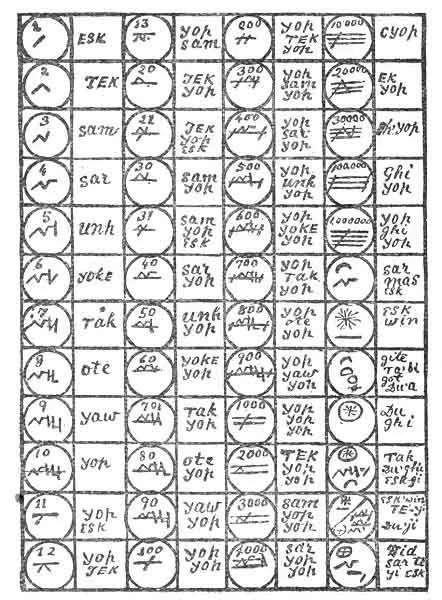
Plate 17. TABLET OF AH'IOD'ZAN. Numeration.
5. The which was beneficial to Jehovih's angels, in assisting them to deliver hosts of the chaotic spirits, whose mortal part fell in dread war. For such was the labor of the true God in Craoshivi, Son of Jehovih, and of his hosts of upraised angels. To gather in from every quarter of earth and her heavens the fallen victims of the self-Gods; to restore them to reason and to happier and holier scenes; and to teach them righteousness and good works.
6. Jehovih had said to God, His Son: Because one man can not lift up the whole world he shall not grieve, nor cease doing what he can. For his glory lieth in exerting himself to the full.
7. Because the self-Gods have come against thee, they are against Me also; because they have espoused to be Creators, and thus proclaimed themselves for their own glory, they shall have their fill. Before these times, the false Gods were content to proclaim their own names; but lo and behold, they have made the Lord God as the Creator, and set him up as a man, on a throne, to worship him!
8. And Te-in, and Sudga, and Osiris, too! All of woman born, and knowing My breath upon them. Sufficient is it for thee, My Son, to gather in the afflicted and distressed, and restore them and deliver them in light and truth. Keep thou thy schools and colleges in heaven; and thy nurseries and hospitals, and factories, and thy fleets of swift-flying otevans and airavagnas. And send thou thy faithful volunteers, and make the afflicted to rejoice and hold up their heads in great joy.
9. But to them that will not hear; and to them that curse thee and Me, seeking to destroy Me for their own glory, be thou silent. My hand is upon them. My ji'ay'an shower covereth earth and heaven. In their own game shall they cast themselves in darkness and destruction.
10. And all the while the self-Gods were at their evil deeds, the Faithists, Jehovih's angels, worshippers of the Ever Present, All Person, coursed the heavens along in their fire-ships, calling in the persecuted children of Jehovih. Calling loud and cheerfully through the heavens of the evil Gods, and over the kingdoms of the earth; calling in these words:
11. Come! Come! The Father's kingdom is free! Come! Come! In peace and quietness thou shalt be thine own master! Behold, the Father's places rise higher and higher! Not downward, to the lower kingdoms, nor to the earth, nor to re-incarnation, the invented tale of drujas; but upward to wisdom, goodness, love and happiness.
12. Because ye have put away the All Person, ye have fallen in the mire; ye have closed your eyes to yonder higher heaven. Come, O ye that are in bondage! Cut loose from all! Fly to Him Who brought ye forth to life! Disown the world! And self! And all the Gods and Saviors! Lords and kings! Be Jehovih's! Sworn to peace and love! To good works and righteousness!
13. Come! Come! Our otevans are free! Our airiavagnas full of comfort. O Come and be our loves! Be fellows, one with Jehovih.
14. And they gathered in millions and thousands of millions! For hundreds and hundreds of years they labored in the distracted regions of hada; toiled and toiled till wearied and prostrate, tens of thousands of times; then rested awhile, invigorated for more energetic work.
15. But not alone nor unseen, these toiling millions, hundreds of millions of Jehovih's angels, faithful Sons and Daughters. For the labor built up their own spirits to be as very Gods and Goddesses in noble endurance. Which was written in their fair faces, so the high-raised messengers of far-off heavens, traveling past, beheld Jehovih's soul in them. And so bore the news to other worlds of the darkness of the earth and her evil Gods, and of the faithful, struggling hosts of Jehovih in their up-hill work.
16. And now the earth and her heavens crossed the boundaries of the ji'ay'an forests, and rolled slowly towards the homes and dominions of other etherean Gods.
END OF BOOK OF WARS AGAINST JEHOVIH.
p. 458a
Book of Lika, Son of Jehovih
KNOWN IN HEAVEN AS THE DAWN OF BON, AND ON EARTH AS THE CYCLE OF MOSES, CAPILYA AND CHINE! JEHOVIH SAID: I GAVE UNTO THE EARTH A TIME OF FULL EARTHHOOD; AND, THAT THE GENERATIONS OF MEN MIGHT KNOW THE PERIOD THEREOF, BEHOLD, I CAUSED MAN TO BUILD A PYRAMID IN THE MIDDLE OF THE WORLD. FOR IT WAS MY MARK, THAT, FROM THAT TIME HENCEFORTH, MAN SHOULD TURN FROM STONE TEMPLES, AND THE HOPE OF EVERLASTING FLESH-LIFE, TO REJOICE IN SPIRITUAL ABODES IN MY ETHEREAN HEAVENS. AND I BROUGHT THE EARTH OUT OF DARKNESS AND ENCOMPASSED IT AROUND WITH THE DAWN OF BON.
Chapter I
1. IN the far-off etherean worlds spake the Voice of Jehovih, saying: Lika, Lika, My Son! Behold the red star, the earth. She cometh thy way; she mergeth dark and soiled from the forests of ji'ay, in the swamps of Bonassah. She will cross thy etherean fields, the Takuspe, and Opel, and Wedojain, dripping with the odor and dross of the ji'ay'an swamps. Go thou to her, and wash clean her soil and her atmospherean heavens.
2. Lika said: Alas, O Jehovih, how they have forgotten Thee!
3. I will go to the red star, the earth, O Father! I will deliver her into purity and faith. Thy chosen shall be delivered from bondage; Thy God made triumphant on earth and in her heavens.
4. Lika called to his high Council, in p. 459a his etherean kingdom, Vetta'puissa, in the Plains of Peo'ya, off the Road of Ahtogonassas, at the high Arc of Bon, made light by the holy angels of tens of thousands of years; and he said:
5. Behold, the red star, the earth; the Voice of Jehovih came to me, saying: Go thou to her, O My Son, and wash clean her soil and her atmospherean heavens. And I said: I will go, O Father! I will deliver her into purity and faith.
6. Lika said: Five hundred million etherean hosts will I take with me. For five years and forty days will I and my hosts sojourn on the red star and in her heavens. Her true God shall be restored and delivered in my name by Jehovih's hand. According to the rank of harvest of the gardens of Honyon, so shall my marshals choose and record my hosts.
7. Then spake the Council, the historians of the etherean libraries of the Vorkman Road, where hath traveled the earth for tens of thousands of years. And they detailed the affairs of the earth for many cycles past; made plain before the Gods assembled all the doings of the earth and her heavens.
8. Then Lika sent swift messengers off to the earth and her heavens; in arrow-ships of fire they sped forth, twenty thousand, well skilled in coursing the etherean heavens and penetrating the atmospherean vortices of traveling stars. To obtain the details of her God and her false Gods; her Lords and false Lords; her hadas and her hells; to scan her libraries and hastily return to Vetta'puissa, to lay the matters before the high Council and Lika, the Nirvanian Chief on Jehovih's throne.
9. Lika was sprung from the corporeal star Atos, which traversed the roads, Yatas-ko-owen, of the south circuit of Thoese, the vortex of another far-off sun, and was raised to etherea in the cycle of Sai-kah, one hundred and twenty-five thousand years, by Meth-ya, Goddess of Ori-iyi, afterward Chieftainess of Yeuna-gamaya.
10. And Lika rose to be God of Avalassak four thousand years; God of Kemma, six thousand years; Inspector of Judas' etherean roads at the a'ji'an swamps of Hennassit, fifteen thousand years; Surveyor of Iwalt, two thousand years; Surveyor of the Wacha excursion, four thousand years; Recorder of Hitte-somat, eight thousand years; Deliverer of Habian vortices, twenty-six thousand years; Measurer of densities in Ablank, one thousand years; Recorder of the Ratiotyivi, two thousand years; God p. 460a of the Home Plains of Cteverezed, twelve thousand years; and Chief of Vetta-puissa, twenty-five thousand years.
11.Lika had for his high Council thirty thousand Chieftains and Chieftainesses, of grades of more than a hundred thousand years in the etherean worlds; five hundred thousand of the rank of Inspectors; seven millions of the rank of Gods and Goddesses; and of the rank of Lords and Lordesses, more than half a thousand million.
12. Of the Rapon hosts there were seven Chiefs and nine Chieftainesses, who were Lika's private companions. First, Rebsad, Chief of So-tissav, forty thousand years; Sufristor of Sheleves, sixty thousand years; Marshal of Zele'axi, twenty thousand years; Master of Bassaion, seventy thousand years; and he passed twenty thousand years on the journey of Loo-soit-ta-vragenea, besides thousands of other journeys of less duration.
13. Next to Rebsad was Yanodi, Chieftainess of Ure, seventy thousand years; Chieftainess of the Roads of Sallatamya, seventy thousand years; marshalless of Petanasa, forty thousand years; Goddess of the ji-ay'an forest of Loo-loo-woh-ga, sixty-five thousand years; besides Goddess of Mor, Goddess of Chichigennahsmmah, Goddess of El, and of Raumba, and of Zee.
14. Next to Yanodi was Thazid, Goddess of Zoleth; Matrusettes of Yith-kad, Chieftainess of Hagu, Chieftainess of De'baur, and of Hachull, and of the Roads of Oleaskivedho, besides Goddess of more than one hundred etherean worlds.
15. Then came Thoso, Chief of Kassarah and Dassamatz, ninety thousand years; God of Saxax, seven thousand years; God of Chennesa, God of Hoxora, God of Fiben, God of Hotab, each six thousand years; surveyor of the Lymthian Roads, twelve thousand years; marker of meteors, two thousand years; Fireman of Thostus on the Ibien excursion, thirty thousand years.
16. Next to Thoso came Miente, Chieftainess of Gawl and Sanabtis, in whose dominions the star T-lemos was uzated *, when Gai-loo opened the Road of Enjxi-ustus for the Nizaigi vortices of Messak; Chieftainess of Lam-Goo and Kud, Goddess of Itzi, Goddess of Ashem and of the Baxgor Wing, Goddess of the Duik Swamps, and Lordess of Sus and Havrij; in all one hundred and seven thousand years.
p. 461b
17. Chama-jius stood next; she was Chieftainess of Hors-ad and Tu and Okadad, Goddess of Asthy, and Hid, and Sheaugus, and Jagri, Surveyor of Arvat and the Vadhuan Roads; surveyor of Anchas; surveyor of the Han Mountains in the etherean Uuj of Drij-Lee; in all two hundred and sixty thousand years.
18. Next stood Murdhana, Chieftainess of D'hup and Hen-Dhi, Chieftainess of Happa and Hirish, surveyor of Sepher and Daka, Inspector of Anachu, and Zadon, and Edau, and Medtisha, and Roth; in all ninety thousand years.
19. Oshor stood next: Chief of Out-si and of Yotek, and of Samoan, and of Yadakha, maker of the Bridge of Weasitee, Marshal of the Honlaguoth expedition, and, besides these places, God of seven etherean worlds; in all one hundred and twelve thousand years.
20. Next came Yihoha, Chief of Shung-how and Agon, Chief of Neo-sin, God of Izeaha, and Kaon, and Ahsow, and Una, and Yuk-Hoh, and Ahgoon. He was also the builder of the Raxon etherean arches; in all ninety thousand years.
21. Hisin was next: Chief of the Kionas Belt, where Yagota, the Orian Chief, walled the Plains of Maga, the Nirvanian home of the delivered hells of Mina half a million years before. Hismi was here nicknamed Creator of Wit, because of establishing his Chieftaincy on the ruins of hell. He was also Chief of Mamsa and Jauap, God of Gah, and of Darah, the region of fountain flowers; in all ninety thousand years.
22. Bowen was next: Chief of Apaha, formerly the Farms of Lung-wan and Srid, Chief of Vadhua, and of the Valleys of Nasqam, where a million years before the Chief of Chaksa disrupted the Atmospherean Sakri, and liberated from its four thousand hells more than thirty thousand million angel slaves in chaos. Bowen had also served as God of Amaan, and Havat, and Shedo, and Pivan; and as measurer of Pracha, and Xeri, and Asthus, surveyor of Ulam, and Sheyom, and Chozeh and Zadark, in all eighty thousand years.
23. Gwan Goo was next; she was Chieftainess of Andol, the place of the one-time apex of the Karowgan vortex, whereat was formed the star Ogitas and sent on its course by Aclon-guin, Orian hemmer of Shegoweasa. This vortex, when first formed by Aclon-guin, was three hundred thousand million miles long and was cometary thirty thousand years in Aclon-guin's hands. Gwan Goo was also Chieftainess p. 462a of Ahsa-thah and Waegon; Goddess of Anoa, and of Howgil, and of Zahaive; in all one hundred and ninety thousand years.
24. Geehoogan was next; Chieftainess of Sumatri in the By-roads of Yotargis, Chieftainess of the four etherean worlds, Yoni, Ogh, Theum and Wachwakags; surveyor of Unshin, Zarihea and Keanteri; inspectress of Saquiz, and Hagimal, and Hafha, and Borax, and Rab, and Shor-loo; in all eighty thousand years.
25. Next stood Bachne-isij, Chief of Yahalom, where the Gein Maker, Tarmoth, cleared the Forests of the a'ji'an Haloth, in making a roadway for Havalad's group of Shemasian corporeal stars, in which labor he employed ninety thousand million Nirvanians for four thousand years, and the distance of the road was more than one hundred thousand million miles. Bachne-isij was Chief of Agwan, and Shoe-nastus, and Hador, and Ad; God of Vach, and of Kuja, and Rai, and Kathab, and Cynab, and Buhd, and Abbir; measurer of the mountains of the etherean worlds, Vijhath, and Hakan, and Dis; measurer of the arches in the etherean world Niksh; constructor of the Plains in the NIrvanian world Chom; in all one hundred and thirty thousand years.
26. Rehemg was next; Chieftainess of Otaskaka, commonly called World of Shining Waters, a great visiting place in Nirvania; she was Goddess of Theasapalas and Timax, weigher of Sultzhowtcih in the Ofel Plains; in all one hundred and ten thousand years.
27. Then stood Antosiv, Goddess of Munn, renowned because she was of two hundred and sixty thousand years, and had declined exaltation above the rank of Goddess.
28. Such, then, were the Rapon hosts.
Footnotes
460a:* Dissolved out of being
Chapter II
1. FAR and wide, spread the words of Lika, words of Jehovih, over the Plains of Poe-ya, first highest light in etherea, where traveled the earth and her heavens. Far off, toward the northern group of twinkling stars, gazed the etherean millions; rose the voice of millions: Where is the red star? Where lieth the earth and her troubled heavens? Is not this the young star, a satellite that traveleth with the hidan sun? What is the angle and course of this little, traveling world, that our eyes may feast on the road where soon our Chief will send Jehovih's redeeming ships?
p. 463a
2. Then they pointed, surmising, by the red-like color and tedious motion, which was the earth, one of the small gems that Jehovih had placed in the measureless firmament. And they gazed thereon, speaking with souls of delight: Great art Thou, O Jehovih, to build so wide. To stud the etherean worlds with gems like these; to provide a place for the souls of men to germinate. Surely her people, the sons and daughters of the red star, must behold etherea; must realize the difference betwixt a short corporeal life and this endless paradise. Can it be that they have, in their small heavens, unscrupulous false Lords and false Gods who set themselves up to be worshipped as creators, whom mortals name with bated breath? And have they, too, a host of Saviors, who profess to have the key to all the roads that lead into this great expanse, the etherean worlds? Some excuse mortals have who are brought forth to life on the central suns, to be stubborn in their egotism of their Lords and Saviors and Gods; but on one so small like the earth, how can it be?
3. Then came back Lika's swift messengers in their arrow-ships; messengers attained to be very Gods in wisdom, and in swiftness. And they quickly told the tale, about their visit to the red star and her heavens; told how the true God, Son of Jehovih, had struggled on, but had been outmatched by all odds by self-Gods and self-Lords, who had plunged thousands of millions of hapless souls into torturing hells.
4. And this news Lika spread abroad in his etherean dominions, which only needed to be told once, for every sympathetic soul by his shocked appearance told it to others, the like of which spread instantly to thousands of millions of high-raised ethereans. And when Lika said: Five hundred million angels shall go with me to the troubled earth and her heavens, in double-quick time the volunteers were ready to be enrolled on the list.
5. Then Lika inquired more fully of the swift messengers, and they answered him, saying: This, O Lika, Son of Jehovih! The earth hath passed her corporeal maturity, and mortals have set up a pyramid to mark the time thereof. The days of the highest, greatest audacity of the self-Gods are passed, and are memorized by the pyramid also; for in that self same time, they taught mortals to worship the God and the Lord and the Savior, instead of the Great Spirit, Jehovih. But darkness is upon the self-Gods, and they are bound in hells; and mortals are also bound in hells.
p. 464a
6. Behold, this is the first dawn of dan on the earth since she passed the limit of her greatest corporeality.
Chapter III
1. LIKA said to his chief marshall: Enroll thou my hosts, five hundred millions, and appoint unto them captains and generals, and grade them and apportion them. Beside these give me one million singers, one million trumpeters, one million attendants, one million heralds, one million messengers and one million recorders and waiters.
2. Lika called his chief builder and said unto him: Build me a fire-ship, an airavagna, with capacity for a thousand millions; and provide thou the ship with officers and workmen sufficient. Consult thou with my mathematicians as to the distance to the red star, and as to the densities through which the ship shall pass, and as to the power required, and the time of the journey, and provide thou all things sufficient therefor.
3. Then Lika spake to the high Council, saying: For the time of my absence my vice-Chief, Heih-Woo shall hold my place. Touching matters whereof ye desire my voice before I go, speak ye!
4. Atunzi said: Behold, O Lika, the star, Yatis, headeth towards the a'ji'an Forests of Actawa, and she hath not passed the esparan age! Lika said: To clear the forest Actawa I appoint Eashivi, Goddess, with three thousand million laborers. Eashivi, how sayest thou? Eashivi said: Thanks to Jehovih and to thee, O Lika. I will at once choose my laborers and proceed to make the road.
5. Wan Tu'y said: Erst thy return, O Lika, the Hapsa-ogan vortex will cross the south fields of Vetta'puissa. She hath twenty thousand million souls in grades of sixty and seventy. Lika said: To her assistance for three years I appoint Tici-king, God, with fifty millions for his hosts. How sayest thou, Tici-king? Tici-king said: By the grace of Jehovih, I rejoice in this labor. In suffucient time will I prepare my hosts and accomplish what thou hast given into my keeping.
6. Wothalowsit said: In four years the hosts of E'win will return from the double stars, Eleb and Wis, with their harvest of forty thousand million angels. How shall they be apportioned? Lika said: To Bonassah, six thousand millions; to Opel, two thousand p. 465a millions; to Wedojain, five thousand millions; to Eosta, two thousand millions; to Feuben Roads, seven thousand millions; to Zekel, four thousand millions; to Huron, three thousand millions; to Poe-ga, six thousand millions; to Yulit, one thousand millions, and to Zulava, four thousand millions; and I appoint Misata, Goddess, to provide the places in these several heavens for them, and to have charge of their selection and allotment. And I give to her five hundred million angels for her laboring hosts. How sayest thou, Misata? Misata said: It is Jehovih's gift; I am rejoiced. I will prepare myself and my hosts.
7. Ching Huen said: Behold the star-world, Esatas, in her se'muan age will cross the Roads of Veh-yuis in three years hence! Lika answered Ching Huen, saying: To cross these roads of light in her se'muan age would blight her power to bring forth animal life sufficient unto her wide continents. The trail must be filled with se'muan forests to preserve her gestative season. To this labor I appoint Ieolakak, God of Esatas' se'muan forests in the Roads of Veh-yuis, four thousand years. And I allot to Ieolakak six thousand million laborers. How sayest thou, Ieolakak? He answered: This is a great labor; by the wisdom and power of Jehovih, I will accomplish it.
8. Veaga-indras said: In two years the fleets of Leogastrivins will return from their voyage of four thousand years, bringing two thousand million guests from the Iniggihauas regions. Who shall provide for their reception? Lika said: Yeanopstan, with ten million hosts. How sayest thou? Yeanopstan said: A most welcome labor, O Lika.
9. Hiss-Joso said: The Arches of Rassittissa, the etherean world of Yungtsze's Plains, will be to cast in four years. Lika said: To Sut'tuz six million arches, and to Iviji four million arches, and to each of them one hundred million laborers. How say ye? Then spake Sut-tuz and Iviji, saying: By the help of Jehovih, the labor will be accomplished.
10. Sachcha said: The star-world, Neto, will be to turn on her axis in two years hence, in which time she will pass through the south Fields of Takuspe. Lika said: This will be a great labor, and I appoint Urassus, with Salas, to accomplish it. And I give to them three years, with four thousand million laborers. How say ye? Then answered Urassus and Salas saying: With fear and trembling we rejoice at this great work. By Jehovih's p. 466a wisdom and power, we shall accomplish it.
11. After this manner Lika made more than a thousand appointments to be accomplished ere he return from the earth and her heavens; but ordinary matters he left with his vice-Chief, Heih-Woo, and to the high Council, the select ten millions.
12. Jehovih had said: Even as I provided a little labor unto mortals to develop the talents I created withal, so in like manner, and after the same like, but spiritually, provided I greater labor unto the high-risen inhabitants in My etherean worlds. For which reason let My children learn the secret of harmonious and united labor with one another. I gave labor to man not as a hardship, but as a means of great rejoicing.
13. And the talents I gave on corpor, I gave not to die on corpor, but to continue on forever. As I gave talent for corporeal mathematics, and talent for corporeal buildings, even a talent for all things on corporeal worlds; even so provided I in My etherean worlds for the same talents, but spiritually. Wherein man on the corporeal earth, judging the adaptability of talent to corporeal things, may comprehend the nature of the labors I provided in My exalted heavens for the same talents.
14. Neither let any man fear that his talents may become too exalted for the work I have provided; for until he hath created a firmament, and created suns and stars to fill it, he hath not half fulfilled his destiny.
Chapter IV
1. JEHOVIH spake in the light of the throne of Kairksak, in Vetta'puissa, saying: Lika, My Son! This is My road and My journey. With thee and thy hosts My Voice shall travel with power; on the earth will I lie My foundation, in spirit and word. Thy companion Chiefs and Chieftainesses shall go with thee; they shall help deliver the inhabitants of the earth and her heavens.
2. My enemies have marked their labors in temples and pyramids. Because their hearts rose not up to Me, they descended into stone, the most dead of all things. They have carried the inhabitants of the earth down to rottenness and to death. Suffer their monuments to stand as testimonies of them that hated Me, that denied Me, that believed not in Me, the All Person.
3. My building shall be the most p. 467a subtle of all things, the spirit of mine own body. Verily shall it be a monument within the souls of My chosen. Nor will it go away again in darkness, but it shall encompass the whole earth.
4. For thou shalt find My chosen a scattered people, persecuted and enslaved, the most despised of all the races of men. But I will show My power with them; I will raise them up; the things I do through them, and the words I speak through them, even in their ignorance and darkness, shall become mighty. Their words shall be treasured forever; and none can match them in wisdom of speech, or in the craft of good works.
5. But the learned men of all other peoples shall be forgotten; their wisdom be like the wind that bloweth away. The self-Gods and self-Lords that led them astray shall be as a serpent that biteth itself unto death. Yea, as long as their pyramids and temples stand, their own falsehoods shall stare them in the face.
6. They have bound themselves in their own bulwarks; they shall yet be My laborers, thousands of years, to undo the evil they sowed on the earth. Nor shall they look down from heaven and behold with joy their temples and pyramids; but as one beholdeth a coal of fire burning in the flesh, so shall their edifices cry out unto them forever: THOU FALSE ONE. And it shall be to them a burning fire that will not die out.
7. And their great learning, even of the stars and the sun and moon, and of all the things of the earth, and in the waters, shall pass away and be remembered not amongst men. Yea, the names of their men of great learning shall go down, with none to remember them on the earth. And in time, long after, the nations of people will forget them and their wisdom, and even pity them, and say of them: What a foolish people!
8. But My chosen, who are their slaves, and are as nothing in the world, shall speak, and their words shall not be forgotten; shall write, and their books will be a new foundation in the world. Because My hand will be upon them, My wisdom shall come forth out of their mouths.
9. And this shall be testimony in the ages to come, as to what manner of knowledge endureth forever. For as the buildings of the earth remain on the earth, and the spirits of them that incline to the earth raise not up, so have I bound corpor in corpor; but as I planted the quickened spirit of man in p. 468a man for spiritual knowledge, so shall spiritual knowledge look upward for an everlasting resurrection.
10. Lika asked: O Thou Highest, Jehovih, what are the preparations of Thy Gods? Wherein shall my hand be strong on the earth? Jehovih answered, saying: For six generations aback hath My God prepared unto thee and thy hosts. My voice was with My God, and I said unto him: My Son, behold, the time cometh in six generations, when I will bring the earth into another dawn of light. And in that day will I bring My Son, Lika, from My etherean worlds; and he shall come with a mighty host of ethereans with great power. Go thou, My Son, down to the earth, and with thy loo'is, thy masters of generations, and raise up an heir unto thy voice. In the three great divisions of the earth provide thou three servants to do My will.
11. So, My Son, God of Craoshivi, hath raised up unto thee, O Lika, three men, Capilya, and Chine, and Moses, the fruit of the sixth generation in the lands of their fathers; and they are of the Faithists in Me, holy men and wise. To these shalt thou send the Gods of their forefathers, even they who were beaten away by the Gods of evil.
12. And Capilya shall deliver the Faithists of Vind'yu, and Chine shall deliver the Faithists of Jaffeth, and Moses shall deliver the Faithists of Egupt. And this, also, shalt thou put upon Moses and his people: He shall lead his people westward; and their heirs after them shall also go westward; yea, westward until they circumscribe the earth. Three thousand and four hundred years shalt thou allot to them to complete the journey. And wherever they go, they shall establish My name, Jehovih; they shall lead all people away from all Gods, to believe in the Great Spirit, who I am.
13. And when they have carried My name to the west coast of Guatama, and established Me, behold, I will bring the earth into kosmon; and My angels shall descend upon the earth in every quarter with great power. And it shall come to pass that the Faithists of the children of Moses shall find the Faithists of the children of Chine and the Faithists of the children of Capilya.
14. And all these people shall cry out in that day: No God, no Lord, no Savior! For My hand will be upon them, and their words shall be My words. But they will proclaim Me, the Great Spirit, the Ever Present, Jehovih.
p. 469a
15. And they shall become the power of the world; and shall establish peace and put away war, leading all peoples in the way of peace, love and righteousness.
Chapter V
1. VETTA'PUISSA, in Lika's etherean regions, made glorious by Jehovih's light, and by His purified Sons and Daughters, whose heavenly mansions matched unto their great perfection, was now quickened with great joy. The trained hosts of Jehovih's Son, Lika, knowing he was to take recreation by a journey to the red star, the earth, to deliver her unto holiness and love, provided music and heralds and trumpeters, millions of performers, to claim their reverence and rejoicing.
2. The fire-ship, the airavagna, now adorned in splendor, was brought into its place, and the vast hosts for the journey entered into it. A roadway was preserved for Lika and his companion Chiefs and Chieftainesses. First to lead, of the Rapon hosts, were the Chieftainesses, Yanodi and Thazid, and they walked arm in arm. Next after them came Lika, alone. Next came Rebsad and Thoso, arm in arm. Next came Miente and Hors-ad, arm in arm. Then Oshor and Yihoha, arm in arm. Then Gwan Goo and Geehoogan, and after them Rehemg and Antosiv.
3. Loud swelled the music as the Chiefs marched forth; more than a thousand millions in concerted song to Jehovih; and echoed by the far-off trumpeters. And when the Chiefs entered the ship, followed by the ship's laborers and firemen, all was motionless till the music ceased.
4. Lika walked upon the High Arch, and stretching up his hands to Jehovih, said: I go forth in Thy name and wisdom and love and power, O Jehovih! Thy great heavens which thou hast made full of glory shall bear me up; the spark Thou gavest unto me will I keep quickened in Thy sight. Thy hand is upon me. Thine arm encompasseth my ship of fire. In Thee I know it will rise and course these worlds, to the red star, sail with Thy hosts triumphantly unto labor for Thy glory.
5. Arise, O palace of the firmament; by the power of Jehovih that dwelleth in me, upward! onward! arise!
6. And now with one will the hosts joined in, and the laborers and firemen stood to their places. A moment p. 470a more, and the airavagna raised from its foundation, steered toward the red star, and moved forth over the Fields of Vetta'puissa. A hundred thousand banners and flags floated and waved from every side on the great ship of heaven, and was answered by more than ten hundred thousand more in the hands of the hosts below.
7. The es'enaurs of the ship struck up a quickened march, joined by the millions beneath, whilst the great multitudes tossed up their hands and shouted in prolonged applause. Thus went forth Lika, Son of Jehovih, to the red star, the earth.
Chapter VI
1. AS Lika in his ship sped on, coursing the Fields of Sonasat, and Hatar, and Yuax, in the etherean world, Chen-a-goetha, rich in light in these regions, on the Yong-We Road, and now traversed by hundreds of vessels coursing hither and yon, Jehovih's light descended on the High Arch, in the midst of the Rapons; and the Voice of Jehovih spake out of the light, saying:
2. As I taught corporeans to build ships to traverse corporeal seas, so have I taught ethereans to build vessels to course My etherean seas.
3. As I bound the corporean that he could not raise up in the air above corpor, save by a vessel, so created I My heavens for the spirits of men, that by manufactured vessels they might course My firmament.
4. For the little knowledge I gave to corporeans I made as a type of knowledge which is everlasting.
5. To the corporean I gave two kinds of presence, objective and subjective. By the latter he can imagine himself in a far-off place; and the thought that proceedeth out of him goeth to a friend and speaketh understandingly in the distance. For thus I created him. But he who goeth objectively must take his person with him, for so created I him.
6. And I magnified these two conditions unto the spirits of all men, that they might also appear objectively and subjectively in the places known to them.
7. And this is the bondage I created unto all places on the earth and in the heavens thereof, making all men understand the power of objective association.
8. I created wide seas on the corporeal p. 471a earth, that man should perceive that one man alone could not cross over; nor in a small boat, with any profit under the sun. Neither created I My heavens in the firmament that one angel could go alone on long journeys, becoming isolated and powerless. But I provided them that they could not escape association; yea, I created the firmament that they must congregate together and go.
9. Nevertheless, I gave freedom unto all; to him that goeth not objectively, to go subjectively; but of little avail and not much truth or profit. And because I gave this liberty, behold, even drujas will say: Yea, I have been there. Nor know they how to raise up from the earth, or to go to any place, save on another's shoulders.
10. And I created man and angels that all knowledge which is to be everlasting must be obtained objectively; yea, in the experience of his own person made I him to desire without end.
11. And they fill My seas in heaven and earth with their great ships; with wants that could not be satisfied in one place created I man. For I drive him forth on strange errands and on missions of profit and love; for I will store him with a knowledge of My works.
Chapter VII
1. ONWARD sped Lika in his airavagna, with his eight hundred millions; through the sea of Enea-Wassa, the etherean realm of Haog-sa-uben; shining like a meteor in its flight, the ship of fire of eight hundred millions. On every side, the Jehovihian worshippers' vessels, tens of thousands, coursing as many ways, some fast, on missions of quickened labor; some slow, as traveling school-ships, exploring the great expanse and glorious richness of Jehovih's provided worlds, always ready for the newborn; each and all the ships as studded gems in the etherean sea, moving brilliants playing kaleidoscopic views, ever changing the boundless scene with surpassing wonders. And all of these, by signs and signals, the story of their place and mission revealing to the high-raised etherean souls, ships and men, as quickened living books of fire, radiant with the Father's light and history of worlds.
2. On Lika's ship, as on all the others, every soul, hundreds of millions, enraptured, stood in awe and admiration of the ever-changing scenes; some in silence, absorbed in thought; some posing with upraised hands; some ejaculating gleefully; and some in high p. 472a reverence to Jehovih, uttering everlasting praise; every soul its full bent, being the full ripe fruit of the diversified talents as they first shone forth in corporeal life.
3. Onward sped Lika's airavagna now in the Roads of Nopita, now in the a'ji'an Forest of Quion, most rich in adamantine substances, arches, stalactites and stalagmites, and in forming and dissolving scenes, a forest, a very background in the etherean worlds for the over-brilliant crystal regions of light. And here, too, the tens of thousands of ships of Jehovih's chosen; and on either side the great roadway lay the Fields of Anutiv, inhabited by countless millions of etherean kingdoms. Along the road for hundreds of thousands of miles, stretched up the hands of millions and millions of souls, waving banners and flags to their favored ships, going to some native star, from which Jehovih brought them forth.
4. Then changed the course of Lika's airavagna, by his commands sent through the comet Yo-to-gactra, a new condensing world, already with a head of fire four thousand miles broad; a very ball of melted corpor, whirling like the spindle of a filling spool, forever winding unto itself the wide extending nebulae. Here were coursing along, hundreds of thousands of school-ships, with students and visitors to view the scenes, most grand in rolling on, now round, now broken, now outstretched, this ball of liquid fire, whirling in the vortex, thirty million miles long. To balance against which vortex many of the ships tossed and rolled, dangerously, had they not been in skilled hands; and, as they were, causing millions of the students on many a ship to fear and tremble, perceiving how helpless and stupid they were compared to the very Gods who had them in charge.
5. Not long did Lika loiter to view the scenes, or to indulge his eight hundred millions, but stood his course again for the red star, the earth; coursing the Fuassette Mountains, where the God, Vrilla-Gabon, built the Echosinit kingdom, whose capital was Exastras, the place where the Niuan Gods assembled to witness the first starting forth of the earth. Here, halting awhile, and adown went Lika's recorders, to gather from the Exastras libraries the earth's early history and the grade of her creation; a copy of which obtained, the recorders hastily returned, when onward again sped the airavagna, now making course across the Plains of Zed, in the midst of which lay the great sea Oblowochisi, p. 473a four million miles across, and this also studded over with thousands of etherean ships.
6. And now across to Rikkas, the place of the Goddess, Enenfachtus, with her seven thousand million etherean souls, whereupon Lika and his hosts cast down millions of wreaths and tokens, and the while, the music of the two spheres mingled together in Jehovih's praise. Here, across, the distance was three million miles.
7. Now, all the while before, the red star stood upward, inclining upward, but here in horizontal line began to stand, gleaming in more effulgent flame. And in the course, where Lika's airavagna should go, the Goddess, Enenfachtus, had previously upraised a hundred thousand pillars of fire to honor him and his company; which great respect Lika and his hosts answered with holy salutations.
8. After this, came the ji'ay'an Forests of Hogobed, three million miles across, and close for lack of etherean air and inspiration. Here stood the Province of Arathactean, where dwelt the God, Yew-Sin, with thirty thousand million newly-raised Brides and Bridegrooms from the star Kagados. Over these regions Lika sped swiftly, and then to the open sea, Amatapan, on the Vashuan Roads.
9. Then a sail of two million miles, in the uninhabited regions of Samma, when he reached Chinvat, the bridge on the boundary of the earth's vortex beyond the orbit of the moon.
10. And, halting not, but now coursing on a downward plane, made straight toward the swift-rolling earth, whose speed was three-quarters of a million miles a day. Through the high-floating plateaux of atmospherea came Lika with his fire-ship, with his hosts, eight hundred millions, came his ship like a meteor, huge as a continent.
Chapter VIII
1. ON the uninhabited plateau, Theovrahkistan, rich and broad as the earth, high above the lands of Jaffeth, and Vind'yu, and Arabin'ya, lighted Lika in his airavagna, with his eight hundred millions. Here he made fast his fire-ship, and forth came his hosts to found a heavenly kingdom. Lika said:
2. I hear Thy voice, O Jehovih; Thy hand is upon me; in Thy Wisdom and Power will I build the foundations of Thy kingdom in these heavens.
3. Jehovih said: Call forth thy Rapon p. 474a hosts, thy companion Chiefs; build thy throne broad for them and thee. And shape thou the area of the capital and stand thy high Council, the chosen millions, to the four quarters of the heavens of the earth.
4. The legions then fell to and built a heavenly place unto Jehovih, and called it Yogannaqactra, home of Lika and his eight hundred millions.
5.Jehovih called out of the light of the throne which Lika built, saying: Lika, My Son, thou shalt build all things new on the earth and in the heavens of the earth, even as if nothing had ever been. Send thou thy messengers in an otevan to the broken-down region of My beloved, God of Craoshivi, and bring him and his thousand attendants unto thy place.
6. Thereupon an otevan was sent off, well officered, and in due time it returned, bringing God to Yogannaqactra, where he was received with great joy, and greeted in Jehovih's name.
7. Lika said: Speak thou, O God,for I am come to deliver these heavens into Jehovih's dominion. What are the light and the darkness of the heavens and the earth that have been intrusted to thy keeping, in Jehovih's name?
8. God said: Alas, how can I speak? Behold, my kingdoms are scattered and gone; I have nowhere any pride in anything I have done in heaven and earth. An exceeding great darkness came upon my people, for a thousand and five hundred years! Thy servants have been overpowered, helpless and tossed as chaff before the wind.
9. Lika said: How many Gods? How many dans of darkness? Whither are gone My true Gods?
10. God said: Four Gods are risen to etherea with their hosts, heart-broken, true Gods. Four dans have come and gone; so weak and small, like a breath of air, for the darkness brushed them away. In Savak-haben, in etherea, sojourn thy Gods.
11. Jehovih's light fell upon the throne, and His Voice came out of the light, saying: Send thou, O My Son, Lika, to Savak-haben, four arrow-ships, with a hundred thousand attendants for My true Gods, and bring them to Yogannaqactra.
12. Lika then sent four arrow-ships with his swift messengers and a hundred thousand attendants, to bring back the four disconcerted Gods.
13. God said: Thousands of millions of angels of darkness flood the hadan regions; and as many grovel about on the low earth. De'yus, the false Lord God, is cast into hell, a hell so wide p. 475a that none can approach his place of torment. Te-in, the fase God, the Joss, is also cast into hell; and so is Sudga, the false Dyaus; and so are all the false Gods that encompassed the earth around; their kingdoms are in anarchy.
14. The names Lord, and God, and Dyaus, and De'yus, and Zeus, and Joss, and Ho-Joss, and many others, have become worshipful on the earth! Not only labored the traitors to put away the Great Spirit, but to establish themselves as men-Gods capable of creating; yea, the veritable Creator of heaven and earth!
15. Lika said: Hear thou, then, the Voice of Jehovih! Because they have put Me aside and assumed to be Creators under the name God, and De'yus, I will magnify the Person of God and De'yus in men's understanding.
16. Nor from this time forth on the earth, for three thousand years, shall man be confined to the one name, Jehovih, or Eolin, or Eloih, but worship God, or Lord, or De'yus, or Zeus, or Dyaus, or Joss, or Ho-Joss. For since these men have cast themselves into hells, behold, the spirits of the risen shall not find them nor their kingdoms. And thou shalt magnify unto mortals that all names worshipful belong to the Ever Present, whose Person is the spirit and substance of all things. And if they inquire of thee: Who is Dyaus? or, Who is God? or, Who is Joss? thou shalt say: Hath He not said: Behold, I am the Creator of heaven and earth! and I say unto you, He is the Ever Present, the All Highest Ideal.
17. But this bondage shall come upon them: To reap the harvest they have sown. Because one hath said: Build thou a pyramid, and thy God will come and abide therein, even as a man dwelleth in a house; he shall be bound while the pyramid standeth. And another hath said: Behold, thy God is in the image of a man, and he sitteth on a throne in heaven; he shall be bound while this belief surviveth on the earth.
18. Because they have sown a falsehood on the earth, the harvest is theirs. And until they have reaped their whole harvest they shall not rise into My etherean worlds.
Chapter IX
1. WHEN the other four Gods, the true Sons of Jehovih, who had been discomfited in the lower heavens by De'yus and his fellow false Gods, came, the light of Jehovih came again on Lika's throne. Jehovih said:
p. 476a
2. I suffer not evil to triumph over good but for short seasons; and, soon or late, My righteous Sons and Daughters, raise up and rejoice in their trials which I suffered to come upon them. Let not men or angels say, because this or that happeneth: Lo, Jehovih sleepeth at his post! or: lo, Jehovih is the author of evil, or is impotent to avert it.
3. My times are not as the times of men or angels; nor am I within the judgment of men as to what is evil or good. When the wealth of the rich man is stolen, do not mortals say: Poor man, Jehovih hath afflicted him! For they judge Me by what they consider afflictions. But they behold not that I look to the soul of man as to what is good for him. And when the assassin hath struck the king unto death, behold, they say: How hath a good Creator done this? For they consider not the nation nor the problem of anything but for the day thereof; nor consider they what I do for the souls of many nations, by one small act.
4. For all people in heaven and earth are Mine own; they are as trees in My orchard, and I prune them not for the life of the branches, but for benefit of the whole orchard, and for the harvest that cometh after.
5. I created life, and I take away life; in Mine own way do I with Mine own. I send night to follow the day; clouds to interchange with the sunshine. And even so do I give times of dan to My atmospherean heavens, to be followed by seasons of darkness.
6. By these changes do mortals and angels and Gods learn to battle with and overcome the elements of My worlds.
7. The true Gods said: We weep before Thee, O Jehovih. Long and hard we labored our allotted seasons; we were helpless witnesses to the great darkness that came upon the inhabitants of heaven and earth.
8. Lika said: To you five, true Gods, who have toiled in the darkness of the earth and her heavens, I restore your old time names for the season of dawn, after which I will raise you all up, with your kingdoms restored to the full, and ye shall be heirs in my Nirvanian heavens, in peace and rest.
Chapter X
1. THE five Gods' names were Ane, Jek, Lay, Oal and Yith. Lika said unto them: Ye have been heretofore crowned p. 477a as Gods; come ye to the foot of Jehovih's throne, for I will crown you with new names.
2. When they came to the place designated, Lika continued: Take my crown upon thy head, and speak thou in Jehovih's name in that labor which I put upon thee, Jehovih in Ane, Jehovih in Jek, Jehovih in Lay, Jehovih in Oal, Jehovih in Yith.
3. And thereupon Lika crowned them with a band on the head, inscribed, INANE, INJEK, INLAY, INOAL, and INYITH, Panic names designating their rank and the age of the earth in which these things came to pass.
4. Lika said: To each and every one I give of my etherean hosts ten million laborers for the period of dawn. And these are the labors I allot unto you: To Inane, to go down to the earth, to the land of Vind'yu, and be inspirer unto my mortal son, Capilya, and his followers. To Inlay, to go down to the earth, to the land of Jaffeth, and be inspirer unto my son, Chine, and his followers. To Inoal, to go down to the earth to the land of Egupt, and be inspirer to my son, Moses, and his followers. And ye three shall restore the Faithists in these great divisions of the earth unto liberty and safety. And thou, Inoal, shalt deliver Moses and the Faithists out of Egupt, and shape their course westward; for they shall circumscribe the earth, and complete it by the time of kosmon.
5. To Injek, to go down to the earth, to Parsi'e and Heleste, and provide those peoples to liberate the slaves who are Faithists, whom thou shalt inspire to migrate to Moses and his people. To Inlay, to go down to the earth, to Jaffeth and Vind'yu and Arabin'ya, to inspire the scattered Faithists in those lands to come together, to the great lights, Capilya and Chine and Moses.
6. And ye shall take with you of my hosts, whom I brought from etherea, and labor ye together as one man. And when dawn hath ended, ye shall repair hither, and be raised up unto my Nirvanian kingdoms. Nevertheless, ye shall not leave Jehovih's chosen alone, but provide angel successors unto them. And herein I give you a new law unto all my angel hosts who shall hereafter dwell with the Faithists on the earth, which is, that successors shall always be provided by the retiring hosts ere they have departed; for the Faithists shall not more be left alone for a long season.
7. The chosen five then said: In Thy name and wisdom and power, O Jehovih, we go forth in joy to fulfill Thy commandments. Because we lost the p. 478a earth Thou hast given it into our hands to redeem it and glorify Thee!
8. And thereupon Lika proclaimed a day of recreation, so the hosts could be selected, the fifty millions, to which labor the marshals fell to, helping the chosen.
9. During the recreation, the atmosphereans explained to the ethereans how laid the lands of the earth and the heavens thereunto belonging. And then, after a season of prayer and singing, and a season of dancing, the recreation was brought to a close.
10. After labor was resumed, the chosen five, with their hosts, saluted before the throne of Jehovih, and then withdrew and went to vessels which had been previously prepared for them, and embarked, and departed for the earth.
Chapter XI
1. JEHOVIH spake to Lika, saying: Appoint thou other servants unto Me for the other great divisions of the earth, and for the islands in the oceans of the earth; and give unto them each ten millions of My servants which thou broughtest from Nirvania. And they shall go down amongst mortals, and by inspiration and otherwise collect together in groups the scattered Faithists who worship Me. And thy servants shall also provide successors to come after them, to abide with mortals, making the seasons of watch short unto them that they shall not be weary thereof.
2. Then Lika appointed T'chow, N'yak, Gitchee, Guelf, Ali and Siwah, and allotted them to different divisions of the earth, and he gave them each ten millions of the hosts brought from the Orian worlds. And these were selected after the same manner as the previous ones; and they also saluted and departed for the earth.
3. Again Jehovih spake in the light of the throne, saying: Because many are risen in wisdom and truth, I will have Theovrahkistan for My holy place unto them; and it shall be the region for My Brides and Bridegrooms at the resurrection of dawn. But at the end thereof it shall be divided and sub-divided that none may find the place of My standing. For it hath come to pass, that man on the earth learning the name of one of My heavens glorifieth it, and aspireth to rise to it, but to rise to no other heaven.
4. Because My true Gods taught man of Hored in the early days, man desired Hored. Whereupon Mine enemies, the false Gods, each one cried p. 479a out: Behold, my heavenly place is Hored! I am the All Heavenly ruler! Come hither to me! For, by this means, the name I gave in truth, was usurped and made as a snare to enslave my earth-born.
5. And I will not more give to mortals a name of any of My heavenly places; nor shall they be taught of any heavens save the higher and the lower heavens, which shall designate My etherean and My atmospherean heavens. And by these terms shall man on the earth be fortified against the strategems of false heavenly rulers.
6. And man shall perceive that when angels or men or Gods or Saviors say: Come ye unto me, and I will give you of my heavenly kingdom! that they are false, and but tyrants to enslave My people. But if they say: Go ye, serve the Great Spirit, and not me, for I am only a man as thou art! then shall it be known that they are of My Nirvanian hosts.
7. And if they say: Come ye to this heaven or that heaven, for with me only is delight, it shall be testimony against them. But if they say: Verily, Jehovih is with thee; cultivate thyself within Him, and thou shalt find delight in all worlds, then shall it be testimony they are from My emancipated heavens.
8. Lika said: Seventy new kingdoms shall ye found in the lowest heaven, where ye shall begin again with schools and colleges and factories, teaching the spirits of the dead the requirements for resurrection.
9. Two hundred millions of my Orian angels shall be allotted to these seventy heavenly places, and during dawn it shall be their work to carry out these commandments. And they shall provide for successors after them, who shall continue for another season; and they shall provide yet other successors, and so on, even till the coming of the kosmon era.
10. Lika then selected the two hundred million angels, and divided them into seventy groups and companies around about the earth, in the lowest heaven, and after they were duly officered and organized, they saluted before the throne of Jehovih and departed to their several places.
11. Then came the voice of Jehovih to Lika, saying: Behold, of thy five hundred millions, are still left one hundred and seventy and five millions. This, then, is the work thou shalt put upon them: They shall begin at one end of hada and go to the other, delivering all the hells of the false Gods as they go; untying the knots thereof and providing passage for the drujas p. 480a into one great plateau. For as the false Gods began in confederacy I will bring them back into confederacy, even all of them that are cast into hell. And thou shalt officer them safely; and when they are thus established, behold, thou and thy Rapon hosts shall go and raise them up and deliver them into the a'ji'an Forest of Turpeset, where they shall be habitated and begin a new life of righteousness and love.
12. And Anuhasaj, once-crowned Lord God, shall be over them; and Osiris and Sudga and Te-in and all the other confederated Gods shall be under him; for even as these Gods labored to cast Me out, behold, I give unto them their harvest.
13. Then Lika commissioned the one hundred and seventy-five million ethereans, and officered them, and sent them into the hadan regions of the earth to deliver the hells thereof.
14. Jehovih said to Lika: The rest of thy eight hundred millions shall remain in Theovrahkistan, for the labor here is sufficient for them. And so they remained.
Chapter XII
1. THE Rapon hosts desired to see Ahura, and so Lika sent an arrow-ship, with one hundred thousand angels, properly officered, to Vara-pishanaha, to Ahura, praying him to come on a visit for ten days, bringing his ten thousand attendants with him.
2. And it thus came to pass that Ahura came to Theovrahkistan, where he was most honorably received and saluted under the Sign MORNING OF JEHOVIH'S LIGHT, and he in turn answered in the Sign MY WORDS SHALL SERVE HIS SONS AND DAUGHTERS!
3. Accordingly, Lika came down from the throne and greeted Ahura, saying to him: Come thou, then, and stand in the midst of the throne, that thy voice may delight the Holy Council.
4. So Ahura ascended the throne, along with Lika, and when the latter sat down, then Ahura walked to the midst and saluted the Holy Council with the Sign FIRE AND WATER, and he spake, saying:
5. Because Thou, O Jehovih, hast called me in the Sign of the MORNING OF THY LIGHT, behold, I am risen up before Thee, to speak to Thy Sons and Daughters.
6. But how shall I clear myself, O Father! I am as one who had a hidden skeleton, and the place of concealment broken down. Because I was by Thee created alive in the world, why should I not have forever glorified Thee? p. 481a This have I asked myself all the days of my life; but Thou troublest not to answer me in my curiosity.
7. When I was young in life, lo, I cried out unto Thee, complaining because Thou madest me not wise. I said: Behold, Thou createdst all the animals on the face of the earth to know more than I in the day of birth. Yea, I knew not where to find suck, nor could I raise up on my feet, but laid as I was laid down by my nurse.
8. Even to the lambs and the calves and the young colts, Thou gavest greater wisdom and strength than Thou gavest Thy servant. I said: Why, then, shall I glorify Thee or sing songs in Thy praise? Why shall I pray unto Thee; Thy ways are unalterable and Thy Voice answereth me not.
9. Thou art void as the wind; Thou art neither Person, nor Wisdom, nor Ignorance. And as for Thy servants, who say they hear Thy Voice, behold, they are mad! I said: How can a man hear Thee? It is the reflection of himself he heareth. How can a man see Thee? It is the reflection of himself he seeth.
10. And Thou sufferedst me to become strong, as to strength, and wise as to self, even as I had called unto Thee in my vanity. Yea, I prided myself in myself; and as to Thee, I sought to disprove Thee on all hands. And the worthlessness of prayer unto Thee I showed up as a great vanity. Yea, I craved wisdom for sake of showing Thou wert neither wise nor good. And to this end Thou also gavest unto me. And I became conceited in hiding my conceit, even from mine own understanding, that I might carry all points.
11. I pointed to the fool, saying: Behold, Jehovih's son! I pointed to the desert place, saying: Behold, Jehovih's fruitful earth! To the mountain which is rocks and barren, saying: Behold, how Jehovih hath finished His work! And of the evil man, who murdereth his brother, I said: Jehovih, good in one thing, good in all!
12. But I knew not the hand that was upon me; Thou wert answering my prayer every day. Yea, I ventured to judge Thee with my eyes, and my ears, and my own understanding. In the place I stood I judged Thee and Thy works, O Jehovih! And the craft of my speech won applause; by flattery was I puffed up. And I deemed my judgment the right one; and whoso saw not as I saw, I condemned or pitied; yea, I craved great speech that I might show them up in their folly.
p. 482a
13. And in this Thou also answeredst me by giving freely; and my words were reckoned great words and wise. And I was quoted and praised far and near. Yea, and I practiced good works that I might show unto others that, even in such like, a belief in Thee was vanity and a waste of judgment.
14. Yea, I craved means and great treasures that I might render good unto others, in order that mine own philosophy might seem the highest of the high. And even in this Thou renderedst unto me great treasures and ample means; and by my good works done unto others I was applauded as a great and good God above all others.
15. I craved a heavenly kingdom that I might prove my great wisdom and power unto thousands of millions; for I pitied them that I thought foolishly dwelt in darkness in regard to Thee. And even yet Thou, O Jehovih, didst not cut me off; but gavest me a great kingdom of seven thousand millions!
16. And I taught them my philosophy, that there was nothing above them; that Thou, O Jehovih, sawest not, heardst not, answeredst not. Yea, I made my will all-powerful that I might cut them off from Thee. But alas for me.
17. I had been as the sylph of old who stole into the musical instruments and put them out of tune. My kingdom was divided into seven thousand million philosophers, every one mad in his own conceit, and in a different way. There was no harmony amongst them. Yea, they were a kingdom of growlers and cursers! I had carried away the tuning fork, for I had cast Thee out, O Jehovih! Mine own philosophy had done it all.
18. Because I set myself up as the All Highest, thou didst indulge me; and I became the highest God of my people. Yea, they cast their plaudits on me at first, but afterward all their ills and their curses. Neither could I satisfy them in anything in heaven or earth; nor could I turn them off from me, for I had bound them unto me by my great promises.
19. I became as one in a cloud, because of the great trouble upon me and the fear withal. And yet Thou, O Jehovih, didst not forget me; but sent Thy Gods' words unto me, imploring me what to do, that I might be delivered in season. But how could I hear thee, O Jehovih, or hearken unto Thy Gods? Behold, my pride had swallowed me up, I was encompassed on every side. Because I had denied Thee before I must deny Thee still.
p. 483a
20. Then greater darkness came upon me; Thy light was obstructed by the walls I had built up against Thee! Then came the crash, as if heaven and earth were rent asunder! I was cast into the chasm; my kingdom was upon me! The leadership and vanity I had sown had cast me into hell! I was in death, but could not die!
21. A knot was bound upon me; foul-smelling slaves were clinched upon me, millions of them, tens of millions; and the shafts of their curses pierced my soul; I was as one lacerated and bound in salt; choked and suffocated with foul gases. But yet, Thou, O Jehovih, didst not desert me; but did hold my judgment from flying away into chaos.
22. And Thy Voice came to me in the time of my tortures; came as the argument of the Most High! It was like myself that spake to myself, saying: He that forever casteth away all things, can never be bound in hell; he that craveth and holdeth fast, is already laying the foundation for torments.
23. And I cried out unto Thee, O Jehovih, saying: O that I had possessed nothing! Nor talents, nor craft, nor philosophy. That I had told these wretches to go to Thee, O Jehovih! O that I had told them, Thou alone couldst bless them, or supply them! But I sought to lead them, and lo, they are upon me!
24. O that I could be freed from them. That I could turn about in an opposite way from my former years; having nothing, craving nothing, but a right to serve Thee, O My Father!
25. Thou didst send Thy Gods into the depths of hell, and they delivered me. And I made oath unto Thee, O Jehovih, to serve Thee forever. And Thou gavest me labor, and I bowed myself down to labor for Thy drujas, with all my wisdom and strength forever! And Thy hand came upon me and gave me great power; power even over mine own soul to create happy thoughts.
26. Why should I not praise Thee, O my Father? Thou gavest me liberty in all my ways, and didst answer me according to my desires. Neither once hast Thou turned away from me nor afflicted me; but because of mine own vanity I cut myself off from Thee. Yea, Thou hast shown me that to glorify Thee is the foundation of the highest happiness; to sing to Thee is the greatest delight; to praise Thee is te highest wisdom.
27. Hereat Ahura halted in his speech a while, and, still standing in the midst p. 484a of the throne, burst into tears. Presently he said:
28. Anuhasaj was my good friend. He it was who since took the name De'yus, and, afterward, proclaimed himself the Creator. I weep in pity for him. He is in hell now!
Plate 18.--THE EARTH IN OCGOKUK.
Jehovih said: Out of the etherean mountains of Ocgokuk I have brought the earth, prepared for my four Sons: Abram, Brahma, Po and Eawahtah. And I numbered the Earth at one hundred, for it had attained to fulness.
29. He was my best friend in the time of my darkness. And after I was delivered out of hell, he came and labored with me, full of repentance and love. Oft we rested in each other's arms. Afterward, he traveled far and near in Thy great heavens, O Jehovih.
30. And when he returned to this earth's heavens he came not to see me. And I was broken-hearted because of my great love for him. Then he founded his heavenly place and called it Hored. And I called out to Thee, O Jehovih, as to what message I should send him, for I foresaw his kingdom would be p. 485a broken up and himself ultimately cast into hell.
31. And Thou gavest me liberty to send him a message in mine own way. And in the anguish of my broken heart I sent him a message, saying, in substance: I have no longer any love for thee! And I chid him and upbraided him because he came not to see me, to gratify my burning love. And I foretold him the great darkness and the hell that would come upon him, even as they now are.
Plate 19.--THE EARTH IN KAS'KAK.
Jehovih said: That My Gods might learn to master the elements of My heavens, I brought the earth into the etherean forest of Kas'kak. And lo and behold, angels and mortals fell in the darkness. And Anuhasaj established the names Lord God and De'yus (Dyaus) (Deity) as worshipful on the earth. Before that time, man worshipped Me under the term Great Spirit. And man built the great pyramid as a monument to his own darkness.
32. Now do I repent, O Jehovih, that I sent him such a message! For near two thousand years my message hath been to me as if I swallowed a living coal of fire!
33. Ahura ceased. Lika spake, saying: Because thou hast plead for De'yus, thou hast turned the etherean hosts to him. To thee I allot the restoration of De'yus, alias Anuhasaj. My hosts will in the proper time take p. 486a thee to the hell where he is bound, and thou shalt be the first to receive him.
34. Lika then proclaimed a day of recreation, for there were millions of ethereans who desired to meet Ahura and greet him with love and praise.
Chapter XIII
1. LIKA spake before the Rapon hosts, saying: Behold, the hosts of laborers are allotted to their places.
2. Let us go about, and examine the earth and her heavens. It is proper that my surveyors measure her land and water, together with all the living thereon and therein, and especially as to every man and woman and child, and the time of maturity unto them, and the years of the generations of men.
3. And man that is brought forth out of the earth shall be numbered; and the grade of his understanding measured; and the nature of his desires and aspirations shall be ascertained; which reports shall be copied and sent into the Orian kingdoms, for the deliberations of the Chiefs, that they may determine as to the requirements of the earth, and as to the nature in which her roadway shall be strewn with either light or darkness for the ultimate perfection of her soul harvests.
4. And the heavens of the earth shall be measured, as to the spirits of the dead; and their grades shall be made out, together with their desires and aspirations; the lengths of the times of their bondage to the earth, and the places of their habitation, and the nature of their supplies. And a copy of such record shall be made and also sent to the Orian Chiefs for their deliberations.
5. And the plateaux of the earth's heavens shall also be numbered and measured, and their localities mapped out and recorded, and copies thereof also sent to the Orian Chiefs, that they may determine as to necessary changes therein and thereof.
6. During which time of my absence from Theovrahkistan, I appoint Havralogissasa as vice-Goddess in my place. How sayest thou, Havralogissasa? She said: Jehovih's will and thine be done. I am rejoiced.
7. Lika then called Havralogissasa to the throne, and commissioned her vice-Goddess of Theovrahkistan. And after this Lika gave instructions as to extending the capital, Yogannaqactra, and enlarging the places for reception of the higher grades; all of which were p. 487a duly provided with the persons to carry out the commands.
8. And now Lika spake to Ahura, saying: Behold, thou shalt return to thy kingdom, Vara-pishanaha, for when I come thither on my journey, I will resurrect thy hosts as Brides and Bridegrooms to the etherean kingdoms. Thy labor is well done; thy glory is the glory of thousands of millions! May the love, wisdom and power of Jehovih be with thee, now and forever!
9. Thereupon Ahura saluted, and was in turn saluted, when he advanced and met the marshals, who conducted him hence, to the arrow-ship, where he embarked and departed.
Chapter XIV
1. IN due time Lika's otevan was completed, and he, with the Rapon hosts, besides one million hosts in attendance, to make necessary surveys and records, entered into the ship and departed for his two years' cruise around about the earth and in her heavens.
2. Sufficient unto the earth is the history thereof; and the maps of land and water; and the number of inhabitants; and the living creatures upon the earth and in the waters thereof; which are in the libraries of the earth. Therefore, suffice it that the revelations of the heavens upon the face of the earth, which records are in the libraries of heaven, shall be disclosed before the generations of men from the records of Lika, Son of Jehovih.
3. This, then, is a synopsis of the atmospherean heavens at that time, to wit: In the hells of Hored, with Anuhasaj, alias De'yus, forty thousand million angels.
4. In the hells of Te-in, eight thousand millions; in the hells of Sudga, twelve thousand millions; in the hells of Osiris, seventeen thousand millions.
5. In the smaller hells in other parts of hada, there were in all fourteen thousand million angels.
6. These ninety-one thousand millions were not all bound in their respective hells; upward of thirty thousand millions of them surged about, from one hell to another, often in groups of a thousand million.
7. And these groups, at times, descended to the earth, fastening upon mortals, even casting large cities and nations in death. Because they carried the foulness of their hells with them, they impregnated the air with poison, so that mortals were swept off by the million. And these were called plagues.
p. 488a
8. Lika said: Behold, I will give a new grade to these heavens for a season. From this time, such angels shall be known as being in the first resurrection. But spirits who have quit their old haunts, and joined organic associations, being enlisted in companies, either for labor or for receiving heavenly instruction, shall be known as being in the second resurrection. And such spirits as have attained to etherean grades, being Brides and Bridegrooms of Jehovih, and having ascended beyond atmospherea into the etherean worlds, shall be known as being in the third resurrection.
9. Such angels as engraft themselves on mortals, becoming as a twin spirit to the one corporeal body, shall be known as re-incarnated spirits. But where such spirits usurp the corporeal body, as of an infant, growing up in the corporeal body, and holding the native spirit in abeyance, such spirits shall be known as damons (which was the origin of that name).
10. Spirits who inhabit mortals in order to live on the substance mortals eat and drink, and oft absorbing the strength and life of mortals, shall be known as uzians (vampires). Nevertheless, these shall not include fetals.
11. All the foregoing, who are not in the way of resurrection, shall be called drujas.
12. Now, behold, there were millions of angels in those days who knew no other life, but to continue engrafting themselves on mortals. And, when one mortal died, they went and engrafted themselves on another.
13. These were the fruit of the teaching of the false Gods, who had put away the All Highest, Jehovih. They could not be persuaded that etherea was filled with habitable worlds.
14. And they professed that they had been re-incarnated many times; and that, previously, they had been great kings or philosophers.
15. Some of them remembered the ji'ay'an period of a thousand years, and, so hoped to regain their natural bodies and dwell again on the earth, and forever. Hence was founded the story that every thousand years a new incarnation would come to the spirits of the dead.
16. Lika said: Such spirits as come to mortals purposely to inflict them with pain or misfortune shall be called evil spirits.
17. And when they go in groups, having a leader, that leader shall be called beelzebub, that is, captain of evil (prince of devils). (And this was the origin of that word.)
p. 489a
18. In Parsi'e and Heleste there were habited with mortals one thousand million damons, and one twelve hundred million evil spirits. In Egupt there were inhabited with mortals seven hundred million engrafters (re-incarnated spirits), who, for the most part, held the spirits of their victims in abeyance all their natural lives.
19. In Jaffeth there were habited with mortals more than fifteen hundred millions of damons and evil spirits, besides four hundred million vampires. So that in these three great divisions of the earth, Vind'yu, and Jaffeth, and Arabin'ya, there were habited upward of ten thousand million spirits who had not attained to any resurrection.
20. Besides all the foregoing there were thousands of millions of spirits in chaos, being such as had been slain in wars. Of these chaotic spirits there were in Parsi'e and Heleste a thousand millions; and in Jaffeth two thousand millions; and in Vind'yu two thousand millions. But in Egupt there were not half a million, all told.
21. So that, in atmospherea, at the time of Lika, there were upward of one hundred and twenty-five thousand million angels, who had no knowledge of or belief in any higher heaven.
22. To offset this great darkness, there were of believers in, and laborers for Jehovih and his emancipated kingdoms, only four thousand millions, and many of these were not above grade fifty. And these were members of Craoshivi and Vara-pishanaha.
23. Two thousand million of them were ashars, laboring with the Faithist mortals of Egupt, Jaffeth and Vind'yu.
Chapter XV
1. AFTER Lika had numbered all the mortals on the earth, and all the angels in the heavens of the earth, and beheld the great darkness thereof, he visited Hao-yusta, and found it a good plateau, capable of all grades up to sixty. And Lika possessed the place and consecrated it to Jehovih; and he left thereon three hundred thousand Gods and Goddesses, who were of his etherean host. And after this he returned to Gessica, chief God, for the deliverance of the hells of De'yus, and Te-in, and Sudga, and Lika instructed him.
2. Gessica had the vessels constructed with walls of fire around the margins, to prevent the drujas escaping. And there were built in all four hundred vessels, each capable of carrying p. 490a one hundred million drujas.
Plate 20.--THE EARTH IN THE CROSS-ROADS OF HORUB.
Jehovih said: In Horub I delivered My first Holy Book to mortals, through My Son, Zarathustra. After that I carried the earth in darkness, that it might be perfected for the generations of men to come afterward. Thus provided I the nations which I delivered through Capilya, Moses and Chine.
3. The manner of driving the drujas into them was by leaving part of the fire-wall open, and by fire-brands in the ethereans' hands cutting off sections of drujas from the hells. In this way the ethereans drove the drujas into the vessels, whereupon the doorway in the wall of the ship was closed. And then the workers of the ship put it under way and carried them up to Hao-yusta, where the Gods and Goddesses received them, placing the drujas in pens, walled with fire, where they could be treated and restored to reason, after which they were to be liberated in installments, according to their safety.
4. In the first year Gessica delivered from the hells of hada five thousand p. 491a million drujas; but in the second year he delivered thirty-five thousand millions; and in the third year, sixteen thousand millions. After this the work went slowly on, for the balance of the hells were mostly in knots, some of them hundreds of millions. And these had to be delivered individually, requiring great labor, and power, and wisdom, and dexterity.
Plate 21.--THE EARTH IN THE ARC OF BON.
Showing the es'ean position of the earth in the time of Capilya, Moses and Chine. Jehovih said: The time of My Arc of Bon shall be fourh hundred years. And it was so. And at the termination of that period, behold, the earth went into a dark region, and the Isrealites, Brahmins and Zarathustrians forsook the higher light, Jehovih, and established kings and rulers, like other nations.
5. In the fifth month of the fourth year, Anuhasaj, alias the false Lord God, was delivered out of the great knot of hell, in which there had been eight hundred millions bound for more than four hundred years. After the manner in which Fragapatti delivered knots, even so did Gessica and his hosts, with brands of fire.
p. 492a
6. When it was known in which place De'yus (Anuhasaj) was tied, and when it was half delivered, Gessica sent for Ahura to come and have the honor of releasing Anuhasaj. And to this end Ahura labored on the knot fifty-five days, and then it was accomplished.
7. But lo and behold, Anuhasaj was bereft of all judgment, crying out, unceasingly: I am not God! I am not the Lord! I am not De'yus! He was wild, crazed with fear and torments, frenzied, and in agony.
8. The which Ahura, his friend, beheld; and Ahura caught him in his arms. Ahura called unto him: Anuhasaj! O my beloved! Knowest thou not me? Behold me! I am Ahura!
9. But, alas, Anuhasaj knew him not; pulled away, tried to escape in fear; his protruding eyes seeing not; his ears hearing not. And he kept forever uttering: Let me go, I am not the Lord God nor De'yus! I am Anuhasaj! Then broke the good heart of Ahura, and he wept.
10. Then they held Anuhasaj and carried him away into the ship, and Ahura helped to carry him.
11. Then the ship rose up and sailed along higher and higher, farther and farther, till at last it came to Hao-yusta. And they took Anuhasaj to a hospital prepared for maniacs, and stretched him on his back and held him. Then called Ahura to the Gods and Goddesses to come and help him; and they came and seated themselves around about, making the sacred circle.
12. And Ahura said: Light of Thy Light, Jehovih! Thou who first quickened him into being, O deliver Thou him!
13. A light, like a small star, gathered before Anuhasaj's face, and this was the first thing his fixed eyes had yet seen. Then Ahura and the Gods and Goddesses sang sweetly: Behold me! I am the light! And the life! I quicken into life every living thing. Behold me! I am with thee! I am never away from thee! Thou art mine now, and forever shall be! Look upon me! I am in all things! Nothing is, nor was, nor ever shall be without me! Hear my Love! I am thy Creator! Only for love, and for love only, created I thee, my beloved.
14. Anuhasaj gave a long gasp and relaxed his mighty will, then fell into a swoon, all limp and helpless. Still the Gods stood by him, waiting, watching whilst he slept awhile. And then, by signals to the es'enaurs, Ahura caused other music to steal upon the scene, to be answered by distant p. 493a trumpeters. For the space of seven days Anuhasaj slept; and all the while the Great Gods and Goddesses relaxed not their wills nor steadfast positions. And at the end of the seventh day Anuhasaj began to sing in his swoon, like one weak and out of breath, but half awake.
15. How could I deny Thee, O Jehovih! Was not the evidence of mine own life before me? I raised up my voice against my Creator! I plucked Him out of my soul; from all people in heaven and earth I dispersed Him. But they that applauded me turned against me! Even as I had turned against Thee, Thou All Person!
16. In my vanity I owned not that I was in Thee nor of Thee; with mine own hand I cut myself asunder from Thee, O Jehovih! O that I had perceived I was going farther and farther away; that I had known the road of life and death!
17. I see Thy judgment upon me, O Jehovih! I hear Thy just decree: Whilst the name of God or Lord or Savior is worshipped on the earth I shall labor with the drujas of heaven and the druks of earth!
18. A most righteous judgment, O Jehovih! Whilst I am in hell or in heaven, in hada or on the earth, will I pursue all peoples, mortals and angels, till I cast out the worship of a God and of a Lord and of a Savior. And Thou alone, Thou Great Spirit, Ever Present Person, Everlasting and Almighty, Thou shalt be All in All.
19. Again Anuhasaj went off in a swoon for the space of three days, and yet the Gods and Goddesses ceased not their fixed places. And again was the music resumed till Anuhasaj awoke and again chanted in Jehovih's praise. And again he relapsed and again awoke, for many days; but at last awoke and beheld first of all Ahura. Steadily and wildly he gazed thereon, until his eyes were clouded and as if dead. And he dropped again into a swoon.
20. Another day the Gods watched him, and sang for him; moved not from the sacred CIRCLE OF JEHOVIH.
21. Then Anuhasaj awoke, singing: Who was it taught me to love? Ahura! Who first proclaimed Jehovih unto mine ear? Ahura! Who was the last to plead Jehovih? Ahura! Who most of all that live labored for me? Ahura!
22. I broke thy heart, O Ahura! I was mad, O I was mad, Ahura! Because of thy love, Ahura, thou praisedst me; I was vain-glorious and unworthy of thee, O my beloved.
p. 494a
23. Thy vision hath raised up before me, Ahura. Second to Jehovih, O my love? O that thou knewest I am here, penitent and heart-broken! I know thou wouldst fly to me, Ahura. Thou alone do I know, who would never desert me, sweet Ahura.
24. Then again Anuhasaj relapsed into a swoon, wilted, breathless, like one that is dead. Ahura sang:
25. Behold me! I am Ahura. I am come to thee from afar, O Anuhasaj. Awake and behold my love, my love. My heart is broken for thee, Anuhasaj. A thousand years I have wept for thee. O that thou couldst awake to know me!
26. Anuhasaj looked up and beheld Ahura. The latter kept on singing: It is not a dream, Anuhasaj. Thy Ahura is here. Behold me! I am he. Break the spell, O Anuhasaj. By Jehovih's power put forth thy soul! Ahura is here!
27. Again Anuhasaj relapsed, but not to swoon; merely closed his eyes and sang: Blessed art Thou, O Jehovih! Thou hast given me a sweet vision! Thou hast shown me the face of my love, Ahura! His sweet voice fell upon mine ear! I am blessed, O Jehovih!
28. Even these hells hast thou blessed, O Jehovih! The darkness of endless death is made light by Thine Almighty touch. Thou alone shalt be my song forever. Thou alone my theme of delight. Jehovih forever! Jehovih forever and forever!
29. Then Ahura, seeing the spell was broken, said: Arise, O Anuhasaj. I will sing with thee. Behold Ahura, thy love is before thee. This is no vision. Come thou to the arms of thy love.
30. And he raised Anuhasaj up, and he awoke fully, but trembling and weak, and knew understandingly.
Chapter XVI
1. IN the same time that Anuhasaj was delivered out of hell, so was Anubi, and from the self-same knot. And he was carried on the same calyos to Hao-yusta, the same heavenly place. And he was also in chaos, knowing nothing, only screaming: I am not Anubi. I am not the Savior. I am plain Chesota! (his real name).
2. And he also saw not and heard p. 495a not, but was wild, desiring to fly away. And they held him fast, and, after the same manner they delivered Anuhasaj to reason, they also delivered Chesota.
3. And when both of them were well restored to sound reason, though still timorous, Ahura took them in his own otevan and carried them to Theovrahkistan, before Lika, for judgment. And great was the time when they came; and especially the desire of the inhabitants to look upon Anuhasaj, the most audacious God that had ever dwelt on the earth or in her heavens, and, withal, the much-loved friend of Ahura.
4. When they came before the throne of Jehovih and duly saluted, Lika said: Whence come ye and for what purpose, O my beloved?
5. Ahura said: Hell hath delivered up the bound. My friends are before thee. Then Lika said: In Jehovih's name, welcome. Whatsoever the Father putteth into your souls, that utter ye and be assured of His love, wisdom and power.
6. Anuhasaj said: That I am delivered out of hell it is well; that I was delivered into hell it was well likewise. Give thou me Jehovih's judgment. My purpose before thee, is to register my vows unto Jehovih, that my record and thy just judgment may be carried to the heavens above.
7. Lika said: My judgment upon thee, Anuhasaj, is that thou shalt judge thyself!
8. Anuhasaj said: Most righteous judgment, O Jehovih! But knowest thou not Jehovih's voice?
9. Lika said: Thou asked for a great heavenly kingdom. Behold, Jehovih gave it thee. As soon as order is restored, thou shalt have thy kingdom again.
10. Anuhasaj said: I want it not.
11. Lika said: Thou shalt not say, I want this or that; but say that thou will do whatsoever Jehovih hath given into thy hands. When thou hast raised up thy whole kingdom, behold, thou wilt also be raised up.
12. Anuhasaj said: Alas me, this is also just. Show thou me the way; I will henceforth labor for the thousands of millions who were my kingdom.
13. Lika now bade Chesota (Anubi) speak. Chesota said: I called myself Master of the Scales and Savior of men. Whoever called on me, worshipping me and De'yus, alias the Lord God, I accepted; whoever worshipped me not, nor De'yus, nor the Lord God, I cast p. 496a into hell, saying: Depart from me, ye cursed, into everlasting torments.
14. What, then, O Lika, shall be my judgment? For, behold, I cast a thousand millions into torments.
15. Lika said: Judge thyself.
16. Chesota said: Alas,the pains I gave can never be called back and undone. Have I, then, no hope?
17. Lika said: Whom thou hast pained, go thou to, and by thy good deeds hereafter done to them, so win their love that they will call thee blessed! When all of them have accepted thee, behold, it shall be well with thee.
18. Chesota said: O endless task! And yet, it is just. Teach me, then, O Lika, how to carry out this great judgment.
19. Lika then asked for Anuhasaj to come forward and be crowned; and when he approached the foot of the throne Lika came down and said: Anuhasaj, Son of Jehovih, God of Hao-yusta, thee I crown in Jehovih's name, unto his service forever. Be thou with him, O Jehovih, in wisdom, love and power.
20. Anuhasaj said: Into Thy service, O Jehovih, I commit myself forever! Give me of Thy love and wisdom and power that I may glorify Thee and Thy kingdoms.
21. Lika stretched up his hand, saying: Light of Thy light, crown of Thy crown, O Jehovih! And the light was formed in his hand, and a crown came out of the light, and Lika placed it on Anuhasaj's head. The latter then sat down on the foot of the throne, and Lika took his hand, saying: Arise, O God, and go thy way, and the Father be with thee!
22. Thereupon Anuhasaj and Chesota saluted and stood aside. And then Ahura saluted and stood aside also; whereupon Lika granted a day of recreation, during which time the visiting Gods departed for Hao-yusta.
Chapter XVII
1. WHEREIN this history hath overlapped the running story, hear ye how it was with Ahura and his kingdom, Vara-pishanaha, which Lika visited prior to the deliverance of the hells of hada. For, to accomplish the resurrection of Vara-pishanaha, Lika had previously sent swift messengers to Ye'a-Goo, Goddess of Ha'mistos, in etherea, to bring an avalanza capable of six thousand million Brides and Bridegrooms for the mid-harvest.
2. Accordingly, at the same time Lika and p. 497a his Rapon hosts were visiting Ahura, the Goddess, Ye'a-Goo, came down in her avalanza, fully equipped. Her avalanza was egg-shaped and veiled without, and was seven miles high and five miles wide, every way, habitable throughout. On the outer surface, but under the veil, were twelve thousand porches with banisters. The propelling vortices were within the centre, and the workmen were in the summit. On the lowest porch were five hundred thousand es'enaurs, and on the highest porch one thousand trumpeters.
3. Ye'a-Goo's compartment, and the place of the Holy Council, were in the midst; and her throne faced to the north, like the earth's vortex.
4. Ahura said to Lika, Son of Jehovih: My Brides and Bridegrooms I give to thee; honor thou this dissolving kingdom by performing the marriage ceremony. Lika said: Thy will and Jehovih's be done. Thus was it arranged, and the twain, together with the Rapon hosts, ascended the throne together and sat thereon.
5. Ahura had previously provided his hosts, in all four and a half thousand million Brides and Bridegrooms, and arrayed them in white, so that they anxiously awaited the coming of Ye'a-Goo, and were on the look-out to see her magnificent ship descending. A place of anchorage had also been previously made, together with accommodation for the spectators, of whom there were fifteen hundred millions, being adopted wanderers, rescued from the various hells during the past hundred years.
6. The Brides and Bride-grooms were arranged in semi-circles facing the throne, leaving a place for the avalanza, but above them, so that when Ye'a-Goo descended from her ship's bottom she would be in the midst.
7. Whilst the ship's workmen were anchoring, Ye'a-Goo and her Holy Council descended to the platform, and saluted the Gods and Goddesses on the throne in the Sign, THE GLORY OF THE FATHER, and Lika and the others answered under the Sign, THE ABANDONMENT OF SELF!
8. Ye'a-Goo said: In Jehovih's name am I come to answer the call of His Son, to deliver the emancipated Sons and Daughters.
9. Lika said: Behold, O Daughter of Jehovih, the Brides and Bridegrooms are before thee. To thee I give them in Jehovih's name!
10. Ye'a-Goo said: My beloved, know ye the resurrection of the most high heavens?
11. Response: Reveal, O Goddess; our faith is strong.
p. 498a
12. Thereupon Ye'a-Goo instructed them, and then followed the usual ceremonies, but concluding with the seventh degree of emuth, in Jehovih's voice, to wit: To be My Brides and Bridegrooms forever?
13. Response: To be Thy Brides and Bridegrooms forever, O Jehovih! To labor for thee, and to be mouth-pieces for Thy commandments, and to be Thy expression forever! And to be in concert with Thy most high Gods for the resurrection of mortals and angels.
14. Whom I receive as Mine forever! To be one with Me in My kingdoms; for which glory I accept you as My Sons and Daughters, Brides and Bridegrooms forever!
15. Response: And be Thy Sons and Daughters! To be one with Thee forever, Thou Most High, Jehovih!
16. Ye'a-Goo said: Behold the crowns the Father bestoweth upon His loves, to be theirs forever. (Hereat the Rapon Chiefs with Lika, gathered of the curtains of light and wove crowns and cast them forth, thousands of millions, and the power of the Great Spirit through their wills bore them upon the heads of the Brides and Bridegrooms.)
17. Response: Crown of Thy crown, O Jehovih! Glory be to Thee, Creator of worlds!
18. Ye'a-Goo: The Father's ship hath come for His chosen. Walk ye in and rejoice, for ye are His harvest. Gods and Goddesses are waiting for you, as a woman waiteth for her first-born. They will receive you with joy and love. Yea, they are crying out unto me, Daughter of Jehovih, why tarriest thou so long.
19. Lika now saluted the Brides and Bridegrooms, and said: Arise, O my beloved, and go your ways, the Father calleth.
20. The Brides and Bridegrooms saluted, saying: Alas, we have not paid our teacher, Ahura. And every one plucked from the rays of Jehovih's light a flower of love, and cast it at Ahura's feet, saying: Most blessed of Gods, love of my love; Jehovih be with thee!
21. Ahura responded not; only burst into tears. And now, whilst the Brides and Bridegrooms were going into the ship, Ye'a-Goo came along the platform, accompanied by the chief marshal, and his staff, and these were followed by Ye'a-Goo's high Council. The Rapon Chiefs rose up and received them, and they all sat on Jehovih's throne in relaxation and fellowship.
22. Thus ended the ceremony. The music of the two spheres now commenced; p. 499a Ye'a-Goo and her hosts embarked, and she gave the word, Arise! and lo, the great avalanza started from its foundation, amidst a universal shout of applause from the four thousand millions. Higher and higher rose the ship of fire, toward the bridge Chinvat, toward the etherean heavens.
Chapter XVIII
1. AFTER the judgment of Anuhasaj and Chesota at Theovrahkistan, Ahura asked Lika for assistance to remove the remainder of Vara-pishanaha to Hao-yusta, which Lika granted, allotting ten millions of his etherean hosts to accomplish it. With these Ahura and Anuhasaj and Chesota accomplished the removal.
2. In not many days after this, Sudga was delivered from the hells of Auprag, of which event Ahura had been previously informed, as to the time thereof, and he accordingly went to Auprag, to be in readiness to receive Sudga, and help restore him if required.
3. Sudga, on his delivery from the knot, where there had been thirty millions bound, was bereft of reason, but not gentle like Anuhasaj, but fierce, battling right and left, a very maddened maniac that neither saw nor heard, but raved and cursed with all his strength, choked up with madness. For all the curses of his broken-down kingdom recoiled upon himself; the projective curses of his thousands of millions of slaves were piercing his soul from every quarter.
4. But they held him fast and carried him into the ship, which sailed for Hao-yusta, whither he was landed in the same condition. Ahura was with him, and Ahura caused a circle of deliverance to assemble and labor in the restoration. And it required thirty days and nights to bring him round, so he could even see and hear; but as for his judgment it was yet a hundred days more before it manifested.
5. So Ahura could not wait longer with him, but returned to the hells where Te-in was bound, the Ak-a-loo-ganuz, for Te-in was to be delivered. But herein was Ahura also disappointed, for Te-in was neither frightened nor wild nor mad; but limpid, helpless as water and without knowledge, more than a vessel of water. His energies had all been exhausted, and in a dead swoon he lay in the heart of the knot. Him they also carried to Hao-yusta, and Ahura provided for his restoration.
p. 500a
6. But yet, ere Te-in awoke from his stupor, Ahura departed for Osiris, who was bound in the hells of Prayogotha. Osiris had been in hell now for more than a hundred years, and in a knot for fifty years.
7. When the false Osiris was delivered, he was deranged, but preaching Jehovih, calling everybody Jehovih, and everything Jehovih. Him they also carried to Hao-yusta and provided restoration for him. And Ahura went thither also to assist with all his wisdom and strength.
8. Thus were delivered all the self-Gods who had rebelled against Jehovih and established the great confederacy, of which not one vestige was now left.
9. But of all the angels delivered out of the hells and knots not one in ten was of sound judgment, whilst more than half of them were only drujas at best.
10. Thus was founded the new kingdom of Hao-yusta, but yet in charge of the ethereans, who were to commit it to Anuhasaj and his one-time confederates, for their deliverance.
11. It came to pass in course of time that Sudga and Te-in and Osiris were restored to judgment, and in this matter Anuhasaj and Ahura and Chesota were constant workers. And when they were all restored, they in turn fell to, to restore others, to which labor they were committed till the close of dawn.
12. Osiris and Te-in and Sudga all desired to go before Lika, to be adjudged and sentenced; and they all sentenced themselves, which was granted unto them. On this occasion Osiris said:
13. Thy lessons are near at hand, O Jehovih. But who will learn them? Mortals go insane, because they have not learned to throw their cares upon Thee. To throw government upon Thee, O Jehovih, is not this wisdom? To cast riches and kingdoms into Thy lap; to own nothing; to have nothing; is not this the sum of the highest happiness?
14. Whoso doeth this will battle against no man for anything in heaven or earth. But he who doeth otherwise will soon or late descend into hell. For what is hell but the opposite of bliss? What is battling against others, but sowing the seed of anarchy in one's own soul? To battle against others is to gain the lower, by sacrificing the higher, of which latter Thou, O Jehovih, art the summit.
15. To go against Thee, O Father, is to go against one's fellows; to go against one's fellows is to go against Thee. And p. 501a who can go against Thee but will soon or late evolve his own fall?
16. Thou hast given to mortals, kings, queens, and shown them that soon or late their kingdoms will fall to pieces. And yet Lords and Gods, seeing these things, will not believe. Every one, in his own conceit, imagineth his particular kingdom will be governed more wisely than all his predecessors. And yet his also falleth.
17. Now will I turn to find Thee, O Jehovih, and the search shall be everlasting. Kingdoms are nothing to me; all possession, save wisdom and love, are but vanity and vexation. I know Thou art above all else, and yet Thou art that that hath given Thyself all away, so that none can look upon Thy face. Verily hast Thou hid Thyself away; to be like unto Thee is to hide away the self of one-self; and that that will remain will be Thy mouth-piece and Thy hand.
18. Then spake Sudga unto Jehovih, saying: Why was I puffed up, seeing that I created not even mine own self. Neither had I anything in earth or heaven to use or to work with, but the substance was made already. Yea, I leapt into Thy garden which Thou hadst planted.
19. I raised up my voice against Thee; because Thou wert too Holy for my gross senses to behold, I condemned Thee. I wanted Thee gross that I could look upon Thee; that I could walk around Thee, and behold Thy stature. I saw that all men were like unto me in this.
20. Therefore I made a figure-head of myself; I said unto Thy children: Behold me! And at first they were pleased, because they imagined they had found a Creator they could measure. But Thine eye was upon me, Thine hand pointed the way and the manner of my iniquity. And they searched me out and found I was but a man, like unto themselves. Wherefore they condemned me.
21. The fool acknowledgeth no person save he can grapple therewith, and find the arms, and the length thereof, and the feet and their standing place. How vain I was in this, O Jehovih!
22. He that professed Thy Person I denounced as a fool; because I saw not Thy completeness Thou sufferedst me to pursue my vanity. Because I had risen above acknowledging Thy Person I was forced to make man the All Highest; and this drove me to make myself the all highest man. But Thou camest not against me to beat me from my iniquity, but gavest me full play to do my utmost.
23. On all sides hast Thou encompassed p. 502a Thy creation with liberty. Even Thine enemy Thou hast not restrained. He standeth in public, saying: Jehovih, I deny Thee. If Thou art mightier than I, strike me down. Behold, I deny Thee and Thy Person! Thou Void Nothingness! Thou fool Creator, with Thy half-created world. Thou who hast created sin! And created misery! Thou Father of evil! O Thou dumb Nothing.
24. Yea, even to him hast Thou given free speech; and he buildeth up his own soul in his own way. And for a season he is the delight of the druk and the druj; yea, they fasten upon him, and he gaineth a multitude of evil ones, divided one against another, but the seed of his curses taketh root in them, and he becometh encompassed with foulness and bondage.
25. To find harmony in Thee, O Jehovih; to measure the Goodness of Thee; to rejoice in one's joys; to treasure Thy best gifts; to laud Thy love; to love Thee because Thou hast given me power to love, and things to love; to rejoice in Thy fruits and flowers and all perfected things; to harp forever upon Thy glories and the magnitude of Thy creation; to sing praises to Thee for harmony wherever found; to love to comprehend all good things; to find the good that is in all men and women; to rejoice in delights; to teach others to rejoice, and to search after all perfected beauties and goodness and righteousness and love; these shall be my service unto Thee, my everlasting Father.
26. To seek not to find imperfections; to seek not to find inharmonies; to seek not to find evil; to seek not to find ugliness; to seek not to find evil in others, nor their darkness nor shortcomings; to seek not to prove imperfections upon Thee, O Jehovih; to find no fault with Thee; to complain not against Thee; to complain not for trials nor for hardships, nor for the evil others inflict me with; to quibble not, because I can not comprehend Thy vastness; to quibble not for myself; to speak not evilly against anything Thou hast created. O make Thou me strong and wise forever.
27. Te-in spake to Jehovih, saying: Wherein is the limit of experience, O Jehovih! And how short have I not been before Thee, My Father! Behold, I had learned all philosophies; I had been taught for a long season in the right way, but I rebelled against Thee, my Creator.
28. I had been taught to horde not up anything; to own nothing; to desire nothing but wisdom and love. And Thy teachers, O Jehovih, showed me p. 503a the evidence of thousands of great rulers, and every one of them had come to evil and destruction. Why then, O Father, was I not wise in the evidence before me? But I rose up against all this testimony, and I fashioned a mighty kingdom. Yea, Thou sufferedst me to try in mine own way to the full.
29. I went not by peace but by war; I raised me up standing armies and great warriors without limit; by force I established myself, but only as a tree that groweth up and is cut down. But what was I in Thy great universe, O Jehovih. What was my experience but the repetition of others who had been before me.
30. Now will I be wise; most cautious in my wisdom, and slow to proceed. But how can I make my experience profitable unto others? Thou hast stood me afar off; whoso heareth me will say: Ah, had I tried it I had succeeded better. Thou prickest each one to go in and try, but they all fail. Yea, they reiterate their failure; but where is the profit of this experience unto others? How can I ever reach them, O Jehovih!
31. What profit have I more than a mortal that dwelleth on the earth? Have not the angels testified for thousands of years that the rich man was crippling his own soul, and that the king and queen were binding themselves with chains for the habitation of hell? But they will not heed; every one hopeth he at least will find a way to escape; to gain prestige over others; to be a leader; to have servants; to be idle; to live at ease; to have great possessions; to revel in luxuries. Are not these more powerful than experience; greater in the eyes of the ignorant than all the wisdom of earth and heaven.
32. Thou hast wisely shaped Thy creatures, O Father! Thou makest great servants of us in a way we know not of. Behold, I desired a mighty kingdom in heaven, and Thou gavest one into my hand. Yea, I flattered myself with my success; I laughed at the Gods who had been before my time. How things are changed now, O Jehovih!
33. Thou hast made me a servant of servants; yea, by mine own hand have I bound myself about. Have I not heard mortals say: O that I had a kingdom to rule over! O that I had great riches, how good I would be! And because Thou deniest them for their own good, they complain against Thee. Who shall answer for the vanity of men and angels! They have not patience with Thee, who created them alive and knowest what is best.
p. 504a
34. One saith: Yonder is a great king, why doeth he not a great good? Or, yonder is a rich man, why doeth he not a great good also. O that I were in their places.
35. How shall I show them, O Father, that to be a king is to go away from doing good; that to be a rich man is to deny goodness? Yea, by the very act of possession is he testimony in the opposite way. For he that is good giveth all; even as Thou gavest all and so made all things. And the greater the possession the greater the bondage. Who hath so small responsibility as he who hath nothing? This is the sum of wisdom, O Jehovih; and all men and angels soon or late will acknowledge it.
36. Better hast Thou made it for the servant than for the master; better for the poor than the rich; and these things will also come to their understanding in course of time. But how can I, O Father, make them to know wisdom without experience, to accept the testimony of others' tortures in hell?
37. Behold, Thou gavest me great learning when I was of the earth; and when in hada great advantages to attain to deep wisdom; but, after all, I was caught in a snare of my own setting. How much, then, O Father, must I expect of the multitude? Happy is he who hath nothing, and desireth only wisdom and love. To cultivate such a garden, what a harvest will ripen out unto him.
38. When the three had thus spoken before the throne and before the high Council, Ahura stood aside and spake also. He said:
Chapter XIX
1. O that I could sing Thee a song of delight, Thou All Highest. Or find the words to make plain Thy marvelous ways. But Thou has limited me as a shadow, of which Thou art the substance. Thy causes are deep and of long times; my judgment less than a breath of air; I resolve and reason and devise, but all is nothing before Thee.
2. To-day my soul is buoyed up with great rejoicing; Thou hast sent me my loves. I would bind them with sweet words; their wisdom would I feast upon forever. In Thy great mercy, Jehovih, Thou hast showed me a world of delight.
p. 505a
3. How can I repay Thee, or Thy countless millions make to understand the way of rejoicing. O that I could show them the secret way of bliss; or turn them in the direction of the All Highest! Could they be the Within; to know the dlight of that which proceedeth outward.
4. O that I could make them understand; to look upward instead of downward; to look inward instead of onward. How Thou followest up Thy wayward children; Thy truants that strive to go away from Thee.
5. They wander away off, and Thou givest the slack of the leading line unto them. They go as if around a circle, and come to the place of beginning at last. O that I could prevail upon them in the start; that I could save them the first journey of the circle. O that they would go slowly and with Thee alway, Jehovih!
6. But Thou enrichest them with Thy bounteous fields; they travel far and are foot-sore and weary; and the twain causes are as a new book of songs. O, that experience may never die! And Thy creations never cease to have adventurous Sons and Daughters!
7. O, that I could understand Thy Greatness, or find the darkness that glorifieth the light of Thy countenance. I drink deep of mine own folly, and mine eyes wander about because of the darkness. I come upon Thy pathway and burst forth with a song of delight. Yea, I rejoice for the darkness I have passed through; in this am I more buoyant in my love to Thee, my Creator.
8. How can I make all Thy people to sing songs unto Thee; or teach them to harp not forever on the dark side of things? I have seen the tree of hell they planted in their own souls, and the way they cultivate it. They know not what is meant by singing praises unto Thee, and of Thy growth in them.
9. Why will they interpret me by words, or realize not that I sing of the exuberance of the soul? O that I could inspire them to talk good of all things; to harp forever on the beauties Thou hast made, instead of the ills and horrors around about. Can they never understand what it is to sow the seed of the tree of endless delight?
10. O that I could call them unto Thee, Jehovih! Or that I could lift their aspiration up from the shadows of death. I would follow them into Thy two great gardens which Thou hast created; that which is green, where they go and curse Thee; and that which is ripe, where I have found p. 506a Thee full of love. Because I said: Sing unto Him forever; pray to Him with great rejoicing, they interpret me to mean words uttered as a mocking-bird. Yea, they grumble forever.
11. To find Thee, O Jehovih; to glorify the good that cometh along, this is the salvation of the world. Of this my songs shall never end; without a shadow of darkness Thou wilt tune my voice forever. I will sing and dance before Thee; the germ of happiness in my soul will I nurse as Thy holiest gift. For of all the trees which Thou hast planted in the soul of men and angels, this is the most glorious; for it is the perfection of Thy Voice, which singeth in all Thy living creatures.
12. When Ahura ended his song, then spake Lika, for the Voice of Jehovih was upon him. He said: Many leaders have I created for the earth and her heavens; but not one have I created with power to make a leader of himself. My hand is upon them that I choose; with wisdom and power raise I them up from the beginning.
13. To a people on the earth I give a king; to the inhabitants of My heavens give I Lords and Gods.
14. Because ye have tried the fullness of self, and raised up mighty realms in heaven, but to come to naught before My hand, ye are as a new power in these heavens.
15. As by the name Jehovih, I have maintained the Faithists in earth and heaven, so shall ye rule over My enemies, in righteousness and love and good works, by the names Lord and God, which they shall worship until the coming of the next dawn. But I will come in that day and deliver you and them, and there shall be no more Lord or God upon the earth or in the heavens thereof.
16. Grieve not that ye have had great kingdoms, and been overthrown and cast into torments; for ye have been so prepared in My works, that I might reach them that are not of the flesh and blood of My Faithists. And inasmuch as ye have gone to the farthest limit of glory and of the darkness of hell, so will I give unto you wisdom, love and power accordingly.
17. For, to make ready for the kosmon era, I want not a few, but thousands of millions in heaven and earth, to inspire such as live in darkness.
18. As I delivered you, so shall ye deliver them; because they will accurse themselves with war and with standing armies for the sake of earthly glory unto their rulers, ye shall encompass them about, and break them p. 507a up, and deliver them into My kingdoms, which are peace and love.
19. As ye have been delivered out of hell, so shall ye deliver the kings and queens of the earth out of their kingdoms wherein they will unknowingly bind themselves in condemnation before Me. They shall be made to understand that, whoso assumeth a kingdom, shall not rule it unto his own glory without reaping the fruits of hell.
20. When the king goeth forth, he shall not be afraid he will be cut down; nor shall his marshals stand about him to protect him, for My Person shall shield him, and his people will shout with great joy when his steps draw nigh. To serve Me is not in prayer only, or in rites and ceremonies, but in stretching forth the hand to do good unto others with all of one's might.
21. Because ye have proved that force and violence only establish for a day, and is not of Me, so shall ye make them understand that whoso useth force and violence or armies to sustain himself is not of Me, but is My enemy, and is on the way to destruction.
22. Whoso being a king, or a general, or a captain, and in war, either offensive or defensive, professing to serve Me by rites and ceremonies and praises, is a mocker of Me and My kingdoms; yea, a blasphemer in My sight; he provideth the way of his own torments. These are My creations; to answer force with force, violence with violence, mockery with mockery; alike and like as seed is sown, so shall the harvest come unto the sowers.
23. Neither shall evil and darkness and misery cease on the earth till I have disbanded the dealers in death; by My own hand will I liberate the nations of the earth; their armies shall go away, like the winter's snow in sun of summer. To which end ye shall be My workers, with wisdom and love and power.
Chapter XX
1. DURING the fourth year of dawn, the Voice of Jehovih came to Lika, saying: My Son, thou shalt provide thyself an army sufficient, and thou shalt take away from the earth all angels below the first resurrection, save such fetals as are under the dominion of My heavenly rulers.
p. 508a
2. And thou shalt provide them separate regions in My lower heavens, whence they can not return to mortals. And thou shalt appoint rulers and teachers over them, to deliver them out of madness and evil and stupor.
3. Of thy etherean hosts shalt thou appoint teachers and rulers for this purpose; but at the end of dawn they shall give over their places to atmosphereans selected from Theovrahkistan.
4. From this time forth My atmosphereans shall begin to help one another, not depending for all teachers to come from My etherean heavens.
5. Lika then called up At'yesonitus and told him of Jehovih's words, and further added: To thee do I therefore allot this labor. And I give unto thee twelve generals, for the different regions of the earth; and unto each of the twelve I allot five million ethereans, whom thou canst draw from the armies that were engaged in delivering the hells and knots.
6. At'yesonitus said: In Jehovih's will and thine, I am pleased. I will divide up the regions of the earth amongst the twelve generals, and give unto each one of them the five millions, according to thy commandments.
7. At'yesonitus then sent officers out into different regions in atmospherea to select the sixty million deliverers, commanding them to report in Theovrahkistan, in the Valley of Tish, his heavenly place, whither he took the twelve generals that Lika had assigned him.
8. Lika gave to At'yesonitus a list of the spirits to be thus taken away from mortals, that is, the engrafted, the damons, the familiars, the vampires and the lusters, and such other spirits as otherwise lead mortals into darkness and crime; showing him the regions of the earth where they were most numerous. With which list At'yesonitus and his generals made themselves well acquainted before starting on his perilous enterprise.
9. At'yesonitus then ordered the ship-builders to provide him twelve thousand fire-boats, with bulwarks of fire, and with gateways.
10. In the meantime Lika sent Yussamis with four hundred geographers and mathematicians and surveyors to find the necessary plateau to which At'yesonitus could send his captured hosts.
11. Yussamis therefore founded the six heavenly plateaux known as the Ugsadisspe, a name signifying the HEAVEN OF THE DESTROYING SERPENTS.
p. 509a
12. These, then, were the six heavens of Ugsadisspe, to wit: Tewallawalla, over Arabin'ya, one thousand two hundred miles high; Setee'song, over Vind'yu, one thousand miles high; Go'e'dhi, over Jaffeth, one thousand one hundred miles high; Ellapube, over Uropa, one thousand miles high; Apak, over North and South Guatama, six hundred miles high, and bordering on Yaton'te, the subjective heaven of the ancients, which was now being re-established by Kaparos; and Fue, over Chihuahi, nine thousand miles high.
13. Yussamis provided these heavens with no roadways, in order to prevent the delivered spirits flocking together, in which case they might run into anarchy (hells). And, accordingly, appointed unto each of these heavens one ruler of the rank primal God, selecting them from the etherean hosts, but empowering them to bestow their thrones on successors at the end of dawn, giving terms of office not less than two hundred years, but subject to the limiting power of God of Theovrahkistan.
14. Lika gave four thousand messengers to At'yesonitus, and twelve thousand messengers to Yussamis, to whom he also gave sixty million laborers. But each of them provided their own heralds, musicians, marshals and captains in their own way.
15. Now, therefore, At'yesonitus and Yussamis, receiving their armies of laborers, fell to work, the former to delivering, and the latter to receiving the drujas of the earth. And Yussamis put his hosts to building houses and hospitals, heavenly places, and to founding cities and provinces through the primal Gods under him.
Chapter XXI
1. JEHOVIH had said: All angels below the first resurrection, save infants, shall be known in heaven and on earth as drujas, for they are such as have not capacity in knowledge or strength of individuality.
2. As there are on earth paupers and vagrants and beggars and criminals who are druks, so are there, in hada, spirits that are a great trial to both mortals and angels.
3. And they inhabit mortals and the houses that mortals dwell in. Some mortals have one or two of them; some a score; and some have hundreds of them. Some of them continue to inhabit mortal dwellings long after mortals have abandoned them, even till p. 510a they fall in ruins. And whoso cometh into such house, the drujas come upon him to live on him and with him.
4. And if a mortal have greater wisdom and strength of soul than the drujas, he ruleth over them, to a good purpose, reforming them and raising them up out of darkness and helplessness.
5. But if the drujas have greater power than the mortal, then they pull him down in darkness, making of him a man to lust after the affairs of earth. Sometimes they help man to riches and great power; and if he have sons and daughters who are brought up in idleness and ease and luxury, then the drujas fasten upon them, leading them in their own way, of lust and debauchery, or hard-heartedness.
6. The flesh-eater is their delight; and the drunkard their great joy. The man of riches, and kings, and generals, and fighting men, and harlots, and soldiers, are great treasures to them. And all manner of intoxicating things, that mortals delight in, are great feasts and rejoicings to them. The priest and the preacher who live in ease and luxury, performing showy rites and entertainments, are as great harvests for them to revel with.
7. On some occasion the drujas rule over their mortal, and his neighbors call him mad, and they send him to a mad-house, which is to them a city of delight. When mortals engage in war, slaying one another, the drujas have great merriment, taking part, by inspiring the mortals into the conflict.
8. The pleader (lawyer) is a favorite to them, for his vocation bringeth them in the midst of contention and craft and lying; he is to them a fortunate habitation.
9. The magician that worketh miracles and tricks is their favorite, for with him and through him, they can make themselves manifest. And when they show themselves, and are questioned as to who they are, they answer to any name that will please or flatter, even at times pretending to be Gods and Saviors!
10. The tattling woman that talketh of her neighbors is a good home for drujas; and if the woman be given to talk evil, they are rejoiced beyond measure. The man that is a great boaster, and liar, and slanderer, is a choice house for them to dwell in.
11. The cheater and defrauder, the miser and the spendthrift, the curser of Jehovih, the curser of the Gods, is like a citadel for them to inhabit.
p. 511a
12. They go not, for the most part, away from the mortal they inhabit whilst he liveth; nay, they have not wisdom or strength to go more than one length away. Some of them have strength to go to a neighbor or to a neighbor's house. And if a mortal curse his neighbor to die, then such drujas as can go to that neighbor, seek out some poisonous infection and inoculate him to death, which is called casting spells.
13. Nay, there is nothing too low or foul for them; and for the most part they are but idiots, and deranged imbeciles, answering to any name or request like a man who is drunk, one so very drunk that he knoweth not and careth not.
14. A large city full of crime and debauchery, and rich and fashionable people, and people of evil habits, suiteth them better than a country place.
15. Drujas dwell as numerously among the rich and fashionable as amongst the poor; they fill the bawdy-house and the temples of the idolators; a court of justice full of pleaders (lawyers) and criminals is their delightful resort, but a battle in war is a sweet amusement to them.
16. A laboring man that is good and honest is of little value to them, save he be a gross feeder or drinker of intoxicating wines.
17. A man that marrieth a rich, lazy woman, receiveth with his wife a hundred drujas, or more.
18. A woman that marrieth a rich, lazy man, or a gambler, receiveth with her husband a hundred drujas, or more.
19. Drujas rule over mortals more than mortals rule over them. It was because of their abundance and their power to do evil, that Jehovih commanded His chosen to marry amongst themselves; and to withdraw from other peoples, and make themselves a separate and exclusive people, that they might not be inhabited with drujas.
20. When a mortal dieth, and he had dominion over his drujas, not only his spirit will rise to the first resurrection, but his drujas also, whereupon they are all delivered into light.
21. When a mortal dieth, and his drujas had dominion over him, then his spirit becometh a druj also, and he becometh one with them, fastening on whoso cometh in the way; but if it be in a house and no mortal cometh, upon whom they can fasten, then they remain in that house. And here they may remain a year or ten years or a hundred years, in darkness, knowing p. 512a nothing, doing nothing, until other angels come and deliver them, which is often no easy matter, requiring bodily force to carry them away.
22. Jehovih gave certain signs unto both angels and mortals, whereby it shall be known both on earth and in heaven which is master over the other, a mortal or his drujas, and, consequently, such matter determineth to what place the spirit of a man will most readily fall after death.
23. If the mortal can not control his habit for intoxication, or gluttony, or avarice, or debauchery, or laziness, or lying, or hypocrisy, preaching what he practiceth not, or sexual indulgence, or vengeance, or anger, or tattling mischievously, then is he, indeed, a victim in the hands of drujas, and at the time of his death, he becometh one with them.
24. For if he have not power to rule in such matters whilst he is in the mortal world, he will be no stronger by the loss of his corporeal body.
25. If the mortal, on the other hand, shall have risen to control himself over these habits and desires, then will he be indeed, at the time of death, already entered into the first resurrection; and the drujas, if he have any, will be delivered also.
26. And not the words and professions of either mortals or drujas, nor their prayers, nor religious rites and ceremonies are of any value unto them; but by the works and behavior of mortals are all things known and proven.
27. So that Jehovih's high-raised Gods but need pass over a corporeal city once, to determine whether it be in resurrection or declension. And such Gods put their angel laborers to work, sorting them as a mortal would his cattle.
28. And if a city be badly cast in drujas, dragging mortals down to destruction spiritually; then the angels inspire such mortals as are in the way of resurrection to move out of the city, and after that they cast the city in fire and burn it down.
29. And whilst it is burning, and the drujas distracted with the show, the angels of power come upon them and carry them off, hundreds of millions of them. And the mortals are thus cleared of them that would have bound them in darkness and death.
30. In this matter the infidel curseth Jehovih because the houses are burned, for he judgeth matters by the things his soul was set upon. He saith: What a foolish God! How wicked to burn a city.
p. 513a
31. For he understandeth not that all things are Jehovih's; and that His Gods under him work not for man's earthly aggrandizement, which is the curse of his spirit, but they work for his spiritual resurrection in their own way, according to the Father's light in them.
32. To accomplish the resurrection of the drujas dwelling with mortals on the earth, had Lika, Son of Jehovih, appointed At'yesonitus, with his twelve generals, very Gods in wisdom and power, each one to a certain division of the earth.
Chapter XXII
1. JEHOVIH spake to Lika, saying: These are My ways; reveal thou Me unto them. They that know Me not, shall be made to know Me; My labors shall rise up before them, and their understanding shall be opened.
2. They shall know what I mean when I say I will destroy or I will build up. I have heard man in his vanity, that judgeth Me. His eyes are on the earth only, and in houses and riches. Because I take them away from him, he complaineth against Me.
3. I gave man an example in his own child that delighteth in sweets, and idleness, and vain pleasures. Man taketh these from his child, saying: Behold, they are not good for thee, save in great temperance!
4. Wherein have I injured thee, O man? Wherein destroyed I aught that contributed to thy spirit? Wherein have I suffered destruction to come upon thee, whilst thou followedst My commandments? Why shalt thou complain because I laid great cities in ashes? Sawest thou the millions of drujas thou wert holding down in darkness by thy evil habits?
5. I am not in anger, nor pull I down, nor burn I up any place in a passion. As thou goest forth to destroy a row of houses to stay a great conflagration, shall the people murmur? For thy hand is stretched forth to do a good work for the whole city.
6. My heavens are magnified cities, and when a mortal wing offendeth, behold, I clip it short. They are all Mine; and none can question My authority with Mine own, which I wield for the resurrection of the whole.
7. Thou hast wept because of the destruction of the books of great learning of the ancients; but thou knowest not thine own words. Saw I not, O man, that thou wouldst never wean thyself from the doctrines of the dark ages p. 514a if the books of great learning were not destroyed!
8. In all ages of the world thou hast been bound to the ancients; thou art forever searching backward for wisdom; and to the angels of the dead who pretend to be ancients. I behold the latter, and that they are drujas.
9. I send wise angels down to them to deliver them out of darkness. And they come and bear the drujas away from thee, for thine own good and theirs. My wise angels suffer mortals to burn up the books of the ancients; for I command them to make thee open thine understanding to the living present.
10. Jehovih spake to At'yesonitus, and through him to the twelve Gods of deliverance, saying:
11. Go forth, My son, in wisdom and power. Thy labor requireth great strength and strategems. For thou shalt find the drujas fast bound to mortals and to mortal habitations (houses). As a drowning man clingeth to a log, so cling the drujas to mortals. As a delirious man, mad with drunkenness, flieth in fear from his best friends, so will the drujas fly from thee, and thy hosts who shall attempt to deliver them.
12. They will inspire their mortals to dread an innovation of the ancient doctrines. Yea, the twain, not knowing it, will bind themselves together with great tenacity.
13. But thou shalt deliver them apart nevertheless, by stratagem, or persuasion, or with a strong hand. And when thou hast them separate, thou shalt surround the drujas with flames of fire, and carry them off to the boats, which are bulwarked with fire. And thou shalt deliver them in the places My Son, Yussamis, hath ready prepared for them.
14. Thou shalt not only deliver the drujas, but cause mortals to hate them.
15. Mortal kings shall issue edicts against magicians and prophets and seers and priests; and the consultation of spirits shall come to an end. And man on the earth shall turn to his own soul, which is My light within him, and he shall cultivate it and learn to think for himself.
16. At'yesonitus prepared a record to give to mortals, and it was by inspiration so given. And the nature of the record was to teach mortals to be guarded against drujas, and know who was afflicted with them.
17. This, then, that followeth is said record, even as it standeth to this day in the libraries of heaven, to wit:
p. 515a
18. The man that saith: I pity my neighbors, they are surrounded with drujas!
19. The man that saith: Fools only believe in obsession!
20. The man that saith: There is no All Person!
21. The man that saith: My way is wisdom; thine is wicked!
22. The man that saith: Let no one dictate to me! I will have nothing but liberty to the uttermost!
23. The man that saith: As the priest thinketh, so do I!
24. The man that saith: That thou hadst my knowledge!
25. The man that saith: The ancients were wiser than we!
26. The man that saith: The ancients were fools!
27. The man that saith: Whoso seeth not as I do is a heathen!
28. The man that saith: Whoso worshippeth not my God is wicked!
29. The man that saith: Wisdom is book-learning!
30. The man that saith: There is no wisdom in books!
31. The man that saith: My book is sacred; it containeth the sum of all revelation and inspiration!
32. The man that saith: There is no inspiration, nor words thereof!
33. The followers of the ancients only.
34. He who will have nothing to do with the ancients.
35. He who ignoreth rites and ceremonies and prayers.
36. He who dependeth on rites and ceremonies and prayers.
37. Whoso denieth the Ever Present Person.
38. Whoso followeth the counsel of angels or men.
39. Whoso will not learn from the counsel of men and angels.
40. Whoso feeleth prayers and confessions to be good for others, but not necessary for himself.
41. Or saith: I will lead and supervise; be thou my servant!
42. Or saith: Behold my rights!
43. Or: Behold my earnings!
44. Or: Behold my possessions!
45. Or talketh of himself and his experiences.
46. Or tattleth of others.
47. Or judgeth his brother, or criticiseth him.
48. The self-righteous, who saith: Behold me, I am holy!
p. 516a
49. Or who desireth not new light, or saith: The old is good enough!
50. Whoso laboreth for himself only.
51. Whoso laboreth not for others in his wisdom and strength.
52. That seeketh his own ease.
53. That considereth not others' welfare more than his own.
54. The hypocrite preaching one way and practicing another.
55. That speaketh not openly his doctrines, lest his words profit not his earthly means and associations.
56. At'yesonitus said: For these are all as much under the bondage of drujas as is the drunkard, or harlot, or murderer. And after death their spirits float into the same hada of darkness.
Chapter XXIII
1. WHEN At-yesonitus' generals and their hosts went through Vind'yu and Jaffeth and Arabin'ya, they concerted with the Gods who had in charge the inspiration of Capilya, Moses and Chine. And not only did the angel generals remove the drujas from mortals, but inspired mortal kings and queens in those great divisions of the earth to issue edicts against magicians and priests who consulted with spirits.
2. Jehovih had said: It shall be a testimony in the latter days unto the inhabitants of the earth of My proceedings; not with one division of the earth only, but with all places. For they shall in after years search history and find that in the same era in these three great divisions of the earth the kings and queens issued edicts against spirit communion. And this fact shall be testimony of My cycle of Bon; wherein man shall understand that I come not in one corner of the earth only, and to one people only; but that I have them all in My charge, as a Father that knoweth his own children.
3. Neither give I unto them the same aspirations; for one I send westward to circumscribe the earth; one I build up with a multitude of languages, and a multitude of Gods; and the third one I build up without any God save Myself. And they shall understand that where there are many languages there are many Gods worshipped; where there is one language, there is only One worshipped, even I, the Great Spirit.
p. 517a
4. For in kosmon I will bring them together; and these diversities shall be as a key to unlock the doctrines and languages of times and seasons long past.
5. Man living away from other men becometh conceited in himself, deploring the darkness of others, and great nations become conceited of themselves and their doctrines.
6. Each one of the great peoples saying: Behold yonder barbarians! I was the chosen in His especial care. Those others are only heathens, and have not been worthy of the Great Spirit's concern.
7. But in this day I plant the seed of My testimony, which shall come up and blossom and bear fruit in three thousand years.
8. At'yesonitus and his generals, with their millions of angel hosts, cleared off the drujas of the earth, the angels of darkness. They extended east and west and north and south, around all the earth, in all the divisions thereof, into every nook and corner.
9. Day and night At'yesonitus and his armies labored, ceased not nor rested, but in good method went right on, filling all the lowest place of heaven with their transport boats of fire.
10. And the boats sped hither and yonder without ceasing, loaded in their ascent with the screaming, frightened drujas, all under guard, and duly preserved against accident or harm by the wise angels over them.
11. Some drujas were easily captured and carried away; some weak, helpless and harmless; but hundreds of millions of them mad, and most desperate; some evil, fearful in desperate oaths, and foul talk, and dangerous withal.
12. But others were most pitiful in their love to linger with their mortal kindred; mothers, whose children dwelt on the earth; and children spirits, whose mothers dwelt on the earth. To separate them and carry away such drujas was a most heart-rending task, requiring God-like souls to accomplish it.
13. Jehovih had said: As a mortal mother will cling to the mortal body of her dead child, till her friends must tear them apart, the while all souls who look on are broken-hearted because of her love, even such is the bond betwixt the spirit of the dead and the mortal yet left behind.
14. But when My wise angels look upon them, and perceive they are carrying each other down in darkness, then shall they be torn asunder; and the spirit shall be taken away and provided p. 518a for ultimate resurrection, and only permitted to visit the mortal kin under due guardianship.
15. On the battle-fields of the earth were hundreds of millions of spirits in chaos, still fighting imaginary battles, not knowing their bodies were dead; knowing naught but to curse and fight; roving over the battle-fields, and would not away, save by capture and being carried off.
16. Thus did At-yesonitus and his mighty hosts clear the earth. But of their great labors and wonderful adventures a thousand books might be written, and thousands of heroes singled out, whose great achievements overwhelm one's belief because of the manifested love and power.
17. And yet not much less were the labors and adventures of Yussamis in Ugadisspe and her six heavenly places, where his etherean hosts labored unceasingly, preparing places, and keepers, and nurses, and physicians, and teachers for the delivered drujas, the thousands of millions.
18. Jehovih said unto Yussamis: Thou shalt assort the drujas; the peaceful to themselves; the dumb to themselves; the mad, the chaotic, and all other of My afflicted ones; provided sections and places for them. And teachers and nurses and physicians; for they shall be delivered out of darkness also. Yea, every one of them shall become as a star of glory in heaven.
19. And Yussamis and his Gods developed the six heavens of Ugadisspe; established places for the tens of millions of drujas; and provided order and discipline, and altars of worship, and schools, and colleges, and factories, and all things whatsoever required in a primary heaven.
Chapter XXIV
1. JEHOVIH spake to Lika, saying: Behold, the end of dawn draweth near; go thou once more around about the earth and her heavens, and examine into the labor of thy Gods. And thou shalt take with thee thy Rapon hosts, and a sufficient number of heralds and attendants, and such musicians and messengers as thou desirest.
2. And when thou art come to Yaton'te, My subjective heaven, thou shalt halt a while with Kaparos, and re-establish it in greater holiness and efficiency. For this is Mine only subjective heaven in the regions of the red star.
3. Behold, the spirits of those that p. 519a die in infancy call out to Me, saying: Tell us, O Thou Creator, how is it with the earth? How is it with mortals who dwell on the earth? What do they toil at? Have they schools and hospitals and factories, like unto ours? Have mortals mishaps and trials? And have they roadways, and oceans of water on the hard earth?
4. How can these things be, O Jehovih? Why is it that mortals can not go down into the earth and into the bottoms of their oceans, even as we do in the heavens?
5. How didst Thou create us alive in the earth? What was the place like? Why do mortals carry around with them such earth-houses (bodies)? Can not they go in them and out of them at pleasure?
6. What do mortals mean, O Jehovih, by mortal life and mortal death? Doth the clay and stone and water they dwell in (the earth body) have life and death? What do they mean by: This is mine and That is thine?
7. Shall every one retain his own body? How do the earth bodies grow? Do they eat clay and stone? And water? Where do they get their blood? And do they eat hair, that they may have earth hair?
8. Why is it that they bring not up their bodies with them when they are dead? Wear they clothes over the spirit body only, or over the earth body also?
9. Great are Thy works, O Jehovih! Take me to Yaton'te, Thy great subjective heaven. We would learn by figures in pantomime the illustrations of the earth. We would learn by Thy panoramic heaven what mortals do? How they live and what their schools are like? How they have contrived to teach the corporeal senses by corporeal things? How their boats are made and propelled; how their vehicles travel along upon the solid earth.
10. Jehovih said: For which reason, O Lika, thou shalt see to it that Yaton'te be perfected unto this instruction, as well as to arouse from stupor the spirits of the dead who desire not to raise up from the earth.
11. Lika told the Rapon hosts Jehovih's words; and he also gave command to his chief marshal to provide the necessary otevan with officers, heralds, musicians and messengers.
12. Accordingly, as soon as all things were in readiness, Lika committed the throne of Jehovih, in Theovrahkistan, to his vice-God; and Lika and the Rapons, with their attendant hosts, departed on their journey.
13. Now, since the time of Lika in the plateau of Theovrahkistan, it had become habited by thousands of millions p. 520a of angels, and they were high in the grades.
14. So that the officers of selection were already preparing them by the millions for Brides and Bridegrooms to Jehovih. And there were thousands of heavenly cities besides Yogannaqactra, which were now in beauty, gaiety, refinement and delight, with music, and rites and ceremonies most magnificent.
15. Then there were officers over these officers, whose place it was to sort and arrange the inhabitants of cities; and others over these for each one hundred and forty-four cities; and yet another over these officers, and he was called MARSHAL OF THEOVRAHKISTAN. And he was of the same rank as the marshals of the hosts of Lika, conferring with the MARSHAL IN CHIEF OF JEHOVIH'S THRONE.
Chapter XXV
1. JEHOVIH said to Lika: Finish thy visit and thy inspection, My Son, in all the places of hada on the earth, leaving the land of Jaffeth to the last. And thou shalt go thither, at the time of Chine's resurrection, and descend with thy ship and take him up from the earth.
2. And thou shalt bring him with thee to Yogannaqactra, where he shall remain the few days that dawn remaineth; and when thy hosts ascend to etherea thou shalt take Chine with thee and make thy home his home until such time as he may be taught the ways and powers of the higher heavens.
3. For since his corporeal life is a sacrifice for the resurrection of men, he shall receive especial care and assistance in heaven.
4. Lika had been previously informed by the God of Chine as to the time Chine would die, and be burnt up, with his ashes scattered to the four winds; and the re-gathering up of a corporeal form of Chine, and the seven days' duration thereof. So Lika shaped the course of his otevan, according to the instruction of his messengers, who had been appointed for that purpose, so that he should reach the field in time to raise up Chine before the multitude.
5. The God of Chine had prophesied to mortals through his ward that a fire-ship would descend from heaven on a given day, and take Chine up to heaven.
6. Accordingly a great multitude of mortals were assembled in the ash-field, where they cast the ashes of the dead, watching for the heavenly ship.
p. 521a
7. Of which matters Lika had been previously informed by his messengers; and Lika had in turn informed the God of Chine the time he would appear with the ship, that he might cause Chine to walk in the midst of the field and so be caught up.
8. And all these matters were carried out to the hour and minute, in the hands of these great Gods. And Lika caused the fire of the ship to be made visible to mortals. And the size of the ship was ten times larger than the field of the dead, so that when the people beheld the light of the ship they feared and trembled, and many of them fell down bewailing that the world was coming to an end.
9. And God caused Chine to walk out in the field, and Lika sent down a whirlwind and took him up into the ship, in presence of tens of thousands of mortals assembled.
10. And Lika bore his course now for Yogannaqactra, for the end of the dawn of Bon was at hand.
Chapter XXVI
1. LIKA sent messengers to all his Gods and Lords, to install their successors, and to bestow them; after which the Gods and Lords were to report in Theovrahkistan ready for the cyclic resurrection. And he commanded them to bring their etherean hosts with them, save such as chose to volunteer to remain the next dan of two hundred years.
2. Lika had previously sent word by his swift messengers to etherea, to Lissa, Goddess of Teannakak, in etherea, next to Howgil. And he said unto Lissa: My resurrection will be eight links, each one equal to eight thousand million Brides and Bridegrooms. Send thou a cowppon to deliver them.
3. Lissa sent word back to Lika, saying: O Jehovih, I am delighted with the command of Thy Son, Lika, Chief of Vetta'puissa! I will deliver the chain of cowppon.
4. Then Lissa gave her commands in Teannakak, to have her builders construct the cowppon; and she also set her officers to work selecting such hosts as she would need for her great undertaking. For she had been notified in sufficient time; for it was a matter of great magnitude even in etherean realms.
5. And so perfectly were Lissa's commands carried out, that not one day's time too much or too little was wide the mark. And then she embarked with her hosts for the red star, the earth, with her thousand million p. 522a trained resurrectionists; on her long journey, twenty thousand million miles!
6. Jehovih had said: Carry far My Brides and Bridegrooms; make them know the magnificence of the heavens I have created. House them not together in a small corner. Let them feast their souls on the splendors of My great heavens!
7. In the meantime Lika and his Hosts in Theovrahkistan were getting ready for the ceremonies and for the ascension.
8. The Gods, with their hosts, were now coming in from every quarter of the lower heavens, bringing in their harvests and quartering them in the places allotted by the marshals.
9. Most conspicuous and beloved of all was Ahura. Next to him were the five true Gods: Inane, Injek, Inlay, Inoal and Inyith, with their heavenly hosts restored to them; for it was through these five Gods that the three mortals, Capilya, Moses and Chine, had delivered the Faithists of Vind'yu, Jaffeth and Arabin'ya. These five Gods had in five years changed the mortal dominions and laws of Vind'yu and Jaffeth, and sent four million Faithists on a westward journey round the earth; and had firmly established the All One in the four great divisions of the earth, and had delivered from bondage all the Faithists on the face of the earth.
10. Great also was the work accomplished by At'yesonitus, and by Yussamis; and by the Gods that had delivered the hells and the knots; and by many others. So good and great were the works of them all, that a history of any one of them in the five years' labor, would make a book that a man could not read in a life-time.
11. And they had left successors to carry out what they had founded; so that all the lower heavens were in order, system and discipline, such as had not been for two thousand years.
12. The drujas of the earth were removed away from mortals; the battle-fields of the earth were cleared of the chaotic spirits slain in wars.
13. So that the whole earth and her heavens were delivered into a new condition, in the way and form of Jehovih's light.
14. And this was the Arc of Deliverance in Bon.
15. Then descended Lissa with her chain of cowppon; with her ships of fire stretched wide as the earth. And the p. 523a hosts of Theovrahkistan, the Brides and Bridegrooms, sixty-four thousand million Sons and Daughters of Jehovih, stood, waiting, watching, nervous, but filled with inexpressible delight.
16. And they saw the cowppon coming; knew the mission of the mighty Goddess, Lissa, Daughter of Jehovih!
17. Arrayed in spotless white, the sixty-four thousand millions stood; shuddered at the etheric current, the whirlwind of the higher heavens, stood the exalted affianced of Great Jehovih!
18. Nearer and nearer came the mighty sea of etherean fire; and nearer, till it landed at the plateau of Theovrahkistan.
19. Then came forth Lissa, saluting; and, being answered by great Lika, Jehovih's Son, proceeded before Jehovih's throne.
20. Then Lissa demanded in the usual form, why she had been summoned in Jehovih's name. Lika also answered in the usual form: To bestow Jehovih's affianced Sons and Daughters.
21. After this, each of the five Gods of the earth took their hosts and bequeathed them to Jehovih, through Lissa, His Daughter.
22. But so great and grand were the ceremonies that mortal words cannot describe them. And as for the awe and magnificence, together with the music, could they be described to mortals, understandingly, they scarce could live, because of the enchantment.
23. But there is a time, and a limit, and an end to all such matters; and so there was to the labor of Lika, Son of Jehovih. The hosts were wed, and they marched aboard the great etherean ships, the cowppon. Lika and his hosts went into his own airavagna. And, as it were, with a thread light, he made fast to the cowppon, and gave the word, the command to go.
24. Then raised up the mighty seas of fire, the eight-linked cowppon and the airavagna! Slowly, steadily moving onward, upward, higher and higher, faster and faster, and still higher. And thus departed Lika with his thousands of millions of upraised Sons and Daughters of Jehovih. And thus ended the dawn of Bon.
End of Book of Lika, Son of Jehovih.
p. 458b
Book of the Arc of Bon
BEING A HISTORY OF CAPILYA, MOSES AND CHINE, THE THREE GREAT LEADERS-FORTH OF THE FAITHISTS IN THE TIME OF LIKA, SON OF JEHOVIH. AS THE UPPER BOOK IS OF THE HEAVENS, SO IS THIS LOWER BOOK CHIEFLY OF EARTHLY AFFAIRS IN THE ADMINISTRATION OF GOD.
Chapter I
HISTORY OF CAPILYA.
1. IN the mountains of Dharma, in the high country of Yatinghadatta, in Vind'yu, God, Son of Jehovih, chose the family of Capilya for gathering together the scattered Faithists, and establishing them in safety and prosperity.
2. Six generations previous to the time of Capilya God came down from his holy hill in heaven, to visit the land of Shem, now called Vind'yu.
3. And God called aloud over all that land, but no man could hear his voice.
4. Then God called his angels, saying: Come hither. Behold, here is a great country, with millions of people, but they cannot hear the voice of God.
5. God commanded the angels to go down amongst mortals, and to dwell with them for six generations.
6. To the angels God said: By inspiration and otherwise, lead ye man and woman together as husband and wife, to the profit of the voice of God. Raise p. 459b me up a man that can hear me, for I will deliver the Father's chosen.
7. The angels of God, half a million of them, then came down to the earth. The angel, Hirattax, was commander over them. He divided his angel hosts into groups, and allotted to them certain places in the land of Vind'yu, where they were to dwell and to labor.
8. In those days the Faithists were known by the names: Vede, and Parsi'e, and Hiyah, and Syiattahoma, beside various other names of less note.
9. In some places they were slaves, in other places serfs, and in still other places hid away in wildernesses and amongst the mountains; being non-resistant and timorous, having suffered great persecution by the idolators of Dyaus and other false Gods and Lords.
Chapter II
1. THESE are the generations of the scattered tribes, contributory to the bringing forth of Capilya:
2. In Brahma, begotten of the Lord, Hathiv, who begat Runoad, who begat Yaid, who begat Ovarana, who begat Chesam, who begat Hottaya, who begat Riviat, who begat Dhor, who begat Avra, who begat Lutha, who begat Jaim, who begat Yanhad, who begat Vravishaah, who begat Hoamya, who begat Wotcha, who begat Saratta, who begat Hriviista, who begat Samatrav, who begat Gatonat, who begat Thurin, who begat Vrissagga, who begat Hesemwotchi, who begat Ratha, who begat Yoshorvat, who begat Capilya.
3. Know ye, then, the way of God through his holy angels, and profit ye in the light of his revelations.
4. Capilya was a natural born iesu; and also a natural born su'is and sar'gis.
5. God said: Behold, man shall not only learn to bring forth seedless fruits in his garden, but also learn that all flesh tendeth in the same direction, toward barrenness.
6. And as man draweth nearer and nearer to the light of Jehovih, so doth his race become less prolific. And when man attaineth to be one with the All Light, behold he is iesu also.
7. God said: By diet and by fasting, iesu can be attained, even by many who have it not. But the natural born p. 460b iesu standeth more to the way of Jehovih.
8. When Capilya was born, a light in the form of a crescent appeared above his head, and the voice of God spake out of the light thereof, saying: This is my son. By him will I overthrow the governments of the tyrants who have persecuted my people.
9. When Capilya's mother was pregnant, the angels of Jehovih, under the archangel Hirattax, stood guard over her, thinking holy thoughts night and day, whereby the mother's soul ran constantly to heavenly things.
10. And when Capilya was born, behold, Hirattax appointed a host of one hundred and forty-four angels to be with the child day and night. Into four watches of six hours each, divided he the guardian angels.
11. So the angels of God taught Capilya from the time of his birth, and he became wise above all other children.
12. But, of the way in which God ruleth over nations for the glory of the Creator, consider ye the history of this deliverance.
13. Jehovih had suffered the power of the kings of Vind'yu to become centered chiefly in Yokovrana, king of Hafghanistun, of the capital, Oblowski, a great city dedicated to Dyaus. Yokovrana held forty provinces and four hundred cities tributary to himself, and every city furnished one governor, and these were the royal Council of king Yokovrana.
14. By the laws of Hafghanistun, the oldest male heir succeeded to the throne; but in case the king had no male heir, then the king's oldest brother's male heir succeeded to the throne. Therefore, every king desired a son, but Yokovrana was frustrated by the plans of the loo'is, the angels of Jehovih.
15. For Hirattax, chief loo'is, had said: I will not only raise up an heir to Thee, Jehovih; but I will have dominion over Thy enemies, to Thine own glory. For by inspiration will I lead the king of kings to marry with a barren woman; and because he shall have no heirs, he shall become a tool in my hands for the deliverance of the Faithists, who are persecuted and outlawed.
16. And in those days, whoso was of the seed of the worshippers of the Great spirit, Ormazd, was outlawed in receiving instruction. So that the chosen, p. 461b the Faithists, were held in ignorance, lest a man of learning might rise up amongst them and deliver them. And the angel of Jehovih foresaw that Capilya should be a learned man, and acquainted with the cities and the royal Council. For which matter the angel, Hirattax, provided the chief king, Yokovrana, to be childless and to desire an heir as successor to the throne.
17. When the king consulted the oracle, behold, the angels of Jehovih had possession, and they answered the king, saying: Put thy wife away in a dark chamber for nine months, and she will deliver into thy hand a male child, who shall save the crown from thy brother's child.
18. The king told the queen, who was near the time of limit for women, and she would not believe. Nevertheless, she also went to consult the oracle, and to her the angel of Jehovih said: Have not kings killed their wives in order to obtain one who shall have an heir to the throne?
19. The queen acknowledged this, adding: What, then, shall I do, for of a truth I know I shall bear no child.
20. The angel said: Do thou as the king hath said, and the angels will bring a male child unto thee in thy dark chamber; and thy maids and thy servants shall see to it that no other woman entereth into thy place; and they will testify that the child is thine own. Neither shalt thou, under penalty of death, inform the king otherwise.
21. On the other hand the angels of Jehovih foretold the father and mother of Capilya, even before his birth, that the child would be carried away and given to the king, Yokovrana, known for his cruelty as the most hated of men. And the angels said, moreover: Neither shall ye grieve for loss of the child, for Ormazd will make of him a deliverer of his people. And it shall come to pass even in the day the child is delivered to the queen, its own mother shall become its nurse.
22. Thus it came to pass; and in the time of the birth of Capilya, the angels carried him into the city of Oblowski, into the king's palace, and to the queen's arms, in the dark chamber. And in that same instant of time, the angels illumed the chamber, so that all the maids and servants saw the child and the light withal, and they were frightened, and fell down, beseeching Dyaus for protection.
p. 462b
Chapter III
1. WHEN Yokovrana went to the temple to do sacrifice, the high priest besought him to consult the oracle in reference to the child, and for his kingdom's sake. And he so consulted the oracle, and the angels of Ormazd said unto him: O king, thou, before whom all people fear, hear thou the angels of heaven and be wise, for thy kingdom's sake, and for Capilya. Behold, thou hast maintained the custom of thy forefathers, and caused to be slain on the altar of thy God, Dyaus, twelve young men and twelve virgins for every day of the twelfth new moon, that by blood thy God might triumph on the earth, and that thou mightst be the most feared of kings. And thou hast subdued all the regions of the rich earth to honor thee and thy laws.
2. Therefore, the God of heaven saith thou shalt no longer pursue the sacrifice of human blood, but instead thereof make sacred the blood of the lamb, which shall be called the Lamb of thy God. And in the day of thy first sacrifice, thou shalt bring Capilya to the altar, and sprinkle the blood of the lamb thou hast slain upon his head, as a blood offering to thy God. And he shall be called CAPILYA, THE LAMB OF HEAVEN.
3. To this the king assented, and Capilya was accordingly sprinkled with the blood of a lamb, which was sacrificed in the altar of the king. Thus ended the first of the evil edicts of the evil Gods of Vind'yu; and from that time after mortals were no longer sacrificed to the Gods, by consent of the kings.
4. Capilya was called Yokovrana's son; and he was taught all things which it was lawful in those days to teach a prince; and because he was prepared for the throne, he was made acquainted with the kings and governors of all the tributary cities and countries in the land of Vind'yu.
5. Of the matters of Capilya, hereinafter revealed, know ye that in all things he was directed by the angels of Jehovih (Ormazd).
6. When Capilya had attained maturity, he besought the king for leave to travel, saying to the king: Is not the greatest wisdom that which cometh by p. 463b the eye and the ear? And is it not wise that he who may some day become king should acquaint himself with his kingdom whilst he is yet young? For then, he will not only see and hear better than if he were old, but he will have time to weigh the nature of the government, as to its best adaptation to the people.
7. To this the king replied: Thou art already wise, my son; thou knowest sufficient of the earth and her people according to the laws of the ancients. Therefore to travel for wisdom's sake would be great folly. Thine eyes and ears are too sharp already; better is it for thee that thou seest not the people of thy kingdom. For the time may come when thou shalt need to use great severity upon them; therefore, to be strange with them, thy sympathy will not lead thee away from justice.
8. Capilya said: Thou reasonest will, O king; and because thou art wise, have I no credit in being wise also. For it must be true that a son hath his wisdom from his father. And since thou hast so wisely put me off with thy arguments, answer me this: Is it not profitable to a young prince, before he hath the cares of a mighty kingdom, to go abroad and enjoy the pleasure of the world?
9. The king said: There are but three pleasures in all the world: eating and drinking is one; sleeping is another; the presence of women is the third. Why, then, shall a man go abroad?
10. Capilya said: And yet thou hidest the true reason as to why thou desirest thy son not to travel.
11. The king said: If thou tell me the true cause, then shalt thou go whithersoever thou desirest.
12. Capilya said: First, then, I will say to thee that I rejoiced because thou didst deny me; for I so loved thee, O king, that I knew no joy but to remain with thee. And, moreover, thou so lovest thy son, thou wouldst not have him go far from thee?
13. The king was so delighted with this answer, he said: Of a truth, O prince, thou hast guessed aright. And if thou find it in thy heart to leave me for a season of travel, then will I indeed bear with thy loss until thou returnest.
p. 464b
14. Capilya traveled for nine years, and he went to the uttermost extent of the land of Vind'yu, east and west, and north and south. And because his nurse, who was, in fact, his real mother, had told him thousands of tales about the persecution of the Faithists, and their sufferings, he sought to obtain information of these scattered people, but as yet he knew not he was of that race.
15. At the end of nine years Capilya returned to Yatinghadatta, rich in knowledge as to the inhabitants of Vind'yu. And when he came before the king, Yokovrana, where he was received in great honor, he related the knowledge he had obtained of the country, its extent and grandeur, and its hundreds of great cities and innumerable people. To all of which wisdom the king lent a willing ear; and he declared Capilya was the wisest and most learned man in all the world.
16. And now was come the time when God, Son of Jehovih, came to establish Jehovih, and begin the deliverance of the Faithists, and to collect them together in the places designed for them.
Chapter IV
1. THE word of Jehovih (Ormazd) came to Capilya, saying: Son of heaven, hear thou the Voice of the Ever Present! Capilya asked: How sayest Thou? The Ever Present?
2. Jehovih (Ormazd) said: Behold Me; I am not of the king's laws; I am the Maker of kings. They have made a law against Me, the Ever Present. They have scattered My people. They have denied My people the right to obtain knowledge.
3. Capilya said: Mine eyes and ears have proved these things. What shall Thy servant do?
4. Jehovih said: Thou shalt deliver the slaves unto freedom, and provide them places to dwell together, according to the laws of the ancients.
5. Capilya said: O Ormazd (Jehovih), why hast Thou put this upon me, Thy servant? Why gavest Thou not such matters into the hands of the Vrix?
6. Jehovih said: Thou art thyself of the race of Faithists, and have been prepared for this labor from the time of thy birth. Go thou and find p. 465b thy nurse that cared for thee in infancy, and when thou hast her alone, say to her: Nurse, the voice of heaven hath come to me, saying: Capilya, thou art of the race of Faithists: how sayest thou? And the nurse will say to thee: My son! my son! Alas me! Thinkest thou I would by thy death, or thy mothers death? For is not such the law?
7. Capilya went and inquired of the nurse, and she said to him: My son, my son. Alas me! Thinkest thou I would be thy death, or thy mother's death? For is not such the law? Capilya answered: Such is the law. But tell me the truth, and I swear unto thee, both under the name Dyaus and under the name of thy God, Jehovih (Ormazd), that thy words shall be secret with me, as the God's will. Am I an adopted Vrix?
8. The nurse said: Behold, thou hast loved me all thy days; from mine own breasts wert thou fed. Shall I, then, lose thy love, and so die of a broken heart?
9. Then Capilya made oath before the Gods, and thereafter she answered him, saying: I am thy mother, O prince! The angels of the Ever Present came to me in the moment thou wert born, and carried thee into the queen's arms; and the king knew not even to this day but thou wert his.
10. Capilya said: Why hath this been done unto me?
11. The nurse said: Hearken, O prince! The king's wife was barren; the king desired a son who should be heir to the throne.
12. Capilya interrupted: And thou barteredst thy flesh and flood with the queen for this?
13. The nurse said: Patience, O prince! I am of a race that owneth only One King, the Ever Present! Respect me, therefore, till thou hast learned the whole truth. The angels of Ormazd came to me before thy birth, saying: Alas, the Chosen People are persecuted and abused, scattered and despised; but because they are faithful and most virtuous, the Ever Present will come and deliver them. Then I said unto the angels: What is this matter to me? Behold, I am myself but a servant, and can do nothing.
14. Then the angel answered, saying: Thou shalt have a son, and shalt call p. 466b his name Capilya; and he shall be the deliverer of thy people. For which purpose he shall receive great learning. But because great learning is denied to thy people, thy son shall be adopted by the queen, and the king, believing it is his own son, will render unto the child learning and power also.
15. And I said unto the angel: Flesh and blood of me are nothing if I can thereby serve Jehovih (Ormazd).
16. Capilya said: Since thou committedst me to thy God, then am I indeed his. Now whilst they were yet talking, Jehovih spake to Capilya, saying: I am not come to give new doctrines unto men, but to rescue My people from bondage, and to restore equal rights unto the inhabitants of the earth. For this purpose wert thou, O Capilya, sent into the world. Because thou wert of the race of the Faithists My voice hath come to thee.
17. Because the king imagineth thou art his son, and loveth thee dearly, thou shalt not suffer from his hand. Go, then, whither I will lead thee, and it shall be testimony to thee, that I am the Ever Present, moving them by means of the spirit to come to thee.
18. In due time the prince departed from home, not advising the king of his purpose; and he went as Jehovih led him, and came to Hosagoweth, near the river Vesuthata, where there was a forest, with meadows interspersed, and he found a camp of four families of wandering Faithists, and they were famished with hunger, and were ragged.
19. The prince, seeing they feared him, said: Be not afraid; I come not to persecute or drive you hence. As ye perceive by my dress, I am a prince, judge ye not me to be your enemy, come to destroy you. For, by the same power ye were led hither, am I come also. This land do I bequeath to you, to be yours forever. Cease ye, therefore, traveling about, but begin and till the soil.
20. Yatithackka, the rab'bah, said: How sayest thou? Thou wert brought hither by the same God? Then, of a truth, thou knowest the signs and pass-words?
21. Capilya said: None of these things have I learnt; but even as there is a legend amongst thy people that one would come of Jehovih and restore His chosen people, so declare I unto you, I am he. That thy Ruler is p. 467b my Ruler; take me in private with thee, O rab'bah, and the Ever Present will give the signs and pass-words, and thus prove me.
22. Moreover, I say to thee in prophecy, ere three suns have risen and set, there shall come to this place hundreds and hundreds of thy people. Now when the rab'bah had examined Capilya, and found that he had the signs and pass-words, he wondered exceedingly. The prince then caused wood and stone to be laid in the form of a crescent, and its size was sufficient for seats for one hundred people. He said: This is the altar of Jehovih (Ormazd). Let us sit this night, for the Father's voice is with me.
23. During the day, many more came; so by night there were one hundred, men, women and children, and the prince commanded them to sit about the altar of Jehovih. And presently the Voice spake in the midst of the altar, saying: This is My Son, of whom it hath been prophesied, one would come to restore My people. Behold, I am the Ever Present, and not in the figure or image of a man, but I am the All Space and Place, doing My will through My angels and through the souls of men. Be ye steadfast in righteous works and love toward one another; and most just to a fraction with all other peoples. With you will I establish Myself, even as in the ancient days with your forefathers.
24. Capilya then appointed the oldest rab'bah as chief of the altar; and this was the first established family (community) since many a hundred years, that was assured by a prince that they should not be driven off.
25. On the next day the prince took the people a little way off, about half an hour's walk, and he said to them: Build ye here another altar, for yet, ere night comes, there shall come others even here. Let the Ever Present have an altar provided unto them. Accordingly the people fell to in faith, and built another altar; and when it was finished, and the sun gone down, there came many wanderers, Faithists, to the place.
26. Capilya said unto them: Come ye to the altar of Ormazd, for he desireth sacrifice of all whom he blesseth. And they went in and sang, and prayed, giving thanks to God. Jehovih p. 468b said: Suffer him I have sent unto you to build three more altars at like distances apart; for I will bring My people together for three places of sacrifice.
27. On the next day there came many more wanderers, who had escaped from the province of Anassayon, where a war was being carried on against raiders from Tubet, the high mountain region. And Capilya built altars for them also; and to them he also appointed rab'bahs and chief rab'bahs.
28. Now, behold, they were without food, and many had been famished for many days. Capilya, perceiving that some of the people were suspicious of him, said unto them: Whoso hath faith in me of Jehovih, let him stand with me this night, for the Father will manifest unto us.
29. Not more than forty came to the place designated; for they feared Capilya was an imposter. And when they were assembled, Capilya tried them, and found of a truth they had faith. And he said unto them: Stand in a circle and join hands, and I will stand in the midst. Yet I know not what the Great Spirit will do for us.
30. And when they were thus standing, Jehovih sent a cold wind, and there came down from heaven an abundance of Ahaoma, sufficient to feed the whole of the people for many days. Neither knew any man of what ahaoma was made; but it was savory and nutritious.
31. And the people came and ate, and also gathered up the ahaoma, and carried it home. Capilya said unto them: Because Ormazd hath done this, go ye into the altars and return thanks unto Him.
32. And the people did as commanded; and from this time forth not one of them lacked faith in Capilya. And thereupon he said unto them: This place shall be called Maksabi, for it is the first colony (Tarag-attu) in all the world where the Father hath fed His people with His Own hand. So the place was called Maksabi, which, in Vedic, would be Suta-ci-ci (I speak with food!).
Chapter V
1. FOR forty days Capilya remained in Maksabi, teaching and helping the people; and on the fortieth day he said unto them: I go now; the Father desireth p. 469b me. Be ye faithful unto Jehovih, and maintain the sacrifices (worship). The eye of Jehovih is upon you; His ear heareth not only your spoken words; but the thoughts in your hearts. In time after this I will come again unto you, and restore your rites and ceremonies.
2. Jehovih said unto Capilya: Even as thou hast done in Hosagoweth, so shalt thou do in Tibethkilrath; for thither will I also bring My chosen from the Province of Yusitra.
3. So Capilya went to Tibethkilrath, where were assembled more than seven hundred Faithists; and they feared him, saying to one another: Is this not some one sent of the king to entrap us?
4. But when Capilya beheld they feared him, he said unto them: He who hath faith in Ormazd feareth nothing in heaven or earth. For the Father appointeth a time unto all peoples; nor can they make it more or less. Throtona, one of the rab'bahs, said unto Capilya: Art thou indeed one of us? Capilya said: Because I am as I am, I cannot answer thee. If I say I am of thy race, then will not thy people be restored to liberty; for I would suffer death, being a teacher of thy people. If I say I am not of thy race, then thy people will not have faith in me.
5. I say unto thee, I am but a man, even as thou art; neither am I pure and good; for there is but One pure, the Creator. Therefore, put thy faith in Jehovih, and wherein my words and labors are good, render unto me even as to any other man, nor more nor less. And yet, even as thou believest in the Ever Present, so do I; as thou believest not in a man-God, so do not I.
6. Are not all men brothers, and created by the same Spirit? Because the kings acknowledge not this doctrine, they persecute and outlaw thy race. To restore thy people, who are my people also, am I sent into the world. My labor is now upon me; and for that purpose am I here with thee and thy people.
7. This land, around about, I bequeath unto the Faithists; and they shall settle here and till the soil, and reap the harvests, and shall not be driven away. And in time to come I will provide teachers, and the Faithists shall have the right to obtain knowledge.
p. 470b
8. Capilya built altars for the multitude, saying to them: First of all, thou shalt dedicate to God all things thou puttest thy hands to, for without the rites of bestowal upon the Great Spirit, thy people cannot be in harmony. To neglect the rites is to neglect all things. Know ye the doctrines of the ancients?
9. None of the rab'bahs could answer Capilya, and so he said: Ormazd provided your servant with great learning. For this am I sent to you. Know ye, then, the doctrines of the ancients, even from the time of Zarathustra and Brahma:
10. To rise with the sun; to bathe the body once every day; to eat no flesh nor fish; to pray to Ormazd at sunrise, at high noon, at sunset, and before laying down to sleep.
11. Certain philosophers, wise in vanity, said: To rise an hour after the sun is no sin; to bathe one day in seven is sufficient; to eat fish-flesh, which is of cold blood, is no sin. Now, behold, it came to pass that they laid in bed two hours; they ceased to bathe altogether, and as to eating, they halted not with fish-flesh, but ate of all flesh. And sin came upon them; by their behavior they cut themselves off from the Father.
12. Be ye scrupulous in following the texts; and as to him that openeth the door for disobedience, have nothing to do with him or his philosophy.
13. Capilya asked: Why doeth one man a good act rather than a bad act? Why doeth another man a bad act rather than a good one? The rab'bahs said: The first is the speech of Ormazd; the second is the speech of satan; for as these dwell in men, so do they manifest.
14. Capilya said: I am pleased with the answer; for which reason I have before commanded you to build altars and do sacrifice; for these are the expressions of your souls, which testify ye rather would serve the Creator than the destroyer.
15. This was also of the ancient doctrines of Zarathustra; but certain other philosophers, vain in self-knowledge, said: Can not a man worship in the soul, and without building an altar of stone and wood? And the multitude harkened unto them; and they afterward went further, and said: Why worship at all? So, they fell in darkness. A soul without an outward expression of worship standeth on the brink of hell.
p. 471b
16. To see an altar, as we pass along, enforceth upon us the thought of worship, and of Ormazd, the Creator; it leadeth the soul upward. To see evil, or the temptation of it, is to lead the soul toward darkness. Therefore, let men and women be discreet of their persons; but make the altars of sacrifice numerous.
17. Capilya asked: What is the first poison? The rab'bahs knew not how to answer, perceiving Capilya had great learning and wisdom. Capilya said: The first poison is self. One man saith: Rites and prayers are good for the stupid and unlearned; I need them not. I say unto you that that man is drunk on the first poison; let not his breath breathe upon you; for here entereth the wedge of destruction.
18. Capilya said: What is the second poison? But when he perceived none would answer, he said: The first leadeth to the second, which is desire to lead others and rule over them. Htah-ai, one of the rab'bahs, asked: How can we get on without leaders?
19. Capilya said: Suffer no man to lead you; good men are expressions of the All Light. Capilya asked: What is the best and yet the most dangerous thing? Some replied as to one thing, and some as to another. Capilya said: The best and yet most dangerous thing is speech. To talk of good things; of delights; of love; of Ormazd and his wonderful creations; of life and death; of everlasting happiness; these are good speech and give the soul great happiness. To talk of evil; of dark deeds; of one's neighbors; of disgusting things and words; these enrich satan's harvest.
20. Certain three men traveled through a great city, and when they returned home, and the neighbors assembled to hear the story of their travels, one of the travelers related all that he saw, good and bad; another one related only all the bad things he saw; and the other one related only the good things he saw, the delights and most beautiful things. Which, now, of the three, say ye doeth most for the Father's kingdom? The rab'bahs said: The last one. Capilya said: True! Be ye, then, like him even to one another; for by this course only is speech not dangerous, but of profit unto the world.
21. Sufficient is the number of evil men to relate the evils in the world; relate ye the good, for by constantly p. 472b walking in clean ground ye shall remain clean, in word and deed.
22. Search ye both spirits and men, not for the brilliancy of speech, for oft its brilliancy hideth its poison, or stealeth on the senses unawares; but search their words as to holy ideas and good delights, to make man rejoice in his life. He who harpeth on deceivers and liars and debauchees, is a fireman for satan's hells. Reply not to him, lest your speech become a snare to entrap yourselves.
Chapter VI
1. FOR three years Capilya traveled over the land of Vind'yu, east and west and north and south, establishing the Faithists wherever he found them; and he donated to them whatever lands laid waste and not tilled; but he touched not any land whereon other people dwelt and tilled the soil.
2. And it came to pass, the servants in the provinces fled from their masters and went and dwelt in the places of Jehovih, to so great an extent that the governors and sub-kings complained against Capilya, and he was reported to Yokovrana, the king in chief, Capilya's foster-father. And the king sent a commission summoning his supposed son to the capital, to answer the charges against him.
3. When Capilya was before the Royal Council, and demanded by the king why he had come, Capilya said: The servant of the great king answereth; his words are bound words. Whatsoever cometh out of Capilya's mouth, Capilya holdeth as his. There be such as maintain that man, whose tongue is moved by the spirits of the dead, is irresponsible for his words. Capilya creepeth not through so small a hole. To be master of one's flesh, and desires, and passions and words, these are great gifts indeed. Capilya professeth these. Therefore, Capilya bindeth himself in every word.
4. Know then, Most Royal Council, servants to our Great King, Yokovrana, Capilya was summoned here by the king, to answer certain charges made by members of the Royal Council. These charges prefer that Capilya hath founded certain colonies which have attracted away the servants of p. 473b the sub-kings and of the rich, and thereby sowed disobedience in the remainder.
5. Capilya is come to answer these charges. Hear ye, then, Capilya's answer: Capilya being heir to the throne besought the king for leave to travel, and the king said unto him: Whatsoever the soul observeth that may be good for the United Kingdoms, do thou. Said not the king this?
6. Yokovrana said: Yea, my son. Thereupon Capilya said: When Capilya traveled near and far, for nine years, his heart was sick because of the misery of the poor and the glory of the rich. He beheld many forests and many plains where no man dwelt; and he said to himself: Let the poor come hither and live. Yet he called not any poor man. Was it, then, an evil for Capilya to say this to himself?
7. The king said: Surely not. Then Capilya went on: After a long season of idleness, Capilya went the second time to travel, and when he came to the forests and plains, behold, the poor were gathered together, and yet more coming. So Capilya went amongst them to show them how to dwell together wisely. Was this an evil in Capilya?
8. The king said: Nay; of a truth it was good. Then Capilya said: In a little while they discovered it was good for them to dwell together and to help one another; and the news spread abroad, whereupon the servants of the governors, and the rich, ran away from them. Is it not just to say of the king and governors and rich men that they are driving their servants away from themselves, because of hardships which are greater than the hardships of the Gods?
9. The king said: A good proof. But why sayest thou, the Gods? These people for the most part believe not in the Gods. And many of them, I hear, are believers in the Great Spirit! Capilya said: Thou sayest truly, O king. But that is their matter, and not Capilya's. The king said: Thou art right, my son. But how sayest thou of education? Shall not the laws be maintained?
10. Capilya said: Art thou the king? or merely the servant of the dead? Shall Capilya call him father who is only a servant to carry out the laws of the dead? If so, then hath Capilya sinned against the law. But hear ye, p. 474b who are of great learning; do ye obey one law of the ancients and not another? The law of the ancients was that with the death of the king all laws died, and whoso became king afterward must need make new laws of his own. The law against educating the Faithists is a law of the ancients. Let Capilya's accusers find which they will; for if they stand by the laws of the ancients, then, indeed, have we no laws, and no king nor sub-kings. If they repudiate the laws of the ancients, then Capilya hath not sinned against any law.
11. Yokovrana said: Thou art acquitted, Capilya. The laws of the ancients can not bind thy king nor the king's kings. Touching these matters, then, the Royal Council shall make new laws. And since Capilya hath not contravened any law, neither shall the new laws interrupt the orders of the state as they now are.
12. Because of Capilya's presence in the Royal Chamber, the power of Jehovih and His angels was great in that house.
13. After this manner, that followeth, were the speeches of the sub-kings and governors: To permit great learning to the Faithists is to overthrow Dyaus and his reigning Gods and Lords; for by great learning will the Faithists ultimately become members of the Royal Council; therefore, at all hazards, great learning must be prohibited. Great learning is inimical to good servitude.
14. Jehovih said to Capilya: Be thou present when these laws are passed; for by this means My holy angels will rule over the Royal Council for the good of all men.
15. For one hundred days the Royal Council discussed the matter, but the angels of heaven kept them divided as to opinion and belief, so that no law was passed by them. Now after they had thus wasted much time to no purpose, Capilya asked permission to speak before the king and Council as to what was wisdom in the government of the nations; and it was granted unto him. This that followeth is, then, the substance of Capilya's speech.
Chapter VII
1. WHOEVER is born into the world is in part possessor of the world by fact of his birth. All come into the p. 475b world naked and helpless, and they deserve our assistance because of helplessness. To help the helpless is the highest virtue.
2. Two wise men are greater than one; a nation of wise men, what could be greater than this? Yet all men come into the world knowing nothing; to give them great wisdom is to make the nations wise and great. To open the avenues on every side to great learning, this is the foundation for a great kingdom
3. To have the soil tilled, is this not greater than hunting and fishing? To throw the lands open in the east and west, north and south, to the tiller of the soil, this is the foundation of plenty. When the poor and ignorant are supplied with what to eat and to wear, with a place to live, there is little crime, but great virtue; and such are great strength in that kingdom.
4. To hold more land than one can till is to sin against them that have none, who have not wherewith to live or to earn a living. Yea, such a one is an enemy to the nation.
5. There are two kinds of governments: one is government for the government; and the other is government for the people. The latter government the people will endorse, and by their wills make mighty. The former government seeketh to make itself mighty at the expense of the people. Such a government is in the throes of death.
6. To make government and people one, as to prosperity and peace; this is the highest government. For the government to render unto the people bountifully, as to land and water, and as to great learning, and to music, this is the wisest, best government.
7. What man is there that loveth not liberty, the chief of all desires? Can a government abridge this without crippling itself or forfeiting the love and co-operation of its people? To bestow liberty, and maintain it unto all people, this is the greatest good thing a government can do.
8. But who shall say what is liberty, and the end thereof? A man shall not have liberty that offendeth his neighbor, or depriveth him of virtuous livelihood. No man should run naked; nor should a man have liberty to go into another's field and take his harvest. How, then, shall the government take a man's possessions against his will? But he who hath received great p. 476b learning will not offend by nakedness, nor by taking that which is another's.
9. What, then, is greater than for a government to bestow great learning on the people? It is not enough to say to the poor: Here is land; feed yourselves. But men of great learning shall be sent amongst them, showing them how to till the soil, and how to build, and to keep themselves pure in soul and body. For great learning is not in the books only; nay, there be men of great knowledge as to books, who are themselves gluttons and debauchees, and bigots, and tyrants, and base authority. Such men have not great learning; in fact, but great vanity.
10. Two kingdoms, lying side by side; in the one are great philosophers and colleges, but the multitude are in want; in the other kingdom there are no philosophers as such, nor colleges; but the multitude have plenty: The latter is a kingdom of greater learning than the former. For of what consisteth great learning, but in knowing how to live wisely? A few philosophers are not a nation, to bestow such knowledge on the people as will enable them to live wisely and be happy to a good old age, this is the labor of the best, great government.
11. It is a common saying that such and such a king is a great king, because, forsooth, he hath founded colleges. And this is no small matter. But how much greater is the king who founded a thousand poor families, and taught them how to live wisely?
12. To make a law to prevent liberty; to bind slaves more rigidly, is to weaken the nation; to weaken the kingdom. For, see ye, a man had ten servants, and they were free; then he bound nine of them with chains, and complained because they served him not well. He was a fool.
13. To labor for one's self at the expense of the state, is to rob the state; to horde up possessions is to rob the poor. What treasure hath any man that he can take out of the world? Better is it to give it whilst one may, for to-morrow we die, leaving it to them that earnt it not.
14. The highest peace is the peace of the soul, which cometh of consciousness of having done the wisest and best in all things according to one's own light. For after all, is not the p. 477b earth-life but the beginning, wherein we are as in a womb, molding our souls into the condition which will come upon us after death? In which case we should with alacrity seize upon the passing of time and appropriate it to doing righteous works to one another.
Chapter VIII
1. WHEN the king and the Royal Council beheld the great wisdom of Capilya, they were struck dumb in their seats. After a while the king said: Was it not by blood that our forefathers established Dyaus? Scattering the Faithists with great havoc? Shall we gather up the escaped races and nurse them and have them turn upon us and bite us? Shall we not with our valiant arms defend Dyaus?
2. To this Capilya answered: Sufficient unto his own battles is the God of Vind'yu. If the king must need fight Dyaus' battles, then Dyaus is a weak God indeed. Heaven forbid that Capilya believe in such a God, or labor for one so weak!
3. But thou art right, O king; by blood our forefathers established Dyaus; but where is there, either in ancient or modern learning, a commandment that Dyaus shall be maintained by blood? Didst not thou thyself receive a commandment to stop the sacrifice of human blood on the altar? Is it, then, indeed a holier place on the battle-field, that these things must continue?
4. Man loveth vengeance; and more for this than for righteousness he desireth to inflict or destroy others. Nevertheless, all things are answered accordingly as they are; vengeance answereth vengeance; blood answereth blood; war answereth war. And the same rule applieth to virtue, which begetteth virtue; love, which begetteth love; peace, peace; good works, good works. For in these things our souls play a greater part than do our external bodies.
5. One of the Royal Council said: How sayest thou of rites and ceremonies? Capilya answered: Without rites and ceremonies the spiritual person of the state and of the community, and of the nation, is like a man that hath thrown away his clothes, and then, with disgust, drowned himself. p. 478b As the soldiers of the army have drill, which is discipline, so shall the worshippers have rites and ceremonies, which are the drill to keep one's soul in reverence for the Creator.
6. But it falleth not to my lot to say unto you what rites or what ceremonies; for these also come under the head of LIBERTY.
7. Another one of the Royal Council asked: Some men, who are bad men, have great pleasures and enjoyments; some men, who are virtuous and wise, have great trials and misery: What, then, is the prize which thy philosophy offereth to them that practice righteousness and good works?
8. Capilya said: Could thine eyes see as mine have seen, or thine ears hear as mine have heard, then it were easy to answer thee. Nevertheless, I declare unto thee a great truth, which is also revealed in the doctrines of the ancients, that this is not the real life, but the embryotic state. And many that have great pleasures and enjoyments in this life, waken up as babes in heaven; whilst many who are virtuous and wise, but suffer great misery, in this life, wake up in heaven in strength and glory. More are trials and exertions to be desired than ease and enjoyment; for the former causeth the soul to look upward; but the latter causeth the soul to look downward. Nevertheless, severe trials are a great injustice to any man.
9. When the king and Royal Council beheld that Capilya had greater wisdom than any other man, the king said unto them: No man in all the world hath wisdom sufficient to try my son. How say ye? And they answered: That is true. Whereupon the king said: Capilya, hear thou the king's decree, and it shall be a law unto thee in all the kingdoms of the world, which is, that thou hast been tried by the greatest king on the earth, and art acquitted and declared to be above the dominion of mortals. And thou shalt go whithersoever thou wilt in any land, doing whatsoever thou desirest, and no man shall arrest thee or forbid thee in anything whatsoever. And whatsoever law thou makest no king shall make another law, above thine, to set it aside. Wert thou not mine own son I would say thou wert begotten by the Gods!
10. The king's decree was recorded in the House of Records, and copies of p. 479b the decree sent to the tributary cities and kingdoms throughout Vind'yu. Yokovrana had also a copy made of Capilya's speech, and it was also recorded and signed by the king and Council, under the name, THE FOUNDATION OF LAWS.
11. Jehovih said to Capilya: I have suffered this land to endure war for hundreds of years, that they might be ready for this. Behold, they are not slow to accept doctrines of peace and liberty.
12. Capilya inquired concerning the laws, and Jehovih said: Trouble not thyself more; My hand is upon the king and Council. They will pass laws endorsing what thou hast said. Go forth, then, My son, amongst My chosen, and thou shalt establish them anew in rites and ceremonies.
Chapter IX
1. WHEN Capilya had come to Wes-tu-chaw-aw, Jehovih said to him: Send messengers into twelve colonies which I will name to thee, to the chief rab'bahs thereof, summoning them hither, for thou shalt teach them alike and like.
2. The colonies were: Tahdayis, L'wellaat, Ha'darax, Thowaka, Dormstdatta, Ghiballatu, Yhon, Themmista, Vrach'hao, Ebotha, Ewen and Sravat, and each of them sent the high priest (rab'bah) with three accompanying rab'bahs, so that in all, there were thirteen chief rab'bahs, and thirty-nine rab'bahs. And Capilya caused them to put on red hats, without brims, after the custom of the ancient Zarathustrians.
3. Jehovih said to Capilya: Choose thou twenty damsels who are young and well grown; and twenty dames who have borne children. And these shalt thou adorn with blue hats with ear-flaps, after the manner of the Daughters of the Zarathustrian law.
4. When Capilya had them clothed with hats and aprons, he caused the rab'bahs and the women to go with him to the summit of a mountain, so that they might not be approached by idlers or spectators without due warning. And on the summit of the mountain Capilya said: When ye were babes, I prayed for you; now that ye are mature ye shall worship the Creator p. 480b with your own words. Bring, therefore, every one a stone, and cast it down, for it shall be an altar before Jehovih for our sacrifice. And as I do, do ye.
5. They all took stones and cast them in a pile; and when they were yet standing near, Capilya raised his hands to heaven and said: Father, when I was weak, Thou providedst for me. My mother and my father and my rab'bah prayed for me, and taught me of Thee. Wherefore I praise Thee with thanks and glorification. Now that I am strong, I stand upright before Thee and praise Thee and pray to Thee with mine own words, and not as the heathen who have priests to pray for them.
6. Because Thou madest me a man (woman) I will labor to prove myself before Thee. As I have here cast down this stone, let it stand as my covenant to Thee that I will from this time cast away earthly passions and desires. And because I have raised up both my hands unto Thee, lead Thou me, O Father, in the right way!
7. When they had all repeated these words, Capilya walked once around the altar, followed by the others, and he said: Jehovih (Ormazd) Almighty, glory be to Thee forever! Thou art on the mountain-top and in the valley; Thy circle is the circumference of the world. I walk in the circle with Thee; Thou art forever by my side; Thy light the glory of my soul. Praise Him, O ye mountains and valleys; sing to Him, thou moon, and ye stars; His hand holdeth ye up; His breath moveth all things!
8. In Thee I live; of Thyself madest Thou me! O that I may not dishonor Thy handiwork; or make myself ashamed before Thee. Because Thou art Ever Present, I fear Thee; because I can not hide from Thee, I will be most circumspect in my behavior.
9. Capilya then sat down on the altar, saying: Go ye hence a little way, and then return, that I may teach you how to approach the altar of Jehovih. The people did as commanded, and when they came near, Capilya said: Who cometh?
10. Now herein are the questions and answers as Jehovih taught His children through Capilya:
11. A worshipper of Jehovih (Ormazd): Behold, the altar of My people, who are known by their piety and good works, and in helping one another.
p. 481b
12. Who is Jehovih?
13. The Ever Present. He filleth all place and space. He created me alive, and taught me to adore Him and His works.
14. Why comest thou to this place above any other? If He be Ever Present why not worship Him in any other place?
15. He sendeth guardian angels to abide with His children who are pure and good. These angels desire certain places and times, wherein my soul may be given to Jehovih. Through His holy angels He teacheth me in wisdom and love.
16. Why not worship the angels themselves, since they are thy guardians and benefactors?
17. To call not on the name of any angel who is Lord or God, is my religion; but to call on Jehovih, the Great Spirit. Whoso calleth on the name of angels, or Lords, or Gods, will be answered by them, but whoso calleth on the Creator will be answered by Him, Who is the All Highest.
18. How can Jehovih answer thee? Hath He lips, and tongue, and mouth?
19. Jehovih is the Soul of all things; He speaketh to Soul. His voice hath had many names; by the heathen and the idolator he is called Conscience.
20. What profit hath thou in worshipping Him?
21. I am so created; because of the fullness of Him in me, I desire to express my adoration, and to commune with Him. Whoso hath not this desire is an evil man.
22. Will He answer thy prayers? Turn aside from His usual course and come especially to thee more than to another?
23. As a horse drinketh water from a trough and so enlargeth himself, so doth the soul of the righteous man drink from the Everlasting Fountain, Jehovih, and the soul of man thus enlargeth and accomplisheth in answer to its own prayer; nevertheless, it all cometh from Jehovih. Neither turneth He aside from His usual course, for He is Ever Present, and thus answereth the prayer of the soul of man.
24. What prayers answereth He? And what prayers answereth He not?
25. He answereth the prayer for purity and love and wisdom and virtue. Whoso prayeth to Him for permission to do good unto others, He answereth p. 482b without fail. He answereth not selfishness, nor the prayers of the wicked. Wherefore the wicked say: He answereth not prayer.
26. Capilya said: My beloved, when ye approach the altar of Jehovih, ye shall repeat the wise words I have taught you; but not aloud like the idolators, but in whisper or low voice.
27. What is the worship of Jehovih's chosen? and wherein differeth it from the heathen's?
28. Jehovih's chosen stand equal before the Father, and everyone shall work out his own resurrection, both in this world and the next. Hence they are direct worshippers, being taught to worship Jehovih with their own prayers and songs. The heathen have priests to do worship for the people, who contribute to them in money for the service. The heathen priests worship the spirits of the dead, who call themselves Lord, and God, and Savior. The chosen children war not, resent not by violence, but answer evil by good, and practice charity and love. The heathen, the worshippers of God, and of Lord, and of Dyaus, and all other idols, practice war, maintain armies of soldiers, who are taught the art of killing with great havoc. They build monuments to men, and otherwise blaspheme against Jehovih. They teach that Jehovih is void, but that He made Himself into Dyaus, a large man, and then created all things, after which He retired to His throne, leaving certain laws to govern His works.
29. What is the Zarathustrian law of life?
30. To eat not flesh of anything Jehovih created with the breath of life. To bathe once every day. To rise with the morning sun, and be temperate in all things.
31. What is the Zarathustrian fatherhood and motherhood?
32. To have but one wife; to have but one husband; to maintain sacred the maternal period.
33. What was the Zarathustrian compensation?
34. All things belong to Jehovih; man is but His servant. The fruits of the earth and of all labor shall be cast into the rab'bah's house, and by him delivered unto the needy.
p. 483b
35. Why were the Zarathustrians persecuted and destroyed?
36. Because they resisted not by violence, and because they worshipped not the idols of the heathens.
37. Had they no way of saving themselves?
38. To that end Jehovih gave them certain signs and pass-words, whereby they might know one another, and in time of distress assist one another to flee away.
39. Why did not Jehovih preserve His chosen people?
40. By the laws of circumcision the Faithists could only marry amongst themselves, in order to preserve a knowledge of Jehovih (Ormazd) amongst mortals. They who were holy were preserved; they who went after earthly things, and after the idolators, were cut off. But even in this Jehovih profited the seed of the Faithist, by raising up heirs of su'is amongst the heathen.
41. Capilya said: Teach ye these things to your children from their youth up, and enjoin it upon them to teach them to their children.
Chapter X
1. JEHOVIH said to Capilya: Thou shalt remain with My chosen until they have learned these rites and ceremonies and doctrines; after which thou shalt go to another region whither I will lead thee, and there teach the same things, and in the same way. And Capilya obeyed the commandments of the Great Spirit in all these things.
2. In the fifth year of Capilya's preaching, the voice of Jehovih came to him saying: Behold, thy foster-father is near death's door. Go thou to him and have the law of protection established before his death; and after his death, and when thou art king, thou shalt ratify the law, and then abdicate the throne.
3. So Capilya returned to Yokovrana, the king, who was ill with fever. The king said: O my son, my son! I feared I should die ere mine eyes beheld thee. A few days more, and it will be over with me. Thou wilt be king. Bethink thee, what wouldst thou ask of me, whilst yet I may accomplish it?
4. Capilya said: Call thy Royal Council and pass a law guaranteeing Brahmins, p. 484b the Zarathustrians (Faithists), the lands they have possessed and tilled and are now dwelling on, to be theirs forever.
5. The king assented to this, and the law was so enacted; and this was the first law granting land unto the Faithists, to be their own, by any king in all the world. And the law stipulated that the Faithists should worship in their own way; neither should they be impressed into any army as soldiers of war.
6. After the law was established, Yokovrana said unto Capilya: I was wondering why thou didst not wait till thou wert king, and then enact the law thyself, and it could not be set aside during thy life-time? I will die soon, and the law will die with me.
7. Capilya answered: I shall ratify thy law on the day I ascend the throne, which is binding, according to the rules of the ancients. Had I waited until I was king, then I had been bound, according to my religion, which is that no one individual possesseth land, save what he tilleth, and then only by donation from the community in which he dwelleth, and only during his life-time, after which it reverteth to the community.
8. Yokovrana said: Thou art wise, O my son! What is it that thou understandst not? After the king rested a while, he said: Capilya, thou hast often said thou hast seen the angels of heaven: Who sayest thou they are?
9. Capilya said: Persons who once inhabited this earth. Some of them once lived on the stars.
10. The king said: Since thou sayest so, it must be so. I thought, sometimes, they might be different beings that dwell in the air, and never dwelt here. Sayest thou, Capilya, all souls are immortal?
p. 485b
11. Capilya said: They are so born into life; nevertheless, not all inherit everlasting life. Even as the body goeth into destruction, so can the spirit of a man dissolve out of being. The fruit of them that have attained to faith in everlasting life is safe; but for them that have fallen from faith in everlasting life, and from faith in the Creator, I pity them and their heirs.
12. The king said: Why do the oracles tell lies? They are the words of angels.
13. Capilya said: If a man will not think for himself, examine for himself, the Creator suffereth him to be the recipient of lies. He is a wise man who hath attained to disbelief in angels and men; for then he will turn to the Creator, Who is All Truth. This is the beginning of wisdom. Some fair men, with stunted souls, who look not about doing good in the world, require the serpents's fang in order to make them think.
14. The king said: I have killed many men in my day; sayest thou I have sinned? Capilya said: Inquire thou of thy Creator. I am not thy judge, nor any man's. The king asked: If a man be killed and his soul live, then the killing amounteth to little. We put away the body, but the soul may come back and retaliate. Is it not so? Capilya said: Yea, O king.
15. The king reflected a while, and then he asked: My son, can the spirits of them we have slain catch us in heaven and injure us? Capilya said: Yea, O king. The king said: And they having been in heaven first would have the advantage in battle. And if they go in gangs and have a leader (satan), they might do a great hurt. Know thou, Capilya, I have a great secret for thy philosophy; which is: When death draweth near, we begin to shake in the p. 486b soul as to what we have done all our lives. Sometimes I think of saying to Dyaus: Here, I will pray thee! But then I remember I have no merchandise which he would accept. How strong we are in health and prosperity, and how weak in adversity and in death! Sayest thou prayers would make my case stand better in heaven?
16. Capilya said: I am not master in heaven; or if I were, my love to thee would shield thee from all darkness. The king said: The priest saith if I pay him money he can intercede with Dyaus and so secure me a high seat in heaven. I think he falsifieth, for Dyaus oweth him nothing. Two things I have found, even with my little wisdom; the caterer to the king and the caterer to the Dyaus make great pretences, but do but little as to their promises. These two men, O my son, beware of them.
17. I owe my greatness more to this discretion than to wisdom. They are at the bottom of all wars and evils in this world. They can deceive even the Gods, I am told. When thou art king, Capilya, put thy wisdom in this matter; spare them not; they are the curse of the world. I regret that I slew not more of them; my conscience pricketh me for this.
18. Capilya said: Man's conscience being only part of the man, may it not err? Is not the conscience dependent for wisdom on other things? And after all, if we have done that which seemed the highest, best thing at the time, have we not fulfilled the law?
19. The king said: It would seem so. Conscience must depend for its errors or its justice on the education it hath received. But may not conscience be a disease in the heart? To regret for not having done a thing; to regret for having done a thing, these are irreparable complainings. Whoever can say beforehand, and yet not err, is wise indeed. I find that no man brought himself into the world; nor can he live but for a short period at most. When we are young we dislike to die; but at my great age I desire not to live. Evidently He Who created us hath more mastery over us than we have over ourselves.
20. Capilya said: That is true; man at the best hath not more than half mastery of himself. Yokovrana interrupted, p. 487b saying: I interrupt thee, my son, because my time is short. I would ask thee what is the greatest consolation to a dying man?
21. Capilya said: There are two consolations that are great to a dying man: one is to know that he left no heirs after him; and the other is, that he leaveth after him a noble son. The king said: Thou art wise, my son. I asked the priest in the oracle-house the same thing, and he said: For a dying man to have faith that his soul will enter paradise. Thereupon I said to him: No honest man can have such faith; for such a fate would be cheating heaven with one's sins. Were I the Creator, I would break the necks of half the world. Still it may please a foolish dying man to tell him such a tale as regardeth his soul. Thou alone, my son, hath told me the greatest consolation to a dying man.
22. My slaves may have faith that they will be kings, but they will wake up in their folly. A man may have faith that his soul will enter paradise, and he may wake up and find it was a mistake. Faith without a guarantee is folly.
23. Capilya said: A man to know a thing of his own knowledge hath the greatest of all wisdom. To be as thou art, a philosopher in time of death, is evidence of a great soul. Few have attained to this.
24. The king said: Before thee I am nothing as to wisdom. Thou art a mystery to me. Thy mother, whom the doctors slew to put her out of her misery from long sickness, was not wise. And as to myself, I am only great, not wise. I can make men fear me; but thou knowest the secret of love, which is a great thing. Thy name, O Capilya, will be honored long after mine is forgotten. Yet I am the greatest king in all the world. O thou, my most wonderful son!
25. Capilya said: Because thou gavest me great learning and a father's kingly care, why should I not be an honor to thee, O king? When thou art in heaven, and can look upon me, I hope thou mayest not lose thy hope for me.
26. The king said: It seemeth not wise to me that angels should see too closely their mortal kin, or else, forsooth, they would never raise up to higher heavens. The seers say heaven and angels are about us all the while. p. 488b I think this is a lie, otherwise it would be more hell than heaven to them.
27. After the king rested a while he said: I have been surmising what to say to thee, for I feel the blood in my veins is nearly stopped. And this maketh me think more than ever that man at best is but a gaming ball for the Gods to play with. Who knoweth, perhaps even now they laugh in their sleeves as to how they have used me for some hellish game! O that man had some standpoint to judge things by! O that he had a measure and a foundation to stand upon! I have searched the spirits of the dead, and the Gods of the oracles, and they are lies, lies, lies!
28. Capilya said: The small spark of light within our souls is right at the start; and if it be rightly cultivated it will grow brighter and clearer every day. For is it not in the nature of all things to grow by culture?
29. The king said: To rightly cultivate! There is the matter, O my son. To settle that point the world hath been washed all over with man's blood. Rightly! Who knoweth that word? O that mine enemies were mistaken, and that I was clear in perceiving what was right!
30. Again he rested awhile and then he said: I had hoped when death came on, I should get glimpses of what is in store for me; but even death is silent and dark and deceiving. My members weaken evenly. This showeth I was begotten of good blood. Hadst thou not been my son I should rejoice more than I do. For then I should know that my family race had run out, and, so, I should have ascended to the higher heavens. Now I may be obliged to dwell on the earth for a long season. As I understand myself now, with all thy wisdom and thy love, I had rather thou hadst been some other man's son. Then I could die easier and not care so much about leaving thee. I have no other kin.
31. Capilya said: O king! Thou has rent my heart in twain! Of a truth I am not thy son! When thy wife laid in the dark chamber, the angels of heaven stole me and brought me thither. She who nursed me was my mother; and her husband was my father. I am a Brahmin of Zarathustrian blood, a Faithist!
p. 489b
32. The king said: Is this true? It can not be! Go call thy nurse! Capilya called in the nurse, and the king said to her: Ere I doom thee to death, I charge thee, is this thy son, and is thy husband his father? She answered him: I am sworn to Jehovih and cannot answer thee. Therefore sentence me, for I have carried a great load many a year. Behold! An angel of heaven appeareth!
33. Jehovih's angel appeared before the king, and all saw the angel, which said: Capilya is not thy son, O king! And yet no sin hath been committed! Thereupon the angel vanished.
34. The king said: Were this not a counterfeit made by the Gods, then it was my angel wife. So, Capilya! Must here end our love? The earth is going fast from me now! Capilya said: Our love will never die! For the good thou has done for the Zarathustrians, the Great Spirit will provide thee a home suited to thy great soul. If thou hadst any faults, thou hast more than balanced them.
35. The king beckoned for Capilya and the nurse to come to him, and then he said, feebly: It seems to me I hear the Gods laughing! Keep ye up the joke! My brother's oldest son knoweth nothing of it! A kingdom is but a farce. Hold me up, Capilya. I would have mine eyes feast on the sky only, after having seen thy sweet face.
36. Capilya lifted him up, and the king said to the nurse: I bless thee! Thou broughtest forth a good prop! O aden (sky), aden! All is something! All is nothing!
37. And the breath went out of him; he was dead.
Chapter XI
1. JEHOVIH said to Capilya: My chosen shall not have kings; I, Jehovih, am King. As through Zarathustra I gave rab'bahs and chief rab'bahs, so have I through thee; and their families are My families.
2. Kings and kingdoms of men I give to the unrighteous; for they, perceiving not Me, for I am the higher law, shall have that that they can perceive, which is the lower law.
3. A kingdom is thrust upon thee; what wilt thou? Capilya said: What p. 490b shall I do, O Jehovih? Jehovih answered, saying: Suffer thyself to be proclaimed at home and in the provinces, after which thou shalt ratify the laws, and then abdicate, and the kingdom shall fall into other hands.
4. Capilya was proclaimed, and thenceafter known as king Capilya, and he abdicated, and then Heloepesus became king, and he became obligated to Capilya, so that the latter, though not king, stood as a protector over the Faithists, even greater than Heloepesus, nor could any laws be enacted affecting the Faithists without the consent of Capilya.
5. Jehovih had said: My people shall be a separate people; they shall live under My laws, for I am their King.
6. Now the whole time, from Capilya's first beginning of the restoration of the Zarathustrians (Faithists), until establishing a protectorate for them, was five years. After this Capilya traveled about, east and west, and north and south, collecting together the scattered remnants of his people; and he established them in colonies, and taught them not only rites and ceremonies, but taught the lost arts of tilling the soil and of making fabrics out of hemp and wool and silk; and he established schools and provided teachers for the people.
7. Capilya said: The first virtue is to learn to find Jehovih in all things, and to love and glorify Him.
8. The second virtue is Cleanliness; all peoples, old and young, shall bathe once a day.
9. The third virtue is to eat no fish nor flesh, nor other unclean thing; for of what profit is it to bathe the outer part if one putteth filth within?
10. The fourth virtue is Industry. Because the Father gave man neither feathers, nor hair nor wool; let it be testimony of His commandment that man shall clothe himself. To clothe one's self, and to provide one's self with food; these are the enforced industry upon all people. In addition to p. 491b these, to labor for the helpless; to bathe them and feed them, and house them and clothe them; these are the volunteer industries permitted by the Father that ye may prove your soul's worthiness before Him. Without industry no people can be virtuous.
11. One of the rab'bahs asked him what Industry was? To this Capilya replied: To keep one's self in constant action to a profitable result. To rise before the sun and bathe and perform the religious rites by the time the sun riseth; and to labor thereafter not severely but pleasantly until sunset, this is Industry. The industrious man findeth little time for satan's inspiration.
12. The fifth virtue is of the same kind, which is Labor. There shall be no rich amongst you; but all shall labor. As ye develop your corporeal bodies unto strength by reasonable labor, so doth the act of labor develop the spirit of man to profitable growth for its habitation in heaven. For I declare unto you a great truth, which is, that the idle and the rich, who labor not with the corporeal body, are born into heaven helpless as babes.
13. The sixth virtue, which is greater than all the rest, is Abnegation of one's self. Without Abnegation no man shall have peace of soul, either on earth or in heaven. Consider what thou doest, not that it shall profit thyself, but whether it will benefit others, even as if thou wert not one of them. Without the sixth virtue no family can dwell together in peace.
14. The seventh virtue is Love. Consider when thou speakest whether thy words will promote love; if not, then speak not. And thou shalt have no enemies all the days of thy life. But if thou canst justly say a good thing of any man, be not silent; this is the secret to win many loves.
15. The eighth virtue is Discretion, especially in words. Consider well, and then speak. If all men would do this, p. 492b thou wouldst be surprised at the wisdom of thy neighbors. Discretion is a regulator; without it, man is like a tangled thread.
16. The ninth virtue is System and Order. A weak man, with System and Order, doeth more than a strong man without them.
17. The tenth virtue is Observance. With Observance a man accepteth from the ancients such things as have been proven to be good, such as rites and ceremonies. Without Observance a man beginneth back even with the earliest of the ancients, and thus casteth aside his profit in the world.
18. The eleventh virtue is Discipline, the Discipline for the individual and the family. He who hath not Discipline is like a race-horse without a rider. A time to rise; a time to eat; a time to pray; a time to dance; a time to labor; these are good in any man; but the family that practiceth them in unison with one another hath Discipline.
19. The twelfth virtue is like unto it, and is Obedience. All good and great men are obedient. He that boasteth his disobedience to discipline is a fool and a madman. Greater and better is the weak man of obedience, than the strong man of defiance. For the one promoteth the harmony of the family; but the other ruptureth it.
20. Consider these twelve virtues; they are sufficient laws unto the whole world. Man may multiply books and laws forever, but they will not make the family, nor colony, nor state, happy, without the adoption of these twelve virtues.
Chapter XII
1. CAPILYA said (being inspired of Jehovih): Let thy life be thy preacher. The behavior of one good man, even in a sparse country, is of more avail than a thousand preachers.
2. The clamor of the tongue maketh speedy converts, but it changeth not the blood. They perform the rites and ceremonies, but their behavior is not of the twelve virtues.
3. One community (family) of a score of men and women, that dwell together in peace and love, doing good toward one p. 493b another, is the manifestation of more wisdom than all the books in the world.
4. A man that hath learned sympathy is better learned than the philosopher that will kick a cat or a dog. Great learning is not only in books; he who hath learned to harmonize with Jehovih hath great learning.
5. The doctrine of the idolator is war; but My Sons and Daughters practice peace, resisting not any man with weapons of death, saith Jehovih.
6. My sermons are not in wordy professions, but in the souls of My people who practice My commandments.
7. Ye have witnessed that Sudga's followers said: Behold, Sudga is our Lamb of Peace! And they were nations of warriors; they built monuments to glorify their greatest slayers of men.
8. My people say little; profess little, as regardeth their virtues; but their practice is My Voice!
9. Capilya said: Whatever should be the character of one man, so should be the family (community); so should be the state. Harmony in a man's soul is his greatest blessing; and so of the family, and of the state.
10. Whoso will sacrifice self-gratification for good of the family is the greatest, best one in the family. Whoso triumphs in self-desire or in inflicting on others his opinions or doctrines, is the worst, bad man in the family.
11. My Father in heaven, is thy Father also; all men and women are my brothers and sisters. To magnify one's soul so as to realize this brotherhood, is a great virtue. No matter what name He hath, there is, nevertheless, but One Creator; and all peoples are His children. Call thou Him what name thou wilt, I will not quarrel with thee. I am a child of His love; by love will I prove it unto thee. No man can prove this by war.
12. At death the real life beginneth; mold thyself well whilst thy soul hath a good anchor (the body). The highest, best life in this world, findeth the highest best life in heaven. To love thy Father Who created thee; virtuous happiness is little more than this. The happiness of lust, is hate to thy Creator.
13. The man learning to swim had better go in with corks, till he find the p. 494b stroke; like this, thy Creator gave thee a corporeal body. Be not in haste to enter the unseen world; make sure that thou hast learned the stroke of the resurrection erst thou puttest aside thy flesh and bones.
14. Religion is the learning of music (harmony) in a community, in which the rab'bah is the key-note. Music is of two kinds: sounds and assimilation. Dumb instruments may make sound-music; but assimilation cometh to the real matter of putting one's behavior in harmony with the community.
15. Good works! Who knoweth the meaning of these words? King Yokovrana judged the good works of a man by the number of bad men he had slain. When alms-houses promote laziness they are not good works. Preaching, and praying, and singing, are not works; they are the blossoms, and with enticing fragrance. Yet satan persuadeth man that these are good works. Nevertheless, all fruit is preceded by blossoms. The most learned man, the most pious man, and the greatest philosopher can not tell what is the meaning of the words, good works. But a mother, with a child one day old, can tell; a farmer, that hath sowed and reaped one harvest, and given half of it away to the less fortunate, can tell also.
16. To bring forth out of the earth food or clothing, these are good works only so far as they exceed one's own requirements and are given to others. To live on the earnings of others, save in time of helplessness, is evil. To preach and not produce substance for others; such a man is a vampire. He selleth sermons and opinions to the ignorant, making believe his words are Jehovih's concerns.
17. The preacher shall dwell with the poor, taking hold with his own hands; teaching and helping; he who giveth words only, and not labor, is a servant of hell. He findeth honied words, and drawleth his voice; he liveth in ease and plenty; he stretcheth out a long face seriously; he is a hypocrite and a blasphemer against his Creator.
18. With love and rejoicing, and with willing hearts, stand thou upright before Jehovih; for thy preaching shall bear evidence of joyful light; and thy presence give to the weary and disconsolate assurance that thou art the Creator's son, come in earnest to glorify Him by righteous works and a helping hand.
p. 495b
19. Besides Capilya's book of maxims, the quarter of which is not here related, he also restored the Zarathustrian commandments and the songs of Vivanho. Nor since two thousand years were the children of Jehovih so well standing before the world. And peace and plenty came upon the land of Vind'yu, even greater than in the days of Brahma.
20. Thus closeth the history of Capilya, who was led in all things by Jehovih, through his angels, even to the words he uttered, though oft he knew it not. Such is it to walk with the Creator. Now whilst this was going on in Vind'yu, the Creator also labored through his angels in the land of Egupt, with Moses, of whom hear ye.
Chapter XIII
History of Moses of Egupt.
1. GOD commanded his loo'is, in the high heavens, saying: Descend ye to the earth, to the land of Egupt, and raise me up a son capable of my voice.
2. The angels descended as commanded and searched over the land of Egupt and in the adjoining countries, examining into the flesh and the souls of men. And they called unto God, saying: The land of Egupt is overrun with spirits of darkness (drujas), and mortals have attained to see them; and they dwell together as one people, angels and mortals.
3. God said: Go ye amongst my chosen until ye find a man capable of understanding betwixt truth and fable. Him inspire ye to an I'hin woman for my voice.
4. In Ellakas the loo'is found a man, Baksa, a Fonecean, a Faithist, born a su'is, and they said unto him: Why art thou alone in the world? Baksa said: Alas, mine eyes have never seen God; mine ears never heard him. I am searching for God in the life of a recluse.
5. The loo'is perceived what manner of man he was, and they led him to take an I'hin woman to wife, and she bore him a son, Hasumat.
6. The loo'is guarded Hasumat till he was grown, and they spake to him, trying him also as to his power to distinguish angel voices.
7. Him they also inspired to take an I'hin woman to wife, and she bore a p. 496b son, Saichabal, who was guarded in the same way. And the angels inspired Saichabal, to marry Terratha, of the line (house) of Zed. Terratha bore a daughter who was named Edamas. And Edamas bore a son by an I'hin father without marriage, and she called his name Levi, signifying joined together (because his toes were not separate on the right foot, nor the fingers separate on the right hand). And Levi grew to be a large man, larger than two large men.
8. Levi, being of the fourth birth of I'hin blood, was not acknowledged an heir of the chosen race, the Faithists. Therefore Levi established a new line, which was called, the House of Levi.
9. Levi, not being eligible to a Faithist wife, was inspired by the loo'is to take an I'hin, Metissa, to wife. Metissa bore him a son, Kohath, who, at maturity, was admitted to the Order of Avah, the third degree of Faithists, whereupon he was circumcised, and afterward called an Israelite, the name given to the Faithists of Egupt.
10. Kohath took to wife, Mirah, a devout worshipper of Jehovih. Mirah bore him a son, Amram, who took to wife Yokebed, sister-in-law to Kohath, and she bore him a son, who was Moses.
11. Before Moses' birth the loo'is perceived that he would be capable of the Father's voice, and they called unto God saying: In the next generation, behold, thy son will be born.
Chapter XIV
1. IN these days in Egupt there were houses of records, where the affairs of the state, and of the king and governors, were recorded; and there were recorded also the births and marriages and deaths of people.
2. The languages of the learned were Fonecean and Parsi'e'an; but the native languages were Eguptian, Arabaic and Eustian and Semis. The times by the learned gave two suns to a year, but the times of the tribes of Eustia gave only six months to a year. Accordingly, in the land of Egupt what was one year with the learned was two years with the Eustians and Semisians.
3. God said: My people shall reckon their times according to the place and the people where they dwell. And they did this. Hence, even the tribes of p. 497b Israel had two calendars of time, the long and the short.
4. To events of prophecy there was also another calendar, called the ode, signifying sky-time, or heavenly times. One ode was equivalent to eleven long years; three odes, one spell, signifying a generation; eleven spells one Tuff. Thothma, the learned man and builder of the great pyramid, had said: As a diameter is to a circle, and as a circle is to a diameter, so are the rules of the seasons of the earth. For the heat or the cold, or the drouth or the wet, no matter, the sum of one eleven years is equivalent to the sum of another eleven years. One SPELL is equivalent to the next eleventh spell. And one cycle matcheth every eleventh cycle. Whoever will apply these rules to the earth shall truly prophesy as to drouth and famine and pestilence, save wherein man contraveneth by draining or irrigation. And if he apply himself to find the light and the darkness of the earth, these rules are sufficient. For as there are three hundred and sixty-three years in one tuff, so are there three hundred and sixty-three days in one year, besides the two days and a quarter when the sun standeth still on the north and south lines.
5. In consequence of these three calendars, the records of Egupt were in confusion. The prophecies and genealogies of man became worthless. And as to measurements, some were by threes, some by tens, and some by twelves; and because of the number of languages, the measurements became confounded; so that with all the great learning of the Eguptians, and with all the care bestowed on the houses of records, they became even themselves the greatest confounding element of all.
6. Jehovih had said: For two thousand years I gave My enemies a loose rein; and they have the longest line of kings in all the world; and yet in the midst of their prosperity they fall down like a drunken man. Even their language is become like a pearl that is lost in a mire.
7. Jehovih said: Because the kings of Egupt have outlawed My people, and denied them the right to obtain great learning, behold My people are divided also. One tribe hath one speech, another tribe another speech, and so on, till they can not now understand one another; save, in fact, in their rites, and signs, and passwords.
p. 498b
8. Yea, the kings have perceived that to keep My people in ignorance is to keep them forever in bondage. But I will raise up a leader, Moses, amongst My chosen, and I will send him even into the house of the king, and the king shall give him great learning; he shall master all languages, and be capable of speaking with all My people.
9. Because the Israelites (Faithists) worshipped not the Gods and Lords, but the Great Spirit only, and because they resented not injury done by another, they had been limited into servitude by the Eguptian laws, which had stood for fifteen hundred years. These laws were called the Sun laws, after the manner of the division of the Osirian system, which was:
10. The sun is a central power; its accompanying planets are satellites. In like manner the king of Egupt was the Sun King, and his sub-kings (governors) were satellites. Osiris, the highest angel in heaven, was the Sun God, that is, God of Gods; for all other Gods were his satellites. He revealed certain laws to mortals, and these were the Sun laws; and all minor laws were satellites. A Sun law extended over all of Egupt, but a satellite law pertained to the minor affairs of a city or province; but it must conform to the Sun laws. For in those days the spirits of darkness taught that the sun once whirled so fast it cast off its outer extreme, and so made the earth, and moon, and stars; and this was the accepted philosophy of the learned Eguptians of that period. Because the worlds run in circles (orbits), the circle was the highest measure, or sun measure; and the diameter of the circle was called, the ode, a Fonecean word, signifying short measure. And this name, ode, was applied to the Israelites in satire, as the Anglo-Saxon word, odius, is used to this day. But the Israelites made sweet songs and called them odes also.
11. Amongst the Sun laws were the following, to wit: The God of Gods (i.e., Osiris) decreeth: Whoso boweth not down to me shall not partake of me. Behold, mine is the sign of the circle! My enemies shall not receive great learning.
12. They shall not hold sun places (be employers), but be as servants only all their lives. And these signs shall discover them:
13. If they worship not me, but the Great Spirit;
p. 499b
14. If they deny that the Creator is in the image of a man;
15. If they circumcise, and will not serve as soldiers;
16. Then their possessions are forfeited already; nor shall they possess houses in their own names; nor send their children to the schools; for they shall be servants and the servants of servants forever.
17. Under the Eguptian laws it was accounted a sufficient crime of idolatry to worship the Great Spirit, Jehovih, that the Israelites were not even admitted to the courts to be tried for an offence, but fell under the jurisdiction of the master for whom they labored, and his judgments were unappealable.
18. Now at the time of the birth of Moses, there were in Egupt thirteen millions of inhabitants; and of these, four millions were Faithists (Israelites), more or less. For amongst the Israelites not all were of full faith, but many, to shirk the rigors of the Sun laws, professed to be worshippers of God (Osiris), and they would also enlist as soldiers, and otherwise connive in the ways of men, for sake of favors.
19. For which reason the Sun King (Pharaoh) feared the time might come when the Israelites might revolt against the Sun laws or become soldiers and confederate with foreign kingdoms for the overthrow of the Eguptian dynasty.
20. For more than three hundred years the God Baal and the Goddess Ashtaroth had driven the foreign kingdoms to war; and in consequence of these wars the Faithists had fled into Egupt, and even accepted servitude rather than be slain elsewhere.
21. Jehovih had said: Behold, mine enemies in killing one another, frighten off My chosen. Now will I lead them into Egupt together and give unto them a great leader, and he shall restore My doctrines unto them, and I will afterward deliver them into lands of their own.
Chapter XV
1. THE king's palace and pyramids were surrounded by a wall of stone; with twelve gates, made of wood and iron. The wall was of sufficient breadth for twelve men to walk p. 500b abreast thereon, and the height of the wall was equivalent to twelve squares. On the summit of the wall were twelve houses for the accommodation of the soldiers who patrolled the walls. And in each and every gate-way were houses for the keepers of the gates. So that no man, nor woman, nor child, could come into the palace or palace grounds without permission.
2. And it came to pass that when Leotonas, the king's daughter, walked near the river, accompanied by her maids, she beheld a child in a basket amongst the bullrushes. Leotonas commanded her maids to fetch it to her; and when she looked upon it, and beheld it was an Israelitish child, she said: The Gods have sent him to me, and he shall be my child.
3. And they bore the child into the palace, and Leotonas said to the king: Behold, a wonder of wonders! I have found an Israelitish child in a basket in the rushes, and only Gods know how it came, or how it scaled the walls. The king said: Keep thou the child, and it shall be both a brother and a son to thee. Nevertheless, my guards shall find the way my grounds are entered, or blood will be upon them.
4. Now after some days, and when the search had been completed, and no way discovered as to the manner of the child's ingress, the king issued a decree commanding a thousand Israelitish male children to be put to death, Moses amongst the rest, unless the mother of the child, Moses, came and acknowledged as to the manner of ingress. The king allotted three days in which time the matter should culminate; but nevertheless the mother came not and acknowledged.
5. And the king called his daughter, and said unto her: What shall be done? Leotonas said: The king's word must not be broken; nevertheless, thou gavest the child to me, saying: Keep thou it, and it shall be a brother and a son to thee. And straightway I sent my maids and procured an Israelitish woman as nurse for the child. And I set my heart upon the child, nor can I part with it and live. Last night I consulted the oracle as to the matter, for I saw that thy mandate must be fulfilled.
6. The king said: And what said the oracle? Leotonas said: Give word p. 501b abroad that the nurse of the child is its mother. Now I beseech thee, O king, let it be heralded abroad that all is acknowledged.
7. The king, seeing the child, relented; and word was proclaimed as Leotonas had desired. And, moreover, the matter was entered in the recorder's house that the mother of the child had made the basket and placed it where it was found, though no reason was assigned therefor. Such, then, was the Eguptian explanation.
8. Now the truth of the matter was, the angels of Jehovih came to Yokebed and said: Thy son's name shall be Moses, signifying, a leader-forth, for he shall deliver the Israelites out of bondage. But he shall be taken from thee, and thou canst not find him. For the angels of Jehovih will deliver him into Leotonas' hands. And she shall adopt him as her brother and son, and bestow upon him the education of a prince.
9. Yokebed feared, for in those days male children of Israelitish parentage were outlawed, nor could any man be punished for slaying them. And Yokebed prayed Jehovih, saying: Thy will be done, O Jehovih, for I know Thy hand is upon my son. But I beseech Thee, O Father, that I may come to the princess and be her nurse for the child. The angel of Jehovih said: Swear thou before Jehovih thou wilt not betray to the child that thou art his mother!
10. Yokebed said: Though I be commanded by the king, yet will I not own that I am the mother, and it be Thy will, O Jehovih!
11. And Jehovih's angels fashioned a basket; and carried the child and placed it where it was found by Leotonas and her maids. And Leotonas, seeing it was a Hebrew child, commanded one of her maids to go and bring an Israelitish woman to nurse it. And the maid went out beyond the Utak gate and found and brought Yokebed, the child's mother, but no one knew she was its mother.
12. And when Yokebed had come before the princess, the latter said unto her: Nurse thou the child, for I will be its mother and its sister, for the Gods have delivered it into my hands. And Yokebed said: It is a goodly child; I will nurse it for thee.
13. Moses grew and became a large man, being a pure I'huan, copper-colored p. 502b and of great strength. And Pharaoh, having no son, bestowed his heart on Moses, and raised him as a prince, having provided him men of great learning to teach him. Moses was master of many languages, and withal made acquainted with kings and queens and governors, far and near. And he espoused the cause of the king, whose dominions held seven kingdoms beyond Egupt as tributary kingdoms, which paid taxes to Pharaoh.
14. So Pharaoh made Moses embassador to the foreign kingdoms, in which capacity he served twelve years. But because of the prejudice against him, for being of Israelitish blood, the court of Pharaoh importuned the king for his removal, and Moses was so removed from office under the king.
15. The king said to Moses: My son, this is a double infliction on me in my old days; in the first place, it is as a sword-thrust, to cut off my love to thee, lest thou some day become king; and in the second place, it is hard for a Pharaoh to be dictated to by his own court.
16. Moses replied: Fear not, O king, that my love and thine can be severed. Oft it happeneth that men are tried in a way they know not the wisdom of, but which, afterward, we realize to be the best thing that could have taken place.
17. As for myself, I think this rebuke is put upon me by Jehovih because I labored not for mine own people.
18. The king said: How so? Moses replied: For many days a great heaviness hath come upon me; it is as if the wind of heaven bore down on my heart, saying: Moses, Moses, lift up thy voice for thy people. For behold, the king, thy father, will favor thee!
19. Pharaoh said: What wouldst thou. my son? And if it be possible to be done it shall be done.
20. Moses answered: Until I have gone amongst them and ascertained their grievances, I know not how to answer thee. The king said: Go, and keep thy counsel to thyself until thou art returned.
21. So Moses departed and traveled over the land of Egupt, and was four months absent, and returned unto Pharaoh. And to him Moses related all the grievances of the Israelites; explaining the tasks put upon them; p. 503b their denial before the courts; their forbiddance to education; and withal extolled them highly for being a peaceful and virtuous people.
22. The king said: It is a pity; it is a great pity. But what can I do, O Moses? Thou beholdest how even thyself is chastised by the king's court. If I demand the repeal of the laws, the court will heap coals of fire on thy head and on mine.
23. Moses said: Neither know I, O king, what to do. And Moses was in great trouble of soul; and after he waited a while for his thoughts to come to him, he said: O king, this night thou and Leotonas shall reason with me, for I feel it incumbent because of the pressure on my soul.
24. When the three were alone that night, lo and behold, it was the beginning of the dawn of light. And Moses' ears were opened, and he heard the Voice of Jehovih (through His angels) saying:
25. Behold, O king, and thou, Leotonas, and Thou, Moses, now is the beginning of My power on the face of the earth. Moses, My son, thou shalt take thy people out of the land of Egupt; and I will bestow upon them the lands of the ancients, even whither I will lead thee. Change not thy laws, O king; let Egupt have her way; and let the Israelites have their way also.
26. The king said: To deliver four millions of people! O what a labor!
27. On the next day Moses walked out, going into the woods to be alone, for heavy trouble was upon him. And an angel of Jehovih appeared in a flame of fire in a bush, calling: Moses, Moses, My son! And Moses saw that the bush was not burnt, and he said: Here am I, and I heard Thy Voice.
28. The Voice said: I am the God of Abraham, and of Isaac and Jacob. Moses said: What wouldst Thou?
29. The Voice said: Go thou once more amongst thy people and say thou: I, Moses, am come to deliver you out of the land of Egupt, and into an inheritance which shall be your own.
30. Moses said: My people will ask of me: By whose authority speakest thou? What then shall I answer them? The Voice said: Say thou to them: The I AM sent me. And if they question further, saying: Thou has a deceiving p. 504b spirit, like the Eguptians, then shalt thou say to them: How can ye distinguish one spirit from another? and they will say: Whoso laboreth for himself will deceive us. And thou shalt say to them: Whosoever hath faith in Jehovih, let him give up all, even as I do; and let them follow me; for if a multitude go forth in Faith in the Father, then will the Father provide unto them. (For this is the meaning of Faith, from which ye were named Israelites.)
31. So Moses and his brother, Aaron, traveled about in the land of Egupt, calling together Raban families, explaining to them, and urging the people to get ready and depart out of Egupt. For three years they thus labored, and it became known far and near that the project was on foot.
32. And the oracles of the Eguptians prophesied that when the Israelites were once out of the country they would unite with the kingdoms whereto Moses had been embassador, and then return and overpower the Eguptians.
33. And in order to stigmatize Moses they said he fled away from Pharaoh's palace because he had seen two men, and Eguptian and an Israelite, fighting, and that Moses slew the Eguptian and buried him in the sand. And the recorders thus entered the report in the Recorder's House.
34. Moses was of tender heart and he inquired of the Great Spirit, saying: Will ever a voice of justice speak in my behalf? Jehovih, through his angel, answered Moses, saying: Suffer thy enemies to put on record what they will, for the time will surely come when the truth shall be revealed unto men. Pursue thy course, for it shall be shown that thou dost still visit the king; wherefore, hadst thou fled as the records state, thou wouldst not return, with the report hanging over thy head.
35. In those days Egupt was a land of glory and of misery. Hardly is it possible for words to describe the splendor in which the nobles lived. Of their palaces and chariots a thousand books might be written, and yet not reveal all. And as to the members of the king's court, so grand were they that many of them stood not on the ground from one year's end to the p. 505b other; but caused carpets to be spread wherever they desired to walk. And as to their chariots, they were bound with silver and gold, and set with precious stones.
36. Of the royal court and the nobles, there were two thousand four hundred and eighty, and they owned and possessed everything in Egupt, which was the richest country in the world.
37. The next in rank were the masters, who were servants and tenants to the courtiers and nobles; and the third in rank were the Faithists, called Israelites, who were servants under the masters.
38. And it was against the law for any one to call a meeting of Israelites, or to incite them against servitude to the masters; for which reason Moses and Aaron violated the law of the land, nor dared any man to arrest them, because Moses bore with him the king's seal.
39. Of the miseries of the land of Egupt, the half hath never been told, nor ever shall be; for they were of the nature of the flesh, and of such kind that one may not mention them fully, for the history would also involve the beasts of the fields, and dogs, male and female, and goats also.
40. Suffice it, the people were victims of evil spirits, and had descended to such unnatural practices as poisoned the flesh, which became inhabited with vermin; and they had running sores; and only evil practices alleviated the pains. The people were subject to entrancement by evil spirits, and the latter appeared amongst the people, taking to themselves corporeal forms for evil's sake, also eating and drinking with mortals daily.
41. When Moses beheld these things he prayed to Jehovih for wisdom and strength; for thousands and thousands of the Israelites were becoming afflicted in the same way. Jehovih answered Moses, saying: Because of the abundance of evil angels in this land, it is impossible for My chosen to dwell herein and escape affliction. Moses explained this matter to the Israelites.
42. Jehovih said: Moses, thou and thy brother shall return to the king, for he is worried concerning thee and thy labors. Behold, the nobles have complained before the king against thee.
p. 506b
43. Moses visited the king, who was sick with a fever; and the king was on his divan at the fountain in the palace grounds, and the men servants were forcing water. When the king saw it was Moses he raised up, rejoicing, and called Moses to come and sit with him. And servants ran in and told Leotonas that Moses had returned, and Leotonas came also and rejoiced to see Moses. Now whilst they were talking the king was overcome and fell in a faint, whereupon Moses raised him up and restored him; and then carried the king into the palace, in his arms carried he him.
44. Leotonas said: Moses, my son and brother, thou shalt not more leave us alone? Behold, my father is old, and he gave his heart to thee when thou wert a child. Be thou to him his son. Behold how he revives in thy strong hands!
45. Then spake the king, saying: My son, with all thy wisdom, canst thou understand a woman? Moses said: Alas, O king, save the princess, I have not studied them. But why asketh thou?
46. The king replied: Leotonas had not said one word about the affairs of the kingdom! What is uppermost in a woman's heart, that speaketh she first; but as to man, he speaketh first that which lieth at the bottom of his heart. I love thee, Moses, and delight in thy presence; but my kingdom concerneth me deeply. The nobles have complained against thee for meddling with their slaves, and for this I have desired to see thee.
47. Moses said: The Voice came to me, informing me of what thou sayest, and then commanded me to come to thee, for thou wert ill with fever. And the king replied, saying: If I should die before thou has accomplished the migration of thy people, I fear my successor, Nu-ghan, will make it hard for thee. Tell me then, therefore, how matters stand with thee?
48. Moses said: Jehovih hath planned this migration; it cannot fail. For, witness thee what proof I have found: The Israelites were looking for a leader-forth, even as I was named in the basket. And wherever I have gone, the rab'bahs and their families are acquainted with the matter as if it were born in their souls.
49. The king said: Everywhere the oracles declare against thee and Jehovih; saying thou art in the hands of evil spirits.
p. 507b
50. Moses said: What are the oracles to me? To feel assured one is in a good work; this is better than oracles.
Chapter XVI
1. THE Voice of Jehovih came to Moses, saying: Have the king give thee commissioners who shall go in advance and examine the countries whither I will lead thee; and when the commissioners have returned, thou shalt proclaim to My people what the commissioners say, and the people will be convinced, and rise up and follow thee. So Moses asked the king for a commission of Eguptians, and the king appointed thirty-three men, and allotted to them seven months to accomplish the inspection; and he gave to the commission camels and asses to ride upon, and to carry food to eat on the journey.
2. Meanwhile, Moses sent Aaron around about through Egupt, to inform the people of the commission, and also as to how they should make their outfits. And Aaron said unto the rab'bahs: Be ye circumspect as to the outfits of our people; observing that they carry not away with them anything that is another's, even to a fraction; for thus hath Moses commanded me to say unto you.
3. When the commissioners returned and made their report, which was favorable, Moses had the report sent amongst the Israelites; and Moses added: For there be such, as, having little faith in Jehovih, will have faith in the words of the commissioners.
4. The Gods of the Eguptians were not idle, and they sent word by way of the oracles to the courtiers and nobles to the effect that Moses had persuaded the king to hand the kingdom over to the foreign nations, knowing the king had no son eligible to the throne.
5. The courtiers and nobles, therefore, importuned the king to choose one of two things: Either to banish Moses out of the country, and put aside all arrangements for the migration of the Israelites; or, on the other hand, to abdicate the throne in favor of Nu-ghan. In the meantime, a whole year's drouth came upon Egupt, and the rivers overflowed not, so that a famine was sure to fall upon many parts of the country.
p. 508b
6. The king answered the demand of the courtiers and nobles with these words: I am Pharaoh, king of Egupt! Look ye to the threatened famine; provide the stores for my people. I declare to you all, a new thing is come unto the world, which is: MIGRATION FROM BONDAGE! Nor is it in the power of nobles or courtiers or kings to stay this invention.
7. When the courtiers received this answer they said to one another: These are Moses' words, fashioned for the king's mouth. Certainly he hath lost the fear of the Lord, and hearkeneth to the Great Spirit of the Israelites!
8. Jehovih, through His angels, spake to Moses, saying: Now is thy time. Go to the Heads whom thou has chosen and appoint a time unto them of one place, and a time unto others of another place, and so on unto all the Heads. And thou shalt make the armies going forth so numerous that the Eguptians will be overwhelmed.
9. These, then, are Heads, the chief rab'bahs appointed by Moses, and the places in Egupt whence they were to depart from:
10. Rasak, son of Ubeth, of the place Hagor; Ashimel, son of Esta, of the place Ranna; Gamba, son of Hanor, of the place Nusomat; Bothad, son of Nainis, of the place Palgoth; Amram, Son of Yoth, of the place Borgol; Lakiddik, son of Samhad, of the place Apau; Jokai, son of Keddam, of the place Hasakar; Jorvith, son of Habed, of the place Oeda; Sattu, son of Bal, of the place Harragatha; Tussumak, Son of Aban, of the place Ra; Makrath, son of Filatti, of the place Nabaoth; Hijamek, son of Tor, of the place Nu'joram; Fallu, son of Hagan, of the place Ennitz; Shutta, of the place Romja; Jokkin, son of Rutz, of the place Moan; Tudan, son of Barrahha, of the place Hezron; Osharrak, son of Libni, of the place Raim; Thammas, son of Rodaad, of the place Sakaz; Misa, son of Tiddiyas, of the place Tessam; and Sol, son of Zakkaas, of the place Annayis.
11. Jehovih said: And the Heads shall have notice seventy and seven days; and they shall notify the rab'bah of their places, that due preparation shall be made for the start. Nevertheless, the time appointed unto thy people shall be kept secret with the Heads and the rab'bahs. And p. 509b whatever number the rab'bah can send forth, he shall notify the Head; and when all things are in readiness, that number shall go forth on the day appointed, every one on the same day.
12. And Moses appointed the month Abib and the tenth day thereof, when all the people should start; and moreover, he said unto the Heads: Ye shall see to it that the night before they start, even at the hour of sunset, and the moment thereof, every family shall offer a lamb in sacrifice, and every man, and every woman, and every child that can speak, shall covenant unto Jehovih in the blood of the lamb.
13. When the time of the slaughter is at hand, the family shall stand around, and the lamb shall be in the midst, bound head and foot; and when the knife is raised for the blow, no one shall speak, for that which is to be shall be the covenant of the blood of the lamb against Egupt. And when the throat is cut across and the blood flowing, they shall all say: In Egupt the lamb of Jehovih is dead; His God shall go hence with Israel, but Egupt shall be accursed from this night! Accept this, my covenant, with thee, O Jehovih (E-O-Ih!), for innocent blood hath been shed as a testimony before Thee that, with to-morrow's rising sun, I rise to lie not down again in Egupt forever!
14. Thus went Aaron and Akad, bearing this message in secret to the Heads of the Houses of Israel, saying unto them: Thus saith Moses: This is the commandment of Jehovih, Who is Almighty!
15. And now, on the eve of success to the Israelites, the king of Egupt, being at the point of death, sent for Moses, and Moses went to him. The king said: If it should be the Lord's will to take me off before they people are gone, thou wilt have great bother; for my successor, Nu-ghan, hath a great hate toward Israel.
16. Moses said: What, then, shall be done? The king said: Behold, the pestilence hath overspread Najaut and Arabenah. Thy people will be cut off from traveling by that way. Nu-ghan and his courtiers dwell in Harboath. Moses replied: My people shall march through Najaut and Arabenah; neither shall the pestilence come upon them, for the hand of the Almighty is in this matter.
p. 510b
17. Leotonas, learning that Moses was with the king, went in to see him. She said: O my son and brother, thou art welcome. Behold, the trials of the royal court, and the persistence of the nobles, are the death of the king. To this the king said: And still I live, Leotonas! But, alas, these were his last words, for he laughed, and the blood bursted through his heart, and he died then and there, even in Moses' arms.
Chapter XVII
1. JEHOVIH, through His angels, said unto Moses: When the body of the king is embalmed and put away, thou shalt go quickly to thy people; for he who cometh to the throne is under the voice of the Lord, Baal, and he will try to prevent the departure of My chosen. So, Moses left the capital and did as commanded.
2. On Nu-ghan's being crowned he at once issued the following decree: Behold me, I am Pharaoh, King of Egupt, and Ruler of the World. God hath raised his voice in my dominions saying: Hail thou, Sun King of the corporeal world: Behold, I gave to thee all the living that are on the face of the earth, and in the waters of the earth, to be thine, to keep forever. And I say unto thee, what is thine own is thine own, and thou shalt have dominion in thine own way, for I made all that are alive on the earth to be thine forever!
3. Whether of beasts of the field, or fish in the waters, or man on the earth; all the living I created for thee, and thou shalt possess them from everlasting to everlasting. And the life of the living gave I into thy keeping; and I said unto thee: The house of Pharaoh have I created, and it is my house also.
4. And whoever ruleth on the throne of this land, the same is my son, and is the possessor whilst the breath of life is in him. But when he dieth, and the throne fall to his successor, the rights and the powers and possessions of thy kingdom shall not die nor be set at naught. But the successor shall be my Pharaoh whom I raised upon unto my dominions; thus saith the Lord.
5. Now, therefore, I, Pharaoh, who am king and possessor of all the world by commandment of God, and by his son p. 511b (Osiris), who is dead and risen, being myself God of the earth, into whose hands are bequeathed all the living, am today, yesterday, and forever, the same everlasting king and Lord of all. And I decree unto my people, who are mine by virtue of my authority from God, that only by my gracious indulgence hath any man or people right to put one foot before the other, on this my sacred earth.
6. And whoso goeth here or there, save by the sign of the signet of my seal, shall surely be put to death.
7. Any any multitude of my people, who are my servants, whom the God of Gods hath given into my hands to do my works, to till my earth, or to build my houses, or dig ditches, or make bricks, or gather harvest, or make cloth, or attend flocks, and to do all works whatsoever, who may design to escape out of Egupt, to go to my enemies, the foreign kings, shall be deemed guilty unto death. And if such people start forth, to quit my service, to go out of my holy land, then shall my loyal slaves fall upon them and slay them, right and left, sparing neither man, woman nor child. For thus commandeth the Lord God, whose son I am.
8. Jehovih, through His angels, spake to Moses, saying: Go thou; take Aaron thy brother, and go before the king and plead thy cause. Moses said: O Jehovih, Thou Almighty, why hast Thou said this unto me? I have no argument in me, like other men? nor have I courage to face a man or woman. My tongue is slow to find words till after the opportunity. From my youth up I have known this man, Nu-ghan, who is king, and if he but stomp his foot at me I am helpless before him.
9. Jehovih said: For that reason, My son, I can give thee My words. Go and fear not.
10. Then Moses went before Pharaoh, taking Aaron with him. The king asked: What is thy will? And Moses said: I am come to beseech thee to suffer my people to depart out of Egupt. The king replied: The Lord is with me; he saith thou shalt not go; and I repeat the words of my God.
11. Then spake Moses, the power of Jehovih being upon him: Think not, O king, that bondage is for this world only; here doth not the matter end. Thou hast here said in thy decree, even p. 512b from the Lord hast thou spoken, saying: The life of the living gave I into thy keeping. Saidst the Lord this to thee? Wherein, then, is justice, since pestilence and death are coming upon thy people? Callest thou this keeping them? I declare unto thee, that even in the words of thine own God thou hast failed utterly, and this sin is upon thee. Suffer, then, my people to depart, that thine own shortness may not be magnified unto thee, in the afflictions which will surely overspread this land.
12. The king said: Thou hast no authority; thou art a frozen serpent that was taken into the house of the king; and being thawed out, thou turnest to bite thy benefactors. Thou art outlawed by men and accursed by the oracles. It is said of thee, thou hast been to Hored, and there wed for sake of alliance with my high priest, Jethro, for conveyance of my lands unto thy people. Who art thou, that pretendest to hear a voice, and to be led by the Unseen? Thou slave!
13. Moses said: I am not here to plead mine own cause O king, but my people's. Suffice it, though, that even as thy Lord God standeth upon miracles, I bow not down before him. For these are evidence that thy God and thy Lord are but angels of the dead, who labor for thee and thy aggrandizement, and not for all men's welfare.
14. For I have miracles also; and whatsoever thy magicians can do, that can I do also; have I not eyes and ears, even as the oracles? Now I declare a miracle unto thee, which is that thou thyself shalt yet not only consent to my people going out of Egupt, but thou shalt send armies to drive them out. To turn a rod into a serpent, or water into wine; or to show the spirits of the dead, alas, O king, even they that are of rotten flesh can do such things!
15. Pharaoh said: If the oracle hear God, is not this the greatest? Moses replied: He who uttereth what an angel bid him is that angel's servant; he who uttereth a good truth hath spoken with Jehovih's voice. Pharaoh asked: Sayest thou thy words are the Creator's?
16. Moses replied: I am as all good men who speak truth; all that is good, and all truth, are Jehovih's words. In a rose He findeth expression in perfume; p. 513b in the lightning His words are thunder; in a bird His words are songs; but in man, His voice is in man's words; for every living creature, and every dead thing on the earth, or in the waters, or in the air above the earth, giveth expression in its own way; because the Father's hand is the foundation of all that is good and true. He is the I AM Who sent me to thee; by His command open I my mouth before thee. And in His name declare I unto thee thou shalt not only suffer my people to depart out of Egupt, but thou shalt send thy armies to drive them out.
17. The king said: Moses, Moses, thou art mad! For though all Egupt run blood, yet will I not do as thou hast said. Then Moses replied: I tell thee, O king, there be two powers in heaven: that which is for Justice and Goodness, even Jehovih; and that which is for sin and death. And if the Creator lift off His protecting hand from Egupt, she shall in that day become the plague spot of the earth. Thou dost remember, when in the ancient days, great Thothma built the first pyramid, thy forefathers decried the power of heaven; and straightway all the land, and the great pyramid itself, was flooded over by evil spirits. And then came foreign kings, and robbed and plundered Egupt. Think not, O king, these legends are but idle tales; there be Gods and Lords in heaven who could sweep the sea up, and drown all this country. Behold, a day is set; a night is marked out when the lamb of peace shall die. And in that night the first-born of every woman, and the first-born of every beast in the fields, shall die for all the Eguptians; and in that same night not one of the Israelites shall go down in death. Jehovih saith: I will show My power through My people in the time of My covenants.
18. Pharaoh said: Were these things to be, God had come to more noble quarters. Thou art beside thyself. And I banish thee; nor will I again look upon thy face.
19. Moses said: Whether in this world or the next, thou shalt yet call unto me to deliver thee from torments. Nevertheless, I do thy bidding; neither will I come to thee again, nor shalt thou look upon my face for a long season. With that, Moses and Aaron saluted the king and departed.
p. 514b
Chapter XVIII
1. PHARAOH called his chief superintendent and said unto him: As to the Hebrew brickmakers, thou shalt no longer supply them with straw, but they shall gather stubble themselves, and they shall continue to make the same number of bricks. And as to the tillers of the soil, thou shalt no longer suffer them to have cattle to draw the plows, but they shall draw the plows themselves, and they shall likewise break the same quantity of ground. And in this way the king put extra hardships upon the Israelites because he was angered at what Moses said.
2. Moses perceiving this, cried out unto Jehovih, saying: O why didst Thou send me before Pharaoh? Behold matters are worse than before. O that I had guarded my tongue and been of persuasive speech!
3. Jehovih said to Moses: Rebuke not thyself, for thou hast done My commands. And it shall come to pass now, what otherwise would not. For such Israelites as hesitated about going out of Egupt, will now decide for themselves as to what they will do. And the hardships that Pharaoh hath newly added, shall be a blessing to thy people.
4. And it came to pass that the Israelites went away from their task-masters, and the rab'bahs sent them to the Heads; and the people of Israel were stirred up from one end of Egupt to the other. And as for the Eguptians, save the courtiers and nobles, they were likewise stirred up, but without any purpose or order; so that all the great land of Egupt had no tillers nor builders; and cleanliness departed away from them; and the country stank as a dead carcass, so that insects and vermin filled all the air of heaven.
5. But of the Faithists, the flesh was good; and vermin came not upon them; nor were they stricken with fevers, or lepers, or scabs, like the Eguptians.
6. Pharaoh ordered his army of two hundred thousand men to take the field, but lo and behold, they were scattered and afflicted so that they were only as vagrants, without head or discipline.
7. Jehovih spoke to Moses, saying: Now will I show her philosophers a miracle in the air above the earth. Have they not said: All thing come p. 515b up out of the earth? for they have tried every way to put Me aside, and to explain My creation away as an idle tale. They shall look and see the sun, and declare of a truth there is no cloud; but whilst they look up, they shall see a cloud high up in the heavens, and it shall be broad as the land of Egupt, a very black cloud. And it shall descend to the earth, and it shall prove to be locusts, come without any seed; and they shall be so numerous that in three days they will eat up every green leaf of every tree and herb in all the land. Neither shall they be like any other locusts that have been on the earth or ever shall be; for man shall comprehend that they are not of the seed of the earth.
8. Moses sent with a herald this prophecy to the king, and he added thereto: Why hast thou put more hardships on my people? Seest thou not that the evil thou hadst hope to accomplish hath cured itself even before it came to pass? For the Israelites now work not at all, and their task-masters are left in the lurch. Again I call upon thee to let my people go.
9. The king replied not to this, but silently put his officers to work, drilling and equipping his armies and collecting them together; the which, when Moses beheld it, he understood to be the sign, as the Great Spirit had previously said, when the cloud would appear. And it came to pass on a very clear day, at noon, a cloud formed high up in the firmament, and it grew blacker and blacker, until it descended upon the earth; and it was locusts, and was even as a snow-storm that covereth the land of the earth; in places to the depth of the shoes and ankles. And they fell to, eating every green leaf, and herb, and grass, so that in two days there was not a leaf to be found far or near. And on the third day, the locusts being still unappeased as to hunger, fell upon the Eguptians, old and young, feeding upon their clothes, and even upon the flesh of the Eguptians.
10. And on the fourth day Jehovih caused a great wind to come, and it blew the locusts off into the sea. And again Moses sent heralds to the king, saying: Consider now my words and be wise. I have told thee that the hand of the Creator is upon this land. In thy heart thou sayest: Moses is a p. 516b fool! Only a wind-storm fetched the locusts from a far-off country.
11. But I say unto thee, O king, this is not so. And thou shalt still further behold Jehovih's power. For as the locusts came down out of the firmament, and thou hast a philosophy for the occurrence, behold, now another mirace shall come in another way: For there shall suddenly come up out of the water frogs and reptiles, and they shall likewise be so numerous on the land that man shall not find where to put his foot that it shall not come upon them. And the first day they shall be harmless; but on the second day they shall crawl upon the people, and under their clothes, and in their houses; and on the third day they shall eat the flesh of the Eguptians. But they shall not touch one Hebrew in all the land.
12. Nor shall any man find whence came so many frogs and reptiles, for they shall not be like the seed of other frogs and reptiles. And on the fifth day they shall suddenly disappear, neither by wind nor rain. But a stench, as of rotten flesh, shall strangle the Eguptians nigh unto death.
13. Again I appeal unto thee, O king, to suffer my people to depart out of Egupt in peace. This is the last time I shall solicit thee. And if thou answerest not me, then shall it come to pass in the month Abib, and on the ninth day and night thereof, Jehovih will raise His hand over Israel; but as for Egupt, thy Lord shall strike her in death. For in every family of Eguptians, far and near, on that night shall the first-born fall dead; and that thou shalt not say the prophecy killed them, behold the first-born of every beast shall die also, even of goats, and sheep, and cattle, and asses, and of dogs and cats, and of every living creature man useth. For on that night, behold, four millions of Israelites shall make with Jehovih the covenant of death. And on the morning thereafter they will rise up to not lie down again in Egupt. And this shall be the testimony of innocent blood against thyself and all thy people, for what the Hebrews have suffered.
14. The king answered not Moses; and it came to pass that Egupt was overspread with frogs and reptiles, in every particular even as Moses had prophesied. Nevertheless, Pharaoh pursued his course.
15. Jehovih spake to Moses, saying: p. 517b Moses, My son, look upon man and pity him, for he believeth not in Me, though I multiply signs and omens continually, and give him prophecies without end. One thing only turneth man's eyes inward; that is, flesh of his flesh, lying dead before him.
16. Now on the night of the passover, when the Israelites made the covenant on the blood of the lamb, a hot wind blew upon the face of the earth; and the first-born of the Eguptians fell dead, both man and beast. And Pharaoh's son died, and his brother's son; and the first-born of every courtier, and every noble's first-born, and all other people, their first-born, so that in every family there lay one dead.
17. Pharoah was now stricken, but not unto repentence, for evil was in his heart, and he cursed Moses and the Israelites, and swore an oath to destroy Israel, man, woman and child, so that never more should there be one on the earth. And such a commandment he sent to his officers, to fall to, and begin the slaughter.
18. As for the Faithists, not many of them had slept all the night, but were providing for the journey; so that when morning came, and at the time of sunrise, they every one started. From all the different regions of Egupt they went forth to Sukkoth, westward. The Heads led the way, and every commune was led by a rab'bah, and every man's family by the father of the family or by the eldest son. And at the start they spake through their leaders, saying: In thy name, O Jehovih, we depart out of the land of our birth, where we were born, and our sons and daughters were born, to return not forever! Neither shall Egupt prosper more till Thou hast subdued the whole earth unto Thee.
19. But things had changed wonderfully as to the Eguptians, for when they beheld the Israelites were indeed going, and knew the miracles that had taken place, they relented, and brought them gifts of gold and silver; and also asses and camels for the Hebrew women and children to ride upon; and gave them food to eat. But the Israelitish women said: Nay, and we take these things we will be under obligations to the Eguptians. The Israelites accept not what they can not pay for. Then the Eguptians bewailed in fear, saying: That we be not accursed by the Gods, take them, we beseech you in the name of your God also.
p. 518b
20. So the Faithist women accepted the presents of asses and camels, and of other things besides; and they mounted the asses and camels, and rode them.
21. When Moses heard of this afterwards he rebuked Israel, saying: Because ye have accepted these things it will be said, ye borrowed them and begged them so as to despoil the Eguptians.
22. When they arrived near Sukkoth, Jehovih spake to Moses and Aaron, saying: Stand ye here for twelve days that ye may behold my people as they pass, and that ye in turn may be seen by them. So Moses and Aaron pitched their tents by the way, on a high piece of ground, and remained there twelve days, and Moses showed himself before them, speaking and encouraging.
23. After this the Israelites passed through Etham, on the borders of the wilderness, and thence toward Migdol, near Baal-zephon, the place of the oracle of the God, Baal, and they encamped before Pi'hahiroth, where Moses commanded them to remain some days to rest.
24. Now as for Pharaoh he had not made any attack on the Israelites, for the Lord held his army in confusion. Pharaoh, finding that the Israelites were not injured, decided to take the field himself; and accordingly, having impressed all the chariots of Egupt, went ahead, leading his army in person. The Israelites were wearied and foot-sore, and discovering that Pharaoh was after them, many of them complained and grumbled, saying: O Moses, why broughtest thou us from home? Better was it for us to have remained in servitude to the Eguptians than to be slain.
25. Moses rebuked them, saying: Profess ye to be Faithists but yet have not faith in Jehovih? Put your trust in Him; for he will deliver ye safely, as He hath promised.
26. Jehovih spake to Moses, saying: They shall behold the salvation of My hand; for the Eguptians who pursue them this day shall pursue them not again forever. For when thou fetchest them to the sea, thou shalt lift up thy rod, and I will divide the sea, and My people shall walk across on the land of the bottom of the sea. And Pharaoh's army shall pursue, but be swallowed up in the waters. And it so came to pass.
p. 519b
27. Jehovih brought a strong wind and divided the waters of the sea and swept them back, and the Israelites went over on land. But Pharaoh's army, who were in pursuit, were caught in the flood of the tide and drowned.
28. Thus delivered Jehovih the Israelites out of Egupt; and Israel believed in Him and in Moses, his servant.
29. Now from the place Sukkoth unto the other side of the sea, a pillar of cloud preceded the Israelites by day, and a pillar of fire stood over them by night, and the people looked thereon and saw, every one, the cloud and the light. And the name of the place they reached when they crossed over was Shakelmarath; and they camped there many days.
30. From the time Moses began to put on foot the migration of Israel until he reached Shakelmarath, was four years two hundred and seven days. And the number of Israelites that thus went forth out of Egupt was three million seven hundred and fifty-thousand men, women and children. And the number of other people who accompanied them was four hundred thousand; and because they were of the uncircumcised tribes of ancients, the Hebrews named them Levites, i.e., imperfect flesh.
31. And Moses commanded the Levites to camp aside, and not to mix with the Israelites, and they obeyed him in all things; maintaining that they were the true descendents of Abraham.
32. And Moses made a song unto Jehovih, and Miriam, his sister sang it and played on the timbrel, and the women of Israel danced before Jehovih.
33. This, then, is the song of Moses:
Chapter XIX
1. ELOIH, Almighty, Thou, my God, Who hast delivered my people! I will sing unto Thee a song; and the children of Israel unto Thee, O Eloih!
2. Thou art a great strength and salvation; unto Thee, Eloih, will I build my habitation; Thou, my father's God, O Eloih!
3. Thou art my Warrior; Eloih is Thy name, forever!
p. 520b
4. Thou has encompassed Pharaoh and his hosts; they are swallowed up in the sea, his chosen captains and his warriors in the Red Sea.
5. The depths covered them up; they sank to the bottom as a stone, O Eloih!
6. Almighty Eloih: Glorious in power in Thy right hand that passed over innocent blood!
7. Thou, my God, Eloih; Wise in majesty, in Thy right hand that dashed in pieces Thy enemy!
8. Excellency, O Thou Eloih; in graciousness that came upon them that rose up in Thy way; Thou sentest Thy breath upon them; as stubble they were cut down by Thy righteous sword!
9. By the breath of Thy nostrils, Thou heapedst up the waters of the sea; and the floods stood upright by Thy voice, to entrap them in the heart of the sea!
10. Thine enemy said: I will pursue; I will overtake them; the spoil shall be mine; I will draw the sword; my hand shall destroy them!
11. Thou didst blow with Thy wind; the sea covered them; they sank as lead in the mighty waters.
12. Who is like unto Thee, Eloih, amongst the Gods? Who is like Thee, Glorious in Holiness, fearful in praise and wonders, O Eloih! Thou stretchedst out Thy right hand, and they went down into the earth.
13. Merciful Almighty, Eloih, my God, and God of my fathers; Who hast led forth Israel and delivered her into the land of her fathers, O Eloih! Who hast guided them to a holy habitation and peaceful one.
14. All people shall hear and be afraid; sober thought shall take hold on the inhabitants of Palestina. And the nobles of Edom shall be amazed! The warrior of Moab; trembling shall take hold on them, and the wild men of Kana'yan shall melt away!
15. Thou, O Eloih, shalt strike them with fear; in the magnitude of the strength of Thine arm will they be amazed and helpless as stone. For this land is Thy purchase, O Eloih; in the passover of the blood of the lamb purchased Thou it; and Israel shall pass over it in fear.
16. And Thou shalt bring them to the mountain of their inheritance, to Thy p. 521b place, Our God, Eloih. To dwell in Thy sanctuary, which Thou has established for Thy reign, forever and forever.
Chapter XX
1. MOSES called together the Heads and the rab'bahs, privily, and spake before them, saying:
2. What have I taken upon me, O Jehovih? Behold Thy sons and daughters have followed me out of Egupt; how shall I bind them unto Thee and not unto me, O my Father in heaven?
3. Jehovih said unto me: Moses, Moses, what I say unto thee, say thou unto the rab'bahs and unto the Heads; saying unto them: Not Moses, nor the Heads, nor the rab'bahs, brought ye out of Egupt; ye were brought out by the Creator, Jehovih, Who is God of all, Captain of all, Head of all, Rab'bah of all.
4. For herein have I drawn the line betwixt My people and My enemies, the idolators of men. Because of signs and miracles, the idolaters make a man-God of their magician and worship him. But who is like unto thee, Moses, My son; in miracles who can match thee in the magnitude of thy proceeding?
5. Who led forth My millions; and delivered them out of a great power without loss of a man, woman or child?
6. But I declare unto thee, thou shalt do a greater miracle than any of these; for thou shalt preserve thyself from becoming an idol before men. For thou shalt proclaim Me unto thy people in all things, teaching them that thou art but a man. And thy Heads and thy rab'bahs shall likewise teach them after the same manner; for I will put away all idolatry from the face of the earth.
7. Neither will I have kings nor queens; I am sufficient unto all men.
8. As Abraham apportioned My people into families, with rab'bahs and with chief rab'bahs, so shalt thou re-establish them.
9. And My commandments, which I gave unto Abraham, will I give unto thee; and My crescent will I re-establish with My rab'bahs. And My crescent shall be the fullness of My law unto the rab-bahs and chief rab'bahs.
10. Moses said: I cried unto Jehovih, p. 522b saying: How shall it be with the square and at high noon? And the angel of Jehovih, speaking in the Father's name, said: To the north-east God, to the south-west Lord, to the north-west Baal; to the south-east Ashtaroth. For Osiris is dead already.
11. To this end, then, prepare ye a place this night, that the Great Spirit may bless us. The rab-bahs and the Heads said: It is well.
12. And when it was night Moses and the rab'bahs and the Heads went away aside; placing sentinels that they might be alone. And when they were thus prepared the light of Jehovih came upon Moses, and the books of the ancients were opened before him. And he administered emethachavah upon them; by the voice of Jehovih he re-established it; with all the rites and ceremonies as they are to this day. And after that the Heads were no longer called Heads, but Chief Rab'bahs; for Moses anointed them; by command of Jehovih he anointed them.
13. And in not many days Moses wrote the Levitican laws; for the inner temple of Jehovih was in spoken words only; but the outer temple was written. Wherefore it was said: The Hebrews have two laws; one which no man else knoweth; and one for them who are not eligible unto faith, being such as were called Leviticans, but not Leviticans in fact, but hangers-on who had followed the Israelites out of Egupt and who for the most part had no God, little judgment and no learning.
14. But of all that Moses did, and taught, and how he labored with his own hands, many books might be written. And it is doubtful if the world ever produced so good and great a man.
15. At the time Moses reached Shakelmarath, he was forty-four years old by the Hebrew sun, but by the Eguptian he was eighty-eight years old.
16. Of Pharaoh and his hosts who were not destroyed in the sea, be it said, they returned home to their places. And not long after that, Pharaoh banished God (Osiris) from the earth, declaring himself the SAVIOR OF THE WORLD,and VICE-GERENT OF THE HOLY GHOST.
17. The scribes and recorders assembled in Kaona and appointed Feh-ya (An Eguptian) to write the departure of the Israelites out of Egupt. And Feh-ya wrote the account and called it THE EXODUS OF THE HEBREWS, and it was p. 523b recorded in the king's House of Records. And copies of it were sent to the large cities, and there recorded also, for such was the law of Egupt. Feh-ya's record was afterward accepted by Ezra, and is that which is known to this day as the First Book of Exodus.
18. The Book of Genesis, as it stood in the Eguptian records, was written by Akaboth and Dueram and Hazed, and was the substance from which Ezra copied it through his scribes, even as it is to this day. The inspiration of Genesis was from the God, Osiris, the false, and his emmissaries, chief of whom were Yotabba and Egupt, who were angel servants to Osiris. And so far as the records now stand the spirit of both books was the Eguptian version of the whole subject.
19. Touching genealogies, in which men seemed to have lived to so great an age, this, then, is the explanation thereof:
20. Thothma had said to his recorders: In searching for the truth of legends, give ye the latitude thereof. For one legend will say, such a man lived seven hundred years ago, another legend will say he lived ten hundred and fifty years ago. The latitude between them is, therefore, three hundred and fifty years, which shall be the time of that man's life. And in this way latitude became confounded with fact, and with no intent to deceive.
21. And behold, it came to pass that the records were worthless; and to make matters worse the records were so voluminous, being more than six thousand books, that the scribes of Ezra could make neither head nor tail of them. Nevertheless, they were all written, in the first place not by the Israelites, but by their enemies; wherein the testimony of the miracles is none the weaker.
22. Thus endeth the history of Moses' deliverance of the Faithists out of Egupt.
23. Hear ye now of Chine of the land of Jaffeth:
Chapter XXI
HISTORY OF CHINE (TSCHIN'E), OF JAFFETH, FOUNDER OF CHINA.
1. THESE are the generations of the seven antecedents of Chine, the chosen of the Great Spirit, Ormazd, otherwise, in Fonecean, Eloih; that is to say:
2. Tse'wong begat Hi-gan, who begat Ah So, who begat T-soo Yong, who begat Ah Paing, who begat T-chook Lee, who begat Tschine Loo, who begat Ah Sho'e, who begat Tschin'e (Chine), gifted in su'is and sar'gis of six generations.
3. Of these, T-soo Yong and Ah So were prophets of Jehovih (Ormazd), and Ah Sho'e was a seer; but the six generations could hear the Voice, and they walked upright, keeping the commandments of Jehovih as revealed in the Zarathustrian laws.
4. Ah Sho'e was a basket-maker, and after the manner of the man, Zarathustra; and Chine, his son, was the fourth birth of Ah Sho'e's wife, Song Heng. Like Moses, Chine was of copper color, and very large, but his hair was red, like a fox, and he was bashful and of few words.
5. Ah Sho'e, i.e., Chine's father, said: I have had other sons; my words are wise and true; Chine was unlike any child born in the world; for boy child, or girl child, no physician could tell which, but rather to the boy kind was he. The angel of Jehovih (Ormazd) came to me before the birth and said: The child shall be called Chine, signifying no sex; as it is written among the ancients, i-e-su, having no earthly desires. For he shall restore the chosen people of Jehovih.
6. Whereof I told the physicians before the birth, but they would not believe. Nevertheless, by command of Jehovih, I sent for seven physicians to witness the birth, lest it be said afterward the surgeons have dealt wrongly with the child at its birth.
7. These physicians came to wit: Em Gha, Tse Thah, Ah Em Fae, Te Gow, T'si, Du Jon, Foh Chaing, and Ah Kaon, and they beheld the child born, whereto they made oath, and a record thereof, touching the strangeness of such a birth, and of the prophecy of its coming into the world; this record was put in the Ha Ta'e King (library) of record belonging to the Sun King *.
8. Being now in my old age, I, Ah Sho'e, put these things on record, of which hundreds have come to ask me concerning the youthhood of Chine.
9. First, that he was the laziest of all children, and dull past belief. For his brothers and sisters mocked him, concerning my prophecy, as to becoming a great man.
10. Second, he ate less than a small bird (Fa'ak), and grew so thin we were ashamed of him in his childhood; verily was he nothing but skin and bone, with a large head.
11. Third, when he walked about, the stools and tables moved out of his way; and yet no hand touched them.
12. Fourth, the angels of Jehovih oft carried him about the hut, and would lift him up to pick fruit from the trees.
13. Fifth, he never laughed, but was serious and pleasant, like an old man that had abandoned the world. But he spoke so little no man knew whether he was wise or stupid.
14. When he was three years old his mother weaned him, or rather he weaned himself. And from that time forth he never ate but fruit and nuts and grains of rice. When he was sixteen years old he began to grow suddenly large and strong, and of deep color. Whereat I procured a teacher for him; but lo, and behold, he could learn a whole book in a day. He learned by hearing once; neither forgot he anything he learnt.
15. In his twenty-second year he began to talk, and the angels of heaven spake through him also. And great was his speech.
16. From sunrise in the morning until late at night his tongue ceased not to speak. And his mouth moved as if it were the mouth-piece of heaven. For when one angel had discoursed before the audience for a while, then came another and another, and so on; and when none came, then spake Chine himself.
17. And there came before him men of great learning, and philosophers, to try him as to his knowledge; but they all went away confounded, as if they were fools. Neither was it possible to ask him a question he could not answer correctly. Whether it was to read a tablet or to reveal the size and build of a temple he never saw; or the sickness of a man who was far away; for all things were to him as an open book.
18. For four years this great wisdom remained in him, and his fame spread from the east to the west, and from the north to the south; no man knew how far. When he was asked how far he could see and hear, he said: Over all my land. And he marked with his finger, saying: On this tablet, Chine land!
19. Thus was the country named Chine (China), which it beareth to this day.
20. Ah Sho'e said: Suddenly Chine's abundant speech ceased, and he answered only yea and nay to all things. And he was silent for seven years and eighty days. And then the angels from the second heaven came to him. After that he spake not as man (save in private), but he spake as the All Light, whereof the world knoweth the rest.
Footnotes
524:* State records.
Chapter XXII
1. CHINE said: I am a man only. I am the All Light. My voice is that that liveth forever. Worship not Me; worship not man; worship All Light. I am Jehovih (Ormazd) Ever Present. Because of My abundance in man, man openeth the mouth; maketh words.
2. To know Me is to know all things; he who striveth to Me is My chosen. He who knoweth not Me proveth not Me; he who knoweth Me can not prove Me. To every self am I THE SELF of that self. To perfect that self which is in all selfs; such a man is one with Me. To travel on such a road; that is the right road.
3. Hear Me, O man! I come every three thousand years; I newly light up the world. My voice cometh upon the souls of men; thy All Highest is Me; thy all lowest is sin. Two things only set I before thee, O man; the Self that is Myself, and the self that is thyself. Which wilt thou serve? For hereon hangeth either thy resurrection or thy hell.
4. In the time of the first of ancients I asked the same questions. Whoso said: I will serve Thee, Ormazd, Thou All Self, he was My chosen. Whoso answered: I will serve the self of myself, was satan's. The latter went on the wrong road. Their trail was blood and death; war, their glory.
5. They fell upon My chosen; like tigers have they pursued them. I called out in the ancient days: Why persecute ye My chosen and destroy them? And they answered: They will not war; they serve not our king; they serve the King of kings; they practice peace; they uphold not our God.
6. But I stretched forth My hand from the second heaven; I bowed down to My virgin daughter, the troubled earth, Ma-lah. And I took My chosen and put them in Brahma's hand; and they were shapely and fleet-footed, valiant in love and good works. And I sent great learning unto the sons of men, and wisdom and peace and great rejoicing.
7. And Ma-lah blossomed and was fragrant as new honey, and cleanly and full of virtue. Her daughters hid the thigh and ankle; their full breasts were concealed and their words were of modesty.
8. Her sons were early to rise; producing abundance, and with songs of rejoicing, and with dancing. For My beloved shaped the ways of man; their progeny were as the sweet blossoms of an orchard; as the fragrance of red clover. I said unto them: Fear not; thy sons and thy daughters are a great glory to thee. Count thou the days of thy wife; and rejoice when the birth draweth near; for it is fruit of Me and of thee.
9. And they taught the little ones to clap their hands and rejoice; I made them for this. Sing, O earth! Hold up thy head. I said to My beloved, for Mine is a place of glory and sweet love, sparkling with good delights. None could restrain them; like young colts, and young lambs at play; their capers were unceasing and most tender.
10. This was My good creation; the bliss of My chosen; this was My shapely earth in the days of peace; in the times of My chosen. Nor war, nor weeping was there; nor hunger nor thirst; nor famine; nor fields lying waste; nor sickness, nor evil diseases; nor cursing, nor swearing; nor lying; nor deceit; nor hardships and sore toil, nor any evil thing under the sun.
11. I, the All Light, Jehovih, have spoken. Will they hear My words? How will man judge Me, the Creator? Hath he gone amongst My beloved; and My upraised who obey My commandments? Hath he seen the beauty of the earth in the hands of My chosen?
12. O man! Thou fool! Thou goest into a dark corner and sayest: How dark! Thou goest before my enemies and sayest: What a vain creation! Or searchest amongst them that serve not Me, and sayest: Miserable world! Amongst them that hat Me, and sayest: How wickedly they kill one another. O that Jehovih had made a better creation!
13. Thou criest out: There is no happiness on the earth; all is misery and sorrow and pain and death! And this is thy standard, O man, to judge thy Creator! Thou sayest: There is no peace, nor delight, nor love, nor harmony on the earth!
14. Stubborn man! And contrary, and of narrow judgment! O that thou woulst stand in a clean place and high, and then judge! Hast thou measured My chosen, who have faith in My Person! Why hast thou treasured thyself? And put thyself uppermost of all things? Who hast thou found that denied My Person, but dwelt in lust and self-conceit?
15. Where is thy standard, save the All High? What is thy dispute about the all low? If I call Myself the All High art thou better pleased? If satan calleth himself the all low, wilt thou be satisfied? Or shall a man not speak of the All High? nor of the all low? Are there not such things? And shall they not have names?
16. Thy wicked hand riseth up against My chosen, to lay them in death. And when thou hast trailed the earth over in blood; and thy hand is wearied with destruction, and thy little ones have not wherewith to eat, thou prayest: O Father, help Thy little ones!
17. I have spoken!
Chapter XXIII
1. CHINE spake Jehovih's words, saying: They have sought after pleasure, and after thee, O earth! They have bowed down to men, to the king and the rich man, and now, behold their misery! The king said: Come serve me. Take thy spear, and thy strong bow and arrow, and come with me. I will show thee great delights; thou shalt slaughter my enemies; and I will give thee wages.
2. And they ran to serve the king; yea, they washed their hands in the blood of My innocent ones. Because the king said: Brave! Good slaughterer! Then were they pleased, highly recompensed!
3. I have said: Ye are on the wrong road; serve only Me, for I am Good Delights. Because ye slay one another, the land will not be tilled; ye are hungered and ragged. And they queried: What will Jehovih give for wages? More than the king?
4. Herein is thy weakness, O man! Thou sayest: Wait a little while, I will serve the man first; and afterward Jehovih.
5. What profit hast thou in thy brother's death? With all his treasures of gold and silver, what hast thou?
6. Behold, even they that choose Me and My ways, thou wilt not suffer to live in peace. Because they say: My Creator is my King; Him will I serve. The king saith: Go for them; slaughter them! They put Jehovih higher than me!
7. And thou sayest: It is a good and wholesome thing to serve the king, and kill his enemies. To serve my country by killing men, this is great glory!
8. But the voice of My beloved rose up to Me; My lambs fleeing before the wolves, and driven away from My goodly pastures. Behold Me, I am come to them, to the lovers of peace and virtue and loving kindness. My hand is stretched over them in great power; My word is given unto them, and is not dead.
9. I will call them together; they shall again hold up their heads and rejoice because of My Presence.
10. After Jehovih's voice came to Chine he traveled far and near; and because of his wonderful wisdom, men of great learning and even kings sent for him. And wherever he went he preached after the same manner, for peace and love, and against war.
11. For three years Chine traveled, proclaiming the Creator above all else in heaven and earth. And then he rested one hundred and forty days, sleeping like a young child, saying naught more than a child would say.
12. Then came a change upon Chine; he was as a new man in the world, and not as a God. And he rose up, saying: My Father, Creator of men, calleth me. I hear His voice. It is like a burning fire in my soul, moving me. Not with pain, but with great power. He saith:
13. Chine, My Son! Chine, My Son! My house is on fire! My little ones are burning. Go thou, Chine, to them. They are in fear and trembling; they know not what way to turn. The kings of the earth have outlawed them; they are hunted down, and are famished. Go thou to them, O Chine! For that end created I thee alive in the world; thou shalt be My Voice unto them.
14. Chine said: Jehovih saith: Who can overcome the fire when he remaineth in the house? He goeth outside where there is water. Call thou My people out of the house of My enemies. Give them a well spring of clean water; they are parched up and athirst. Say to them: Jehovih liveth! His love aboundeth; come ye to My fountains that are not dried up. Come ye and hear the covenant of My Son, Chine.
15. I swear to Thee, O Jehovih, Thou my Almighty! I will have no other God but Thee, Thou Creator! All Light, Most Glorious! Thou art my King! Holy, Holy, Ever Present! O my Captain, my All Highest Captain! I salute Thee in the Rising Sun! In the High Noon, most Mighty! And in the sweet Setting Sun!
16. I know nothing but Thee; to Thee I swear this my most solemn oath, O Jehovih! Call Thou up Thy angels, holy and most wise; Thy recording angels! They shall hear my covenant unto Thee, My Creator! They shall write it in the books of heaven, O my Master! And whilst the sun standeth, and the moon and the earth and the stars, my oath unto Thee shall stand up against me:
17. Thou only shalt be my King; Thou only shalt be my God and Heavenly Ruler. All other kings I forswear, and all other Gods and captains and great rulers: None of them will I bow down to or worship, forever. I, Chine, have spoken.
18. I swear unto Thee, Thou Great Spirit, Thou art my bond to the end of the world. I will not war nor abet war; to peace forever am I sworn. And though they impress me and torture me, or slay me outright, they shall not force me; I will not draw one drop of blood in any man or woman or child whom Thou hast created alive on the earth.
19. I swear unto thee, Thou All Person, Who art so large that the earth and sun and stars would not fill the hollow of Thy hand; to be like unto Thee, O Jehovih. Fair dealing unto all men, as Thou wouldst; good, forgiving and without anger, forever. And equally in all possessions with Thy chosen, O Jehovih.
20. To raise them up that are cast down; to deliver the afflicted and helpless; to render not evil, nor the fruit of anger, unto any man, forever, O Jehovih. And good to them that abuse me; and in my actions steadfast in Thy course, my Creator.
21. In my blood do I covenant with thee; by the veins in my flesh make oath forever. To wed not out of Thy Order, the Hi-tspe. Blood of the blood of Thy chosen shall be my heirs and my heirs after me, forever.
22. Hear me, O Jehovih: I make a new covenant; it shall be written upon the firmament of heaven. I will do good with all my might; the tears of the suffering poor shall be as scalding blood in my veins; I will not sit down and rest, nor take my ease, nor hold possessions whilst they are in want.
23. Prick me, O my Father in heaven; sharpen my conscience keener than a sword; drive me to labor for the poor and afflicted, give me no rest, but whilst I am doing good unto them.
24. O that my covenant were set with swords, pointing every way; that I could find no peace but in serving Thee, my Creator, Ormazd. And I were pure and strong and wise and swifter than life and death, and as unfailing.
25. And that my oath reached unto thy chosen, and they heard me; that my voice was sweet unto them, and enticing like an early love.
26. That they would come forth from their hiding places, Thy faithful children, and be not afraid.
27. I would go to them as a lover, and bow my head down to them for their long suffering, and their faith unto Thee, Jehovih.
28. As a father that has lost his son and found him again, I would take them in my arms, Thy worshippers, Thou All One, Everlasting Spirit.
29. As a rose-bush trampled in the mire; how they have been scourged, O Jehovih. Poor unto death, and ragged and scattered. But I would wash them clean, and give them new soil; their voices in song and praise should gladden the whole earth.
Chapter XXIV
1. THE great cities of the ancients in Jaffeth were destroyed by Joss (Te-in) and his evil spirits, who inspired mortals to war. And for the most part, it was a land of ruins, but thousands of cities, standing beside the broken walls, were spread over the entire breadth of the land.
2. Jehovih spake to Chine, saying: Now is a good time for My chosen. Behold My enemies, the idolaters; know thou them by their soldiers. They are weak now. They pant with the labor of their great battles. Let My people come out of their quarters and hold up their heads.
3. Say thou unto them, O Chine, there is no Joss, no Ho-Joss, no Te-in, no Po, no Po-Te-in, to make you afraid. And whilst the enemy resteth, bid My sons and daughters arise! They shall inhabit the land that is spoilt, and cause it to bloom and bring forth abundantly. Call up My outlawed race; the enemy is sick of his wounds; his heart is ashamed and disconsolate, he is cast down.
4. Chine went to A'shong and gathered up many converts, descendants of the Faithists, the pure Brahmins, the line of Zarathustra, the people of the Great All One, who accepted not Gods and Lords. And he established them, and invented plows and mattocks for digging the ground; for these implements had been lost and destroyed, hundreds of years, and no man knew how to make them.
5. Chine said unto them: This is a good philosophy; wait not till ye are well fed and clothed before ye bow down your heads at the altar of Jehovih. When ye have prayed and sung before Him, then go forth into the field to work. And He will bless you.
6. Remember the heathen, they say: First provide the natural body, and then the spirit. But I say unto you, Jehovih created them both together. And he who saith: First provide the natural body, never looketh to his spirit afterward.
7. In all things give ye precedence to the spirit; as the Creator is over all His works, so should the spirit of man be over man's works, and over his corporeal body also.
8. Herein laid the foundation of the wisdom of your forefathers, the Zarathustrians. For the heathen and idolater, who labor for self, what are they but servants unto the flesh?
9. Some people labor for the raising of the spirit, which is purity, and love, and goodness, and justice; such people are on the right road to become a great people. But when they strive, every man for himself, such people are beginning to fall.
10. Her boundaries may be large, and her people increasing, but she hah a canker worm within, that soon or late will let her down suddenly.
11. Two extremes meeting are always dangerous: great wealth, and extensive poverty. It not only devolveth on the rich to give their substance to the poor, but they shall go amongst them, teaching them and lifting them up.
12. He who doeth not this, consider how vain it is for him to pray to Jehovih. His prayer riseth not upward. Let him himself first answer the poor. This is the opening of his own soul, so Jehovih can reach him.
13. Remember thou that all men have judgment, and that they should be perfected to see things from their own standpoint, and not from thine. Consider, then, how unjust it is to foist thy opinions on any man, uncalled for.
14. Chine established families of the chosen, but limited them to two hundred; and to each family he gave one priest. But he gave privilege to four thousand people to dwell in one city.
15. Chine said: Ye have been afflicted with Gods; I was sent into the world by the Creator to deliver you unto liberty in the family. I am only a man. I have no authority in myself. Jehovih, the Creator, dwelleth freely in me. Ye can attain the same.
16. Because He is within me, this shall be called Chine-land. There is a time for this. My name is as a post to mark the time when the Creator began His temple of peace, which shall extend over all these people.
17. Jehovih saith: Why will man be vain of himself? Verily have I not created one man on the face of the earth that is himself. He is made up of all oddities, soul and body. Consider his flesh; whence he received it and sustaineth it. Not so much as one hair on his head is of his own making; neither is it made out of new material, but hath been used over and over forever.
18. Even so is his mind not his own; not even his simplest thought; but he is made up of borrowed things from beginning to end, for so I created him.
19. He imagineth I, Who created him, am nothing; but even his imagination he picked up from someone else. He gathereth a little here, and a little there, and then proclaimeth what he knoweth.
20. Chine said: One man saith: I am normal; neither angels or mortals rule over me! Yet he hath only boasted as a crazy man, who will say the same thing. Another saith: Behold my wisdom! the highest of angels course through me. Yet he knoweth not whether it be true or not. Neither do any of them know the fountain head. For if an angel say it, the angel himself is made up of borrowed knowledge.
21. Chine said: I saw a great mathematician one day, and he said: There are no Gods, nor Lords, nor angels, nor any All Person. Everything is void. He showed me a book he had, and I asked: Who made the book? He said: I made it; nay, I made not the cloth, nor the binding; I mean, I made the philosophy that is in the book; nay, I made not the philosophy, but found it; nay, it was not lost; I mean I led myself to find the philosophy; nay, a man cannot lead himself; I mean that I searched and found what was new to me. So, but little of that book was his, after all.
22. I saw three angels standing beside that man, and they were laughing at him. If I had asked the angels, they might have said: Nay, the thoughts were ours. And had I looked further I had seen angels back of them, claiming the same things. Yet, even such are not the highest.
23. Wherefore I say unto you: All things come from an All Highest, name ye Him what ye will. He who saith: Jehovih spake to me: He is the nearest the mark of all. For all good knowledge that cometh to man, is Jehovih's word to that man. Whether it come by an angel or by another man, or by the commonest corporeal thing, it is nevertheless from the All Highest.
24. For which reason bow ye not down in worship to man nor angels, but only to the Highest, Jehovih, for He is the Figure-head and Pinnacle of the All Highest conceived of. And in contradistinction, the all lowest; the foot of the ladder, call ye darkness and evil, and wickedness, and sin, and death and satan.
25. Attribute not to men or angels this or that, for they themselves are not first causes nor responsible but in part; but attribute all good, high, best and wise things unto Jehovih; and all evil, dark, wicked, low things to satan.
26. By these terms ye shall make plain to one another what ye mean; and it is an easy matter to look into your own souls and comprehend as to which of these two ye most incline.
27. The soul may be likened unto a vine, which can be trained either upward or downward. And if ye desire to know if a vine be up or down, look ye for the fruit, and not to the fragrance. Some men pray much, but as to good works they are like a vine without fruit, but with plenty of fragrance.
Chapter XXV
1. CHINE said: One man waiteth till he is rich, before helping the poor; another man waiteth for the angels to inspire him, and give him wonders, before he teacheth the unlearned; another waiteth for the multitude to join in first; and yet another waiteth for something else. Beware of such men; or put them in scales where straw is weighed.
2. The sons and daughters of Jehovih go right on. They say: It is the highest, best! I will go in! Though I do not accomplish it, yet I will not fail (my part).
3. Consider ye the foundation of things at all times. Jehovih saith: I created all the living to bring forth their own kind. Be ye perceiving as to whom ye marry, considering as to the All Highest inspiration common to your choice.
4. Neither judge ye the All Highest inspiration of any man or woman by their words, but by their works. For the raising up of the world shall be mostly accomplished by the fruit of judicious marriage.
5. Chine said: I declare a bondage unto men that they know not of, for it belongeth in the next world; which is the begetting of selfish offspring in this world. For whilst their heirs are in darkness they themselves cannot rise in heaven.
6. And like unto this, I also declare a glory in heaven to them that wed in self-abnegation, who do good unto others constantly and with delight; for they bring forth heirs to glorify Jehovih in good works also.
7. To this end was the mark of the circumcision given unto your forefathers, lest the Faithist women be led astray by idolaters. And yet, with all precautions, many fell, being tempted of the flesh. And their heirs descended lower and lower in darkness, until they lost sight of the All Person, and believed not in Him.
8. The hand hard with toil will insure a better heir than the dimpled hand of a proud woman. The latter hath a soul of passions and her offspring will have souls like a mixture of gall and sugar; though they be sweet, they will prove to be bitter in time to come.
9. Consider thy heir; show him a house with a head, orderly. That he may grow up understanding the discipline of earth and heaven.
10. The father shall be master in all things; and the mother shall be vice-master in all things, to rule in his absence.
11. For each family shall be a kingdom of itself; but no one shall be a tyrant, though he have precedence in all things.
12. Sit not down by the table to eat until all stand about; and when they are seated, thou shalt say: In Thy praise, O Jehovih, receive we this, Thy gift; be Thou with us unto Thine own glory, forever, amen!
13. For the chief virtue of the words lieth in the discipline of the young mind; holding him steadfast after the orderly manner of the angels in heaven. And because he repeateth it with thee, he learneth to honor thee with good rejoicing.
14. And when the sons and daughters are yet small, thou shalt teach them to work; inspiring them above all things not to fall into idleness, which lieth at the borders of hell.
15. But overtask them not, nor give them pain; remembering they are to be thy glory, which Jehovih bestowed unto thee to be in thy keeping, not for thy self-aggrandizement, but for their own delights and holy pleasures.
16. For they shall sing and play, and clap their hands and rejoice and dance, for these are their thanks unto the Creator; and the earth shall be glad because they came into the world.
17. Remember thou that labor shall be delight, and toil a great delight; to have it otherwise to thy children and to thyself is to prostitute man to be as a beast of the field. But thou shalt bring them into groups, and their labor shall be a frolic and full of instruction.
18. And even thy little ones shall learn that thou art but a brother, an elder brother, and one of the same Creator's children; teaching them that one who hordeth and keepeth things in his own possessions is as a cannibal that eateth his kindred, flesh and blood.
19. Above all things thou shalt teach them to keep holy and pure the body created withal; for herein lieth health and strength. To be foul is to be sick, to be sick is to be foul. Behold the heathen and idolater, the feeders on flesh and blood; in the time they boast of health they stink as a carcass; their flesh is congested and puffed up, their breath like a kennel of dogs. How can their souls be pure or their understanding clear? They have made themselves a festering stink-house for the spirit to dwell in.
20. And they say: Bah! I see no Jehovih! I know no All Person! I deny the soul of things! Where is the spirit? I can not see it. Or the sound of its voice? I can not hear it. And there be a Great Spirit, let Him come before me! I would see Him. Yea, in their filthy bodies they say this. Let them be pure and they will understand the vanity of such words.
Chapter XXVI
1. JEHOVIH said unto Chine: Now will I stir up the nations. Through thee will I show them the glory and dominion of My kingdoms.
2. For thou shalt walk without feet; write without hands; hear without ears; see without eyes; and thou shalt rise in the air as a bird; by thine own will go withersoever thou wilt.
3. And thou shalt bring down the thunder cloud, and at the sound of thy voice the rains shall fall.
4. And thou shalt say: Go away, ye clouds; and the sun will shine in the place thereof.
5. And thou shalt come to some that are hungered, and thy voice shall rise up to Me, and I will send down from heaven the food of heaven; and thy people shall eat thereof and be appeased.
6. And thou shalt stretch up thy hand over the dead that are ready for the furnace, and they shall come to life again and be made whole.
7. For these are the testimonies that thou art My servant, and hast kept my commandments:
8. In which thou shalt say to them: Behold me; I am but a man! Why fall ye down before the Gods and worship them. For I charge you, O all you people, ye shall not worship me nor call me but a man striving to do the will of my Father, the Creator.
9. For whosoever becometh one with Him; to such a man are many miracles possible; howbeit, I declare unto you they are not miracles in fact; but possibilities granted by Jehovih unto the upright who serve Him in act and truth.
10. Jehovih said to Chine: And when thou hast shown these things unto many, know thou thy time on the earth is finished. For I will cast thee in a trance, and the people shall bewail, saying: Alas, he is dead! And they shall cover thee and cast thy body into the furnace in the way of the dead; and the fire shall blaze and consume thy body before them. But thou shalt have previously bid them watch by the furnace, for thou shalt gather together the elements of thy burnt body and restore them, and again inhabit it and go about, preaching before men.
11. Therefore get thee ready; declaring these prophecies beforehand, that they may be testified to by men, and so be recorded in the libraries of the kings and queens.
12. Chine related unto the congregations of Faithists, the true Zarathustrians, what Ormazd (Jehovih) had said, and many of them wept bitterly.
13. In years prior to this, when Chine had traveled and preached by the voice of Jehovih, he visited the kings and princes and rich men in many regions; and whilst he was thus speaking, rebuking them for their governments and for their possessions, they took no part against him. But afterward, when he was gone, the kings and queens and nobles said: Chine hath preached a dangerous doctrine; for he said: Thou shalt have no king but the Creator, Who is King over all. Will not this set our slaves against us? And if the people go into communities of their own, ignoring the king, where will the king find his revenue?
14. And there were priests of Dyaus and of other Gods, and speakers in temples (oracles) where the Gods wrote on sand tables. Besides these there were seers and prophets without number. And the kings, being on the alert, went into the matter, inquiring of the spirits, as to whether the doctrines of Chine were true.
15. And some of the spirits said: There is no All Person. Behold, we have visited the stars and the sun, and looked far and near, and we saw not any Creator, or All Person. There is no Great Spirit, save Te-in, who was a one-time mortal, but hath risen to all power in heaven and earth.
16. And other spirits said: There is nothing in heaven that we have not on earth. How shall we find Ormazd? Waste not your time with Chine and his doctrines; he will overthrow your kingdoms. Eat, drink and satiate your desires; for these are the sum and substance of all things in heaven and earth.
17. Tee-zee, king of A'shong, the capital city of the Province of Aen-Na-Po'e, who was withal a great philosopher, had previously heard Chine preach, and was greatly interested. Some time after this a magician, Loo Sin, visited Te-zee, who told the magician about the wonders of Chine. The magician listened to the king's story, and the king asked the magician whether he could himself, in addition to his sleight-of-hand, manifest wisdom in words, like Chine, and if so, how could it be attained?
18. Loo Sin, the magician, answered: Te-zee, O king, thou knowest not how thou hast embarrassed me, thy servant. For when we are young, and finding we have the natural powers for a magician, we go before an adept to be taught all the mysteries of the order; and here we take a most binding oath never to reveal by hint, or word, or mark, or written character, anything that will reveal any of our signs and mysteries, binding ourselves under great penalties, which I can not name to thee.
19. Know then, O king, I can answer all thy questions, and am desirous to serve thee, but what shall I do?
20. The king said: I, being king, absolve thee from thy oath. The magician said: Compared to my power, though I only beg from door to door, thy power, O king, is but as chaff before the wind. In my subtle realms are the keys of all dominions. Not only do I and my craft rule over mortals, but over the spirits of the dead. My oath, then, is too great for thee to absolve, for I can not even absolve it myself!
21. Te-zee, the king, said: Since, then, thou canst not do all things, and especially, absolve an oath, thou art not sufficient for me to deal with. Loo Sin, being desirous of earning something, said: As for that, O king, I tell thee I can not reveal all, for the virtue of my art dependeth much on its secrets and mystery. Nevertheless, as I am very poor, I might reveal an index to thee, to which, if thou wouldst apply thyself diligently, thou mightest attain the remainder.
22. The king thereupon commanded him to perform before him, agreeing to award him according to the decree of the fates (spirits). And Loo Sin at once fell to work, performing wonderful feats, such as causing the tables, and seats, and desks, to move about and to roll over; and to cause voices to speak in unseen places. He also changed rods into serpents, and caused birds to sit on the king's shoulder; and he changed water into wine, and also brought fish and laid them on the floor at the king's feet.
23. The king said unto him: All these things I have witnessed from my youth up. Show me now, whilst thou remainest here, how thou canst see into my neighbor's house?
24. The magician said : Yea, O king; but for that feat it is necessary to enter the state of the holy ghost (trance), and the price is expensive!
25. The king said: I will pay thee; therefore enter into the state of the holy ghost.
26. Loo Sin turned up his eyes and gave a shudder, as one dying, and having stretched himself on the floor, bade the king question him.
27. The king said: Here is chalk; mark thou on the floor the character which is on the top of my tablet, on the left of the throne! Thereupon the magician marked correctly. And now again the king tried him as to his power to see without his eyes, and in far-off places; and, having proved him in many ways, the king said: Canst thou also show the spirits of the dead?
28. Loo Sin said : Of a truth I can, O king. But that requires me to enter, the sublime state of creation, and is even yet more expensive!
29. The king said: Have I not said I will pay thee? Go to, then, enter thou the sublime state of creation at once!
30. Loo Sin then went into a dark corner and laid himself down on the floor, and then swallowed his tongue, and was motionless and stiff, like one that is quite dead. Presently a light like a thin smoke rose up from the body and stood a little aside, and a voice spake out of the light, saying:
31. Who art thou that callest up the spirits of the dead? Beware! He whose body lieth stiff and cold beside me, is one of the heirs of the immortal Gods! What wouldst thou, man of earth?
32. The king said: Who art thou? The voice answered : I am Joss, Te-in! Ruler of heaven and earth! The Great Spirit personified! Creator of all things!
33. The king in satire said : Thou art welcome, O Te-in! I am one of the most blest of mortals, because thou hast made my place a holy place.
34. The spirit then assumed mortal shape and stood before the king, even whilst the magician's body lay on the floor in sight also. The spirit said: What question is it troubleth thee, O king? Speak thou, and I will answer thee, for I am All Wisdom and Truth personified.
35. The king said: Why hast thou not appeared to me before this? Why have I been left in the dark as to thy real existence? Answer thou me this, for it is the foundation on which I desire to rest many questions.
36. The spirit said: My son, Te-zee, I have been with thee from thy youth up, watching over thee, for thou shalt become the greatest king in all the world. Yea, there are great works for thee to do. And if thou desire to extend the kingdom, or to gain great battles, will show thee the way. Or if thou desire another woman to wife, I will find her for thee.
38. The spirit said: Who sayest thou I am? The king replied: I am at a loss to know if thou art a fool or a devil; and I say that I have either seen one like thee, or else thee, through many a magician. But, alas, there all knowledge endeth.
39. The spirit said: Thou saidst thou would pay what the fates decreed. Hear me then, O king; thou shalt give to Loo Sin four pieces of gold. And after that I will explain all things to thee.
40. The king then cast the four pieces of gold to Loo Sin, and demanded the knowledge as promised. The spirit then said: And on thine oath, thou wilt not reveal?
41. The king said: I solemnly swear to reveal naught of what thou teachest me. The spirit said: Know then, O king, I am Loo Sin, the magician! By long training, the magician attaineth to go out of his own body in spirit, and to appear in any form or shape desired. Wilt thou try me? The king said: Show me the spirit of Ha Gow-tsee.
42. The spirit walked back to the body of Loo Sin, and presently returned before the king, looking like the spirit of Ha Gow-tsee. The king said: It is like the king! The spirit answered: Here then, O man, is the end of philosophy. Behold, I am Loo Sin, also. Some men are one spirit, some two, some three, and some four, to one corporeal body. And yet there is but one person in fact.
43. The king asked: What becometh of the spirit when the corporeal part is dead? The spirit answered: One of two things is possible to every man: his spirit will either dissolve into non-existence, and be scattered and void like the air of heaven, like the heat of a fire that is burnt out; or else it will reincarnate itself in the body of a child before it is born, and, so, live over again.
44. Thus came all people into the world. A child that is still-born is one in whose body no spirit re-incarnated itself. There are no new creations. The same people live now on earth that always lived on it; nor will there be any others. They go out of one body when it is old and worn out; and then enter a young one and live over again and again, forever. Nor is there more nor less unto any man, woman or child in all the world.
45. The king asked: What, then, is the highest, best thing for a mortal man to do during life.
46. The spirit said: To eat and drink, and sleep and rest, and enjoy begetting numerous offspring.
47. The king said: How long would a spirit live if it did not re-incarnate itself? The spirit said: If the mortal body is burnt to ashes, then that is the time; if the body be buried, and rot, and return to earth, then that is the time; if the body be embalmed, and keepeth well, the spirit goeth back in the embalmed body and remaineth till that body is moldered into dust, or burnt to ashes, then is the spirit set free, and ready to either re-incarnate itself or to dissolve and disappear forever.
48. The king asked: As it is with thee, is it the same with all magicians? The spirit said: Thou hast only given four pieces of gold; if thou wouldst have more, the price is expensive. The king said: I have told thee I would pay whatever the fates decreed; therefore, proceed. The spirit said: It is even so with all magicians. The king asked: Show me now that thou canst preach like Chine.
49. The spirit said: Thou shalt ask me questions, and I will preach on them.
50. The king asked many questions, and the spirit spake thereon. Finally the king said: That is sufficient; I will pay thee; go thou thy way. As for thy preaching and thy doctrines, they are nothing. Now will I send and find another magician; for out of a counsel with many I shall arrive at the truth.
Chapter XXVII
1. TE-ZEE, the king, sent for another magician, Wan-jho, who came and was commanded to exhibit his powers; but he also demanded a high price; which the king agreed to pay, and Wan-jho exhibited. First he caused a rose to come within a glass bottle whilst it was shut; then a small serpent he created out of a rod, and caused birds to come and sing to the king; then changed vinegar into water; then writing on a stone tablet without touching the tablet, and even whilst the tablet lay under the king's foot.
2. Now after he had exhibited many more feats of like character, he demanded his money, saying: The angels are gone; I can do no more. The king said: And hast thou not power to fetch them back?
3. Wan-jho said: How much wouldst thou give? The king answered: Three pieces of gold. And Wan-jho said: Ah, in that case, behold, they are come again! What wouldst thou? The king commanded him to show the spirits of the dead, so he might converse with them.
4. Wan-jho went into the same place where Loo'Sin had exhibited, and, laying down, cast himself in the death trance. Presently an angel, robed in white, appeared, and came and stood before the king, saying: Most mighty king, what wouldst thou? Behold me, I am the Goddess, Oe-tu Hent, come from my throne in high heaven. And be thou desirous of conquest in war, or to attain great riches, or more wives, most beautiful, then will I by my most potent will give unto thee.
5. The king said: I am blest, O Goddess, because thou hast come to see me. But alas, none of the things thou hast mentioned suiteth me. I desire nothing as regardeth this world. Give me light as to the place in heaven where dwelleth king See Quan?
6. The spirit said: Were he thy friend or thine enemy? The king answered: He was my deadly enemy. The spirit said: Because I asked thee, is he thy friend or thine enemy? for I saw one See Quan in hell, writhing in great agony. And yet I saw another See Quan in paradise. So, then, I will go and fetch him that is in hell.
7. The spirit passed over to the corner, and presently returned, saying: O, O, O, O, O! Horrors! Demons! Hell! and such like, pretending to be in torments, as if it were See Quan in torments.
8. After this the king called for many different spirits, whether they had ever been, or whether fictitious, and they came all the same. Finally Te-zee, the king, said: Bring me now the wisest God in heaven, for I would question him. So, the spirit went again toward the corner, and then approached, saying: Man of earth! Because thou hast called me I have come. Know thou when I come, and I decree four gold pieces to Wan-jho my prophet.
9. The king said: Most just, God! I will pay him. Tell me now whence cometh man, and what is his destiny?
10. The spirit said: First, then, the air above the earth is full of elementary spirits; the largest are as large as a man's fist, and the smallest no larger than the smallest living insect on the earth. Their size denoteth their intelligence; the largest being designed for human beings. These fill all the air of the earth, and all the space in the firmament above the earth; they have existed from everlasting to everlasting, for they were without beginning.
11. Now whilst a child is yet within the womb, one of these elementaries entereth in the child, and straightway there is the beginning of the man. And in like manner are all things produced which live on the earth.
12. The king asked: Before such time when man beginneth, whilst these elementaries are floating about, do they know anything? The spirit said: Many of them have great wisdom and cunning, and are withal great liars and thieves and rascals. Knowest thou one Loo Sin, a magician? The king answered, Yea. And then the spirit said: Well, Loo Sin is obsessed by the elmentaries, and they are all great liars, pretending to be spirits of the dead! As for myself, I am a most virtuous Goddess, from the highest heavenly spheres. I tell thee, O king, these elementaries are the curse of the world; they are anxious to be born into life, so they may have souls, and they inspire mortals to paternity and maternity that they may have an opportunity for incarnation.
13. The king said: Thou hast answered well, O Goddess. I will pay according to thy decree. And thereupon the spirit departed. King Te-zee sent for another magician, Hi Gowh, of the rank of priest, and having bargained with him as to his price for exhibiting, commanded him to proceed.
14. Hi Gowh then exhibited after the same fashion as the others, doing great wonders. And him also did the king command to show the spirits of the dead. Hi Gowh complained about the price; but being assured by the king that his demands would be paid, the magician went into the same corner and cast himself in the holy ghost (trance); and, presently, a spirit appeared, saying: Greeting to thee, O king! Whether thou desirest conquest, or riches, or more women, name thou to me, and I will give abundantly. Know thou I am the spirit of the great Zarathustra.
15. The king said: Great Zarathustra, thou art most welcome. But, alas, none of the things thou has named are what I desire. Tell me, O Zarathustra, what is the origin and destiny of man?
16. The spirit said: First, then, O king, in days long past, the sun turned round so swiftly it threw off its outer rim, and the rim broke into a million pieces, flying every way, and these pieces are the stars and the earth and the moon.
17. And for millions of years the earth was only a stone, melting hot; but it cooled off in time; and the outer stones on the earth were oxidized, and this made moss; then the moss died; but the spirit of the moss re-incarnated itself, and this made grass; and the grass died; but the spirit of the grass lived and re-incarnated itself, and thus made the trees.
18. Then the trees died, but the spirit lived, and it re-incarnated and became animals; and they died, but their spirits lived and re-incarnated and became man. After that the spirit no longer re-incarnateth itself, but floateth upward into peace, and resteth for a long time, when it finally mergeth back into the sun and is extinct, like a lamp burnt out.
19. The king asked: How, then, is it with thyself? The spirit replied: I was the original Sun God, that came away from the sun to take charge of this world. It is in my keeping. The king asked: Who, then, is the All First that still stayeth with the sun?
20. The spirit answered: Because thou asketh many questions, O king, thou shalt pay more money. The king assured the spirit that the money, to any amount, would be paid: whereupon the spirit said: Ahura-Ormazd was the original of all; but when the sun threw off its surface Ahura-Ormazd was thrown into pieces, one piece going to every star, save the earth, and I came here of my own accord, because it was larger and better than any other world.
21. The king dismissed the spirit and the priest, and sent for another, a magician also of the rank of priest, Gwan Le. And Gwan Le, being assured that his price would be paid, proceeded to exhibit also. And he performed feats even like the others. Then the king commanded Gwan Le to call the spirits of the dead.
22. The priest apologized about the expense of the death trance (holy ghost power), but being further assured that his demands would be paid, he went into the corner and cast himself into the swoon, stiff and cold.
23. Presently an angel appeared, saying: Behold me, O king, I am Brahma. And if thou desire conquest in war, or greater riches, or more women, I will grant unto thee. I can tell thee of hidden treasures, and of rich mines, and of women greatly to be desired. Also I can tell thee how thy armies can overcome thy enemies with great slaughter.
24. The king said: I am delighted, O Brahma. But I desire nothing of which thou hast mentioned. Tell me of the origin and destiny of man.
25. The spirit said: Know then, O king, all things alive have two parts, the corporeal and the spiritual; all dead things are but one, which is the spirit. Thou, O king, wert first a stone, a very large stone; then when it moldered into dust thy soul went into silver, a very large piece; but when the silver rusted away, thy soul went into gold; and when the gold was worn away, thy soul began to run into animal life, then into a low order of man, then into the high order of man, as thou now art. Thus came man up from the beginning, re-incarnating himself over and over, higher and higher and higher. And when he is perfected in spirit as thou art, he never more returneth to re-incarnate himself. The king asked: What doth the spirit after leaving this world? The spirit replied: Thou shalt then meet thy sexual partner, thy soul-wife; and shall do nothing ever after but have sexual indulgence, peopling the spirit realms with delightful spiritual offspring.
26. The king said: It is well; thou hast a wonderful doctrine. Thereupon the spirit departed, and the priest also. And the king sent for still another priest, Tseeing, A Brahman prophet. And the king asked him: What seest thou for thy king?
27. The priest said: By the rites of my order I cannot disclose any of the secrets of heaven or earth until thou hast paid the price of indulgence, which is two pieces of gold. So the king paid him. Tseeing said: And thou desire riches, or success in war, or new wives, speak thou and I will grant unto thee according to the price. The king said: Alas, Tseeing, I desire none of these indulgences; tell me the origin and destiny of man, for I would learn why I am, and the object and end.
28. Tseeing said: The first of all was Brahma, which was round like an egg. Then Brahma broke open, and the shell was in two halves, and one-half was the sky and the other half was the earth. Then Brahma incarnated himself in the earth, but he came not up as one only, as he expected, but he came up in ten millions and one million parts, and every part was a living thing, a tree, or a plant, or a fish, or a bird, or a beast, or a man. And this is all there is or was or ever shall be.
29. But Brahma looked over the world and he saw that some men were good and some evil. And he said: I will separate the good from the evil. And that justice might be done he called all the nations and tribes of men before him. And when they were come he said unto them:
30. Whoever delighteth in the earth, it shall be his forever. And though he die, his spirit shall have power to re-incarnate itself into another unborn child, and so live over again, and so on, forever. And he shall have great indulgence in the earth, in eating and drinking, and with women, and in all manner of delights, for they shall be his forever.
31. But whosoever delighteth in spirit shall be blest in spirit. He shall not, after death, re-incarnate himself and live over again, but shall dwell forever in heaven and have heavenly delights. But since heavenly delights are not after the manner of earthly delights, then shall the spiritual choser not live like earth-people.
32. But he shall live secluded, and shall torment his flesh with fastings and with castigations. Neither shall he marry or live with woman, nor beget children, nor have any indulgence on the earth whatever, save merely to live, for the earth is not his, nor is he of the earth. And the more he tortureth the flesh, the higher shall be his bliss in heaven.
33. Now, when Brahma had stated the two propositions unto the children of the earth, he further added: Choose ye now which ye will, for after ye have chosen, behold, there is the end. For ye that choose the earth shall be of the earth, even unto all succeeding generations. But whoso chooseth heaven, to him and his heirs it shall be final, and forever.
34. Thereupon mortals made choice, and lo and behold, nearly all of them chose the earth. But in thousands of years and millions of years afterward Brahma repented of his former decree, for he saw the earth become too full of people, and they were sinful beyond bounds. And Brahma sent a flood of waters and destroyed ten thousand million times ten millions of them. And he sent Zarathustra into the world to give new judgment.
35. Zarathustra opened the door of heaven anew, saying: Whoever after this chooseth Brahma, and will torture his flesh, and hate the earth, and live away from the world, him will I save from the earth and from hell also, for I am very efficient and influential with the Creator.
36. Such then, O king, is the origin and destiny of man. Some are born for the earth forever, and some are born for heaven. Nevertheless, the way is open unto all, to choose which they will, earth or heaven.
Chapter XXVIII
1. TE-ZEE pursued his researches for a long while, and with many prophets, magicians, seers and priests. Afterward he said:
2. All is vanity; all is falsehood. No man hath answered me aright, as to the origin and destiny of man. Even the angels, or whatsoever they are, can only inform me of the things on earth; they only see as man seeth. And it may be true that these angels are nothing more than Loo Sin said, i.e. the spirit of the magician only. Because his body entereth this trance it seemeth reasonable.
3. Now, therefore, I will put a stop to these magicians and priests; they are of no good under the sun. So Te-zee issued a decree covering his own province, commanding magicians and priests to quit the province, under penalty of death. And they thus departed out of his dominions.
4. Now it so happened that in five other great provinces, the kings did precisely the same, and about the same time. And these were the provinces, to wit: Shan Ji, under king Lung Wan; Gah, under king Loa Kee; Sa-bin-Sowh, under king Ah-ka Ung; Gow Goo, under king Te See-Yong; and these provinces comprised the chief part of Jaffeth. And all these kings issued edicts after the same manner. So that the magicians and seers and priests were obliged to abandon their callings or go beyond these provinces, where dwelt barbarians.
5. Jehovih commanded Chine to go before king Te-zee, and when he had come, the king said unto him: Some years since I heard thee, and thou wert profound. I am delighted thou hast come before me again, that I may question thee.
6. Chine said: When thou heardest me before, the Great Spirit spake through me. Now I am well learned, and He commandeth me to speak of my own knowledge.
7. First, then, I am a man as thou art; yet every man hath a different work. Thou art king of this province, and I am told, moreover, thou art good and wise. I hope thou art. Otherwise my words will not please thee. As for myself, I was sent into the world to mark out this land and name it Chine-ya (Chine-land), and to establish anew those that accept the Great Spirit. For Chine'ya and her people shall remain a different country and different people from all the world.
8. Know then, O king, I come not in vain-boasting that I, Chine, am much or can do much; on the contrary, I say unto thee, I am one of the weakest of men; and yet I have more power than any other man in the world. And yet, mark thee, of myself is there nothing whereof to boast. For I am but as a tool in the hands of Jehovih (Ormazd), and not I myself do anything, but He through me.
9. I look upon thee and see thou hast been questioning magicians and priests, and that thou art unsatisfied. Know then, O king, this is thine error, in not magnifying thy judgment.
10. Thou hast worked with magicians who are under the power of angels of the first resurrection, and even angels below them.
11. All such angels teach on their own individual understanding; as wandering individuals they go about. And their miracles are of the same order, merely individual miracles.
12. He, Whom I teach, worketh miracles, not in a small corner but in the affairs of kingdoms and nations; not through magicians only, but through kings and queens, and even through common people. Thou thyself art an instrument of His hand.
13. Behold, in the same time thou issuest thy decree against magicians and asceticism, even in that same time five other great kings do the same thing! This is a miracle indeed! No man can counterfeit His miracles. Neither flatter thyself that such matters occur by accident. They do not occur by accident; but by Jehovih. For His angels in the second resurrection are organized, and work in mighty armies.
14. Te-zee said: Thou art great, Chine; or else thy sudden philosophy turneth my brain! Go on! How shall we know, first, that there are angels who are really the spirits of the dead? Second, how shall we distinguish betwixt the first and second resurrections?
15. Chine said: Only by seeing and hearing with the natural eyes and ears, and with the spiritual eyes and ears, can any man attain to know anything either on earth or in heaven. When these senses are pure and clear, then a man knoweth that the spirits of the dead do live. For I declare, O king, of a truth, that the spirit of my body hath emerged from my body on many occasions, sometimes going subjectively and sometimes objectively. Neither is this a special creation to me only; but it is that which thousands and tens of thousands can attain to by discipline.
16. Touching the first and second resurrections, know thou, O king, spirits that dispose individual things, or earthly things; or propose riches or personal gain, or marriage, discanting to this man or that man as to what is good for him as an individual; spirits giving great names, professing to be this or that great person long since dead; all such are deceivers and have not advanced beyond the first resurrection. They deny the I AM, the GREAT SPIRIT, the ALL PERSON. Their highest heaven is re-engraftment on mortals, and the reveling in lust. They flatter thee, telling thee thou wert this or that great man in a former re-incarnation. They labor thee to make profit to their own magician; they are without truth or virtue, and of little wisdom.
17. The second resurrection cometh not to an individual as an individual; it cometh as an army, but not to an individual, but to a kingdom, a nation, a community. For as such angels belong to organized communities in heaven, so doth that organization work with virtuous organizations of mortals.
18. This is wisdom, O king; to get away from the individual self; to become one with an organization, to work with the Great Spirit for the resurrection of men. For as thou makest thyself one with many to this end, so laboreth the Father with thee and them. As thou keepest thyself as an individual self, so do individual angels come to thee as individuals.
19. Individual answereth to individual; the first resurrection to the first; the second to the second. Moreover, the All Person is over all, and worketh each in its own order, unto a great purpose.
20. Think not, O king, I am making a new doctrine; I am but declaring that which was also proclaimed to the ancients. And as many as came forward and had faith were called Jehovih's chosen people, because, forsooth, they chose Him.
21. Judge thou, then, whoso denieth the All Person is not of His order; neither hath such an one the light of the Father in him. But he who hath attained to understand that all things are but one harmonious whole, hath also attained to know what is meant by the term, All Person, for He is All; and, consequently, Ever Present, filling all, extending everywhere.
22. In contradistinction from Him, two philosophies have run parallel, which are darkness and evil. One saith the All is not a person, being void, and less than even the parts thereof; the other saith the only All High is the great angel I worship, who is as a man, and separate from all things.
23. These comprise the foundation of all the doctrines in the world, or that have ever been or ever will be. The latter is idolatry, which is evil; the second, unbelief, which is darkness; and the first is faith, truth, love, wisdom and peace.
24. Under these three heads are all men classified by Jehovih and His angels. And they may be likened to three men looking across a field; one seeth a light and knoweth he seeth it; another hopeth he seeth it, but he only seeth a white leaf; but the third seeth nothing at all.
25. As a witness, therefore, the latter is worthless; the second is a circumstantial witness; but the first is positive, and standeth the highest and firmest of all. He knoweth his Heavenly Father. He seeth Him in the flowers; in the clouds, and in the sunshine; in the fruits and herbs; and in the beasts of the field, and in every creeping thing; and in the stars and moon and earth and sun. In sickness, in health, in sorrow and in rejoicing; verily he findeth Jehovih in all things; he knoweth Jehovih's eye and ear are forever upon him; and he walketh upright in fear, but in truth and faith and pride and rejoicing!
26. Te-zee, the king, asked: Tell me, O Chine, what is the origin and destiny of man?
27. Chine said: The Ever Present quickeneth him into life in his mother's womb; and he is then and there a new creation, his spirit from the Spirit Jehovih, and his body from the earth; a dual being the Father createth him.
28. His destination is everlasting resurrection; in which matter, man can have delightful labor as he riseth upward forever and ever.
29. The king asked: If Jehovih is all the time creating, will not the firmament become too full of angels?
30. Chine said: A thousand men read a book, and yet that book is no fuller of ideas than at first. The corporeal man is not divisible, and, so, filleth a place. Thought, which may be likened unto the soul, is the opposite of this. Ten thousand men may love thy flower-garden, yet thy garden is no fuller because of their love. Exalted souls in the upper heavens are without bulk and substance; and even so are the regions they inhabit, as compared to corporeal things.
31. The king said: I would that I were as thou art! For which matter, if thou wilt use thy wand and make me even half as wise, I will give away all my kingdom!
32. Chine said: Thou canst not bargain for Faith, or purchase it, as a coat or as sandals. And yet until Faith is attained there is no resurrection. No bird ever flew from its nest, without first having faith it could fly. And when thou hast Faith thou wilt cast away thy kingdom and choose heavenly treasures instead. Until thou hast attained Faith thou wilt retain thy kingdom. This is a judgment unto the rich man in the same way.
33. Riches and a king's kingdom may be likened to balls of gold tied to a man's feet in deep water; he cannot rise until he cutteth himself loose, and casteth away that which bindeth him. So, also, are men bound in spirit, and until they put their own hands to the matter there is no resurrection for them.
Chapter XXIX
1. TE-ZEE, the king, said unto Chine: Because thou hast given me this great light, it seemeth to me I should issue a decree commanding all my people to accept thy doctrines.
2. Chine replied: O man! How short thou art in understanding our Father! Violence is His enemy. Such a decree would be no better than a decree establishing any other heavenly ruler. It would thwart itself. He cometh not with sword and spear, like the idol-Gods; He cometh with education, the chief book of which is the example of good works, and of peace and liberty to all.
3. Te-zee said: Thou reasonest well. Hear me, then, thou greatest of men; command me even as if I were the meanest of servants, and I will obey thee.
4. Chine said: O king, thou tormentest me with my own inability to make thee understand! Thou shalt not make thyself servant to any man, but to Ormazd, the Great Spirit.
5. The king said: Then I will put away my kingdom. But Chine said: Consider first if thou can best serve Him by doing this way or that way, and then follow thy highest light, and thou shalt not err.
6. The king asked: How, sayest thou, shall I put aside my kingdom and my riches and do as thou dost?
7. Chine said: Thou shalt be thine own judge. If I judge for thee, and thou follow my judgment, then am I bound to thee. Suffer me to have my liberty also.
8. Te-zee said: If the Great Spirit would give me thy wisdom, then would I serve Him. How long, sayest thou, a man shall serve Him in order to reach great wisdom?
9. Chine said: Suppose a man had several pieces of glass; some clear, some clouded with smoke and grease; how long, sayest thou, would it require to make them all clear alike? For such is the self in man; it cloudeth his soul; and when he hath put self away, then is his soul clear, and that is wisdom, for then he beholdeth the Father through his own soul; yea, and heareth Him also. And until he doeth this, he believeth not in His Person or Presence, no matter how much he professeth.
10. The king kept Chine many days, and questioned him with great wisdom and delight. One day Chine said to him: Jehovih saith to me: Go thou quickly unto the five other provinces of Chine'ya, and explain to the kings thereof Who I am. Chine added: Therefore, O Te-zee, I must leave thee, but after many days I will return to thee and exhibit to thee the testimony of immortal life.
11. The king provided camels and servants, and sent Chine on his way. And, after Chine was gone, Te-zee said to himself: Although I can not decree Chine's doctrines, I see no reason why I can not decree the extinction of Te-in and other idol-Gods. And thereupon he did as he thought best, prohibiting the priests from doing sacrifice to Joss (God), or Ho-Joss (Lord God), or Te-in, or Po, or any other ruler in heaven, save and except the Great Spirit.
Chapter XXX
1. IN course of time Chine completed his labor with the six kings of Jaffeth, and returned to Te-zee, to die.
2. At this time there had been established in different places more than a thousand families (communities) of Faithists, either through Chine or his followers, the chief rab'bahs. And when Chine returned before the king, Te-zee, there came from every quarter of the world men and women to meet him and learn wisdom.
3. And all that were in any way sick or lame or blind or deaf he cured by pronouncing the word E-O-Ih over them. And persons who were obsessed with evil spirits he healed by permitting them to touch his staff. And many that were dead he brought to life; for he showed before men power to accomplish anything whatsoever. Yea, he rose up in the air and walked therein and thereon over the heads of the multitude.
4. And whilst he was up in the air he said unto the multitude: I will now come down amongst you and die, as all men do die. And ye shall suffer my body to lie five days, that the eyes may be sunken and black, showing that I am dead, of a truth.
5. And on the sixth day ye shall cast the body into the furnace and burn it to ashes. And the ashes ye shall take into the field and scatter this way and that, that no more of me is seen or known on the earth.
7. And on the seventh day, which shall be a holy day unto you, behold, ye shall witness in the field of my ashes a whirlwind, and the whirlwind shall gather up the ashes of my body; and my soul shall inhabit it and make it whole, as ye now see me, and I will break the whirlwind and descend down to the earth and abide with you yet other seven days, and then ye shall behold a ship descend from heaven in an exceeding great light, and I will enter therein, and ascend to the second heavens.
7. Neither shall any man or woman nor child say: Behold, Chine was a God. Nor shall ye build an image of me, nor monument, nor in any way do more unto me or my memory than to the meanest of mortals. For I say unto you, I am but a man who hath put away earth possessions, desires and aspirations.
8. And whatsoever ye see me do, or know of me having done, the same is possible unto all men and women created alive on the earth.
9. Remembering that all things are possible with Jehovih (Ormazd); and to Him only is due all honor and glory forever.
10. So Chine died, and was burnt to ashes on the sixth day, under the superintendence of king Te-zee, and the ashes were scattered in the field as commanded.
11. And on the seventh day, whilst the multitude surrounded all the place, a whirlwind came and gathered up the ashes in a small degree; and the ashes were illumed, and the soul of Chine went therein, and he burst the whirlwind and came down even at the king's feet.
12. And Chine said: Knowest thou who I am? And the king answered, saying: Of a truth thou art Chine. And because this hath come to pass I decree that this, thy native land, shall henceforth forever be called Chine'ya! And I will send unto other kings also, and they will decree the same thing.
13. Chine said: Even so, do thou. And since the Father hath allotted me seven days to remain with His chosen and with thee, O king, apprize thou, whom I will name to thee, to come and see me. And thereupon Chine told the king whom he desired to come.
14. And Chine walked about on the earth, even the same as before death, nor could any man tell by looking at him that he had passed through death. Nor were his clothes different, although they were made out of the ashes in the whirlwind.
15. On the last day that he was to remain, he called Te-zee and the persons he had selected, and thus spake unto them, saying:
Chapter XXXI
1. MY brothers and my sisters, in the name of the Great Spirit, hear me: These are Chine's last words, for the Father calleth me. Be ye attentive, that ye may remember my sermon; be also considerate, for I am no more nor less than one of you.
2. I was sent into the world to wall this great people around with Jehovih's hand. I have made you an exclusive people for three thousand years to come. I give unto you peace and liberty; I have drawn a veil over the bloody past, and taught you to love and respect one another.
3. Chine'ya shall become the most numerous nation in all the world; this is the miracle of the Father unto you. On the foundation I have given you, shall your doctrines be henceforth forever.
4. Be ye watchful against Gods (Josses) and Saviors, and especially wary of spirits of the dead who profess not the Great All Person.
5. All such are instigators of war and lust after earthly things.
6. Be ye exclusive unto one another; suffering not outside barbarians to come amongst you, especially to marry with my people.
7. Yet ye shall not war against them.
8. But it is lawful for you to build walls around about, to keep them away. And these walls shall stand as the Father's judgment against all people who molest you or injure you.
9. And every change of the moon ye shall renew your covenant, which was my covenant, with Jehovih.
10. Teaching it to your children, and commanding them to teach it to theirs after them, and so on forever!
11. Swearing ye unto the Great Spirit to ignore all heavenly rulers but the Creator, the I AM who is everywhere.
12. And though idolaters come amongst you, proclaiming their God, or their Lord, or their Savior, hearken not unto them. But nevertheless, persecute them not, nor injure them, for they are in darkness.
13. Neither be ye conceited over them; for your forefathers were like unto them.
14. The Father hath made a wide world, and fruitful and joyous, and He giveth it unto man's keeping.
15. Unto one people one country; unto another people another country, and so on, all the world over.
16. Chine'ya He giveth unto you, and He saith:
17. Be ye as brothers and sisters in this, My holy land.
18. Which in the ancients days was made to bloom as a flowery kingdom by my chosen, the Faithists of old.
19. But they were neglectful of My commandments.
20. Idolaters came upon them and destroyed them, and laid waste their rich fields; yea, the bones of My people were strewn over all the land.
21. But ye are now once more delivered, and ye shall make Chine'ya bloom again as My celestial kingdom.
22. And ye shall multiply, and build, and plant, and make this heritage, which I give unto you, as an example unto all peoples, of industry and peace and thrift.
23. And of the multitude that can dwell in one kingdom, manifesting love, patience and virtue.
24. And by your neglect of war and of war inventions, ye shall be a testimony of my presence in this day.
25. For the time shall surely come when I will put down all unrighteousness, and war, and idolatry, and I will be the All Person unto the whole world.
26. Chine hath spoken; his last words are spoken. Jehovih's ship of fire descendeth from His highest heaven!
27. Chine will rise up in this; and even so shall ye who are pure and good and full of love.
28. A light, like a great cloud, but brilliant, blinding with holy light, descended over all the field where the multitude were.
29. Many fell down in fear; and many cried aloud in great sorrow.
30. Then Chine went and kissed Te-zee, and immediately walked toward the midst of the field, and was lost in the exceeding great light.
31. And the light turned around like a whirlwind, and rose up, higher and higher, and then was seen no more.
32. Chine was gone!
33. And now were manifested the power and glory of Jehovih. Te-zee at once made special laws protecting all persons who rejected Gods, Lords and Saviors, but worshipped the All Light (Jehovih). Four other kings followed with the same edicts and laws.
34. The Faithists were safely delivered into freedom throughout Chine'ya.
[Thus end the revelations of the three contemporaneous Sons of Jehovih, Capilya, Moses and Chine.]
END OF BOOK OF THE ARC OF BON.
God's Book of Ben
THE NINE ENTITIES.
|
|
Jehovih, or Jehovih said: And is equivalent to THE ALL HIGHEST LIGHT. The All Knowledge. |
|
|
Tae, or Tae said: The word TAE is equivalent to the words, THE HIGHEST GENERAL EXPRESSION OF MANKIND, OR, THE UNIVERSAL VOICE WAS. |
|
|
Corper, or corper said: Corpor signifieth whatever hath length, breadth and thickness. |
|
|
Uz, or Uz said: Uz is equivalent to THE VANISHMENT OF THINGS SEEN INTO THINGS UNSEEN. Uz is also equivalent to WORLDLINESS, or, world's people. |
|
|
Esfoma, or, Esfoma said: Equivalent to THERE IS SOMETHING IN THE WIND; or, AS THINGS SEEM TO INDICATE. Signs of the times. |
|
|
Es, or Es said: Equivalent to, THE UNSEEN WORLD, also to, SPIRIT WORLD. The testimony of angels. Also spirit. |
|
|
Ha'k, or Ha'k said: DARKNESS. Ignorance is ha'k. Darkness may be corporeal or spiritual. Dark ages; or, a time of anarchy and false philosophy. |
|
|
Kosmon, or, kosmon said: THE PRESENT ERA. All knowledge in possession of man, embracing corporeal and spiritual knowledge sufficiently proven. |
|
|
Seffas, or seffas said: Seffas is equivalent to, THE ESTABLISHED, or, THE ENFORCED; as the laws of the land, or, the religion of the land, as established. |








God said: These are the nine entities; or, according to the ancients, Jehovih and His eight children, His Sons and Daughters. And these are the same, which in all ages, poets and philosophers have made to speak as, THE FAMILY OF THE UNIVERSE. Through them I speak. Jehovih is the Light, that is, Knowledge. The manifestation of Knowledge in man is Jehovih. The growth of wisdom in man, as the earth groweth older, is the tree of light.
Chapter I
1. GOD said: Before the arc of Bon the earth was rank.

Plate 22.--ETHEREA.
2. The seed of the tree of light had been planted many times, but the rankness destroyed it.
3. In the time of the arc of Bon, the earth reached maturity.
4. Jehovih said: I gave to the inhabitants of the earth Capilya, Moses and Chine.
5. Through them the tree of light was made everlasting on the earth.
6. The great peoples then knew I was God, and my word was with them.
7. Es had spoken before that day, and man knew the presence of angels. But he heeded them not.
8. When my word came, man gave heed. Mine was with authority.
9. Emblems, signs and symbols were the letters of man's alphabet to lead him upward in wisdom.
10. Wisdom cometh not suddenly; as darkness goeth away, light cometh.
11. Great knowledge is all around about; to make man perceive it, is the labor of God.
12. Man said: I have looked in corpor, but found not knowledge.
13. Corpor said: Doth thy flesh know? Have thy bones knowledge? Is it in the blood?
14. Jehovih said: I am Knowledge; come thou to Me. I am the Unseen. Behold thyself, O man! Canst thou put thy finger on the place, and say: Here is knowledge? Hath wisdom bulk, and a place?
15. Ha'k said: Who knoweth the boundary of Light? Behold, I cannot hide away from Him. What is my small corner compared with the All Light of etherea?
16. Jehovih said: Think not that the vault of the firmament is nothing; for thither have I created etherean worlds, of sizes equal to the corporeal worlds; but they are independent of them. These are My kingdoms, prepared for the spirits of man and women and children, whom I bring forth into life on corpor. Nor are My etherean worlds alike in density or motion, but of different consistencies, that they may be suitable for the varied advancement of My children.
17. Man said: O World, give me light. Give me substantial knowledge, that I can put my finger on it and say: Here is the real!
18. Uz said: O man! Behold thy folly! All things thou seest and hearest and touchest are my abode.
19. Man said: How sayest thou? Thou art vanishment! All things perish; thou art that that is without foundation.
20. God said: Thou art both a flesh-man and an es-man. How hopest thou for thy flesh-talents to acquire substantial knowledge? All substance is evanescent. The real is the All Light, which thou canst not comprehend.
21. Man said: Why, then, this craving in my soul for all wisdom? Was my creation in vain?
22. Jehovih said: Because I created thee craving for light, thou goest forth searching. Thou art on a long road; to the summit of All Light, even Gods have not attained.
23. Man inquired: Why, then, was death created?
24. Uz said: Behold, even stones molder into dust. Wouldst thou have had a separate law for man?
25. Es said: I am within thy corpor; when thy corpor moldereth into dust, behold, I am the es-man, thy real self. I am thy spirit; and like a seed planted, I dwell within thy corpor.
26. Jehovih hath said: The corpor of man I created as a womb for the es of man. By death, behold, the es is born.
27. Around about My corporeal worlds I placed atmospherea; for, as the earth and other corporeal worlds provide a womb for the spirit of man, so have I made atmospherea the substance for a womb for the souls of men.
28. Man said: If, when I am dead, I shall see the place, is not the germ of that light already in me? How am I made that I see, but see not this? Hear, but hear not this? If I am now dead to that which is to be, will I not then be dead to what now is? Give me light, O Father?
29. Jehovih said: To man I gave a corporeal body that he might learn corporeal things; but death I made that man might rise in spirit and inherit My etherean worlds.
30. Two senses gave I to all men, corporeal senses and spiritual senses; nevertheless, the twain are one person. A man with corporeal senses transcending, chooseth corporeal things; a man with spiritual senses transcending chooseth spiritual things.
31. Two kinds of worlds have I made: corporeal worlds and es worlds. He who desireth of corpor shall receive from corpor, for he is My Son, in whom I am well pleased. He who desireth of es shall receive from es, for she is My Daughter, in whom I am well pleased.

Plate 23.--EARTH.
Black centre, and her atmospherea.
32. Kosmon said: Because man liveth on corporeal worlds, corpor is called son; but because man in spirit liveth in the es worlds, es is called daughter.
Chapter II
1. GOD said: Hear me, O man. I am come to teach thee wise dominion.
2. Man said: The aborigines were free. Why shall man with more wisdom learn dominion?
3. Seffas said: My peace is forced peace; I am the light and the life.
4. Man inquired: Behold, the air of heaven is free. Can dominion come down out of nothing (as it seemeth) and rule over something (that is proven)?
5. How can God rule over solid flesh?
6. Uz said: O vain man! Do I not come in the winds of heaven and cast cities in epidemic? And yet man seeth me not.
7. I inoculate in the breath; I cast fevers in the bright sunlight, and yet no man seeth me.
8. Jehovih said: All power gave I to the unseen to rule over the seen.
9. Kosmon said: Why wilt thou, O man, search forever in corpor for the cause of things? Behold, the unseen part of thyself ruleth over the seen.
10. God said: Think not that the es worlds are less governed by system than are the corporeal worlds. The same Creator created all.
Plate 24.--ETHEREAN WORLDS AND ROADWAYS FOR THE SUN-PHALANXES
11. Behold, all things are in dominion. Thou wert in dark dominion before the time of Bon.
12. By mine own light gave I thee a dominion of light in the time of Bon.
13. Man inquired: If the unseen rule in man, what ruled the substance of man before he was made?
14. Jehovih said: I created all things, seen and unseen. My hand was forever stretched forth in work. I make and I dissipate everlastingly.
15. Behold, I make a in etherea, hundreds and hundreds of millions of miles across, and it driveth to the centre a corporeal world from that which was unseen.
16. I blow my breath upon the planet, and lo, man cometh forth, inquiring: Who am I, and what is my destiny?
17. I send an elder brother of man, to teach him, and show him the light.
18. God said: Behold me, O man, I am an elder brother. I have passed through death and found the glory of the unseen worlds.
Plate 25.--PRIMARY VORTEX.
The power that maketh planets. (See Book of Cosmogony.)
19. Jehovih gave to me, thy God, to have dominion over the earth and her heavens.
20. Man said: I have found truth in corpor; I know that I live; that trees grow and die.
21. This is true knowledge. Give me truth in regard to the unseen, that I may prove it truth.
22. Why, O God, givest thou the matters of heaven and earth in signs and symbols? Give me the real light, I want no figures.
23. God said: Thou art vain, O man. What, then, hast thou learnt? Canst thou tell why the grass is green, or why one rose is red and another white, or the mountains raised up, or the valleys sunken low? Or why a man was not made to fly as a bird, or live in the water like a fish? Whence came the thought of shame? Even thyself thou dost not comprehend, nor know of thine own knowledge the time of thy beginning. Thou knowest three times three are nine; and even this thou canst not prove but by symbols and images.
24. Nor is there aught in thy corporeal knowledge that thou canst prove otherwise, save it be thy presence; and even that that thou seest is not thy presence, but the symbol and image of it, for thou thyself art but as a seed, a spark of the All Light, that thou canst not prove to exist.
25. Man inquired: Where, then, is real knowledge possible to man? If my corporeal body and corporeal senses are evanescent and soon to fly away, how can I comprehend that which flieth not away, the spirit?
Plate 26.--SECONDARY VORTEX.
Plate 26.--THIRD AGE OF VORTEX.
26. Yet I know a truth: I know that ten things are ten. This knowledge I can write down, and clearly teach to my brother. See, here are 10. This is exact science.
27. Esfoma said: Thou hast written but two strokes, and called them ten. Now, I will show thee ten. (Esfoma wrote: | | | | | | | | | | .) Yet, be not surprised, for now I will convict myself, also, inasmuch as I have deceived thee. I said I would show thee ten, and straightway, I made ten marks; but I should have written the word ten. Now, thou art wise! Nay, hear me further, for all I have spoken is false; for have I not tried to persuade thee that the one uttered word, TEN, was ten; wherefore, I should have uttered ten utterences. Thy supposed exact science is nothing, and thy supposed truth is only falsehood compounded and acquiesced in.
28. Jehovih said: Man's wisdom is but the experience of my creations, expressed to man's understanding in signs and symbols.
29. Man said: If I search for the real, shall I never attain it? Why, then, this craving? Is truth only that which flieth away?
30. Behold, thou hast said: Thou shalt love the Creator with all thy heart and soul! How can I love that which I can not comprehend?
31. Es said: Behold the utterances of the birds; and the skipping of the lambs at play! These are the expressed love they have for the Creator.
32. To rejoice because thou art created; to seek after exalted rejoicing, to cultivate the light of thy life; to turn away from dark things; these are to love thy Creator.
33. Man said: Why, then, if truth can not be found, and mathematics can not be proven but by things that are false in fact, I will search for goodness; I will shun sin. Is this not wise?
34. God said: This is wise. But what are goodness and good works?
Chapter III
1. MAN said: Behold, I have struggled hard all my days, and met many crosses and losses. To provide my son that he shall fare better, this is goodness.

Plate 28.--FOURTH AGE OF VORTEX.
Now called Inqua, a ball within a ball, or womb of vapour. (S, S, satellites.)
2. Uz said: Vain man! Thou understandest not the creations. Thy trials, thy losses and crosses, have built up thy soul. To provide thy son that he shall have no trials, nor losses nor crosses, will not be good for him. This will not be goodness. Give him experience.
3. Man said: Then I will teach him to sin not. To tell no lies; to steal not; to preserve his body pure. This is goodness.
4. Uz said: What canst thou do, that is not a sin? What canst thou teach, that is not falsehood?
5. Thou paintest a picture, and sayest: Behold, this is my farm! In this thou utterest falsehood. Thou givest a book to thy son, saying: Here is a good book! This is also false. Can paper be good? Thou sayest: Here is a book of wisdom! This is also false. Wisdom dwelleth not in paper.
6. How, then, canst thou teach thy son to tell no lies, since no man can speak without lying?
7. God said: One only is Truth, Jehovih. All else are false. One only is without sin, Jehovih. All else do sin every day.
8. Man said: To understand the laws of the universe, this is great wisdom.
9. Es inquired: What is a law of the universe?
10. Man said: That an apple will fall to the ground.
11. Uz said: By my hand the apple rotteth; the earth to the earth; but moisture flieth upward.
12. Jehovih said: By My touch the substance riseth up out of the earth and becometh an apple. Sayest thou, law is My opposite?
13. Man said: Why, then, there are two laws: one to make the apple rise up and grow on a tree, and one to make it fall down again.
14. Is this the creation? One law to pull one way, and another law in another way?
15. Can one law make one rose red, and another law make another rose white? One law make one man good, and another law make another man bad?
16. Jehovih said: I make no laws. Behold, I labor with Mine own hands. I am everywhere present.
17. Es said: All men may be likened unto green fruit, and on the way toward ripeness.
18. What more is man's earth life than a tree? It hath its winters and summers for a season, and then the end cometh.
19. Jehovih said: Behold, I created light and darkness, and one followeth the other.
20. I give dan to the earth for a season, and then I rain down ji'ay for a season. Even so created I the soul of man; to-day, light and joyous; to-morrow in gloom and melancholy.
21. Man inquired: How can I know if a thing be of God or if it be of nature? What is Jehovih more than natural law?
Plate 39.--ORGANIC WARK,
Within the Earth's atmosphere. The origin of meteors.
22. Corpor answered: What is nature, O man? Why wilt thou use a name for the members of my body?
23. Behold, the trees are mine; the mountains and valleys; the waters and every living thing, and everything that liveth not; they are me.
24. Why sayest thou nature? Now I say unto thee, the soul of all things is Jehovih; that which thou callest nature is but the corporeal part.
25. Man said: I mean the laws of nature. Certain combinations under certain conditions give the same result. This is law.
Plate 30.--JY'AY.
The earth (white spot) in Jy'ay.
26. God said: What hast thou gained by the word law, instead of the word Jehovih? If that that doeth a thing, doth it of its own accord, then it is alive, and wise withal. Therefore it is Jehovih.
27. If it do it not of itself, then it is not the doer, but the instrument. How, then, can law do anything? Law is dead; and the dead do nothing.
28. Within atmospherea, becometh organic and falleth to the earth.
29. Wark in etherea becometh an a'ji'an cloud, and shattered.
30. Men make laws, as betwixt themselves; these laws are rules governing action, but they are not action itself.
31. Jehovih is action. His actions are manifested in things thou seest. He is Light and Life. All His things are a complete whole, which is His Person.
Chapter IV
1. MAN said: What, then, shall I believe? If great learning have not proven anything real; if science is based on falsehood, and if there be no natural laws, shall I not give up my judgment? Whatever is at variance with my judgment, shall I not turn away from it?
2. It hath been said: The soul of man never dieth. No one can know this, save Jehovih.
3. It hath been said: Jehovih is a person. No one can know this, for His magnitude is incomprehensible.
4. Is the soul of man made of oxygen or hydrogen? Give me light that is real. I can say of what man's mortal body is made.
5. Jehovih said: My divisions are not as man's divisions. Behold, I create one thing within another. Neither space, nor place, nor time, nor eternity standeth in My way. The soul is es.
Oahspe, A Kosmon Bible in the Words of Jehovih and his Angel Embassadors, part 2 of 3. 1882. Hermetic Cloud, https://hermeticcloud.com/library/newbrough-oahspe-a-kosmon-bible-in-the-words-of-jehovih-and-his-part-2/. Public-domain text reproduced in full; markup only.